Action Board: How to Create a Future Vision Board That Actually Moves Your Life Forward
INTRO – What an Action Board Really Is (and Why It Works)
I’ve always loved the idea of an action board and vision boards in general, but for a long time I couldn’t believe they were more than a beautiful collage of images I liked.
Drawing a vision board felt more realistic to me—more personal, more intentional—but I had so many dreams in every area of life (health, finances, love, friendships, family…) that I never even started.
I couldn’t imagine how big the paper should be or how many hours it would take to finish a full-year vision board.
Everything changed when I discovered a different method: the action board.
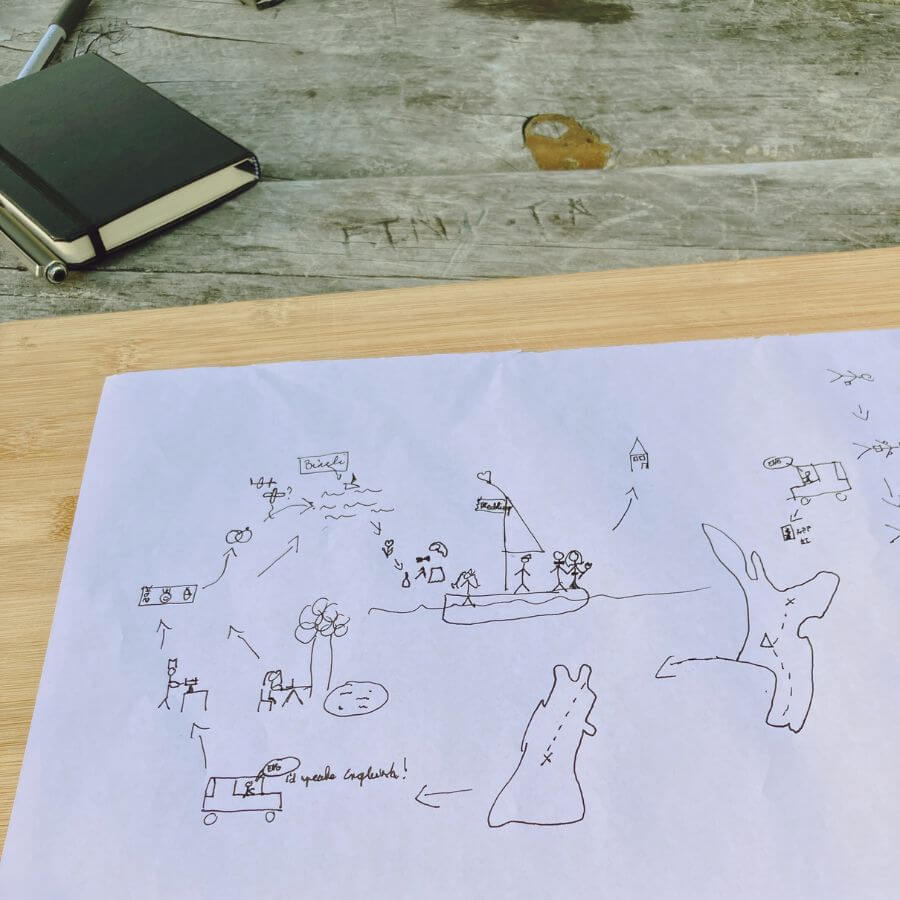
It immediately clicked. I’ve always believed in the power of drawing for manifesting—we learned about ancient cave paintings in school, and I remember thinking they must have painted their goals to make them real. Manifestation through art isn’t new; it’s primal.
For me, the “new year” always begins in August, on my birthday. That’s when I reset my goals and realign my energy.
But now, with the official new year approaching, I want to gather my thoughts and share how I create my future vision board: the action board—a tool that finally helped me organize my dreams in a way that feels inspiring, doable, and truly transformative.
1. Action Board vs. Vision Board – Key Differences You Must Know
Vision boards are beautiful—they spark emotion, imagination, and hope. They help us dream bigger, see possibilities, and surround ourselves with imagery that feels aligned with the life we want to create.
But there is one quiet problem most people secretly experience: vision boards often stay purely visual. They inspire, but they rarely guide.
An action board, however, bridges this gap. It keeps the soul of a vision board—the creativity, the beauty, the dreaming—yet it adds something that changes everything: clarity.
Instead of collecting perfect pictures from magazines or Pinterest, an action board invites you to draw simple symbols connected to concrete steps. It transforms the “someday” feeling into a gentle but steady call to act.
Vision Board (what we know well)
- Emotion-driven and aesthetic
- Helps you dream bigger
- Focused on images and mood
- Inspiring, but often passive
Action Board (what actually moves life forward)
- Visual and strategic
- Built on symbols connected to actions
- Doesn’t require perfect pictures or aesthetics
- Adaptable throughout the year
- Supports momentum rather than just intention
Where a vision board asks, “What do you want?”
an action board gently adds, “And what small step will bring you closer?”
You no longer need the perfect aesthetic or the ideal photo. You just need a pencil and your inner knowing.
This shift makes the process surprisingly grounding. You’re no longer overwhelmed by the size of your dreams—each one becomes a small visual cue, a tiny reminder of the next step.
And because the drawings are minimal, symbolic, even imperfect, you feel free to add, adjust, or redraw throughout the year. Or draw a huge mark if you achieved it! Your goals remain alive, not frozen in a perfectly curated collage.
If you’ve ever struggled with “too many dreams,” or felt blocked by the pressure to make a vision board aesthetically perfect, the action board relieves that entirely. It doesn’t require space, style, or artistic talent—only intention.
2. Do Action Boards Really Work? A Quick Look at the Psychology Behind Them
People often assume that visualization is “magic,” but an action board works because it pairs two proven forces: imagery and action planning. When your brain can see a goal and also see the steps that lead toward it, follow-through becomes dramatically more natural.
“Action board is imagery combined with action planning”
One of the reasons the action board method deeply resonated with me was that it wasn’t sold as magic—it was introduced in a relationship-themed newsletter challenge, backed by a private Facebook group.
The challenge began in January, but I wasn’t in the right mindset to start. Others did, though—and by the time my birthday arrived in August, people were already sharing achievements that felt almost unbelievable.
Looking back, many of their results didn’t seem dramatic or mystical—yet when they posted their original drawings, something clicked.
The sketches were simple: pencil lines, rough shapes, nothing curated or “Pinterest-beautiful.” They looked more like practical notes than artistic vision boards.
And that simplicity was the key. While drawing, they weren’t designing—they were thinking, focusing attention, and mentally rehearsing the steps they needed to take.
From a psychological perspective, that’s exactly why action boards work:
Visualization + Action Steps = Cognitive Alignment
Drawing your goals creates a relaxed, focused mental state where your brain naturally begins problem-solving. You’re not just looking at an image—you’re actively constructing how it could happen.
Micro-Goals Anchor Habit Formation
Most participants chose only one, sometimes two major goals. Then they added the big steps around it. This dramatically increases follow-through because your brain loves clarity and hates overwhelm.
Seeing Steps Daily Strengthens Consistency
A rough sketch pinned above your desk—not glamorous, not framed—quietly nudges you every day. You’re reminded where you’re heading and what the next step is.
Manifestation Mindset + Real World Planning
This blend is powerful. The focus and emotional trust of manifestation get grounded in structure. And structure—no surprise—is what actually moves life forward, hand in hand with consistency.
By August, I felt ready. I drew my first action board: specific, simple, nothing special. And yet the clarity and calm it gave me were unlike anything I had ever felt with traditional vision boards.

3. Before You Begin: Get Clear on What You Truly Want
Before you draw a single line of your action board, you need one thing above all: clarity.
Most vision boards fail not because manifestation “doesn’t work,” but because the intention behind them is blurry. When the goal is foggy, the result is foggy too.
For your first action board, I always recommend choosing just one goal—think of it as a practice piece, a way to learn the method without overwhelming yourself. One goal forces you to focus. One goal requires detail. And one goal is measurable, which is essential.
Ask Yourself the Real Questions
Before deciding on your goal, pause and explore it:
- How will it feel when I reach this?
- What are the details? Who is involved? What changes in my daily life?
- How will I measure that I’ve truly achieved it?
This last question is crucial.
- If your goal is “be happier,” what does that actually look like? Maybe it means one free Sunday every week—how do you spend it, and with whom?
- If you want to “be richer,” richer in what way? Financially—how much, and for what purpose? Emotionally—what does that emotional richness feel like in your body?
The more specific your answers, the more your brain knows what to build toward.
If You Don’t Know What to Choose
Sometimes the problem isn’t too few goals—it’s too many. If that’s you, make a simple list of everything you desire for the next year. Anything counts. Then:
- Choose intuitively
- Or, if you’re unsure, let chance help you
- I often flip a coin—not because the coin decides, but because my feelings instantly reveal which outcome I was silently rooting for
Once that moment of clarity arrives, commit to your one goal. Imagine the details. Feel the edges of it. Let it become tangible.
And when it feels real enough to describe without hesitation, you’re ready for the next step.
4. How to Create an Action Board – Step-by-Step Guide
Your action board is not about perfection. It’s about clarity, momentum, and the quiet magic of drawing yourself into the life you want. This is the heart of the method—so keep it simple and keep it enjoyable.
My thoughts About Format: Physical or Digital?
Your future vision board—or action board—should fit your lifestyle, but I always recommend a physical, hand-drawn version.
There’s something powerful about putting pencil to paper: your mind naturally sinks into focus, clarity, and imagination in a way that digital images rarely achieve.
You can mix media (a small collage, a printed image, a tiny montage), but keep the base drawn by you. It becomes more personal, more memorable, and more effective.
Digital formats (like Canva, Notion, or Pinterest folders) are convenient, but usually less impactful. After a few days or months, most people forget to open the app. It turns into another daily task you’ll eventually skip.
If you do prefer digital, make it your phone or computer background—something you see effortlessly every day.
A physical drawing, tucked into your calendar or unfolded during your routine, becomes something you feel, not just something you scroll past. And that makes all the difference.
If you’re in Europe, using A4 paper works perfectly with planners; in the US, letter-size works similarly.
What You Need
- One A4 sheet — plain white, or a soft beige / blush / sage cardstock
(A4 is intentional: small enough to carry, fold into your planner, keep in your wallet, or pin on your fridge.) - Pencil, markers, pens — whichever feels natural
- Optional: reference images if you need visual inspiration
That’s all. Minimal tools, maximum clarity.
Step 1 — Draw Your Main Goal in the Center
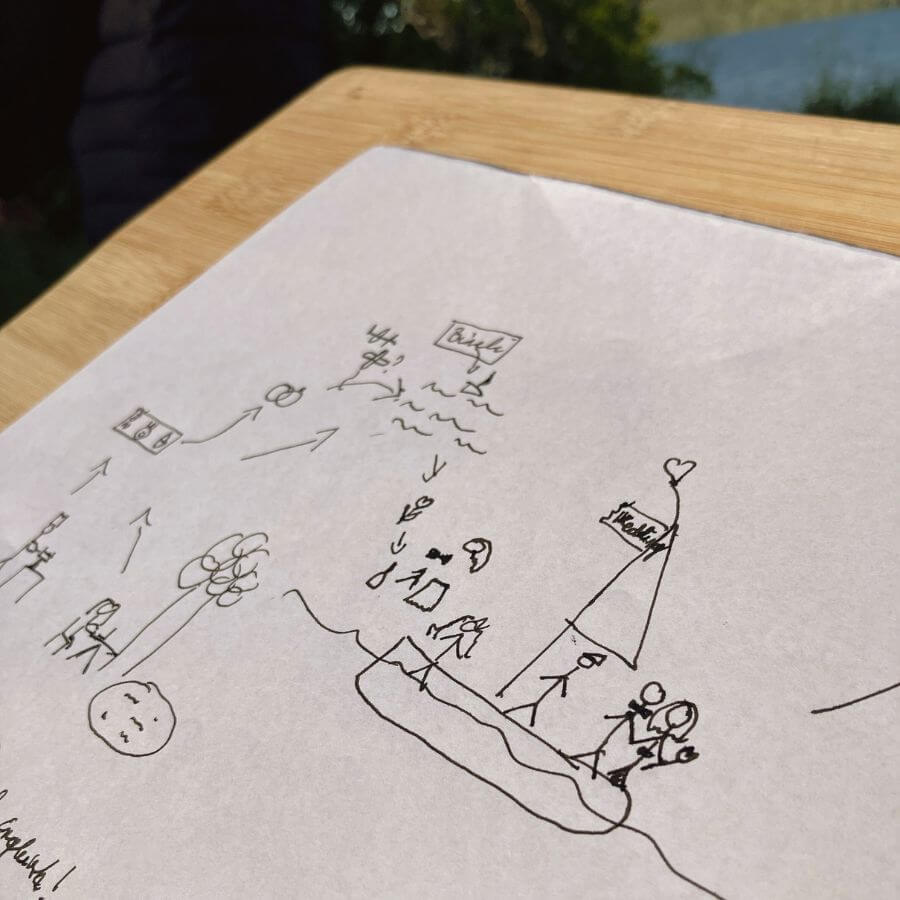
Start with the heart of your future: draw your big goal right in the middle of the page. Draw it clearly, with as many details as you can imagine.
If you’re unsure how it looks, search for images and draw what you see—the exact car, the exact diploma title, the exact place, the exact people. Don’t worry about aesthetic quality. What matters is the state of creating: your brain focusing, wandering, connecting dots.

Step 2 — Draw the Last Step Before the Goal
Once your central goal is drawn, step backward.
Ask yourself:
“What is the final step I must complete before this becomes real?”
Draw that step next to your main goal and add an arrow pointing toward it.
This does not have to be super detailed—just clear enough that you instantly understand what it represents.
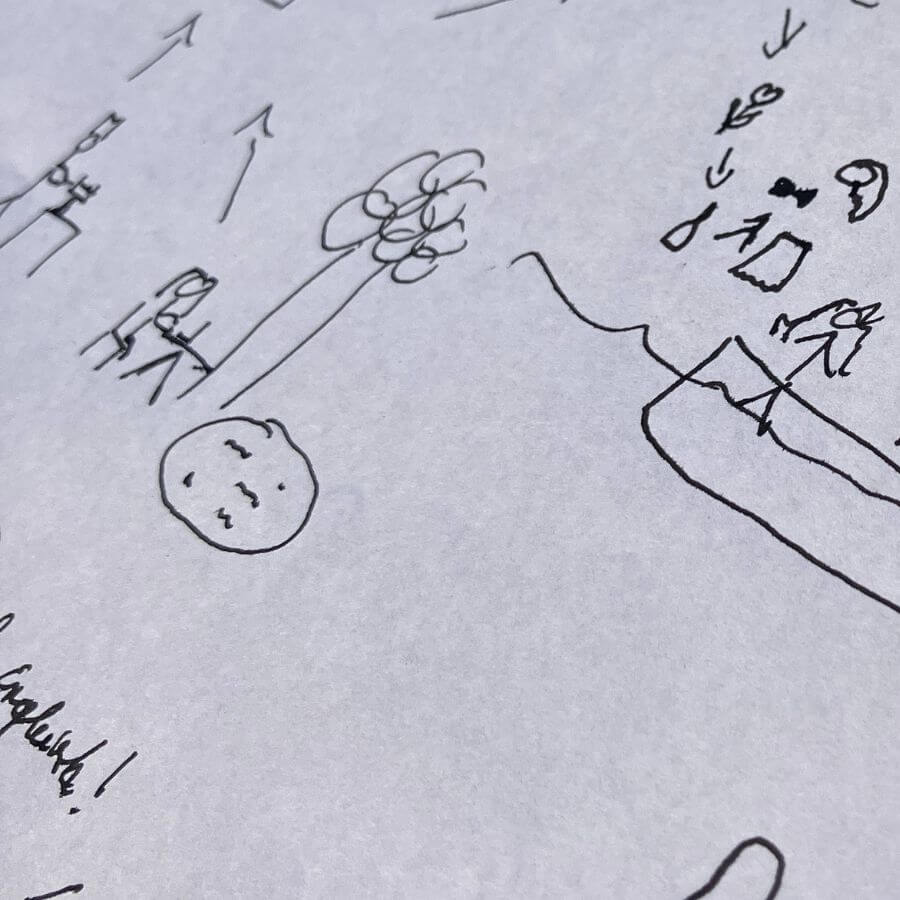
Step 3 — Draw the Step Before That (And Keep Going Backward)
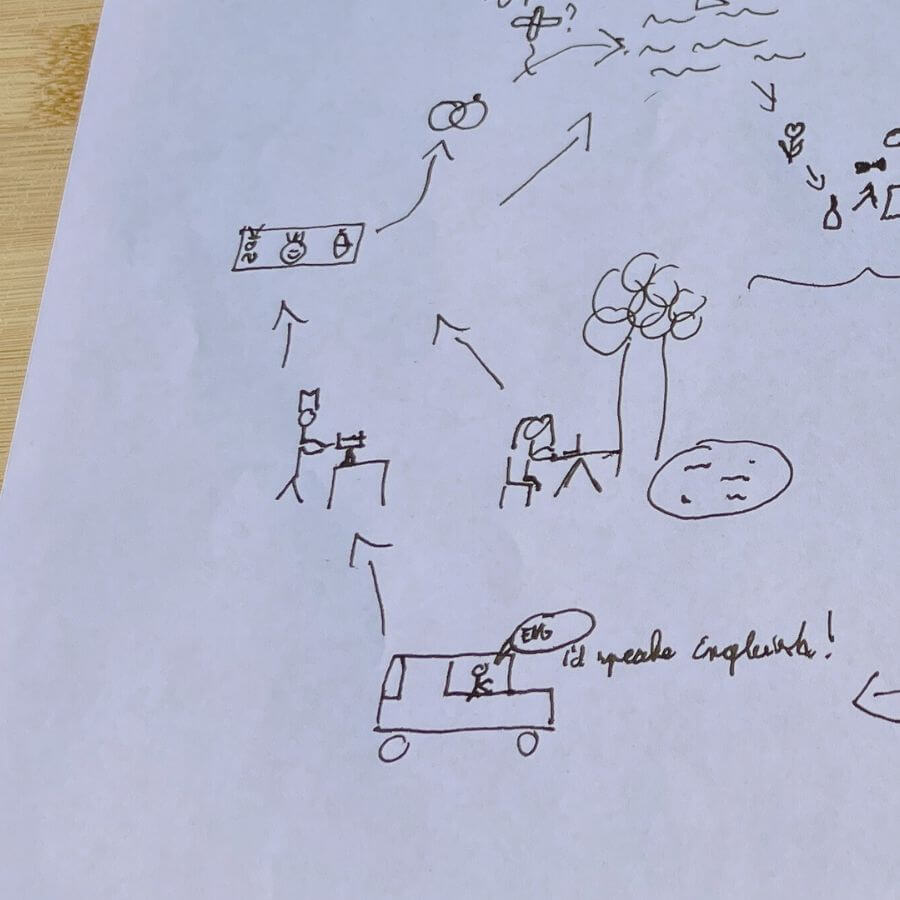
Move backward, one step at a time, until you reach today.
This creates a visual “map” of your journey, with arrows guiding you toward your final image. You’ll see your path clearly: not dozens of tiny tasks, but the big meaningful steps that move you forward.
Example
If your end goal is running a marathon:
- Center image: you at the finish line, medal or certificate in hand
- Last step before: you successfully completing a 35 km training run
- Step before: running long distances weekly
- First step: buying proper running shoes + researching food, sleep, and training plans
This transforms your dream into a sequence of achievable movements.
Step 4 — Add Simple Timeframes (Only If You Want)
Some people like dates. Others don’t.
If timeframes stress you, skip them.
Life has its own rhythm—some goals unfold quickly, others take detours. What matters is progress, not artificial deadlines.
If it feels good, add gentle estimates.
If it doesn’t, trust the process and leave them out.
Step 5 — Put Your Action Board Somewhere Visible
Your action board should live with you:
- Inside your planner
- On your fridge
- In your office
- Near your bed
- Tucked into your wallet
Look at it several times a day. Let it quietly influence your choices. Each time you complete a step, mark it visually—check it off, highlight it, color it in. It becomes a little game, a treasure map.
And here’s the beautiful part:
When you focus on the steps, the goal slowly starts moving toward you.
5. How to Use Your Action Board Daily, Weekly, and Monthly
Once your action board is placed somewhere visible, it naturally becomes part of your everyday awareness—you don’t need discipline so much as simple exposure.
When you see your future vision board each morning, it quietly “plants the bug in your ear.” If you’ve drawn yourself finishing a marathon, your brain will nudge you: Should I take the next small step today? And that gentle nudge is exactly the magic.
Daily, let your eyes land on the board. You don’t have to analyze it—just notice it. This keeps your goal alive in your mind, helping you spot small opportunities in your everyday life that connect to your next action step.
Weekly, reflect for a moment: did any opportunity appear? Did you move one step forward, even a tiny one? If not, is there a micro-step you can take this week?
Monthly, review your board, celebrate your checkmarks, and reward yourself for the milestones you’ve already completed. These moments of acknowledgment reinforce your motivation and keep your momentum steady.
Consistency is not about pressure. It’s about presence. When your board stays in sight, your goals quietly stay in motion.
6. Example Categories for Your First Action Board
If you’re starting your first action board, it helps to have a few simple categories in mind. Think of them as gentle guides rather than rules—your board should reflect what truly matters to you. Here are some ideas to get your creativity flowing:
- Career: Imagine your next promotion, a new skill, or the project you want to complete this year.
- Money: Visualize your savings goal, a debt-free milestone, or even a fun purchase you’re working toward.
- Health & Wellness: From running a marathon to having healthy long hair, draw what being healthy and strong looks like for you.
- Home & Lifestyle: Picture your ideal living space, daily routines that make you feel grounded, or small upgrades that bring joy.
- Creativity: This could be a personal project, learning an instrument, or making time for painting, writing, or crafting.
- Travel: Even small trips count—map out the experiences and places that excite you.
Start small. You don’t need every category at once. One goal in one category is already enough to create a meaningful, actionable board. The idea is to spark inspiration while keeping it clear, focused, and manageable.
7. Troubleshooting: Why Your Vision Board Didn’t Work (and How to Fix It with an Action Board)
Sometimes, vision boards feel inspiring at first… and then gather dust. Don’t worry—you’re not alone. Many of us have been there, staring at pretty pictures that never translated into results.
Here’s why traditional boards often fail, and how an action board fixes it:
Common Problems with Vision Boards:
- Too many goals: You feel overwhelmed and nothing gets done.
- Pretty but vague images: They inspire emotion but don’t guide action.
- No follow-through system: There’s no step-by-step plan to achieve the goals.
- Emotional disconnect: You may like the images but don’t feel them as achievable.
- Focus is lost: You concentrate to make an aesthetically nice product, and you choose your images based on them, not focusing on the real goal.
How an Action Board Fixes It:
- Narrow your focus: Start with one or two big goals instead of a dozen.
- Add clarity: Draw your goal and each major step leading to it—no vague images, just actionable milestones.
- Set timeframes: Small steps set an invisible time frame that leads to the goal. No need to give deadlines, but adding steps gives also a structure in time.
- Create a follow-through map: Each step flows to the next, giving you a clear path.
- Engage your emotions: Drawing, writing, and visualizing your own action board creates a connection that’s both inspiring and motivating.
- Drawing as tool: You just naturally will remember, what you have drawn, even if you just touch the paper. Glued images fall off the paper, loose color, became worn over time.
With these adjustments, your board stops being just decoration and becomes a tool—a future vision board you actually use every day.
Final Thoughts about Action Boards – What is on Your Future Vision Board?
There’s something secretly magical about seeing small, simple sketches transform into real-life milestones. Reading the stories from that Facebook group was inspiring and real —people achieving their big dreams: moving abroad, landing dream jobs with company car, or entering competitive universities.
And it worked! Why wouldn’t it?
Your action board is more than decoration; it’s a bridge between clarity and change.
Each step you draw, each arrow connecting today to your future, is a gentle reminder that progress starts with understanding what you truly want and taking the next tangible step toward it.
I encourage you to start small, start now. Draw, imagine, map out your steps, and place your future vision board where you can see it daily. Let it quietly guide you, spark ideas, and remind you that every action matters.
In time, even the biggest dreams begin to unfold—just like the sketches on a page can eventually turn into real, moving milestones.

Pin it for later!