
Small Bathroom Color Ideas – A Guide for Your Bathroom Remodel
Finding Harmony in Small Bathroom Color Ideas
Thanks to my renovation project, I was thinking a lot about small bathroom color ideas. Our bathroom is really close to getting its final look! The ceiling and the upper parts of the walls are already blue, and we painted the liquid water insulation. And here I noticed: it had almost the same shade as our chosen grout.
That moment gave me an idea about small bathroom color ideas — how colors can affect the atmosphere of a space. More specially, how can we use colors in a bathroom?
Colors influence how we connect to the space, some colors are “usual” for our eyes, and some for some colors the line is thin between “noise”, “just enough” and “too much.”
So this blogpost was born as a helper to create perfect bathroom color schemes.
If you’re new here, I’ve written before about grout colors, bathroom storage, and the principles of minimalist bathrooms — all of which relate to today’s topic. If you want practical help in choosing bathroom tile combinations, read this article!
In this article, I’m collecting what I’ve learned about colors. And what I believe is a good practice for creating color in bathrooms: the balance of quality and quantity. And of course I give some tips for thoughtful choices that can make even the smallest spaces feel whole.
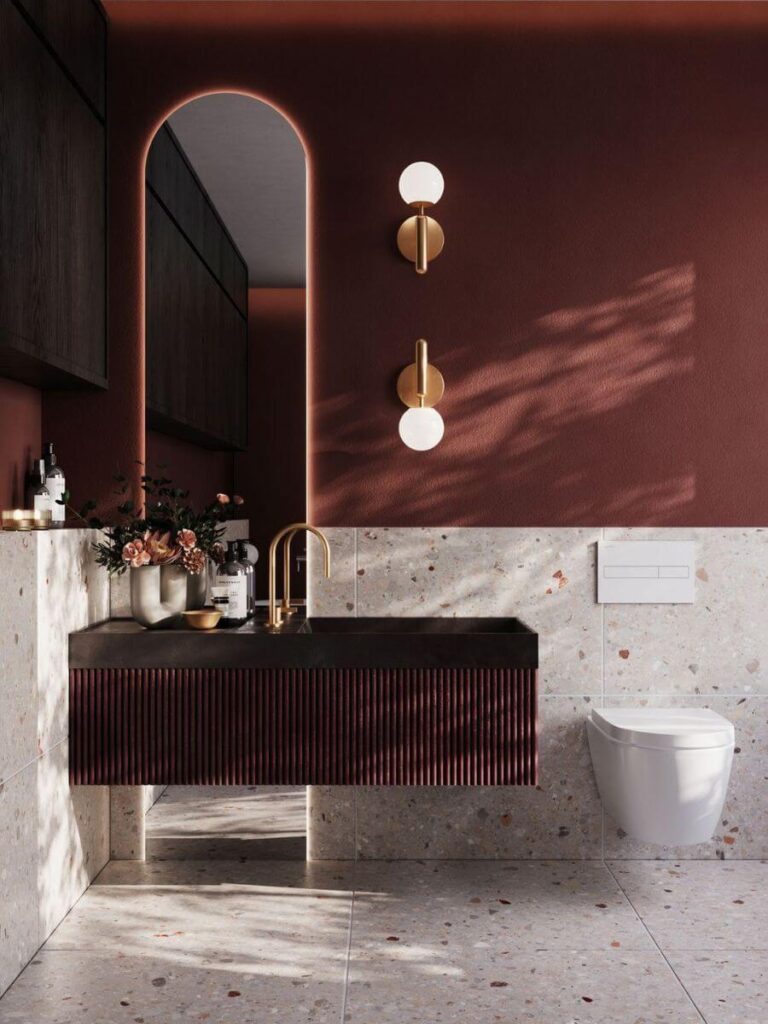
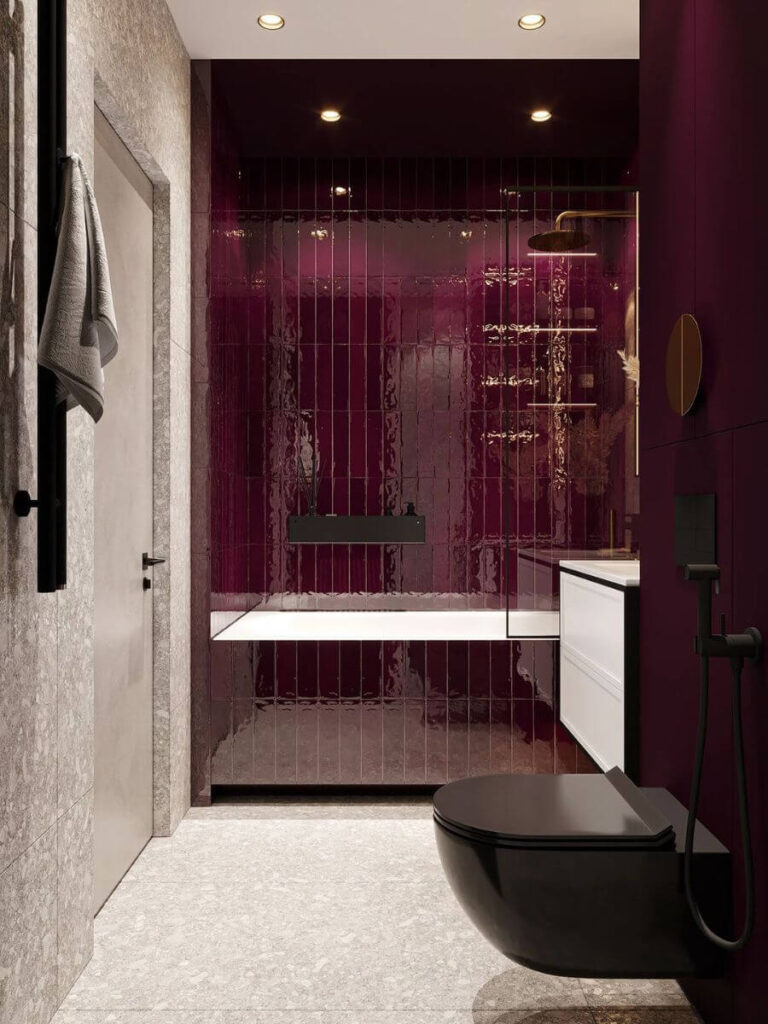
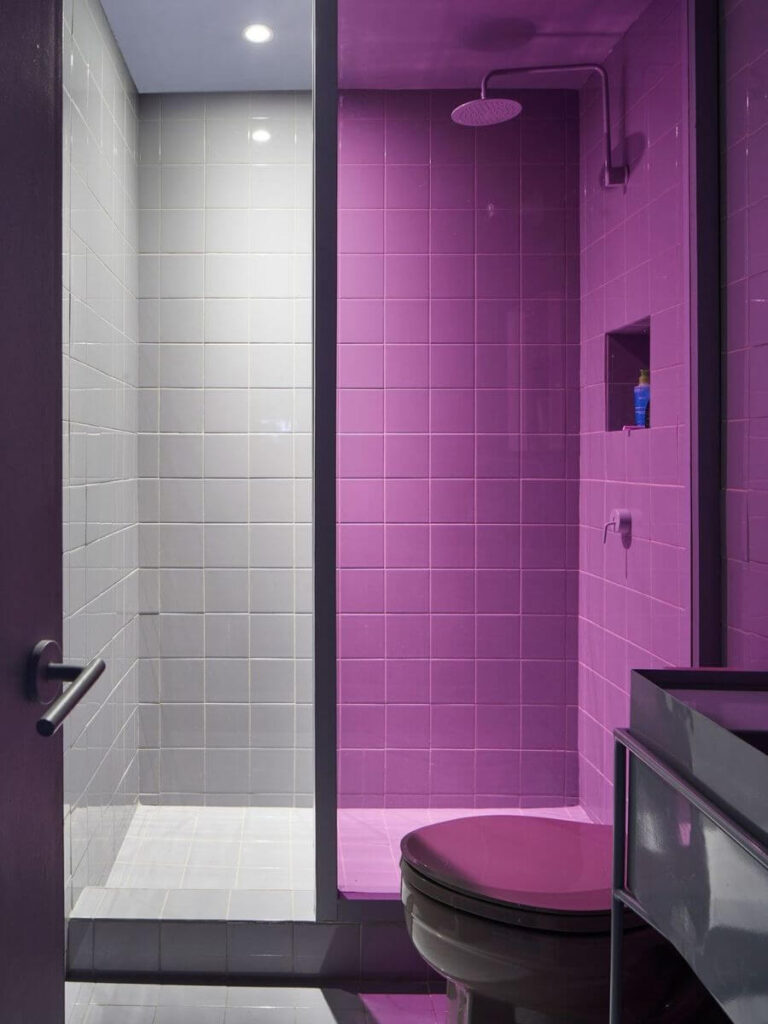
In the post I collected images about purple bathrooms, burgundy bathrooms and violet bathrooms – just for illustration! I just realized, how much I love this color.
And of course, I will give some real combination that I count to “safe choices”.
No AI images here!
How is My Studio Apartment Renovation Going?
As an architect renovating my own studio apartment, I often find that every design decision teaches me something new about proportion, balance, and simplicity. It is a new experience for me, as design choices are made on my computer, and executed by others.
It is different if you are doing the whole renovation process by yourself. You have a lot of time for thinking – I tend to question my design choices from last week…
But I sometimes feel that I discover hidden connections about the driving forces of architecture just by looking at the half-finished bathroom.
Why Color Choice Matters in a Small Bathroom
Color defines how we experience space — especially when the space is small. It changes how we read distance, how light moves, and even how clean a room feels.
When it comes to small bathroom color ideas, it’s as much about perception as it is about maintenance.
I believe the era of grey monochrome bathrooms is coming to an end — I was waiting for it! I’ve never been drawn to the monotony of grey-on-grey spaces. Although I love monochromy – but there is a difference.
We’re craving something more alive, something that reflects personality, not just neutrality. The bathroom is a perfect place to experiment with color because we spend less time here than in the kitchen or bedroom.
Bathroom space allows for a bit more bravery, and the variety is close to endless considering bathroom color schemes.
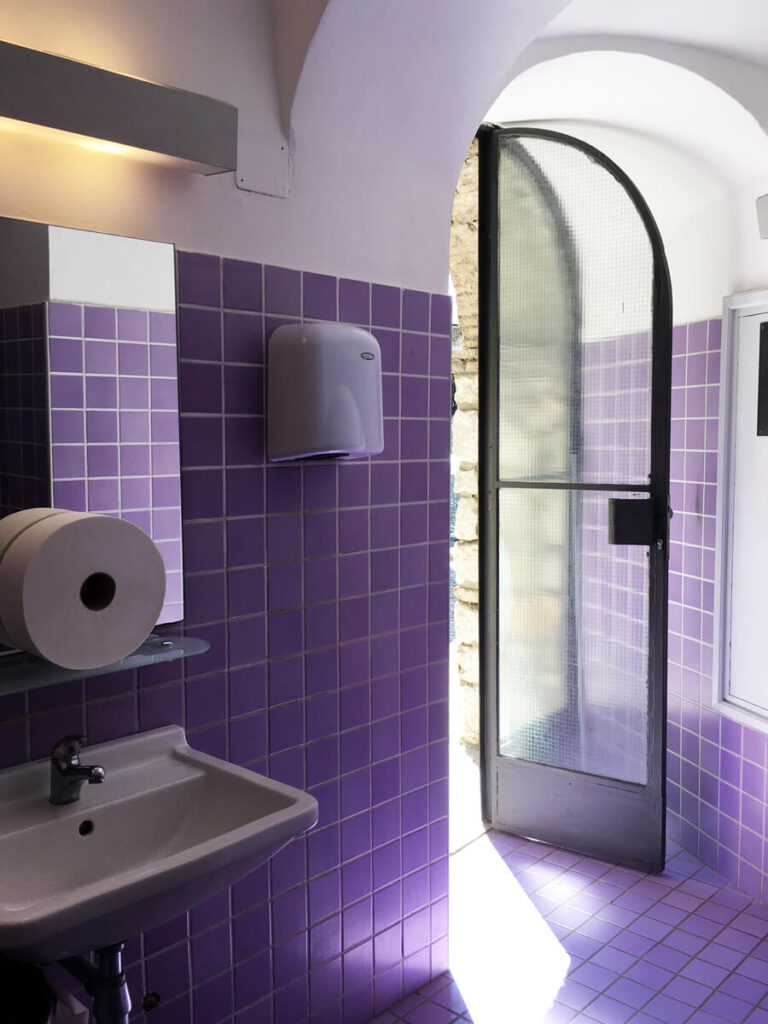
Yet, this is also one of the most complex spaces in the home: high humidity, limited natural light, and tight proportions. Every surface matters. Color can visually stretch walls, lower ceilings, or make light dance where it’s needed.
It also affects hygiene — just imagine a white grout line on the floor, or the black tiles with water stains.
When designing small bathrooms, my core principles remain the same: aim for less, hide the clutter, be brave in design choices, and make sure the space is ventilated properly. Proper ventilation and balanced color go hand in hand in creating a space that looks good and feels right.
Things to Consider Before Choosing Colors
Before selecting your palette, take a moment to think about how color will live in your space every day. These simple considerations can help you choose the right direction for your design and make your small bathroom color ideas feel intentional and lasting.
- Lighting
Natural and artificial light change how colors appear. A soft beige can turn yellow under warm light, while cool tones may look dull without daylight. Always test your colors in the actual bathroom light before deciding. - Room Size
Light tones visually expand walls and reflect more light, making the room feel open. Darker colors can add depth and character, but use them carefully to avoid a closed-in effect. - Maintenance
Glossy finishes reflect light beautifully but show every mark. Matte surfaces hide imperfections better and often feel calmer. Think about how much cleaning effort you want to invest. - Harmony
Choose a base color and an accent color that share something in common — tone, warmth, or brightness. This creates a natural flow instead of visual noise. - Quantity and Character
Decide early if you want a soft, monochromatic look or bold contrasts. Also, consider the atmosphere of your home — does the bathroom continues the same mood? It should match some characteristics! Your color choice should feel connected, not isolated.
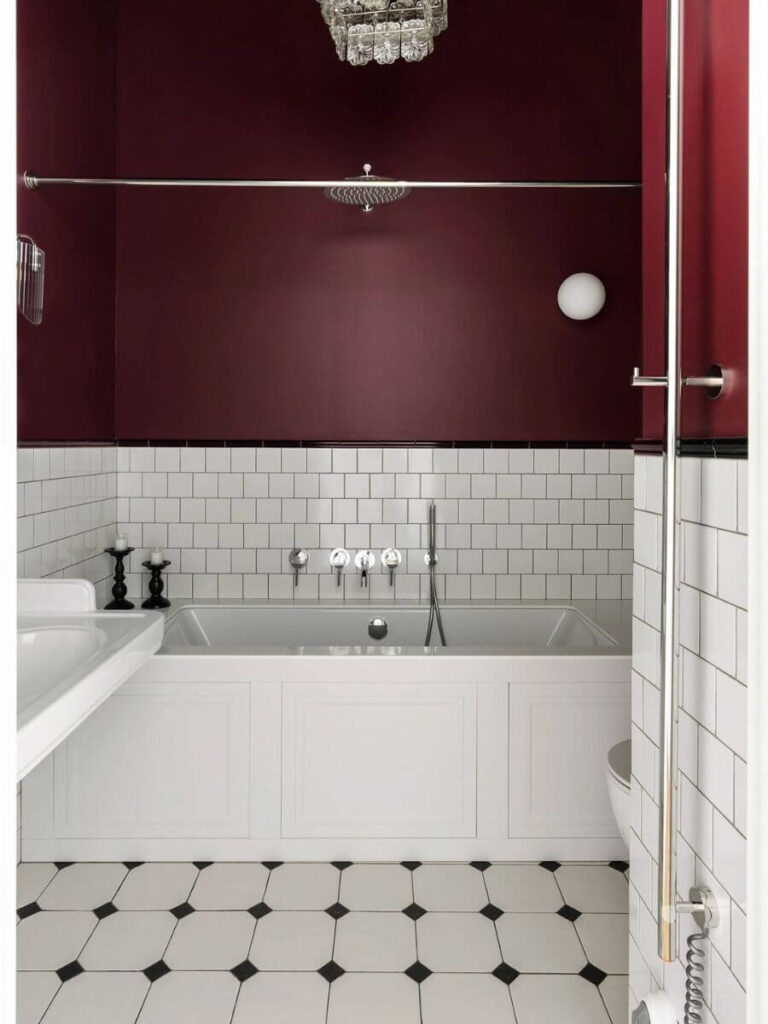
10 Ways to Use Color – Small Bathroom Color Ideas
Color is everywhere — on walls, tiles, grout, and even the smallest details like taps or mirrors. But in a compact space, every color choice matters twice as much. Here are 10 practical ways to bring your small bathroom color ideas to life, and to create a harmonious, clever space.
# 1 – Wall Tiles
The most defining surface in any bathroom. If the bathroom has light colors, I would not choose a strong colors for (only) wall tiles. Think about tiles and wallpaint ratio – how high is your bathroom tiled? What is the vibe of the color?
# 2 – Floor Tiles
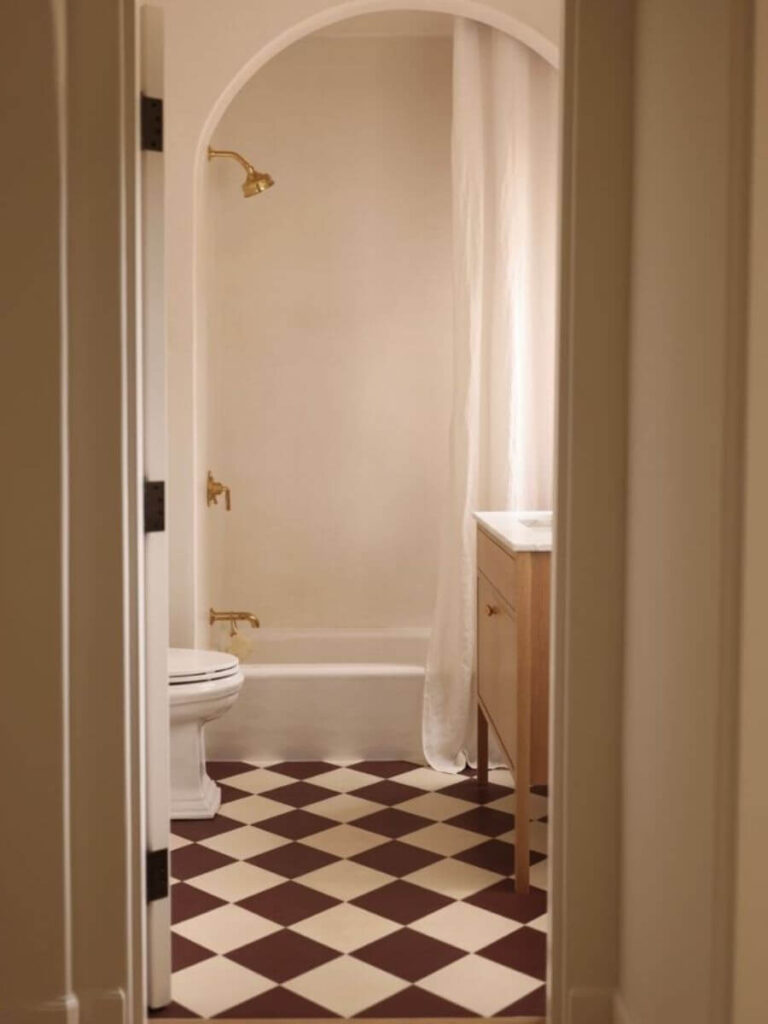
A darker or vibrant floor grounds the room. Just make sure it connects to something — even a single matching tone on the wall makes the whole space feel intentional. Go for tone-on-tone harmony or choose one bold color and let the rest stay quiet.
# 3 – Wall Paint, Wall Panels and Wallpaper
Paint gives flexibility, wallpaper adds character. If you’re unsure, start with a single accent wall behind the vanity or mirror. This “color anchor” instantly gives structure. Plus points, if the paint is matching to something else, like grout color or any patterns of the tiles.
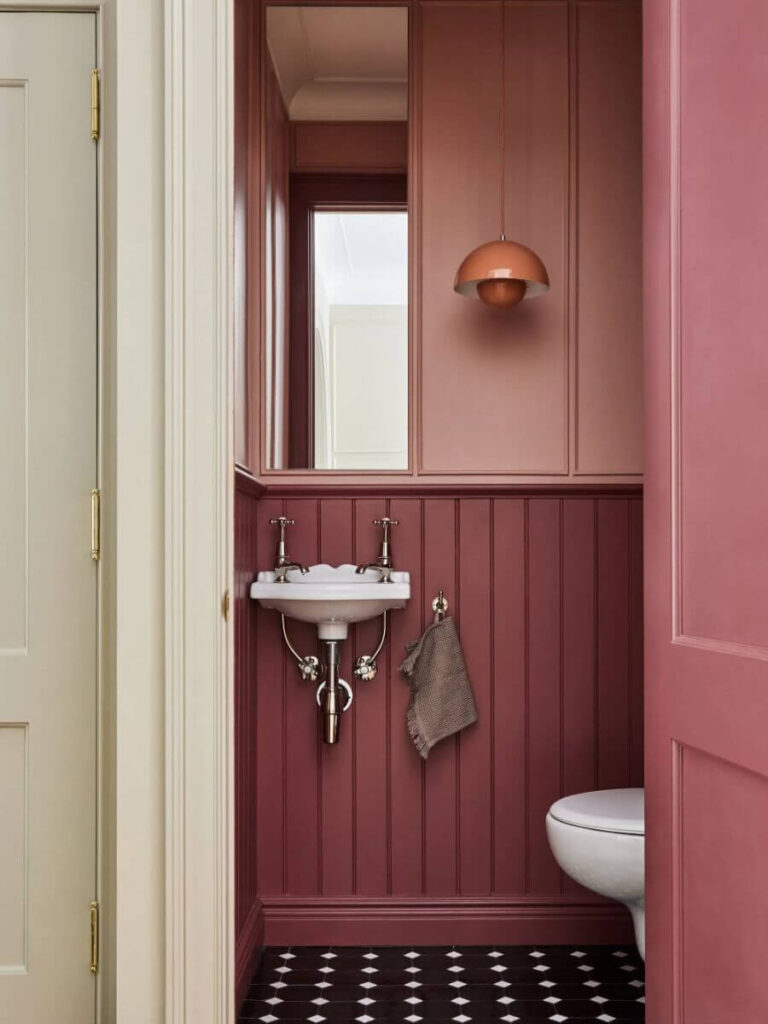
The parlor-level powder room of a house in Greenpoint designed by Space Exploration. Photo by @nicole_franzen, styling by @katjagreeff
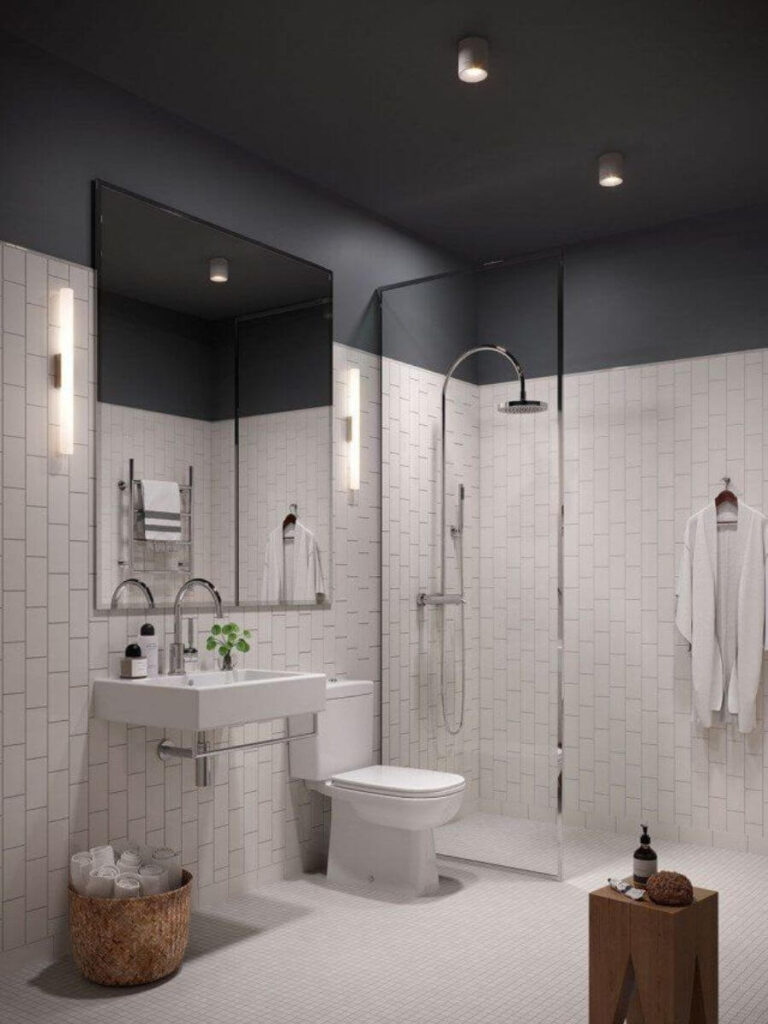
# 4 – Ceiling Paint
Yes, paint the ceiling! It’s the forgotten fifth wall. A light tone can visually lift it, while a deep shade adds drama. In a small bathroom, even a hint of color overhead makes the space feel complete. Take a look on my bathroom’s blue ceiling!
# 5 – Grout
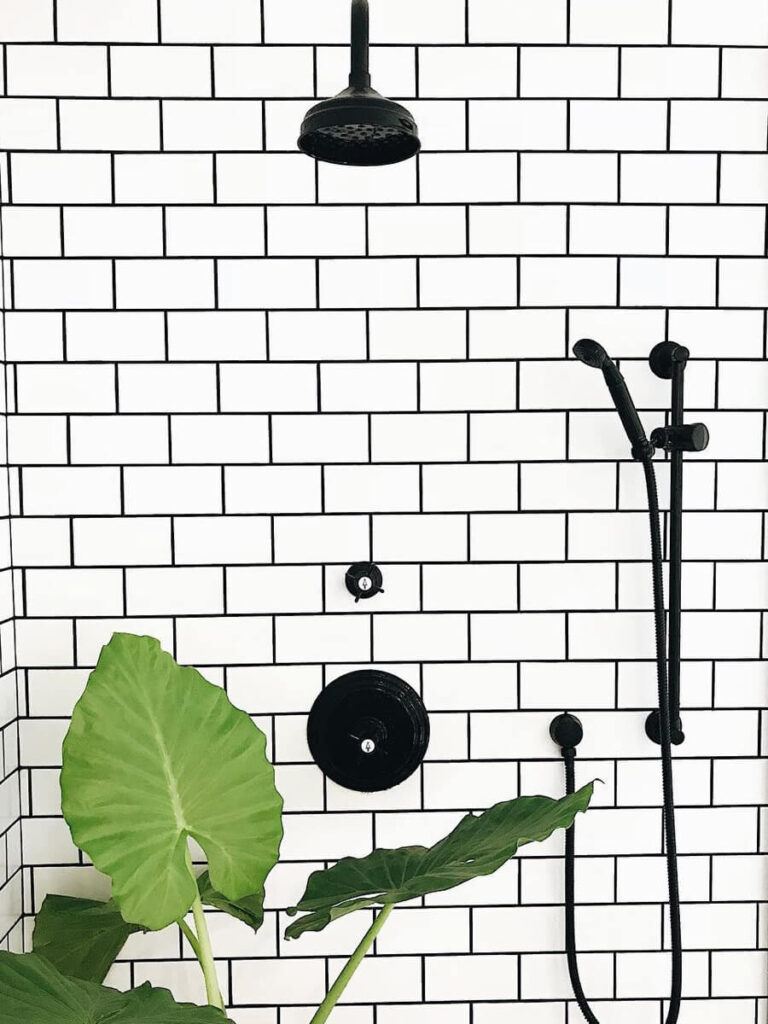
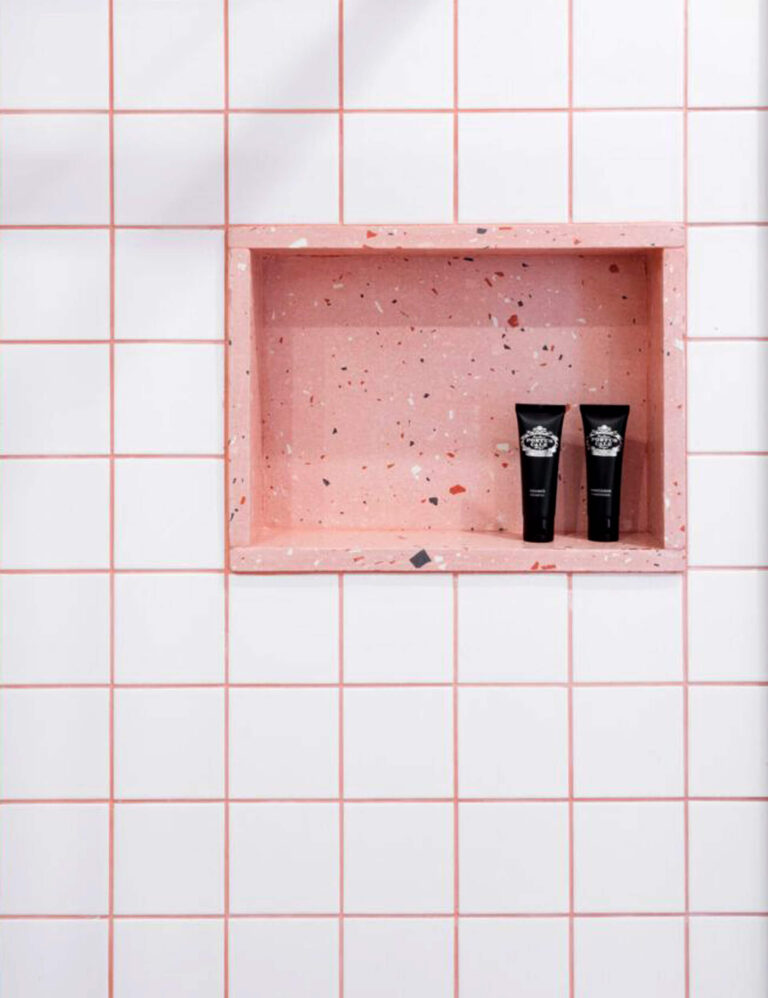
My favorite subtle way to play with contrast. A colored grout line outlines every tile and can quietly add rhythm to the room. Just avoid white grout on the floor — it never stays white. It was the second choice for me in our small bathroom remodel.
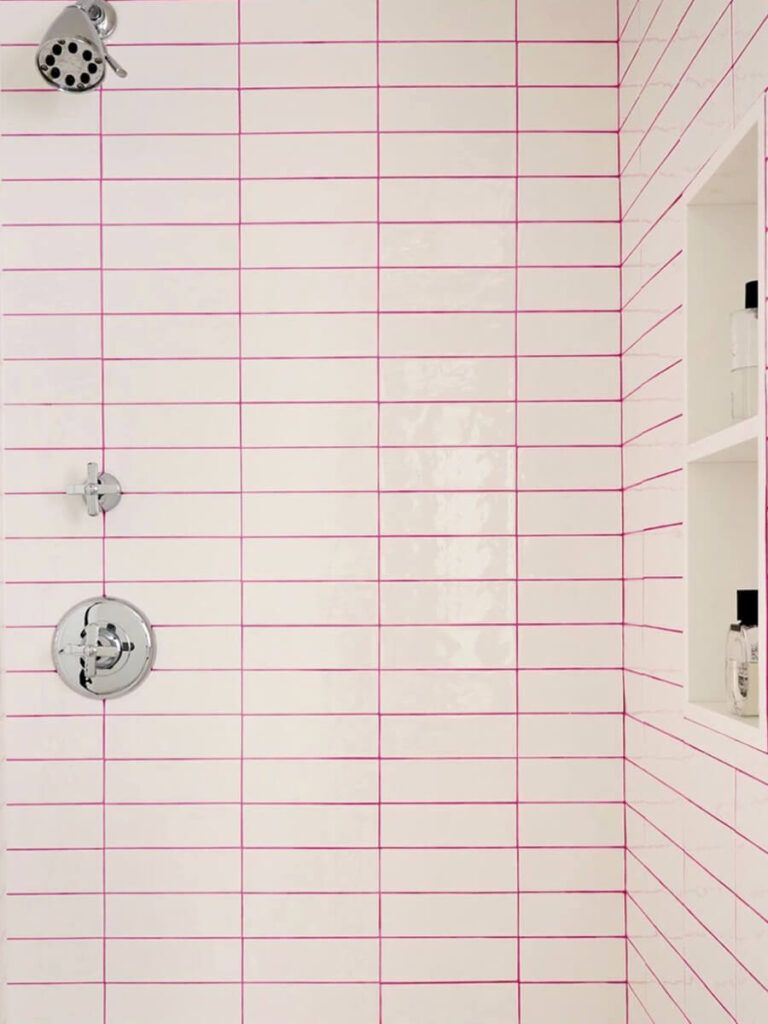
Colored grout works best, if your tiles are white or share some similarities (like tone). A light pink tile goes well with a bordeaux grout!
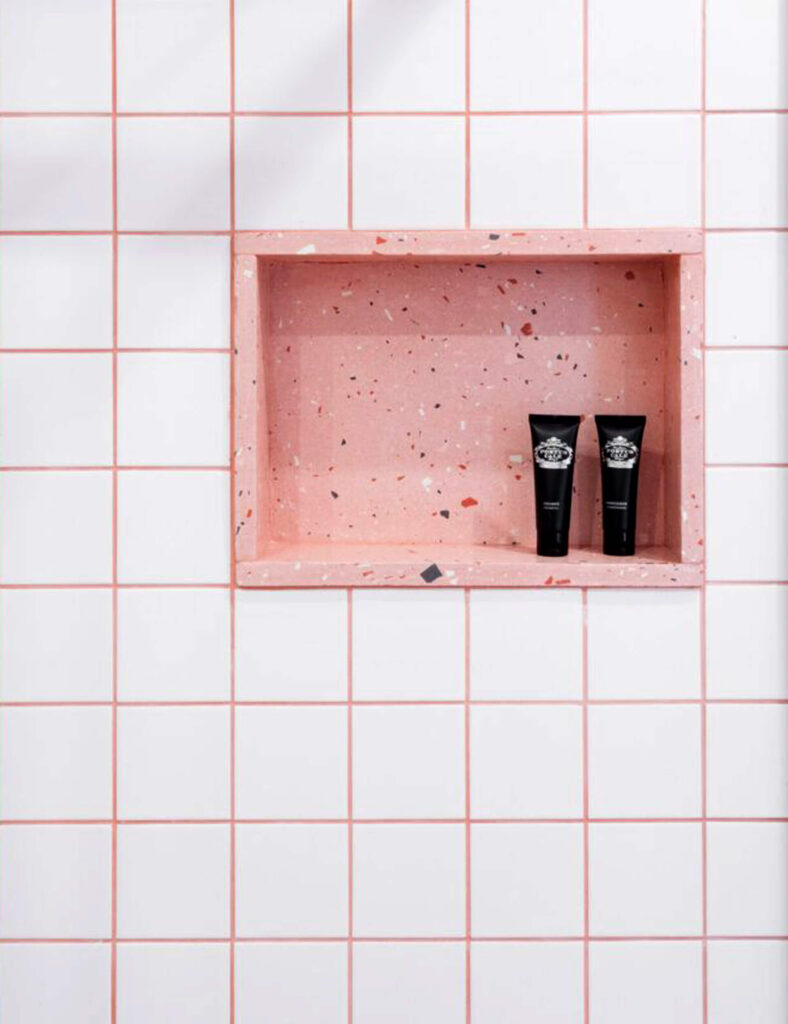
# 6 – Built-In Elements (Niches, Half Walls)
These are perfect mini-canvases for color. A darker tone inside a niche adds depth; a lighter tone highlights structure. Small moves like these can make the layout feel designed, not accidental. Try to repeat that “recessed” color in hidden spaces, like inside drawers or behind cabinet doors!
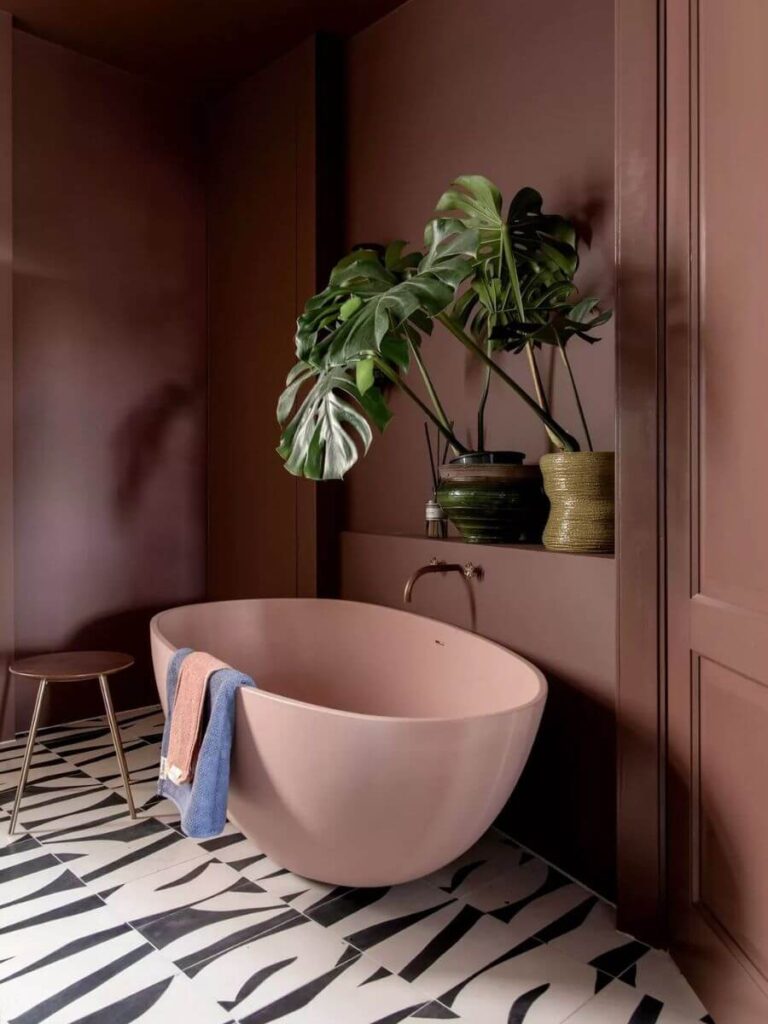
# 7 – Sanitaryware (Vanity, Toilet, Bathtub)
White isn’t your only option. A colored vanity or matte basin can become a centerpiece. Just keep one large element in color — not all three.
# 8 – Furniture
Storage pieces and sink cabinets add warmth through materials and tones. Wood, painted finishes, or even black accents all work — as long as they echo your main palette.
# 9 – Glass & Metal Finishes
Tinted glass showers or brushed brass taps can subtly shift the overall tone. Metals count as colors, so choose one and stay consistent. Mixing too many finishes can easily feel chaotic.
# 10 – Accessories
Towels, vases, and art can finish the look — but they should repeat colors already found in the room. Accessories should echo the main tones in the room.
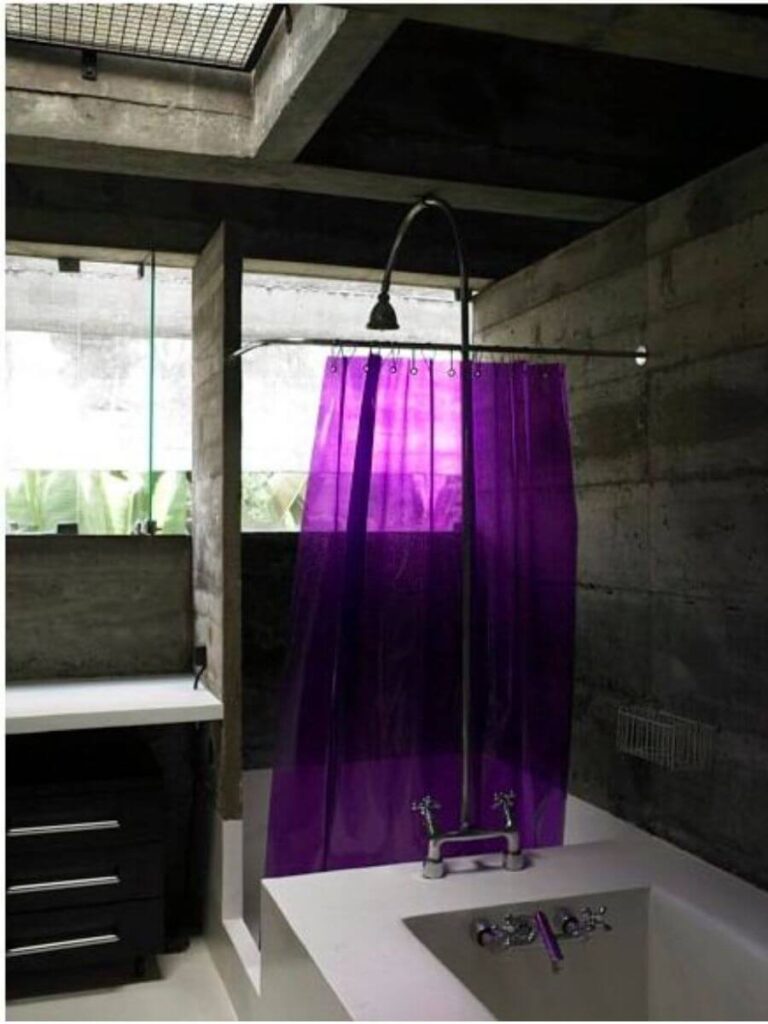
Accessories only work when they echo colors found in something larger. Or, they match and add to the vibe, like this purple shower curtain!
Beware of Random Color Pops!
Adding “a touch of color” at the end — a single orange vase or towel — rarely works. It often feels disconnected. Accessories only look right when they repeat or balance an existing color elsewhere. Otherwise, it’s just visual clutter.
Random pops just break the harmony. If your bathroom is white on white, adding colored accessories would seem like they don’t belong here, they will stay superficial. Towels, vases, rugs — all tempting. But resist the urge to scatter random colors.
In small bathroom color ideas, the goal is to use colors in a way that evokes harmony highlighting design elements. Let the color earn its place. Choose fewer, use them confidently, and let the details do the talking!
How to Create Harmony with Base & Accent Colors
Every color scheme needs structure. The easiest way to achieve that is by defining a base and an accent color. This keeps your design clear and intentional — not random.
In small bathroom color ideas, this structure is especially useful, because too many colors or weak proportions can easily shrink the space visually.
There are two main paths:
- Monochrome harmony — tones that are close to each other, creating a calm and unified look.
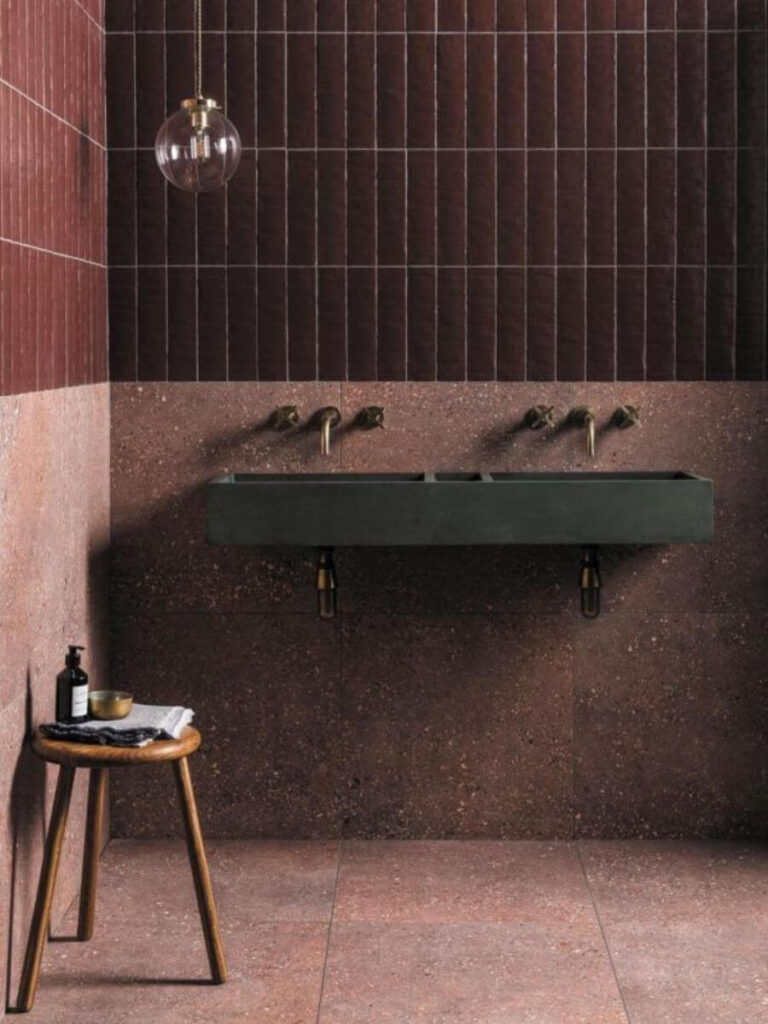
- Contrast — combining colors that highlight each other, adding energy and direction.

A few examples to start with:
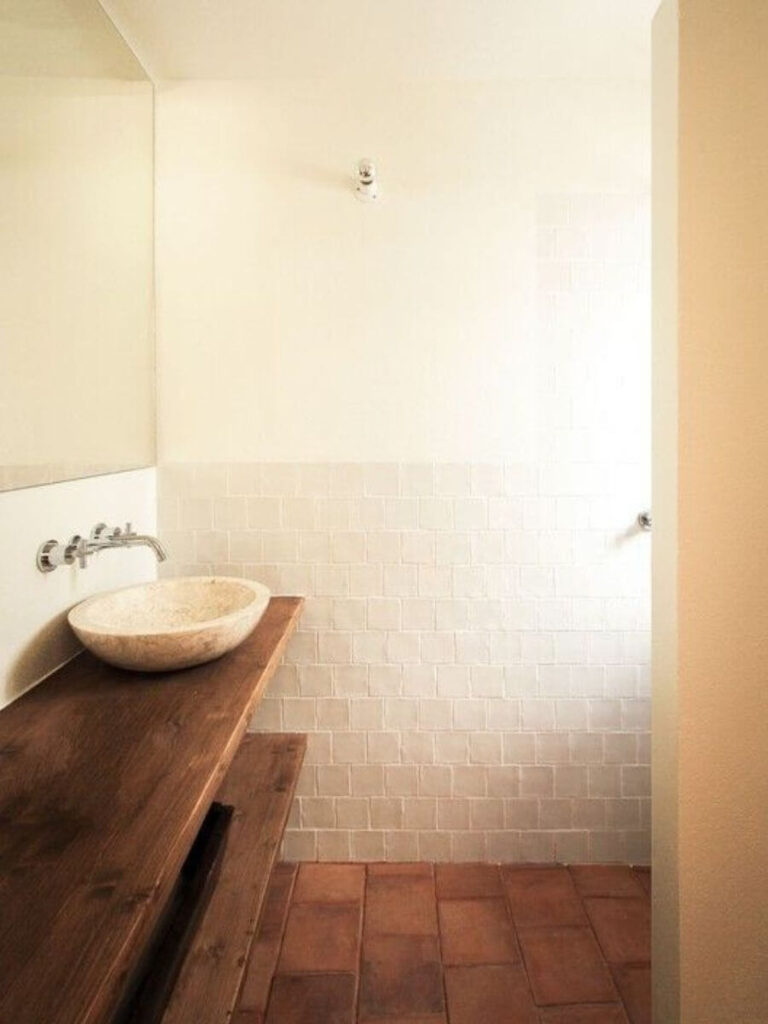
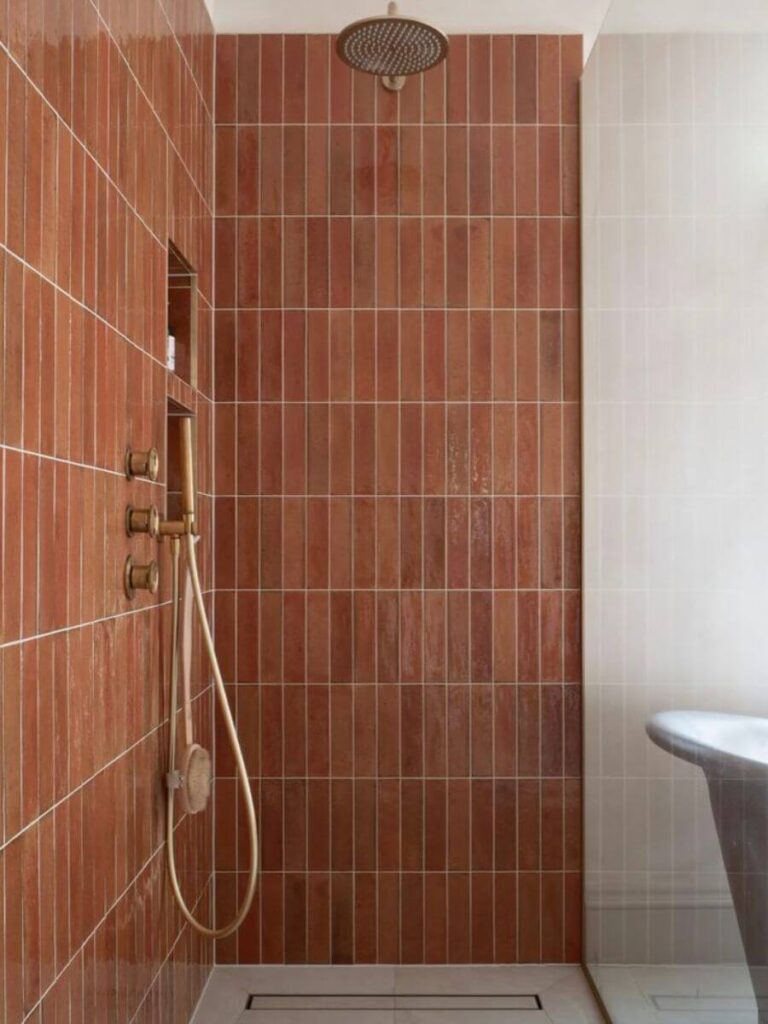
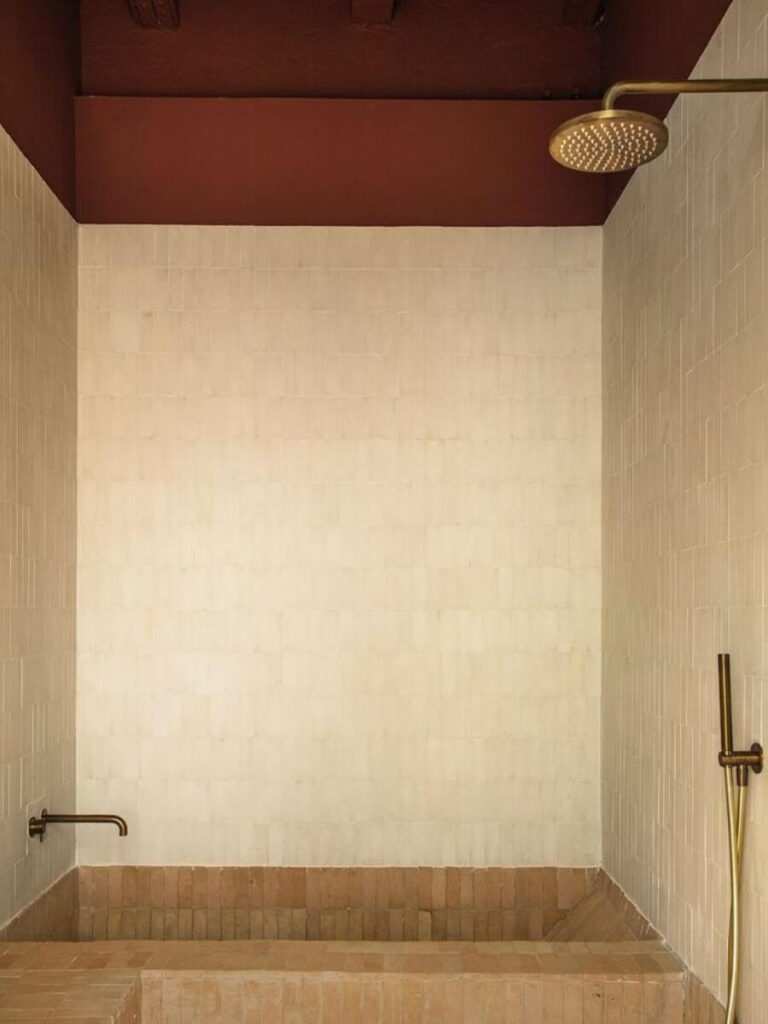
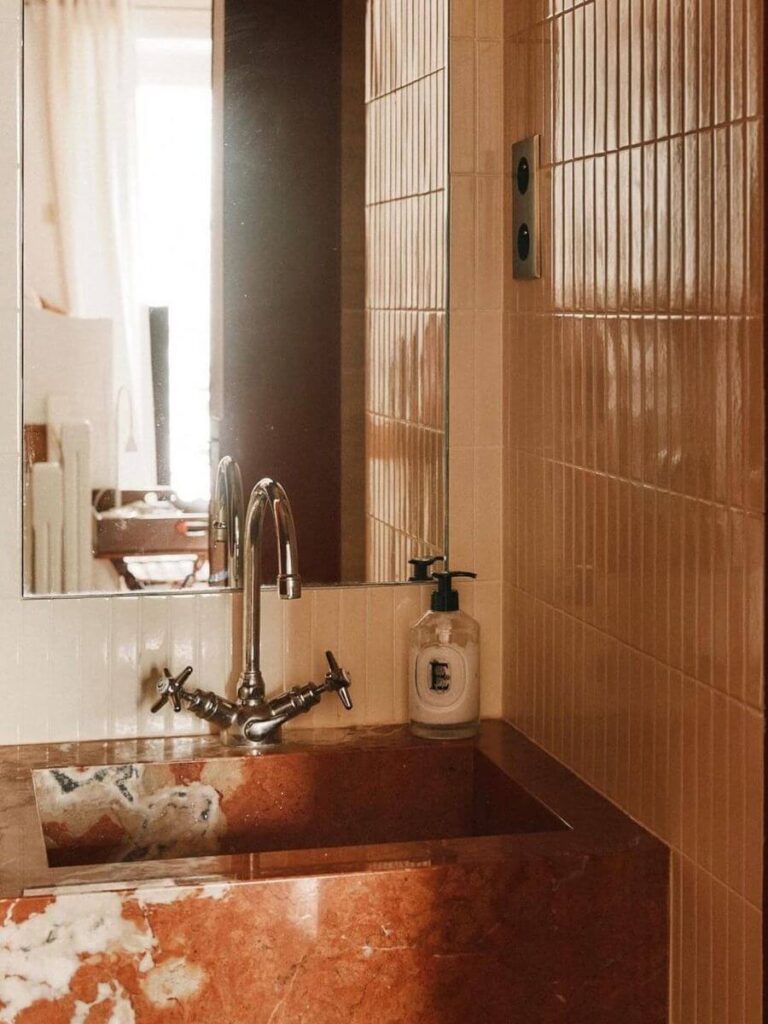
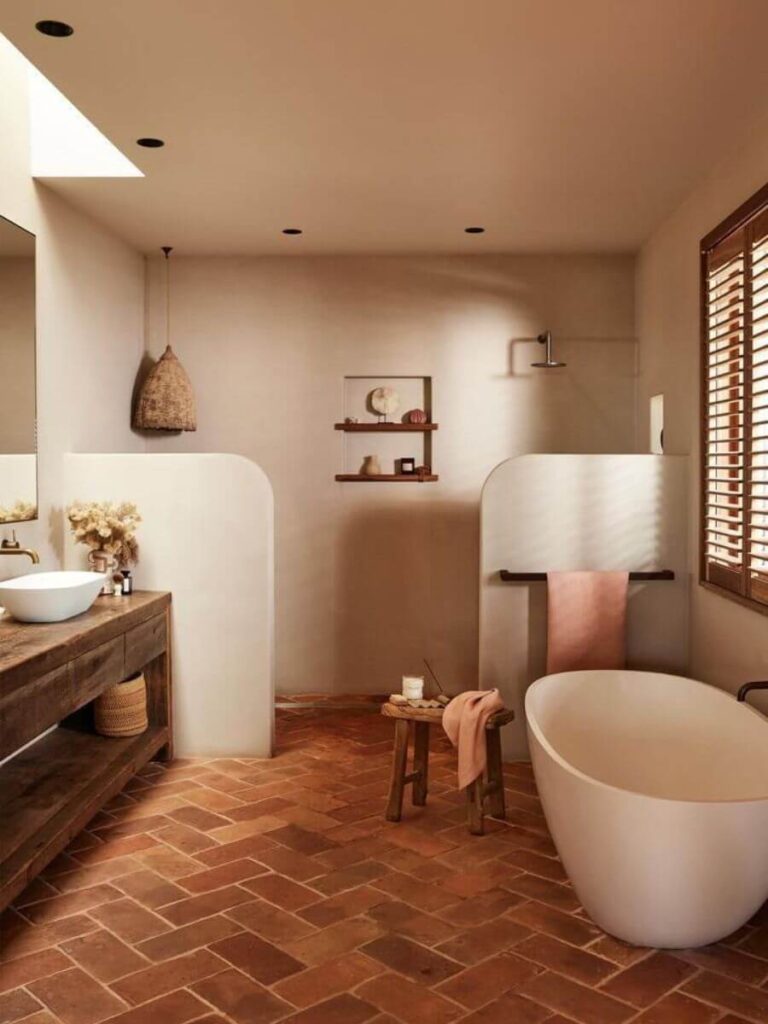
- Beige + Terracotta – warm, muted tones that flow together beautifully. Works best with natural textures and soft lighting.

Beautiful bathroom of House in Chancelaria – a project by co.rp arquitectos. Found it here! Found it on Pinterest. Who is the designer? Tell me, if you knos please! The picture shows one of the bathrooms of the Bos-Cos Hotel in Seville. The bathroom features a unique design with a built-in brick bathtub and shower. The walls are covered with light-colored tiles, while part of the ceiling is painted dark red, creating a contrast in the space. Found it on Pinterest. Emma Lane’s Sprawling Spanish-Inspired Homestead in the Byron Bay Hinterland – found it here!
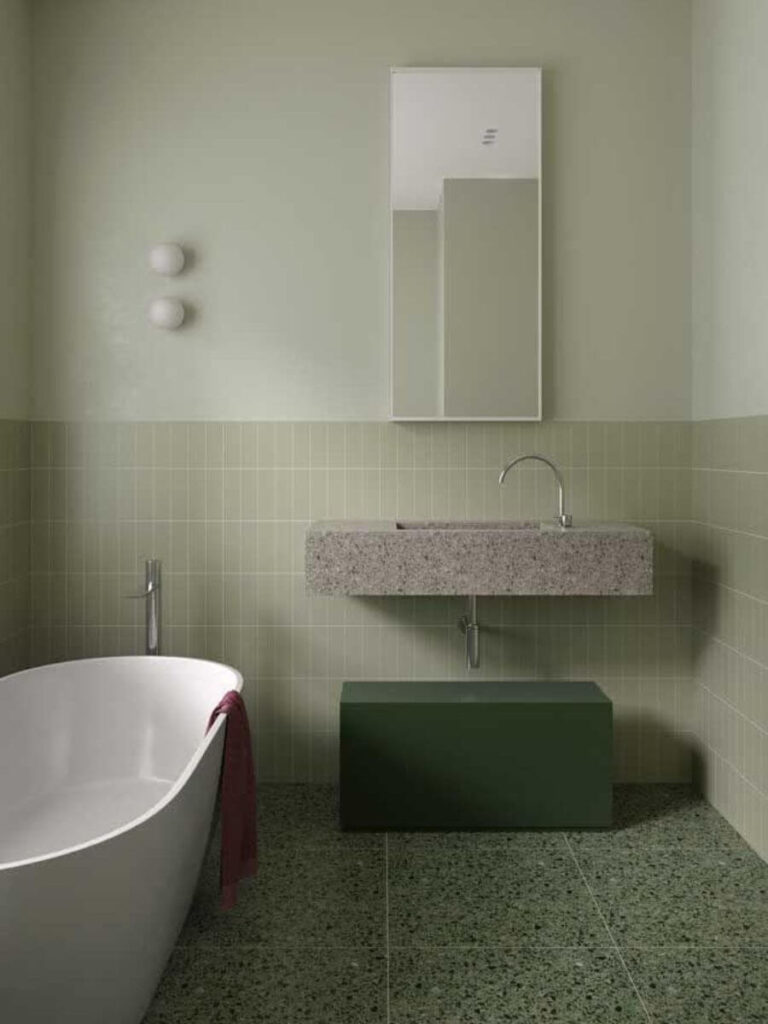
- Light Green + Dark Green – warm, muted and soft earth tones. Using one color in different value (dark or light) is most of the time a safe and harmonious choice.
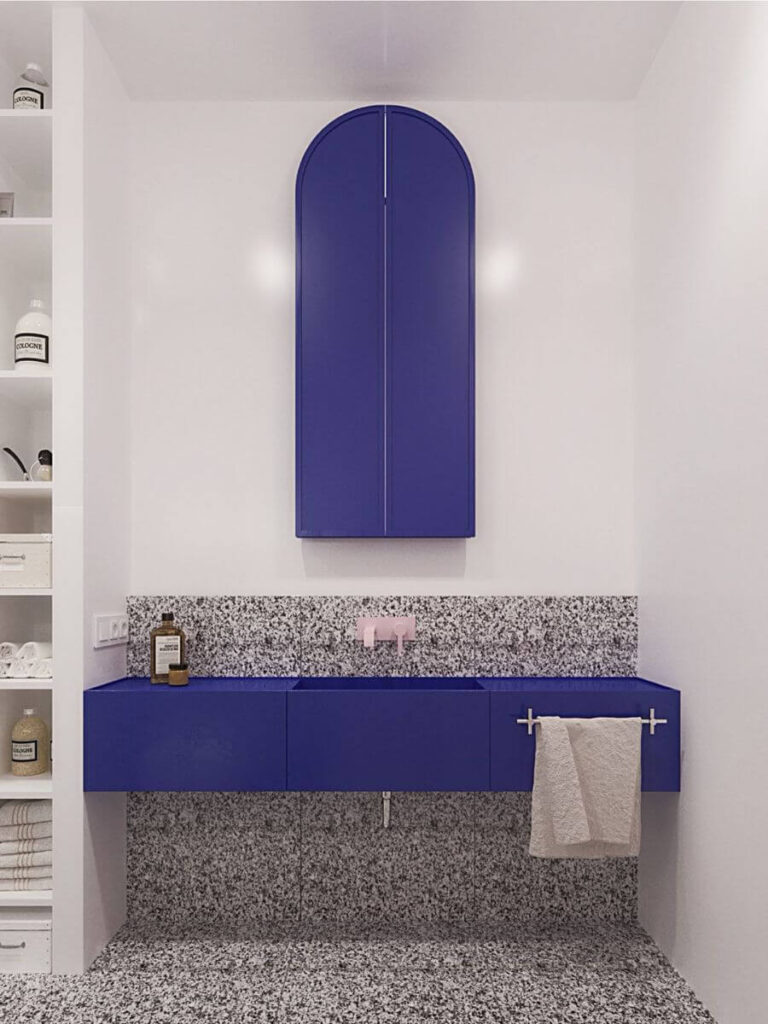
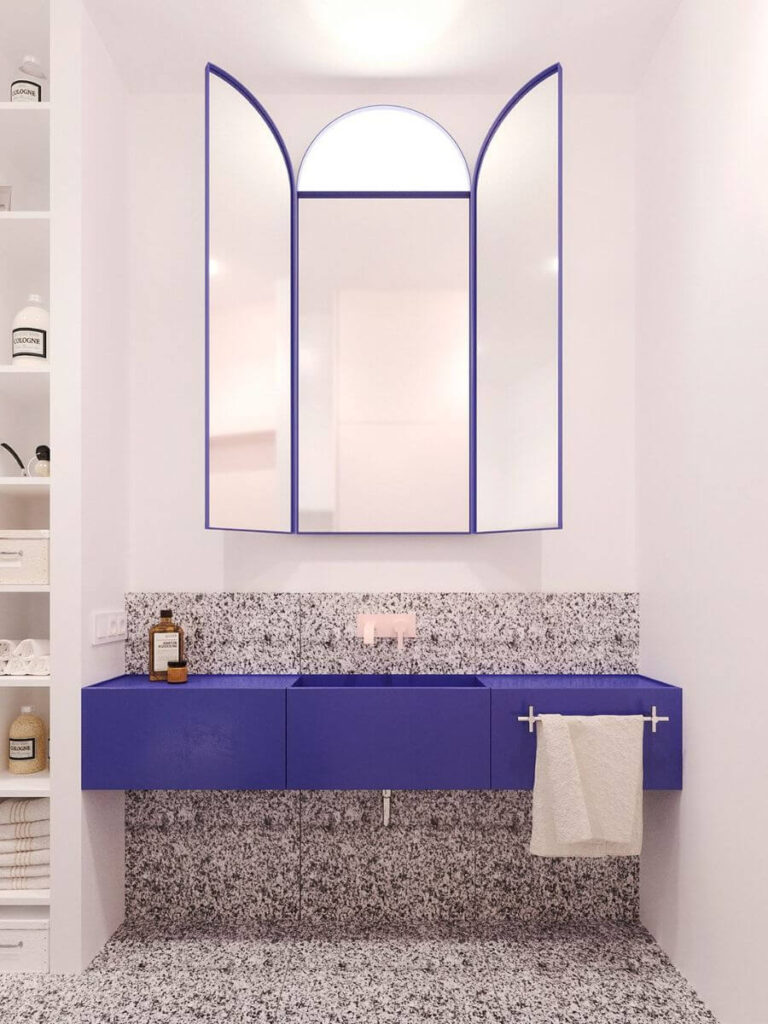
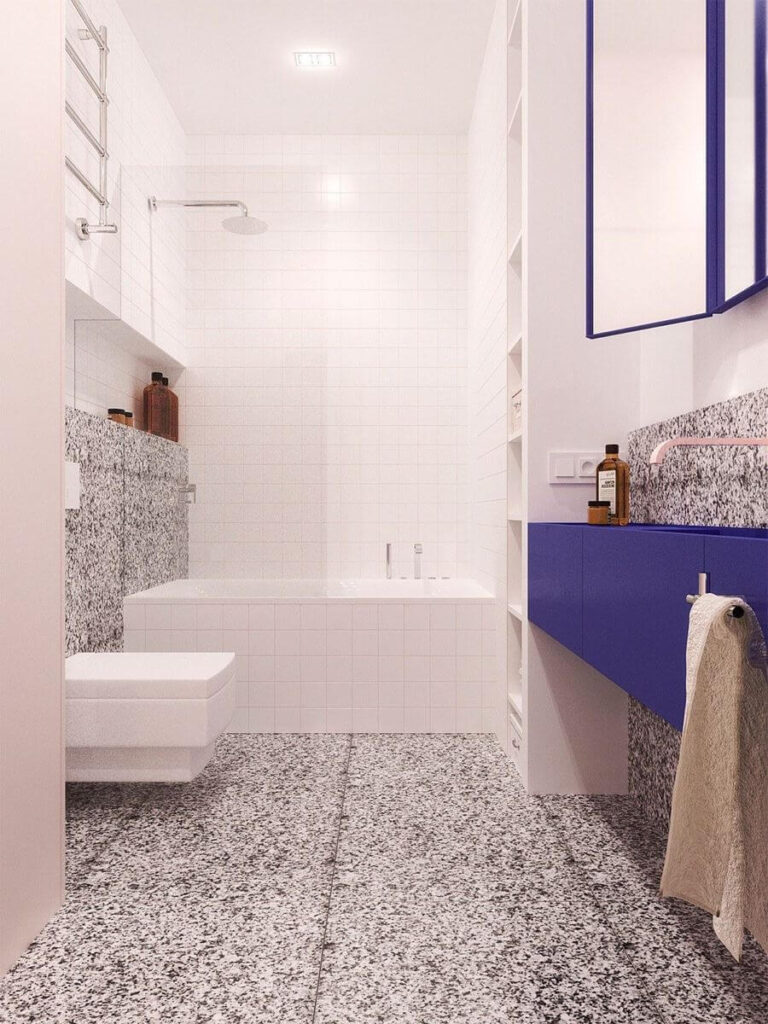
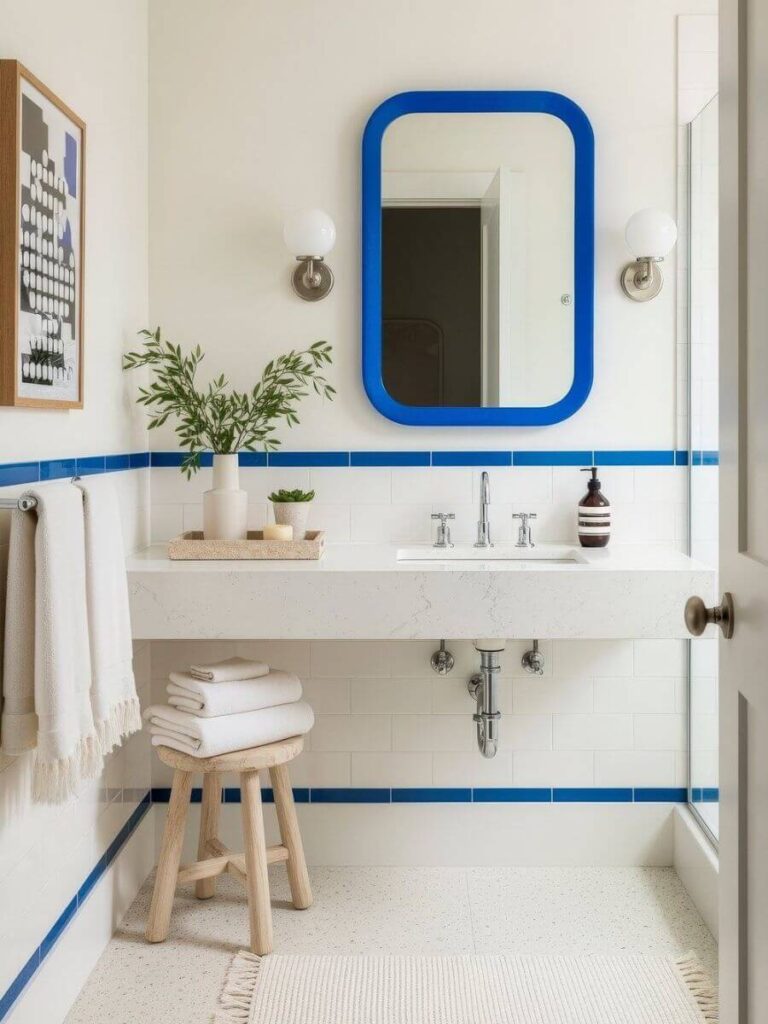
- White + Cobalt – a fresh, clean pairing. Bright color with white tile feels crisp and structured. The reverse can work too — colorful tiles with white or dark grout create a confident, graphic look.
Beautiful deatails – black and white with a vivied blue. Found it here. Beautiful deatails – black and white with a vivied blue. Found it here. Beautiful deatails – black and white with a vivied blue. Found it here. Found it on Pinterest…
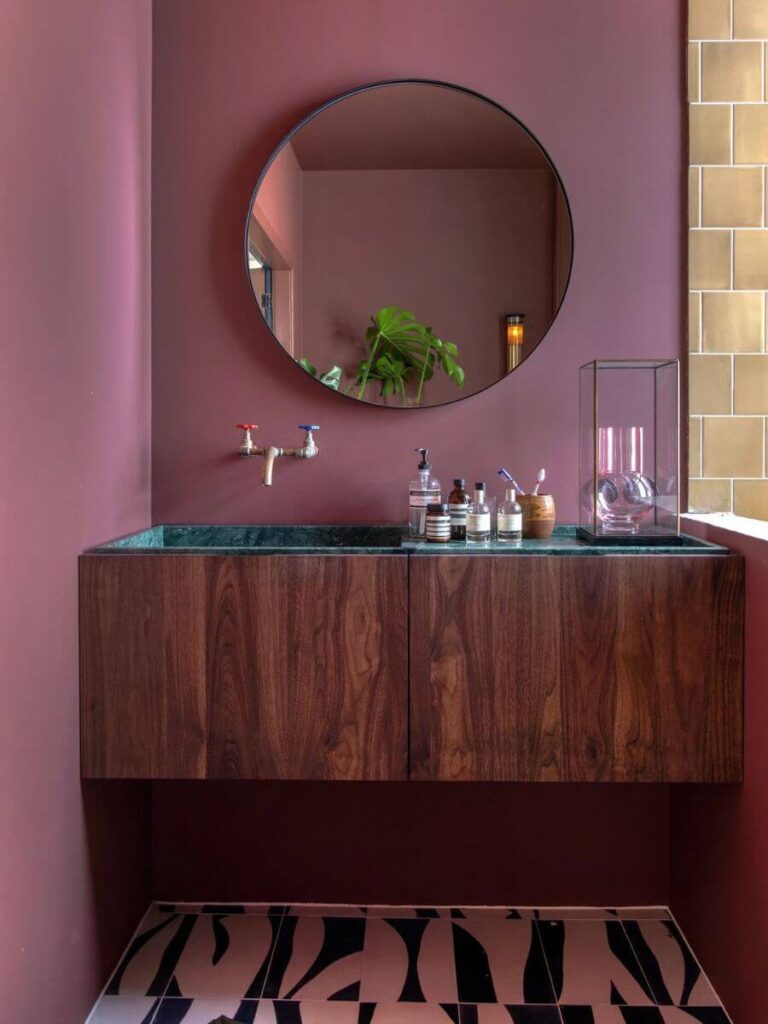
- Blush + Bordeaux – romantic and sophisticated. You can keep it tonal (soft pinks layered) or emphasize the contrast with deeper accents.
Keep the 70/30 rule in mind!
About 70% of your space should feature the base color, and 30% the accent. This balance keeps your eye calm while still offering personality.
If you choose one dominant color for walls, tiles, and paint — like white, dusty green, or terracotta — make sure the shades vary in lightness. Muted tones can be used on larger surfaces, while darker shades should stay as accents to maintain depth and balance.
Knowing color harmony and using it in bathroom color schemes is quite deliberating — knowing why each tone is there and what it adds to the space.
Common Mistakes to Avoid
Here are a few pitfalls I often see — short, simple, and easy to remember. We already touched on accessories, so this is a quick recap plus a few more points:
- Too Many Colors: Stick to your base and accent, keep it intentional.
- Accessories Without Anchor: Accessories only work if they echo a color already in the room. Random pops create clutter.
- Ignoring Lighting: Color changes dramatically under different light. Test before committing.
- Same Color Everywhere: All-white surfaces can feel lifeless. Add variation in tone, texture, or subtle accents to keep depth.
Keeping these in mind will help your small bathroom color ideas feel confident, cohesive, and functional.

FAQ – Small Bathroom Color Ideas
What color makes a small bathroom look bigger?
Light, soft tones are the safest choice if you want to visually expand your bathroom. Whites, creams, pale blues, and soft pastels reflect more light and create a sense of openness.
You can still introduce an accent color in small doses — for example, a bold colored niche or vanity — without closing in the space. In small bathroom color ideas, balancing light tones with subtle accents is often the most effective approach.
Can I use dark colors in a small bathroom?
Yes, dark colors can work beautifully, but they require careful placement. Use them on a single wall, in a niche, or on the floor, and always pair with lighter surfaces to maintain brightness.
Dark accents can add depth and drama without making the room feel cramped, especially when the main base color keeps the space open.
What are the timeless bathroom color schemes?
Neutral palettes with a twist remain timeless. Like beige + terracotta, white + blue, or soft greens with natural materials — tend to age well. Timeless schemes usually balance a calm base with thoughtful accents, making the bathroom feel deliberate and elegant rather than trendy.
How should I choose accent colors for my bathroom?
Accent colors should echo your main tones in some way — in brightness, temperature, or vibrance. Avoid random pops that clash. Accessories only work if they echo existing tones. Whether it’s a towel, a vase, or a fixture, the accent should feel connected to your base color to maintain harmony.
Can I mix patterns and colors in a small bathroom?
Yes, but sparingly. Stick to one patterned element — like a wallpapered wall, mosaic niche, or patterned floor tile — and repeat one of its colors elsewhere in the room. This keeps the look intentional rather than chaotic.
Can colored grouts really change the look of a bathroom?
Absolutely! Grout is a subtle but powerful detail. It can unify a patterned floor, make tiles pop, or reinforce your base and accent color scheme. Choosing the right tone keeps the space clean and cohesive.
How do I make small bathroom color ideas practical for maintenance?
Focus on surfaces that are easy to clean and colors that hide marks wisely. For example, white grout shows every drip, while mid-tone or darker grouts can be forgiving. Matte finishes hide smudges, and gloss surfaces reflect light but show water spots.
Thoughtful selection ensures your bathroom stays beautiful with minimal effort.
Is it okay to experiment with bold colors in a small bathroom?
Yes — the bathroom is the perfect place to be brave. Since it’s a small, functional space, trying a bold wall, colored tile, or unique fixture can make a big impact. Just remember to balance it with neutral tones for clarity and harmony.
Final Thoughts: Be Brave, But Keep It Clean
When it comes to small bathroom color ideas, my philosophy is simple: aim for simplicity, keep it tidy, and always think about function. Every choice — from tiles to grout, paint to accessories — should earn its place. That’s how you create a space that feels confident, calm, and easy to maintain.
If you’ve followed my earlier articles on bathroom remodel, like my guide to colored grouts or tips for minimalist bathroom storage, you know I value thoughtful details over random decoration. The same principle applies here: plan your colors, layer them intentionally, and keep clutter hidden.
The ultimate goal is a bathroom that is both beautiful and practical. Proper ventilation, easy-to-clean surfaces, and smart storage all play a role — for more on that, check out my post on 7 Minimalist Small Bathroom Ideas For Simple Living.
Color also has an emotional side. Modern research in color psychology shows that beyond common stereotypes, certain tones can actually affect mood, energy, and even relaxation. If you like, I can dive into this topic in a future article — tell me in the comments!
Now I’d love to hear from you: what colors does your bathroom have, and how do you feel about them?
Don’t forget to save this post on Pinterest for your next renovation inspiration.