Best Grout Colors for White Tile – My White Subway Tile Bathroom
How I Have Found The Best Grout Colors for White Tile in my Bathroom
Finally, we have found the best grout colors for white tile in our own white subway tile bathroom! And honestly? It happened almost by accident.
When our tiler showed up a few weeks ago, he refused to use a ladder and left the top rows unfinished on two walls. As I stood there staring at the half-done job, a wild idea hit me: what if the grout matched the ceiling color?
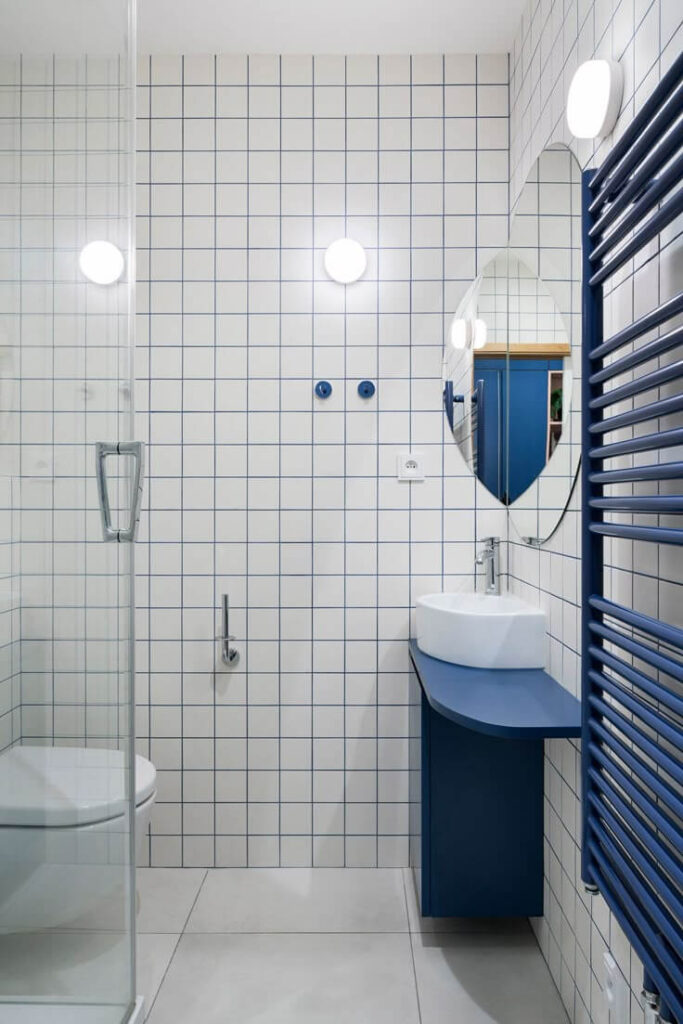
Blue was the first thought that popped into my head, but of course, I had to go down the rabbit hole and explore every possible option—from black grout bathrooms to colored grouts and even more extreme choices – you will see. And an other article was born, based on the endless possibilities, how you can add color to your bathroom.
Luckily, the layout pattern for the subway tile was long ago decided.
– If you are still browsing, read my blogpost about subway tile patterns, and how they work in small spaces!
– If you need practical advice in deciding bathroom tile combination, read this article.
So, in this post I’m sharing my entire collection of grout ideas, inspiration photos about grout colors for white tile and lessons I’ve picked up along the way.
You’ll see what different grout shades actually do to a space, what to consider before making your choice, and how this one small detail can totally change the vibe of a bathroom.
Update: We are already finished grouting! Watch the result here!
If you’re into minimalist bathrooms, check out my earlier stories from my studio renovation project. And once you’re done deciding on grout color, don’t miss my collection of bathroom storage ideas—because choosing the right finishes is just the first step toward creating a functional, stylish space.
Why Grout Color Matters
When people first hear grout, they usually think of it as something purely technical—just the stuff that seals tiles and keeps water out. And yes, as an architect, I’ll be the first to say that’s an important role. But grout is so much more than a construction detail. The grout colors for white tile are actually design-defining.
Think of it this way: grout frames each tile, sets the rhythm of the pattern, and ultimately shapes how the whole bathroom feels. The same white subway tile bathroom can look totally different with crisp black lines, soft gray shading, or even playful color. Grout can make your space feel bigger or smaller, cleaner or bolder, modern or vintage—all without changing a single tile. Not to mention, how the subway tile pattern matters, how the tiles are laid (more info and inspiration here!).
From an aesthetic perspective, grout color also defines the mood. Light tones blend seamlessly and give an airy, minimalist vibe, while darker or colorful choices create drama and focus. And yes, it even influences maintenance—dirt and soap scum don’t show up the same way on every shade.
Later in this post, after we explore all the inspiration photos and grout color ideas, I’ll share a detailed list of what to consider before making your final choice. Think of it as your roadmap for choosing the best grout color for your own tiles.
Things to Consider Before Choosing a Grout Color
Before we dive into all the gorgeous inspiration photos, let’s pause for the practical side. Choosing grout colors for white tile isn’t just about what looks pretty—it’s about how it works in your bathroom. Here are the key things to keep in mind:
- Maintenance: Light grout can stain more easily, while darker tones hide marks but may fade or haze over time, hard water, limescale can leave trace too.
- Blend vs. Contrast: Do you want your grout lines to disappear into the background or stand out as a bold graphic feature?
- Room Size & Light: In a tiny bathroom (like mine), grout choice can make the space feel larger and brighter—or more intimate and dramatic.
- Tile Shape & Pattern: Grout frames the pattern. A herringbone layout feels totally different with crisp black lines than with soft gray shading.
- Mood: Calm, bold, or playful? Your grout color sets the tone long before the towels or mirrors.
- Flexibility: Don’t stress too much—DIY grout paint exists, so you can always adjust later if your first choice feels off.
In my own small white subway tile bathroom, these considerations were huge—especially since our light is tricky and every little design detail shows. Later in this post, I’ll break down step by step which grout colors work best for different tile characteristics, so you can skip the guesswork.
12 Grout Color Options with White Tile
Here is a collection of all the existing grout colors for white tile. Each color creates a completely different atmosphere — from seamless and calm to bold and dramatic. To make it easier, I’ll break down each option with the same structure:
Vibe & style fit – what feeling the grout color creates
Pros & cons – both design and maintenance
Best for – which bathroom or style it works in
Read my tips after this part, how to choose the best for YOUR white tile!
White Grout with White Tile
The classic choice.
White-on-white creates a seamless, spa-like atmosphere — perfect for minimalism or making a small bathroom feel larger. It’s crisp, bright, and clean-looking, but it does come with high maintenance.
Stains and yellowing can creep in over time, so using epoxy grout or sealing is essential. For anyone who loves a “blank canvas” look, this is timeless.
(If you’re also planning a compact space, you’ll find more tricks in my small bathroom ideas post.)

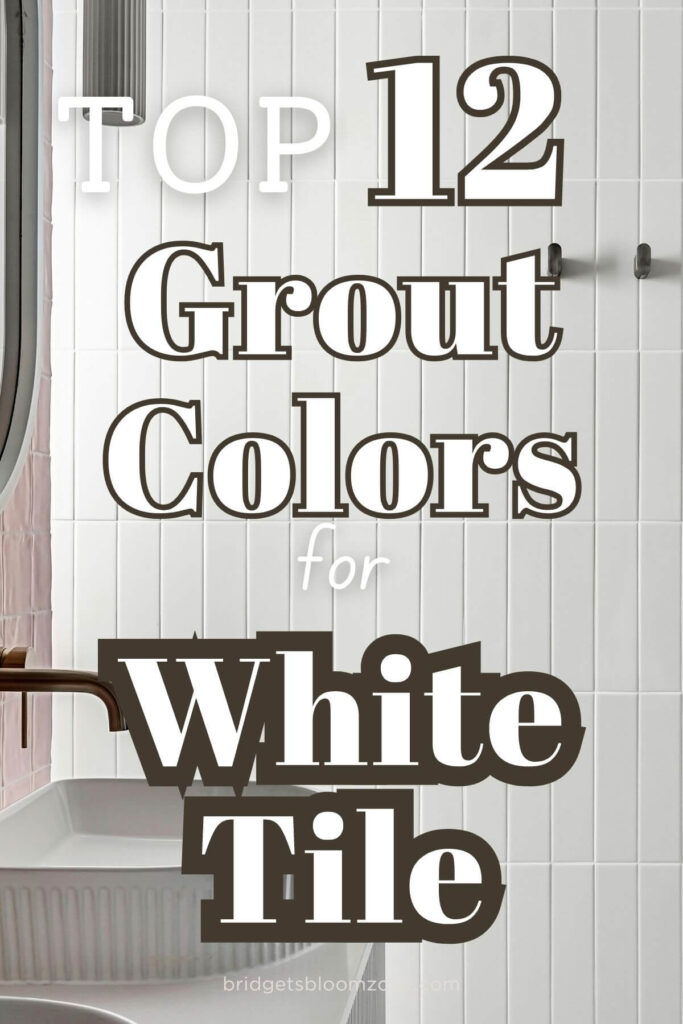
Clean modern space: white grout on vertical tiles creates a serene, streamlined aesthetic, paired with soft-toned fixtures for calm. Foto by Lisa Anna Classic bathroom: hand-made style white tiles with matching white grout, a pedestal sink, and artwork for a minimalist, timeless look. Source
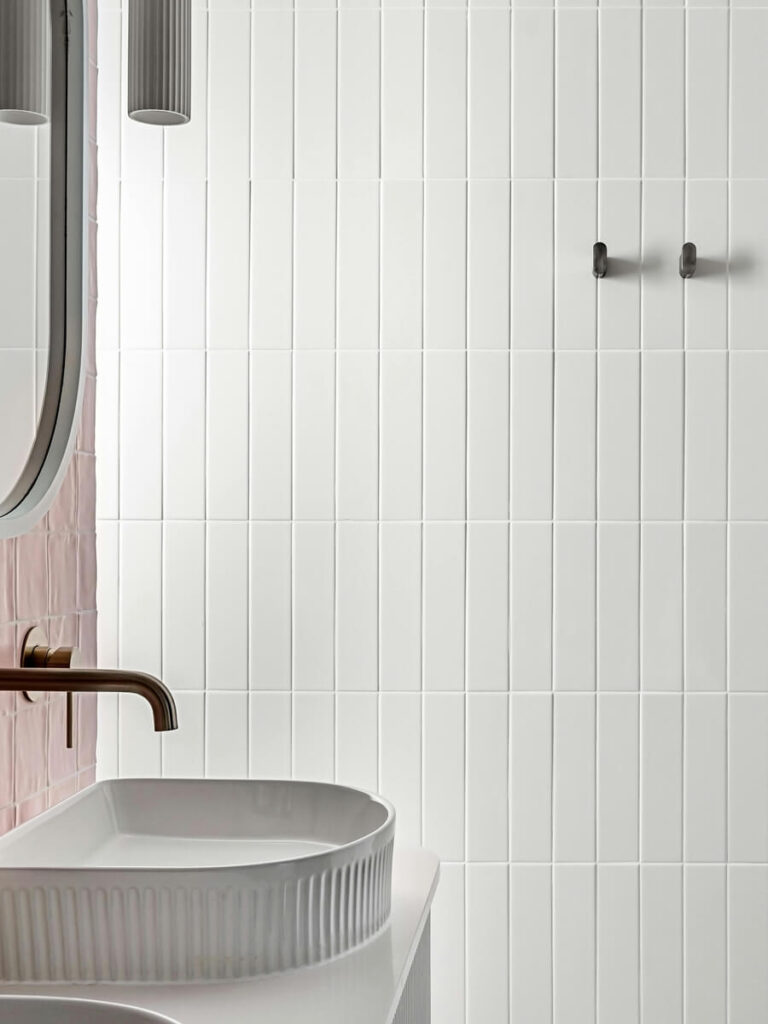
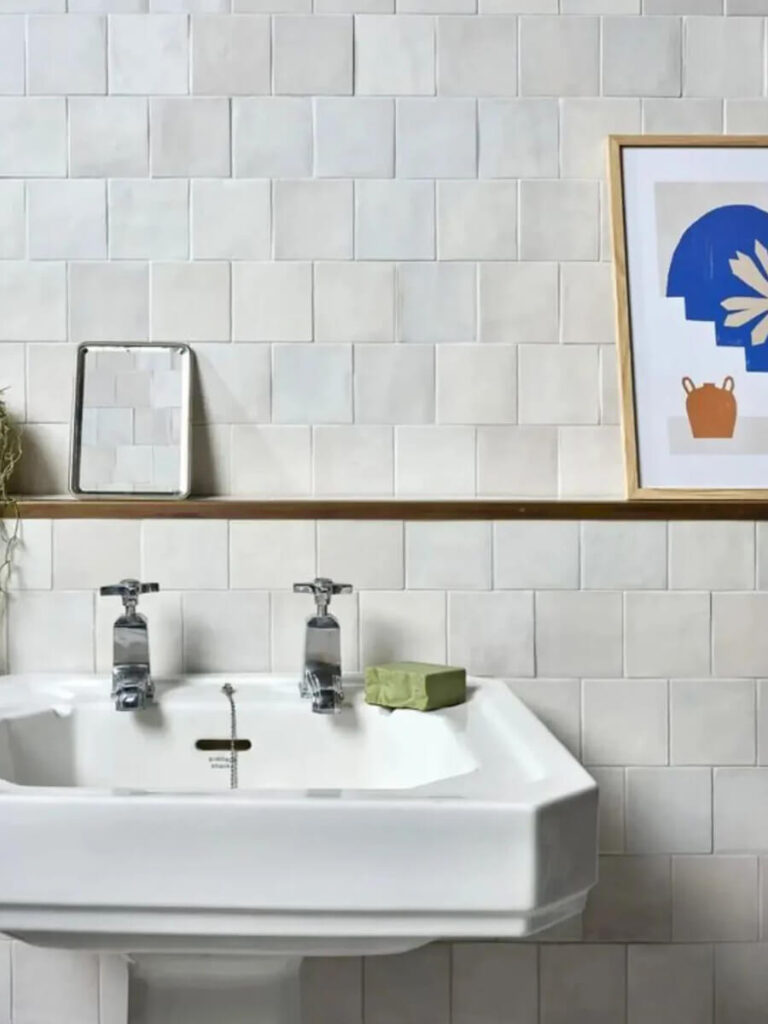
Vibe & Style Fit: Seamless, spa-like, and bright. Creates the illusion of bigger space, perfect for minimalists.
Pros & Cons: Expands the room visually, but stains easily and may yellow over time. Epoxy grout or high-quality sealants help keep it fresh. Grout paint can revive it later.
Best For: Minimalist, Scandinavian, or calming white subway tile bathrooms where brightness is the priority.
Black Grout with White Tile
If you’ve ever admired a black grout bathroom, you know the effect: bold contrast, graphic grid, and that iconic NYC subway vibe.
It works beautifully in industrial or vintage-inspired designs and holds up better to dirt than white grout. The only caveat? Hard water can leave a haze, so sealing helps.
This look demands confidence — and rewards it with serious character.
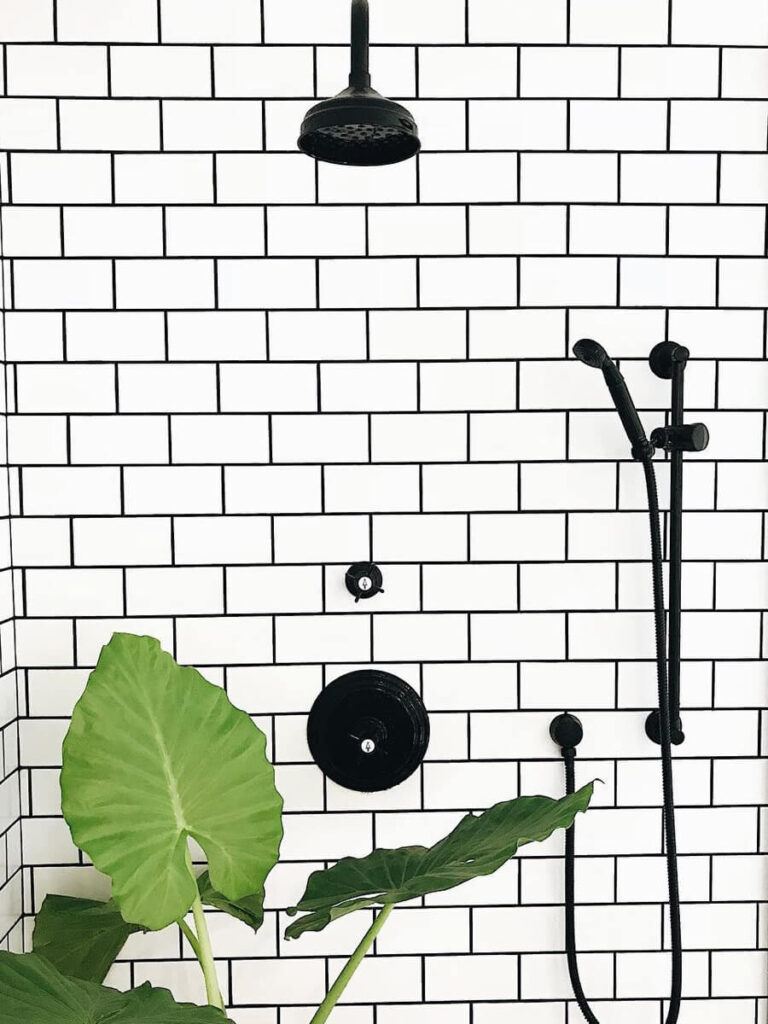
Sleek bathroom styling: black-and-white color scheme, modern vanity, geometric tile pattern, and bold black accents throughout. Foto: Itay Benit, 124sqm Apartment Industrial-inspired bathroom: white grid tiles with dark grout, black fixtures, and a practical wall-mounted sink create a sleek, modern look. Foto: Julia Brunet Graphic tile meets warm taupe paint: white square tiles outlined in black, complemented by a round mirror and decorative dried plants. Source Modern bathroom featuring white square tiles with bold black grout, a round mirror, taupe-pink painted walls, and natural decor details. Source

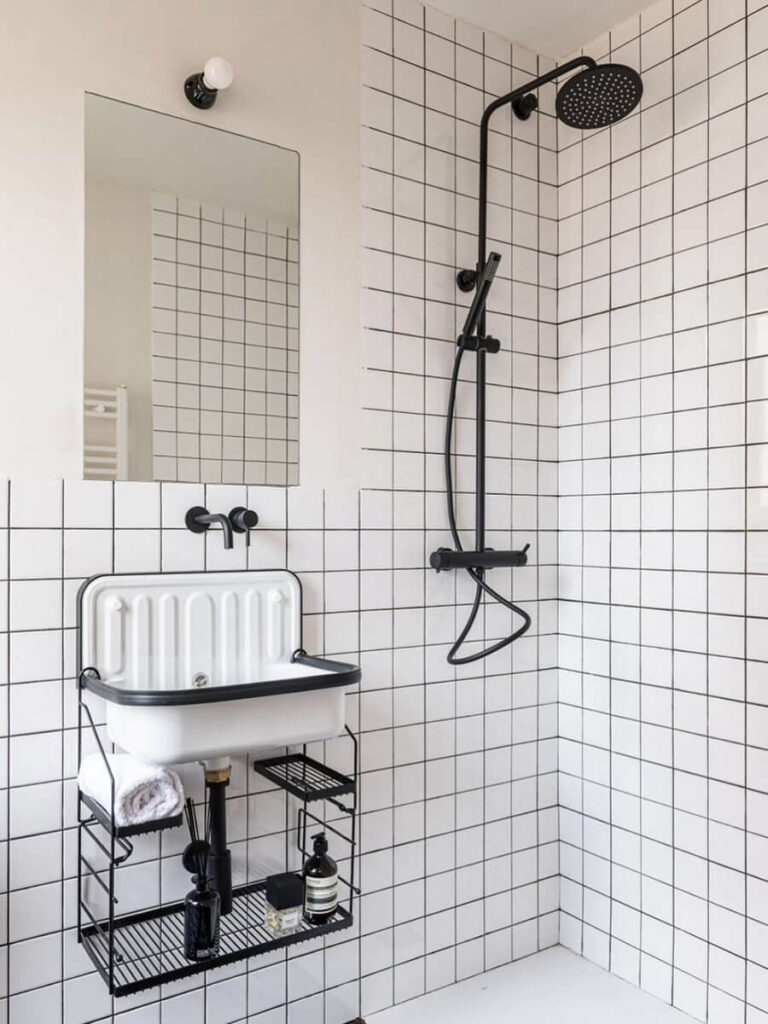
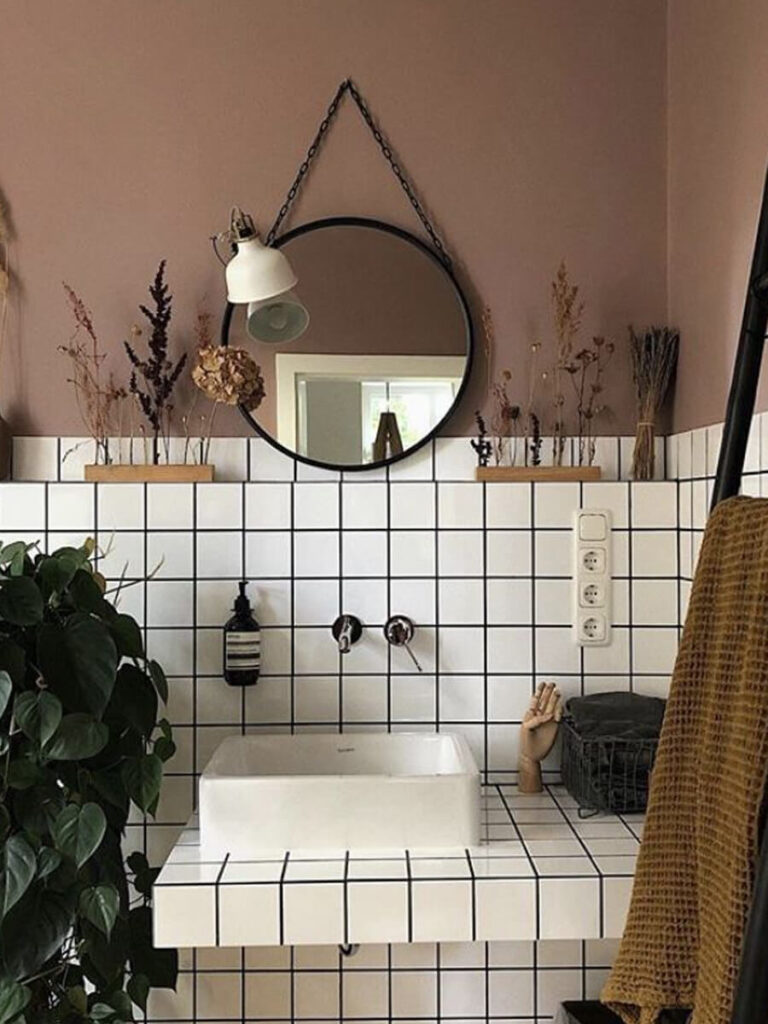
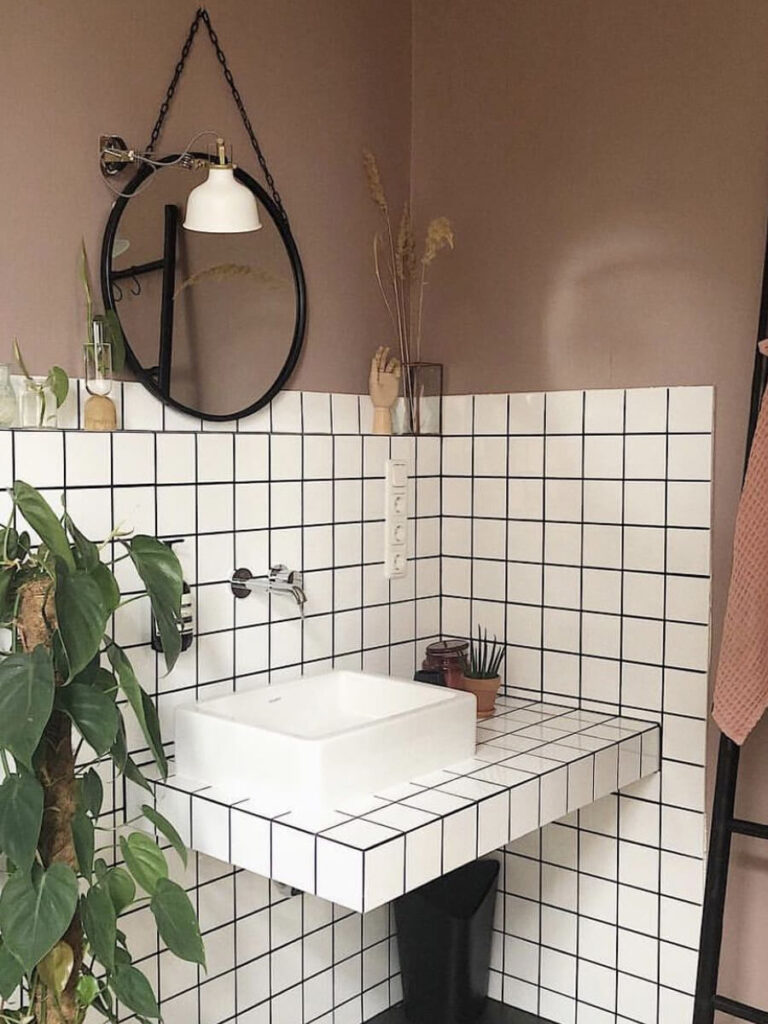
Vibe & Style Fit: High-contrast, graphic, and bold. Evokes the classic NYC subway look or industrial chic.
Pros & Cons: Easier to maintain than white grout, but water spots or haze can show. Needs proper sealing.
Best For: Larger bathrooms, statement showers, or vintage-style spaces where a crisp grid enhances character.
Gray Grout with White Tile
The safe middle ground. Still a classic.
A grey grout bathroom feels practical, modern, and slightly softer than stark black. Depending on the shade, it can lean closer to white (subtle, calm) or to charcoal (stronger presence).
Gray hides dirt well, making it a favorite for everyday use in small bathrooms. Just avoid going too pale — you don’t want it to look unintentionally dirty against the white tile.
Modern shower area: vertical white tiles with subtle grey grout, steel fixtures, and integrated shelf for a stylish, functional finish. DESIGN Mokume Design Studio PHOTOS Christopher Stark Sleek shower: vertical white tile with grey grout, terrazzo seating, and elegant brass fixtures set a modern scene. Foto from tilecloud and chanchancottage Modern bathroom look: horizontal white tiles with grey grout, dark hardware, wood furnishings, and speckled terrazzo flooring. Take a look at the vertical runing bond battern! Source: Contemporary Bathroom, Melbourne by Lena Bruno
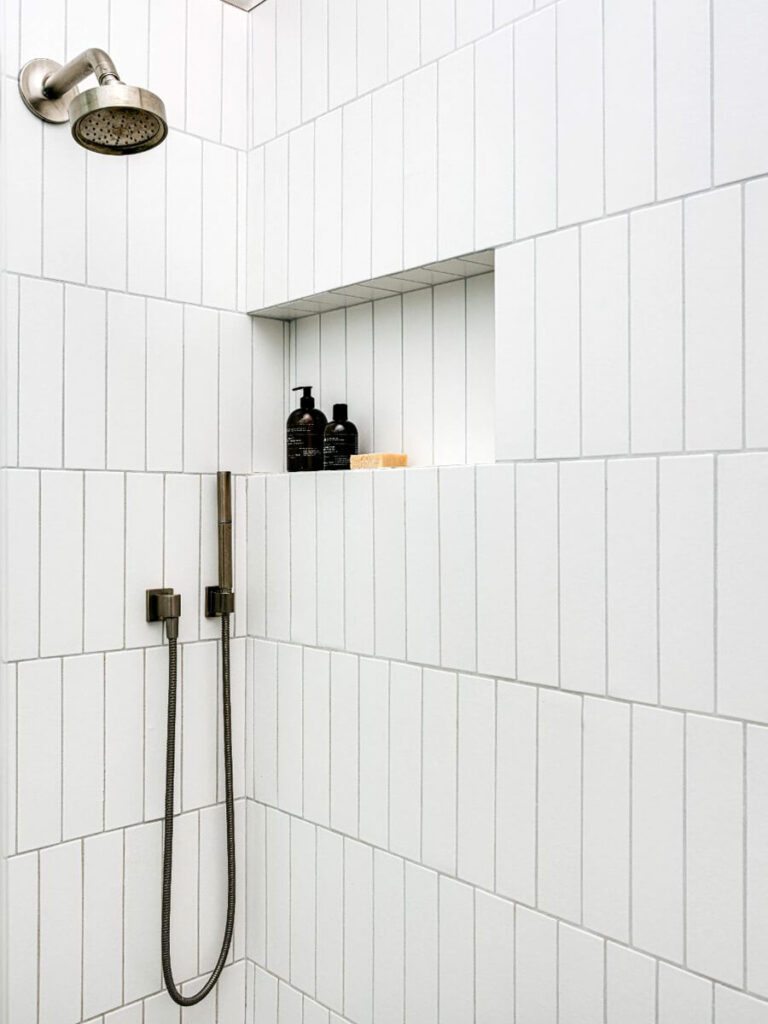
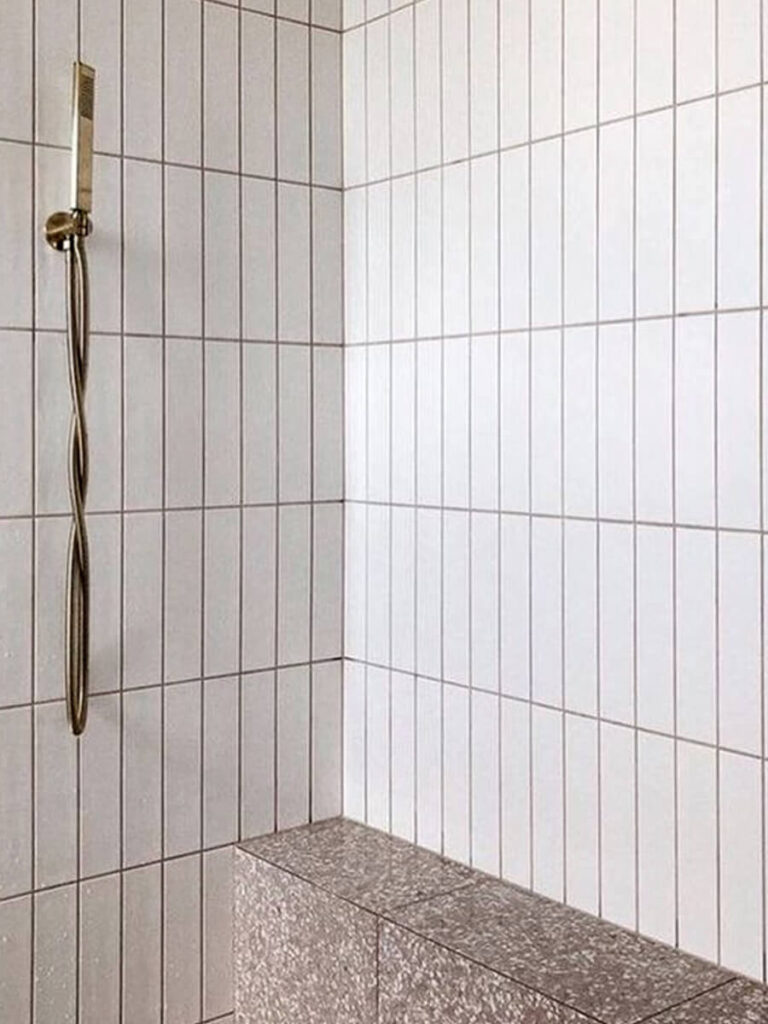
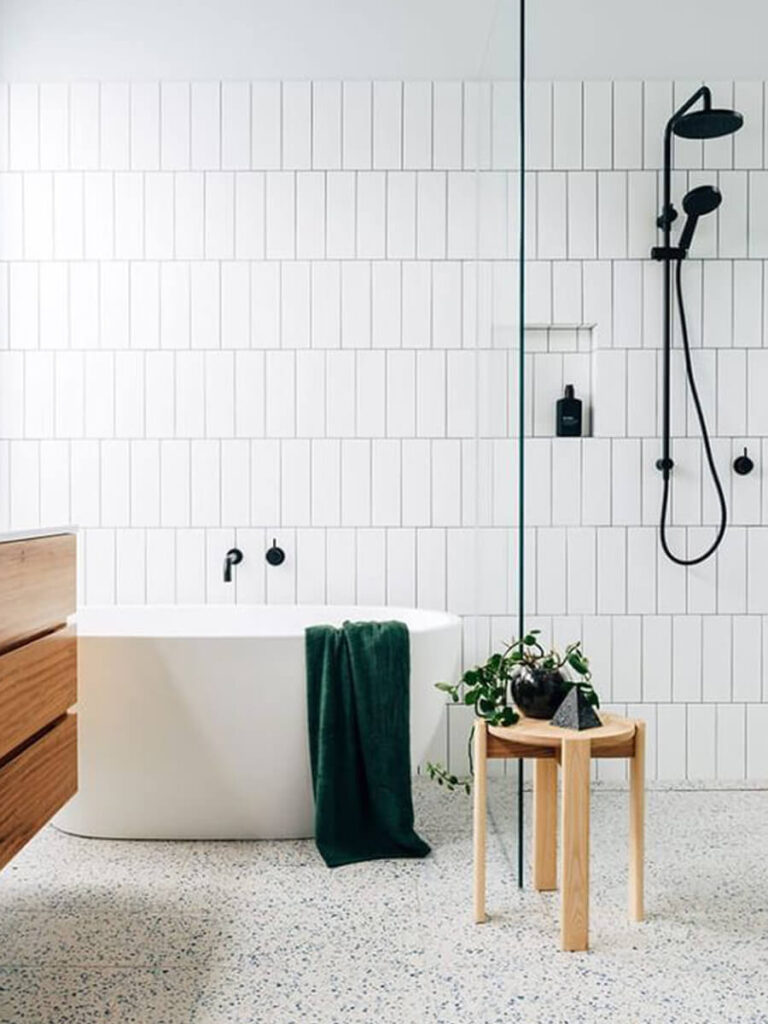
Vibe & Style Fit: Balanced and timeless. Offers contrast without the drama of black.
Pros & Cons: Hides dirt well and comes in many shades (light gray for subtle, dark gray for more structure). Too light can look “dirty” next to pure white tiles.
Best For: Small bathrooms, modern spaces, and anywhere you want versatility with low maintenance.
Blue Grout with White Tile
When choosing vivid grout colors for white tile, here’s where personality comes in.
Blue grout can be calming like water or playful like a pop of color. Navy feels elegant and coastal, while aqua or turquoise leans more fun and fresh. This choice works especially well in bathrooms with terrazzo or patterned floors, pulling tones together.
Plus, medium shades of blue strike a sweet spot in maintenance: not too light to stain, not too dark to show white buildup.
In my own bathroom, blue was the first color that came to mind! It makes even a small bathroom feel lively without clutter. If you are curious, here is my bathroom remodel where you can follow my studio apartment renovation with all the mistakes and tips.
Bright and modern bathroom using white tiles with blue grout and a vibrant yellow painted upper wall and ceiling, lit by stylish round fixtures. Interior of KORA Bakery Contemporary bathroom featuring blue grout grid tiles, matching blue towel radiator and vanity, white and glass fixtures, and round mirror for cohesive style. ARQA – Sixty-Nine / Photographer: Studio Flusser. Found it here! Color-blocked bathroom featuring a graphic grid of white tiles with blue grout, finished with bold pink-red wall paint for a statement look. Project: Loja Flamingo em Festa by Matuarchitetura Minimal white bathroom with blue grouted tiles, accented by a dramatic red mirror frame and pendant light for a contemporary touch. Found on Pinterest, but no source…
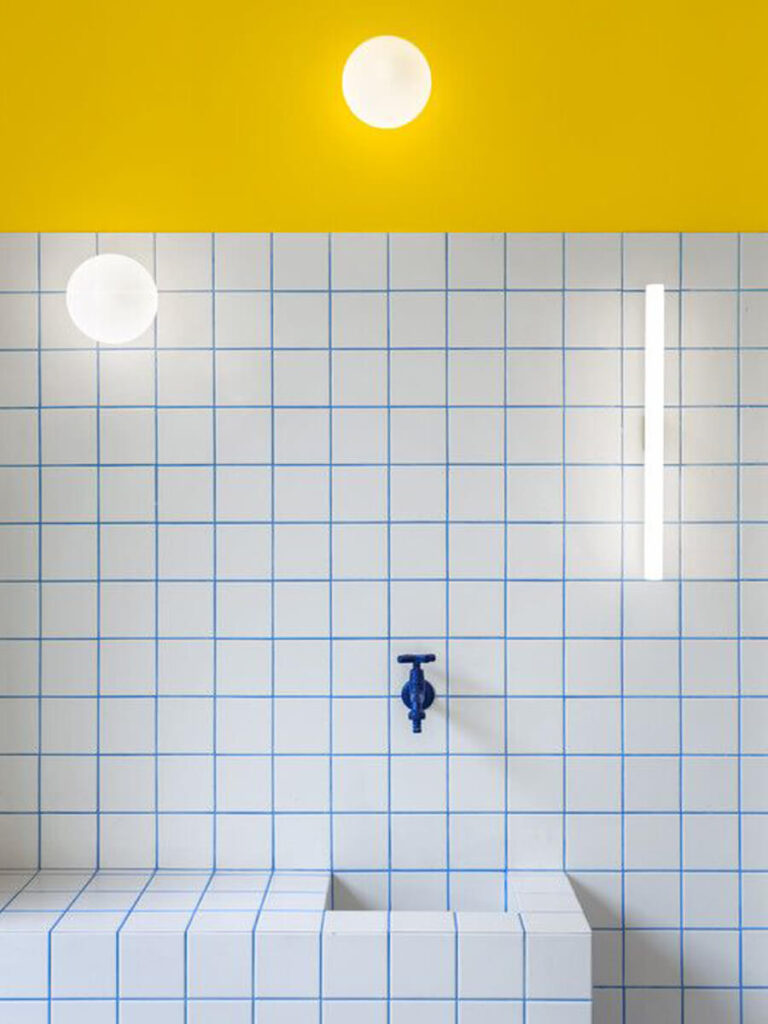
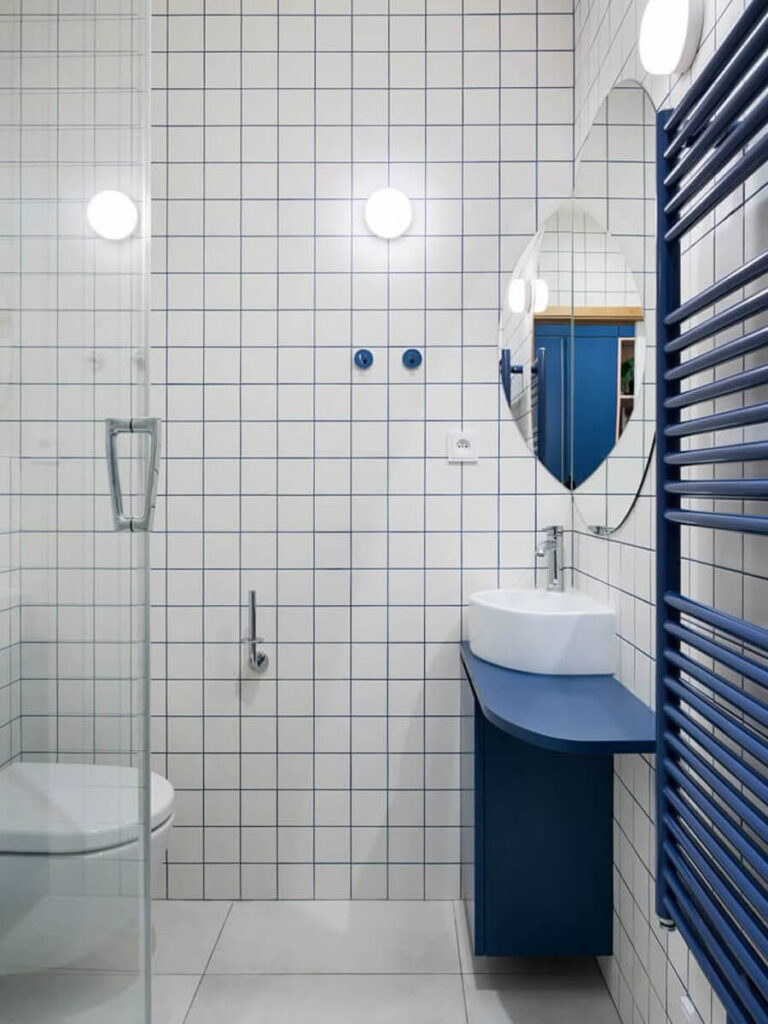
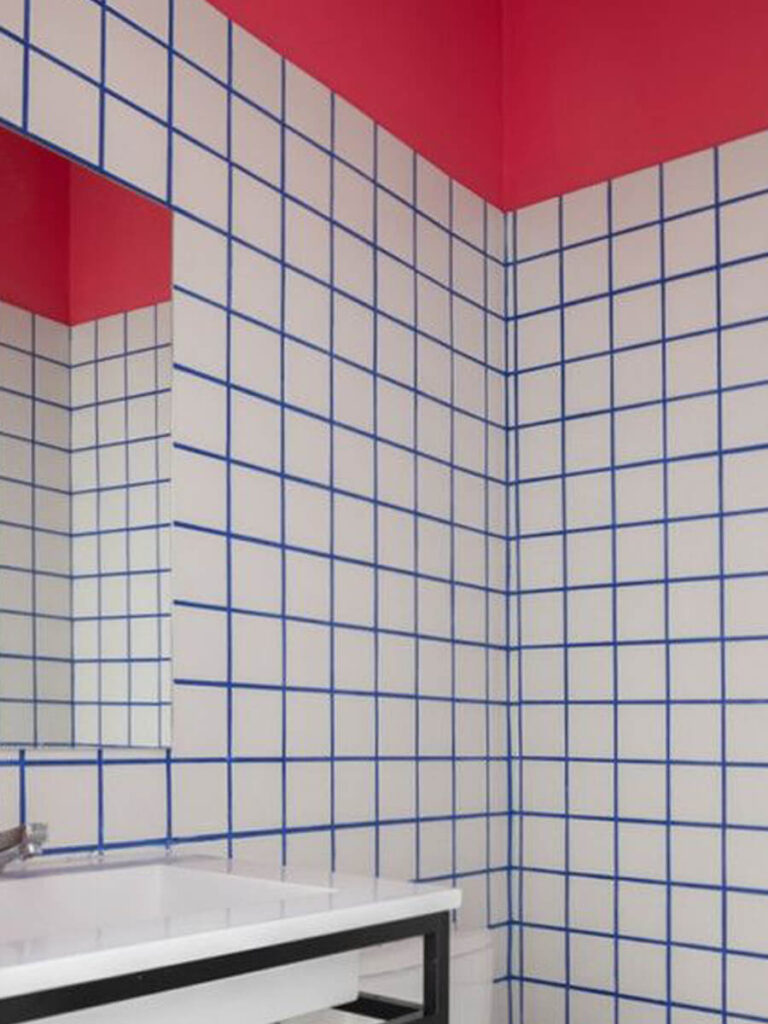
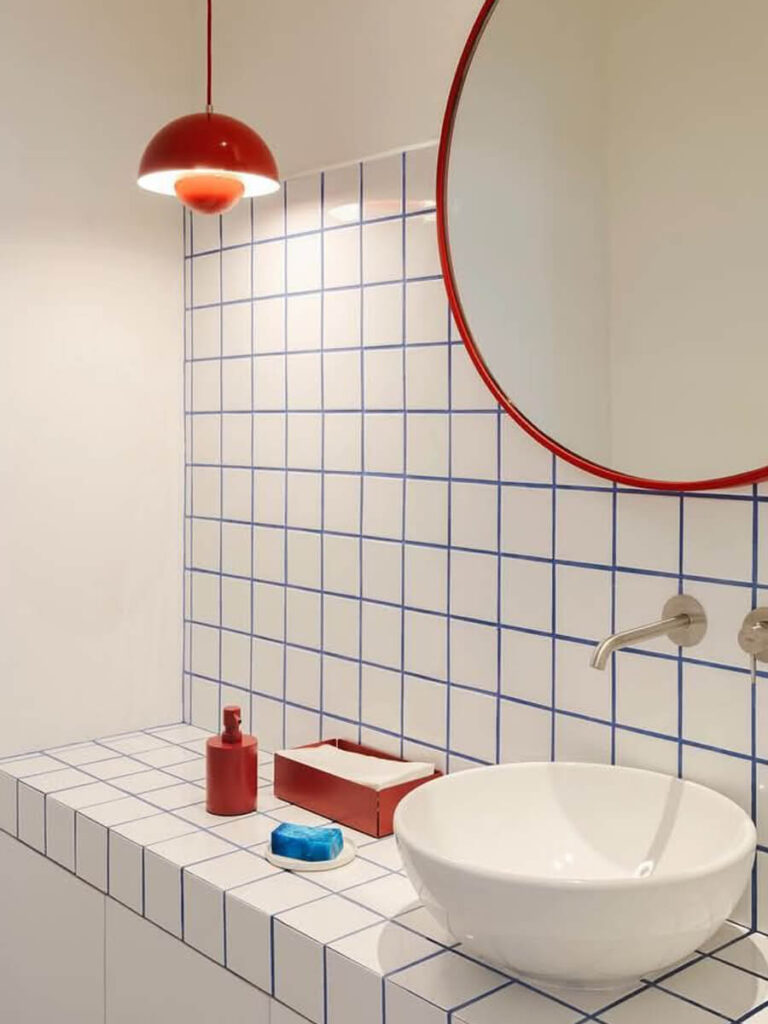
Vibe & Style Fit: Fresh, clean, and slightly playful. Brings water associations into the bathroom.
Pros & Cons: Navy feels elegant, aqua feels fun. Not too dark to show chalky stains, not too light to show dirt.
Best For: Coastal-inspired spaces, contemporary bathrooms, or when you want subtle personality without losing minimalism.
Green Grout with White Tile
Fresh, natural, and just a little unexpected.
A green grout bathroom pairs beautifully with brass fixtures, wood accents, or botanical wallpaper. Muted sage feels soft and minimal, while emerald adds boldness without overwhelming. As an architect, I love how green grout adds a “living” quality to a space — like bringing the outside in.
Bold bathroom design: white tiles with green grout offset by a textured green accent wall, brass hardware, and circular mirror. Foto of Laminex wall panels. Modern eclectic bath: green grout and paint bring out grid tile patterns, with statement pieces like the red round basin and marble counters. Foto of a boutique hotel bathroom. Bright, clean shower: green grout refreshes traditional white tile for a modern, spa-inspired bathroom environment. Found it here. Simple bathroom style: white square tiles with green grout, bold green basin, minimalist faucet, and square mirror create a crisp, modern look. Hill Patru Architects
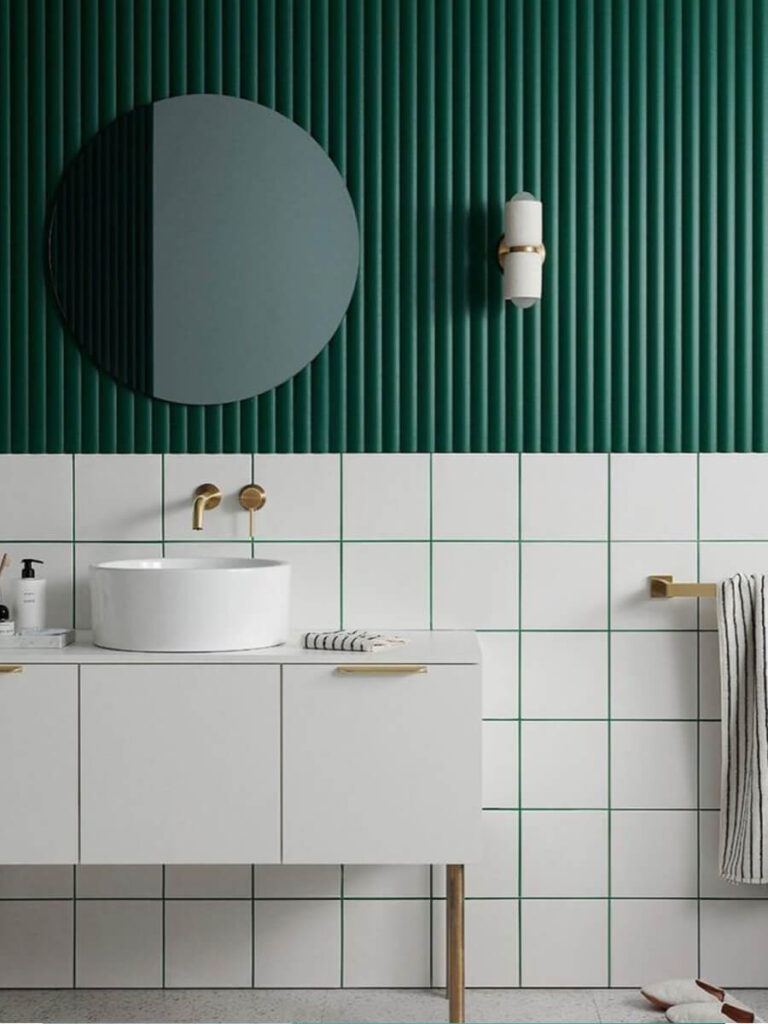
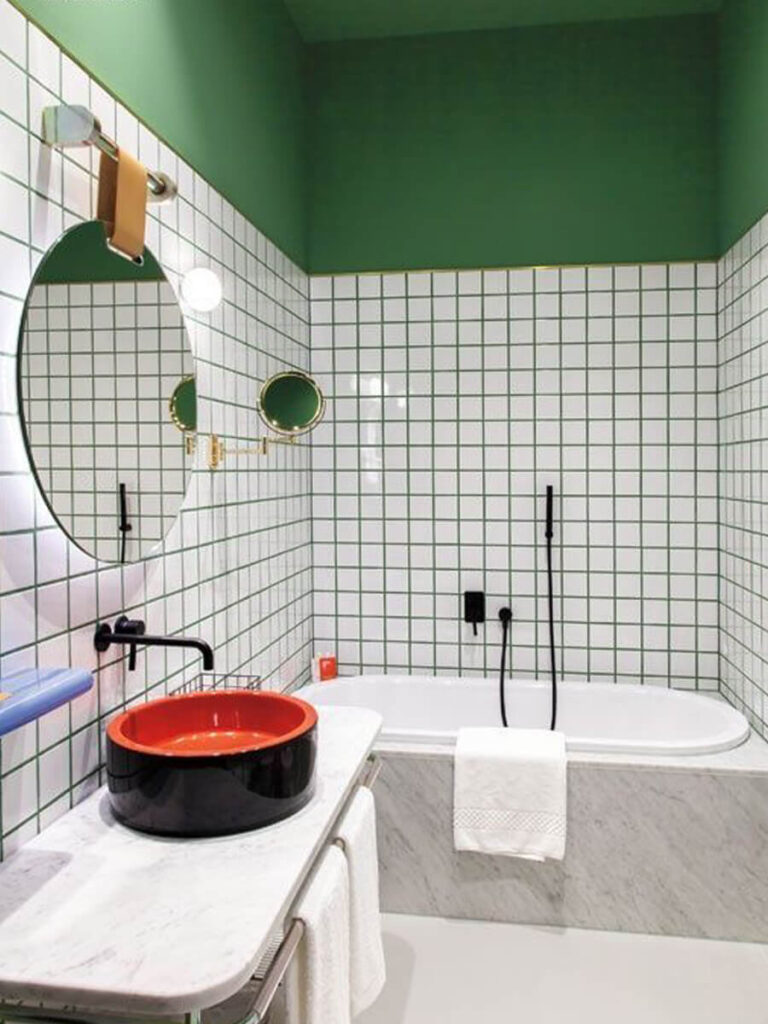
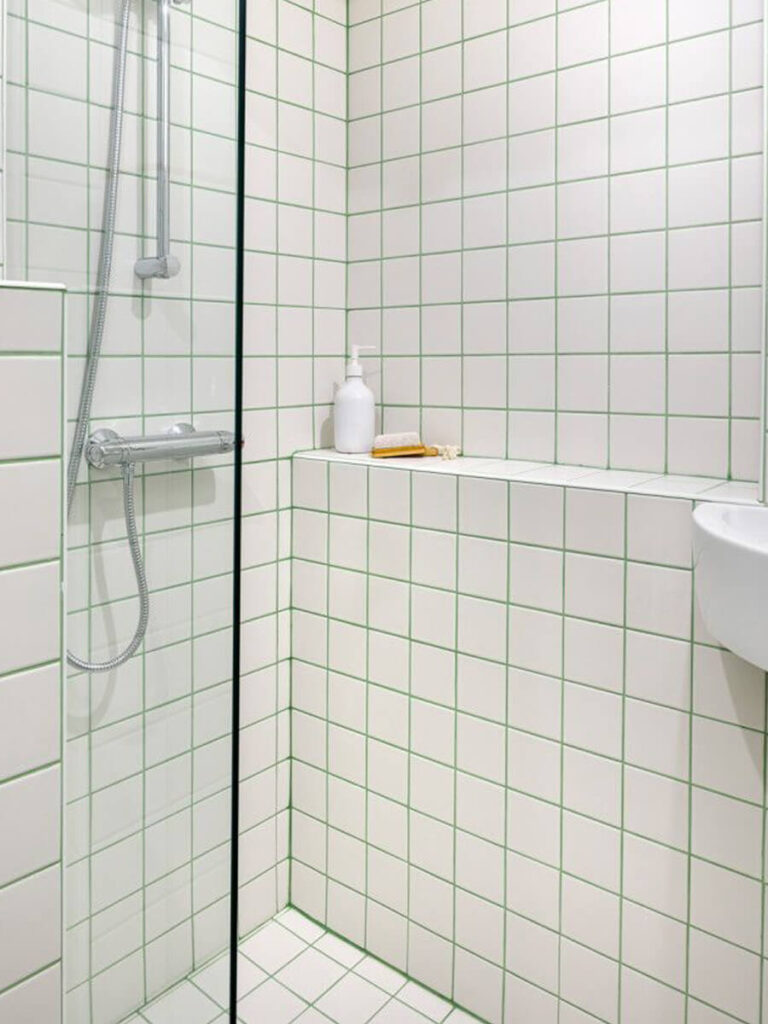
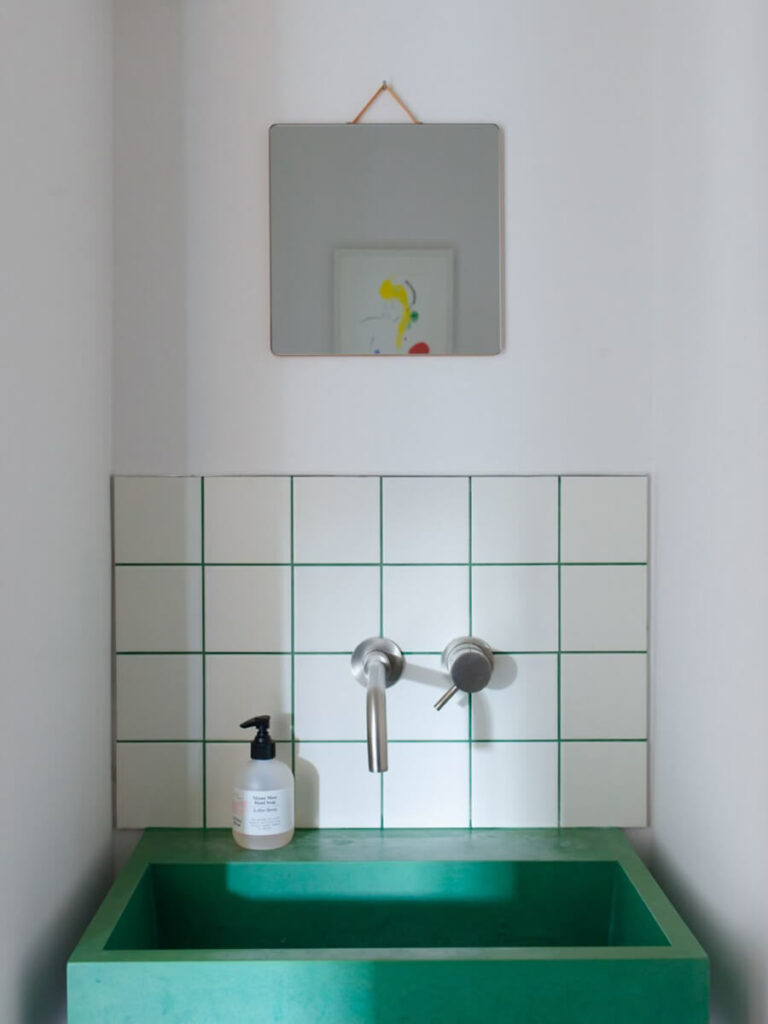
Vibe & Style Fit: Natural, calming, and slightly unexpected. Complements wood, plants, and brass/gold hardware beautifully.
Pros & Cons: Muted sage feels soft and spa-like, emerald makes a bolder statement. Works especially well with handmade-style tiles.
Best For: Botanical or earthy bathrooms, shower niches, or as a subtle nod to biophilic design.
Yellow Grout with White Tile
Bright, cheerful, and warmer than you’d think.
Yellow grout adds personality while still working in minimal or mid-century bathrooms. A softer pastel can feel sunlit and calm, while mustard tones look artsy and modern. This works especially well if you have something else in your bathroom with the same color, as an accent. Grout color can highlight beautifully.
For maintenance, I would suggest to be prepared: this is a very fragile color, every stain can be easily visible. I definitely would choose epoxy grout for this color.
Remodelled bathroom of a 1938 house, with fun yellow grout. Found it here, design by andandand studio. Elevate simple white tiles with striking yellow grout to create a bathroom that feels both modern and inviting. Same project, Design by andandand studio. Pale yellow grout with white subway tiles brings a fresh and cheerful vibe to any bathroom shower. Found it on Pinterest, unfortunately no designer found… A pop of golden yellow grout transforms classic white subway tile into a cheerful and contemporary bathroom statement. Design by Amparallel. Yellow grout lines give crisp white tiles a modern twist, bringing warmth and style to this fresh bathroom makeover.
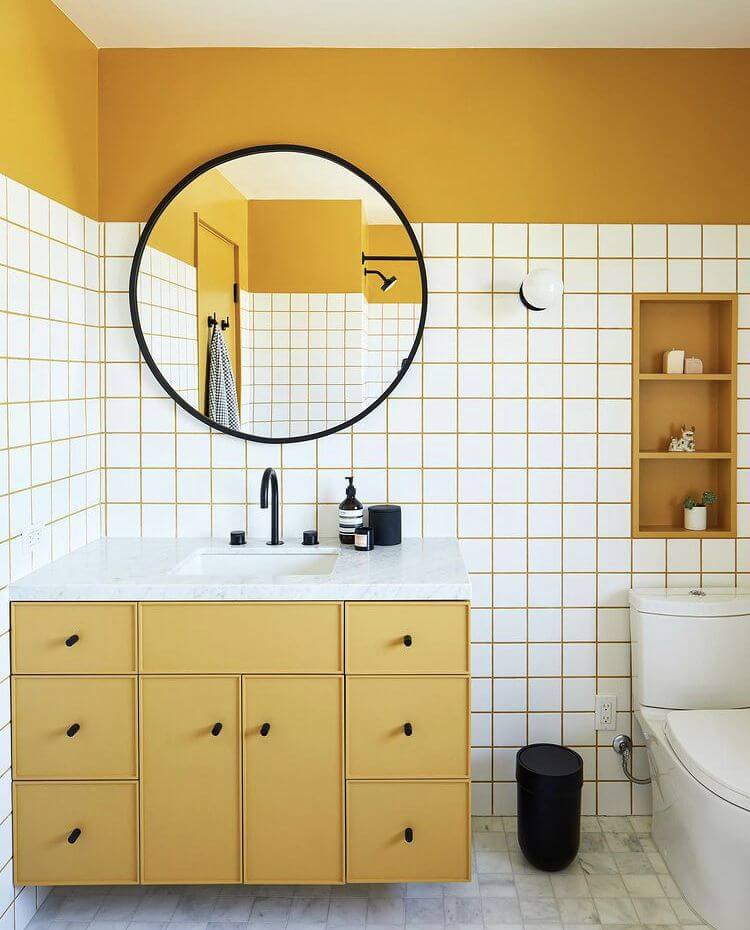
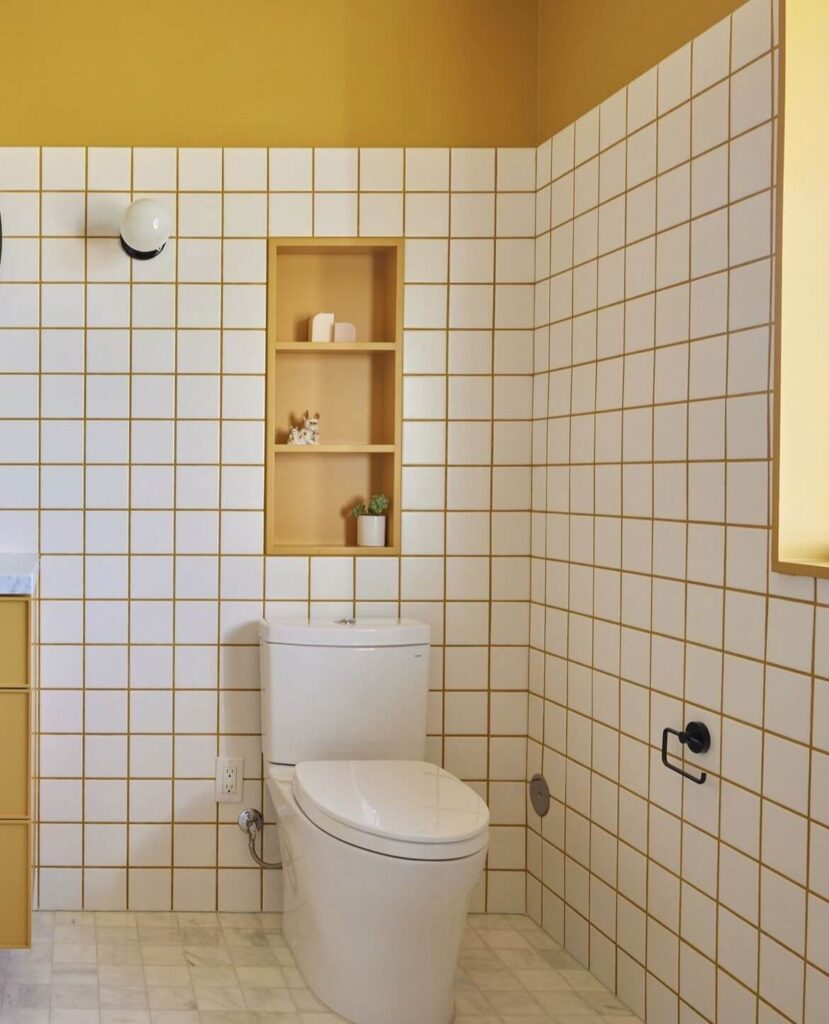
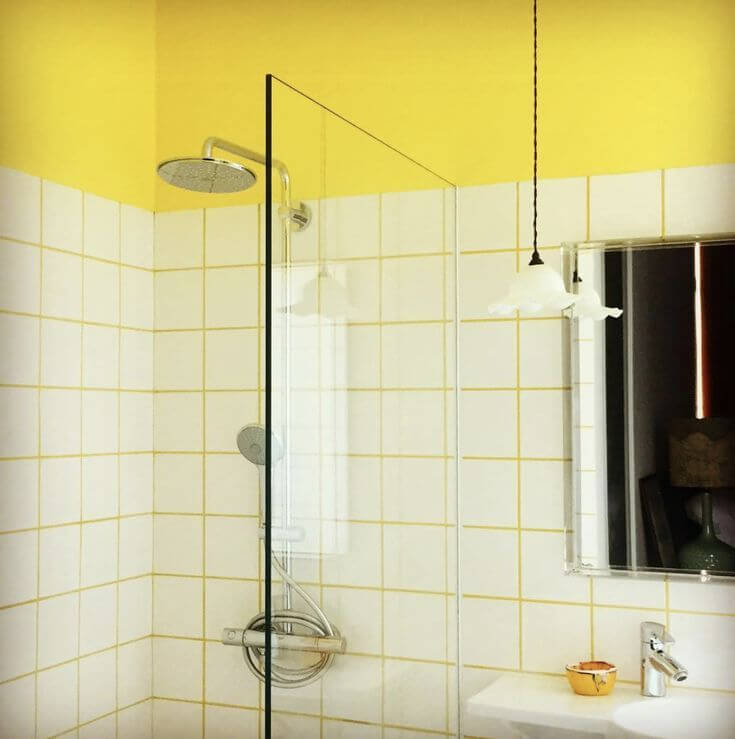
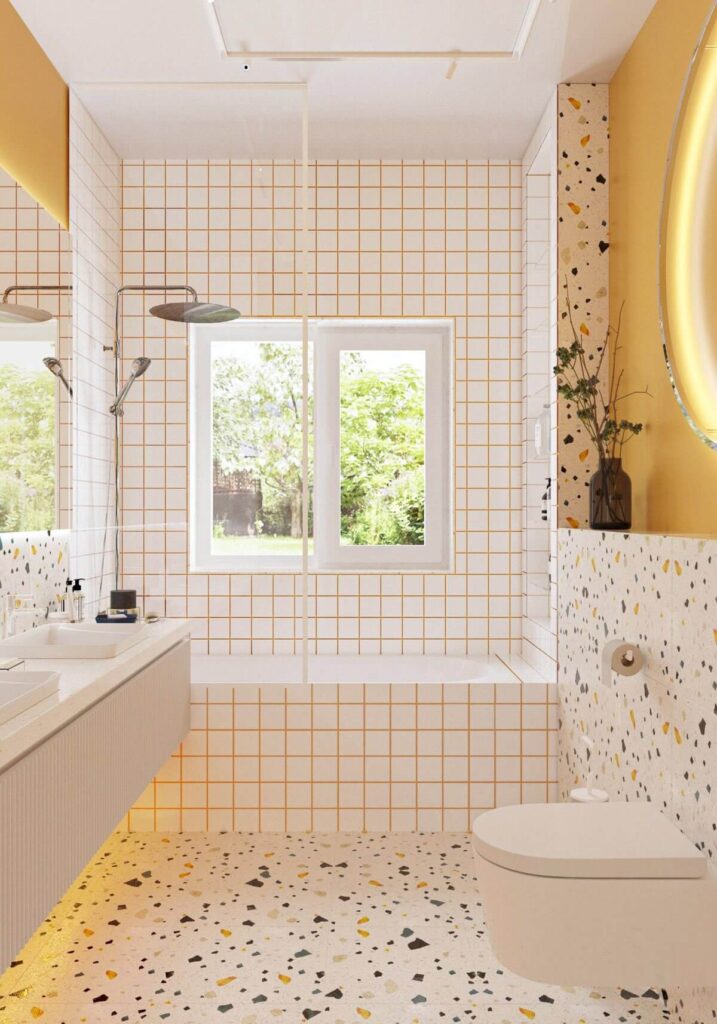
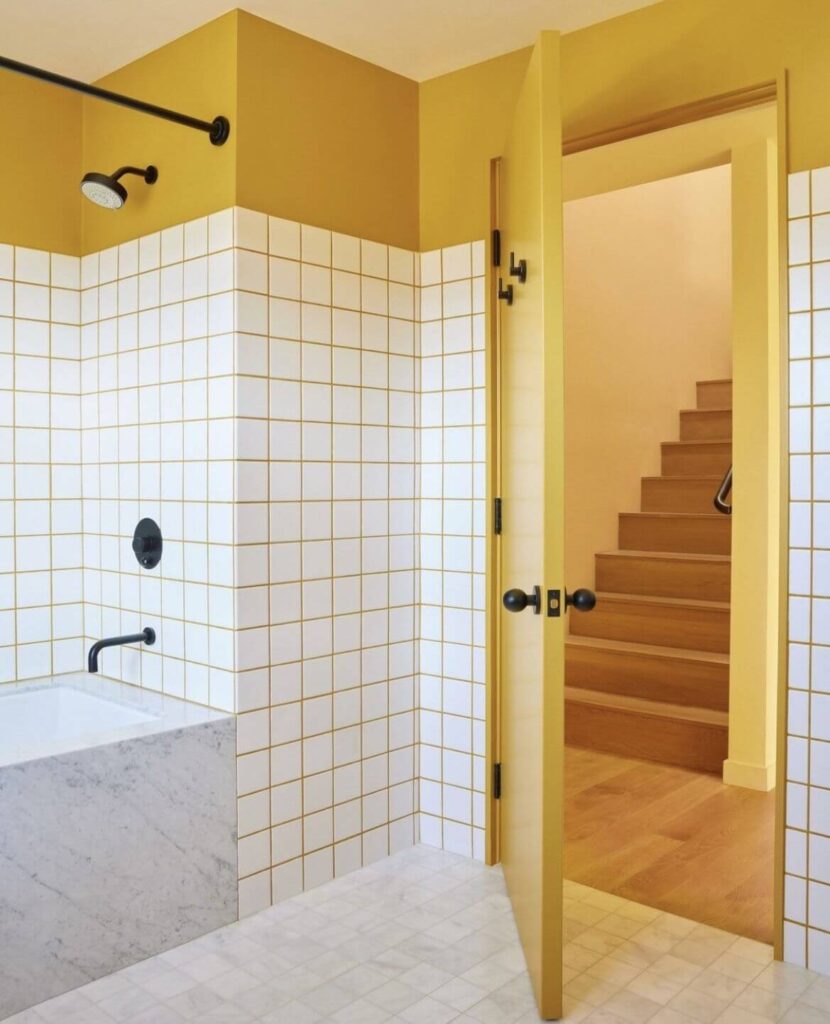
Vibe & Style Fit: Cheerful, warm, and vibrant. Adds a sunny personality even in windowless bathrooms.
Pros & Cons: Unique but not overpowering. Can fit classic, rustic, or even mid-century modern. Test with grout paint first if unsure.
Best For: Farmhouse bathrooms with wood vanities, eclectic styles, or accent walls that need extra energy.
Orange Grout with White Tile
Definitely more daring than yellow, orange grout makes a bathroom feel energetic and playful.
It’s less versatile with furniture and fixtures, but if your style leans eclectic, this can look incredible with natural wood or even black hardware.
It’s a statement-maker, best for those who want to walk into their bathroom and smile.
Bold bathroom: orange grout coordinates with orange ceiling and cabinet, terrazzo floor adds a modern touch. Found it here. Inviting bathroom: orange grout and textiles bring warmth, while white tiles and wood cabinetry ground the look in modern simplicity. Found on Pinterest. Fun, energetic shower: white tiles outlined with red grout, matching red hardware, and a lively green plant for contrast. Found it on Pinterest.
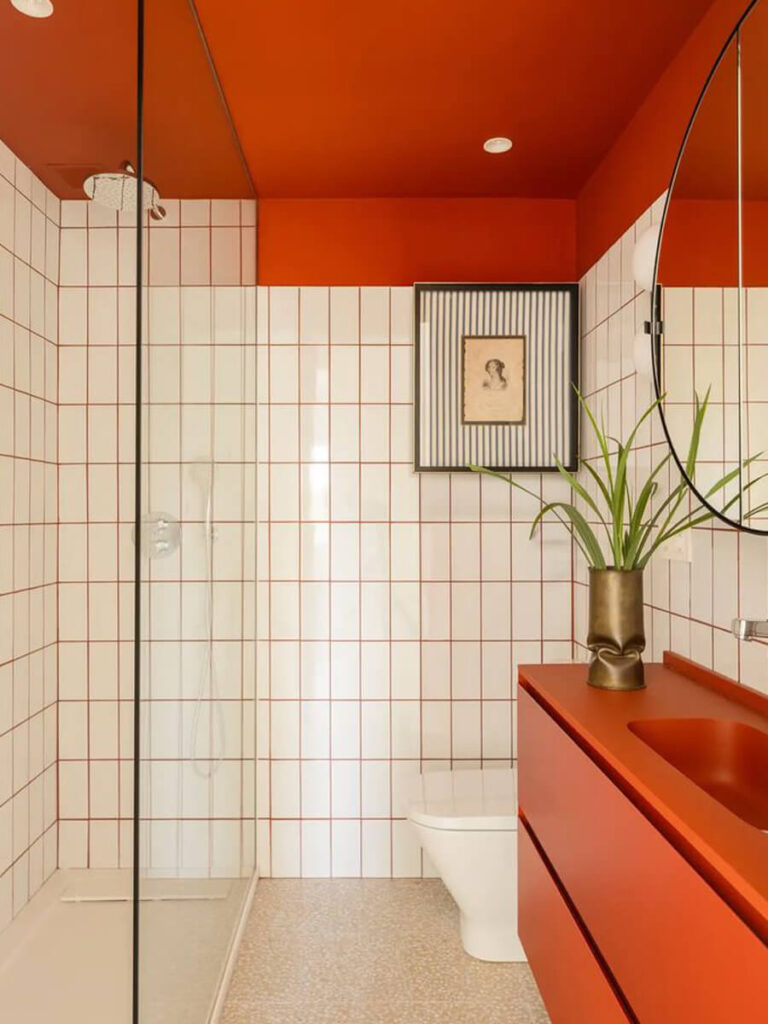
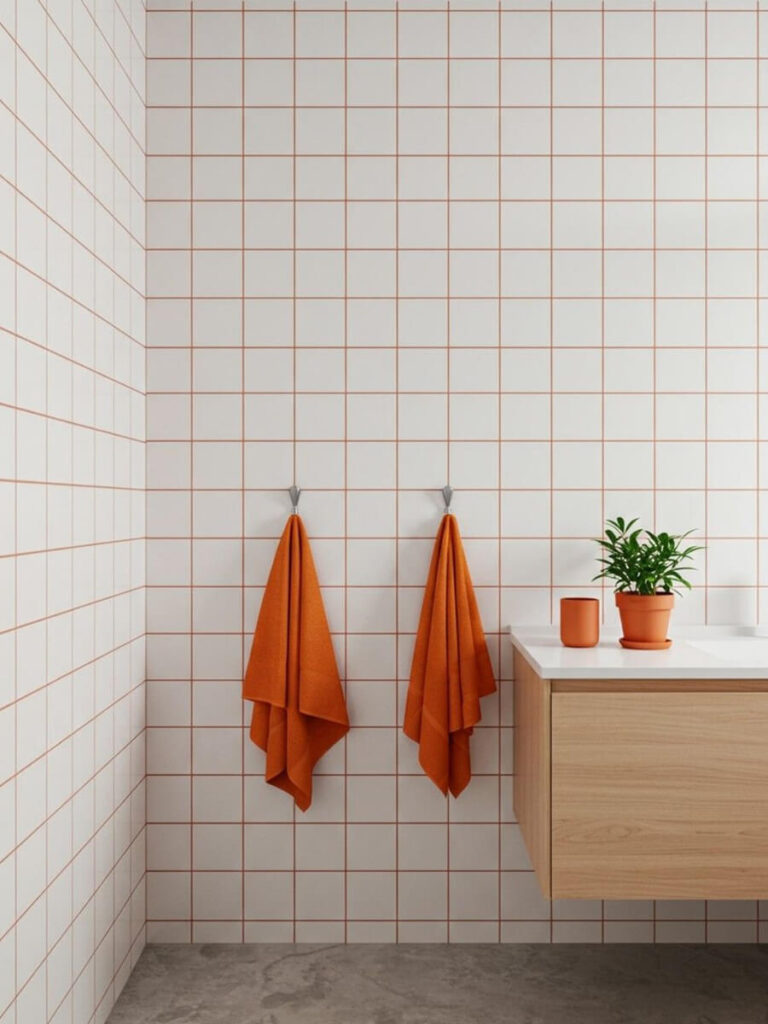
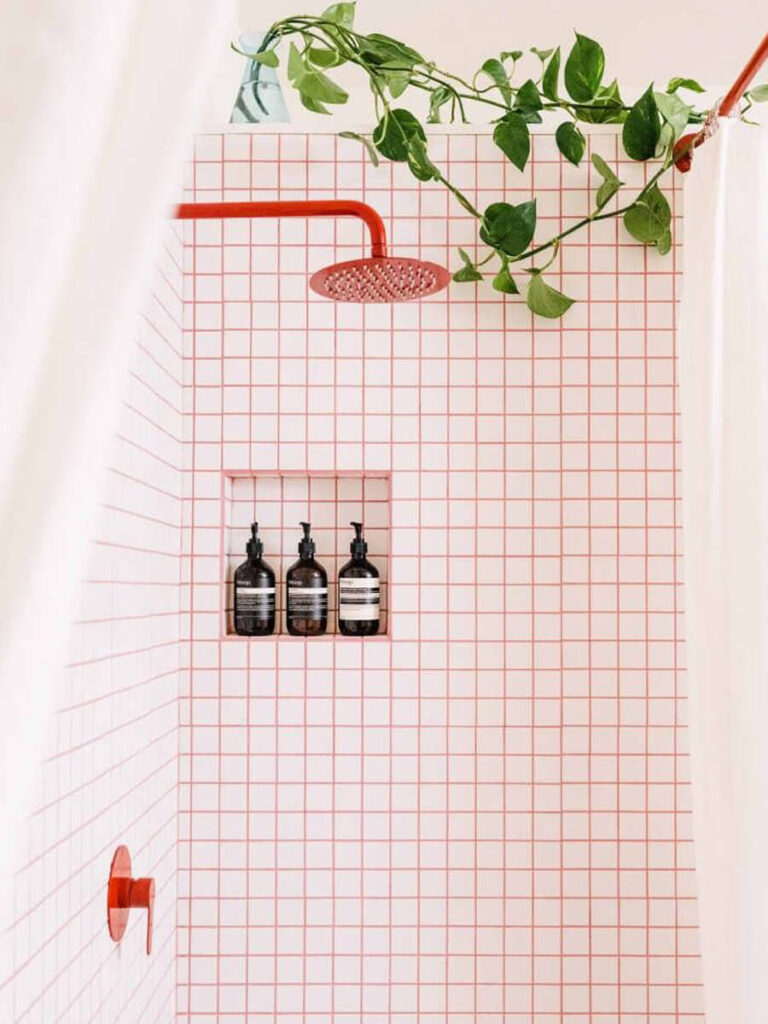
Vibe & Style Fit: Bold and playful, with slightly more intensity than yellow.
Pros & Cons: Restrictive for furniture pairing, but can create a fun, creative vibe. Works best as an accent rather than full-room.
Best For: Statement bathrooms, kids’ spaces, or a guest powder room with personality.
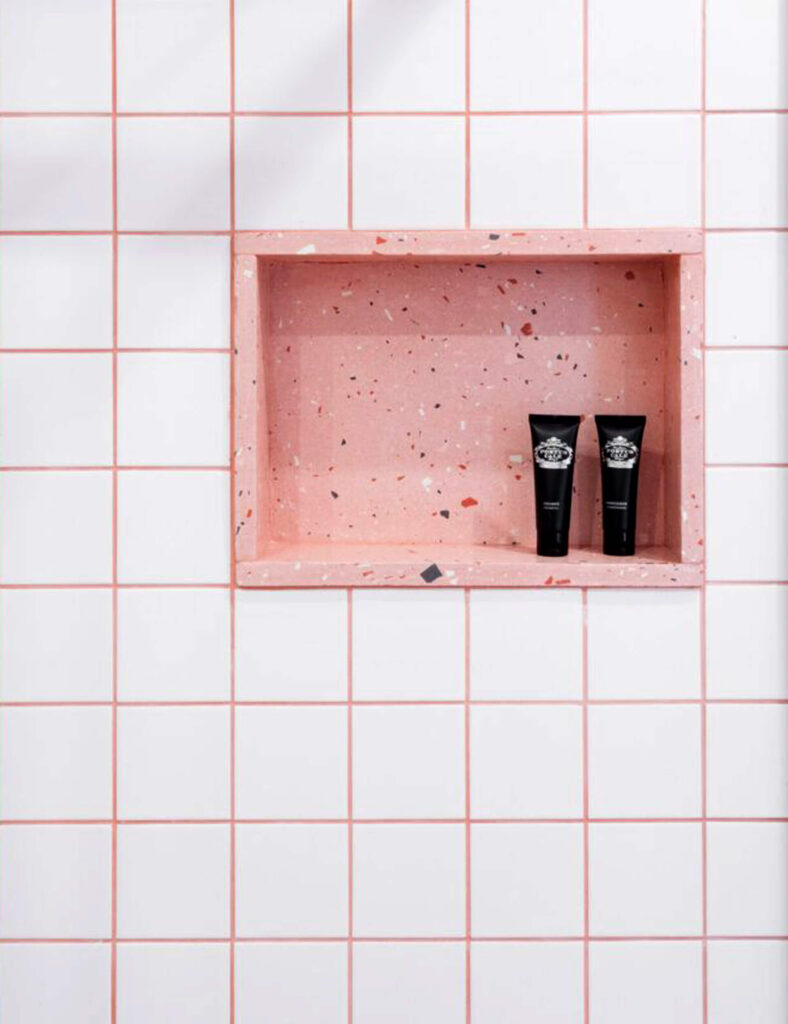
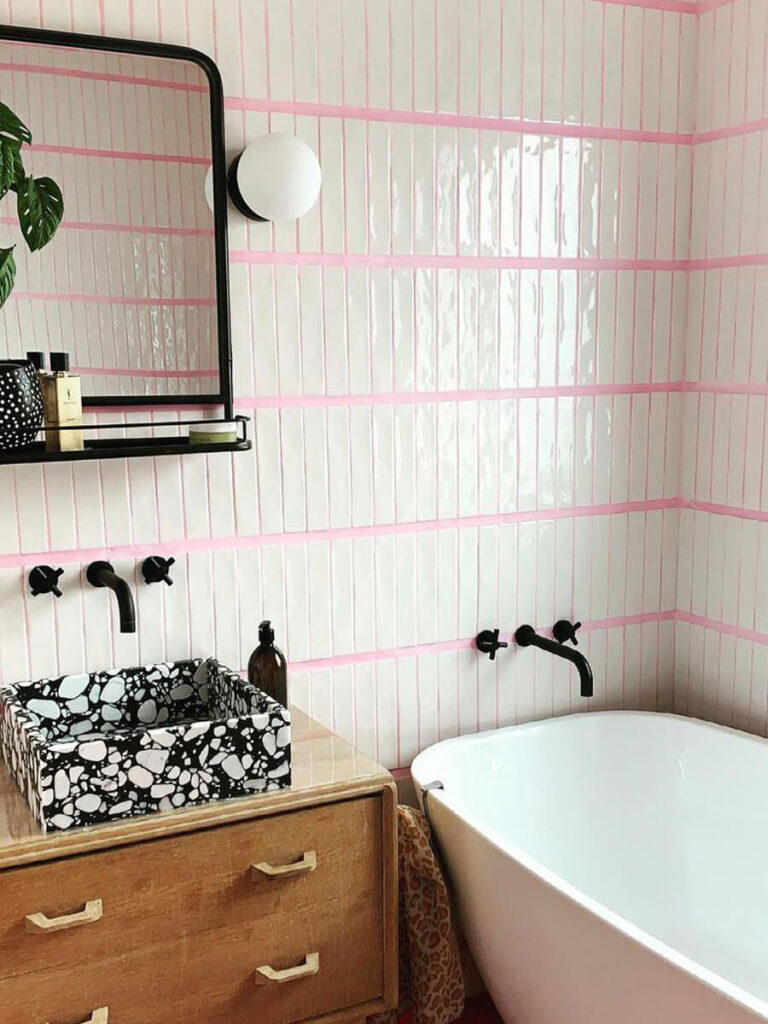
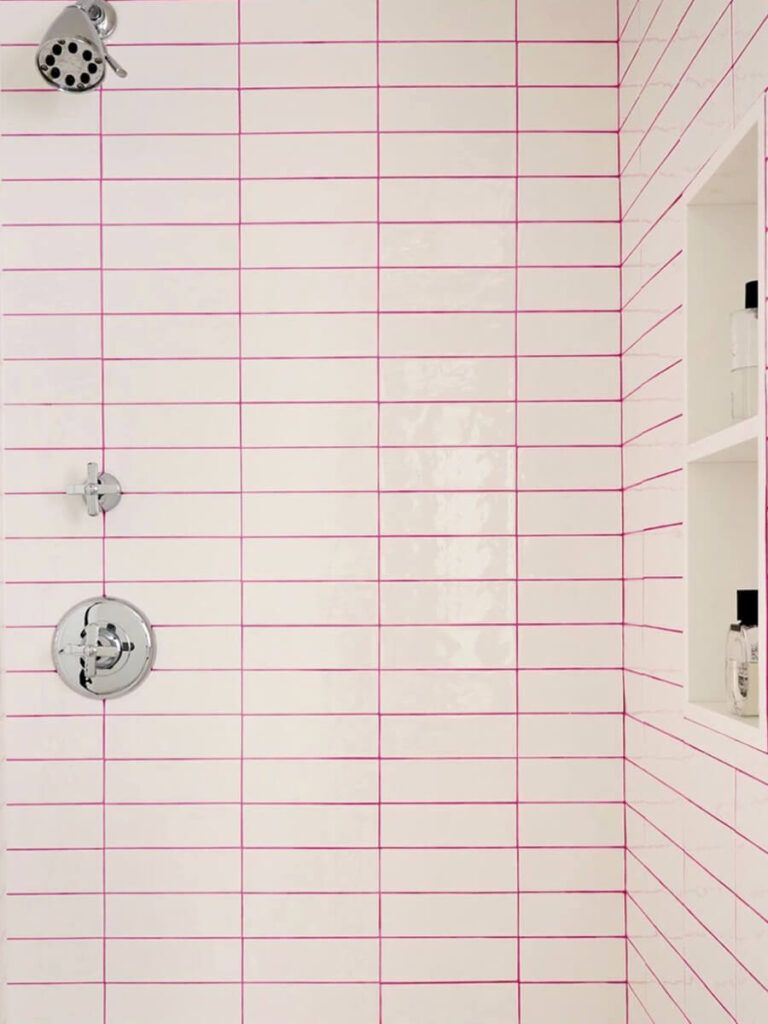
Pink Grout with White Tile
Romantic, fun, and surprisingly versatile. Pink and the following grout colors for white tile are considered to be a kind of extravagant.
Light pink grout feels dreamy and soft, while bold pink makes a quirky statement. It works well in contemporary, vintage, or even farmhouse-inspired bathrooms, though not everyone loves it.
If you’re considering pink, it’s worth testing with grout paint first before committing.
A bright pink built-in shower niche keeps toiletries organized and adds a playful accent to the tiled wall. In Casa Portuguesa Art-inspired bath: vertical white tiles with pink grout, statement black and terrazzo accents, and midcentury modern wood detailing. Found it on Pinterest. Contemporary shower: pink grout on horizontal tiles and sleek metal fixtures blends playful and modern elements. A project by Hilary Matt.
Vibe & Style Fit: Soft, whimsical, or edgy depending on shade. Pale pink feels romantic, hot pink feels daring.
Pros & Cons: Not universally loved — a polarizing choice. Can be hard to source in some regions.
Best For: Playful minimalism, feminine or artistic bathrooms, or as a statement niche.
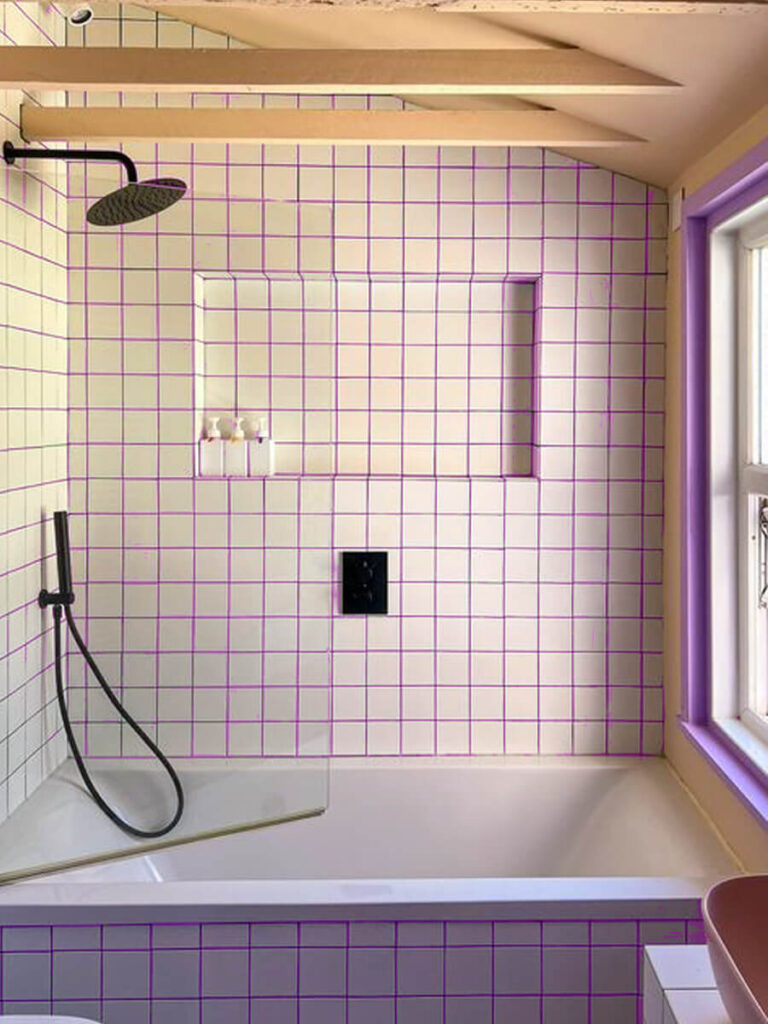
Violet Grout with White Tile
Playful and artistic.
Soft lavender can feel delicate and unique (think a girl’s bathroom or a calming spa vibe), while rich violet is bold and dramatic. Paired with small tiles or mosaics, it’s a true showstopper.
Like pink, it’s more niche — but when done right, it’s unforgettable.
Vibe & Style Fit: Passionate, dramatic, and statement-making.
Pros & Cons: Bright red works in daring designs but can overwhelm. Muted terracotta-like tones pair beautifully with rustic white or artisanal tiles.
Best For: Bars, restaurants, or extravagant homes. For residential, a muted terracotta grout with creamy white tile can feel warm and natural.
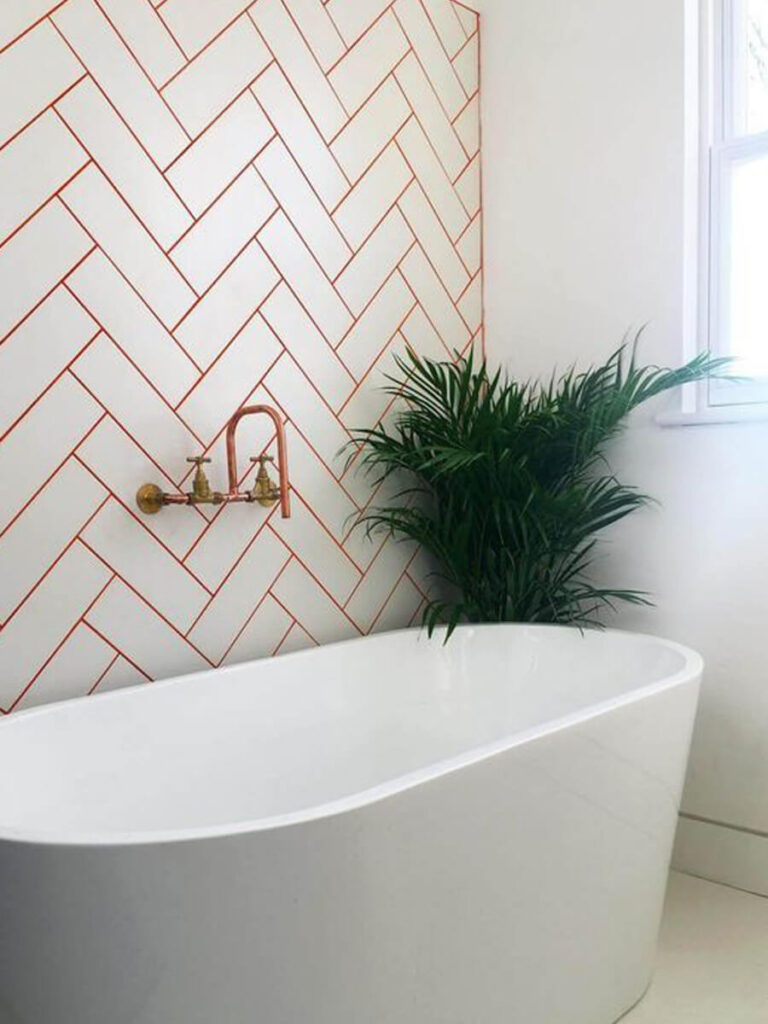
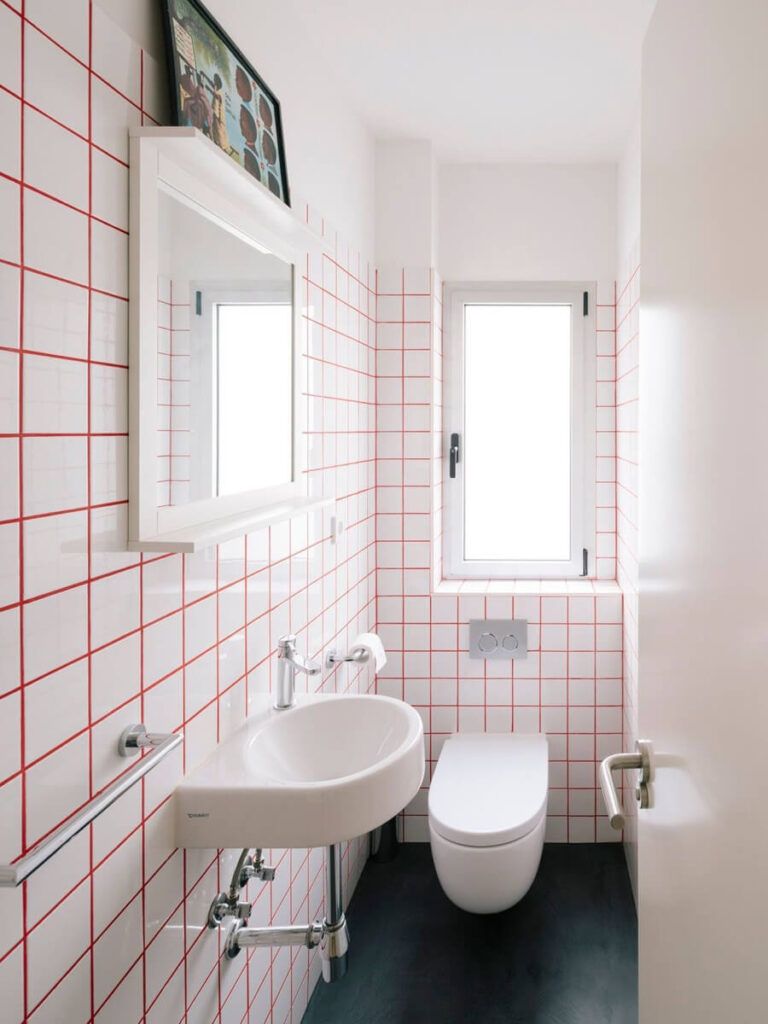
Red Grout with White Tile
The boldest choice of all. One of the least chosen grout colors for white tile, hard to find.
Bright red grout can look striking in statement spaces like bars or guest bathrooms, but it’s trickier to make work in everyday homes. Softer terracotta shades, however, pair beautifully with artisanal or rustic white tiles, giving a warm, natural, almost Mediterranean feel.
For adventurous renovators, this could be the ultimate conversation starter.
Herringbone red grout and greenery mix for a fresh and energizing bath. Source Grid tile style comes alive with red grout and neutral contrasts. A project by PYO Arquitectos. Fun, energetic shower: white tiles outlined with red grout, matching red hardware, and a lively green plant for contrast. Found it on Pinterest.
Vibe & Style Fit: Cozy, grounding, and organic. Gives warmth to otherwise stark white tile.
Pros & Cons: Blends beautifully with rustic tiles and brass fixtures. Maintenance is moderate, hides dirt well.
Best For: Rustic, farmhouse, or vintage-inspired bathrooms with earthy textures.
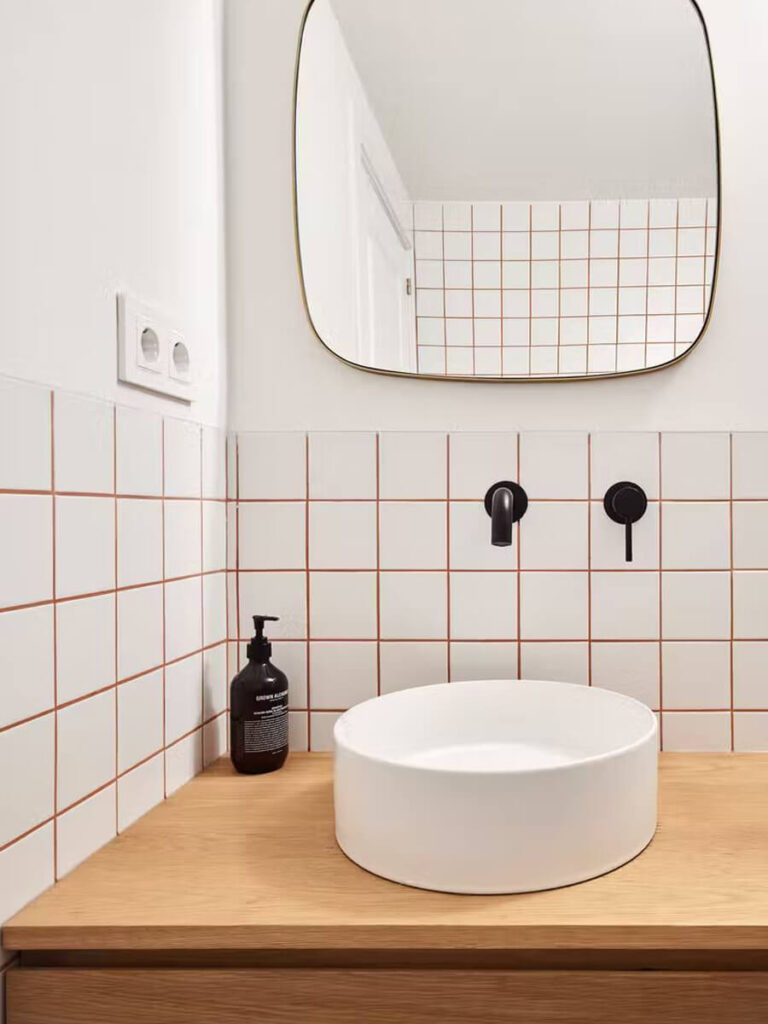
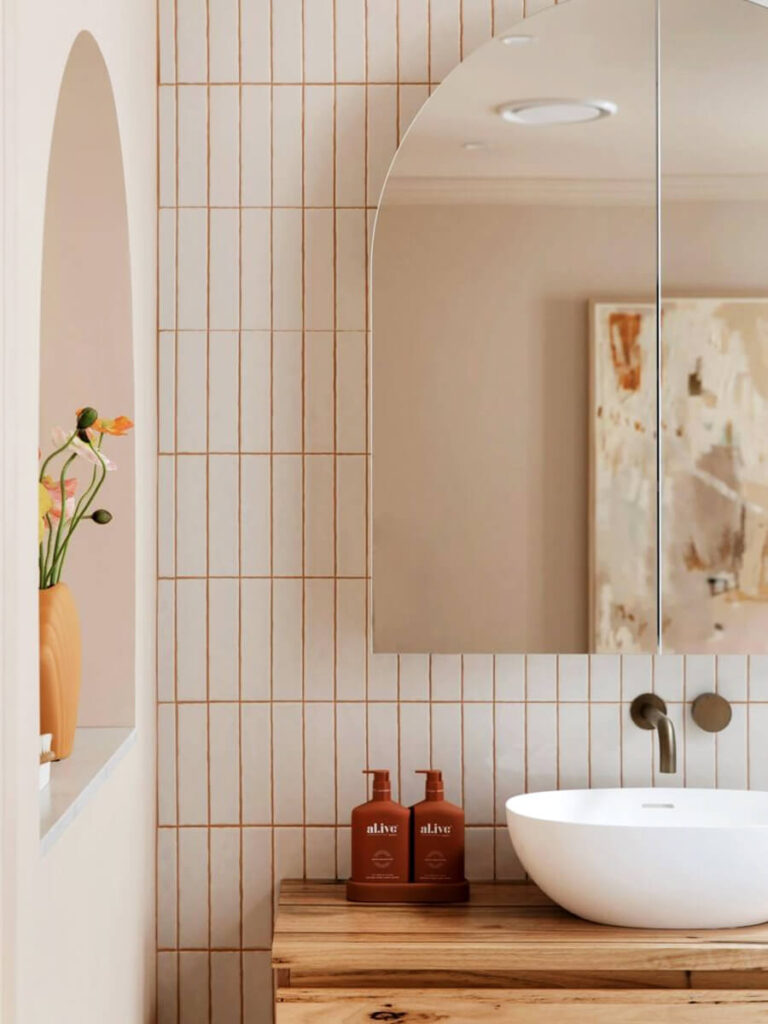
Brown and Warm Tones
Earthy and grounding.
Warm brown grout works beautifully with rustic or handmade-style tiles, especially in bathrooms that already feature wood, brass, or vintage details. It creates a cozy, organic atmosphere — almost like the tiles belong to an older home with character.
A perfect match for anyone who loves rustic minimalism.
Simple natural style: white tiles outlined with brown grout, paired with light wood vanity and matte black hardware for a clean, modern feel. Foto from Pinterest. Soft and modern bathroom: vertical white tiles with brown grout, arched mirror, and natural wood create a cozy, inviting space. A project by Three Birds Renovation.
Vibe & Style Fit: Glamorous and unique. Sparkly grout (gold, copper, silver) creates an accent feature.
Pros & Cons: Works best in powder rooms or accent walls. Can feel over-the-top in everyday bathrooms. Maintenance can be higher.
Best For: Mosaic tile areas, artistic showers, or feature walls where drama is welcome.
Metallic Grout with White Tile
A wildcard.
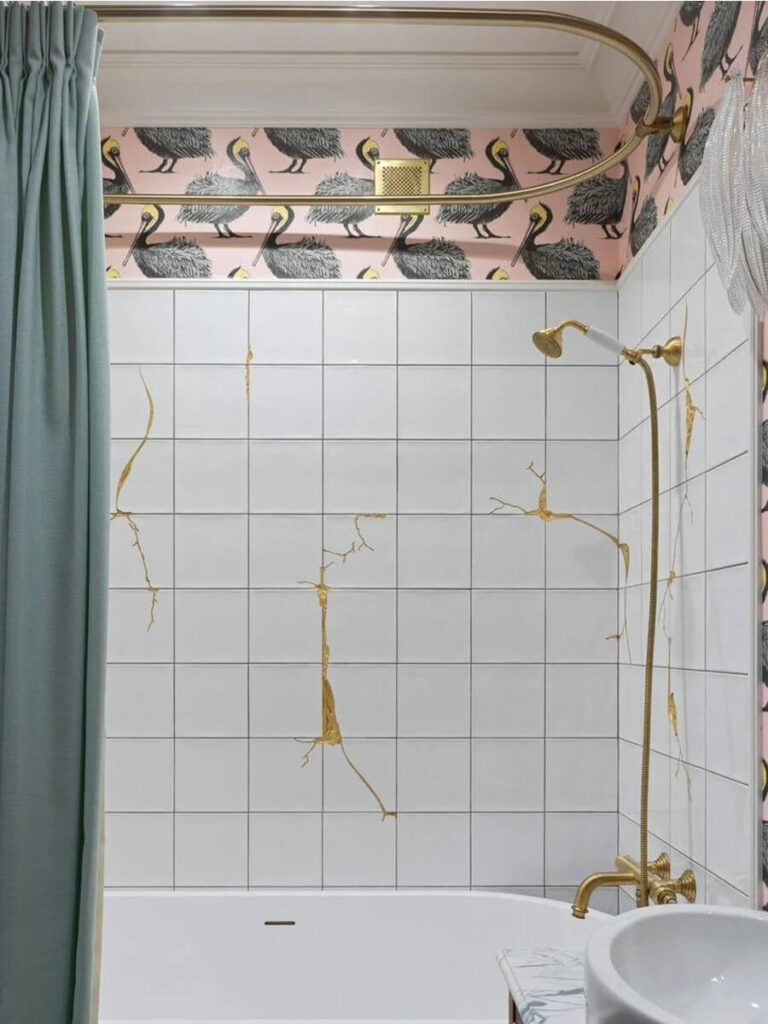
Metallic grouts (or those with glitter mixed in) add sparkle and glam, making them best for accent walls, powder rooms, or mosaics. Think copper shimmer with hex tiles, or silver sparkle in a small niche.
Gorgeous for statement moments, but not the most practical choice for everyday showers.
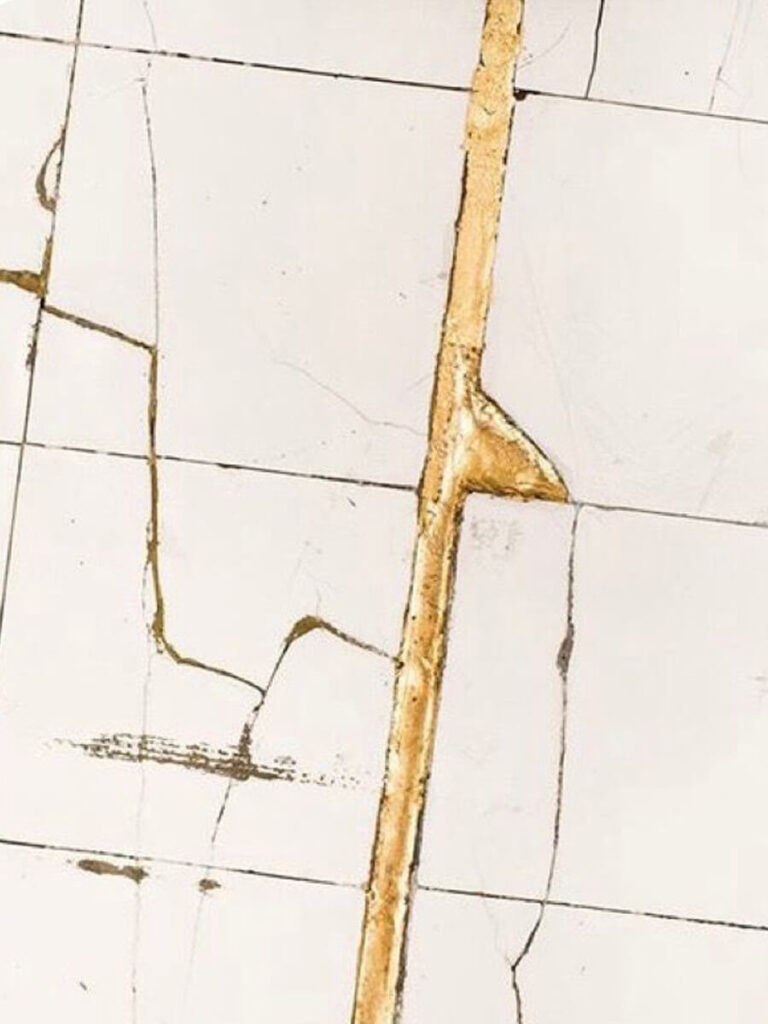
Bold bathroom design: white tiles repaired and highlighted with metallic gold grout, plus pink pelican wallpaper and classic brass shower fittings for luxe charm. Great example of how metalic grout can be used in an elagant way! Found it here. Decorative detail: white bathroom tile restored with glimmering gold grout for a kintsugi-inspired luxury and unique repair. Found it here.
Vibe & Style Fit: Glamorous and unique. Sparkly grout (gold, copper, silver) creates an accent feature.
Pros & Cons: Works best in powder rooms or accent walls. Can feel over-the-top in everyday bathrooms. Maintenance can be higher.
Best For: Mosaic tile areas, artistic showers, or feature walls where drama is welcome.
After all this inspiration, don’t worry if you’re overwhelmed. In the next section, I’ll share how to choose the best grout color for YOUR white tile step by step, based on tile shape, finish, and room style.
Grout Paint – Change It Later
One of the best things about grout colors for white tile is that it doesn’t have to be permanent. Or it comes handy at renovations!
If you’re hesitant to commit or simply want to refresh old grout, grout paint can be a lifesaver. It lets you experiment with bold shades without the hassle of full regrouting — perfect for testing ideas like blue, green, or even subtle pastels.
A few tips before you start:
- Match the shade for refreshes: If you’re simply brightening or renewing existing grout, try to stick to a color very close to the original. A quality paint applied in thin, even layers works best.
- Going lighter: Choose high-quality paint and multiple thin coats rather than one thick coat. Follow the manufacturer’s instructions carefully to avoid streaks.
- Going darker or vibrant: If your grout is white or very light and you want a bold color, check the grout surface first. Any cracks, chips, or unevenness will become more noticeable once painted — something I learned from an architect friend who painted her old white grout blue. Smooth, clean surfaces give the best results.
Using grout paint is a low-risk way to experiment and bring personality to your white subway tile bathroom, especially if you’re drawn to playful, bold, or unexpected shades.
How to Choose Your Best Grout Colors for White Tile in Your Bathroom
After all the inspiration photos, grout comparisons, and big-picture design considerations, it’s time to get personal. The truth is: there isn’t one best grout color for white tile—there’s the best grout color for your tile.
The shape, surface, and even the shade of your white tile can completely change the atmosphere of your bathroom. Here’s how different characteristics play into the decision:
Tile Shape
- Small square tiles (under 20×20 cm): These create a dense grid, so grout becomes very visible. A neutral or light gray grout keeps the look calm, while darker grout emphasizes the geometry and can feel busy in small bathrooms. Colorful grout still keeps the minimalistic vibe, but adds some playfulness – any vibrant color looks great with white squares.
- Classic subway tiles (around 10×20 cm): A timeless choice. White grout gives you that clean, seamless look, while black grout bathrooms lean vintage-industrial. Mid-gray is the safe, versatile balance. Colorful grout can be a good choice as well.
- Mosaic tiles (tiny squares, circles, or irregular): The grout is almost as dominant as the tile. Colored grout (blue, green, or even gold) can make mosaics playful and artistic, while tone-on-tone grout feels more spa-like. If you have a colorful variety of tiles here: the grout can visually unite and set the main color of your surface or bathroom.
- Large format tiles (above 20×20 cm): Bigger tiles = less grout. This could give you freedom, but in my opinion, larger tiles look better with a less dominant grout color. I would suggest to choose shades for grout for your white tiles that are lighter.
Tile Feel of the Surface
- Beveled subway tile (like the real subway tile, bulging on the edges) : The shadow lines already add depth. Pair with soft gray grout to highlight the edges subtly, or white grout if you want the bevel to do the talking. Colored grout can be overwhelming – except if there are other colored surfaces in your bathroom.
- Flat/unbeveled subway tile (just an average tile, with the size of a subway tile): Here the grout does all the framing. Contrast grout = graphic, modern; matching grout = sleek, minimalist. Colored grout can be a good choice!
- Rustic/handmade-look tiles: These often have uneven edges and texture. They shine with warm grout tones (sand, taupe) that blend naturally and highlight their artisanal vibe.
- Matte porcelain stone-look tiles: Matte surfaces pair well with mid to dark grout—they absorb light differently, and darker lines feel grounded and intentional. Colored grout can look good if the grout color is a muted shade.
The Color Tone of The Tile
- Crisp, shiny white: Pure and reflective. White grout gives a bright, seamless bathroom; black grout makes a sharp, modern contrast. This is where blue grout or green grout can add a playful, unexpected twist.
- Cream or off-white: Slightly warmer. They pair best with warm gray grout or beige grout. Avoid stark black—it can look dirty rather than designed.
- Rustic/uneven shades: These tiles already have character. A neutral grout in taupe, stone, or earthy tones keeps the natural, handmade feel intact.
The key takeaway: grout color doesn’t exist in isolation. It interacts with the tile’s shape, surface, and tone—and that’s what sets the mood of your white subway tile bathroom. Minimalist? Bold? Playful? The right combination will get you there.
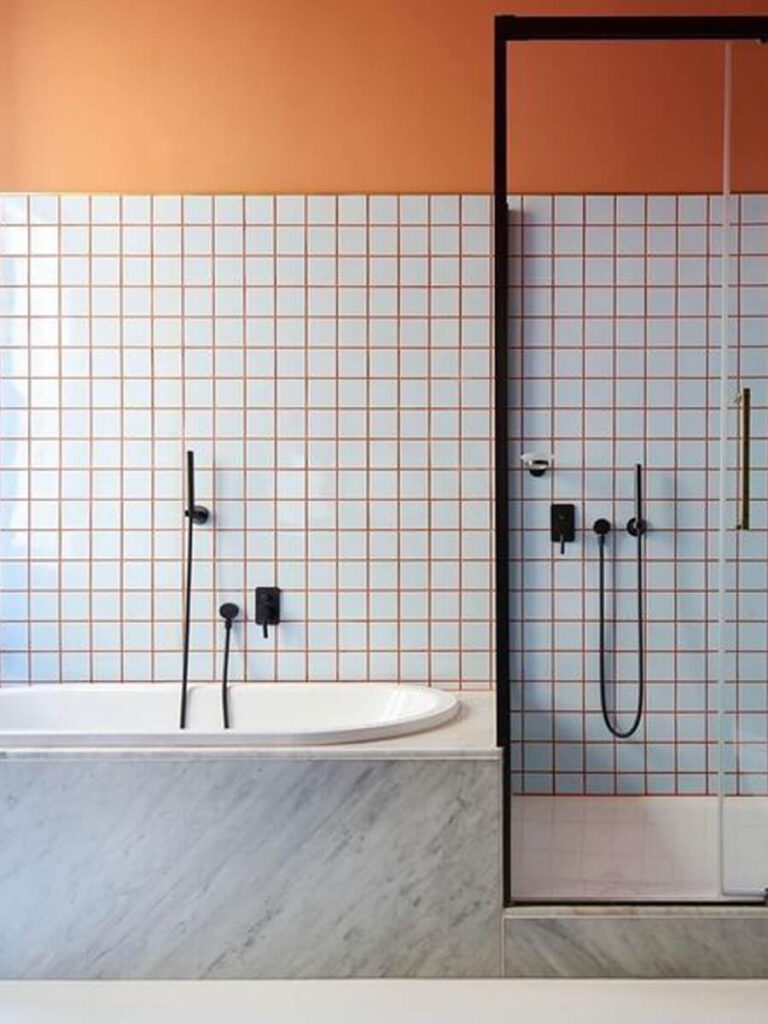
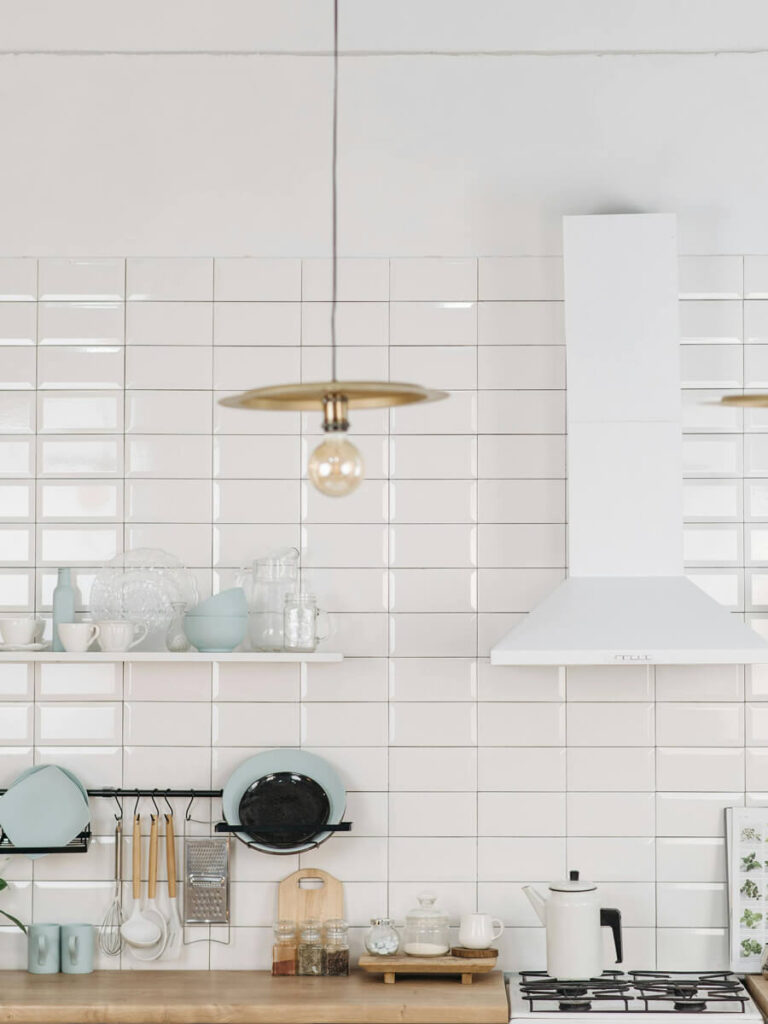
Color-packed bathroom: white grid tiles pop with orange grout and wall paint, matte black hardware, and marble accents. Source Kitchen design: white tiles with grey grout, open shelving, and blue accessories for a stylish, functional cooking space. Photo by Pavel Danilyuk Modern shower area: vertical white tiles with subtle grey grout, steel fixtures, and integrated shelf for a stylish, functional finish. Source
Architect’s Perspective (My Own Choice)
If you’ve read the intro, you already know my grout journey wasn’t exactly planned. The tiler’s “avoidance strategy” left two unfinished walls — and that accident sparked the idea. Instead of hiding it, I leaned in and asked: what if the grout itself became a design element?
After testing options, I landed on Mapei 167 Air for my white subway tile bathroom. I have shiny, flat tiles. Why this choice?
- The terrazzo floor led the way. My floor is terrazzo with delicate blue and green chips, and I wanted the grout to echo that palette rather than fight against it. The cool undertone of “Air” picked up those flecks beautifully.
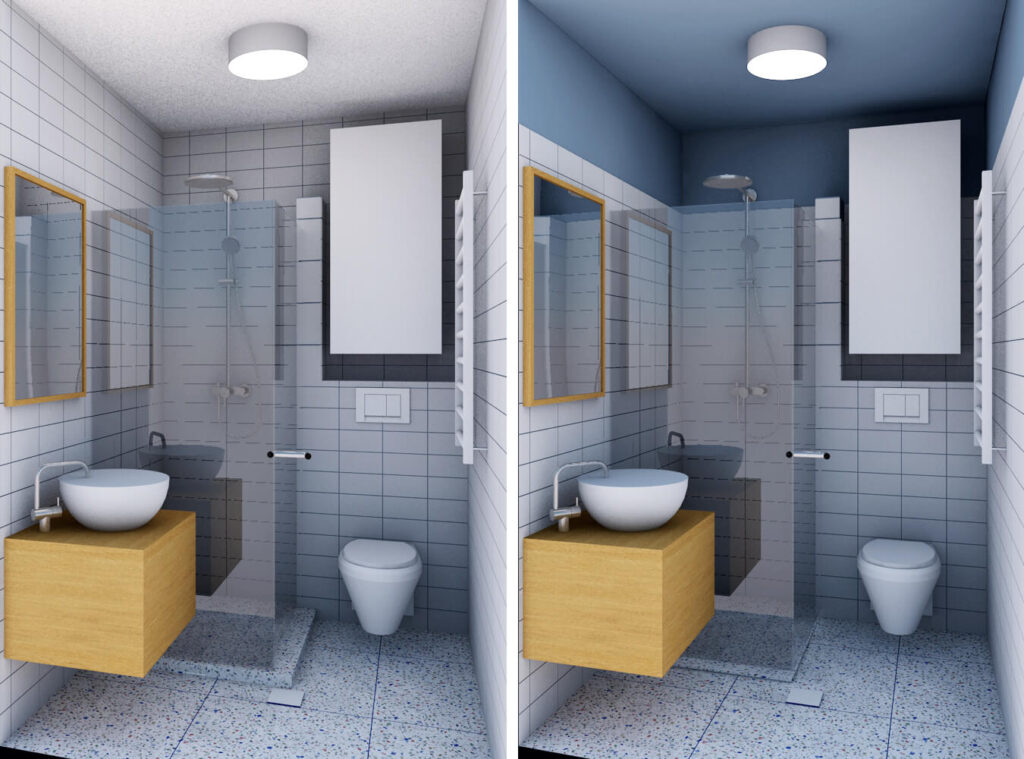
- Horizontal emphasis = bigger feel. By choosing a slightly tinted grout, the grid of subway tiles became visible in a subtle, horizontal rhythm. It stretches the walls visually and makes this tiny bathroom feel more generous. (I’ll show you a side-by-side render comparison—white-on-white vs tinted grout—so you can see the surprising difference yourself.)
- A touch of boldness. White grout would have been safe. But this bathroom is small, and I wanted one element that felt intentional and brave. Colored grout is a low-risk, high-impact way to achieve that balance.
- Architect vs homeowner thinking. As an architect, I considered the long-term: light conditions, maintenance, and how grout color would affect the perception of scale. As a homeowner, I thought about cleaning ease and mood. “Air” is light enough to hide stains better than pure white, but distinctive enough to set the tone.
The result? A bathroom that feels designed, not default. Can’t wait to share the final look! I was a hard choice for me as well, my terrazzo flooring has many beautiful shades – there were so many grout colors for white tile for the walls.
My Top 3 Favorite Grout Colors for White Tile (If You’re in a Rush)
#1. Soft Blue
Adds rhythm and depth, great if you want a hygienic atmosphere with some uniqueness
#2. Pure White
Seamless, bright, timeless — but requires careful maintenance.
#3. Charcoal/Dark Gray
Bold, graphic, vintage-industrial, and hides dirt well.
If you’re working with a small bathroom, check out my small bathroom ideas for space tricks, or browse my bathroom storage solutions to keep things functional once the grout has set.
FAQ Section
What is the best grout color for a white subway tile bathroom?
There isn’t a single “best” color — it depends on your style, bathroom size, and desired atmosphere.
White grout gives a seamless, bright, minimalistic feel, while gray or beige adds subtle contrast and hides dirt better. Black or colored grout creates bold, graphic lines that emphasize patterns.
For my bathroom, I chose Mapei 167 Air — a soft shade that complements the terrazzo floor and highlights the horizontal lines of the white subway tiles.
Should grout be lighter or darker than the tile?
This comes down to the mood you want.
Lighter grout blends in for a clean, minimalist look, visually expanding the space.
Darker grout adds drama, defines the grid, and can make patterns pop, but in very small bathrooms, it can feel a bit heavier if overused.
Which grout color is easiest to maintain?
Gray or mid-tone colors are usually the most practical — they hide stains and discoloration better than white, but still look fresh.
White grout can stain easily, especially in high-traffic or wet areas. Black and dark colors are easier to clean, but hard water deposits can show, so occasional sealing helps.
Can I change grout color later?
Yes! Grout paint is a great option to refresh old grout or experiment with a new shade without full regrouting. There are many good grout colors for white tile, so don’t worry if you can’t find “the best”.
Keep in mind that uneven surfaces, cracks, or chips can show through the paint, so prep is important. Lighter colors require multiple thin coats, and darker or bold colors need a smooth surface for the best finish.
Which grout color makes a small bathroom look bigger?
Grout that’s close to the tile color (white, cream, or very light gray) keeps the eye moving and avoids breaking the visual flow, making the space feel larger.
Contrast grout can define zones beautifully, but in very small spaces, subtle shades are often the safest choice.
How do I choose grout color for my small bathroom?
Consider your tile type, shape, and finish, the room’s natural light, and your desired mood and style.
Square or mosaic tiles, high-traffic areas, and textured tiles can influence your choice. Think about whether you want the grout to blend in or stand out, and don’t forget practical aspects like maintenance and cleaning ease.
After exploring different colors and testing samples, you’ll find a shade that balances aesthetics and function.
Conclusion: Grout Colors for White Tile – Your Turn
When it comes to grout colors for white tile, the choice may seem like a tiny detail — but it truly defines the entire bathroom. It can shift the mood from seamless and airy to bold and graphic, from calm to character-filled.
For my own white subway tile bathroom, I chose Mapei 167 Air, a soft, light blue that tied together my terrazzo floor and made the space feel larger and more intentional. For me, grout wasn’t just filling a gap — it became a design statement.
Now I’d love to hear from you:
Which grout color would you choose for your white tiles?
Are you team subtle (white-on-white) or team bold (contrasting grout)?
Drop your thoughts in the comments — your dilemma or your favorite shade could inspire someone else’s bathroom journey.
And read my ultimate guide with design rules about how to decide bathroom tile combination for your bathroom!
And don’t forget to save this guide on Pinterest so you’ll have it handy when you’re standing in the tile aisle, second-guessing your options.
Pin it for later!