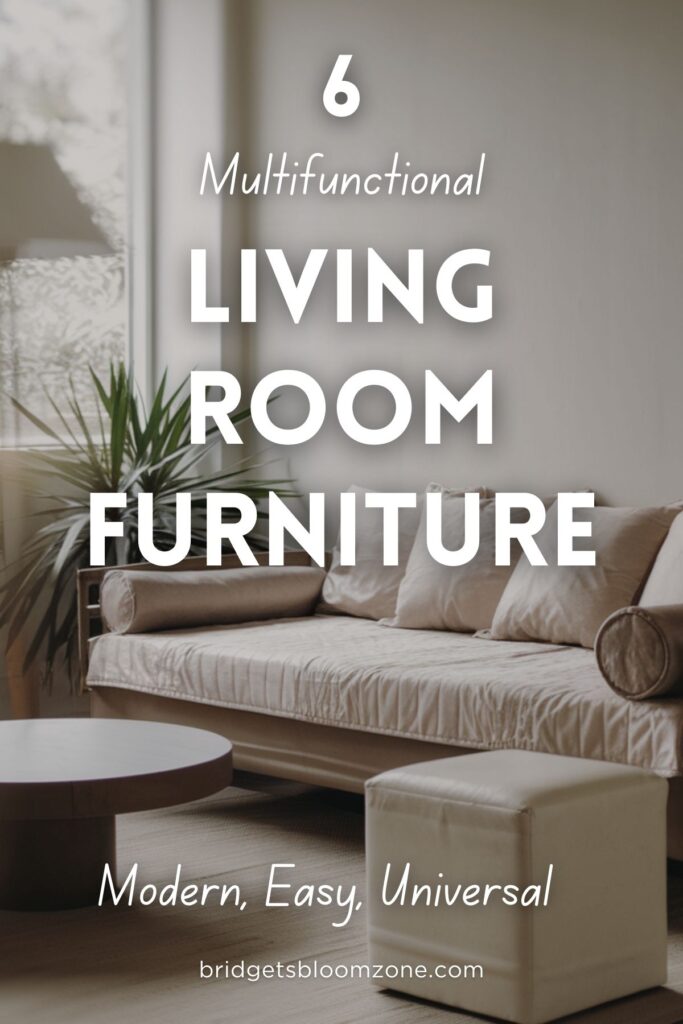
Living Room Furniture – The Best Choices of Multifunctional Furniture
This post contains affiliate links. If you buy through them, I may earn a small commission — at no extra cost to you. I only recommend products I’d genuinely specify as an architect.
What Do You Actually Need to Live Comfortably?
Designing a small home often starts with a quiet frustration you don’t expect: there’s never quite enough space for the life you want to live in it.
A chair becomes a clothes rack. The coffee table fills up with things that don’t have a proper place. The sofa slowly turns into storage, workspace, and sometimes even a bed.
Instead of feeling like a calm home living room, the space can start to feel like everything is happening everywhere, all at once.
This isn’t because you have too much furniture — it’s because each piece is only doing one job in a space that needs it to do three.
Before You Update Your Living Room Furniture
In most homes, the basics are simple: a place to sleep, sit, eat or work, and store your things. But in a small apartment, especially in a studio, all of these functions often need to exist within a single room.
That’s where living room furniture becomes more than just decoration. It becomes a system that shapes how your space works.
Instead of adding more, the goal is to choose smarter.
But what does “choosing smarter” actually mean in a space where everything has to fit into one room?
In this guide, you’ll find carefully selected multifunctional furniture ideas that help your space feel flexible, organized, and surprisingly comfortable — without feeling crowded.
TL;DR
In this guide, you’ll find my favorite smart living room furniture ideas designed for small spaces:
- multifunctional pieces that save space and reduce clutter
- practical solutions for combining living, working, and dining
- furniture that doubles as storage for a more organized home
- simple ways to create a minimalist living room without sacrificing comfort
The goal is simple: fewer pieces, better function — and a space that feels easier to live in.
If your space has ever felt crowded no matter what you tried, this is exactly where things usually start to shift.
Why Multifunctional Furniture Matters
In larger homes, rooms are usually separated by function. You move between spaces depending on what you want to do — cooking, working, relaxing, or sleeping.
In a small apartment, especially in a studio, this separation disappears. Everything happens in one space.
This is where many layouts start to feel difficult. Not because the room is too small, but because it is expected to support too many functions at the same time.
And of course, each activity would need a dedicated piece of furniture. And so, in a small living room furniture begins to take over the role of architecture.
A table becomes a dining area. A sofa becomes a place to relax, host, or even sleep. A desk creates a workspace where none existed before.
Because of this, the furniture you choose has a direct impact on how your space functions.
Well-chosen multifunctional furniture can:
- reduce the number of pieces you need
- free up valuable floor space
- support different activities throughout the day
- make your home feel more calm and organized
This is especially important in a minimalist living room, where fewer objects are visible and each piece needs to justify its presence.
Instead of adding more furniture, the goal is to choose better furniture.
What Does a Small Living Room Actually Need?
Before choosing specific pieces, it helps to understand the basic needs of a compact home.
At first, it seems obvious — but this is where most people make their first mistake.
At first, it seems simple. But this is where most small living rooms start to fail:
- seating
- eating or working
- relaxing
- storage
In a traditional layout, each of these functions would have its own furniture.
But in a small apartment, it is quite possible that those just won’t fit. Combining functions is often the most efficient approach. If you are keen to know more, read my previous article about creating amazing small living room layouts.
This is where multifunctional furniture becomes essential.
Rather than filling your home with separate items, you create a system where fewer pieces do more work.
Or find the best ones on market that you can fold, stack, or transform easily.
Not all multifunctional furniture is actually useful — some pieces just sound better than they work in real life.
My Favorite Multifunctional Living Room Furniture
I have lived in small studio apartments most of my adult life. So I had the opportunity to test many solutions – both layout and furniture related options.
These are practical, proven multiuse furniture solutions that work especially well in small spaces. Each one helps reduce clutter while improving flexibility.
There is no order, all of these are good for different spaces, styles, living habits. Let’s take a closer look.
Lift-Top Coffee Tables
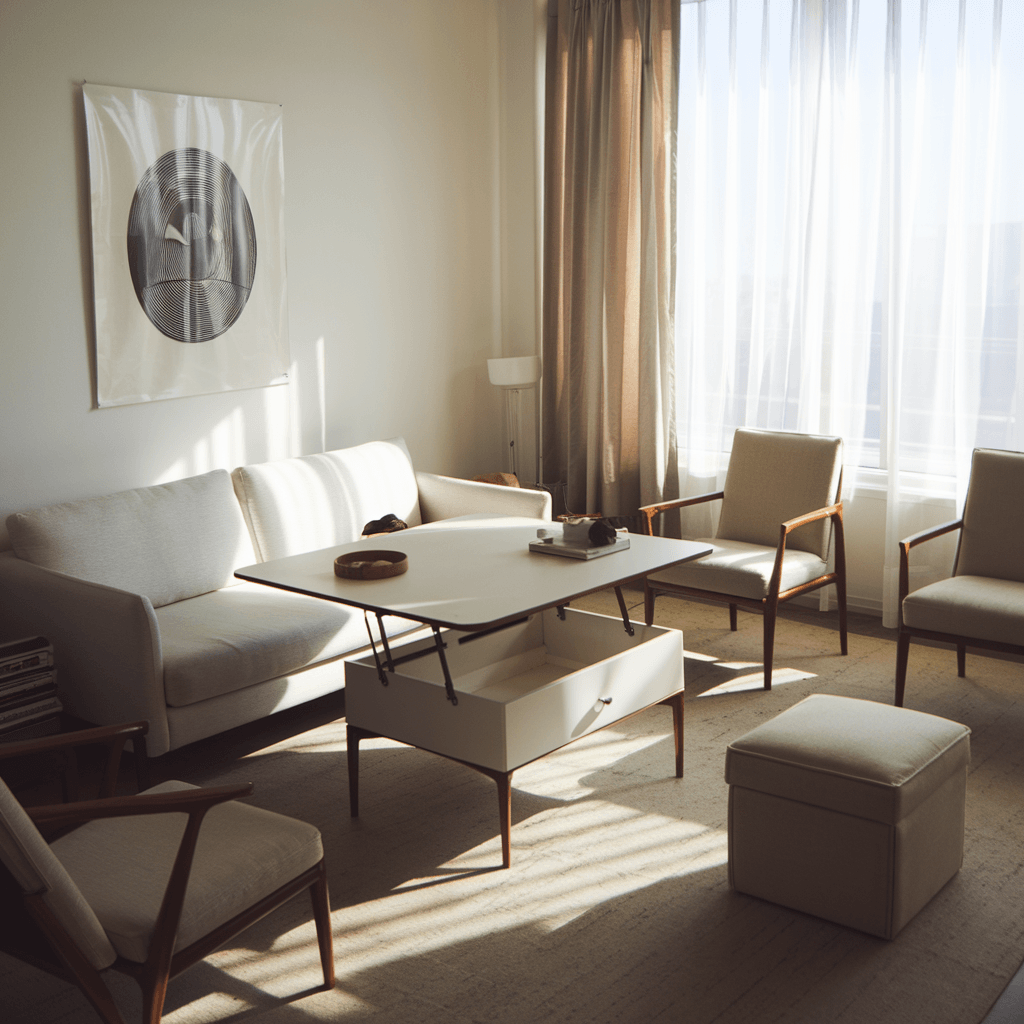
A lift-top coffee table is one of the simplest ways to make your living room furniture more versatile.
At first glance, it looks like a standard coffee table. But with a simple mechanism, the top surface can be lifted and moved closer to you.
Very similar to this, when the legs of the coffee table are equipped with some mechanism, to lift up the whole tabletop.
Why It Works
It transforms a passive piece of furniture into an active one. The same surface can be used for dining, working, or casual everyday use. A coffee table is a “smaller” object, so if it is in this position, occupies less space of the room visually.
Pros
- multifunctional and space-efficient
- ideal for small dining setups
- perfect for laptop use or casual meals
Possible Drawbacks
- usually best suited for one or two people
- quality depends on the lifting mechanism
- you have to clear after each use, if you want to change the function.
Best For
Studio apartments or small living rooms where a full dining table is not practical, or you do not need a dining space in your home every day.
Foldable or Gate-Leg Tables
The flexibility sounds perfect — but there are a few things most people only realize after buying one. Here’s what I mean:
Foldable tables are among the most flexible space saving furniture living room solutions.
They can expand when needed and remain compact when not in use. Mostly, the center piece is equipped with some storage, or even drawers as well – here you can store cutlery, or hide the foldable chairs for the dining function.
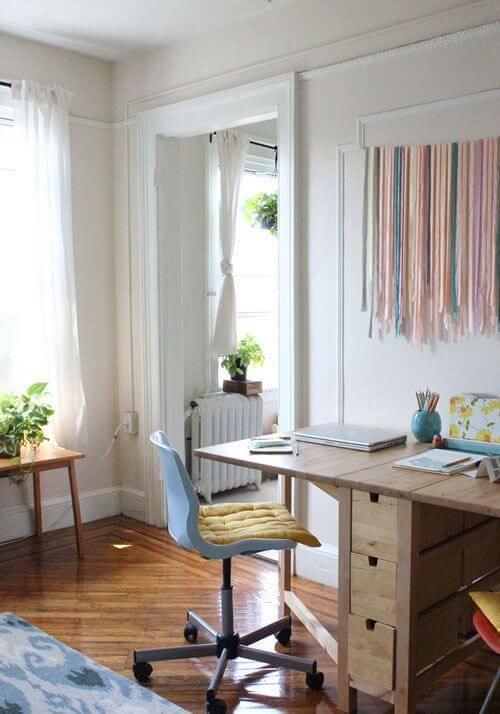
Why It Works
You only use the full size of the table when necessary, which saves space during most of the day.
Pros
- adjustable size
- suitable for dining, working, or hobbies
- easy to store or reposition
- it can fit 4-6 people for dining
Possible Drawbacks
- may not always feel visually light
- not just visually, but physically it can be heavy – especially when the storage function is used.
- legs of the table can be in an uncomfortable position when sitting around it
Best For
Small living rooms where dining functions are different during the week. Or you want to seat a various number of people, and don’t mind some layout reorganizing from time to time.
Why Small Furniture Is Not Always the Best Choice
At first, it seems logical to choose smaller furniture for a small living room.
But this is where many spaces start to feel unintentionally cluttered.
Smaller pieces often mean you need more of them.
More tables, more storage units, more separate solutions — each taking up space and adding visual noise.
In many cases, one well-chosen multifunctional piece can replace two or three smaller ones.
And even if it occupies slightly more space, the room often feels calmer and more organized.
In small homes, it’s not just about size — it’s about how many roles each piece can take over.
Wall-Mounted Foldable Desks
Wall-mounted desks are a strong solution for combining a living room office combo without adding bulky furniture.
This solution looks minimal and clean, but it comes with a trade-off you should be aware of.
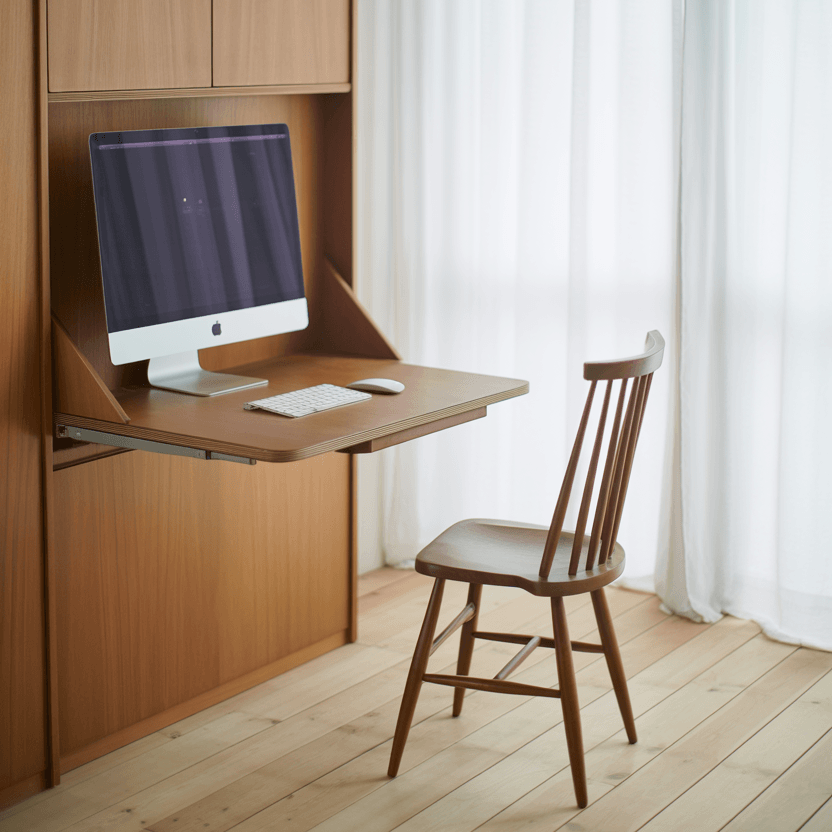
Why It Works
They use vertical space instead of floor space, which keeps the room visually open.
Pros
- frees up floor area
- can include built-in storage
- can be closed when not in use
Possible Drawbacks
- installation required
- leg space can feel limited
- it has a fixed place, and you are probably facing a wall.
Best For
Small apartments where a dedicated workspace is needed but space is limited.
Stackable Chairs
Ok, these are not really multifunctional, I admit. But I assume, you live in a minimalist home, so some pieces can be used creatively for different functions.
Not to mention, seating is often underestimated in small spaces, but it plays a key role in flexibility.
This is where many people default to folding chairs — and often regret it later.
Stackable chairs are a more refined alternative to folding chairs. Folding chairs are also great, you can store them easily, hang them or just hide in a cabinet.
But, if you would need more than 4 chairs – it is best to change to stackable chairs. Because above 4 chairs, stackable chairs use less space than foldable chairs.
The design possibilities are quite endless in these products. My favorite one is the three legged small stool by Alvar Aalto. Made of plywood, very elegant and can be used as a small side table as well. Ikea has something very similar too.
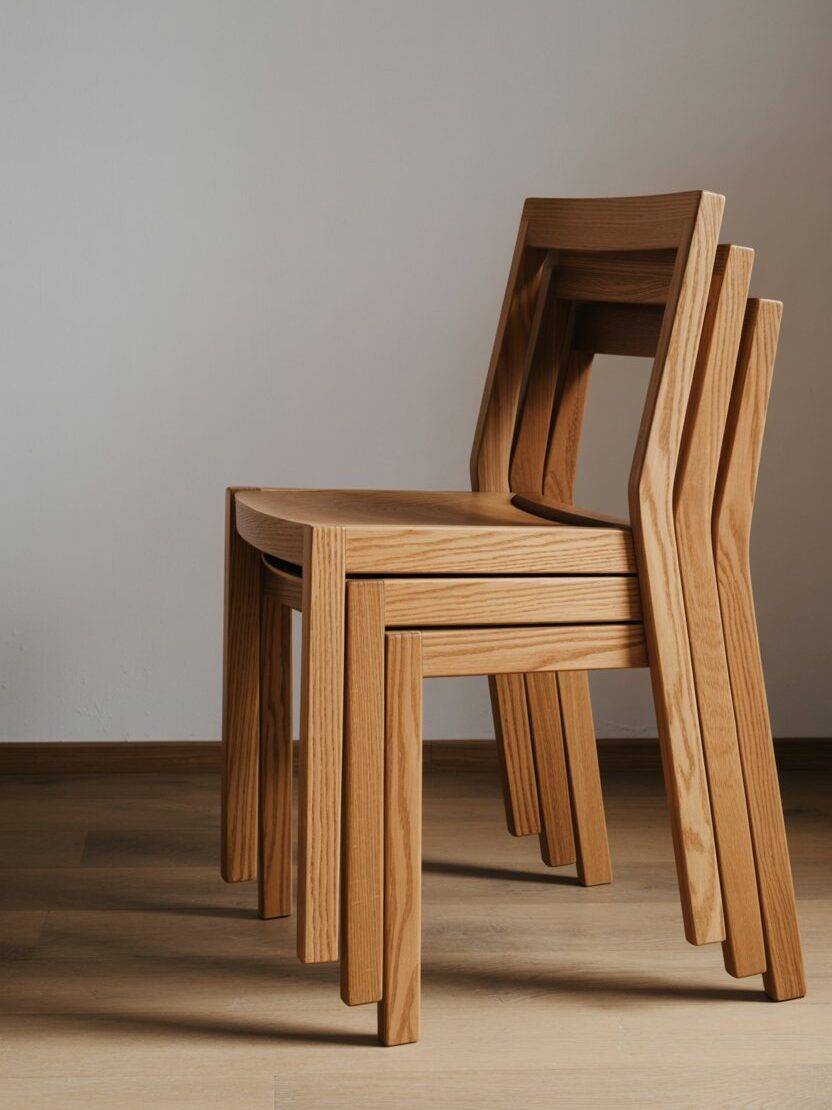
Why It Works
They can be stored vertically, reducing their footprint when not in use. They are much more comfortable to sit on, than folding chairs.
Pros
- easy to store
- stable and comfortable
- some are designed also to use as side tables or nightstands.
Possible Drawbacks
- require a dedicated storage space
- stacking height needs to be considered – it depends if they have a backrest or not.
Design Tip
Compared to folding chairs, stackable chairs often feel more durable and comfortable, making them a better long-term choice.
Storage Sofas
A sofa is usually the largest piece of living room furniture, so it makes sense for it to serve more than one purpose.
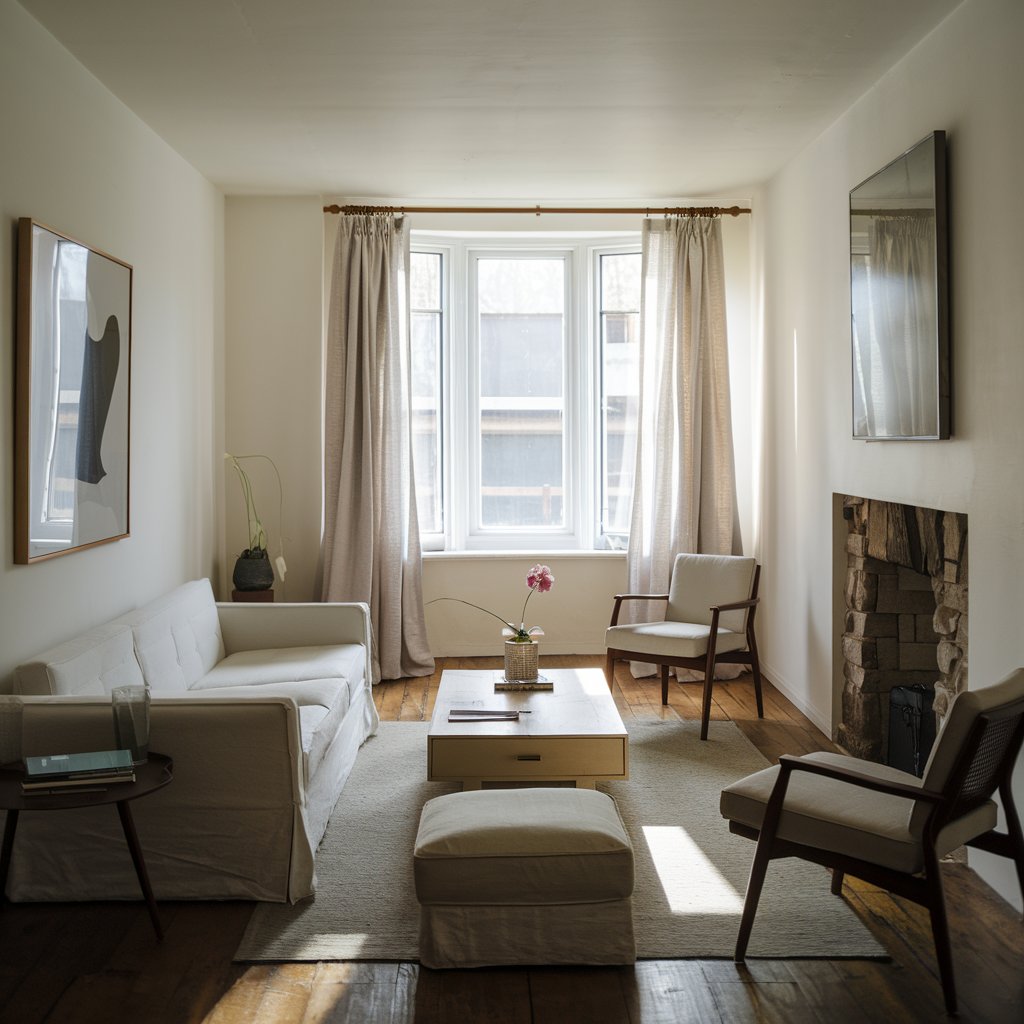
Why It Works
It combines seating with hidden storage, reducing the need for additional cabinets.
Pros
- excellent for storing blankets, pillows, or seasonal items
- keeps everyday objects out of sight
- supports small living room storage needs
- usually it is much easier to open, than storage beds.
Possible Drawbacks
- can appear visually heavy
- accessing storage requires lifting
Design Tip
Balance a storage sofa with lighter elements, such as slim chairs or open space around it, to avoid a crowded feeling.
If you’re struggling with hidden storage, you might also like my post about storage in living rooms – there are more possibilities than you think.
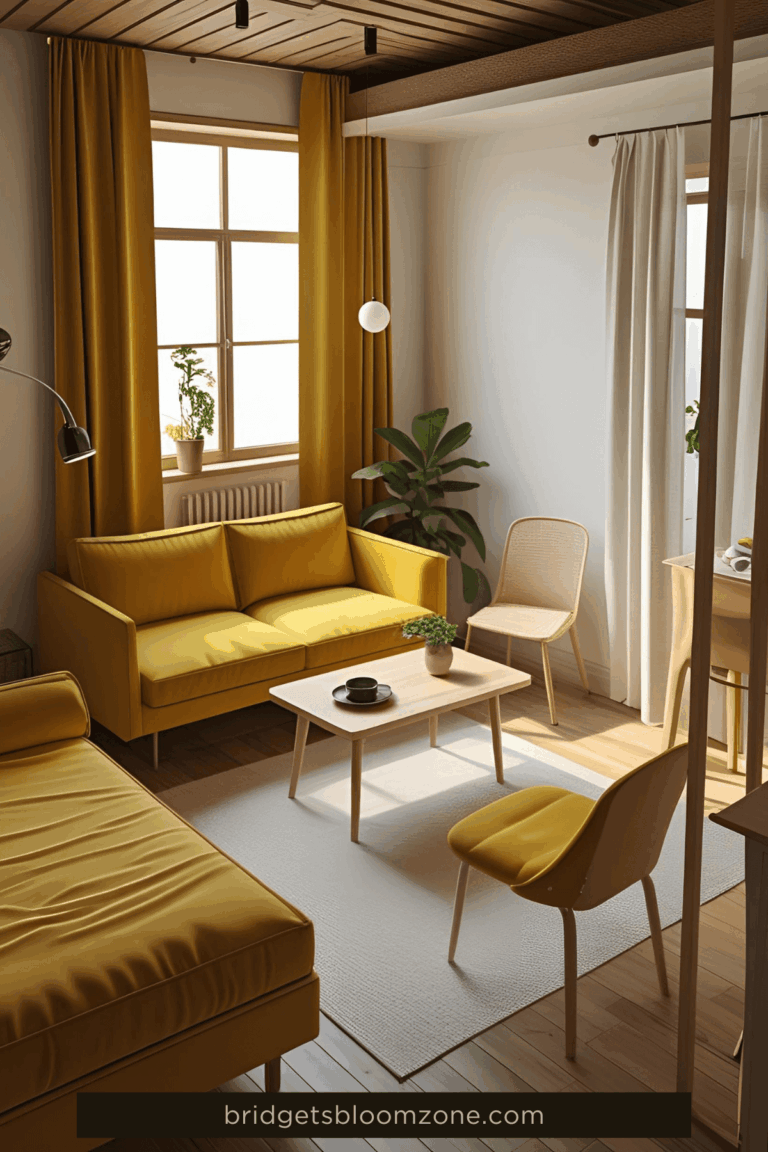
Daybeds
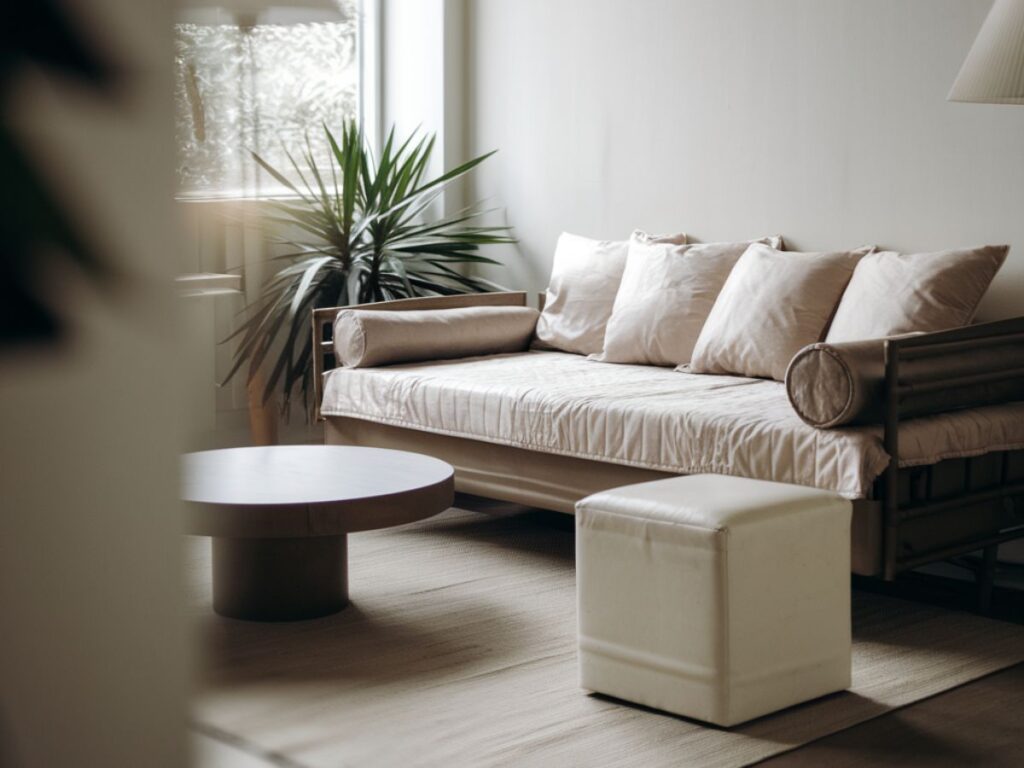
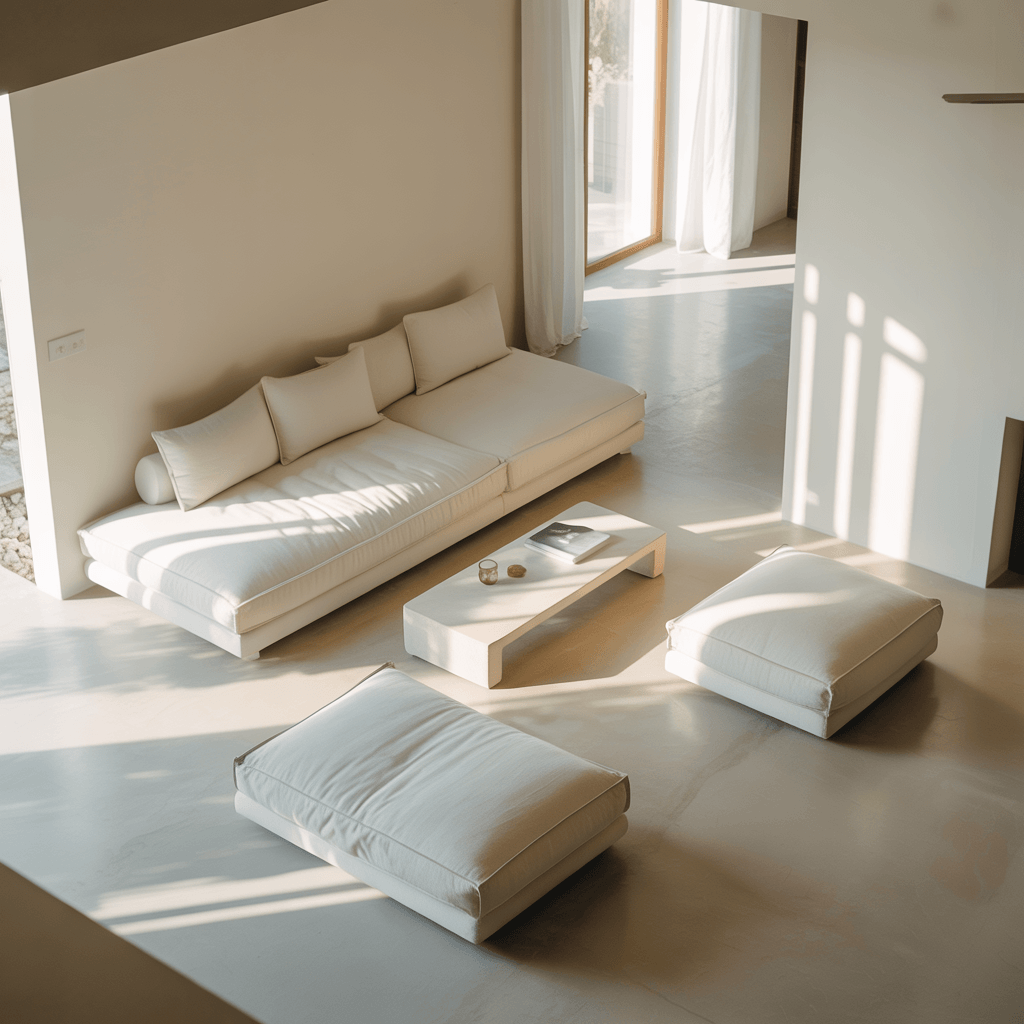
Daybeds are one of the most practical solutions for a living room and bedroom combo.
Why It Works
They function as a sofa during the day and a bed at night without requiring complex mechanisms.
Pros
- easier to use than Murphy beds
- comfortable for daily sleeping
- often includes built-in drawers, where all the duvets, pillows and blankets can fit.
Possible Drawbacks
- You can’t use both functions at the same time
- requires daily transformation
Best For
Studio apartments or single-room layouts. It is also a very good fit for those, who have a small living room, and often have guests.
One Design Principle That Changes Everything
In a small space, the visual weight of furniture matters just as much as its function.
Heavier pieces can dominate the room, while lighter elements create a sense of openness.
This doesn’t mean you should avoid larger furniture entirely.
Instead, aim for balance.
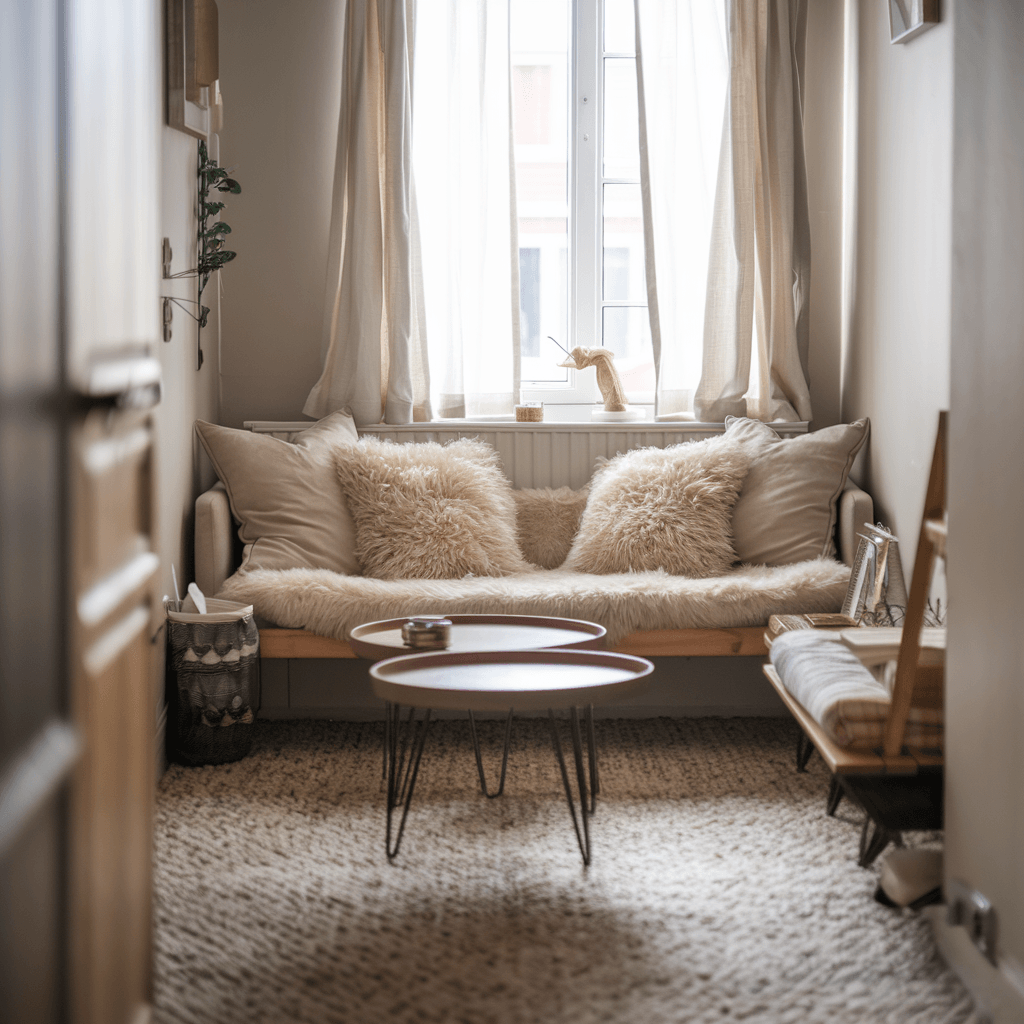
A heavier sofa can work well when paired with:
- slim chairs
- open or floating elements
- simple, uncluttered surfaces
The key is to have a contrast and balance at the same time.
Heavy furniture needs some airy furniture, but don’t try to place only airy furniture – you will need some pieces to ground the room.
Without contrast, the living room will be just boring, and without balance… just won’t be the cozy living room where you will love spending time.
One Common Mistake to Avoid
It is easy to assume that adding more furniture will solve storage or functionality problems.
And this is exactly why many small living rooms end up feeling even smaller over time.
In small living rooms, or small studio apartments you need to be smarter and think differently.
Small spaces are not miniature versions of larger spaces, so the same amount of furniture will make the room crowded.
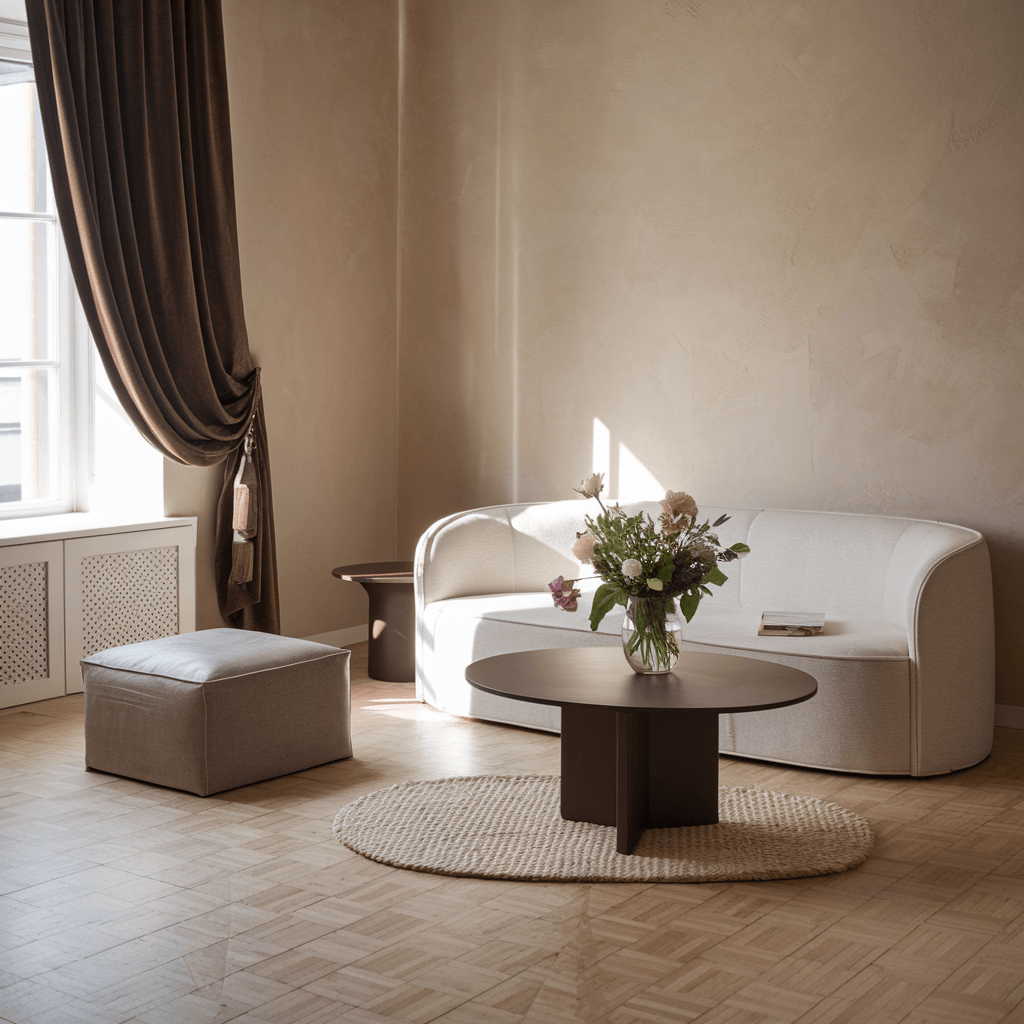
A common mistake is to place smaller furniture into a small living room. It will just emphasize the small size of the room.
Choose fewer pieces that eliminate the need for other pieces entirely.
Aim for multiuse pieces, that serve more function, even when they occupy more space.
This approach supports both a minimalist living room and a more refined luxury living room feeling — where space, not objects, becomes the main feature.
How to Choose the Right Furniture
Before buying any new piece, it helps to ask a few simple questions.
- How often will I use this function?
- How easy is it to transform or move?
- Does it block movement in the room?
- Can it replace another piece of furniture?
The best sofas ideas living room or furniture solutions are not necessarily the most complex ones.
They are the ones that fit naturally into your daily life.
A Small Architectural Insight
In compact homes, space itself has value.
This is the kind of detail that rarely gets mentioned — but makes a huge difference over time.
Every square meter you occupy with furniture is space you cannot use in another way.
Because of this, freeing up floor area often has a greater impact than expected.
Sometimes a custom-made piece may seem more expensive at first.
But if it allows you to remove other furniture or improve how the space functions, it can significantly increase daily comfort.
In many cases, the cost of furniture is small compared to the value of the space it occupies.
Before You Go
If you’re thinking about improving your living room furniture, it often helps to look at the space as a whole rather than focusing on individual pieces.
If this article made you rethink your space, these will take it one step further:
- how to organize small living room storage without visual clutter
- how to divide your home into functional zones in a studio apartment
- how to combine living, working, and sleeping in one space
- find the perfect ambient lighting ideas for your small living room
Each of these builds on the same idea: creating a home that supports your daily life, not just fills the space.
Save This for Later
If you’re planning your space or comparing ideas, save this guide so you can come back to these multifunctional furniture solutions when making decisions.
Small improvements, chosen carefully, can completely change how your home feels and works.