
My Studio Apartment Renovation – Architect’s Diary of a Home Makeover
1. Introduction & About This Studio Apartment Renovation Series
Welcome to my tiny studio apartment renovation adventure!
My story begins like this:
I bought a flat I hadn’t even seen…
Yes, really. My fiancé visited it, walked through the rooms (well—room), took some quick pictures, and messaged me that it’s too small, dark, and not in the best shape.
I looked at the photos, smiled, and replied: “Let’s buy it.” He thought I was joking. I wasn’t!
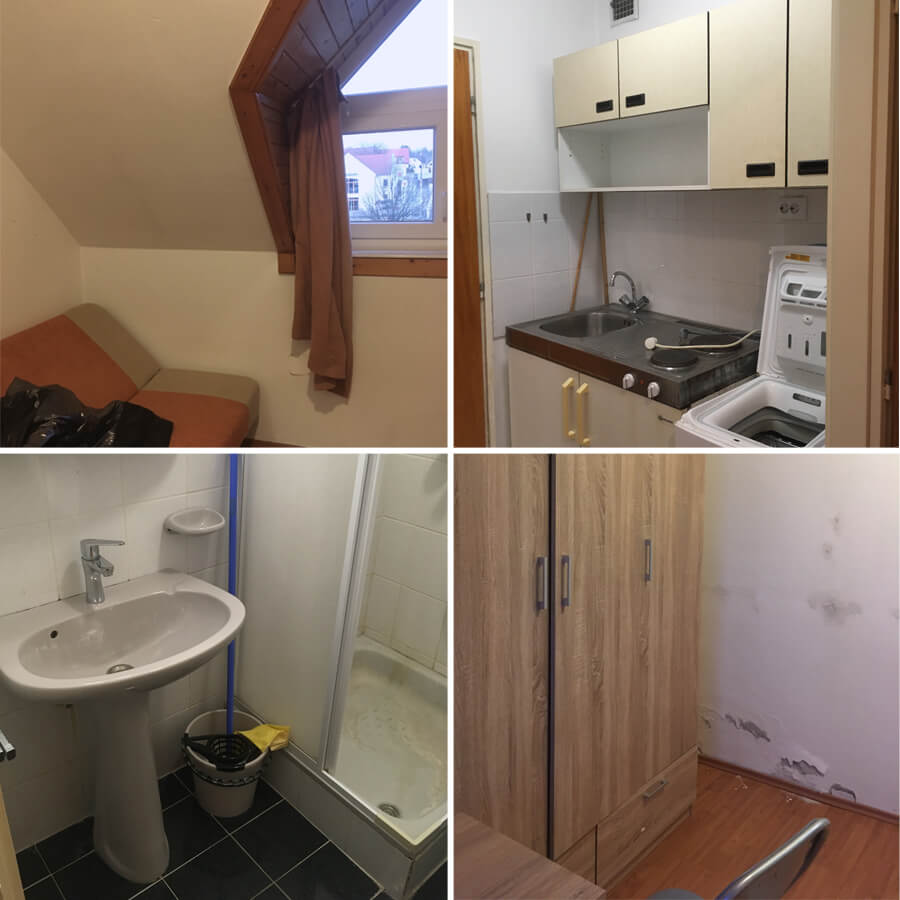
But I saw its potential. As an architect, my mind instantly began rearranging walls, visualizing smart furnitures, hidden storages, and mapping the flow of a calmer, more functional life.
Few months later – after all the paperwork was done, the keys handed over, and the last stamp dry—it was already ours. I stepped in, looked around, and… okay, it was tiny. But I saw more.
Side note: The apartment is really tiny. To be specific:
The whole flat is just 173 square feet – or 16 square meters!
And now, I’m inviting you to follow every step of the “studio apartment renovation” project — mess, beauty, decisions, doubts and all.
What to expect in this series?
This studio apartment renovation diary is not a before-and-after reveal.
It’s a realistic, step-by-step record of how a small space is planned, dismantled, rebuilt, and slowly shaped into a home that supports everyday life.
I’m an architect renovating this studio apartment with my fiancé, doing much of the work ourselves. That perspective matters. It means every choice is filtered through both professional knowledge and lived experience — balancing theory with real-life constraints like budget limits, construction surprises, and decision fatigue.
The goal of this series is simple:
to make the studio apartment renovation process clearer, easier, and more approachable for anyone facing similar decisions.
You can read the full introduction to the series here, where I explain how this project started and what to expect from the diary.
2. Phases of a Studio Renovation — At a Glance
A studio apartment renovation can quickly feel overwhelming if it isn’t broken down into clear phases. When everything happens in one open space, tasks overlap, timelines blur, and mistakes become expensive very fast.
Here’s how we structured our studio apartment renovation from the beginning:
Studio Apartment Renovation Phases Overview
- Planning Phase – setting limits, priorities, and realistic expectations
- Zoning & Layout – deciding how the space should function before thinking about finishes
- Finishes & Materials – deciding what finishes to build in and where
- Budgeting – calculation overall estimated cost, timelines, setting limits, priorities
- Demolition – removing what no longer works and uncovering what’s hidden
- Renovating the Invisible Parts – construction layers, pipes, electricity
- Bathroom Renovation – tackling the most technical and permanent space first
- Kitchen Renovation – kitchen, storage, lighting, and finishing details (coming soon)
- Living Room Renovation – living room lighting, storage, finishes (coming soon)
- Bedroom Renovation – bedroom lighting, finishes, storages (coming soon)
- Entry Renovation – entry lighting, finishes, furnitures and storages (coming soon)
- Studio Apartment Decoration – all you need to know if you have a small living space (coming soon)
Each of these phases is covered in a dedicated blogpost. This main article connects them all and shows how decisions in one phase affect everything that follows.
3. Planning Phase: Zoning & Layout in a Studio Apartment Renovation
If there is one phase you should never rush in a studio apartment renovation, it’s layout planning. The layout determines how the space feels, moves, and functions — long after the paint color is forgotten.
Why Layout Is the Foundation of Any Studio Apartment Renovation
In a studio, layout is not about furniture placement. It’s about:
- circulation paths
- visual openness
- zoning without walls
- how daylight travels through the space
- easy use and access at any time
A good layout supports flexibility. A bad one forces constant compromises.
Common Studio Layout Mistakes
Some issues appear again and again in studio renovations:
- placing the bed where it blocks light or circulation
- ignoring storage volume early on
- placing single furniture pieces instead of a strategy
- designing room-by-room instead of holistically
- prioritizing aesthetics over movement
- forgetting daily use, ending up in a cluttered home or organizing constantly
- not using artificial lighting the proper way
I explore layout strategies, zoning principles in this blogpost about creating zones and circulation paths, and real layout variations for my tiny studio apartment in this dedicated article.
4. Storage & Zoning Ideas for a Studio Apartment Renovation
In a studio apartment renovation, storage is not an afterthought — it’s the backbone of easy everyday use.
Storage Is NOT a Luxury in a Studio Apartment Renovation
Without sufficient storage, even the most beautiful studio feels cluttered. The goal isn’t to hide everything, but to give every item a logical place.
Effective studio storage often relies on:
- vertical solutions
- hidden storages
- built-in elements
- floating furniture
- multifunctional furniture
How We’re Thinking About Zones Without Walls
Instead of physical partitions, zones can be defined by:
- lighting
- ceiling changes
- furniture orientation
- material transitions
- soft architecture: rugs, curtains
These subtle cues allow separate different functions that happen in one space, like cooking, dining and sleeping.
Using zones and hidden stroages for each zone makes a studio feel organized without shrinking the space.
5. Finishes & Materials
In architecture, three things define a project concept:
- what is the vision: how the space will be used and perceived,
- how people move through it
- which materials and finishes support both
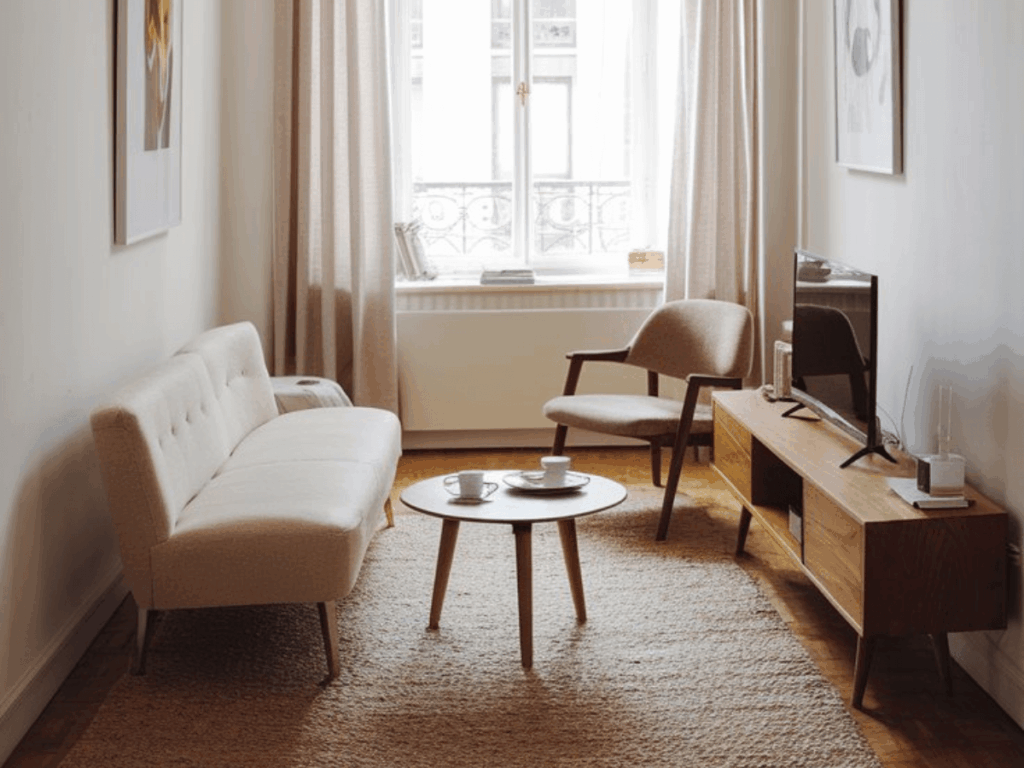
In a studio apartment renovation, finishes are never just decorative. They reinforce function, circulation, and daily habits.
Function Comes First
Before choosing finishes, be clear about how the apartment will actually be used. This is important because of hygienic reasons, durability and daily use.
Ask simple but honest questions:
- Is this a full-time home or a short-term rental?
- Do you cook daily or rarely?
- Do you have pets?
Materials should support real behavior, not idealized lifestyle photos.
Circulation Shapes Material Choices
In a small studio apartment renovation, circulation paths are intense — the same floor area is walked on constantly.
That means:
- durable flooring in main movement zones
- easy-to-clean surfaces near kitchen and bathroom areas
- visual continuity to avoid breaking the space into fragments
Fewer material changes usually make the apartment feel calmer and larger.
Materials That Work With Small Spaces
Good studio materials tend to be:
- visually quiet
- consistent across zones
- resilient and low-maintenance
Overly textured, glossy, or high-contrast finishes can overwhelm a one-room apartment. They can maybe work in one room, like in the small bathroom, but for the living zones choose minimalistic and natural materials. Simplicity here supports flexibility later.
Fewer Finishes, Better Decisions
One of the most common renovation mistakes is over-selection.
In a studio apartment renovation:
- fewer materials = clearer concept
- repetition creates rhythm, not boredom
- continuity helps flexibility in zones
One small but important note before moving on: when it comes to finishes, it’s always wise to plan for a little extra.
As a general rule, adding 10–15% on top of the measured area helps cover cutting, alignment, and the occasional imperfect piece.
The good news is that when a material is used across a larger surface, this extra allowance tends to feel less significant overall.
And since these details quietly shape your final costs, they lead us naturally to the next step of the renovation journey — budgeting.
6. Cost & Budgeting Guide
Usually it is smarter to calculate the costs, after you know the layout and have decided about finishes.
Budgeting is one of the most misunderstood parts of a studio apartment renovation. Small size does not mean small cost. In fact, fixed expenses — permits, labor, plumbing, electrical work — often make up a larger percentage of the total budget than they would in a bigger home.
Why Budgeting Is Critical in a Studio Apartment Renovation
In a studio, there is very little room for financial mistakes. Overspending on one area usually means compromising somewhere else — often in ways that affect daily comfort.
Budget clarity helps you:
- prioritize what truly matters
- avoid emotional decisions mid-renovation
- reduce stress when unexpected costs appear
Typical Studio Apartment Renovation Cost Categories
- Demolition and waste removal
- Renovation of water pipes, wastewater, electricity, ventilation and heating
- Door and window renovation, handles
- Finishes generally
- Painting costs
- Bathroom renovation (often the biggest expense)
- Kitchen and appliances
- Custom storage or carpentry
- Lighting and electrical upgrades
- Furniture upgrades (new or remodel)
- Textiles and decoration (curtains, rugs, etc.)
- Contingency – the “backup” for your unexpected expenses, usually 10-15% of total cost
- Labor costs: as a rule of thumb, labor costs are usually equal to—or about 1.2×—the material cost. Depending on the complexity of the work or the tile size, labor can even reach 1.5-2× the material cost.
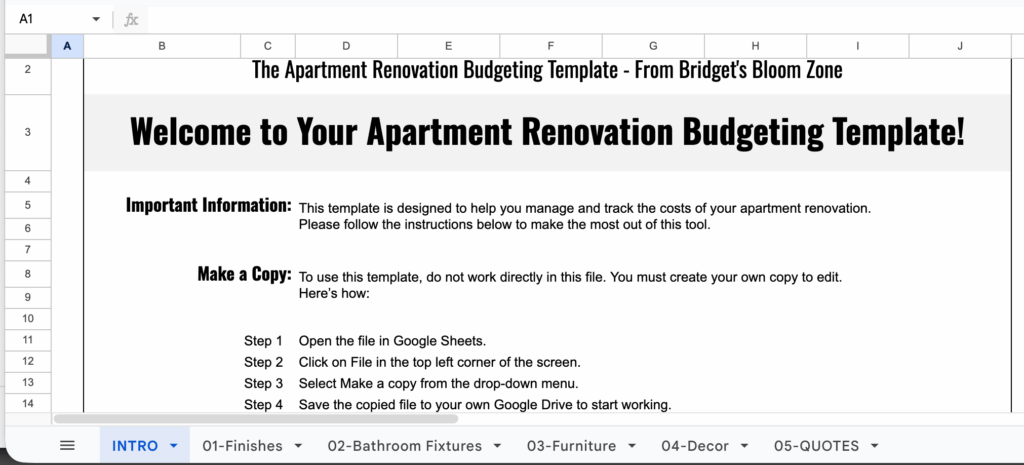
I share real numbers, budget breakdowns, and lessons learned in the full Cost & Budgeting Guide, linked here. Free renovation budgeting template included!
7. Demolition Phase in a Studio Apartment Renovation (+How-To Avoid Mistakes)
Finally, you can start actually doing something!
Or hiring someone to do that for you.
Demolition is often the emotional turning point of a studio apartment renovation.
Once walls are opened and fixtures removed, the project suddenly feels real — and irreversible.
What Demolition Really Means in a Tiny Space
In a studio, demolition affects everything at once. There is no “other room” to escape to. Dust, noise, and visual chaos fill the entire apartment.
Hidden problems also tend to reveal themselves at this stage — uneven floors, outdated wiring, unexpected structural elements.
Also, be prepared for the fact that you may have no space to store debris. All demolished and removed materials can end up piled in the middle of the room—unless you arrange timely removal in advance or find a temporary place where larger quantities can be stored.
How to Avoid Costly Demolition Mistakes
The most important lesson?
Demolition should follow planning.
Clear drawings, documented decisions, and knowing exactly why something is being removed can save both money and regret.
This means, being prepared to what to build in next can save a lot of stress later.
I wrote a full breakdown of what we learned during demolition — including mistakes — in the dedicated post linked here.
8. Renovating the Invisible Parts
In a studio apartment renovation, the most important work is often the least visible.
Before tiles, paint, or furniture ever appear, the apartment is rebuilt through layers you’ll never fully see again: construction buildup, reinforcements, pipes, cables, and systems hidden behind walls and floors.
These “invisible parts” don’t show up in glossy before-and-after photos — yet they determine how comfortable, quiet, safe, and functional your home will be for years.
What Counts as “Invisible” in a Studio Apartment Renovation?
- Floor and wall construction layers
- Structural or hidden reinforcements (for new doors, partitions, or heavy built-ins)
- Water supply and wastewater pipes
- Ventilation and heating systems
- Electrical wiring and lighting infrastructure
Once these are closed up, changes become difficult, expensive, or impossible — so decisions here need to be deliberate.
Best is that these are covered in the very first phase, when deciding zones and layouts!
Construction Layers: Floors & Walls
Even in a small studio apartment renovation, floor buildup can include:
- leveling layers
- sound insulation
- thermal insulation
- underfloor heating (if planned)
- final finish thickness
Every millimeter counts. Raising the floor too much can affect door heights, transitions, and visual proportions. Wall layers matter just as much, especially when adding insulation, soundproofing, or hiding new installations.
Hidden Reinforcements & Structural Prep
Studios often need small but critical reinforcements:
- strengthening walls for sliding or pocket doors
- reinforcing partitions for wall-mounted furniture
- preparing fixings for shelves, cabinets, or fold-down elements
- for built-in storages or wall niches – an extra built layer is needed usually
These reinforcements must be planned before walls are closed — guessing later usually leads to compromises or visible patchwork.
Plumbing: Water & Wastewater
In a studio apartment renovation, plumbing decisions are permanent.
Moving a sink, toilet, or shower affects:
- floor slopes
- pipe diameters
- noise transmission
- maintenance access
Because space is limited, pipes often run closer to living areas — making proper routing and sound insulation essential.
Or, assuming you are in a condo – many of the placing of these vanities can’t be changed easily. It is good to know in the beginning.
Ventilation & Heating
Ventilation is one of the most underestimated systems in studio apartments.
Good ventilation:
- prevents moisture and mold
- improves air quality
- supports comfort in open-plan living (think about cooking)
Heating systems also need to be coordinated early — radiators, underfloor heating, or electric solutions all impact layout, furniture placement, and energy use.
Electricity & Lighting Infrastructure
Lighting doesn’t start with fixtures — it starts with wiring.
In a studio apartment renovation, electrical planning defines:
- how zones are perceived
- where flexibility is possible later
- how layered lighting replaces walls
Socket placement, switch logic, and circuit planning should follow your layout and daily routines, not decoration trends.
Although lighting is one of the few things that can be adjusted relatively easily later, you’ll have a much easier time if you establish a good system from the start.
For a general walk-through, read my article about modern lighting in small apartments!
9. Renovating the Rooms
Bathroom Renovation in a Studio Apartment (High Impact, Small Space)
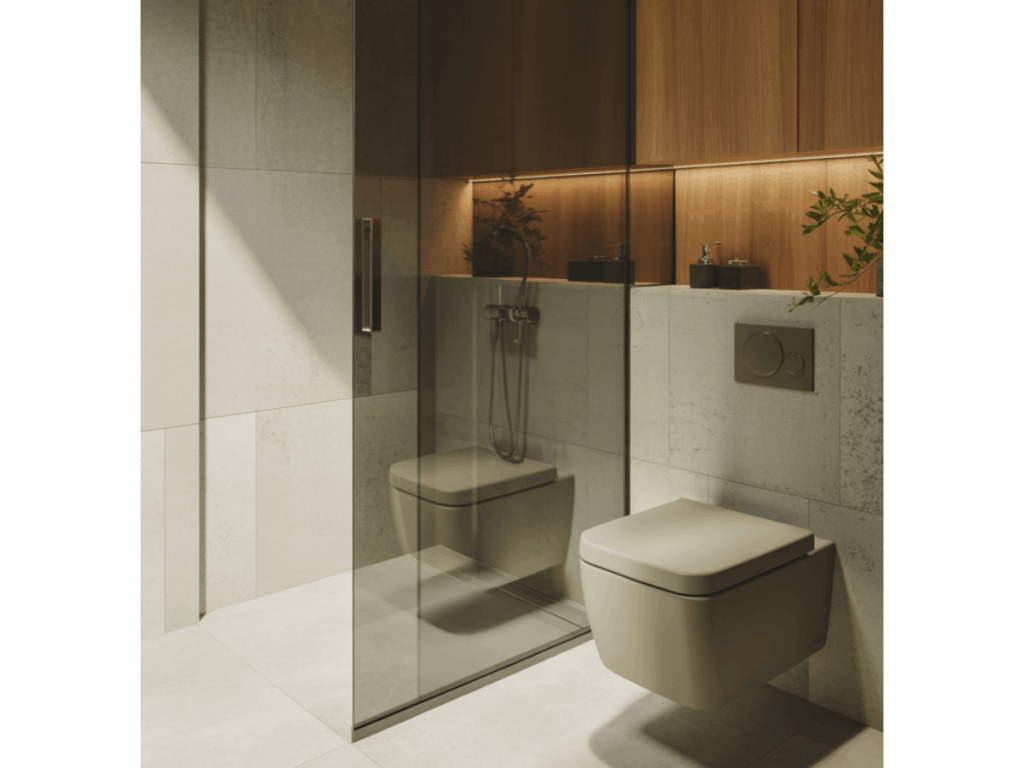
In a studio apartment renovation, the bathroom deserves special attention. It’s one of the smallest spaces, yet one of the most complex and permanent.
Why the Bathroom Deserves Extra Attention in a Studio Apartment Renovation
Bathroom decisions are difficult to change later. Layout, waterproofing, tile choices, and lighting all affect:
- daily comfort
- maintenance
- resale value
In a studio, the bathroom often sets the overall tone for the apartment.
Design Decisions That Matter Most
Some of the most impactful bathroom decisions include:
- tile size and layout
- grout color & color generally
- lighting placement
- storage integration
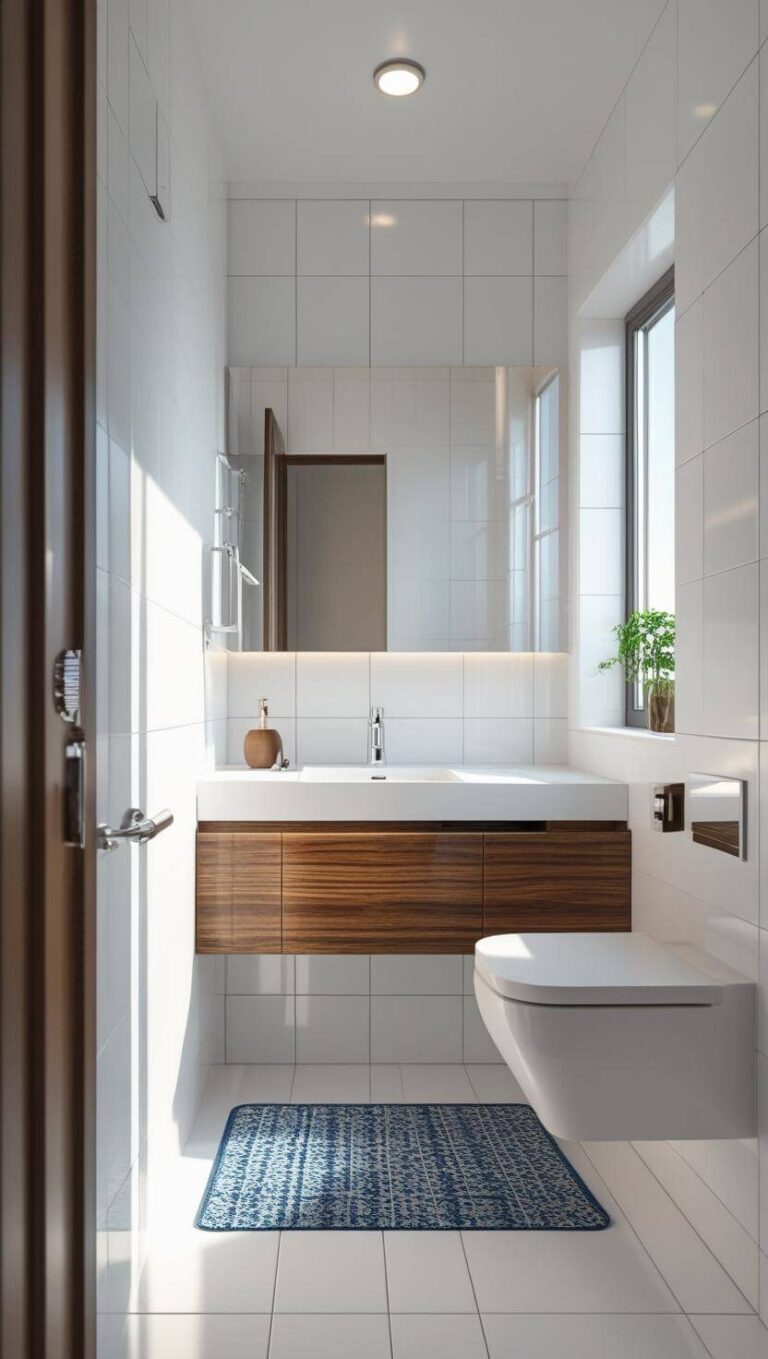
I go into detail about our bathroom renovation choices, including tile strategies and lighting decisions, and our mistakes in my “Minimalist, Small Bathroom Renovation Ideas – My Reno Diary” article.
Kitchen Renovation in a Studio Apartment
In a studio apartment renovation, the kitchen is rarely “just a kitchen.” It’s part of the living space, the visual focal point, and often the most technically complex zone after the bathroom.
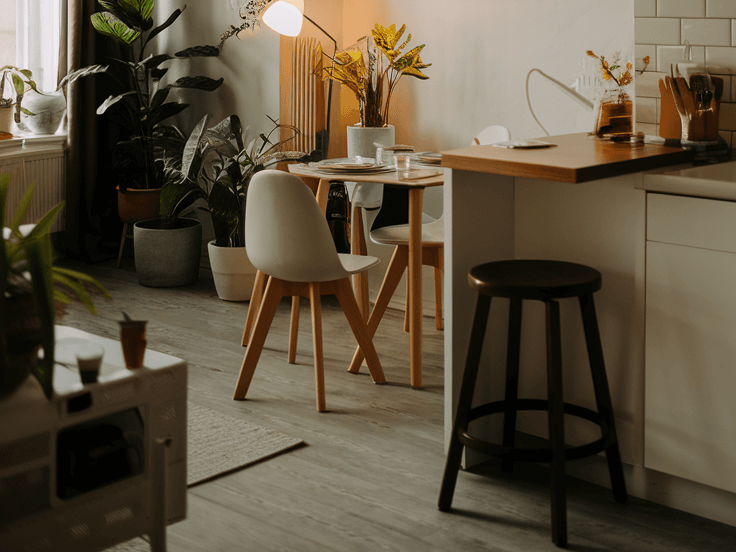
At this stage, focus less on finishes and more on function and proportions:
- appliance sizes and opening directions
- clear circulation in front of cabinets
- where prep, cooking, and storage realistically happen
Small kitchens benefit from simple layouts and continuous surfaces. Overdesigning this area early can lock you into decisions that are expensive to change later.
Even if your kitchen renovation comes in a later phase, the connections (water, waste, electricity, ventilation) must already be planned now.
This is a space where future flexibility matters more than perfection.
Living Room Renovation & Multi-Use Spaces
In a studio apartment, the living room is never a single-purpose room. It may be a lounge, bedroom, workspace, dining area, and sometimes even a guest zone — all within the same footprint.
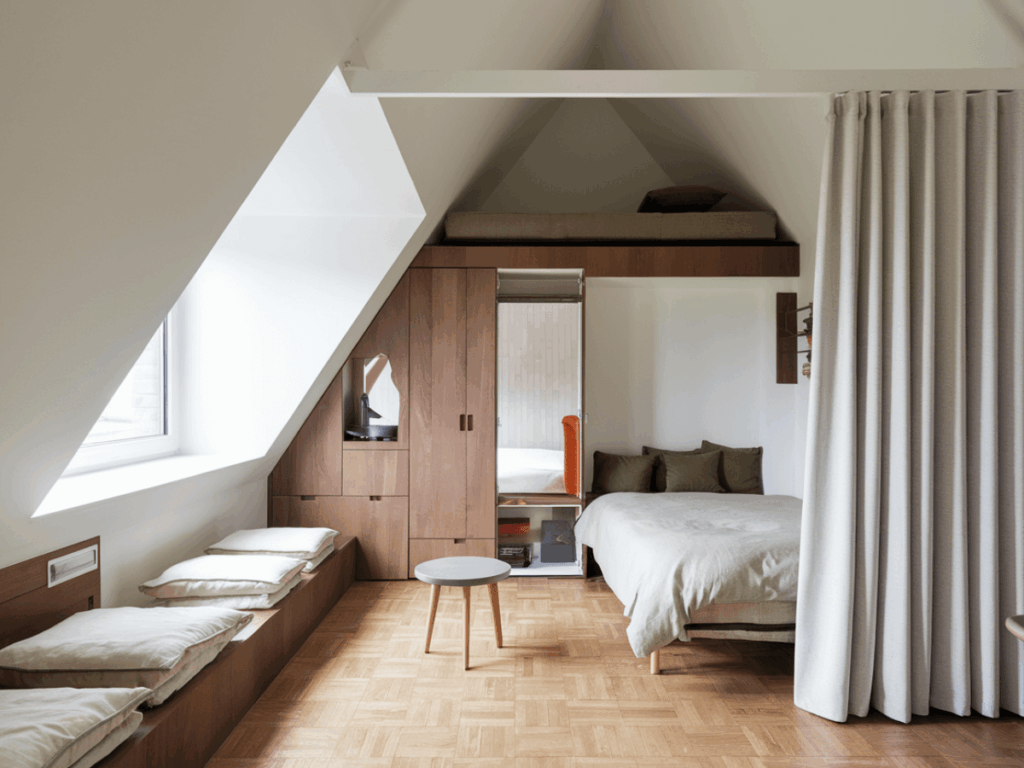
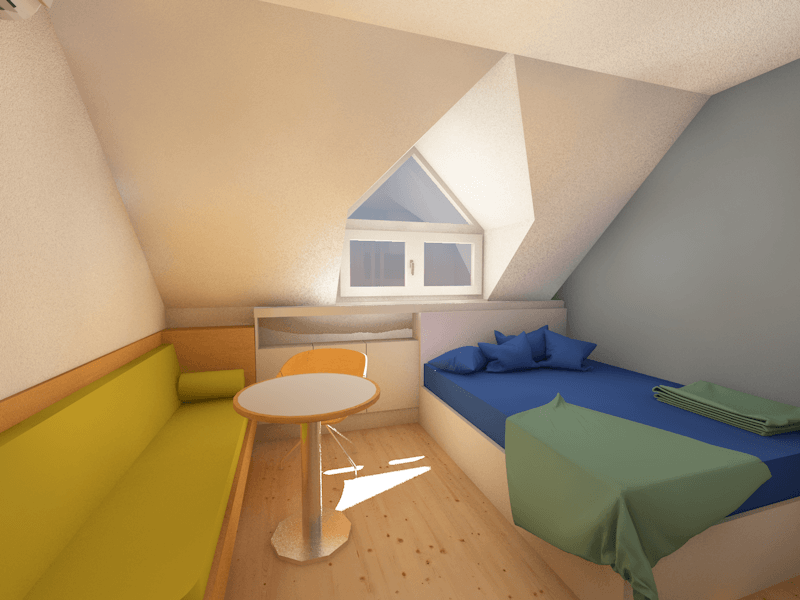
Like in my studio apartment – everything happens in 16 square meters, including bathroom and kitchen. But this has versatility – check out my 6 layout versions!
Before choosing furniture or finishes, define:
- primary vs secondary functions
- daily movement paths through the space
- sightlines from the entry and kitchen
Good studio apartment design relies on zoning rather than walls. Lighting, furniture placement, and material changes often do more than partitions.
Even if the living area feels “finished” later than other spaces, its layout decisions affect almost every other renovation choice.
Bedroom Renovation in a Studio Layout
Bedroom renovation in a studio apartment is more about privacy strategy.
Whether the sleeping area is fully open, partially screened, or visually separated, the decision impacts lighting, storage, and circulation.
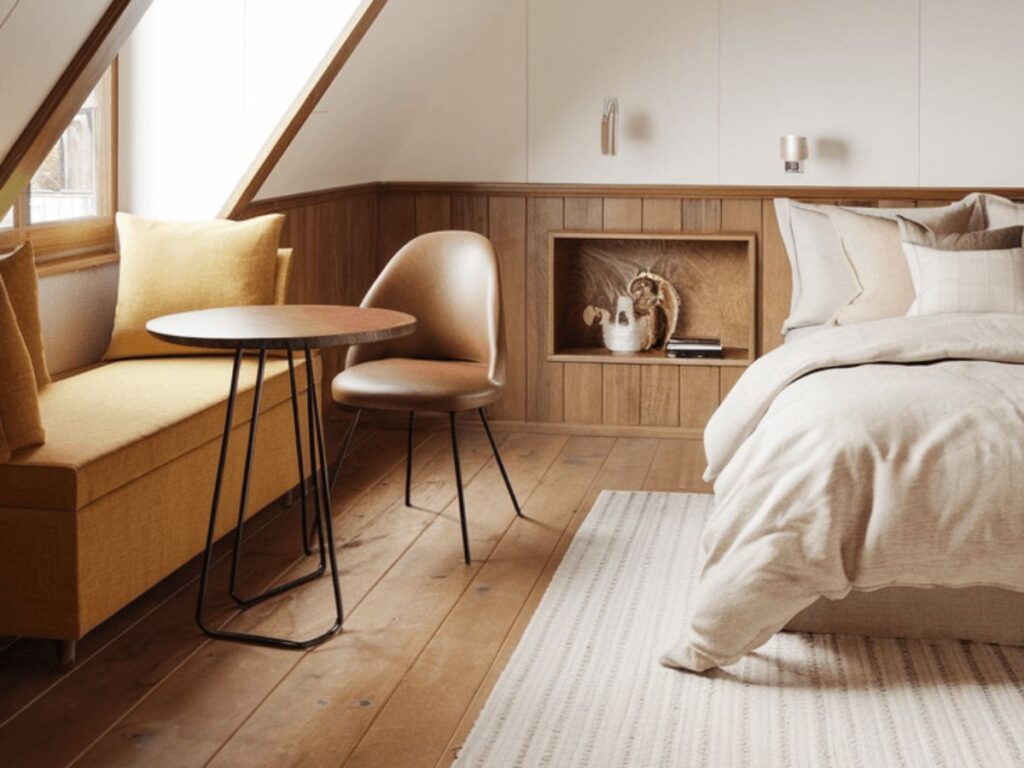
Early questions to answer:
- fixed bed or flexible sleeping solution
- need for visual separation vs openness
- storage integration around the bed zone
Even if this part of the apartment won’t be fully built out yet, the electrical points, lighting layers, and wall reinforcements should be planned in advance. Retrofitting these later is rarely simple.
In studio living, the bedroom works best when it feels intentional — not improvised.
Entry Renovation & First Impressions
The entry is often the smallest area in a studio apartment renovation, if there is any. Yet it carries disproportionate weight. It sets the tone, controls clutter, and mediates between public and private space.
Key considerations here include:
- storage for daily essentials and guests
- lighting that supports orientation
- durable materials for high traffic
Even a narrow entry can feel generous with the right lighting and clear organization. Because this space connects directly to all other zones, its layout and finishes should be decided early — even if execution happens later.
A well-planned entry quietly improves everyday life more than most people expect.
10. Furniture + Multi-Functional Design
In a studio apartment renovation, furniture is not just design choice — it’s architecture at a smaller scale. Every piece affects circulation, storage, and how flexible the space can be over time.
At this stage, the goal isn’t to select specific items, but to define principles.
In small studios, the most successful furniture strategies usually share a few traits:
- one piece serving more than one function
- visually light forms that don’t block daylight
- integration with storage rather than standalone bulk
- proportions that respect circulation paths
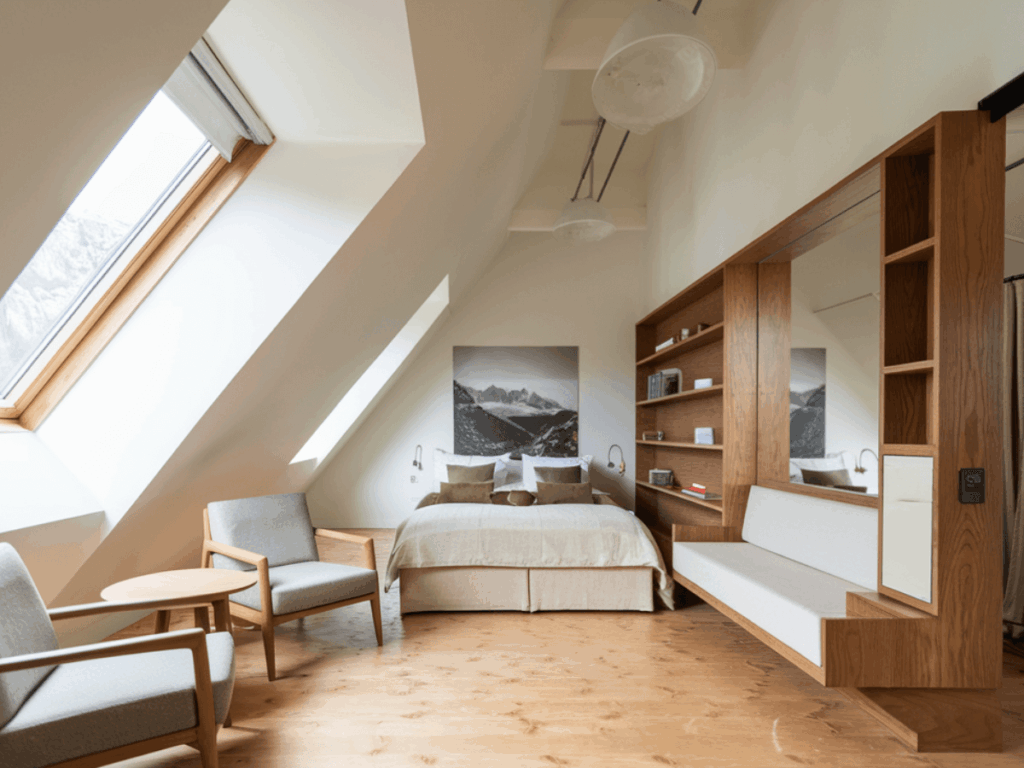
Multi-functional design works best when it supports daily routines, not occasional scenarios. A bed with integrated storage that’s easy to access will be used; a complex transformable system often won’t (Fold down or Murphey beds…).
It’s also important to think about furniture early because it affects:
- electrical planning (lighting, sockets, switches)
- wall reinforcements for mounted or built-in elements
- storage volume calculations
In my experience, the best studio apartment designs don’t rely on clever tricks — they rely on fewer, well-considered pieces that work quietly in the background.
This section will later connect to detailed posts about specific furniture strategies, built-ins, and layout-compatible solutions. For now, the key takeaway is simple:
Design the furniture with the apartment, not after it.
11. Mistakes to Avoid During a Studio Apartment Renovation
Many renovation mistakes don’t come from bad taste — they come from rushed decisions and lack of planning.
Planning Mistakes
- skipping detailed drawings
- relying solely on inspiration images
- underestimating timelines (& costs)
- underestimating or forgetting storage needs
- forgetting about ventilation
Design & Material Mistakes
- inconsistent color use
- too many finishes in a small space
- not matching or poor finishes
- poor lighting placement
- light fixtures that don’t fit the space
- prioritizing trends over daily use
- wrong (too big, bold, complicated) furniture
- lack of proper interior shading / window shading
12. Timeline — How Long a Studio Apartment Renovation Really Takes
One of the most frequent questions about studio apartment renovation is timing. The honest answer: longer than expected.
One thing I’ve learned in my work: the larger or more complicated the project and the tighter the budget is, the longer it takes.
Expected vs Reality
Even small renovations involve:
- planning time – it needs a lot to avoid stress later!
- coordination between trades
- material delays
- unexpected repairs
- emotional fatigue
Building in buffer time — both mentally and financially — makes the process far more manageable.
What This Studio Apartment Renovation Is Teaching Me (So Far)
This studio apartment renovation is teaching me patience — and not the romantic kind…
Things take longer. Decisions evolve. What felt final often isn’t.
Changing your mind is allowed — sudden decisions are not.
I have made some mistakes during my bathroom tiling with a specialist… I’m also learning to:
- check everything specialists do
- ask for corrections without apology
- request extra care where it matters
- question “this is how we always do it”
Most problems can be solved. Some just need better questions.
We’re still only at the finishing stage of the bathroom, so this section will grow and change — just like the apartment itself. I am waiting to start the next rooms!
Until then, you can read our mistakes during bathroom renovation, or continue reading if you feel like you would need some more help with organization or design.
13. Resources, Tools & Asking for Help
This is the part of a studio apartment renovation where clarity saves more time (and money) than any design trick.
Renovation overwhelm rarely comes from lack of information — it comes from too much unfiltered advice, conflicting opinions, and Googling problems that actually require human judgment.
DIY vs Outsource — Be honest early, but It is OK to change your mind
A good rule of thumb:
- DIY saves money only if mistakes won’t be expensive to undo
- Outsourcing saves time only if the brief is clear
DIY works well for planning, sourcing, styling, and some finishing tasks. Structural work, waterproofing, electrical systems, and plumbing should almost always be handled by professionals — but never blindly handed over.
When to Ask an Architect / Interior Designer (Even for a Small Studio)
An architect isn’t just for large homes. In fact, studios benefit the most from professional thinking.
Ask for architectural help when:
- walls are moving
- functions overlap (sleeping / cooking / working)
- you need zoning without visual clutter
- you’re stuck between several “almost good” layouts
- The space is super tiny or complicated
- You don’t have time/energy for planning
Interior designers usually offer consultations that cost significantly less than designing the whole apartment. It can help a lot in critical questions like circulation, storage planning or choosing finishes and colors.
Even a short consultation can prevent months of compromise later.
Specialists Are Experts — But You Are the Editor
One of the most important renovation lessons:
specialists and handmen know their field — not your apartment as a whole.
Electricians, plumbers, tilers, and installers often say:
- “This isn’t possible.”
- “We’ve always done it this way.”
That usually means: it’s unfamiliar, not impossible.
Ask questions. Ask for drawings. Ask them to explain alternatives.
And always check the work, even when it looks finished.
What Not to Google Endlessly
Some things don’t get clearer with more tabs open:
- final layout decisions
- proportions
- how a space will feel day to day
Pinterest and Instagram are great for inspiration, but poor for validation. At some point, you have to stop comparing and start committing — thoughtfully, not impulsively.
Tools That Actually Help
Instead of searching for “best solution,” focus on tools that support decisions:
- simple floor plans (even hand-drawn)
- material samples you can touch
- realistic timelines
- written priorities (what must work vs what would be nice)
This article will gradually link to detailed guides, templates, and decision tools. Think of this section as your navigation panel — not a checklist, but a filter.
14. Follow the Studio Apartment Renovation Journey
This article is just the starting point. Over time, it will connect detailed posts, each covering a specific milestone of the studio apartment renovation — from lighting and kitchen planning to storage solutions and finishing details.
If you’re planning your own studio apartment renovation and feel overwhelmed, you’re not alone.
Feel free to leave a comment — layout, budget, storage, or bathroom questions — I read and reply to all.