
Smart Food Storage: Save Money, Cut Waste, Take Control of Your Pantry Today!
Intro – Why I Started the “Pantry Cleaning Challenge”?
First, I heard about food storage and pantry organization challenge in January. One of the Instagram mommies shared her beautifully organized pantry and food storage… and how she started to clean up “the ruins” in her kitchen after Christmas.
Back then I just took notice — “Pantry cleaning? What an interesting idea!”
But a month later, we just ran out of money, so I was forced to give it a try. (I bought a flat without seeing it first — that’s another story!)
It was just the beginning of the month, so we didn’t have much until the next salary, which was almost a month later. The best option to avoid spending money was simple: eat what we had at home and not go shopping.
At first, I thought we were going to starve. But then I realized: we were storing food in a completely unorganized way. The food supplies were surprisingly plentiful — and shocking!
So, I decided it was time to revamp this part of our living space. That’s how the Pantry Cleaning Challenge began in February.
Follow along, how to start a pantry organization, and by the end, you’ll have a simple, functional food storage system!
TL;DR: A few hours, some sorting, and clever storage solutions can completely transform your pantry or small kitchen.
Step 1 – Identify Your Food Storage Habits & Your Storage Spaces
In our rented flat, there is no pantry. We store everything in the kitchen, but since the kitchen cabinets are quite small, food, cookware, and other items (like the first aid kit) ended up scattered across different cupboards, shelves, and pieces of furniture—wherever they could fit. We even kept some items in the fridge that didn’t actually need refrigeration.
I had a huge stock of some items, while others had been on my restocking list for weeks. This led to shopping habits that weren’t very intentional. As a result, I went to the store with a list, somehow, I always ended up forgetting something.
In short: chaos!
My first realizations led to action—and the start of my pantry cleaning journey.
Before Organizing, Reflected on Your Cooking and Shopping Habits
- How often do you cook at home?
- What types of food do you usually eat?
- How often do you go grocery shopping, or how often would you like to?
- Do you have seasonal habits — like canning, holiday dinners, or baking traditions?
- How much food stock do you want to keep at home?
- How many pots, pans, and dishes do you own and use?
- Which small kitchen appliances do you have and how often do you use them?
- Are there other things that – according to your habits – belong in the kitchen or pantry? (Cleaning supplies, first aid kit, baskets, recycling bins, etc.)
Answering these questions helped me realize which items truly needed a home and which were cluttering the kitchen.
Assess The Food Storage Spaces Available in Your Home
- How much space do you have to store everything?
- How many cabinets and shelves do you have?
- How much extra storage space would you like to have?
In our rented flat, there’s no pantry. Everything is stored in:
- A small kitchen cabinet (120 cm long)
- A display cabinet (150 cm long, 95 cm high)
- A small drawer chest
- A mini shelf
I aimed to keep 20% of space empty, but honestly, I’d be happy if everything just fit neatly.
Step 2 – Empty and Clean All Your Storage Space
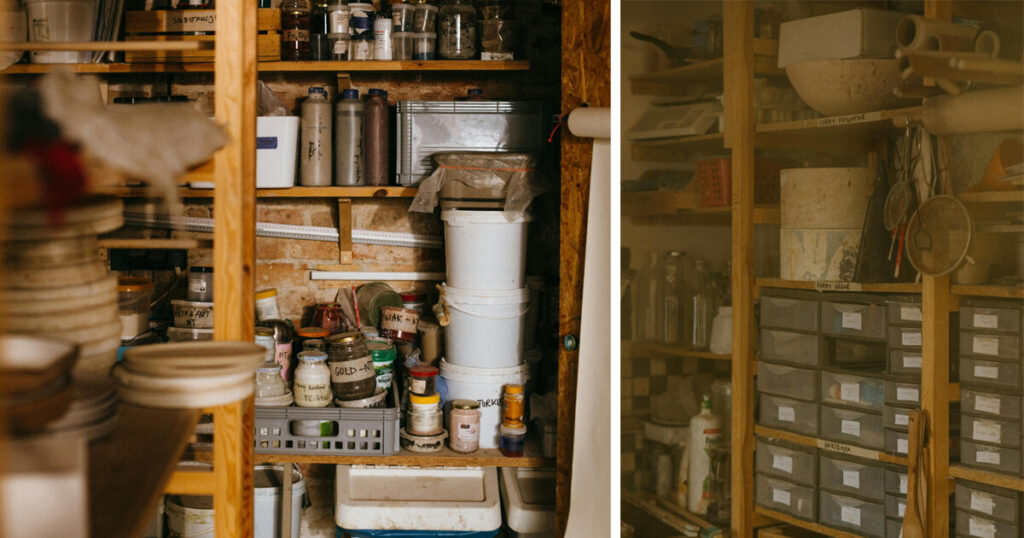
Empty & Clean
- Remove everything from all cabinets, shelves, and drawers
- Clean all surfaces thoroughly
- Separate items into three piles: keep, discard, donate
I started by going back to square one—I took everything out, cleaned thoroughly, and started fresh. Since I didn’t want to buy extra storage containers, I tried to arrange things so that each category fit naturally into a designated space, like a drawer or a specific shelf.
You’ll be in a much better position if you have a pantry – you’ll have everything in one place.
Once you’ve tackled the first two points, there’s just one thing left to do:
Step 3 – Zone Your Storage and Reorganize your Food
Group by Category
I started by mentally organizing items into categories:
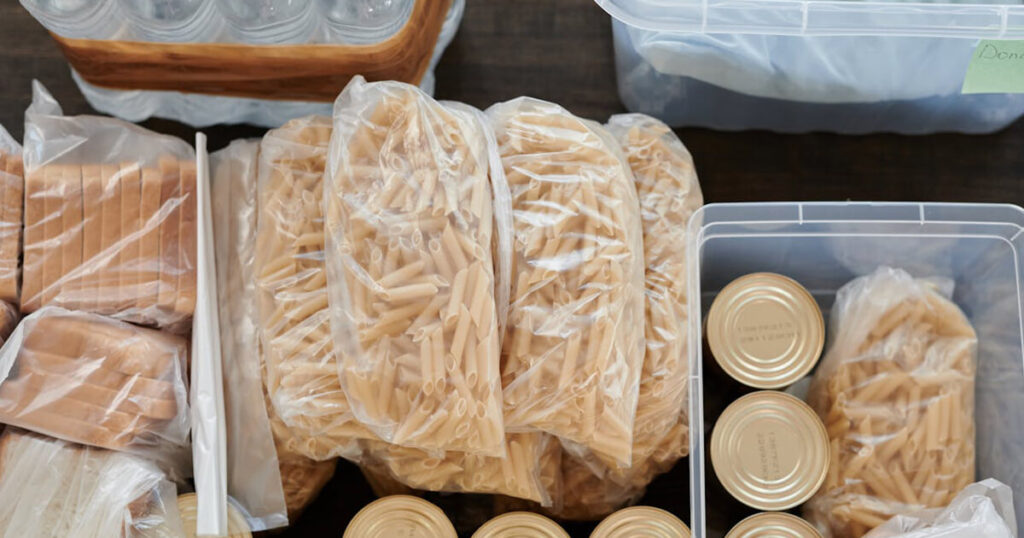
- Dry foods: legumes, grains, pasta, flours
- Canned goods / preserves: tomato sauces, jams, pickles
- Miscellaneous: first aid kit, sweets, small kitchen tools
- Breakfast: that is an independent category for us: coffee, tea, oat, fruits and and the kitchen appliances that go with it.
- Temporary / seasonal: baskets, overflow items
Using bins or drawers for categories helps everything fit naturally into the available space.Since everyone lives a little differently, the same system won’t work for everyone. However, creating a system definitely can.
The key is to establish it, use it, and once a year, evaluate how it’s working.
Zone Your Kitchen – Create Zones for each Category
Organize your kitchen by function and frequency to make everyday tasks easier:
- Pantry zone: dry goods and staples
- Cooking zone: spices, oils, and everyday ingredients
- Bulk / overflow zone: rarely used items
- Snack / kid-access zone: easy-to-reach treats
Ask yourself: How do you want to categorize food? Where should each group live for easy access? After shopping, what’s the fastest way to return items to their zones?
Creating clear zones turns chaos into an intuitive, organized system.
Zone Your Kitchen – my example
- Display cabinet: cookware, dinnerware, cutlery, towels
- Top of display cabinet: fresh fruit, bread, tea and coffee station
- Drawer chest: dry foods (bottom drawers), preserves (middle), miscellaneous (top)
- Kitchen cabinet: cleaning products, storage containers, empty jars
- Top of kitchen cabinet: always clear, it is the workspace
- The shelf: oils, sauces, spices
- Fridge: all vegetables
Tip: Even without a large pantry, categorizing by zone makes retrieval and storage easy.
Smart Storage Solutions for Every Zone
Once your kitchen is cleaned and categories are organized, it’s time to pack everything back.
I aimed this blogpost to be a helper in creating a functional system, not about choosing the perfect containers.
That said, there are plenty of possibilities to make each zone work: shelf risers, pull-out baskets or drawers, vertical dividers for trays and boards, clear jars for dry goods, lazy Susans for cans or spices, bins for grouped items, door-mounted racks for wraps or lids, and under-shelf baskets or hooks.
The key is usability and ease, not uniformity. Choose that you find pretty and functional!
Step 4 – Adopt a Low-Waste Approach
Once you’ve reflected on your habits and set up an organizational system, you’ve taken a big step toward a more sustainable kitchen. How?
By taking inventory of your supplies and organizing them in a clear, accessible way, you now know exactly what you have at home.
Before anything expires, you can use it up because you won’t forget about it, unlike items that might get pushed to the back of a hidden pantry shelf. While this may be a different approach and still far from zero waste, maintaining a well-kept system will definitely reduce your waste.
Organizing isn’t just about neatness — it also helps reduce waste.
- You can see what you have at home and use items before they expire
- Prevents buying duplicates
- Encourages mindful shopping and sustainable choices
5 Key Reasons, Why Efficient Food Storage Matters:
- Reduces Food Waste – Planning and organizing your pantry helps you use up ingredients before they expire, preventing unnecessary waste.
- Saves Money – By consuming what you already have and avoiding impulse buys, you spend less on groceries.
- Encourages Sustainable Shopping – Buying in bulk, choosing package-free items, and storing food properly reduces plastic waste and lowers your environmental footprint.
- Maximizes Storage Space – A well-organized pantry means less clutter, making it easier to find and use ingredients efficiently.
- Promotes Healthier Eating – When you focus on mindful consumption, you’re more likely to cook at home, use fresh ingredients, and avoid processed foods.
Food Inventory Management: How to Track Your Pantry and Avoid Waste
As you progress with organizing and your system begins to solidify, you’ll eventually reach the question of inventory management.
Keeping track of your pantry inventory helps you avoid unnecessary purchases and ensures you always know what ingredients you have on hand.
Keeping an inventory isn’t just about being organized; it’s a total game-changer that:
- saves you money
- reduces food waste
- and makes meal planning effortless.
Imagine always knowing exactly what you have, using up everything before it expires, and never again standing in the grocery store wondering, “Do I already have this at home?”
Keeping an inventory ensures you always know what’s available.
You can track your inventory in a way that works for YOU
- Tech options: Apps like Pantry Check or Out of Milk (barcode scanning, reminders, sync across devices)
- Analog options: Notebook, bullet journal, whiteboard on fridge
- Spontaneous options: Check everything before you go shopping, and write a shopping list!
Here’s my challenge for you: take 10 minutes today to do a quick pantry check. Write down what you have, toss anything expired, and make a note of what needs to be used up soon. Do this once a week—maybe right before grocery shopping—and you’ll never again let food go to waste. Ready to take control of your kitchen?
My system of Inventory Management
- A long shopping list on iPhone, divided by category
- Items in stock are checked; if something runs out, it’s unchecked and jumps to the top of the list
- The first category on the list is “current” items to buy, which change seasonally: for example, vegetables and fruits, Christmas shopping items, or ingredients needed for the weekly menu.
A weekly 10-minute check keeps the system alive — you’ll never waste food again.
Step 5 – How to Maintain Order Over Time
Once your system is in place, small, regular check-ins make all the difference. A little attention each month prevents chaos from creeping back in and ensures your pantry and cabinets stay as functional and inspiring as the day you first organized them.
Lets make it a habit!
- Monthly quick review (discard expired, regroup leftovers)
- Use “first in / first out” system for expiration management
- Keep storage neat — don’t overfill, leave some breathing space
- And once every season, a deep clean: this ensures everything stays spotless, and no expired food is hiding anywhere.
Final thoughts about Organizing Food Storage: Take Control of Your Pantry!
Firstly, and most importantly we went more than two weeks without buying groceries! However, by the end, we missed fresh vegetables – so that’s actually what brought this adventure to an end.
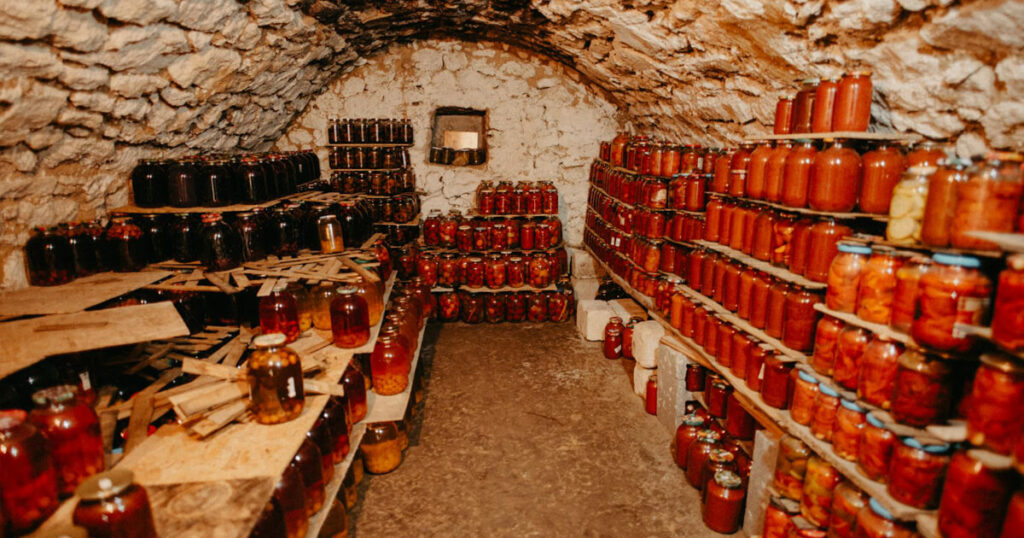
I’m grateful to myself from the summer and fall for preserving so many things for the winter: tomato sauces, stews, and lots of pickles (by the way, this is my hobby). Secondly, we managed to create a pretty varied and delicious menu.
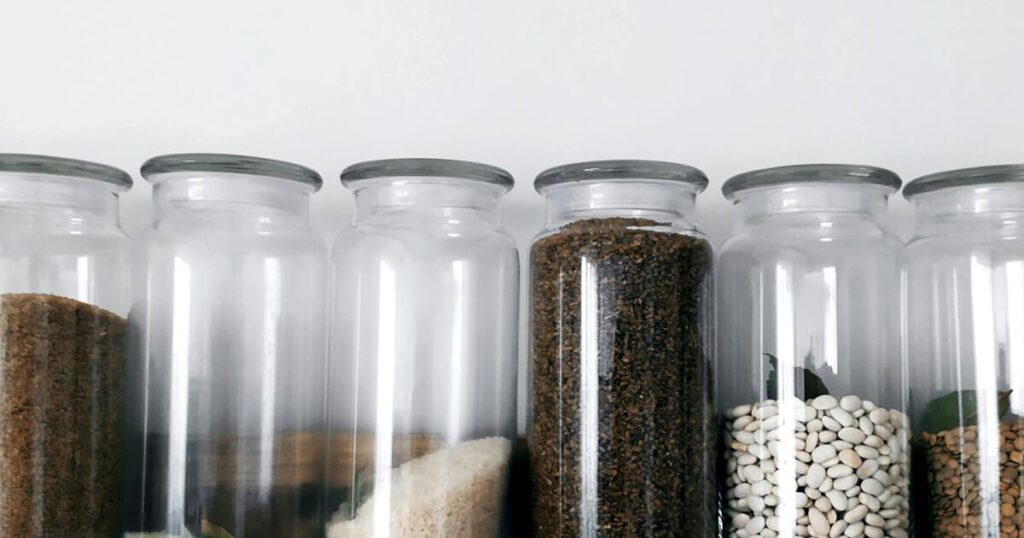
Moreover, one lesson I learned was a bit self-reflective. I’ve always admired beautifully organized pantries, with sleek glass storage containers neatly arranged on stylish shelves.
At the moment, I’m not living in those ideal conditions, so I didn’t start with anything grand—everything just came together as it went.
But one of my proudest moments was realizing thateven without perfect conditions, I was still able to create a food storage system that makes our lives a little easier.
Not to mention, this approach can be applied to any storage space in your flat. I have always lived in tiny apartements, and I have some experience about how to maximize space.
Even without perfect storage conditions, you can create a system that works
- Start small: one shelf, one drawer, one category
- Evaluate after a month and adjust to your habits
- Celebrate small wins — a neatly arranged drawer or visible stock is satisfying!
One thing I can tell you: start today! Don’t be afraid to experiment. Even small steps can lead to huge changes in reducing waste and cutting down on your expenses.
And if you would like to extend your knowledge about small kitchens, read my post about my small kitchen ideas!
Ready to tackle your pantry organization challenge? Begin now, take control of your space, and see how it transforms your kitchen (and your shopping habits). Share your progress with us and let’s inspire each other!
Pin it for later: