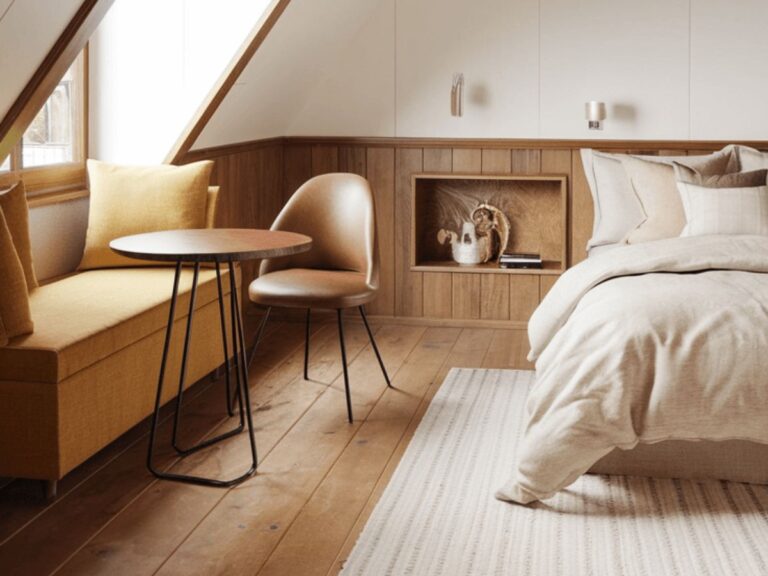
Small Apartment Ideas: The Second Layer That Turns Function Into Feeling
Small apartment ideas are often presented as shopping lists: what to buy, what to fit, what to squeeze in. But once the furniture logic is solved — once storage works, circulation is clear, and pieces earn their place — something else becomes far more important: how the space feels.
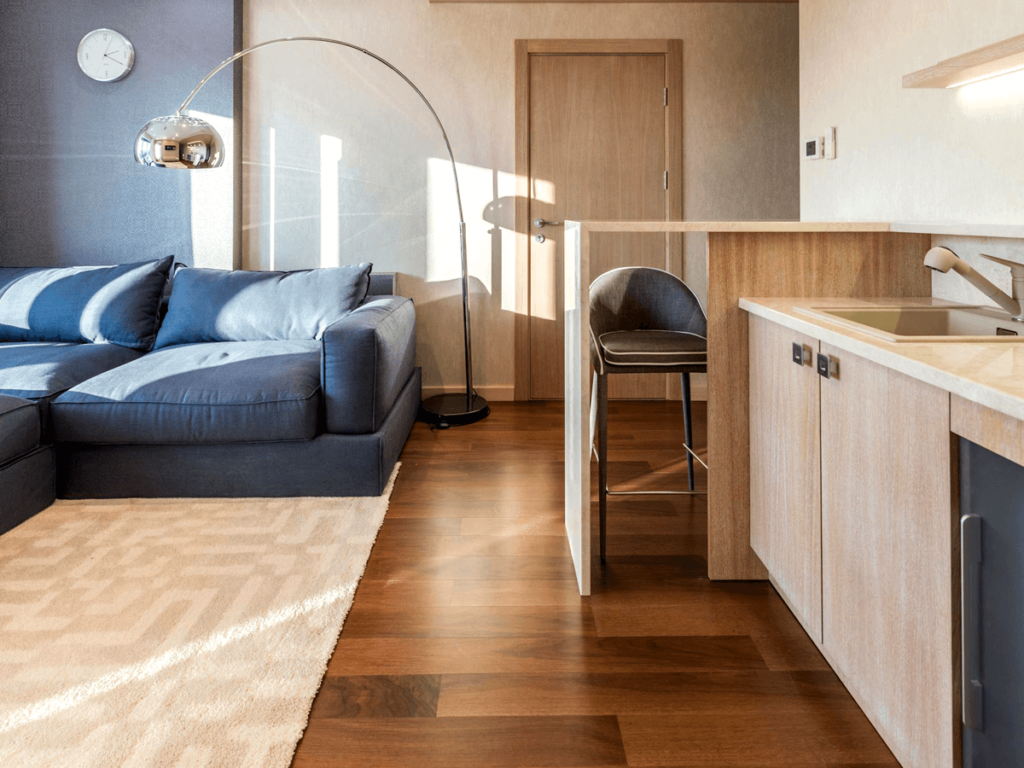
A second layer becomes crucial: atmosphere, perception, and sensory comfort.
It determines whether a home feels calm, cozy, and genuinely livable.
This article is Part 2 of Furniture for Small Spaces.
TL;DR:
Small apartment ideas don’t end with furniture. Good furniture solves function. But how a small apartment feels depends on light, color, texture, and rhythm. This guide shows how the second layer of design transforms small spaces into calm, comfortable homes.
It will be a long and deep article about how to make your home truly yours – but you’ll find the most practical advices highlighted!
Intro: What Is A Cozy Home?
While Part 1 focused on structure — storage, floating elements, scale, and restraint — this guide about small apartment ideas explores what comes next. Light, color, materials, and rhythm are the elements that transform a functional small apartment into a calm, cozy, vibey home.
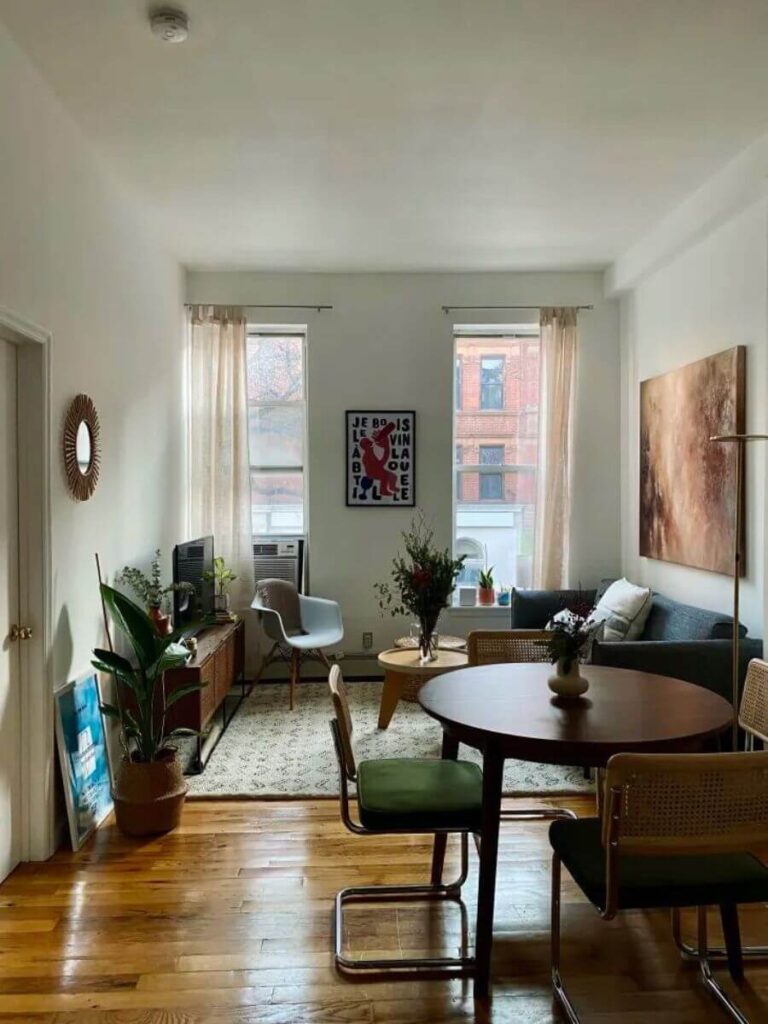
It’s about how a space feels, not what you purchase.
As an architect working with small apartment design, I see this pattern repeatedly: once the layout works, people still feel something is missing. That missing layer is rarely another piece of furniture. It is almost always perceptual.
In my work with small apartment design and small space living, I see the same pattern repeatedly:
Two apartments with similar layouts can feel completely different emotionally.
The difference lies in the second layer — light, color, materials, rhythm, and care.
Once furniture is logical, these layers are what turn small apartment ideas into a calm, vibey, livable home.
1. Light: The First Layer Of Small Apartment Ideas
Light defines space before color, furniture, or decor ever does. In small apartments, it is the most powerful design material you have — and often the most underestimated.
Daylight as the Primary Design Material
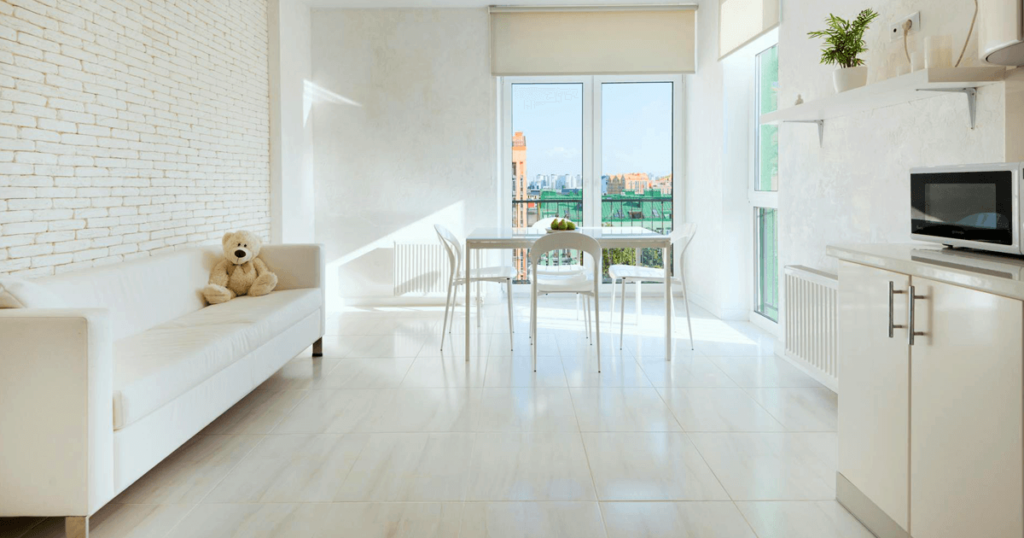
Daylight is the foundation. How it enters, where it travels, and what it touches determines how large or small a space feels. Even in a compact studio, allowing daylight to wash across surfaces creates a sense of openness that no mirror can replicate.
Daylight shapes how we perceive size, depth, and calm. Keeping window zones visually light is one of the most effective small apartment ideas that costs nothing.
How to let more daylight in:
- avoid heavy curtains directly at the window
- keep window surroundings visually quiet
- allow daylight to travel as far into the room as possible
In a small living room or studio, a window blocked by dark textiles or cluttered furniture shortens the perceived depth of the space.
Artificial Light Creates Zones
Artificial lighting becomes crucial the moment daylight fades — and here, many small apartments fail.
One central ceiling light flattens space. It removes depth, creates harsh contrasts, and makes even a well-designed room feel temporary.
In contrast, layered lighting introduces rhythm. Small, localized light sources — a wall lamp near the sofa, a bedside lamp, a pendant above a table, a soft indirect light in the kitchen — create zones within one room.
Each zone gains its own identity without needing walls.
How zones can be defined with light:
- central light above the dining table
- small table lamps on a coffee table, or next to the couch
- under-cabinet lighting in kitchens
This approach is not new. Historically, homes were lit by many small light sources because that was the only option available. But the result was also more human: softer transitions, warmer shadows, and spaces that adapted to different activities throughout the day.
In small space living, this logic is just as relevant today.
Ambient lighting – example across rooms:
- a floor lamp near the sofa in a small living room
- a wall-mounted bedside lamp in a bedroom
- a cute lightbulb on the shelves
- soft wall lights in bathrooms
Have you ever noticed how the same room feels completely different depending on which lights are on? That sensitivity is amplified in small spaces.
If you would like to know more about how to set the perfect ambient lighting in your small living room, take a look at my advices here!
2. Color: Continuity, Harmony, Flow
Color in small apartment ideas is often misunderstood as a choice between white and dark.
But white alone or combined with a nice color does not create calm. Visual continuity does.
In small apartments, the eye jumps from wall to door, from furniture to window, from object to object. When each surface introduces a new color, contrast, or visual break, the space feels fragmented.
This is why tonal palettes — where colors are related rather than opposing — feel calmer and more expansive.
For more specific advices about choosing the best small living room paint colors, read this article!

Fewer Colors, More Calm
Small apartments benefit from a limited, cohesive palette.
- walls, doors, and window frames working together
- furniture colors supporting the architecture
- accessories echoing, not competing
Tonal palettes feel calmer than contrast-heavy schemes because the eye does not constantly stop and restart.
When Dark Colors Work
Darker colors can work beautifully in small spaces — when they are used intentionally.
A deep wall color in a sleeping niche, a dark cabinet anchoring a kitchen wall, or a moody bathroom can create depth and intimacy.
The key is consistency and intention.
Darkness should feel like an embrace, not an accident.
Color is not about making a statement in a small apartment. It is about creating visual continuity that allows the space to breathe.
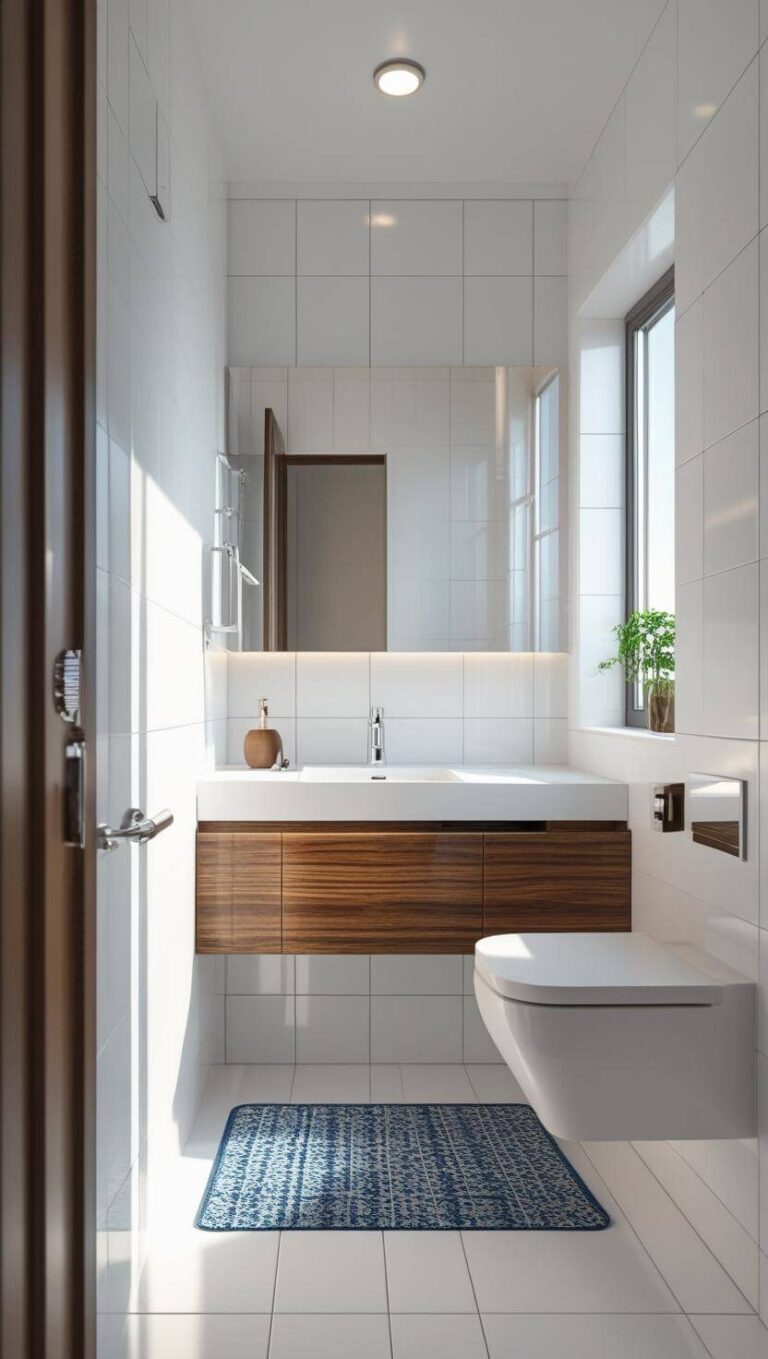
I have an article about how to use color in a small bathroom – read it here!
There are some situations where darker colors can look great:
- in rooms with strong daylight
- on surfaces that recede visually
- when paired with controlled lighting
- emphasizing architectural structures, like niches
- matched to functions that need darker backgrounds (darker bedroom with warm lights)
3. Materials and Textures: Atmosphere Before Decoration
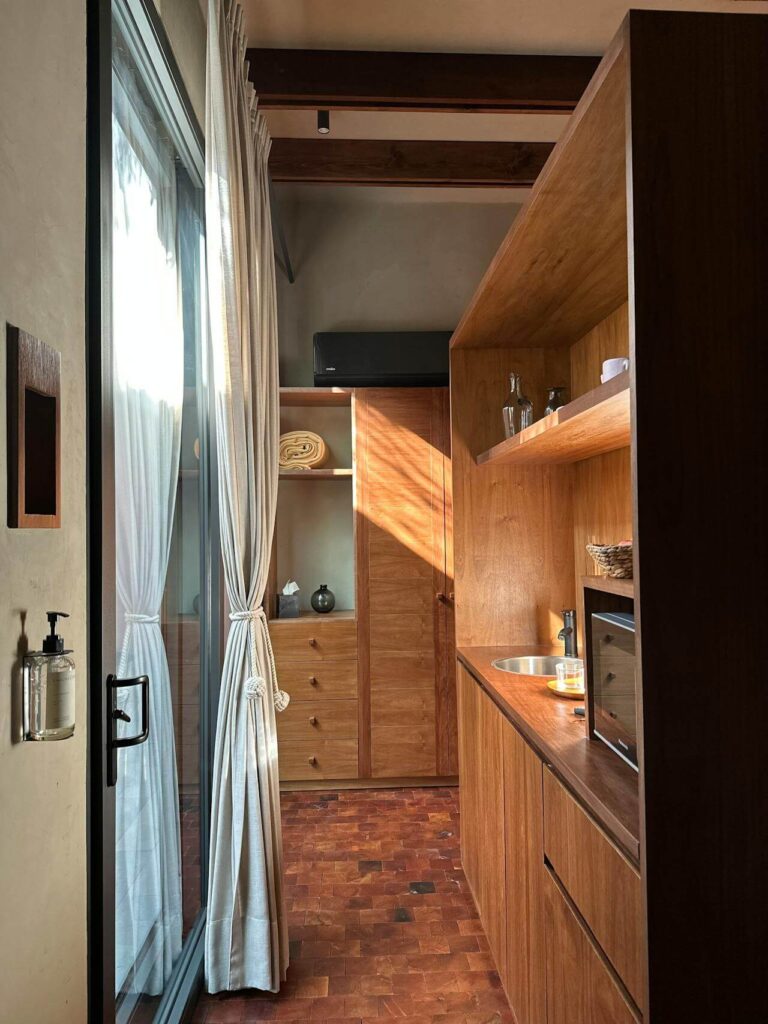
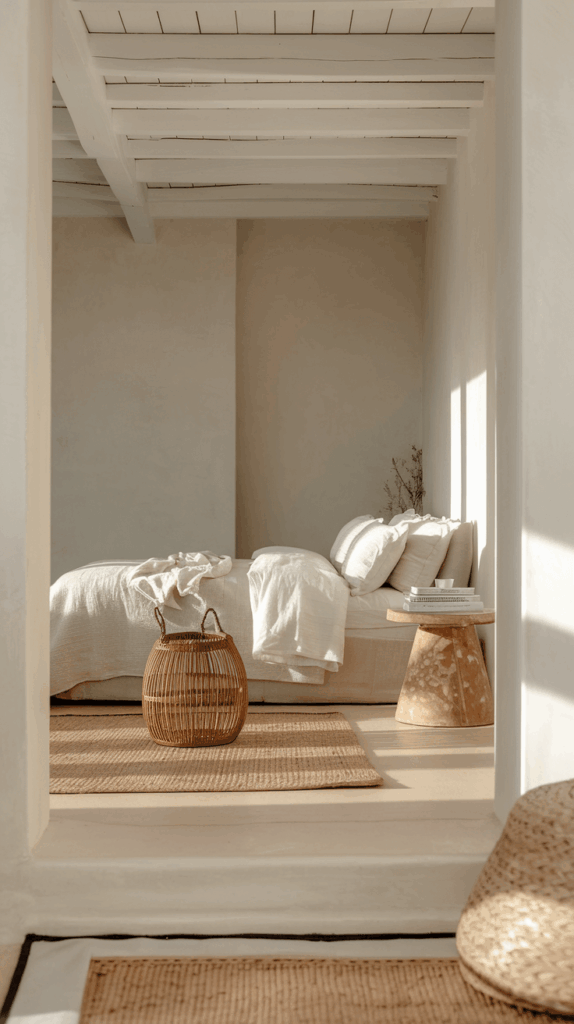
Small apartments need texture more than decoration. Without it, even the most carefully planned layout can feel sterile.
Flat, smooth, uniform surfaces reflect light evenly but offer little sensory feedback. In contrast, real materials introduce subtle variation — grain, softness, warmth, resistance — that our bodies register immediately, often before our minds do.

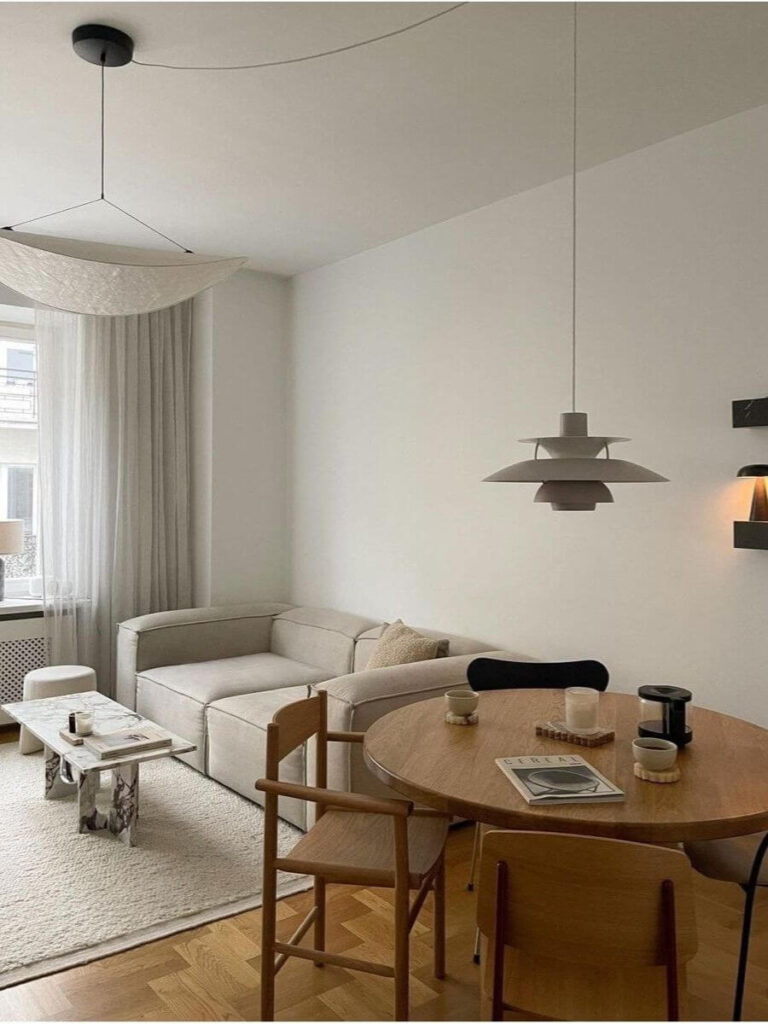
Small narrow living room with dining. A good strategy is just to organize all sitting zones on one longer side of the room. With colors, carpets and materials there is huge variability – but it is important to leave some wall space open. Source: Pinterest, please help me fi Small living room layouts fail not because of size, but because of unclear logic. In this in-depth guide, an architect explains the layout rules behind functional small living rooms—from circulation and zoning to room shape logic and open kitchen–living spaces.
Elevate your classy bedroom with this simple bedside table idea—perfect for anyone who loves a minimalist bedside table look. This unique nightstand pairs beautifully with neutral tones, soft textiles, and natural accents, creating an inviting nightstand aesthetic. Whether you’re searching for nightstand design inspiration or the ultimate addition to your serene sanctuary, this elegant setup…
Why Materials Matter
Stepping onto wood, touching linen, or resting against upholstered furniture creates subconscious comfort. These are not luxury signals; they are biological ones.
Layering Textures
- wood with matte finishes
- textiles against smooth walls
- soft elements balancing hard surfaces
Different materials and textures soften the space without cluttering it.
They create atmosphere without adding objects.
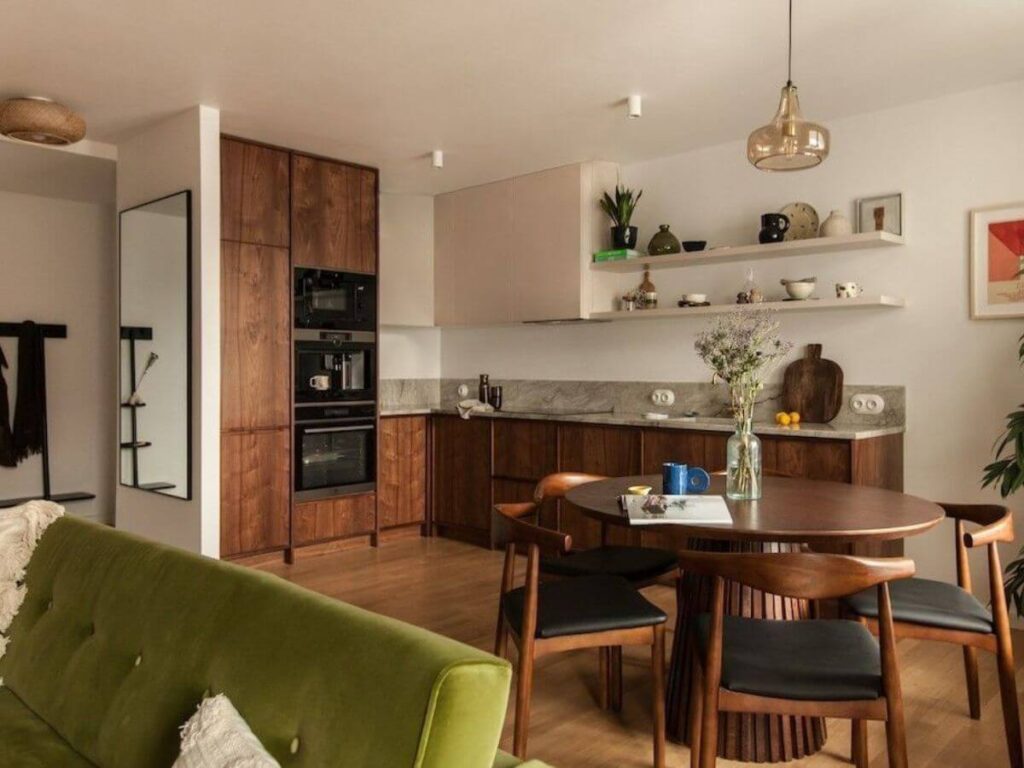
In small apartment ideas that feel truly cozy, materials do a lot of the emotional work. Wood, stone, linen, wool, matte finishes — Layering materials is especially important in compact homes.
Planning For Living
Color and material planning should happen together. Painted surfaces, wood tones, textiles, and finishes should feel related.
Natural colors tend to age better and feel calmer over time. In a small apartment, longevity matters — you live closer to everything.
Materials are not decoration. They are the sensory foundation of the home.
4. Textiles: Creating Zones and a Cozy Studio Apartment
Textiles are often treated as accessories, but in small apartment design they are spatial tools.
Rugs as Invisible Dividers
Rugs are one of the most effective ways to define zones without building walls. In a studio apartment, a rug can separate even when everything exists in one room.
- living area vs dining
- sleeping area vs circulation
The eye understands the boundary intuitively. This is especially useful in cozy studio apartment layouts where flexibility matters.
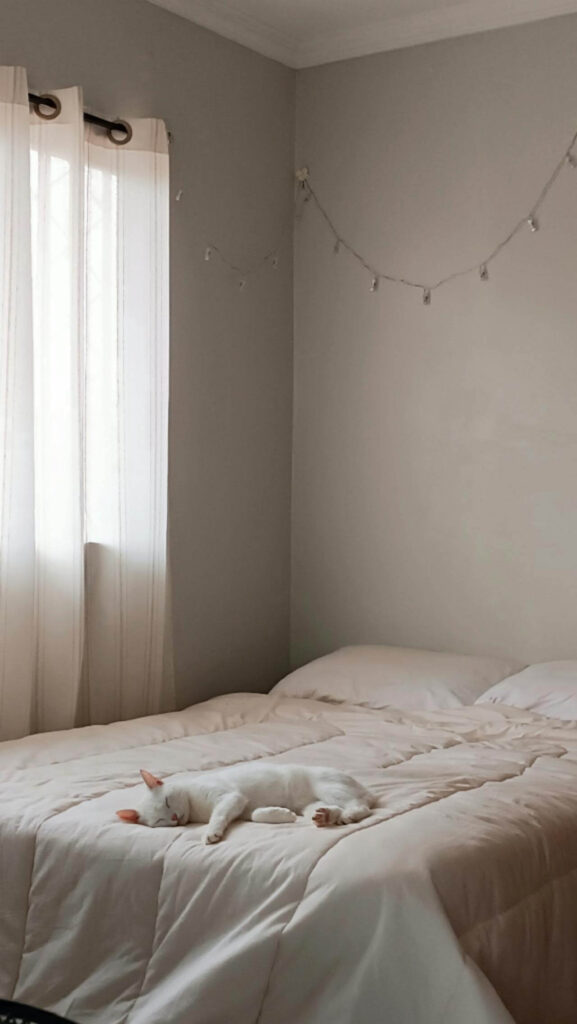
Curtains as Soft Architecture
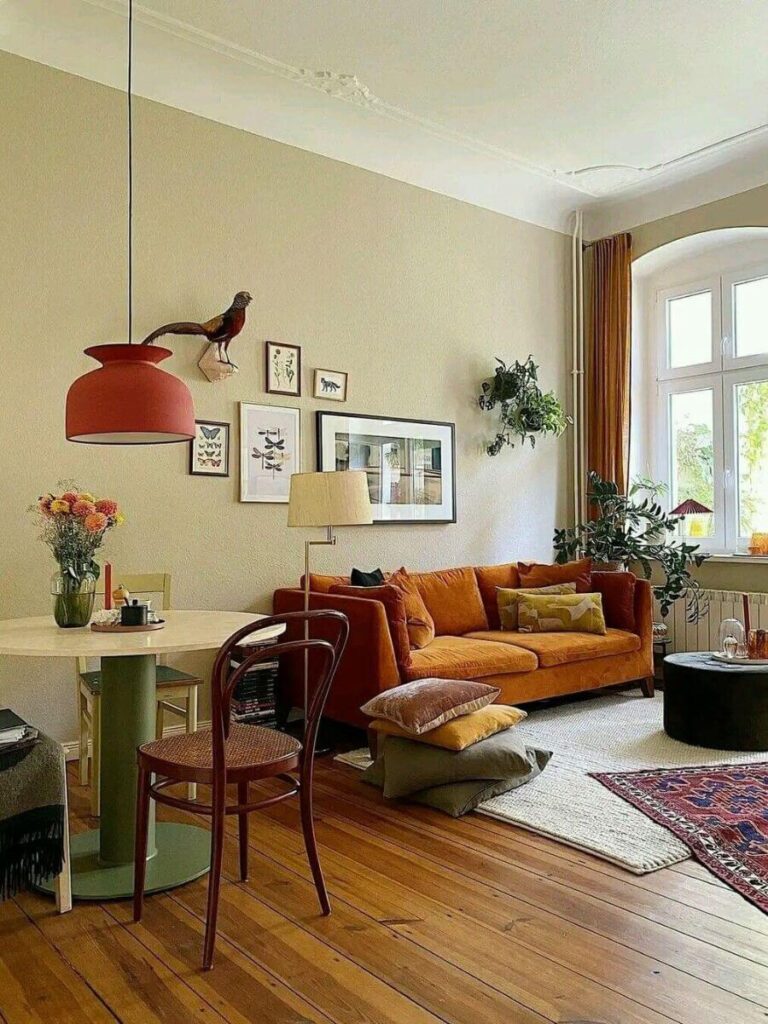
Curtains are another powerful textile element. Unlike hard partitions, curtains preserve light and air while still offering privacy and rhythm.
Curtains can:
- separate sleeping areas
- soften acoustics
- introduce vertical rhythm
Acoustic Comfort
A balance between soft and hard surfaces improves both comfort and acoustics. Textured walls, upholstered furniture, rugs, and curtains absorb sound, making small spaces feel quieter and more intimate.
This is an often-overlooked aspect of small space living: sound travels more where there is nothing to stop it.
Different materials absorb sound differently. In small space living, acoustic softness contributes directly to perceived calm.
Upholstery And Its Pattern
Upholstery scale matters as well. Overly bulky sofas or heavy fabrics can dominate a small room. Lighter upholstery, both visually and physically, keeps the space responsive. Textiles should support comfort without swallowing volume.
Textiles do not just make small apartments cozy. They make them livable.
5. Reflections, Depth, and Visual Breathing Space
Small spaces need visual pauses. Without them, the eye has nowhere to rest.
Strategic Mirrors
Mirrors are often used to “make a space look bigger,” but this only works when they reflect the right thing. A mirror reflecting clutter doubles the problem. A mirror reflecting light, depth, or openness amplifies calm. Placement matters more than size.
Mirrors should reflect:
- light
- space
- calm zones
Creating Depth
Creating depth in small apartment ideas is often more effective than creating symmetry. Allowing asymmetry, staggered elements, and layered views makes a space feel more complex and therefore larger.
Depth invites curiosity; symmetry can flatten.
Depth is created through:
- layered lighting
- overlapping elements
- asymmetry rather than strict symmetry
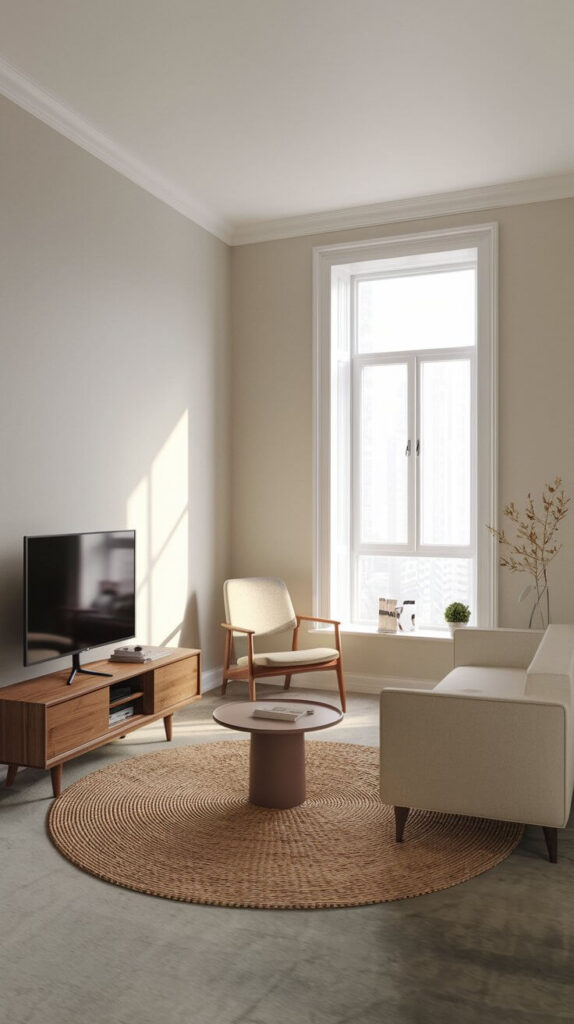
The Breathing Space
Equally important is deciding what not to activate. Not every wall needs art. Not every corner needs furniture. Intentional empty zones allow the rest of the space to read more clearly.
This is especially important in small apartment inspo images that feel calm — there is always space left unused.
Visual breathing space is not wasted space. It is what allows a small apartment to feel intentional rather than overdesigned.
6. Repetition and Rhythm
Small spaces feel chaotic not because they are small, but because they lack rhythm. Those small apartment ideas work best, or feel well designed, when all rooms are in relation – not just in space, but also in concept.
Visual rhythm is created through repetition — of materials, shapes, colors, or proportions.
When the same wood tone appears in furniture, shelving, and frames, the eye relaxes. When round shapes repeat across lamps, tables, and mirrors, the space feels cohesive without explanation.
Why Rhythm Works
Repetition reduces mental noise.
- same wood tone across rooms
- repeated round shapes
- consistent fabric textures
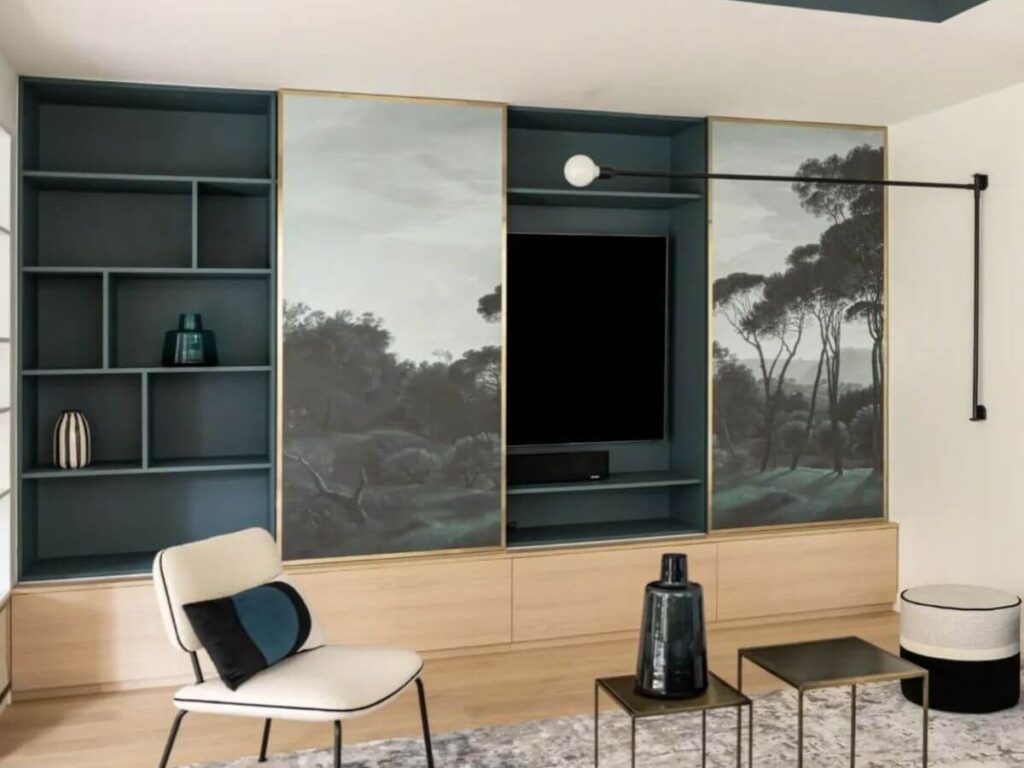
Visual rhythm replaces the urge to decorate more. Instead of adding more objects, consistency creates calm. This is deeply architectural thinking: order is perceived, not announced.
Negative space plays an equal role. Rhythm requires pauses. When every surface is activated, repetition turns into noise. Allowing areas of simplicity between repeated elements gives the pattern room to breathe.
This principle bridges furniture for small spaces with atmosphere. It explains why some minimalist apartments feel cold while others feel warm: rhythm, not emptiness, is the difference.
7. Plants, Seasonal Living Decor, and Personality
Atmosphere lasts longer than trends.
A single bouquet on a table can change the entire mood of a room. A candle, a branch, a ceramic bowl filled with something natural — these elements connect the interior to time, season, and life outside.
Personal objects, plants, and seasonal elements carry emotional weight more strongly when space is limited.
- Plants bring movement and depth. They soften architectural lines and introduce organic irregularity. In small apartment decorating, fewer plants placed intentionally are more effective than many scattered ones.
- Seasonal decor works because it is temporary. It allows the apartment to evolve without accumulating objects. This aligns beautifully with small space living: change without clutter.
- Small spaces amplify personal items, so fewer meaningful objects work better than many decorative ones.
Let your apartment reflect your life, not Pinterest pressure.
8. A Clean Room Is the Modern Luxury
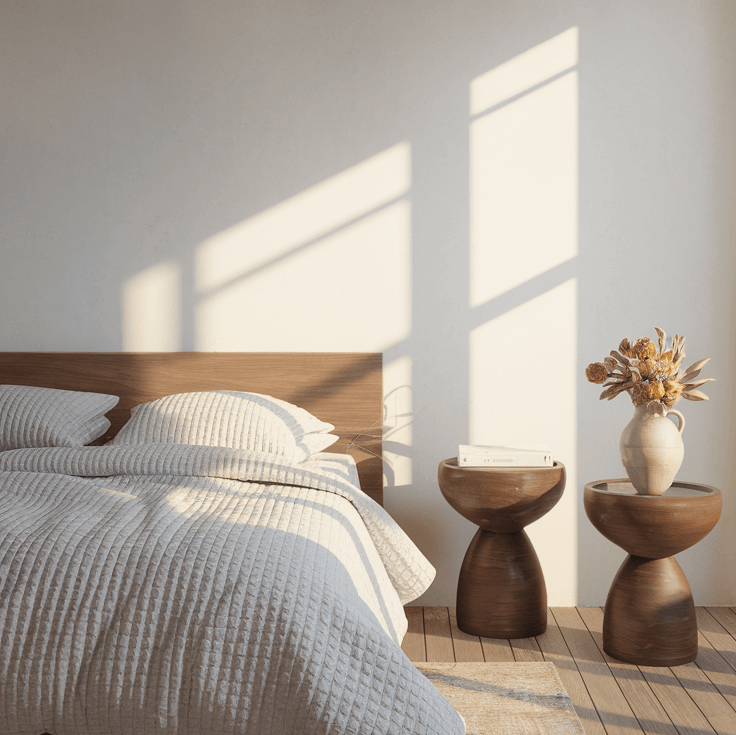
In small apartments, cleanliness is design.
Clutter feels heavier when space is limited. Surfaces fill faster. Disorder becomes visible sooner. This is why cleanliness has such a strong emotional impact in compact homes. Clean surfaces create mental calm.
Good systems make cleanliness effortless:
- invisible storage
- fewer belongings
- intentional furniture
A clean room is not an aesthetic trend. It is a form of self-care — a quiet agreement between you and your space.
This final layer ties everything together: invisible storage, fewer belongings, intentional furniture, and thoughtful atmosphere. Without it, even the best small apartment ideas eventually collapse under daily life.
Bringing Both Layers Together
Furniture is structure.
Light, color, and texture are atmosphere.
Cleanliness is the sustainability of the design.
If furniture was the skeleton of your home, these layers are its nervous system.
Small apartment ideas that truly work do not rely on tricks. They rely on understanding how space affects the body, the eye, and the mind.
If you are rethinking your apartment right now, ask yourself:
Which layer feels missing in your space — light, color, textures, or cleanliness?
That answer is often where transformation begins.
I’d love to hear —
Which part of your apartment feels the hardest to get right right now?
Images are from pexels.com
Pin it for later: