
Lighting Rules for Small Spaces – My Thoughts About Modern Lighting
Intro: Why Lighting Changes Everything in Small Spaces
Modern lighting is one of the most misunderstood tools in small apartments. Many people focus on fixtures, styles, or trends, yet still feel their home looks flat, uncomfortable, or unfinished.
The reason is simple: lighting is not just functional and it is not just decoration.
It is structure, atmosphere, time and function at the same time.

In small spaces, lighting decisions are amplified. A single wrong light can flatten a room, while a thoughtful lighting concept can make even the smallest apartment feel calm, generous, and deeply livable. Modern lighting is not about brightness.
This article is a practical, experience-based guide to interior lighting in small apartments and small spaces.
I’ll walk you through the core rules that actually work: how many light sources you need, how to layer light, how to use daylight, which modern light fixtures make sense, and which common mistakes quietly sabotage otherwise good interiors.
If you’ve ever felt that your apartment looks fine during the day but uncomfortable at night, this article is for you.


General Lighting Rules for Small Spaces – The Basics of Modern Lighting
The most important rule of modern lighting is this: every room needs multiple light sources, not one central solution.
The mistake: relying on a single ceiling light in a small apartment.
The fix: at least 2–3 light sources per room, combined with daylight where possible.
Each source should respond to different activities, moods, and times of day. Lighting is not static — it should adapt to how you live.

Practical example:
- In a 35 m² studio: ceiling light for general orientation, floor lamp near the sofa, LED strip along a shelf.
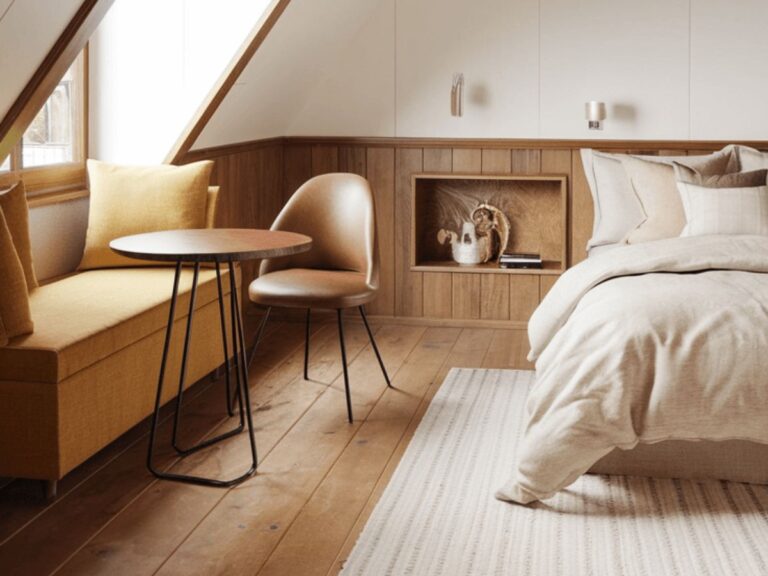
- In a bedroom: ceiling light plus wall-mounted bedside lamps creates calm and depth. Adding an extra LED stripe adds mystery to the vibe.
Modern lighting chandeliers or modern hanging lights can work — but only as part of a layered system, never as the only light.
The goal is to support everyday life without visual stress.
Decision checkpoint: If your apartment feels flat at night, check first whether you have enough layers rather than more decorative lighting.
Understanding Light Intensity and Color in Small Spaces
Lighting quality in small spaces is not about decorative fixtures. It is about intensity, color, and placement working together.
Lumen – How Bright a Light Really Is
Wattage no longer defines brightness; lumen does.
The principle:
- Fewer lumens per source
- More sources placed intentionally
This reduces glare while creating calm. Modern lighting in small apartments works best with multiple, low-intensity sources rather than one overpowering fixture.
Kelvin – The Emotional Temperature of Light
Kelvin describes light color — from warm to cool.
- Warm light (2700–3000K) supports relaxation and evening use
- Neutral light (3000–3500K) works for living areas
- Cool light (4000K+) supports focus and tasks
In small apartments, extreme temperatures feel harsh. Slightly warm lighting usually feels the most natural.
Lux – Why Placement Matters More Than Brightness
Lux measures how much light reaches a surface. In small spaces:
- Reading lights work best near eye level
- Kitchen lighting should be close to work surfaces
- Circulation areas need orientation, not brightness
Matching Light to Function
- Soft light: resting and winding down
- Medium light: social/living areas
- Focused light: cooking, working, grooming
Decision checkpoint: After reading this section, you should know whether your issue is intensity, color, or placement.
Daylight Is the Most Important Light in Small Apartments
Before choosing modern light fixtures, understand how daylight works in your space.
Daylight shapes perception of size, depth, and material. It softens edges and reveals textures. In small spaces, it should be treated as a design material, not a background condition.

Principles for daylight:
- Keep window surroundings visually calm
- Avoid dark or heavy textiles directly at the glass
- Allow daylight to travel deep into rooms
Example: In a narrow studio, switching to light curtains and relocating a shelf near the window can double perceived depth.
Daylight also sets the reference point for artificial lighting. Modern lighting works best when it complements daylight rather than competes with it.
Reflection question: Which room in your apartment gets the best daylight, and are you letting it do its job?
Understanding Modern Lighting Layers in Small Spaces
One of the core rules of interior lighting is understanding lighting layers. In modern lighting design, the three main layers are ambient, task, and accent lighting.
Layering light is one of the most powerful ways to improve small space living.

Ambient Lighting – Orientation and Overall Comfort
Ambient lighting provides general orientation and sets the base mood of the room.
This is usually created by ceiling light fixtures, recessed lights, or track light ceiling design.
Best practices:
- Light color: warm to neutral (2700–3000K)
- Intensity: moderate, enough for movement
- Function: background support, never dominant
The mistake: Overly strong ambient light flattens small spaces.
The fix: Use multiple layers to balance light rather than increase intensity.
Task Lighting – Function and Precision
Task lighting supports specific activities:
- Reading corners
- Kitchen work surfaces
- Desks and home office areas
- Bathroom mirrors
- Board games or hobbies at the table
In small spaces, task lighting is often more important than ambient light.
Best practices:
- Light color: neutral to slightly cool (3000–4000K)
- Intensity: focused, higher than ambient
- Placement: close to activity, not overhead
Example: Under-cabinet lights in kitchens improve visibility and comfort, while a directed lamp by a sofa enables evening reading without illuminating the whole room.
Accent Lighting – Atmosphere and Depth
Accent lighting highlights textures, materials, and architectural details.
Modern lighting fixtures shine here: wall lights, LED strips, shelf lighting, or subtle uplighting.
Best practices:
- Light color: warm (2200–2700K)
- Intensity: low to medium
- Purpose: mood, softness, visual layering
Example: LED strips behind a headboard in a small bedroom add depth without clutter.
How the Layers Work Together
In well-lit small spaces:
- ambient light guides movement
- task light supports action
- accent light creates emotion
No single light does everything. The goal is: balance.
Decision checkpoint: If one area still feels wrong, identify which layer is missing first.
Lighting Rules Room by Room in a Small Apartment
Lighting needs change slightly from room to room — even in small apartments where spaces overlap. The key is understanding what each room needs from light, not treating every space the same.
Living Room – Flexibility First
The living room hosts the most activities, so lighting must adapt throughout the day.
- One soft ceiling light for general orientation
- Floor/table lamps for evening use
- Subtle accent lighting for atmosphere
Modern light fixtures with dimmers work especially well here, allowing the space to shift from active daytime use to calm evenings without adding visual clutter.


Bedroom – Light That Supports Rest
In bedrooms, lighting should prioritize calm over brightness.
- Wall-mounted bedside lamps instead of table lamps
- Gentle ceiling light for orientation only
- Warm light tones
- Optional LED stripes for subtle drama

Kitchen – Work Zones and Vibes
- Under-cabinet lights for counters
- Focused pendants above islands
- Even light across prep zones
Modern lighting design in small kitchens is about visibility and precision, not drama.
Lighting here is about precision, not drama, but consider options for special occasions.
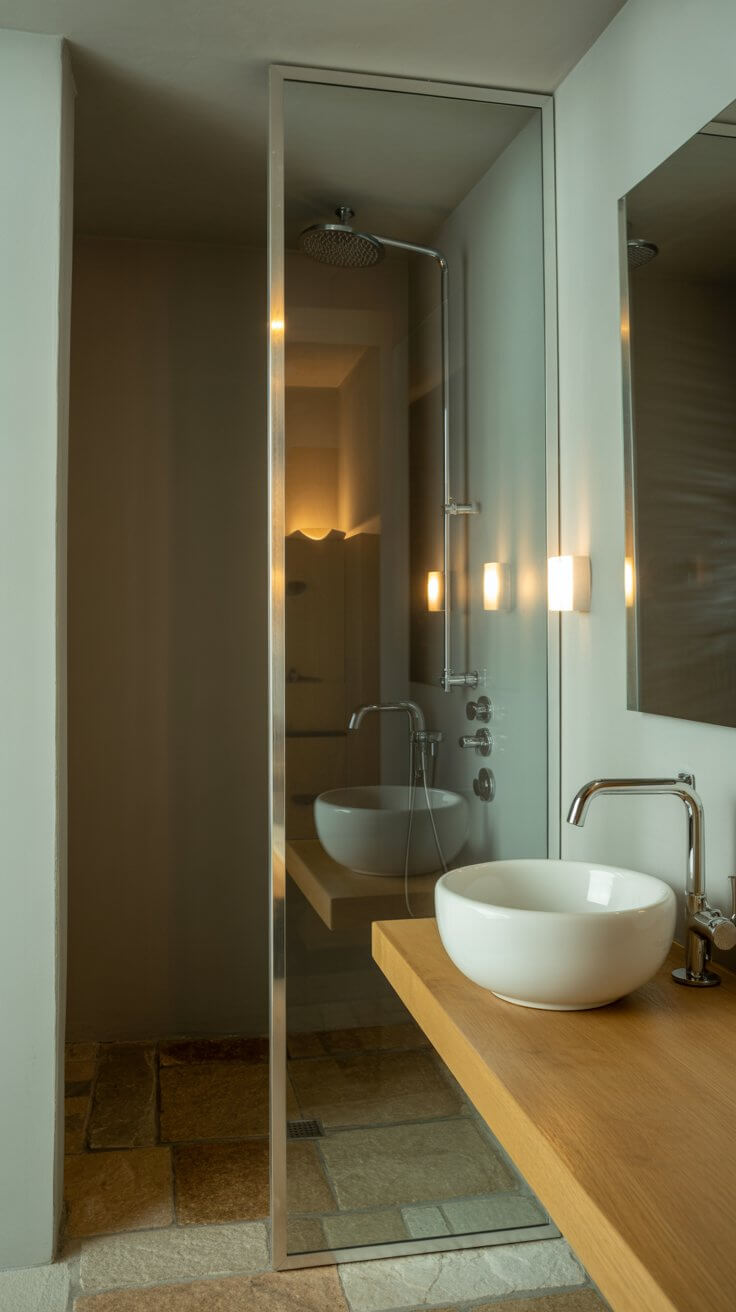
Bathroom – Soft, Layered Light And Studio Lights
Bathrooms benefit from layered lighting just as much as living spaces.
- soft ambient light for overall comfort
- task lighting near the mirror to reduce shadows
- warm tones to avoid a clinical feel
My favorite lighting solutions are mentioned in my bathroom post – including the best lights for a mirror. For lighting tips for your living room read this!

My trial AI visualisation for the concept of mixing patterns: the small space is divided into 3 section, each of it has different charcter, the color white connects them. Try bold small bathroom color ideas like this plum and marble scheme for standout Bathroom Color Palette and luxury inspiration. Trending Bathroom Colors to love!
Explore small bathroom color ideas with this stunning plum and marble bath. Get Bathroom Color Palette and Bathroom Inspiration Colors for a chic, dramatic look. Trending Bathroom Colors for 2025!


Which room in your apartment feels the hardest to light properly — and why?
Modern Lighting Fixtures: What Actually Works in Small Spaces
Oversized chandeliers or heavy contemporary light fixtures can dominate a small apartment.
The principle: scale and placement matter more than style.
Examples:
- Slim pendant above a dining table
- Sculptural light in a double-height space
- LED strips under shelves or behind headboards
Candles or low-level lights still add warmth and human scale — sometimes more than a smart fixture.
Decision prompt: Ask yourself, does this fixture serve the space or compete with it?
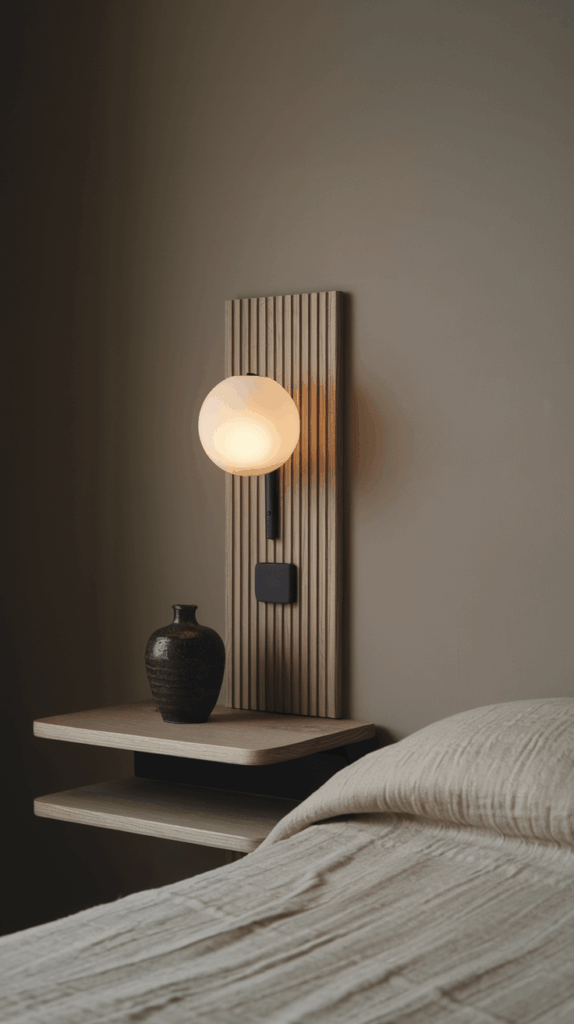
A wall-mounted floating bedside table with integrated lamps brings minimalist style and easy storage to any bedroom.


Common Lighting Mistakes in Small Apartments (And How to Fix Them)
- Single ceiling light – flattens space
Fix: Add one or two additional sources per room - Overly cold light color – makes spaces feel harsh
Fix: Swap for warm or neutral bulbs - Poor placement – beautiful lamp becomes visual noise
Fix: Reposition lamps to support activities
Lighting improvements are rarely about replacing everything; it’s about correcting imbalance. Most of the times just changing a small thing is enough.
Takeaway: Lighting as Atmosphere and Structure
Lighting is not the final step in design. It is one of the foundations.
Modern lighting in small apartments defines:
- How space is perceived
- How it supports life
- How it feels emotionally
Good lighting reduces clutter, creates zones without walls, and makes spaces feel intentional.
Decision checkpoint: Which activity in your apartment feels least supported by light? Start there.
That answer usually points directly to the next improvement.
If this article helped you see your space differently, save it for later — and take a moment tonight to notice which lights you turn on first.ű
Pin it for later!