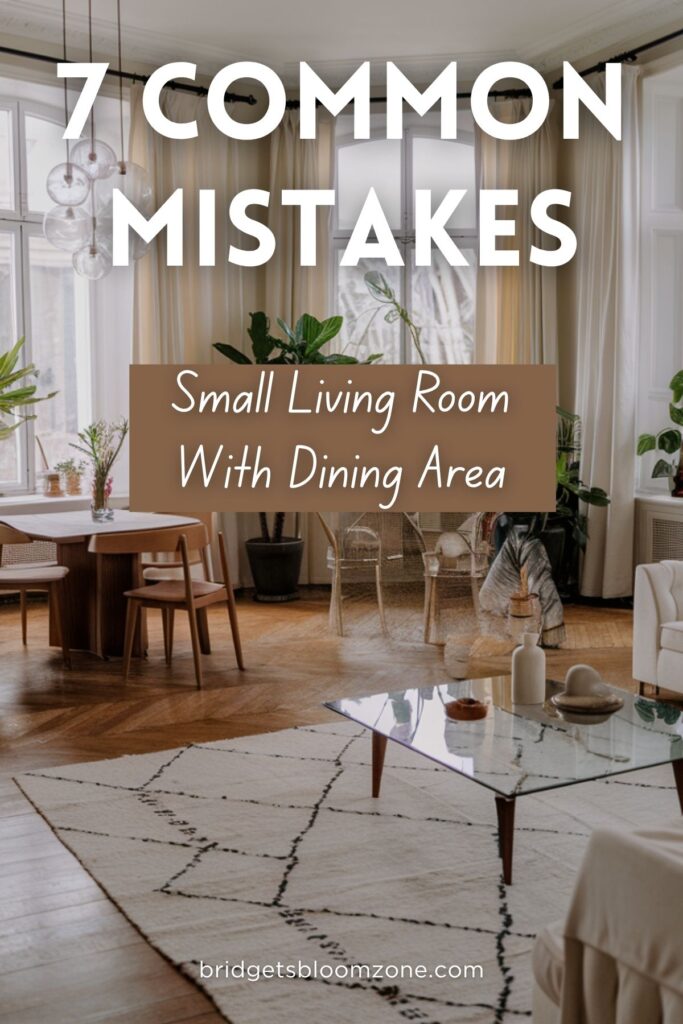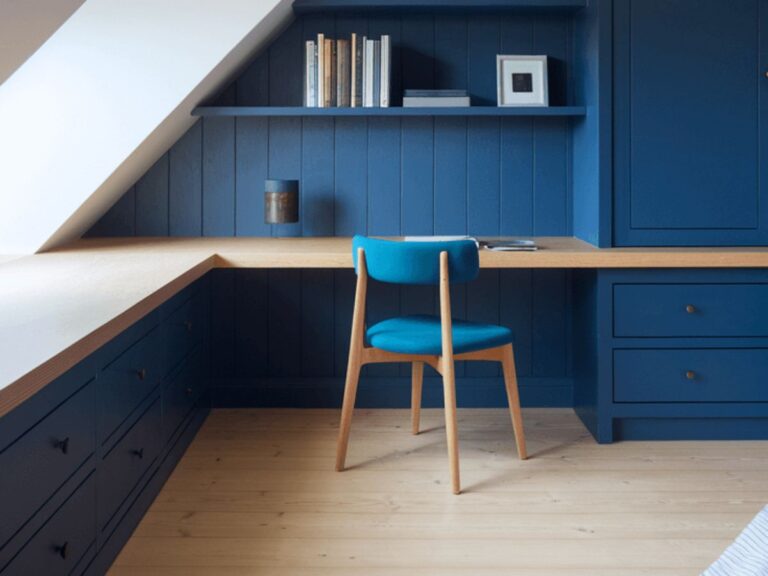
Small Living Room With Dining Area – Hidden Design Ideas That Make You Love Your Space
Introduction
Small Living Room With Dining Area setups often feel like a compromise. One room is expected to do everything — relax, host, work, and somehow… also function as a proper place to eat.
If your small living room with dining area feels cramped, the problem is rarely the size. It usually comes down to three things:
- Circulation: there’s no clear path around the table and chairs.
- Undefined zones: relaxing and dining blur into one busy space.
- Furniture made for bigger homes: a full dining set squeezed into a room that has to do everything.
Fix the path first, then define the zones, then choose lighter, adaptive pieces. Most of these changes need no drilling and no renovation, just a smarter arrangement of what you already have.
Below you’ll find the 7 most common problems, why each one happens, and 3 solutions for each.
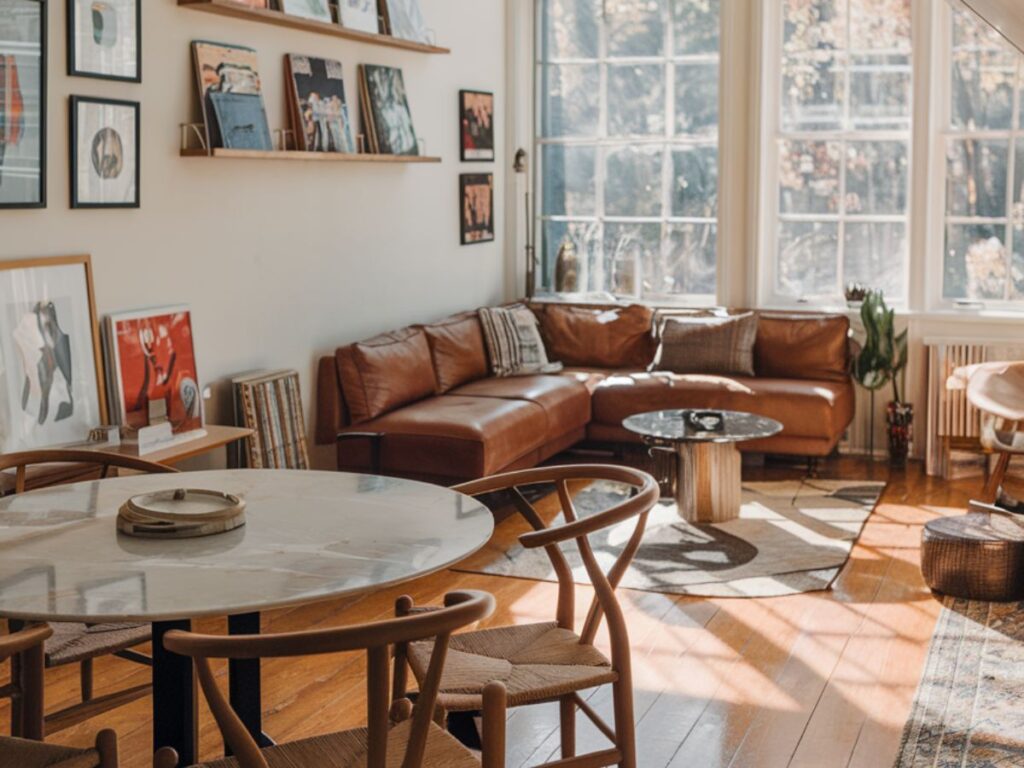
At first, it seems simple: just add a table. Maybe a foldable one. But it just fits into the corner… And in reality, it quickly turns into a frustrating puzzle.
The layout feels cramped. Chairs are always in the way. The room loses its cozy feeling and starts to feel more like a storage area than a home.
If you’ve ever looked around and thought, “this doesn’t feel right… but I don’t know what to change,” you’re not alone.
Creating a small living room with dining area isn’t about squeezing more furniture into the space. It’s about making smarter decisions with what’s already there.
The good news?
The problem usually isn’t your space — it’s the way it’s being used.
And once you see it differently, everything starts to fall into place.
What You’ll Learn in This Guide (TL;DR)
In this guide, you’ll discover:
The most common problems people face when having a small living room with dining area, and versatile solutions for each situation.
Beside that, you will get design advices for:
- smart layout ideas for combining living + dining
- space-saving dining table solutions
- how to avoid the most common small-space mistakes
- design tricks that make your room feel bigger
What Does a Small Living Room With Dining Area Really Need?
Most small living room ideas with dining area try to fit everything in — but very few focus on what actually matters.
At the core, your space needs:
• a comfortable place to sit
• a practical surface to eat or work
• enough room to move freely
• and a sense of visual balance
But what does it mean? These are just furniture that can support your daily life or make your small living room a storage.
Organizing in smart layouts can only work, if you stop for a moment and make a note about your (and your family’s) daily routines, what do you like to do and what do you really need?
The challenge is not fitting everything in — it’s making everything work together.
A well-designed small apartment dining area doesn’t feel crowded, does not get messy and used for what is meant.
Why Small Living Room Dining Combos Feel So Difficult
If your small living room with dining area feels awkward, most commonly there is a problem with circulation and space usage. This is the first and most important issue that has to be solved.
A small living room layout has to support completely different functions in the same space. Relaxing and dining require different setups, different clearances, and different priorities.
This is the source of the second problem: the functional zones of the small living room. If this is also clear, there is one more crucial element that can mess up your living room.
Sometimes, most people bring in furniture designed for larger homes. Standard dining tables, bulky chairs, oversized sofas — they simply don’t scale down well.
They also reduce or shrink the circulation paths.
Choosing smaller items can seem to be a solution, but just by downsizing everything, you will have a feeling of living among visual clutter.
Limited circulation space together with visual clutter, and suddenly the room feels tight, heavy, and uncomfortable.
Most layouts fail not because of size, but because they try to copy full-sized homes — especially in an open layout living room dining room.
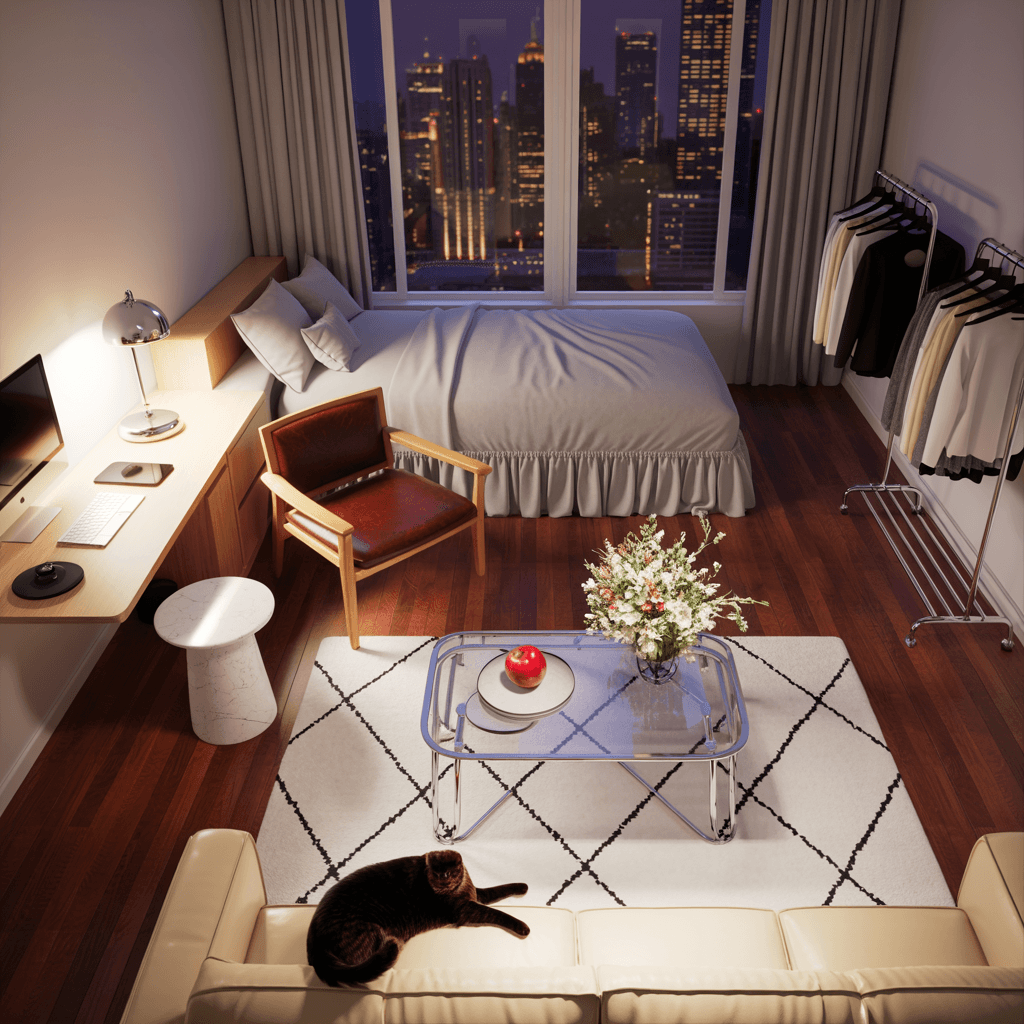
But usually we do not see the solution clearly first. We ask questions like “There’s no way both a sofa and a dining table will fit here” or “It doesn’t feel cozy or finished”.
You have to be a little bit smarter and think differently about small spaces, especially with a small living room with dining area. Lets see what are the most common problems and what can be a solution for each of tehm!
7 Smart Solutions for 7 Small Living Room With Dining Area Problems
Designing a dining area in a small living room is rarely about finding the “perfect table.”
Most problems come from deeper layout and functionality issues.
Below are the most common struggles — and the smart design solutions that actually fix them.
#1 – “There’s no way both a sofa and a dining table will fit here”
The Problem
It feels like you have to choose: comfort or functionality.
A cozy living area… or a proper place to eat.
Why This Happens
Dining tables take up space all day but are only used for a short time. Meanwhile, your living area is constantly in use. Standard dining sets are simply too big for compact spaces.
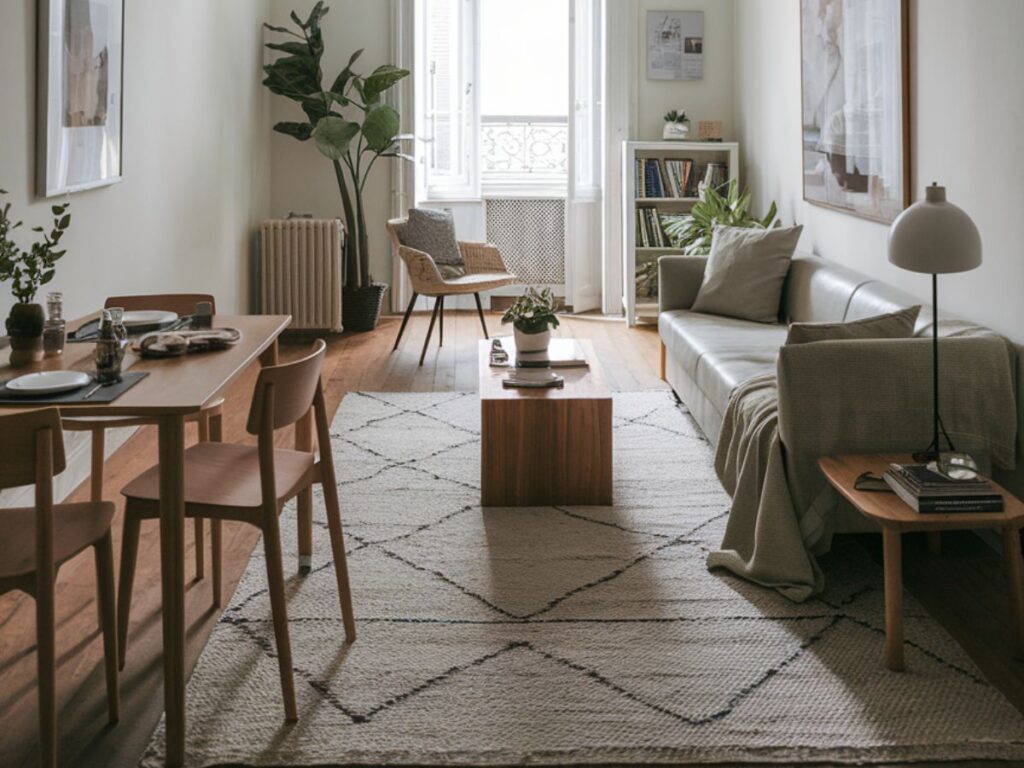
Smart Solutions
1. Use adaptive dining instead of classical, fixed setups
- extendable tables
- fold-down or wall-mounted tables
Good because you do not have a table in the middle of the room – it can be designed for real use, or if you use the setup just occasionally.
2. Layer functions into one piece
- lift-top coffee tables
- kitchen counters as dining bars
They are taking just one footprint, but have multiple uses.
3. Rethink what “dining” means
- smaller bistro-style tables
- seating for 2–3 instead of 6
Most homes don’t need a full dining room — they need a smart one. If you sometimes wish to seat a smaller group of people, you still have some other opportunities that take less space, continue reading to discover them!
#2 – “The room feels cramped the moment I add a dining table”
The Problem
The space suddenly feels heavy, crowded, and visually overwhelming.
Why This Happens
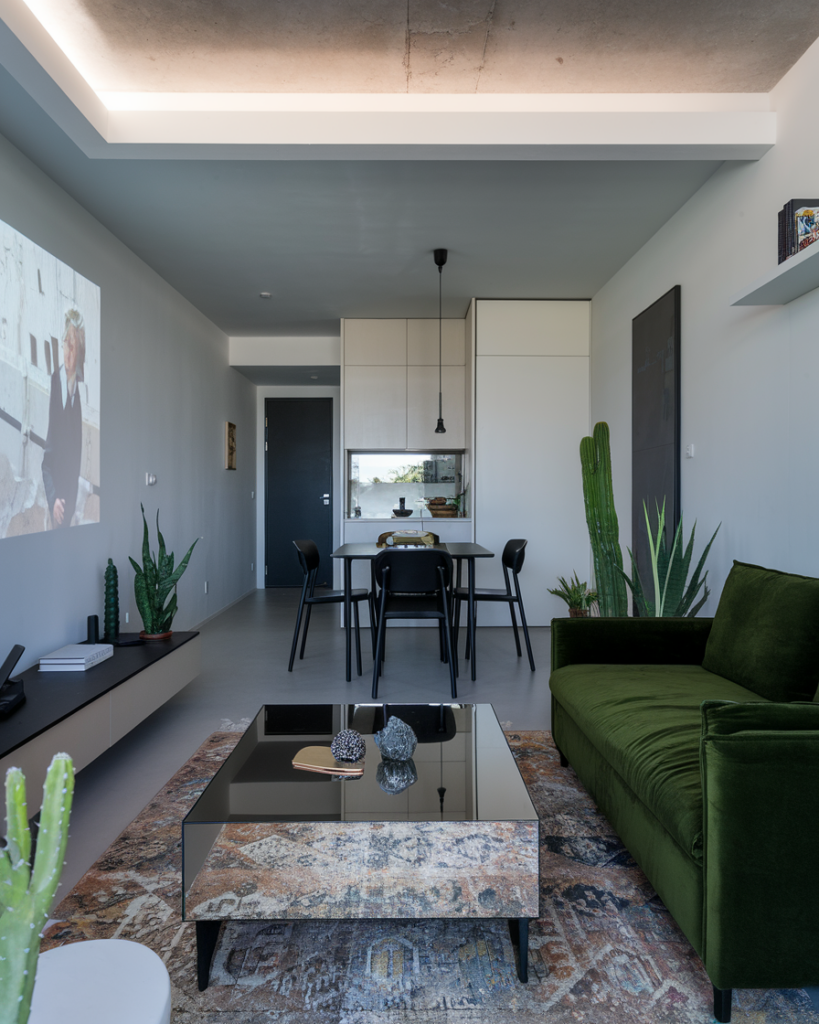
You’re doubling furniture density in one room — often with bulky, visually heavy pieces. Thinking of dining tables – the table top as a solid plane seems to be heavy most of the time.
Smart Solutions
1. Choose visually light furniture
- tables with slim table tops and legs
- pedestal tables with one centered pillar
- combined with open-frame chairs
They reduce visual weight, not just size
2. Edit your furniture
- remove oversized coffee tables
- or change coffee tables to convertible dining tables
Good design is your partner here.
3. Switch to a round table
- smoother movement
- no sharp corners blocking flow
Mostly they have just one centered leg, which also makes them visually lighter.
#3 – “Everything blends together and feels messy”
The Problem
There’s no clear boundary between relaxing and dining. The small living room with dining area feels chaotic.
Why This Happens
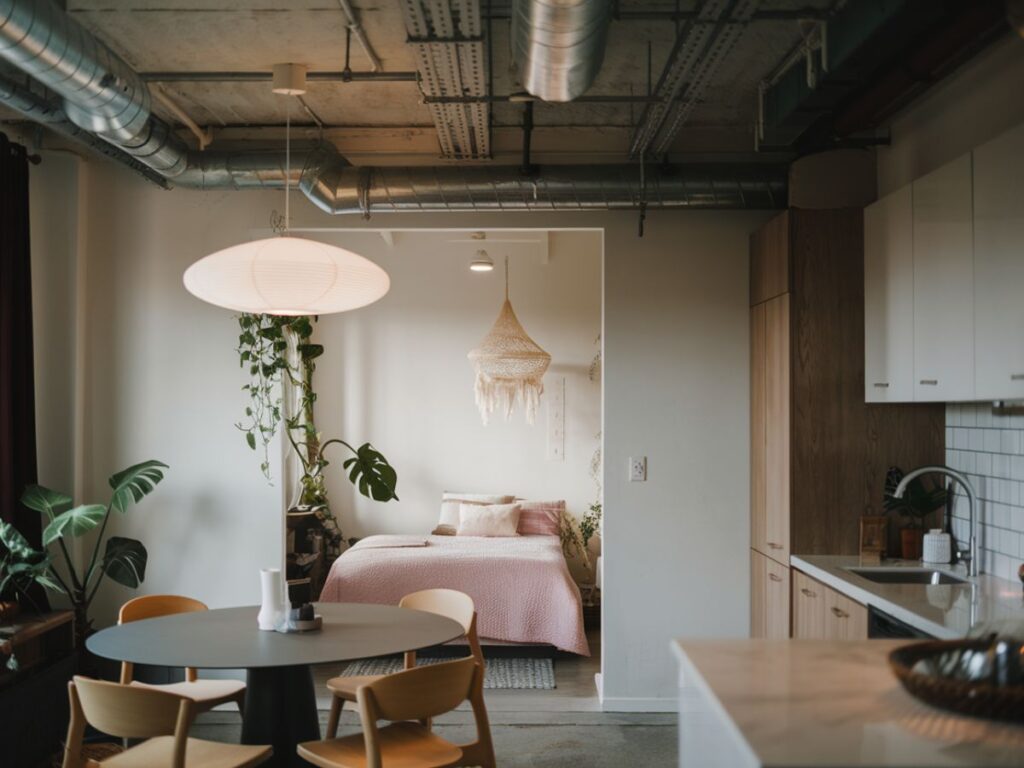
Open spaces lack natural structure — everything visually merges together. Maybe because the space is really too small, or maybe the functional zones are not clearly defined.
Smart Solutions
1. Create invisible zones
- rug under the dining table
- pendant light above dining table
- subtle layout separation (curtains, wall finishes, colors)
These solutions create “rooms” without walls
2. Use your sofa as a divider
- float it away from the wall
- place dining behind it
This is a simple solution in a small living room with dining area, but powerful. It works best if you have a long narrow living room, and also creates two well defined spaces for each activity.
3. Define zones vertically
- wall art
- lighting
- materials
This is a kind of creating invisible zones, when zoning is visual. Works best if your living room is really small, and you want to have a proper table as a dining table.
#4. “Chairs are always in the way and there’s no space to move”
The Problem
You constantly bump into furniture. Sitting down feels like a struggle. Hard to clean, you feel like you are moving furniture all the time.
Why This Happens
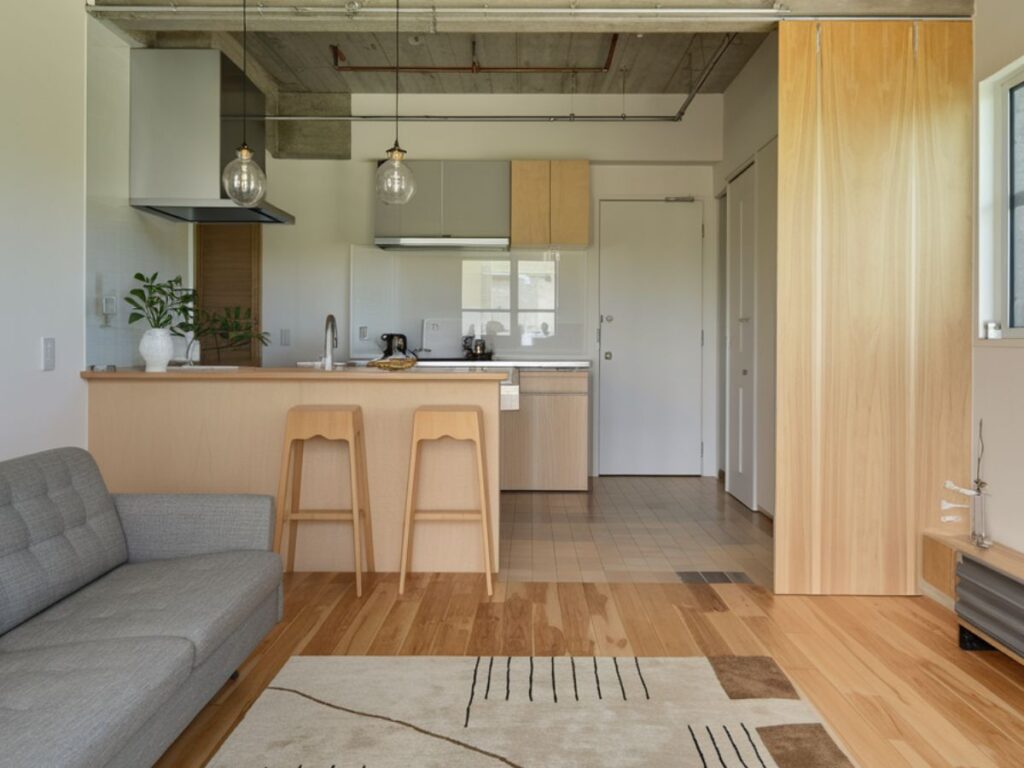
Clearance space is underestimated — especially for pulling chairs out.
Smart Solutions
1. Replace chairs with benches
- slide fully under the table
- no backrest clearance needed
2. Push the table against a wall
- one-sided seating
- saves a lot of space
But keep in mind:
this works best for daily use — for more intimate dinners, facing seating might feel better
3. Push a bench against a wall, combined with backless stools
- one-sided seating
- saves a lot of space
This is the extended and combined solution of 1+2, if you need sometimes more space. the bench blends into the wall finish, takes up the space of a small cabinet, and really it can be a small storage indeed. Win win!
#5 – “The dining table just turns into a clutter zone”
The Problem
Instead of eating by the dining table, it becomes a place for random items. You just “temporarily” put things there. When dining, these things get pushed to the side of the table… And suddenly, weeks (months) pass by and they are still there.
Why This Happens
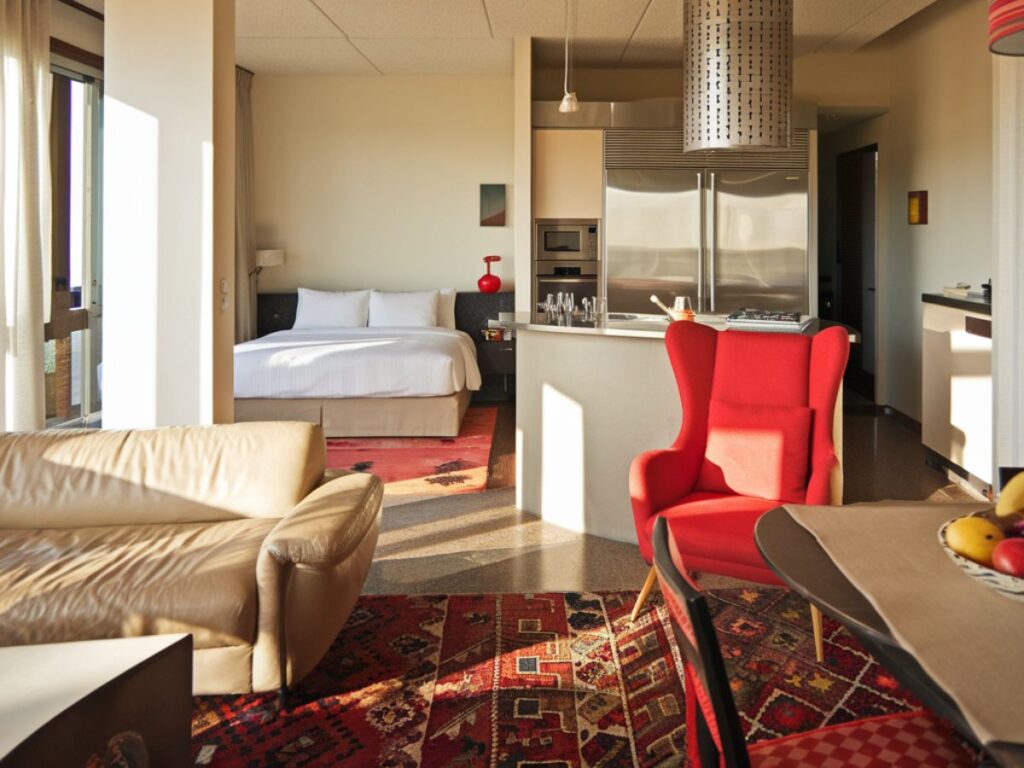
There’s no storage nearby, and the space doesn’t feel defined enough to protect its function. Yes, sometimes it has to do a little bit with our procrastination to organize them. But if something feels easy and fast to do, we tend to accomplish that task more easily.
Smart Solutions
1. Add small, nearby storage
- slim cabinets
- wall mounted cabinets
Extra tip: If you decide to turn your sofa into a divider between the living room and dining area, but the back of the sofa is not as beautiful as you thought… Perfect opportunity to add a slim cabinet to the back of it, facing the dining area and serving storage purposes.
2. Make the space feel intentional
- simple centerpiece
- dedicated lighting
- consistent styling
If it feels like a real place, you’ll use it like one.
3. First Aid solution
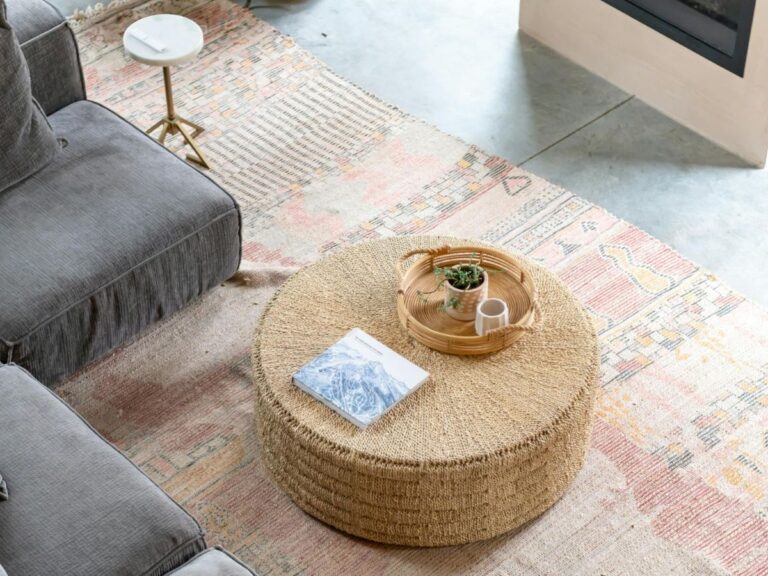
- add a beautiful, woven basket as a centerpiece
- Put every small things form the dining table inside
Yes, I know – this is not a proper solution. But I understand, in some households small things just fill up the dining table, no matter what you do, what organizers you have and how much effort you make.
I heard this idea from a cleaner, and it really works as a first aid – you just put everything inside, and the things become just “one item”. Later or if you have time, you can sort it out, or just set aside for dinner time.
#6 – “It doesn’t feel cozy or finished”
The Problem
The dining area in a small living room with dining area feels like an afterthought. Like something is missing. You have chosen the perfect dining table, defined the zones but still you prefer to eat your dinner sitting on the couch…
Why This Happens
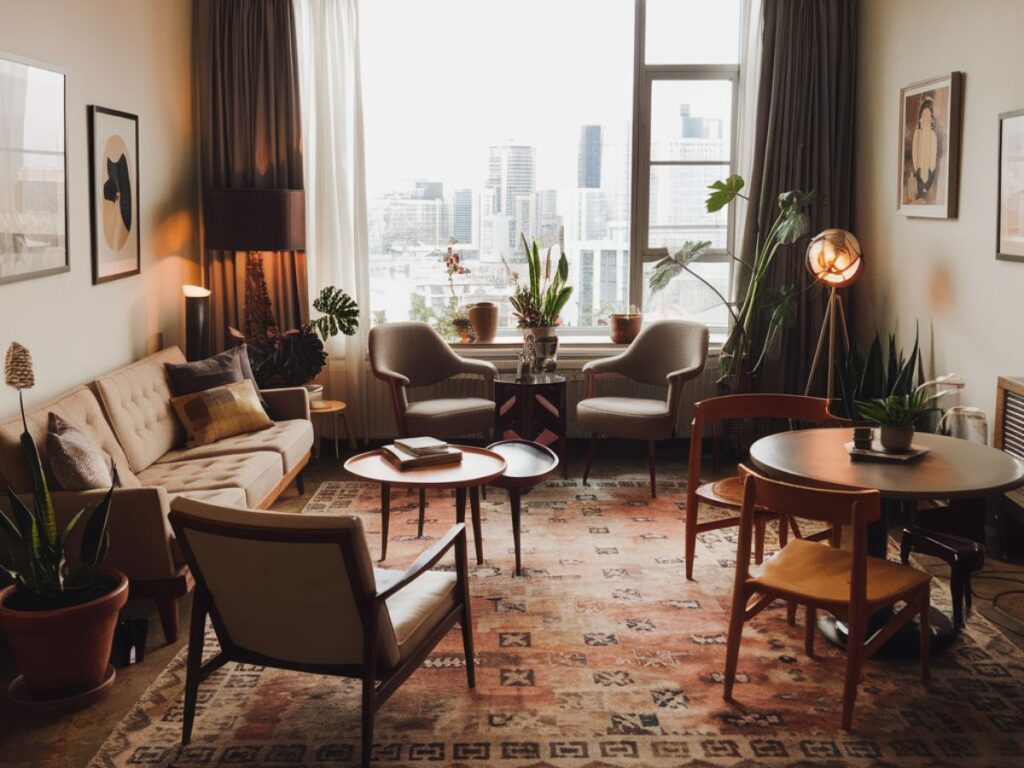
No focal point, poor lighting, and disconnected design choices. Also a common problem, or example: when sitting on the table, the view of the space is not harmonious.
Smart Solutions
1. Anchor the space visually
- statement pendant light (there are pieces perfect for small spaces)
- small rug
These can create importance, and make the dining area more meaningful.
2. Unify your design
- repeat colors and materials
- or repeat materials in the room
- and most importantly: the furniture pieces of the small living room and dining area have to be matching in style, age, vibe and still have some kind of contrast.
3. Layer your lighting
- ambient + task + accent
Avoid the “single ceiling light” effect – to know more about unwritten lighting rules for small living room, read this article!
#7 – “I can’t imagine hosting anyone here”
The Problem
There’s no flexibility for guests. The room feels too small – even if you have a relatively big dining table.
Why This Happens
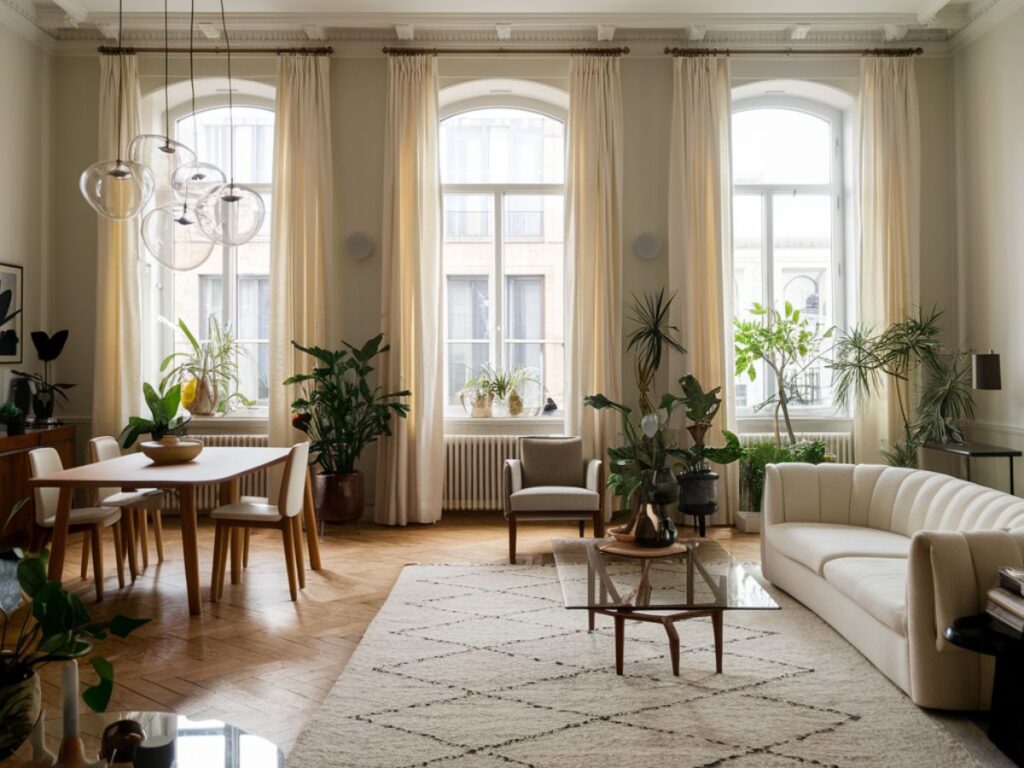
Everything is fixed — nothing adapts. The dining table may be enough for more people, but the circulation area is very limited.
Smart Solutions
1. Use flexible seating
- stackable chairs
- stools tucked away
2. Choose expandable solutions
- extendable tables
- benches for flexible seating
Combined with other mobile furniture pieces, using foldable or expandable solutions can create space for many occasions. Keep in mind, when no tin use, theyx need some space to be stored to not become everyday bulk
How to Choose the Right Dining Setup for Your Space
Before choosing any solution, ask yourself:
- How often will I actually use it?
- How many people need to sit daily vs occasionally?
- Does it block movement paths?
- Can it serve more than one function?
- Does it feel visually light or heavy?
The best small space dining room ideas are not the most beautiful ones — they’re the ones that fit your life.
One Design Insight Most People Completely Miss
The Real Value of Free Floor Space
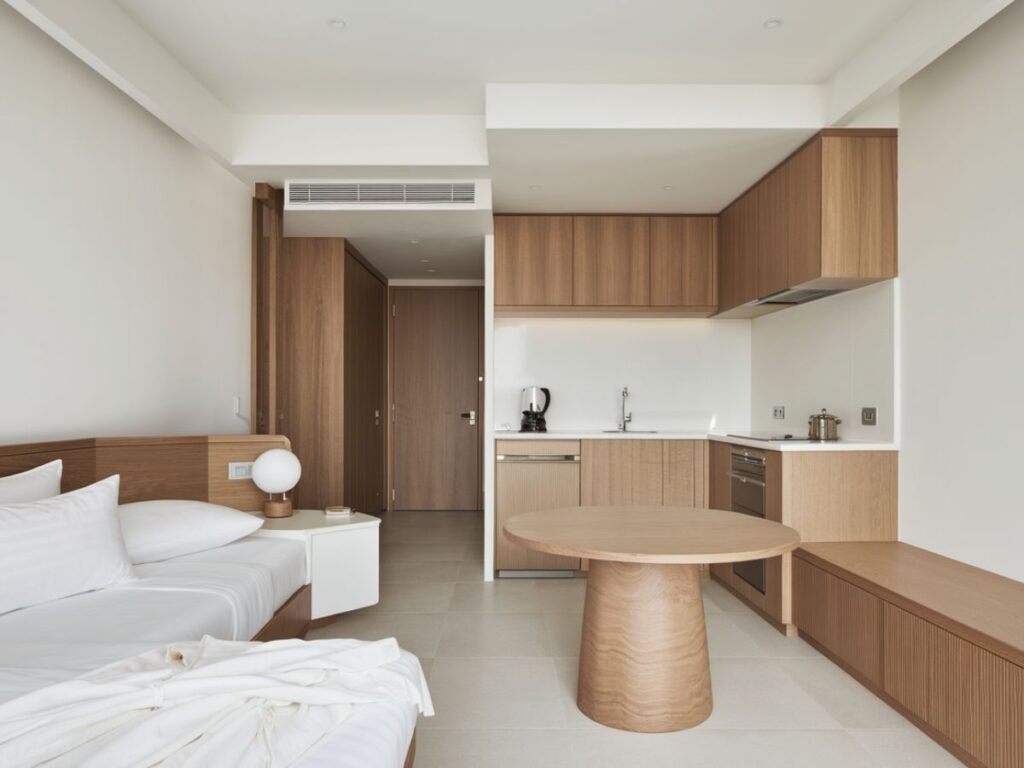
In small homes, empty space is not wasted space — it’s flexibility.
Free space means versatility.
With a bit of rearranging, the same room can become:
- a cozy living room for movie nights
- a proper dining setup
- a safe play area
- even a mini dance floor or yoga space
Sometimes, not filling every corner is the smartest design decision you can make.
The Real Secret Behind Successful Small Living Room Dining Areas
Most people think the problem is lack of space.
But the real issue is this trying to recreate a full dining room inside a multifunctional space.
The 3 Principles That Actually Work
1. Flexibility Over Permanence = your space should adapt to your life
- foldable
- extendable
- multi-use
2. Zoning Over Separation = space for each activity
- rugs
- lighting
- layout
3. Perception Over Square Meters = how it feels matters more than size
- light furniture
- visual openness
- clean layouts
When you stop trying to replicate a traditional dining room, your space starts to support your life.
Before You Go
Designing a small living room with dining area isn’t about getting everything “perfect.”
It’s about creating a space that works for your real life — your routines, your habits, your moments at home.
If something has felt off in your space, now you know why. And more importantly, you know that small, thoughtful changes can completely transform how your home feels — without needing more square meters.
Take one idea from this guide and try it.
Move one piece of furniture. Remove something unnecessary. Redefine one small corner.
That’s how good spaces are created — step by step.
And if you’re in the middle of designing or rethinking your home, don’t stop here.
There are so many smart, simple ideas that can make your space feel bigger, calmer, and more intentional.
Keep exploring and get inspired:
- Small Living Room Layout Rules That Actually Work
- Living Room Office Combo Ideas
- Space Saving Furniture for Small Apartments
- Studio Apartment Layout Ideas
Your space has more potential than it might seem right now — you just need the right ideas to unlock it.
Save this for later on Pinterest!