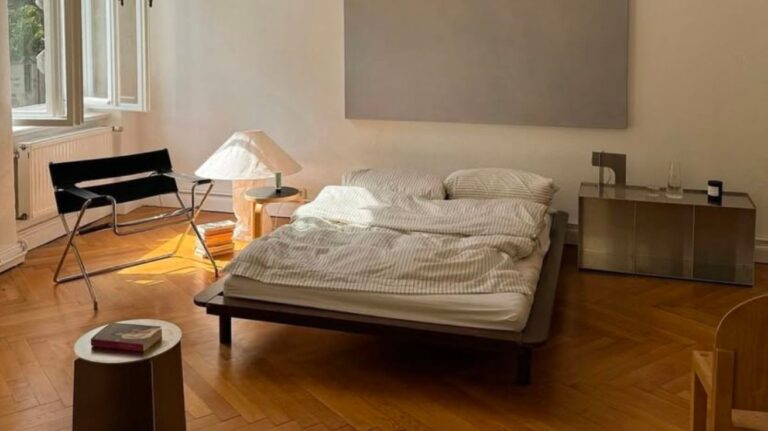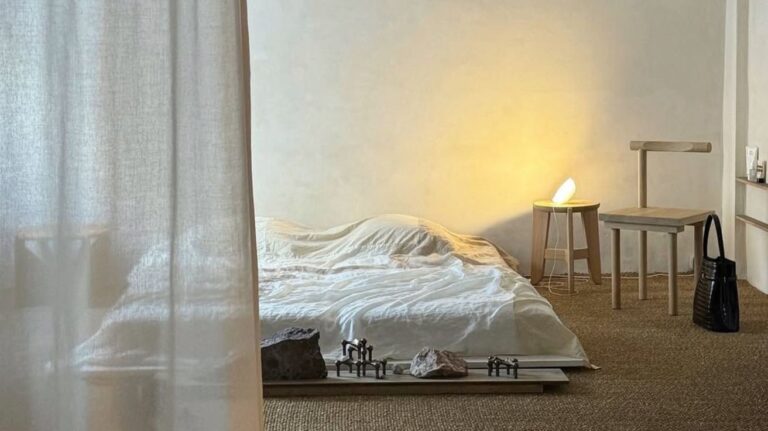
Bedroom Ideas for Small Rooms: What Works Depends on Your Layout
This post contains affiliate links. If you buy through them, I may earn a small commission — at no extra cost to you. I only recommend products I’d genuinely specify as an architect.
The best bedroom ideas for small rooms begin with dimensions, not aesthetics.
A layout that photographs beautifully in a 14-by-16-foot master bedroom can feel suffocating at 10-by-12 (for metric users, 14-by-16 foot is 4 m x 4,5 m and 10×12 foot is about 3 m x 3,5 m). As an architect, the first question I ask before recommending anything is: what are the actual measurements, and what does this room need to do?
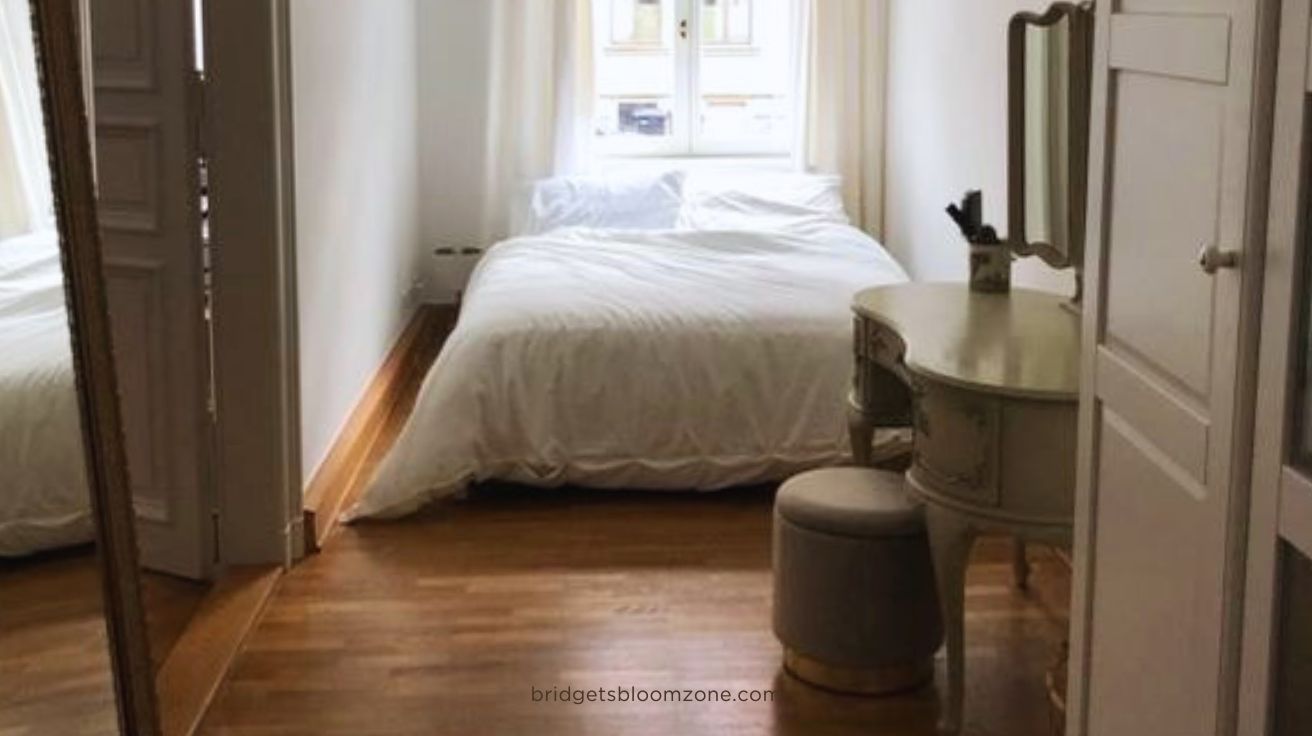
This guide works through the decisions in order. Layout comes first, because no paint color or styling choice repairs a floor plan that doesn’t function. Then furniture, storage, light, and finally decoration — in its proper place at the end. Bedroom ideas for small rooms are only useful when they’re applied in sequence.
If you’re comparing options before a move, a renovation, or a redecoration, this is where to start.
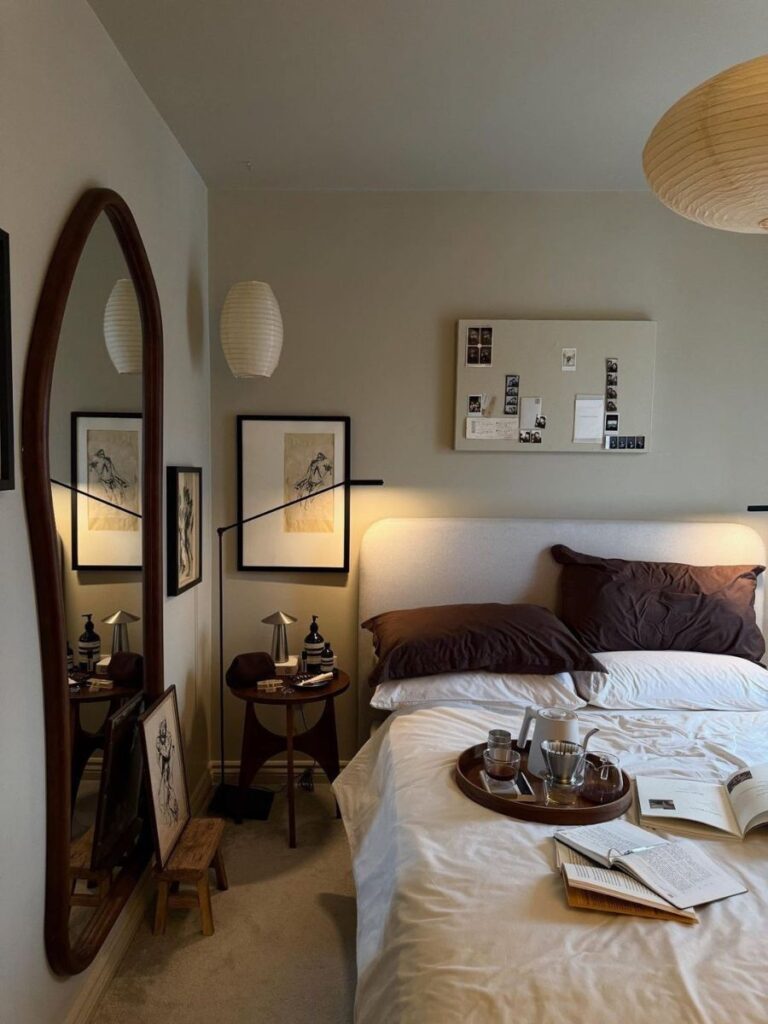
Bedroom Ideas for Small Rooms — Layouts That Work
The floor plan determines everything else. Before choosing a bed frame or a wall color, you need to know whether your room is narrow, square, or awkward. Each shape demands a different approach.
According to RIBA’s guidance on minimum habitable bedroom dimensions, a single bedroom requires at least 70 square feet and a double at least 100 square feet. Those are legal minimums, not design ideals. Most small bedroom decisions happen in rooms between 100 and 140 square feet, where layout choices carry the most weight.
If you’re working through this from the floor up, the small studio layout planning post covers the floor plan decisions in full. And if you want to see how small the margin for error really gets, our studio layout experiments across five different configurations make that concrete.
Narrow Rooms (Under 2.4m Wide)
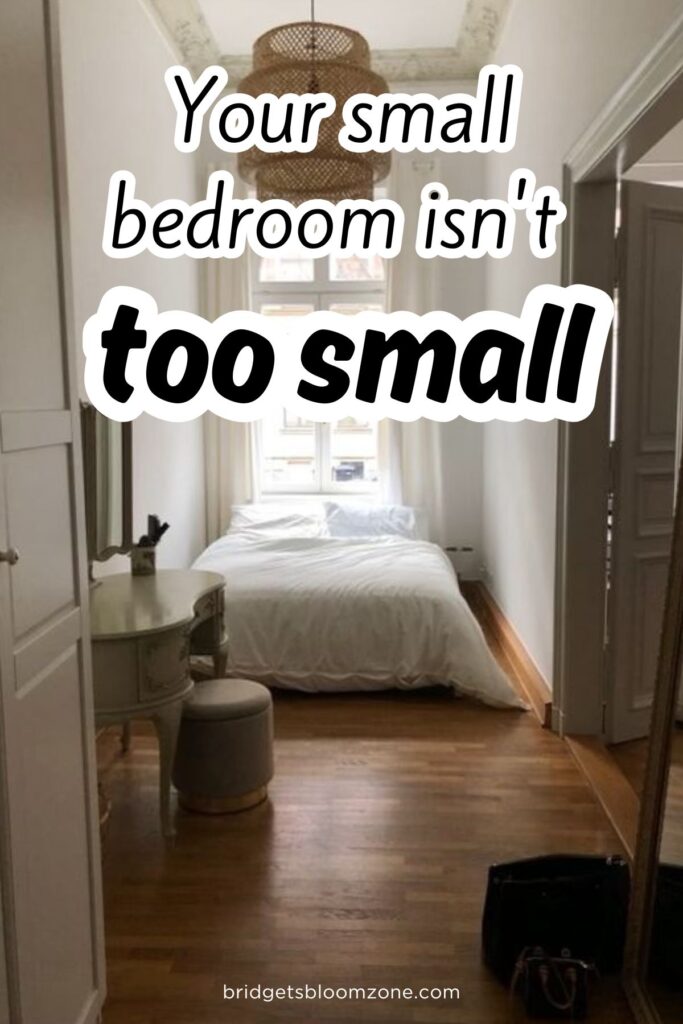
In a room under 8 feet wide — roughly 2.4 meters — the bed almost always runs lengthwise along one wall. This is one of the few layout decisions where there’s little room for experimentation.
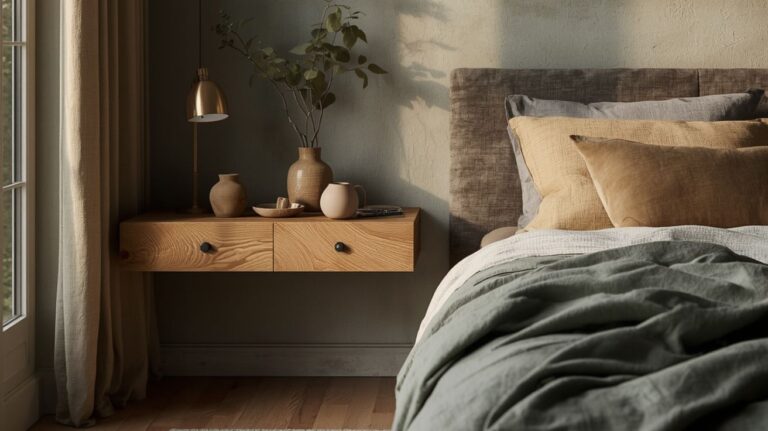
Placing the bed with its length running toward the window gives you the most functional floor space on the access side. The nightstands, if the width allows for them at all, should be minimal: a wall-mounted shelf or a very narrow console rather than a freestanding piece.
For more on that choice, the post on how to choose the right nightstand for a tight bedroom runs through the proportions that actually hold up.
Square Rooms (Where Bed Placement Is the Puzzle)
A square room sounds simpler than a narrow one. Often it isn’t. When the room measures roughly the same in both directions, the bed placement becomes genuinely ambiguous, and every option creates a constraint somewhere else.
The most common mistake is centering the bed on the longest wall and leaving equal space on both sides. In a larger room, that symmetry feels composed. In a small square room, it typically leaves two narrow strips of unusable floor and no clear circulation path.
A more functional approach is to position the bed slightly off-center toward one wall, keeping the larger floor area on the access side. This creates one workable zone rather than two cramped ones.
L-Shaped and Awkward Rooms
L-shaped rooms are common in older buildings where walls were added after the original construction. The recess created by the L is almost always the right location for storage rather than for the bed.
Placing the bed inside an alcove or recess can feel appealing, but it creates access problems, limits ventilation, and tends to divide the room rather than connect it. When in doubt, fit the storage to the awkward part and keep the sleeping area in the main rectangle.
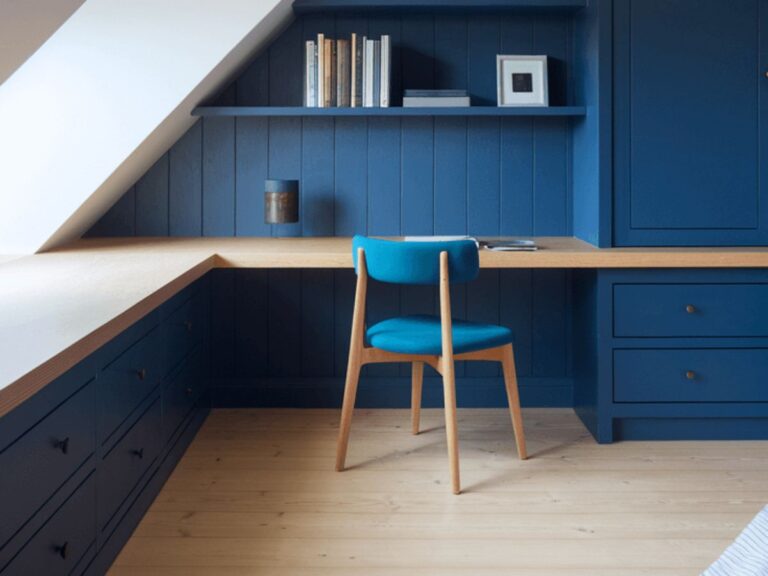
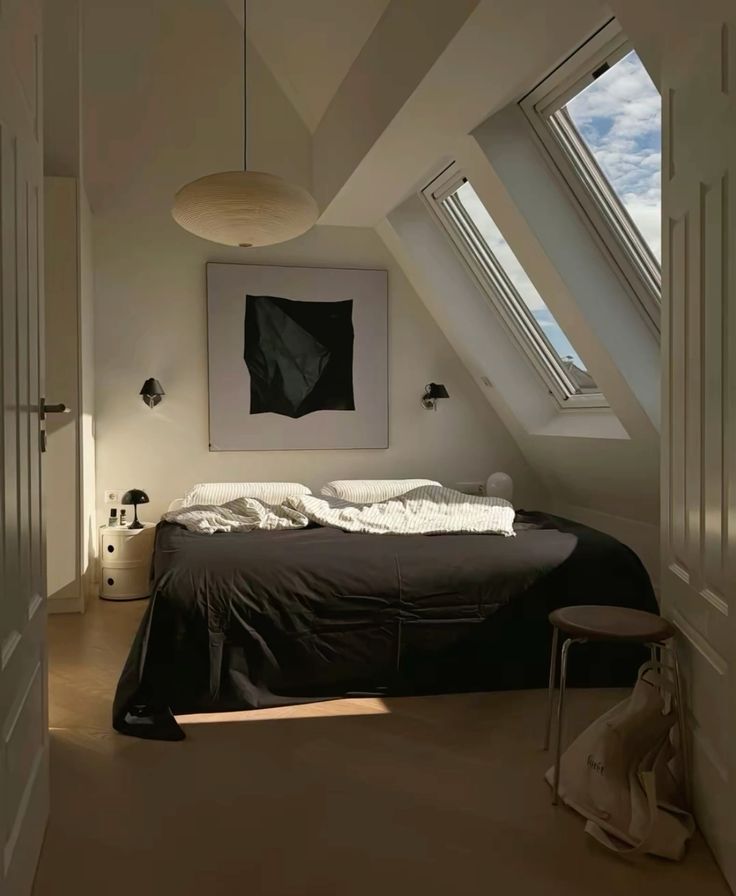
Loft bedrooms and attic bedrooms belong most of the times to this group, in my opinion. The best place for the bed seems to be obvious, but then there is the slanted ceiling which does not allow the bed to fit there…
If you want to know more about bed placement in attic bedrooms, and more tips, read my article about these rooms!
No posts
What Are the Best Furniture Ideas for a Small Bedroom?
The furniture question is really a scale question. A piece that looks proportionate in a showroom or a catalog photograph may be completely out of scale in your actual room.
This is the category where bedroom ideas for small rooms most frequently go wrong. Dimensions rarely get checked before purchase.
The Only Pieces That Belong in a Small Bedroom
A small bedroom needs a bed, one or two surfaces at sleeping height, and storage. That’s the functional core, and most rooms under 130 square feet can’t support much more than that without feeling crowded.
Every additional piece of furniture takes floor space, visual weight, and maintenance attention. A chair that never gets sat in, a second dresser that duplicates the wardrobe, a desk that ends up as a clothes pile. These are the additions that make a small bedroom feel smaller than its measurements.
Furniture Dimensions That Matter More Than Style
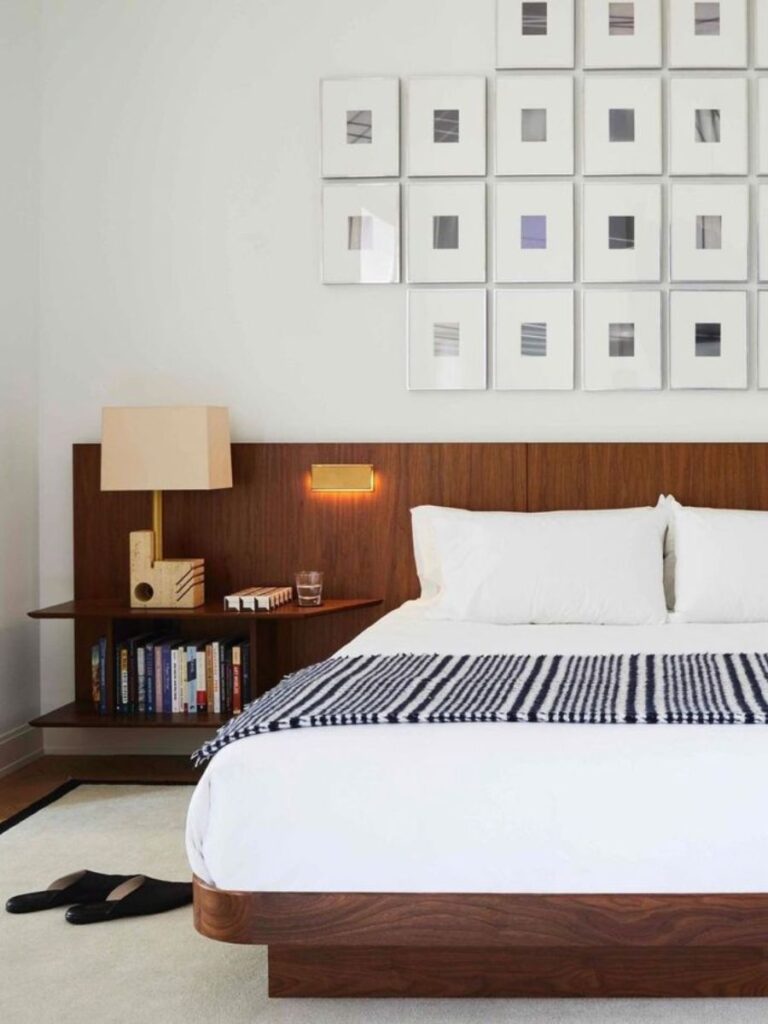
For a bed in a small room, height matters more than most people expect. A tall bed frame — anything over 36 inches from floor to the top of the mattress — will make the ceiling feel lower, regardless of the room’s actual measurement.
Bed depth matters too. A frame with a deep footboard can reduce clearance to below the comfortable minimum of 24 inches. Before buying, measure from the proposed foot position to the facing wall and confirm there’s at least 24 to 30 inches of clearance.
Platform Beds vs. Divan Beds in Compact Rooms
Platform beds have a visual lightness that works well in tight spaces. The gap beneath a platform frame is visible, which keeps the floor area reading as continuous rather than interrupted.
Divan beds sit directly on the base with no visible gap. According to Which?’s testing of bed bases for small spaces, divan bases offer significantly better integrated storage, with drawers built directly into the base. That’s a real advantage when there’s no room for a separate dresser.
The tradeoff is visual weight. A divan with a tall upholstered headboard in a small room absorbs a noticeable amount of perceived space. If you go this route, keep the headboard low or wall-mounted. The post on platform beds for small bedrooms covers the specific configurations worth comparing.
Storage Ideas for Small Rooms That Don’t Shrink the Space
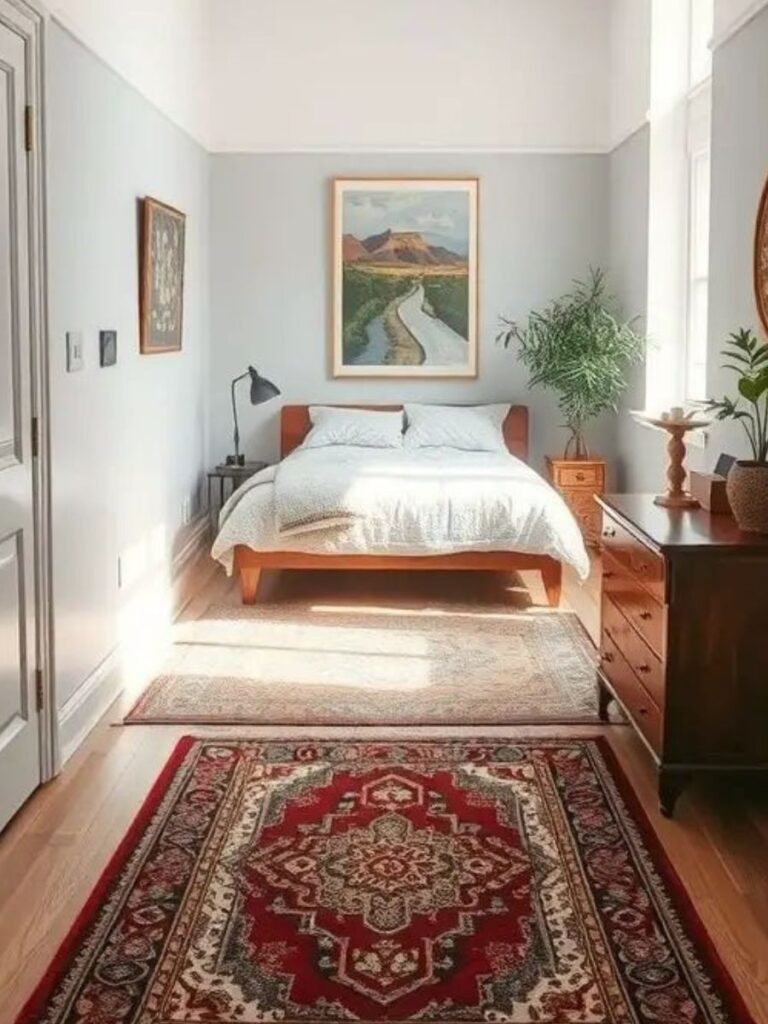
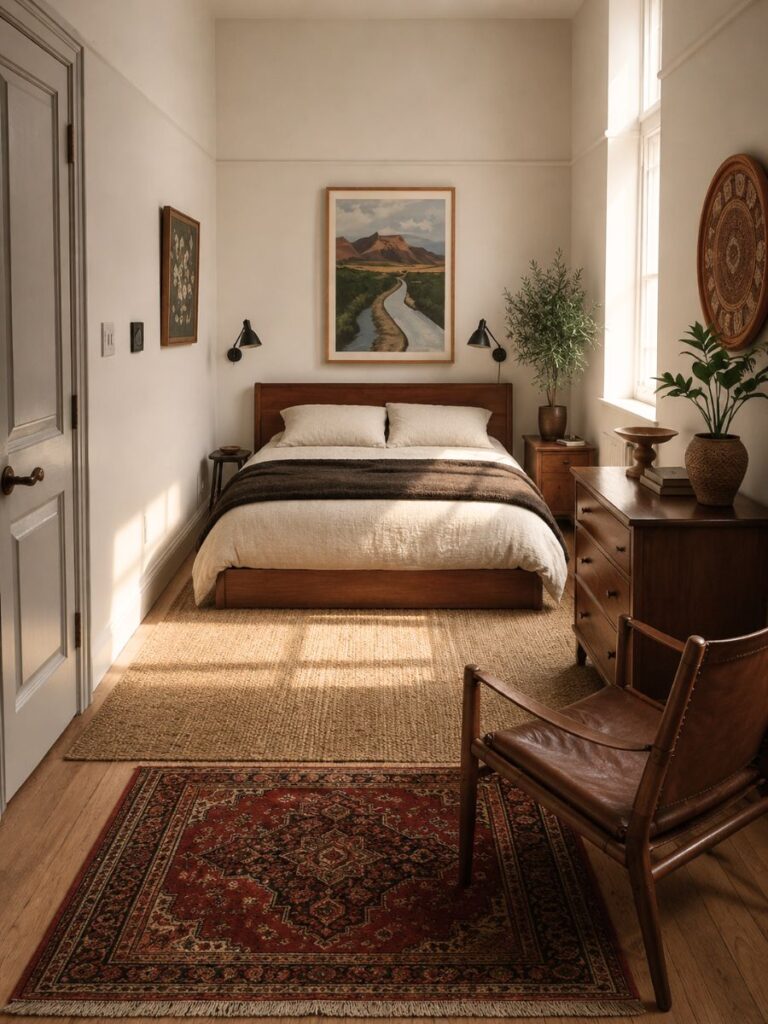
Storage is where small bedroom plans either succeed or undo themselves. Oversized or poorly placed storage units can make a room feel like a corridor.
The principle here is integration over addition. Storage that is built into the room, whether fitted wardrobes, under-bed drawers, or wall-mounted shelves, takes up less visual real estate than freestanding pieces of the same capacity. For a full look at what works in compact configurations, the small bedroom storage guide covers these options in more detail.
Wall-to-Wall Fitted Wardrobes: When They Work
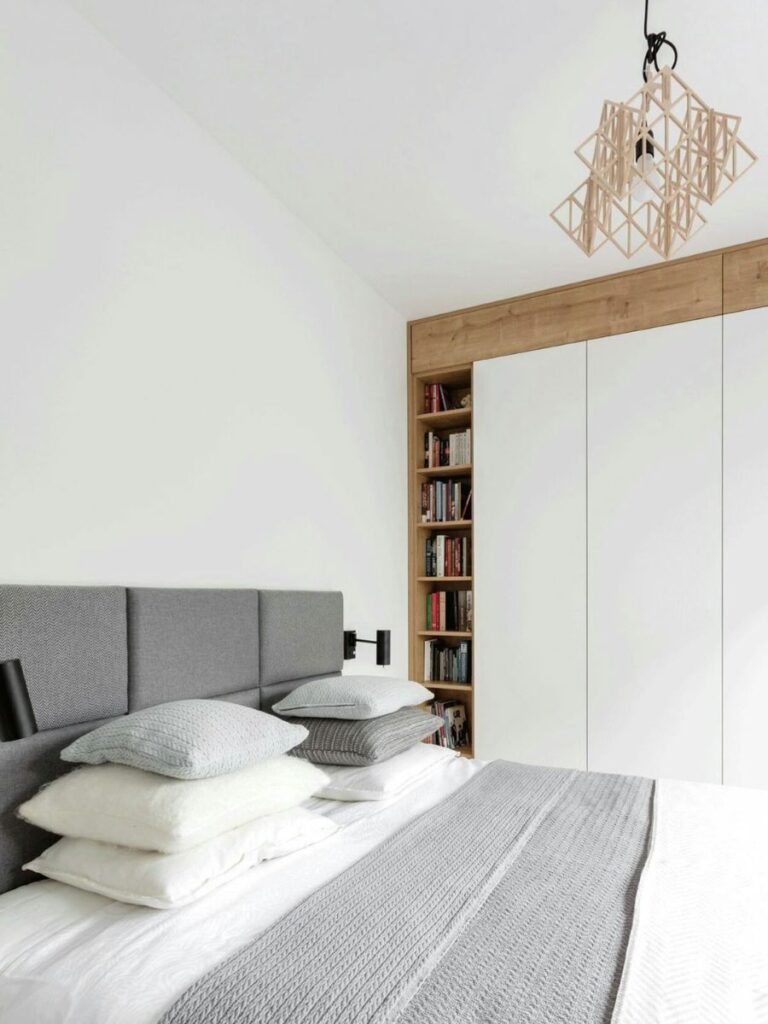
A wall-to-wall fitted wardrobe works when it spans the full width of the wall from floor to ceiling, with flush or minimal-profile sliding doors. Half-measures often look worse than freestanding alternatives. A wardrobe that stops short of the ceiling, or one with doors that swing outward into the room, is rarely an improvement.
The IKEA space planning guidelines for PAX wardrobes specify a minimum 24-inch depth for a standard wardrobe. In rooms where that depth cuts too far into the floor area, a shallower fitted system at 18 to 20 inches works for folded items and accessories, with a slimmer secondary rail for hanging clothes.
The post on fitted wardrobes for small bedrooms covers the depth, door type, and handle decisions that have the most impact on how the room feels.
Under-Bed Storage: The Clearance Rule
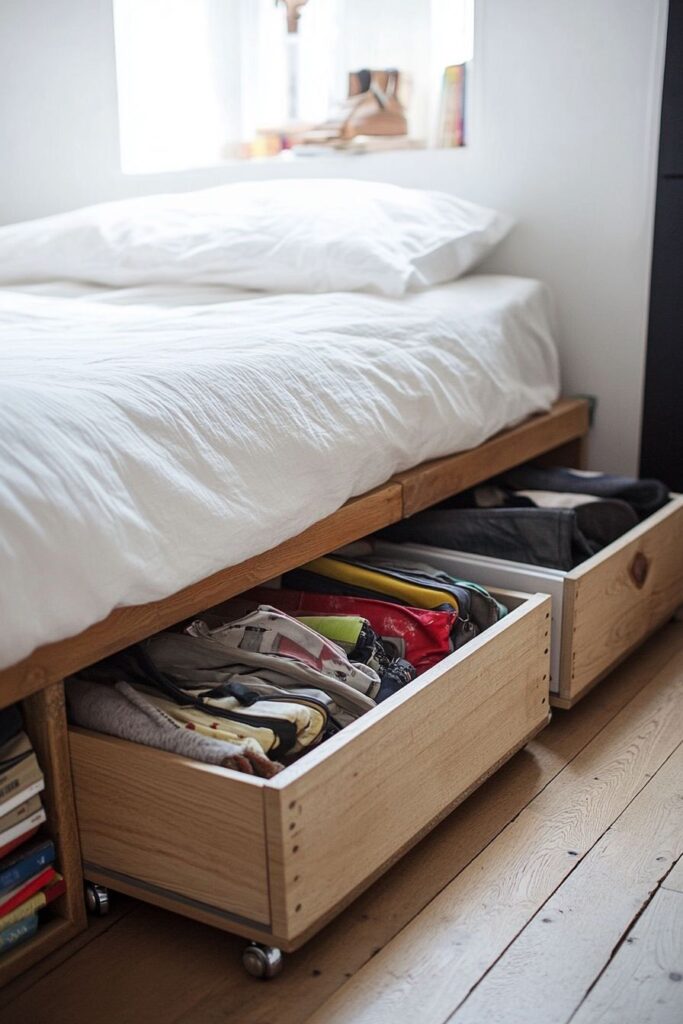
Under-bed storage only works when there’s enough clearance below the mattress to make it usable. The practical minimum is around 7 inches (17-18 cm) of internal height for shallow storage boxes. Full built-in drawers need at least 10 to 12 inches (25-30 cm).
Many platform bed frames are designed for appearance rather than storage. Before committing to any bed with under-bed drawers, check the actual internal drawer depth on the specification sheet, not just the bed height.
Open Shelving vs. Closed Storage: The Honest Comparison
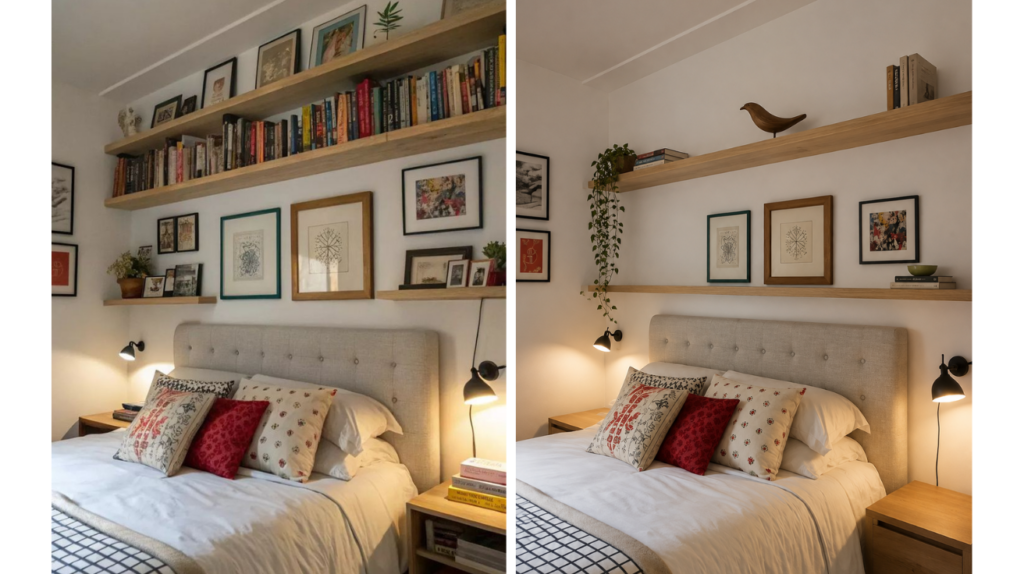
Open shelving in a small bedroom looks good in photographs when styled with four or five objects. In daily use, it tends to accumulate items and become visual noise.
Closed storage, whether wardrobes, drawers, or lidded boxes, hides the disorder and keeps the room feeling contained. Open shelving earns its place above desk height or as a single deliberate display shelf with a strict limit on what lives there.
Bedroom Ideas for Small Rooms — Color and Light
Color and light interact differently in every room depending on which way the window faces. Getting this right requires knowing your room’s orientation, not just picking a shade that appeals on a paint chip.
For more on how these decisions connect to the wider interior scheme, the post on small bedroom interior design decisions covers the sequence from floor plan to finish.
The Color Choice That Opens a Room vs. the One That Closes It
Lighter walls reflect more of whatever light is available, which is why pale colors tend to feel more spacious. The type of light matters as much as the quantity.
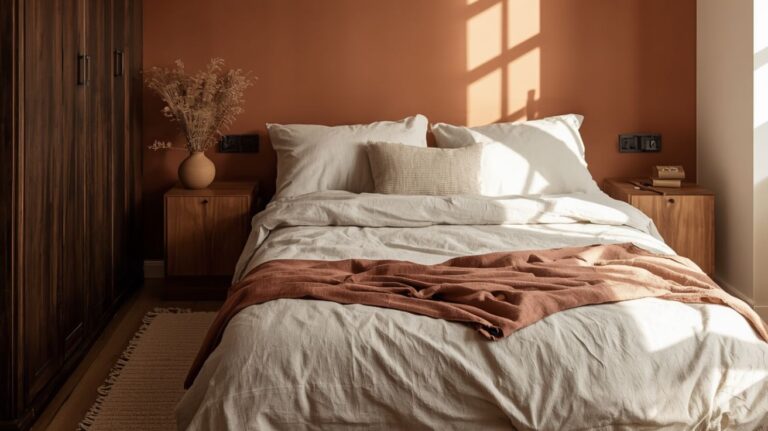
According to research by Colour Affects and Angela Wright on color temperature in north and south-facing rooms, cool colors (blues and blue-grays) increase perceived distance, while warm colors including terracotta and deep ochre decrease it. In a small north-facing bedroom with limited natural light, a warm mid-tone like soft sage or warm linen will feel more comfortable than a cool pale gray, which often reads as cold and flat.
The bedroom ideas for small rooms that get this right are almost always the ones that start with orientation, not with a palette.
How Window Size Affects Your Color Decision
A large south-facing window changes what’s possible on the walls. You can use deeper colors because there’s enough natural light to animate them.
A small north-facing window doesn’t provide the same tolerance. Keeping the walls and ceiling in the same or similar color reduces visual breaks in the space. Separate ceiling and wall colors in a room with limited light tend to make the ceiling feel lower.
The small bedroom color guide covers the specific palette decisions that hold up across different light orientations.
Layering Light Sources in a Room With One Window
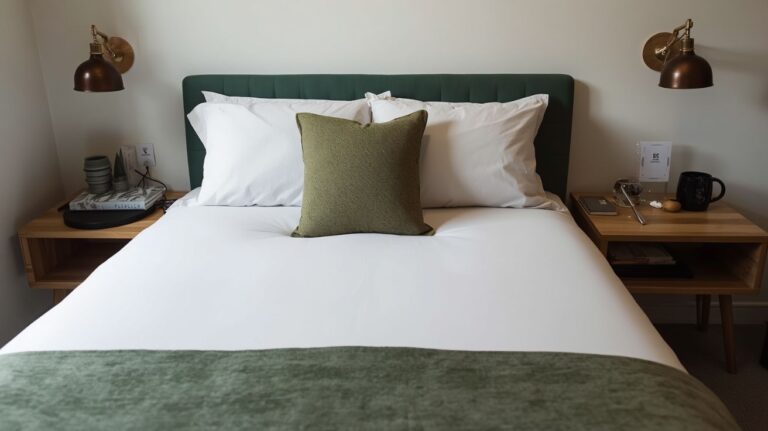
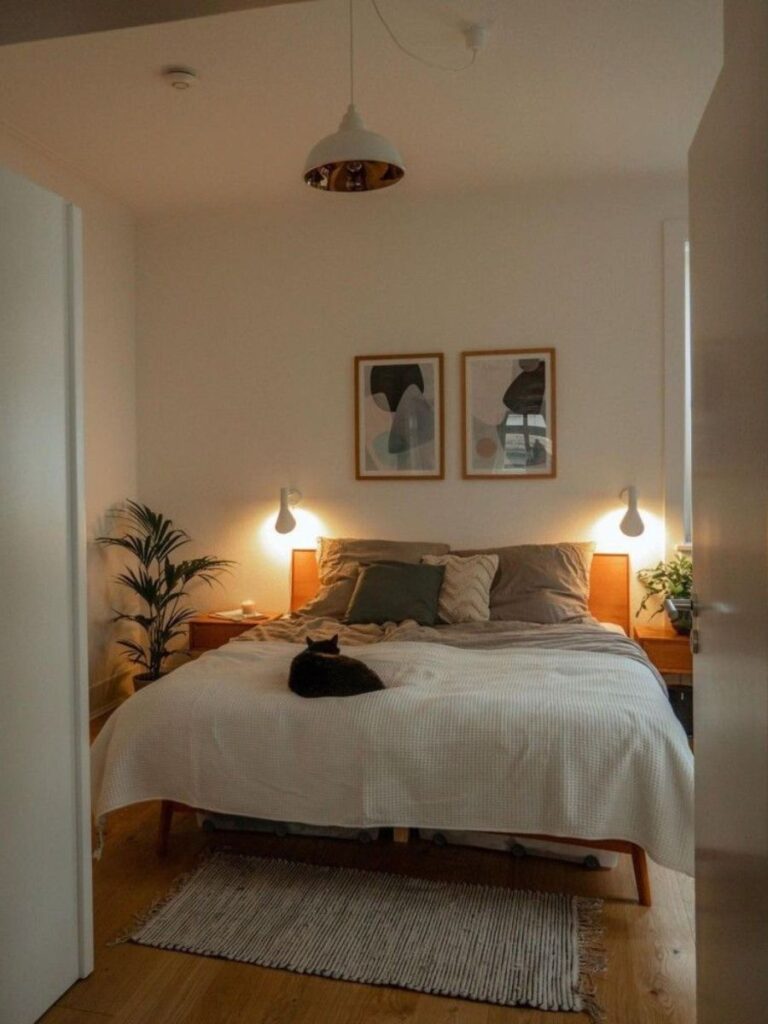
A single overhead light in a small bedroom creates a flat, uniform quality that makes the room feel functional rather than comfortable. Adding a reading lamp, a wall-mounted sconce, or a low-level floor light creates depth and shifts the room’s mood without touching the surfaces.
Separating the sources vertically is the key. A ceiling light, a bedside lamp, and one low source near the floor give you three distinct layers that can be adjusted independently. For the specifics on placement and bulb temperature, the small room lighting guide has the detail.
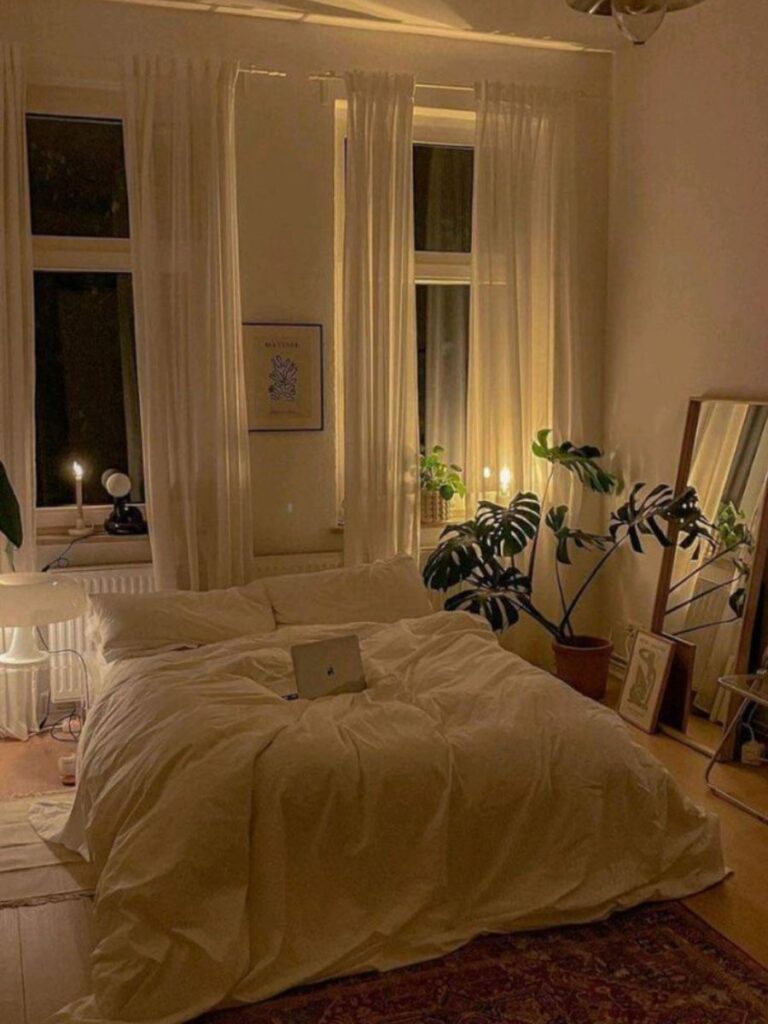
Can Bedroom Ideas for Small Rooms Include Decoration?
Decoration in a small bedroom isn’t off the table. The question is whether each choice earns its place.
In a larger room, decoration can be cumulative. Layers of objects and textiles build to a feeling of richness. In a small room, that same accumulation reads as clutter. The edit has to happen before the room can feel good.
The Decoration Rule for Small Rooms: One Per Surface
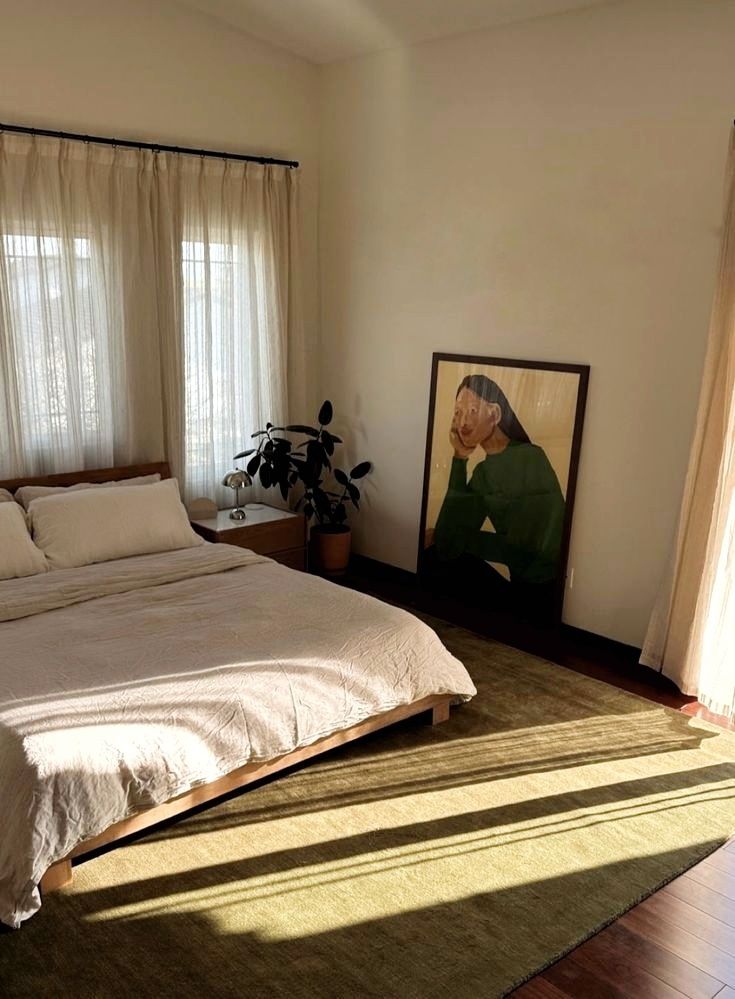
One object per visible surface is the practical limit in most small bedrooms. One plant on the windowsill, one lamp on the nightstand, one print on the wall. Multiples on each surface is where the room starts to feel cluttered rather than curated.
Small rooms have limited depth of field, which means the eye takes in everything at once. When every surface has multiple objects, the room feels busy rather than considered. According to Dezeen’s reporting on decoration density in small residential interiors, rooms that feel both personal and spacious consistently have clear surface areas as a through line.
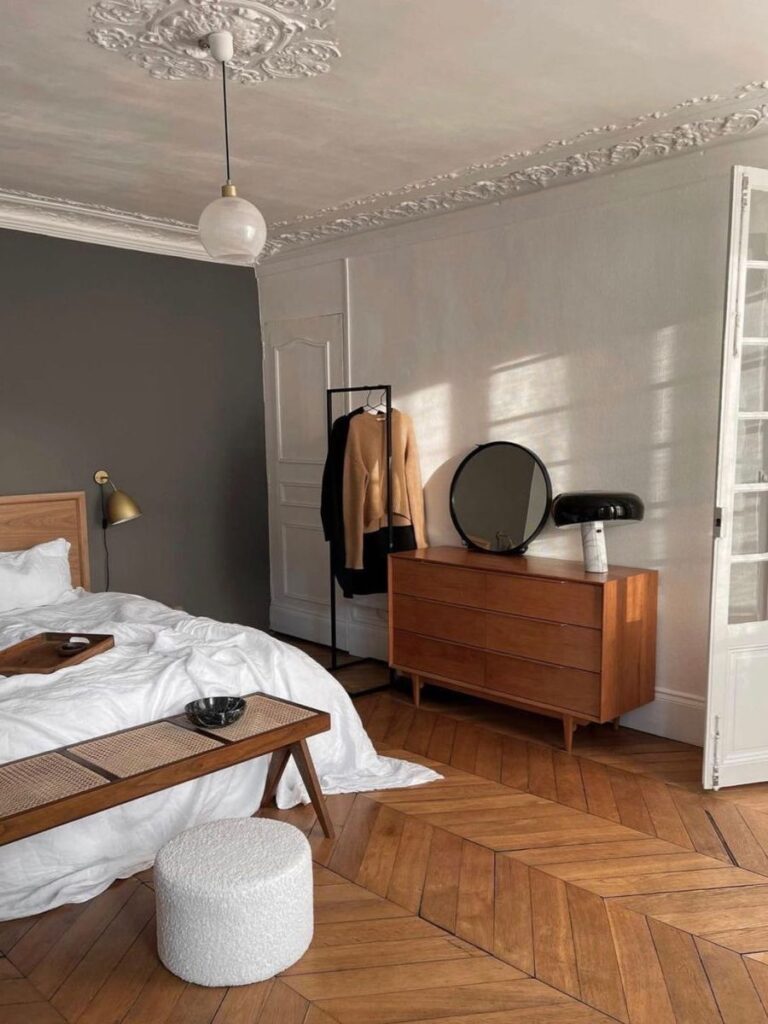
Textiles That Add Warmth Without Adding Bulk
A duvet, two pillows, and one throw is the textile lineup that keeps a small bed from looking overwhelmed. Additional cushions and layered throws add visual noise without adding usable warmth.
Texture matters more than pattern in a small room. A linen duvet cover, a cotton throw, a wool rug underfoot all create material variety without competing colors or busy prints. Keep the palette tight and let the texture carry the interest. For more on building a scheme that feels considered, the post on minimalist bedroom decor covers the edit process in detail.
What to Leave Off the Walls
In a large bedroom, a gallery wall works because the eye has enough space to move across it. In a small room, it tends to close the walls in.
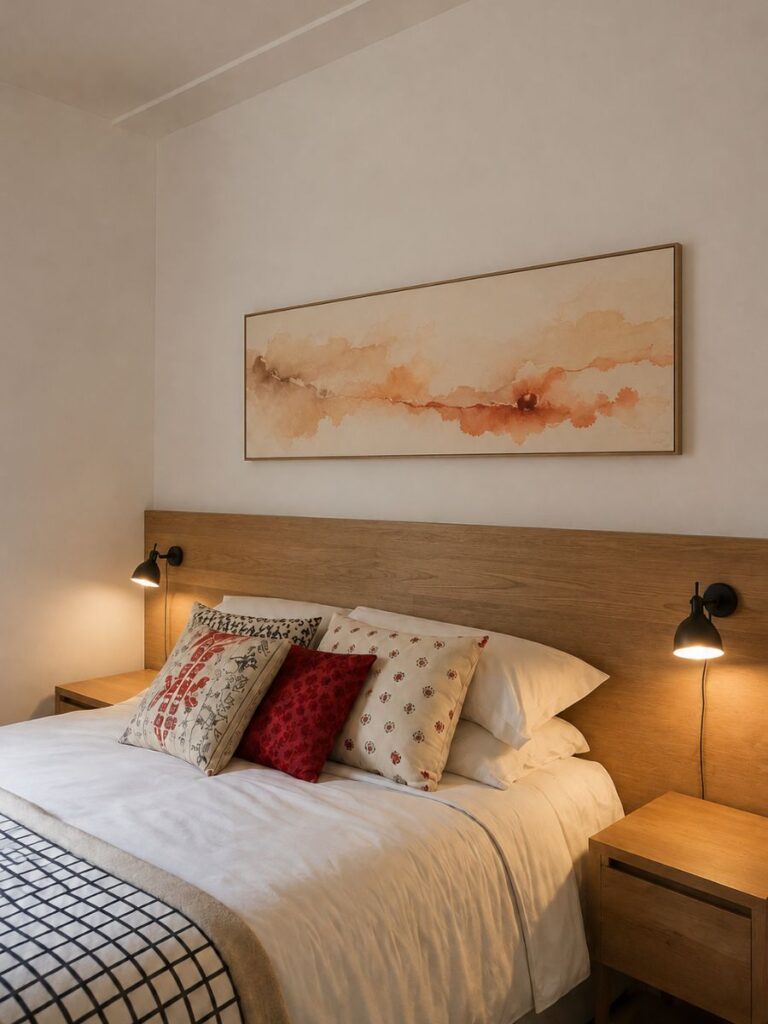
One framed piece per wall, sized to the wall rather than small against it, is the safer starting point. A piece that’s too small reads as an afterthought. One scaled correctly becomes an anchor, and everything else can stay off the walls.
The Questions to Ask Before Trying Any Idea
The bedroom ideas for small rooms that hold up in practice all pass a short checklist before they get implemented. Ideas from magazines and Pinterest are photographed in specific rooms with specific conditions that may not match yours.
According to a Houzz reader survey on what people regret most in small bedroom decisions, the most common regret was buying furniture without measuring the room first. The second was choosing a bed that was too large for the available floor plan.
Does It Solve an Actual Problem?
Before adding anything to a small bedroom, ask what specific problem it solves. A second set of shelves might look appealing, but if the room’s real problem is that there’s nowhere to put clothes, open shelving adds visual weight without addressing the issue. A fitted wardrobe solves it directly.
Decoration follows function in a small room. If the storage isn’t resolved, the styling won’t fix it.
Does the Scale Work for This Room’s Ceiling Height?
This is where many bedroom ideas fail in practice, and the one I’ve seen most often in my own work.
A client came to me with a photograph from an architectural magazine: a four-poster bed with a dramatically tall frame, curtains falling from the uprights, the whole composition beautifully resolved. The ceiling in the photograph was around 10 feet. Her room was 8 feet.
The scale relationship between the frame height and the ceiling was what made the original feel right. In her space, that same bed would have sat only 18 inches below the ceiling rather than 3 feet, pressing the room down rather than composing it.
According to AD Pro’s analysis of scale and ceiling height in bedroom design, the ratio between furniture height and ceiling height is one of the most consistent factors in whether a room reads as proportionate or cramped.
The idea was right. The scale was wrong for that room.
Will It Still Work in Five Years?
Built-in storage and fitted wardrobes have a long functional life but are difficult to change. Make sure the configuration works for your actual storage habits, not an idealized version of them.
Freestanding furniture can be moved or replaced but takes more floor space per unit of storage. For most small bedrooms, a hybrid approach works best: fitted storage on one wall, freestanding bed and nightstands. That combination gives the most flexibility over time.
A Final Word on Bedroom Ideas for Small Rooms
The bedroom ideas for small rooms that hold up over time share one underlying logic: proportions first.
Every decision about color, furniture, storage, and decoration should follow a confirmed floor plan. Starting with the aesthetic and working backward to the layout is where most small bedroom mistakes begin.
Why Ideas from Large Homes Fail Small Rooms
A bedroom designed for a larger space has margin built in. The furniture can be slightly too big, the color slightly too saturated, the decoration slightly too dense. The room still works because there’s enough space to absorb the imbalance.
Small rooms have no such margin. A bed frame that’s two inches too deep can eliminate a circulation path. A color that’s one tone too cool can make a north-facing room feel oppressive all winter. Bedroom ideas for small rooms need to be calibrated to the room, not adapted down from a larger context.
The One Principle That Holds Across All Small-Room Decisions
Every decision that reduces visual clutter and keeps the floor clear will improve the room. This holds whether you’re choosing a bed base, a wall color, or a set of curtains.
Even a small amount of clear floor area is the single most effective design tool in a compact bedroom. A room with 70 square feet of clear floor reads as larger than one with 90 square feet broken up by furniture.
If there’s one idea worth taking from this entire guide, that’s it.
Final Thoughts
The sequence matters more than the individual choices. Proportions before aesthetics, storage before decoration, and one decision at a time.
Small bedrooms reward patience. Making one change, living with it, then making the next one is slower than a full renovation. It consistently produces better results than committing to everything at once.
When you’re ready to work through the floor plan in detail, the small bedroom ideas overview is the place to start. If you’re already past the overview and working on specific layout decisions, the small bedroom layout planning guide covers the exact configurations worth considering.
Frequently Asked Questions About Bedroom Ideas for Small Rooms
What is the best layout for a small bedroom?
It depends on the room’s shape. Narrow rooms almost always need the bed along the longest wall. Square rooms work better with the bed slightly off-center toward one wall, keeping one larger floor zone accessible rather than dividing the space into two equal strips.
How do I make a small bedroom look bigger?
Keep as much floor clear as possible, use storage that is integrated into the room rather than freestanding, and choose a wall color appropriate for your room’s light orientation. Consistent ceiling and wall color in a north-facing room does more than any single furniture choice.
What furniture should I avoid in a small bedroom?
Avoid tall bed frames that come within 18 inches of the ceiling and freestanding dressers in rooms that can’t spare the floor space. Each reduces perceived space without adding proportionate function.
Are platform beds or divan beds better for small rooms?
Platform beds look lighter and keep the floor reading as continuous. Divan beds offer better built-in storage. If under-bed storage is a priority and there’s no room for a separate dresser, a divan with drawer bases is the more functional choice. Keep the headboard low to offset the visual weight.
Can I use dark colors in a small bedroom?
Yes, with the right light conditions. A south-facing room with a good-sized window can handle a deeper wall color. North-facing rooms with small windows are where dark colors become genuinely problematic. Light levels in that orientation simply can’t animate the color.
How much storage do I need in a small bedroom?
Calculate your actual storage volume rather than guessing. A standard wardrobe with a double hanging rail, one shelf, and a base drawer covers the needs of one person in a compact room. The test is simple: everything should fit away with the doors closed.
Should I use open shelving in a small bedroom?
Open shelving works when it’s deliberately sparse, with a strict limit on what lives there. In practice it tends to collect items over time. Closed storage is almost always the more functional long-term choice, with open shelving reserved for one deliberate display position.