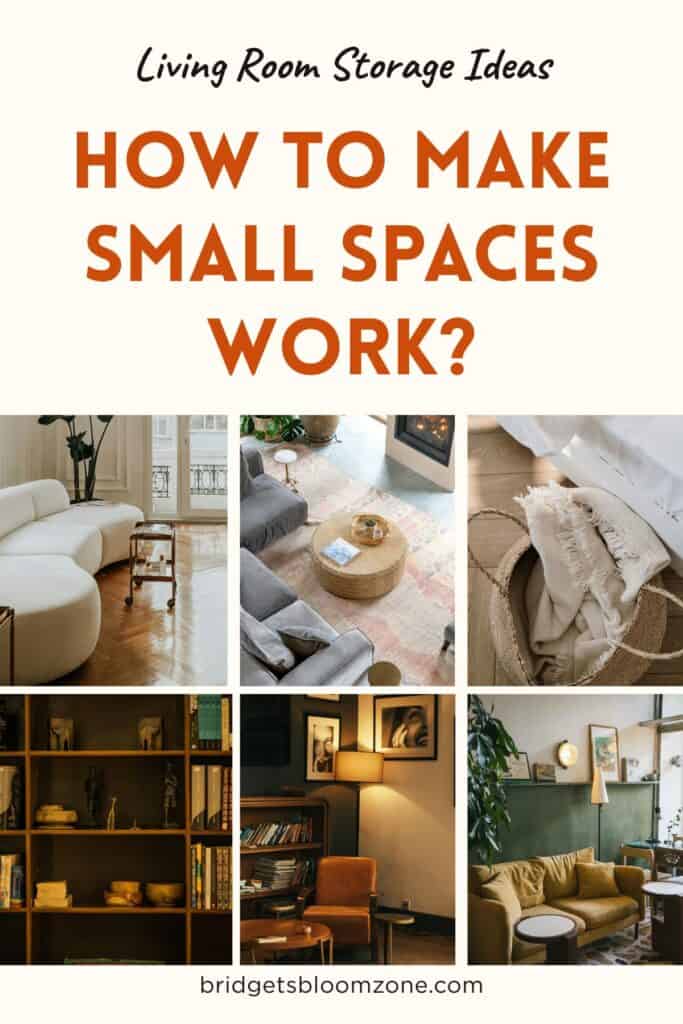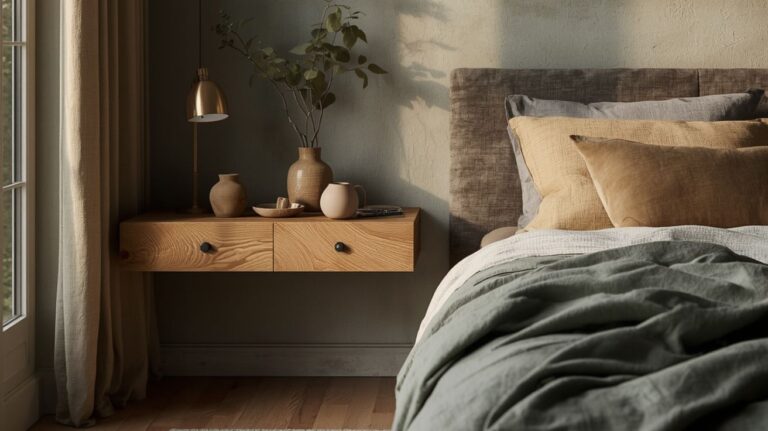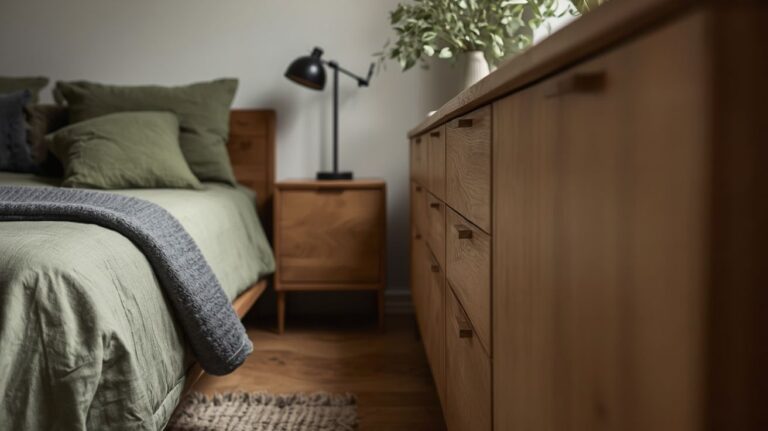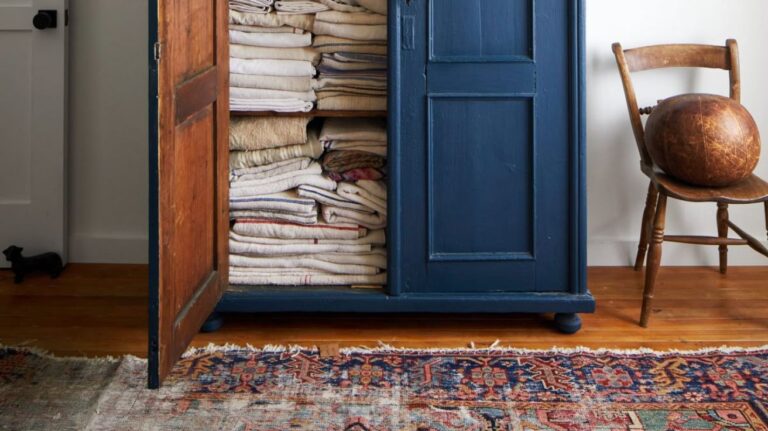
Smart Living Room Storage Ideas – How to Make Small Spaces Work?
This post contains affiliate links. If you buy through them, I may earn a small commission — at no extra cost to you. I only recommend products I’d genuinely specify as an architect.
There is a particular frustration that comes with a small living room storage. You add a basket here, a shelf there — and somehow the space still feels crowded. The things you own are technically contained, but the room does not feel calm.
The problem is rarely a lack of storage. More often, it is a lack of the right kind of storage, combined with more things than the room can comfortably hold.
The most effective small living room storage ideas share two qualities: they disappear into the room rather than competing with it, and they work because there is less to store in the first place.
From planning your living room layout at the right stage to choosing furniture that quietly does double duty, this guide covers both the philosophy and the practical toolkit. So your living room can feel genuinely considered rather than endlessly managed.
The Question Nobody Asks First: How Much Do You Actually Need to Store?
Most people approach a small living room with the question: where can I put all of this?
A more useful question — and a harder one — is: do I still need all of this?
When we began the demolition phase of our studio apartment renovation, something unexpected happened.
Tearing down a wall — the mess and the exposure that comes with it — meant confronting the fact: the space is extremely small. And we have things we want to store.
Why more storage often makes small rooms feel worse
Adding more storage containers does not solve the underlying problem.
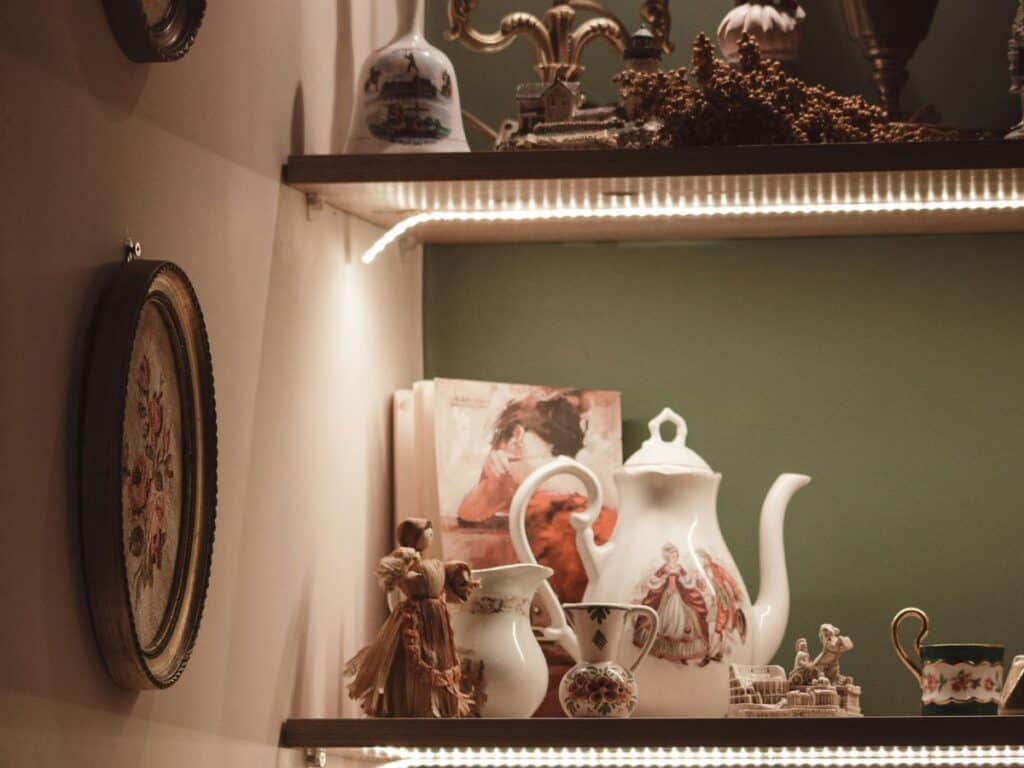
Research published in the Journal of Environmental Psychology found that subjective clutter strongly predicts wellbeing — the more cluttered a space feels, the lower people rate their life satisfaction.
Dr. Joseph Ferrari, a psychology professor at DePaul University who studies the psychology of clutter, found a consistent negative correlation between life satisfaction and accumulated possessions.
More storage simply relocates the problem. Putting things in bins means the stuff is semi-controlled, and only temporarily. It does not change how much there is to manage.
A simple audit before you add anything
Before buying a single piece of storage furniture, spend an hour with the room.
Ask which items genuinely belong there — not which ones have ended up there. Throw blankets, yes. A board game that gets played. Books you are currently reading. Everything else deserves a second look.
This kind of edit does not need to be dramatic. It is simply a process of deciding what earns its place — and being honest when something no longer does.
What a slow-living approach to possessions looks like
The slow-living orientation asks not whether you could store something, but whether it still serves your life.
A space with fewer, more considered possessions is easier to organise, easier to clean, and quieter to inhabit. That calm is not a design trick. It is the result of owning less than the room can hold.
For more on creating a peaceful home through a slower, more considered approach to living, there is a dedicated post on exactly this.
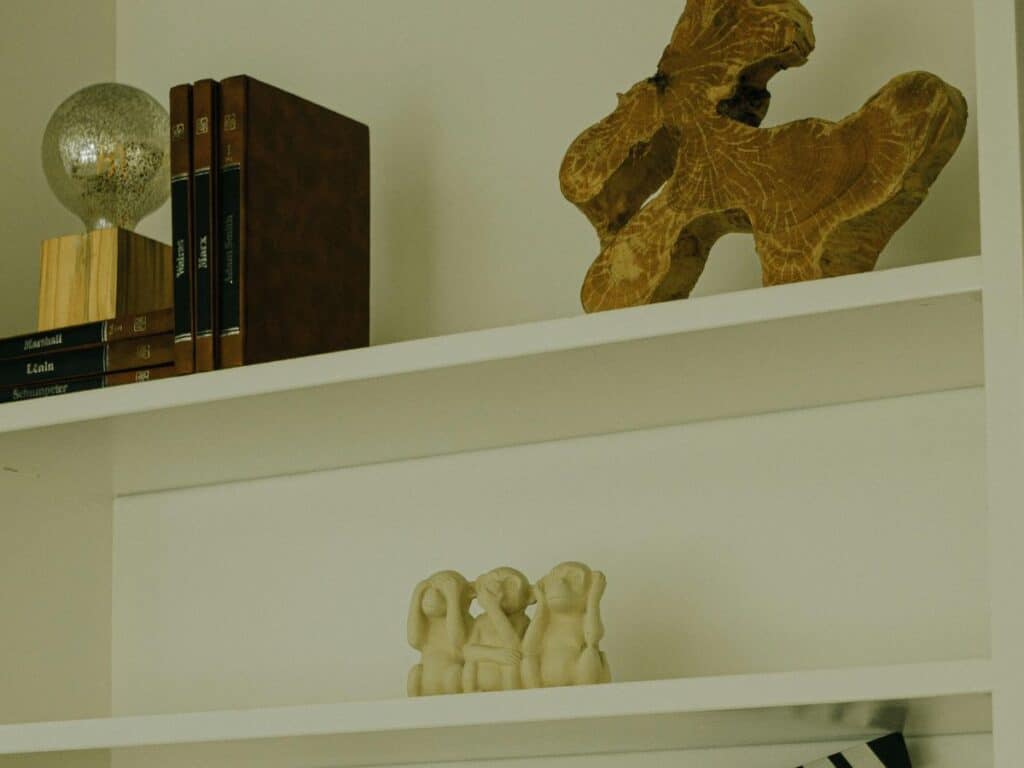
What Is the Best Small Living Room Storage?
The most effective small living room storage is closed storage — built into the room, or integrated into furniture you would choose anyway.
This is the kind of storage that does not announce itself. It simply holds what needs holding, out of sight, while the room remains legible and calm.
Open shelves are not storage in this sense. They are display.
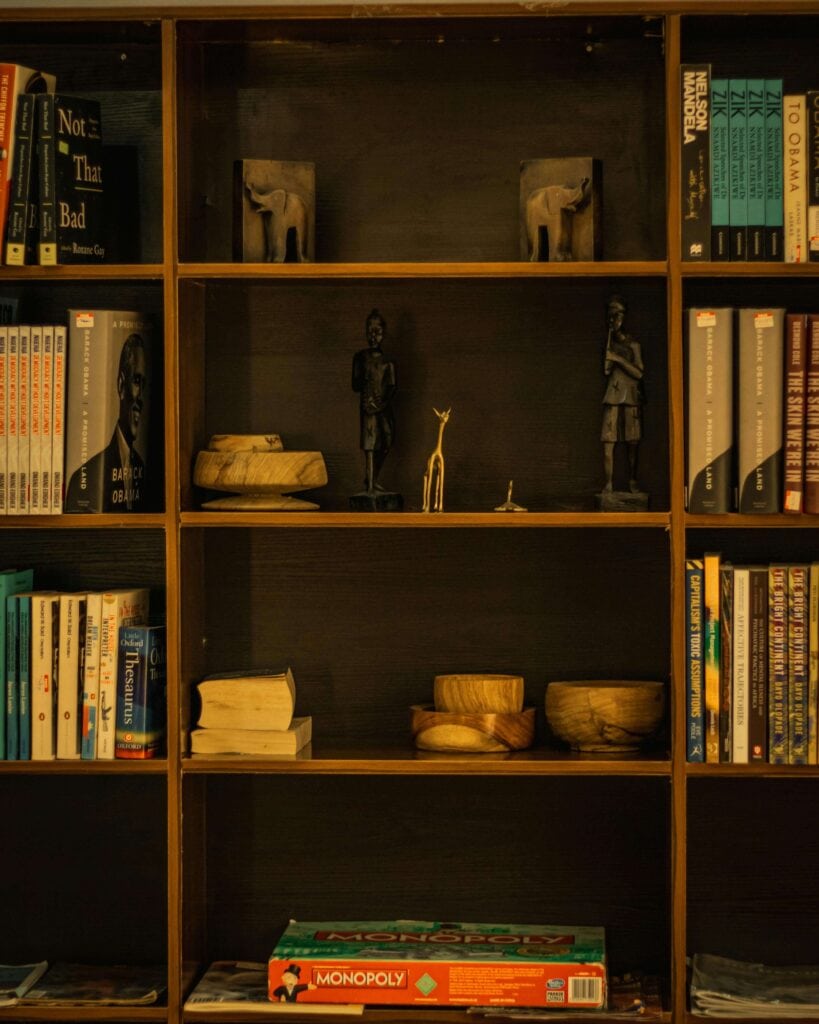
They work beautifully for a curated arrangement of books, a plant, a piece of ceramics you love. The moment they hold the miscellaneous items of daily living — phone chargers, notebooks, a remote that does not belong there — they become a source of visual noise rather than a solution to it.
Display and storage serve different purposes. Conflating the two is one of the most common reasons a small living room feels perpetually disorganised.
1. Hidden storage first — why concealment works
Concealed storage keeps surfaces clear, reduces visual noise, and makes everyday tidying much simpler.
The eye has nowhere to snag. The room reads as cohesive. Because the storage does not contribute to the visual complexity of the space, it does not make the room feel smaller. This is exactly what open, overfilled shelving tends to do.
The principle that guides good small-space design: what you hide does not compete with the room. What you show must earn its place.
2. Multifunctional furniture as the practical workhorse
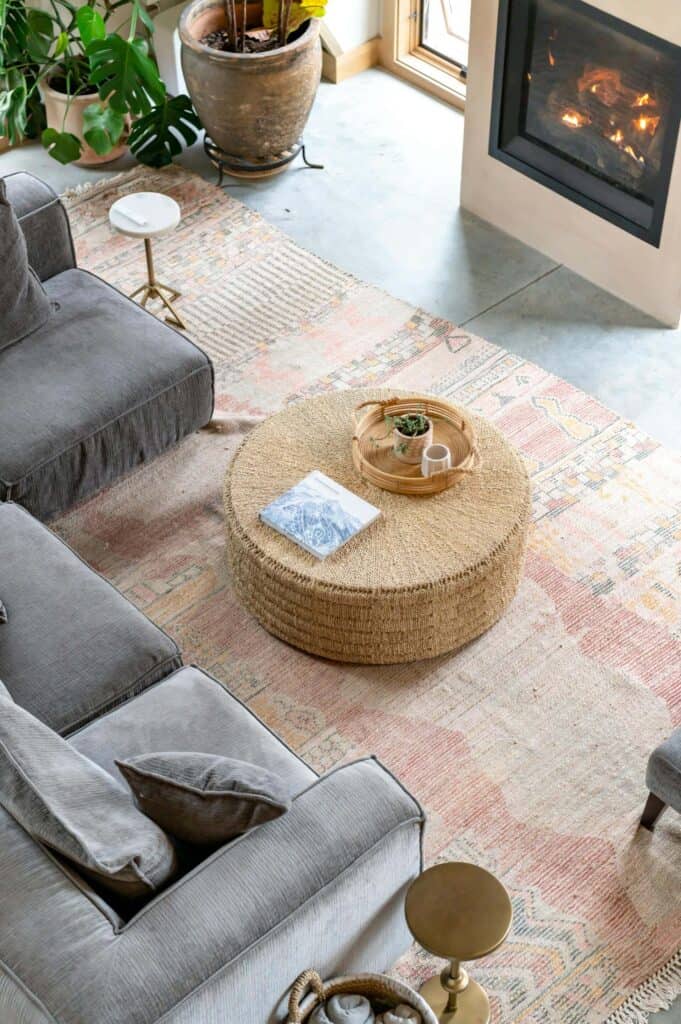
Multifunctional living room furniture is the most accessible form of hidden storage.
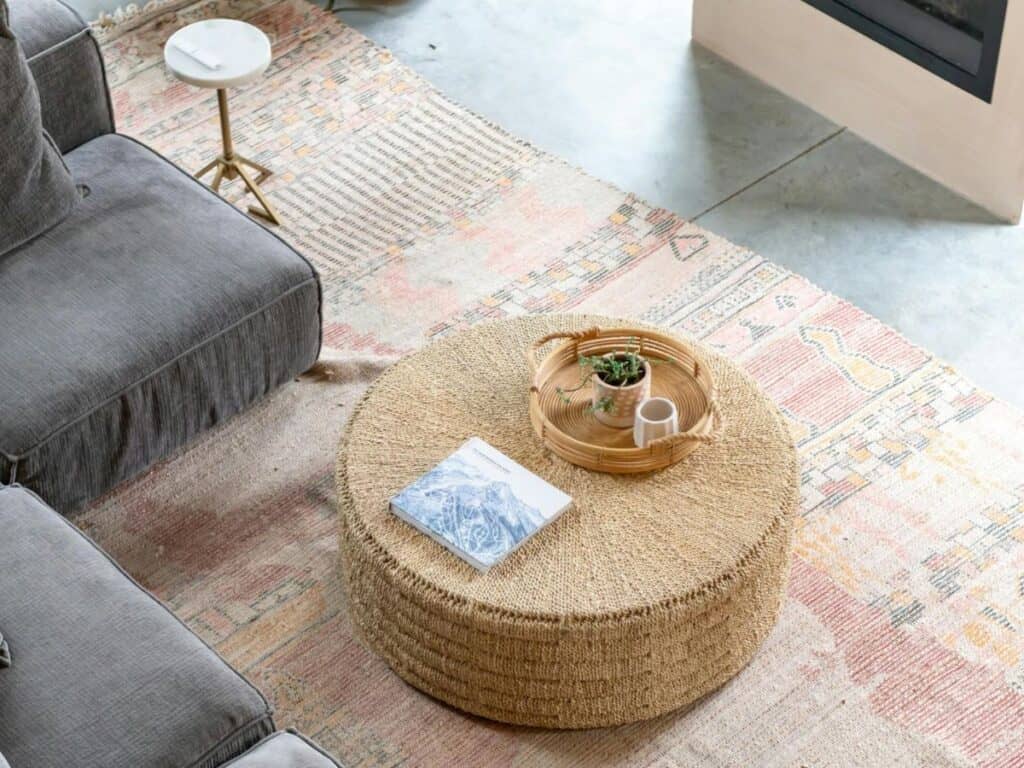
A coffee table with interior drawers, an ottoman that opens to hold blankets, a sofa with under-seat compartments — these pieces carry the functional load of the room without adding footprint. They do their job quietly.
The key is choosing pieces that would work in the room regardless of their storage function.
If the only reason you are considering a piece is its storage capacity, it will likely feel like a compromise.
If it is a coffee table you would choose for its proportions and material, and it also holds the board games and spare throws, that is the right solution.
3. When open shelving works — and what it is actually for
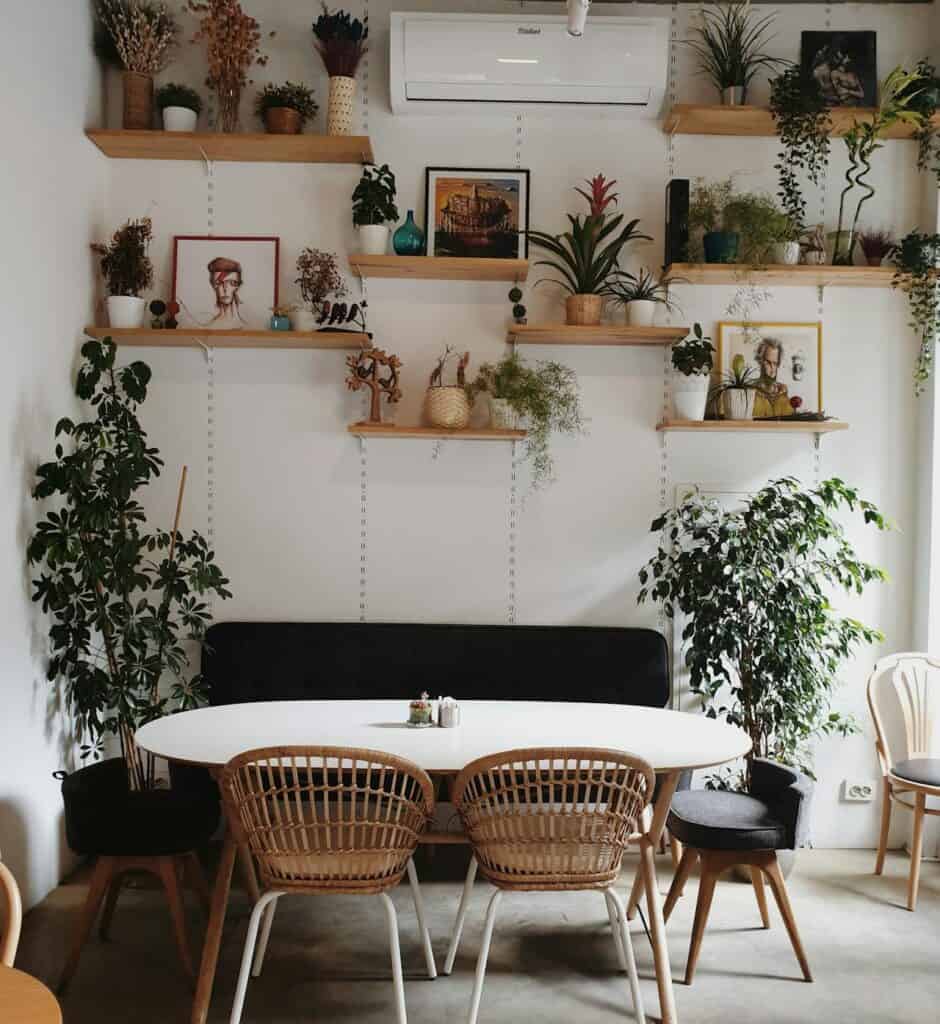
A wall-mounted shelf with three carefully chosen objects is not the same as a shelf full of miscellany.
Shelving works in a small living room when it is used for what it is genuinely good at: displaying things that are meant to be seen. A few books. A plant. One object that means something to you.
The moment a shelf becomes a landing zone — for post, for items waiting to be dealt with — it has crossed from display into disorganised storage. The room suffers for it.
Small Living Room Storage Ideas That Keep the Space Calm
When storage disappears into the room, the living room gains something difficult to achieve any other way: the sense that everything is in its place, without the evidence of that organisation being visible.
This is what well-designed small spaces have in common, regardless of size or budget.
1. Furniture with concealed compartments
Storage ottomans, lift-top coffee tables, and sofas with under-seat drawers are the most versatile starting point.
These pieces are the right choice for renters or anyone who cannot make permanent changes. They move with you, adapt to different rooms, and earn their footprint by serving multiple functions at once.
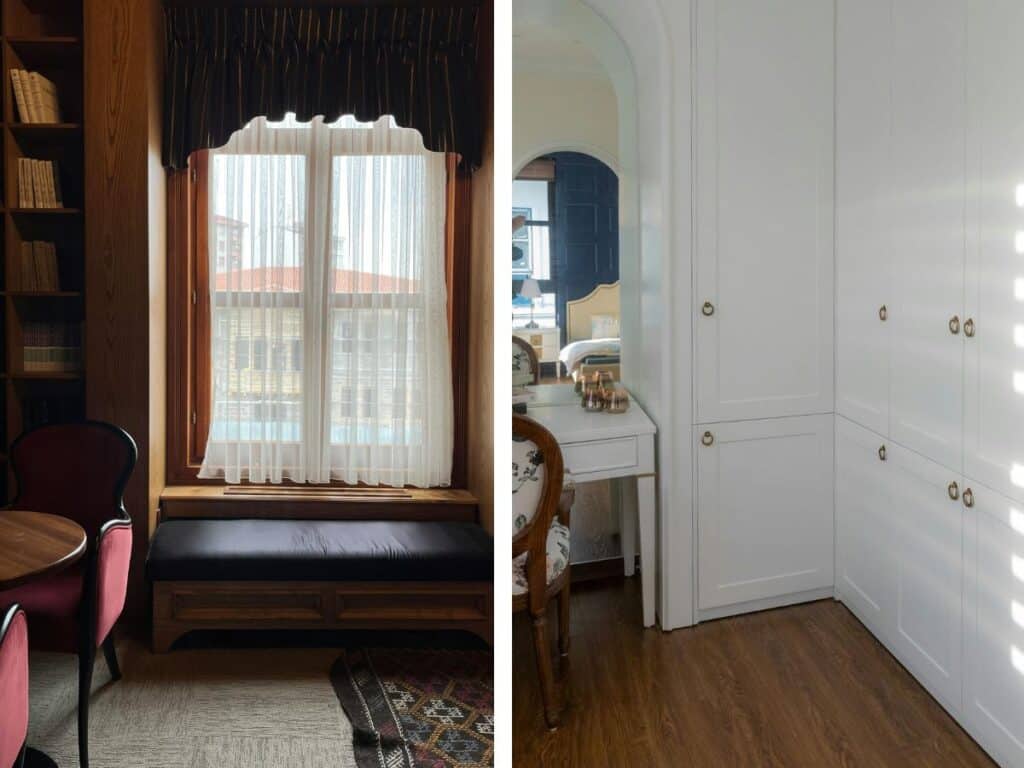
An end table with a hollow interior, a storage bench under a window, a window seat with interior drawers — all of these hold daily essentials without putting them on display.
A lift-top coffee table is particularly practical. It conceals remote controls, board games, coasters, and chargers, yet from across the room it reads simply as a table.
2. Built-in solutions — the long-term investment
When planning the studio renovation layout, one of the clearest architectural lessons was this: storage works best when it is decided at the layout stage, not added as an afterthought.
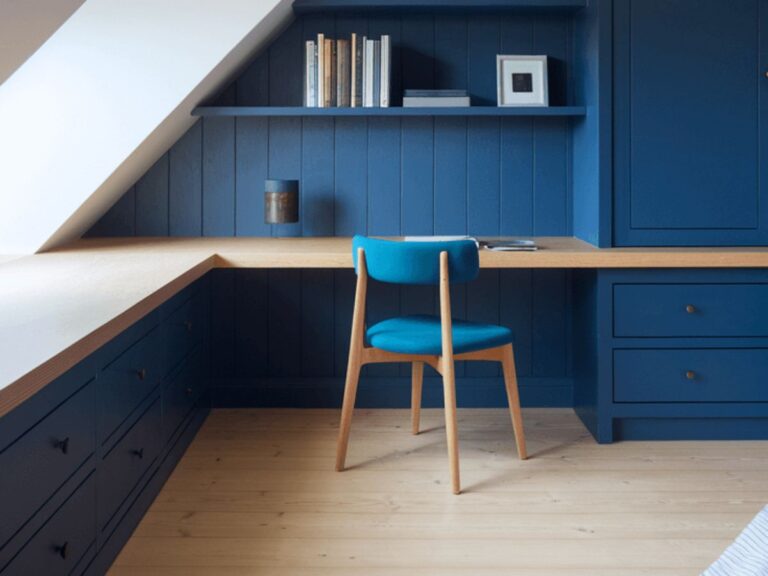
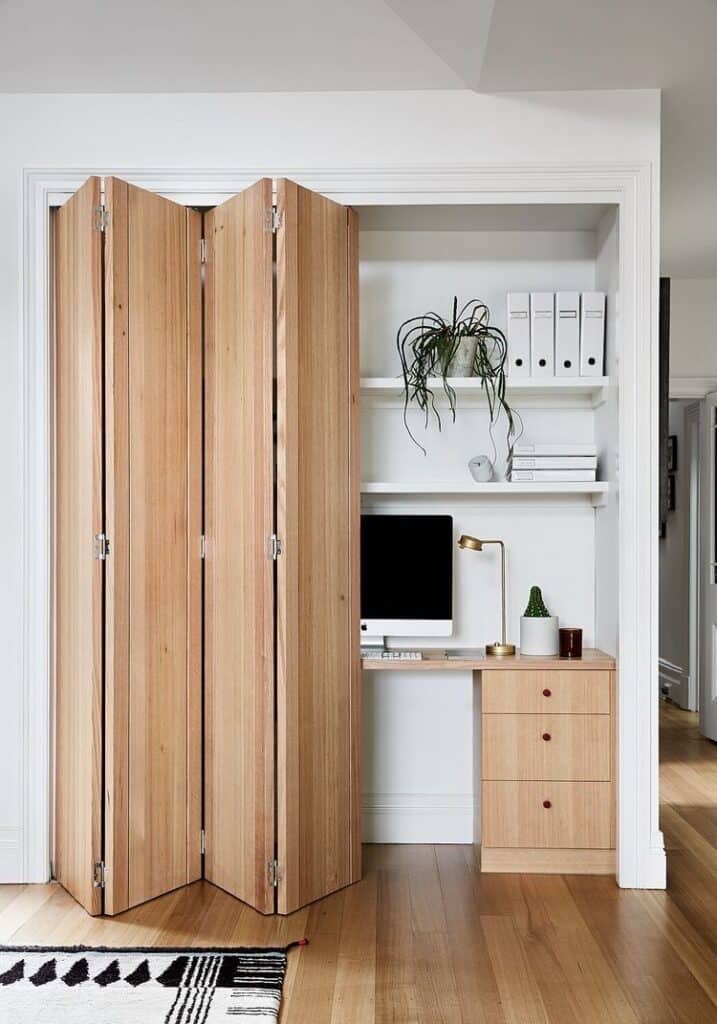
Built-in cabinetry does not read as furniture at all. Think about a window seat with drawers, an alcove fitted with bespoke cupboards, wall panels with touch-latch doors. They become part of the room.
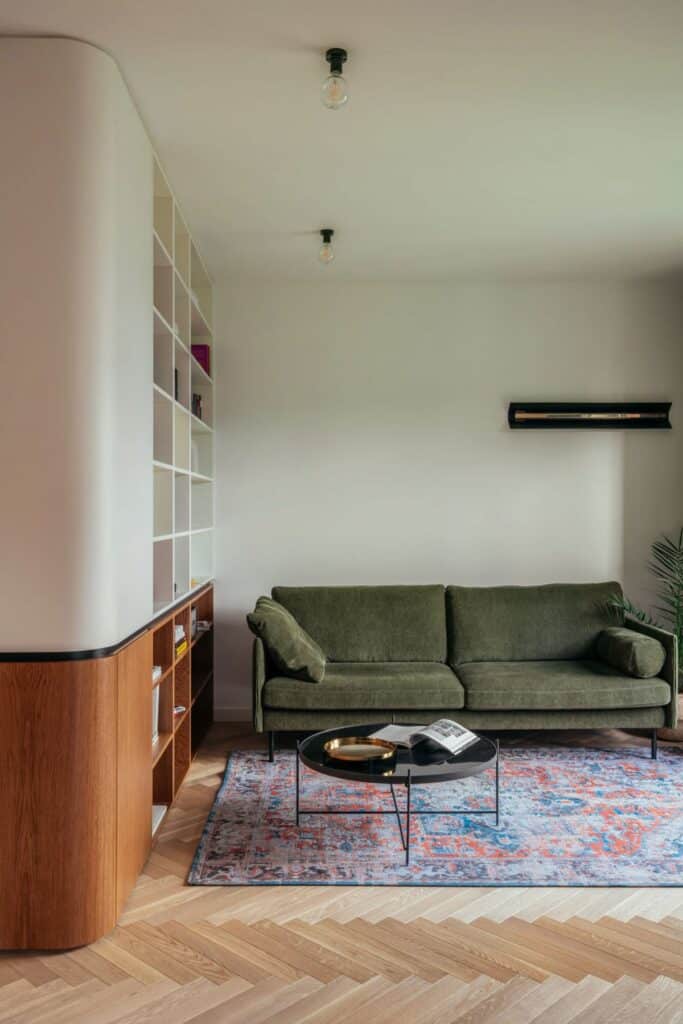
Cabinetry painted to match the surrounding wall, with no visible handles, effectively disappears.
Living room alcoves are an ideal opportunity. Bespoke built-ins can fill awkward spaces in ways that freestanding furniture never quite manages. The investment is higher, but so is the result. Both practically and in terms of how the room feels over time.
3. The TV wall and cable management
Visible cables are one of the most persistent sources of visual noise in a living room. And one of the easiest to address.
A media unit with a solid or partially closed back panel, integrated cable channels, and enclosed compartments for devices does most of the work.
Cables bundled, routed behind furniture, and out of the sightline — this adjustment alone can shift how a room feels without changing anything structural.
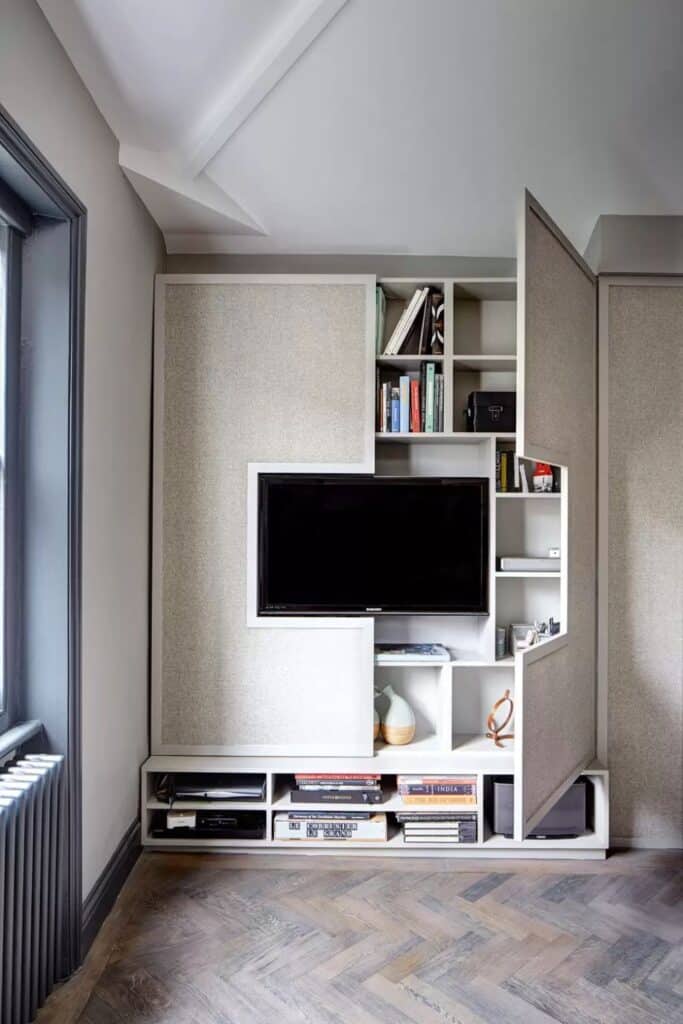
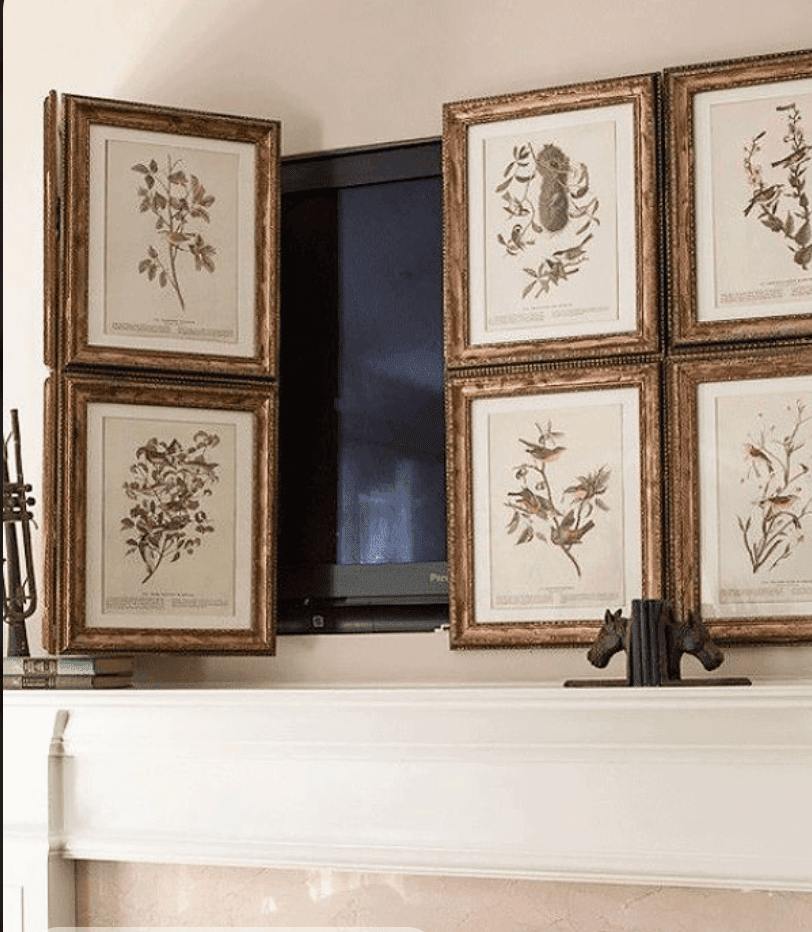
For those considering a more permanent solution, a hidden TV cabinet — sliding behind panels, tucking into a built-in, or concealing behind a framed artwork — allows the technology to disappear entirely when not in use.
How Do You Store Things in a Small Living Room Without It Looking Cluttered?
The honest answer: a living room that looks uncluttered is mostly a room where the things kept there were chosen deliberately.
But there are also practical habits that make the difference between a room that stays calm and one that gradually drifts back into disorder.
The habit of resetting after each task
Tidying up after each activity — rather than letting things accumulate — is a small habit with a significant effect.
This is something I have written about in the context of working from a small living space: the discipline of closing down one task before beginning the next.
When you finish watching something, the remote goes back.
When guests leave, the cushions are straightened.
When you have been working from the sofa, the laptop returns to its place before the evening begins.
This is not perfectionism. It is a low-effort rhythm that preserves the quality of the room without requiring a large tidy every few days.
The rule of closed versus open
A useful working rule: ask whether each item in the living room should be seen or simply accessed.
The things that create visual disorder are rarely the large items. More often, it is the small, inconsistent ones.
Three remote controls on three different surfaces.
Charging cables running across the floor.
Containers in different materials and colours with no relationship to one another.
A media console with enclosed compartments is the practical solution here — it conceals cables and electronics while keeping the surface clear. Any remaining visible storage — a basket, a tray, a lidded box — should follow the room’s palette. When it does, the space reads as intentional rather than accumulated.
This is the difference between reorganising a room and refining it.
Cohesion: the detail that ties it together
Visual disorder often comes not from large items but from small, inconsistent ones.
Three remote controls on three different surfaces. Charging cables running across the floor. A mix of containers in different materials and colours with no visual relationship to one another.
The things that create visual disorder are rarely the large items. More often, it is the small, inconsistent ones. Three remote controls on three different surfaces. Charging cables running across the floor. Containers in different materials and colours with no relationship to one another.
A media console with enclosed compartments is the practical solution here — it conceals cables and electronics while keeping the surface clear. Any remaining visible storage — a basket, a tray, a lidded box — should follow the room’s palette. When it does, the space reads as intentional rather than accumulated.
This is the difference between reorganising a room and refining it.
For guidance on architectural principles for small spaces that apply beyond storage choices, the six-principles post offers a useful framework.
Smart Storage Decisions to Make Before You Furnish
Storage is significantly easier to manage when it is planned at the layout stage. Deciding where storage will live — which wall, which alcove, which furniture footprint — before choosing any individual piece allows the room to absorb storage gracefully rather than accommodate it awkwardly later.
Plan storage alongside the layout
The same logic that guides a professional renovation applies to any room. Decide where storage will live before choosing the furniture around it.
Know that a wall will carry a built-in? Plan the lighting and circulation around it.
Know the coffee table will double as hidden storage? You can skip the side tables altogether.
Planning your living room layout is the right starting point. Storage makes most sense when it is considered alongside circulation, zones, and proportion — not added separately once everything else is in place.
Choose furniture that earns its footprint
Every piece of furniture in a small living room should justify the space it occupies.
The question to ask: does this do one thing well, or two or three things adequately? A multifunctional approach means fewer total items in the room without any reduction in what the room can do.
A storage ottoman replaces both a coffee table and a blanket box. A window seat with drawers replaces a bench and a sideboard. A media unit with enclosed compartments replaces a television stand and a separate cabinet.
Each substitution removes an object from the room and replaces it with something better integrated.
Colour and the perception of calm
How a room is coloured affects how its storage reads.
A built-in unit painted to match the wall behind it disappears in a way that the same unit in a contrasting colour never would.
The same logic applies to storage baskets and boxes chosen in a palette that relates to the room’s walls and furniture. For guidance on finding a small living room paint colour that supports visual cohesion, there is a dedicated post covering the principles in detail.
What If You Still Don’t Have Enough Storage?
Sometimes, after editing and organising and choosing furniture carefully, the room genuinely cannot hold everything you are asking it to. This is worth taking seriously — not as a design failure, but as useful information.
Rotate seasonally
Not everything needs to live in the living room all year.
Heavy blankets in summer, lighter throws in winter, occasional games or sports equipment — these can move to other storage in the home and be rotated as needed. This keeps the living room holding only what is relevant now, and significantly reduces the volume that needs to be managed at any one time.
Ask the honest question every item deserves
Before adding more storage capacity, ask whether the item itself still belongs in your life.
Research suggests the average home holds a large volume of things that are no longer used but kept out of inertia. Every item you own requires some of your time, attention, and space to maintain. Some things are worth that. Many, over time, are not.
Curating versus accumulating
The most functional small living room is not one that has found a clever solution for every object.
It is one where the number of objects has been considered carefully enough that good storage is genuinely sufficient — where the room holds what belongs there, and nothing is waiting for a place that does not exist.
This is a practice rather than a project. It asks for a different relationship with acquiring things, and a willingness to let go when something no longer serves the space.
A Room That Holds What Matters
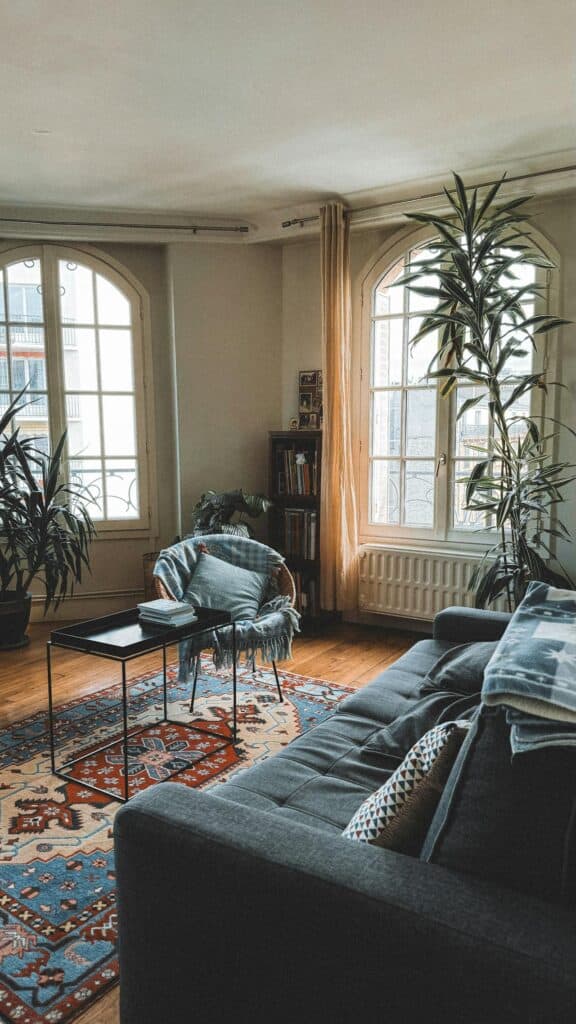
The clearest path to a small living room that works: own less than the room can hold, store what remains out of sight in furniture and built-ins that earn their place, and attend to the details — cables, cohesion, the habit of resetting — that keep it calm over time.
None of these steps require a complete renovation or a significant budget. Some require only a decision: to let go of something kept out of habit, to choose a coffee table that also stores, to route the cables before the room is arranged around them.
The result is a room that does not need constant managing — one that feels considered rather than accumulated.
If you are working through a similar process, I would love to hear what has made the most difference in your own space. And if you are at the start of a renovation, the studio apartment layout diary documents the thinking behind many of these decisions in real time.