Small Bedroom Ideas: A Complete Decision Guide for Tight Spaces
This post contains affiliate links. If you buy through them, I may earn a small commission — at no extra cost to you. I only recommend products I’d genuinely specify as an architect.
The best small bedroom ideas don’t come from a catalogue. They come from a clear-eyed look at what is actually not working in the room — and a deliberate sequence of decisions that fixes it.
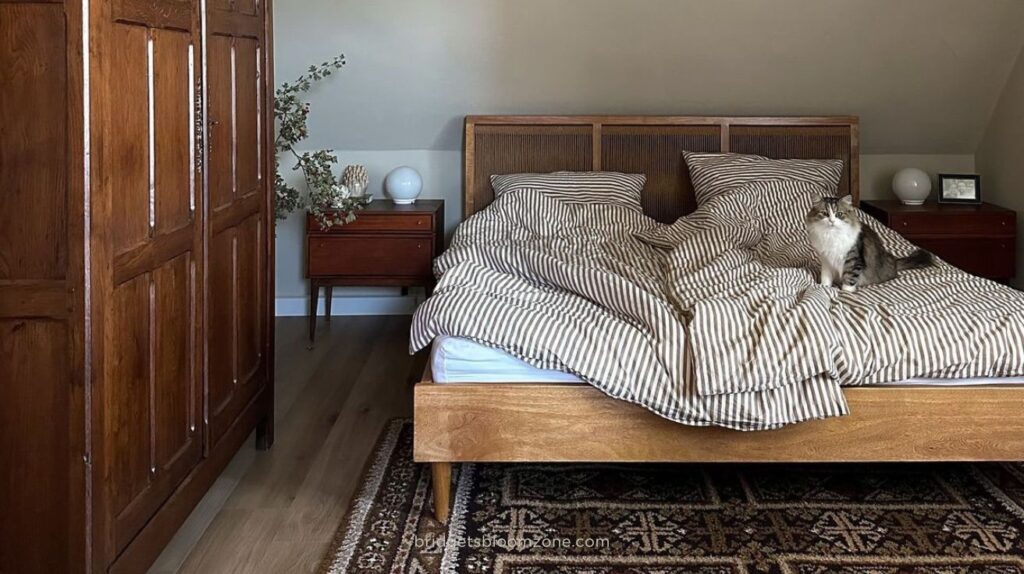
I have stood in a lot of small bedrooms over the years, both as an architect and as someone renovating a 9 m² studio bedroom where every centimetre had to justify itself. What I learned is that the room rarely fails because it is too small. It fails because the decisions were made in the wrong order, or because furniture was added before the layout was resolved.
This guide works through the small bedroom ideas that have the most impact. Starting with the one decision that determines whether everything else can work at all.
Start with the Bed — Everything Else Follows
In any small bedroom, the bed is not just the largest piece of furniture. It is the anchor around which every other decision is made.
Wardrobes, lighting, bedside surfaces, traffic paths — all of these are responses to where the bed sits. This is why bed placement is the first and most important of all the small bedroom ideas in this guide.
The instinct in a tight room is to push the bed into a corner to free up floor space. This works in some configurations, but it creates a problem.
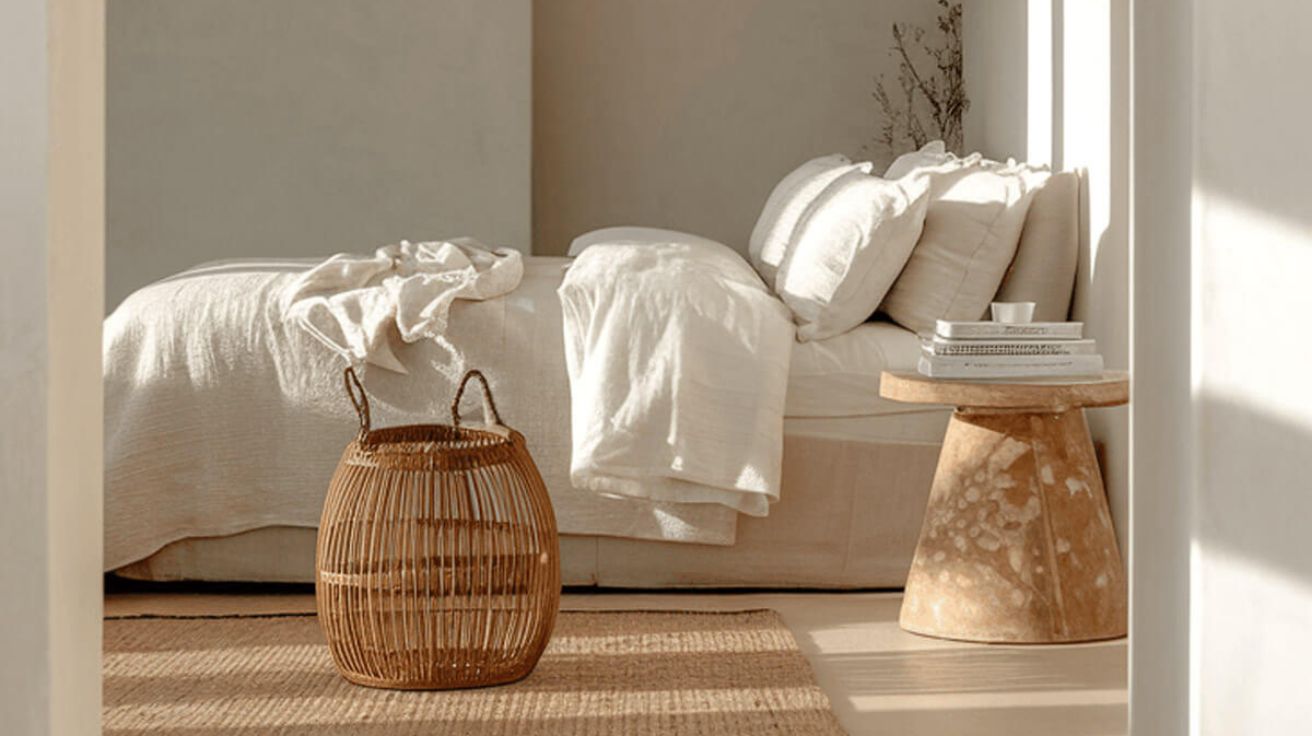
The person sleeping against the wall has no way out without climbing over the other person, and the corner itself becomes unusable.
A better starting point is to ask which wall gives the bed the most breathing room on both sides — even if one side is narrower than ideal.
How far from the wall should the bed sit in a small bedroom?
The professional standard for bedroom clearance is 60 cm on the accessible side of the bed — the side you get in and out from. On the less-used side, 45 cm is workable in a very tight room.
These are not arbitrary numbers. They are the minimum distances that allow a person to move without feeling physically constrained, to open drawers, and to make the bed without contorting.
If you cannot achieve 60 cm on the main access side, the bed is likely the wrong size for the room.
Bed placement and the path of morning light
Where the light enters the room should influence where the bed sits. A bed placed so that morning light falls across the foot of the bed is perfect. Less preferred is when sunlight falls directly onto the face.
Sunlight on the foot of the bed is a more comfortable way to wake up, and the quality of light in the room reads better in photographs.
Where possible, position the bed so the window is to the side rather than directly opposite or above the headboard. This also keeps the window free for cross-ventilation without the bed blocking airflow.
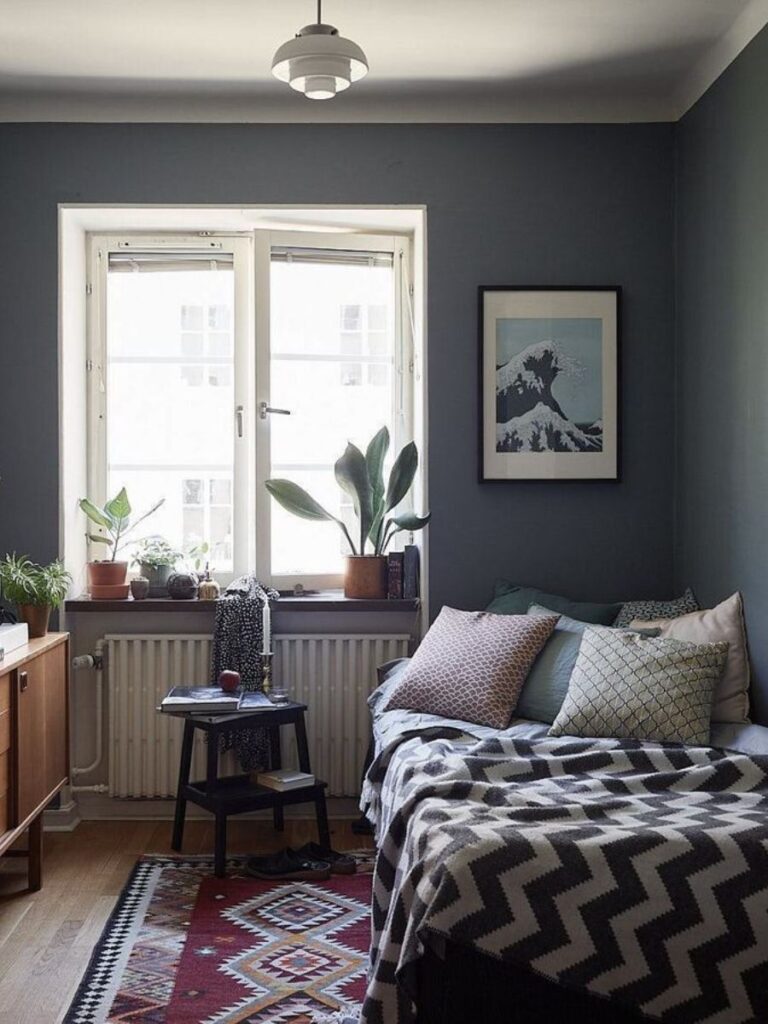
Should you float the bed or push it against the wall?
Floating the bed — leaving space on both sides — makes the room feel more symmetrical and accessible, and allows for a bedside lamp or shelf on each side.
Pushing the bed against the wall recovers floor space but limits access and makes the room feel asymmetric.
- In a room under 2.4 m wide, pushing the bed to the wall is often the only viable option.
- In a room 2.8 m or wider, floating the bed is almost always the better small bedroom idea — even if the clearances are not perfectly equal.
Small Bedroom Ideas for Storage That Don’t Add Visual Weight
The storage decisions in a small bedroom are where most rooms go wrong.
People add a wardrobe, then a chest of drawers, then a bedside table with a drawer, and slowly the room fills with furniture that serves storage but at the cost of the space itself.
The most effective small bedroom ideas for storage work on a different principle: the storage should disappear into the room.
Built-in versus freestanding storage: which wins in a tight room?
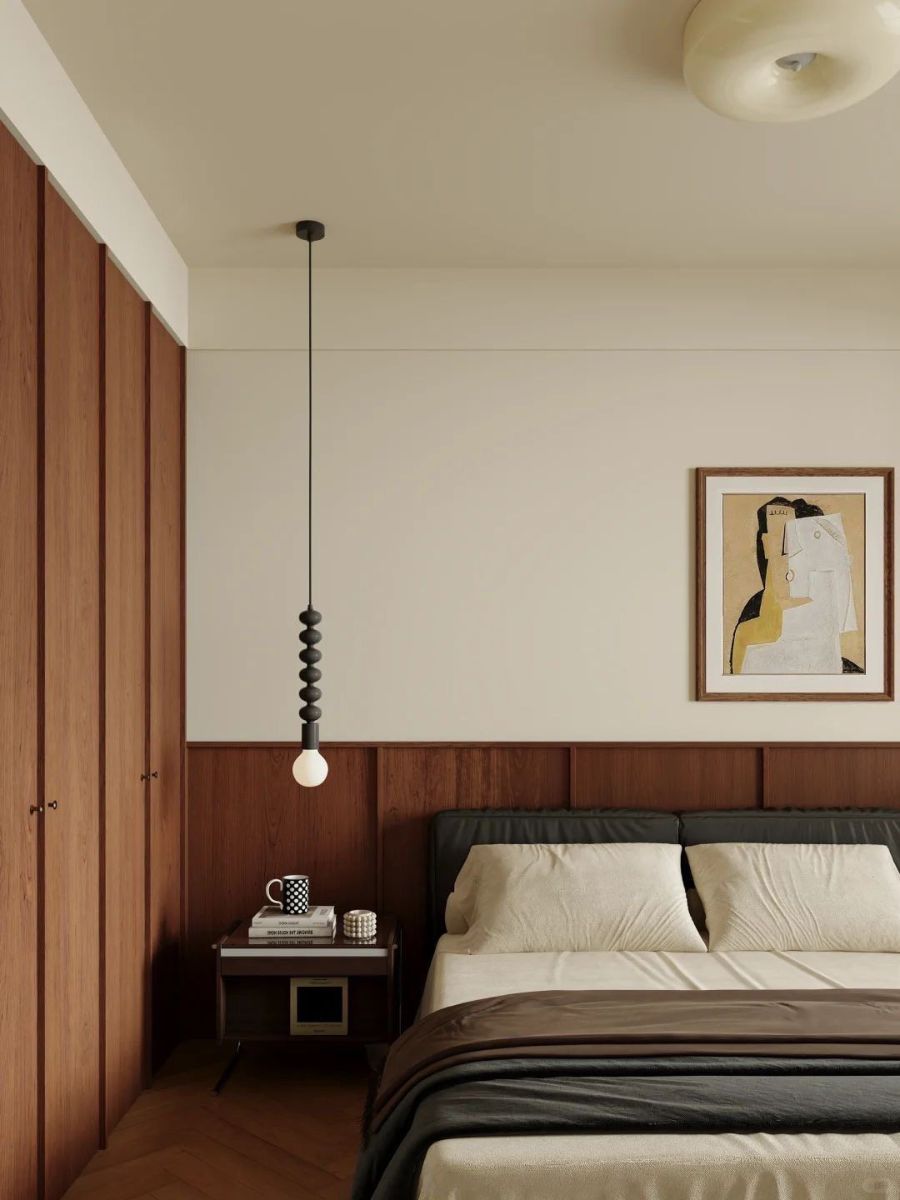
Built-in wardrobes almost always win in a small bedroom. A freestanding wardrobe sits on the floor, has visible sides, and creates a gap between itself and the wall that collects dust and makes the room feel pinched.
A built-in wardrobe runs floor to ceiling, wall to wall, with flush or handle-free doors, and reads as part of the architecture. It holds more, takes up less perceived space, and is easier to keep tidy. The investment is higher, but in a small bedroom it is usually the single most impactful change you can make.
If built-in storage is not possible — in a rental, or where the budget does not allow it — choose a freestanding wardrobe that reaches the ceiling, or add a shelf above an existing wardrobe to close the gap.
The visual weight of that empty space above a wardrobe is disproportionate to its size.
The case for going vertical
In a small bedroom, the wall space above 1.8 m is almost always wasted. A built-in wardrobe that runs to the ceiling uses this space for seasonal items, spare bedding, and things accessed rarely.
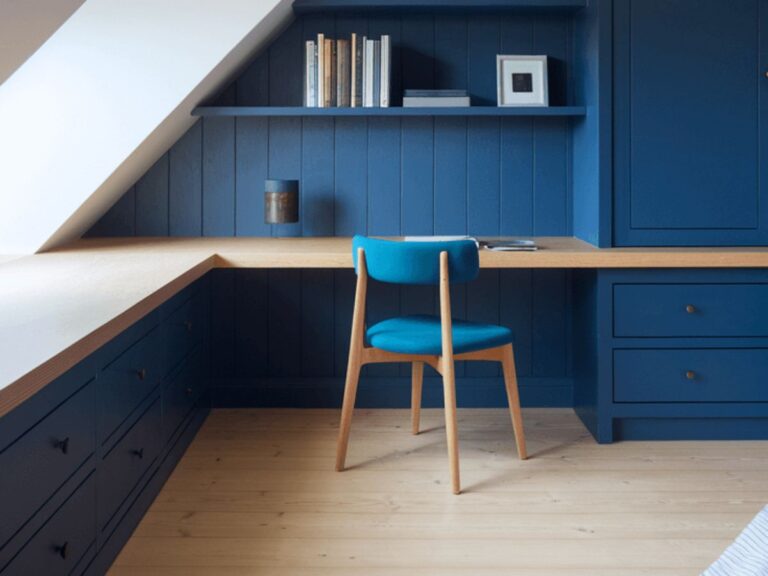
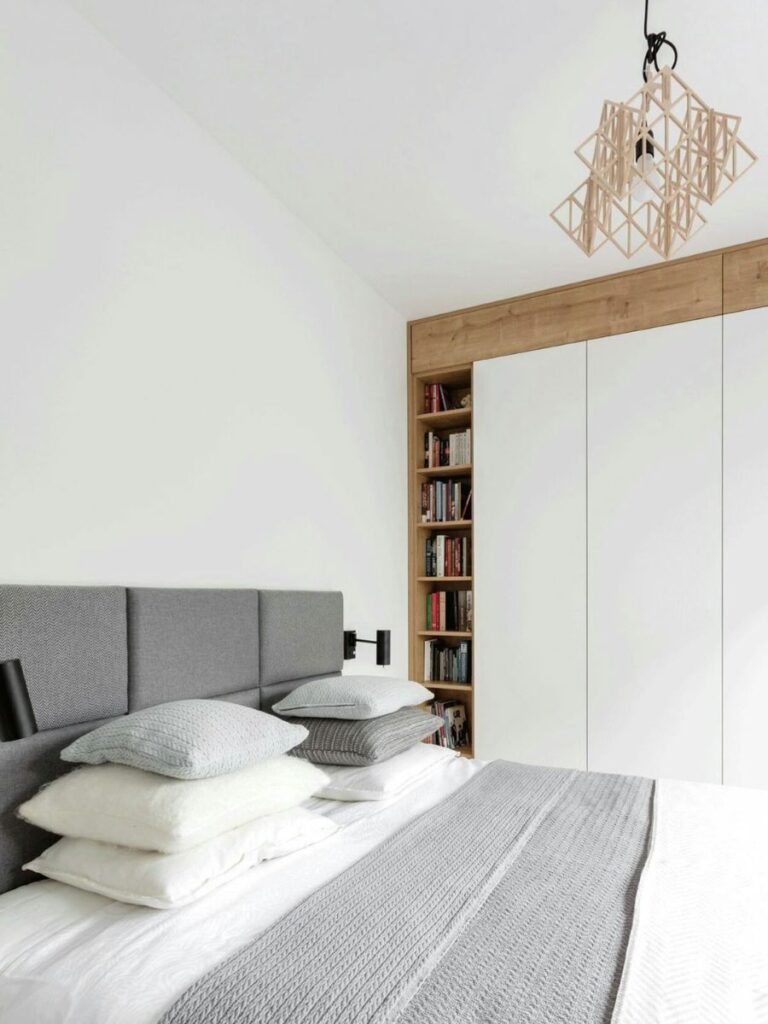
Open shelving above a desk or beside a window can hold books and objects without adding floor furniture. The principle is consistent: in a tight room, vertical storage replaces horizontal furniture, and the floor stays clear.
But careful with open shelves – as you may know, I consider these as displays, not storages.
What to hide and what to leave visible
In a small bedroom, the ratio of closed to open storage matters more than the total amount of storage. Closed storage — wardrobes with doors, drawers with fronts — keeps the room visually quiet.
Open storage, like a bedside shelf or a small open wardrobe section, should hold only the things that are beautiful enough or practical enough to be seen.
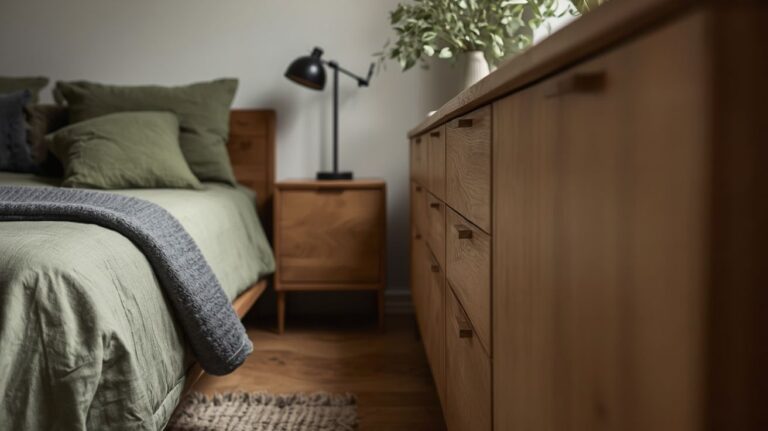
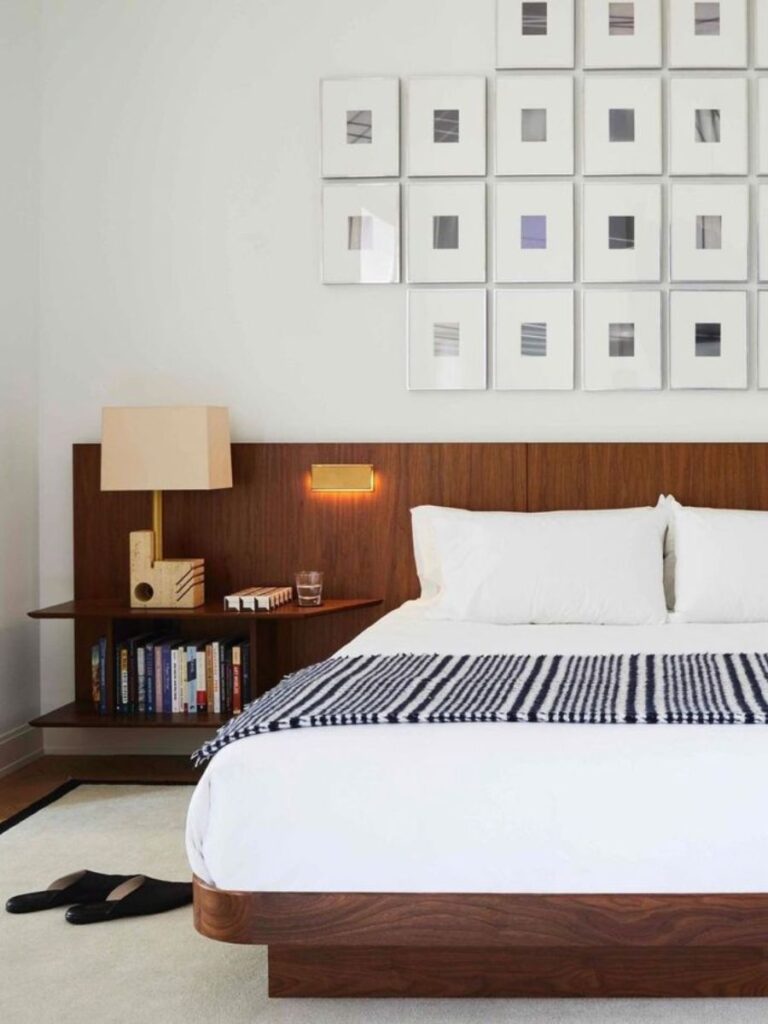
A recessed wall niche beside the bed is one of the cleanest storage solutions I know: it holds a lamp, a book, and a phone charger with no visual weight at all, because it sits inside the wall rather than in front of it.
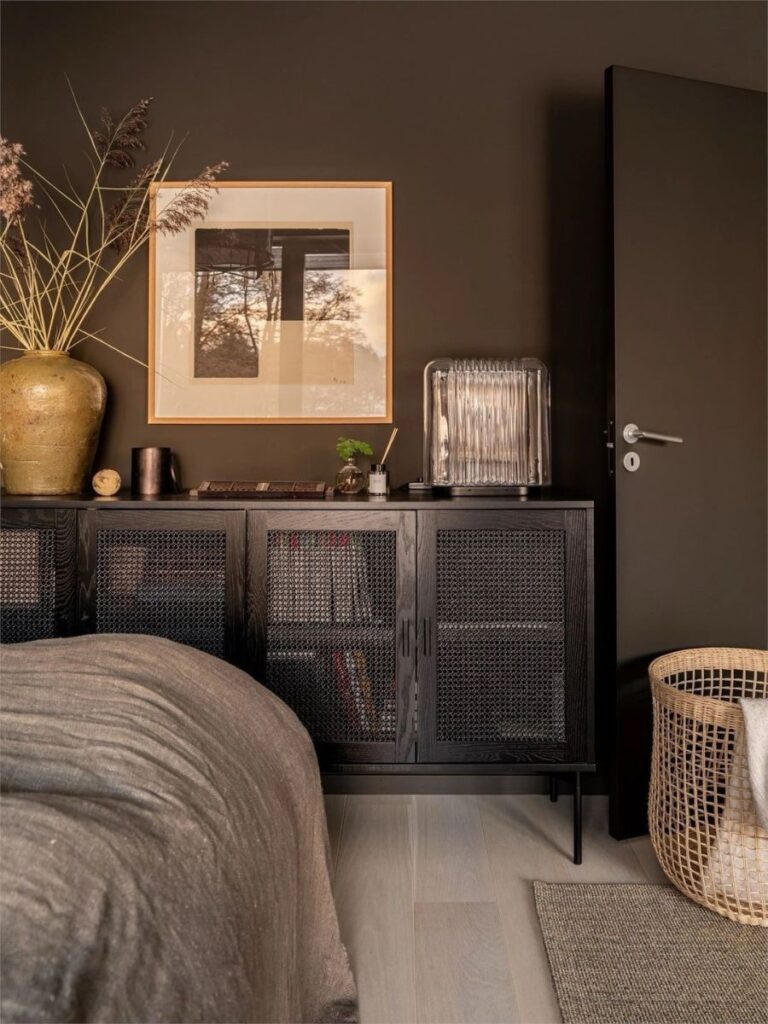
What Is the Best Color for Small Bedroom Ideas?
The most persistent myth about small bedroom ideas is that light colours make a room feel larger. Sometimes they do.
But the relationship between color and perceived space is more nuanced than that, and following the light-equals-larger rule without question often produces bedrooms that are pale, flat, and unmemorable without actually feeling spacious.
Light versus dark: the small-room color myth explained
A light colour on the walls reflects more light and can make the surfaces feel further away — which is why it works in rooms with generous natural light and simple geometry. But in a room with low ceilings, one small window, or irregular proportions, a pale colour emphasises those limitations.
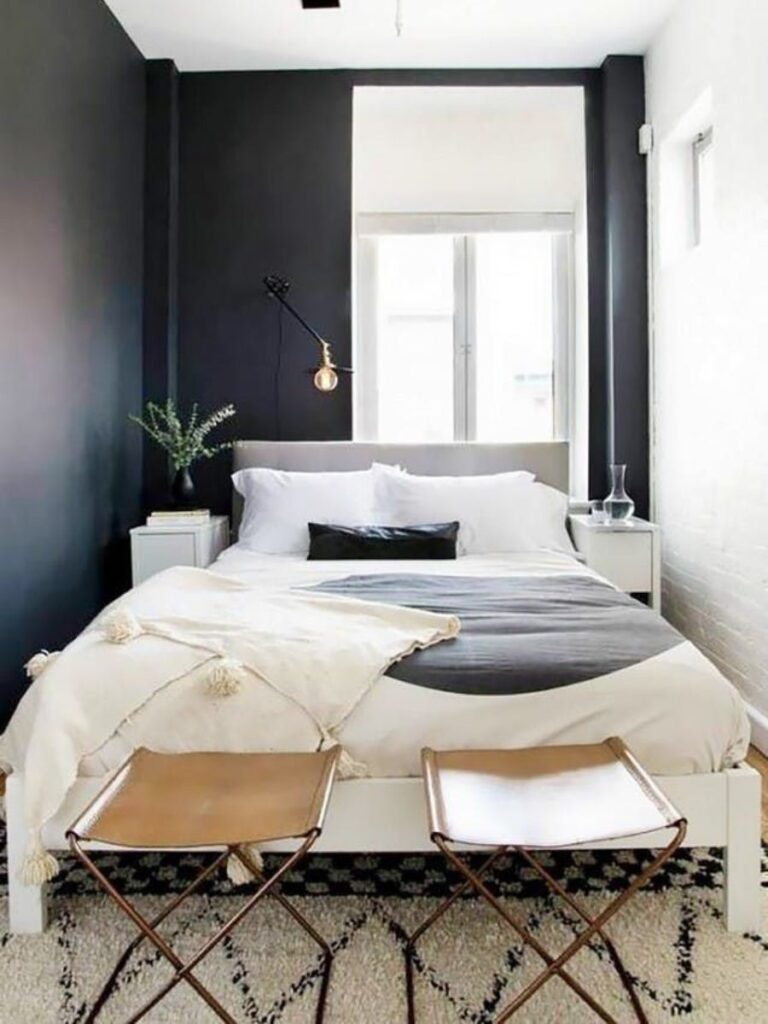
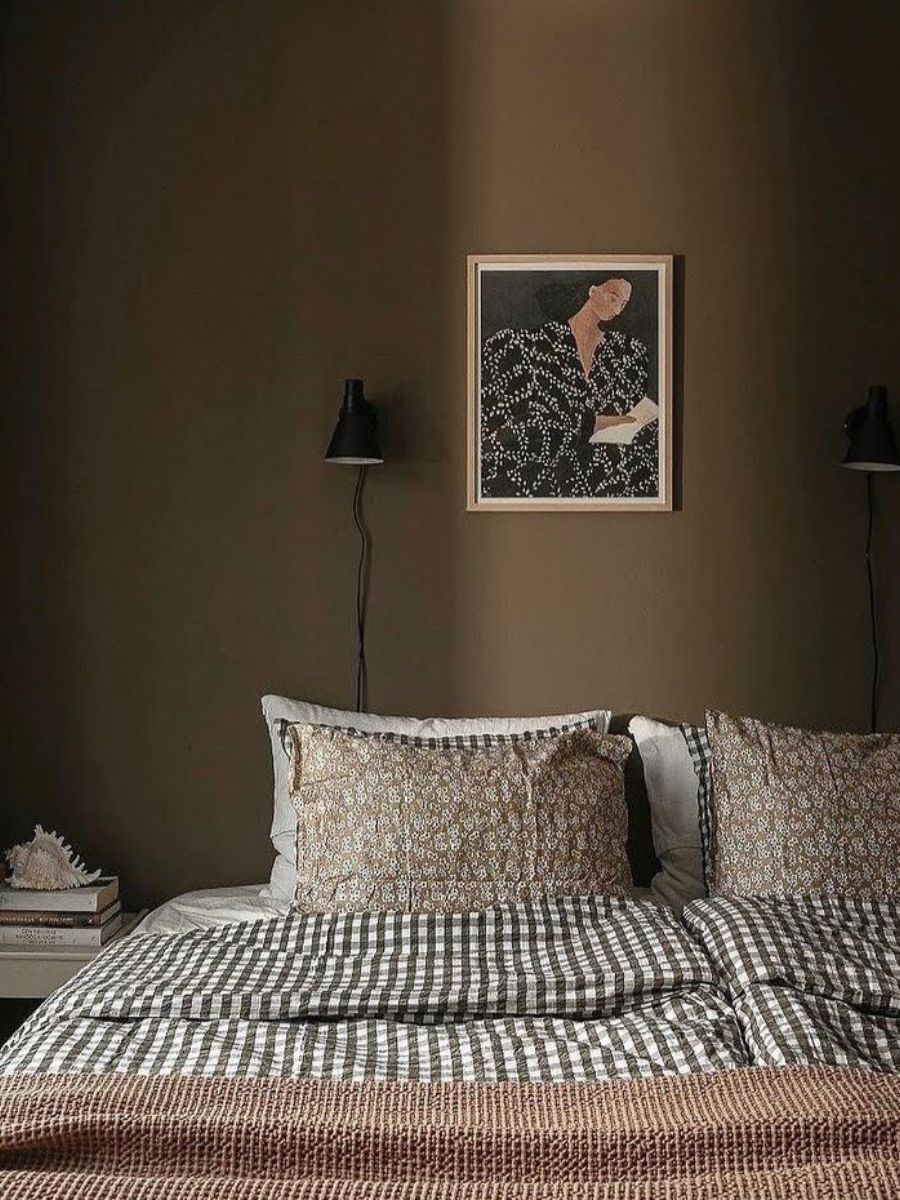
A deeper tone, carried continuously across the walls and ceiling, can actually make the room feel more coherent — the boundaries recede together rather than calling attention to the low point where wall meets ceiling.
Small bedrooms are excellent candidates for darker, more saturated colours precisely because the room is used primarily at night and at low light. A color that feels heavy in a daylit living room can feel rich and enveloping in a bedroom.
The key is to commit to it — patchy or partial application of a dark tone looks unintentional. One wall, or all walls and ceiling together.
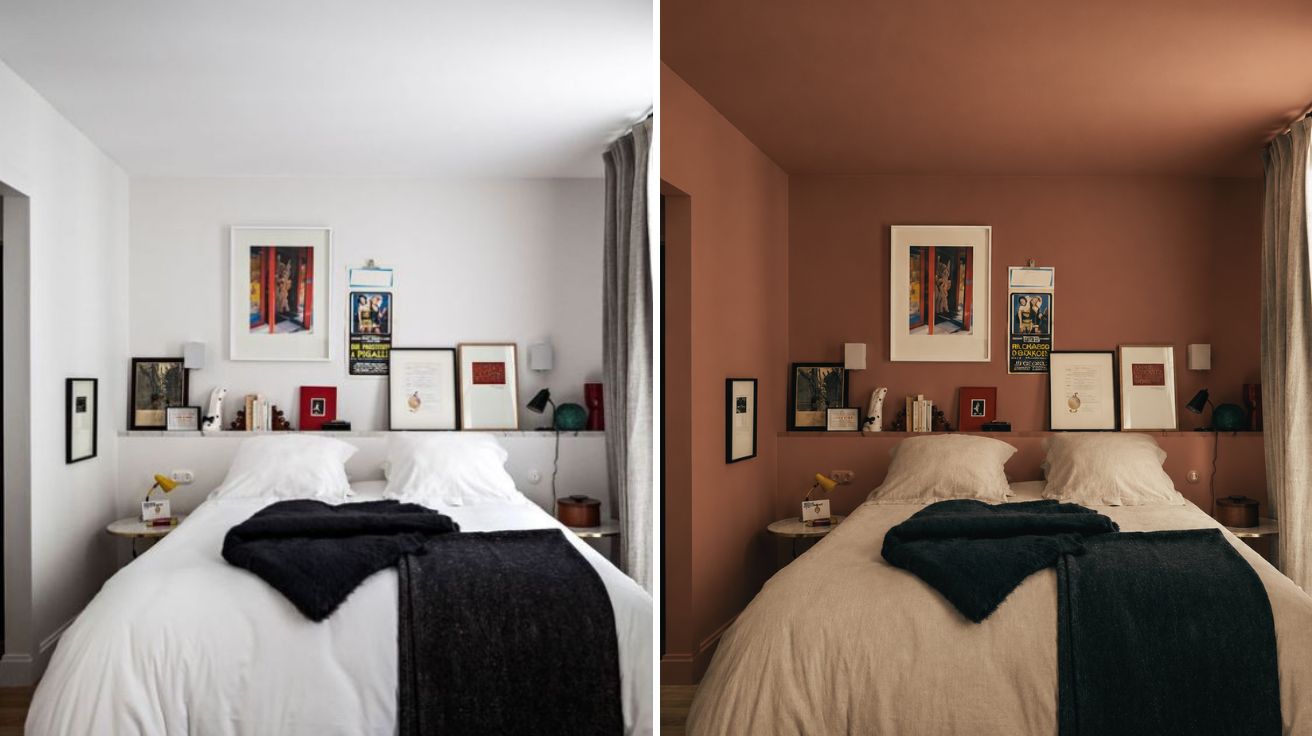
How to use one color across walls, ceiling, and trim
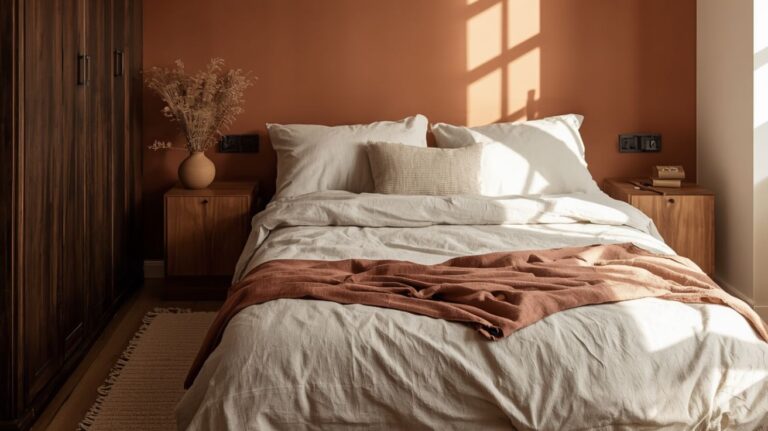
The most effective color strategy in a small bedroom is also the simplest: one tone, across all surfaces, including the ceiling. This is called continuous tone, and it works because it removes the lines that normally break up a room — the contrast between wall and ceiling, between painted surface and trim.
The room reads as a single space rather than a collection of surfaces. Choose a tone with a warm undertone (slightly towards red or yellow rather than blue or green) and apply it everywhere, including window reveals and door frames where possible.
When an accent wall helps — and when it divides
An accent wall works in a small bedroom when it is the wall behind the bed and when it is clearly intentional — a tone significantly different from the other walls, applied with commitment.
What does not work is a half-hearted accent, a wall that is only slightly different from the others, or an accent on the wall you walk toward (rather than the one you recede toward). For a detailed guide on choosing the right accent wall, see the accent wall bedroom post in this series.
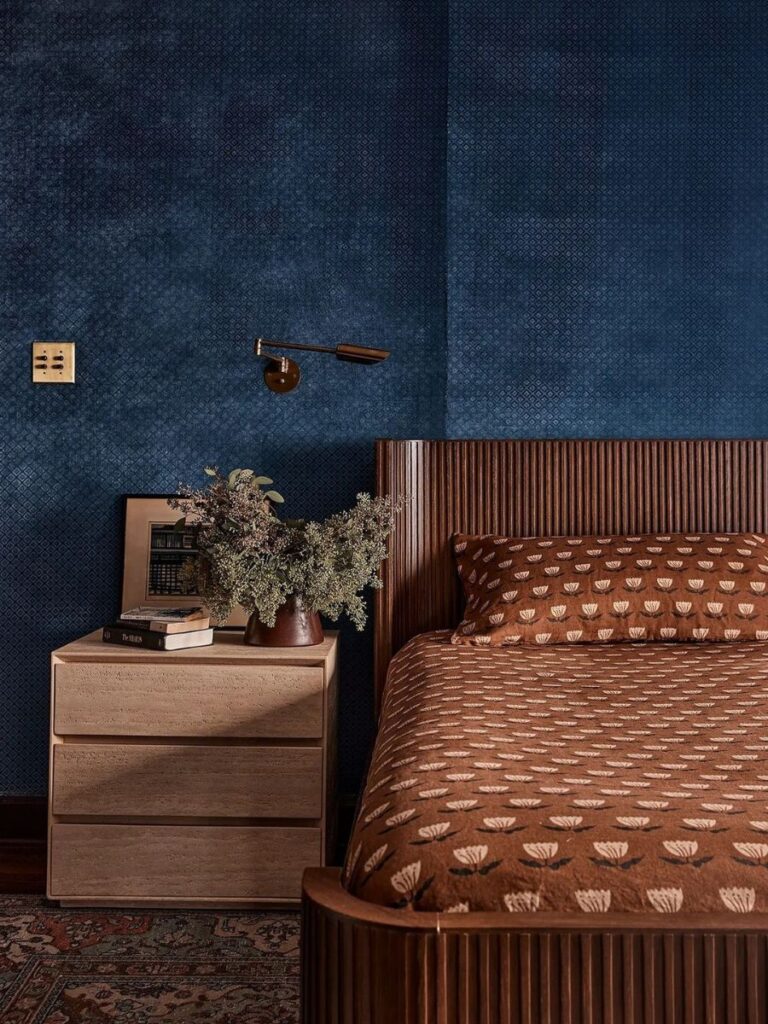
What Lighting Works Best in a Small Bedroom?
Lighting is one of the small bedroom ideas with the highest impact and the lowest cost to get right — but only if it is planned before the furniture goes in, not retrofitted around it. The most common lighting mistake in a small bedroom is to rely entirely on a single overhead light, which creates flat, shadowless illumination that makes a room feel smaller and less restful than it actually is.
Why overhead lighting alone fails small bedrooms
An overhead light in the centre of the ceiling lights everything equally, which means it emphasises everything equally — including the tight corners, the low ceiling, and the furniture.
Layered lighting, which uses two or three light sources at different heights, creates depth and shadow that give the room visual dimension. In a small bedroom, this matters more than in a large one, because the room has fewer opportunities to create depth through furniture arrangement or spatial volume.
Wall sconces versus bedside pendants: a practical comparison
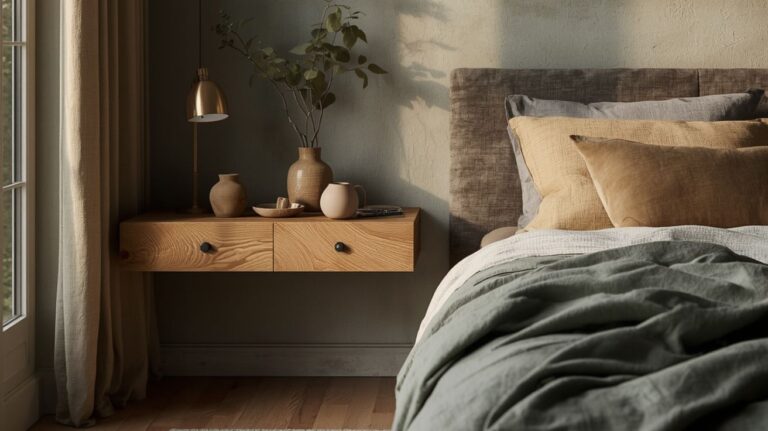
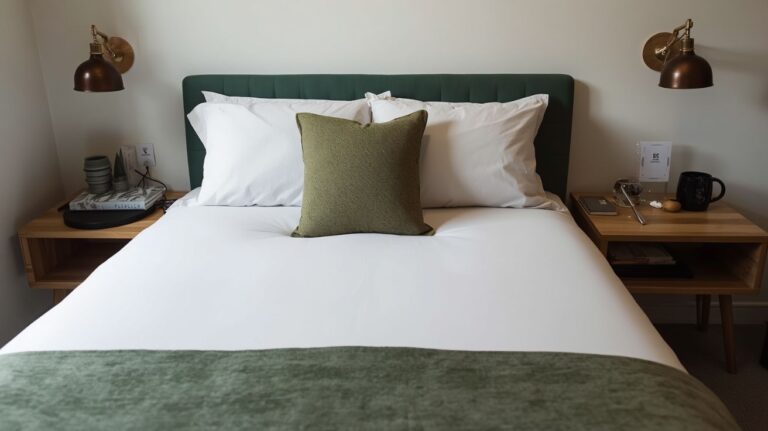
Wall-mounted sconces are the most practical bedside lighting solution in a small bedroom. They free up the bedside surface entirely — no lamp base, no cord trailing down — and can be positioned at the exact height needed for reading without adjusting.
Pendant lights hung from the ceiling work well in rooms with higher ceilings (2.6 m or above) and add visual interest, but in a room under 2.5 m, a low-hanging pendant can feel oppressive.
In both cases, the principle is the same: light should come from the side, at reading height, rather than from above.
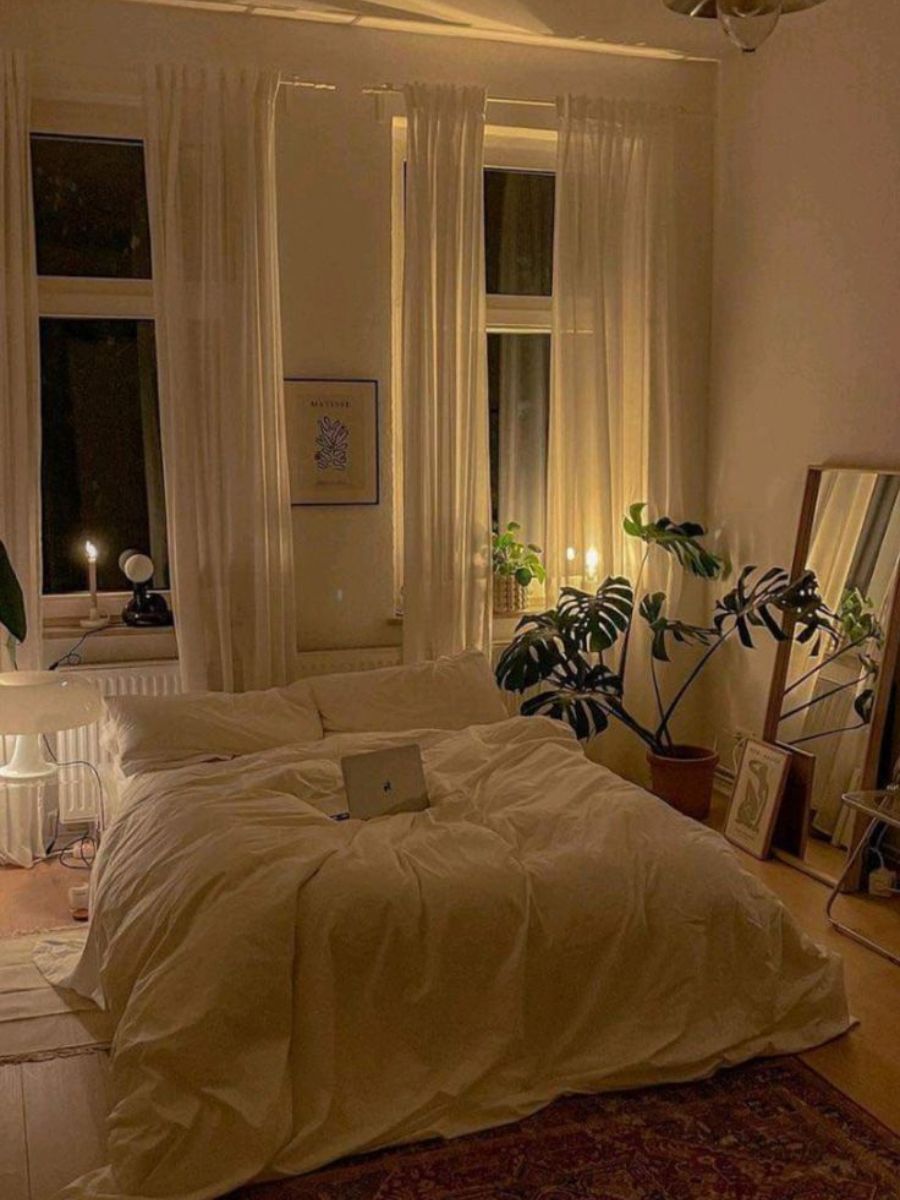
How to plan lighting before you furnish
The ideal sequence is to plan the lighting positions before the furniture is placed, not after. This means identifying where the bedside lights will be mounted and running the cables before plastering, not drilling into finished walls later.
If you are renovating, add two double sockets behind where the bedside tables or sconces will go, one on each side of the bed.
If you are working in a finished room, surface-mounted cable conduit and plug-in sconces are a workable solution. The point is to make the lighting decision early, because it determines where and how the furniture sits.
Small Bedroom Ideas for Furniture That Earns Its Place
One of the most effective small bedroom ideas is also the most uncomfortable: remove furniture before you add it. The question for every piece of furniture in a small bedroom is not “would this be useful?” but “does this room actually need this?” Those are different questions, and the second one is harder to answer honestly.
The furniture pieces most worth investing in
In a small bedroom, the hierarchy of furniture investment is roughly:
- bed frame and mattress first,
- built-in storage second,
- everything else a long way behind.
The bed is the piece you interact with every day, and a well-made, appropriately-sized bed with a good mattress changes the experience of the room more than any decorative decision.
Built-in storage is the second investment because it resolves the room structurally. Once the storage is right, the rest of the room has room to breathe.
Bedside tables, dressing tables, and freestanding chests of drawers are the furniture pieces most likely to be unnecessary in a small bedroom.
A wall-mounted lamp replaces a table lamp and its surface.
A built-in wardrobe with internal drawers replaces a chest of drawers and its footprint. The studio apartment layout experiments showed this clearly: the plans that felt most spacious were the ones that had removed freestanding furniture, not added it.
What to remove before you add anything new
Before any new small bedroom ideas are implemented, the most useful exercise is a furniture audit.
Stand in the room and ask: which pieces are here because they are genuinely necessary? Which are here because they have always been here? The mirror that leans against the wall and is never used. The chair that exists to hold clothes. The chest of drawers that duplicates what the wardrobe already stores. Removing these before adding anything new often solves the problem without any further action.
Multi-use furniture: where it works and where it doesn’t
Multi-use furniture — beds with storage drawers, ottomans that open, bedside tables with charging shelves — is often recommended for small bedrooms.
It works well when the multi-function is genuine and regularly used.
It works less well when the secondary function is aspirational. For example the storage ottoman that is never opened, the fold-down desk that stays folded. Choose multi-use furniture only where both functions are used daily.
Otherwise, a single-purpose piece that does one thing well is usually a better small bedroom idea.
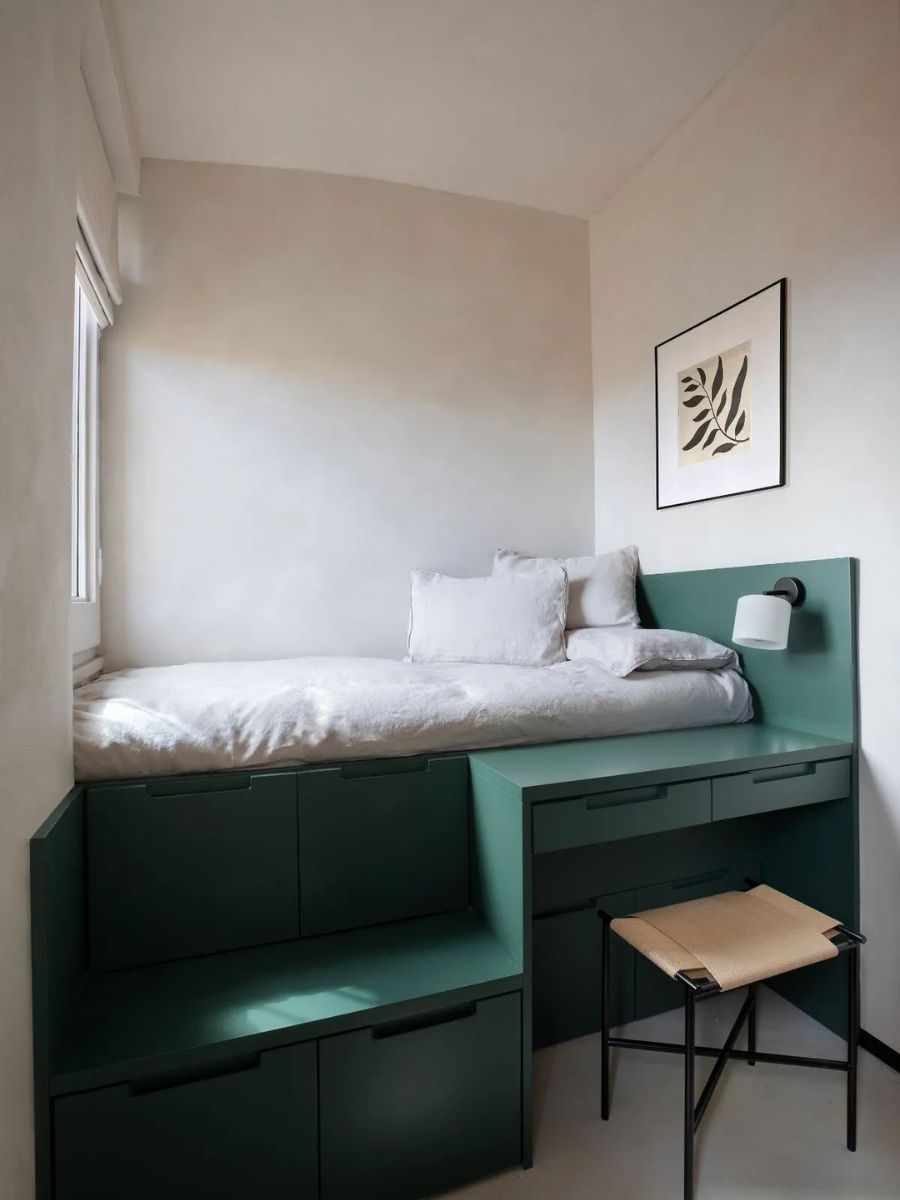
How Do You Make a Small Bedroom Feel Bigger?
There are a handful of small bedroom ideas that change the perceived size of the room without touching the walls. These are not tricks — they work because they address the visual mechanisms that make a room feel tight: blocked sightlines, cluttered surfaces, interrupted floor planes, and low visual points.
Mirror placement that adds depth without feeling like a trick
A mirror works in a small bedroom when it is placed where it creates a genuine sense of depth. This is typically on the wall perpendicular to the window, so it reflects natural light back into the room rather than reflecting the room back at itself.
A full-height mirror on the inside of a wardrobe door is often the most practical solution. You don’t see it when the door is closed, and adds significant depth and light when open.
A mirror placed directly opposite the bed tends to feel confrontational rather than spacious.
Rug size and placement in a tight room
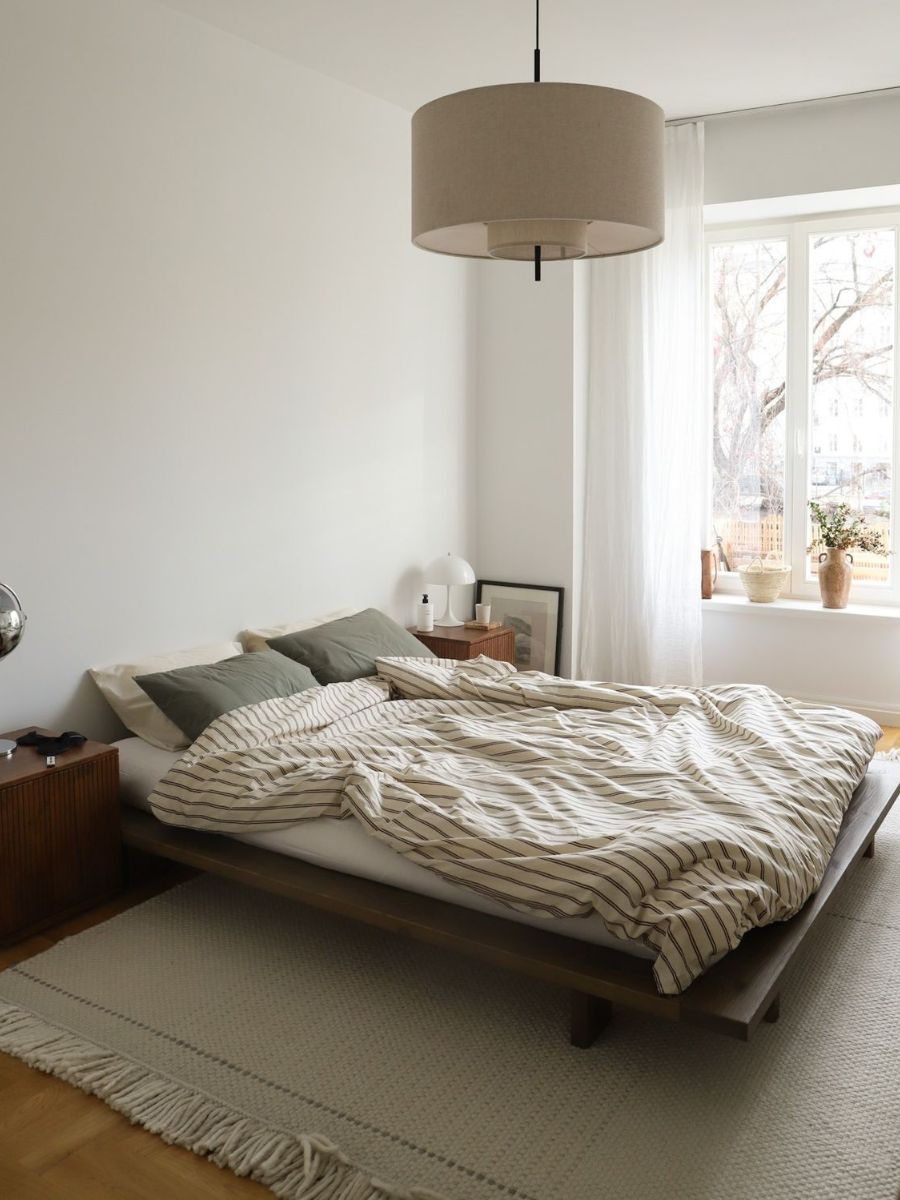
The most common rug mistake in a small bedroom is choosing one that is too small. A rug that sits only under the bed, without extending to the sides, creates a patch that visually shrinks the room.
A rug that extends 40–60 cm beyond both sides of the bed, and at least 30 cm beyond the foot, anchors the bed and reads as a deliberate floor treatment rather than an afterthought. In a very small room where a full rug would be impractical, a runner at the foot of the bed is often better than a small central rug.
Curtains: where to hang them and how wide to make them
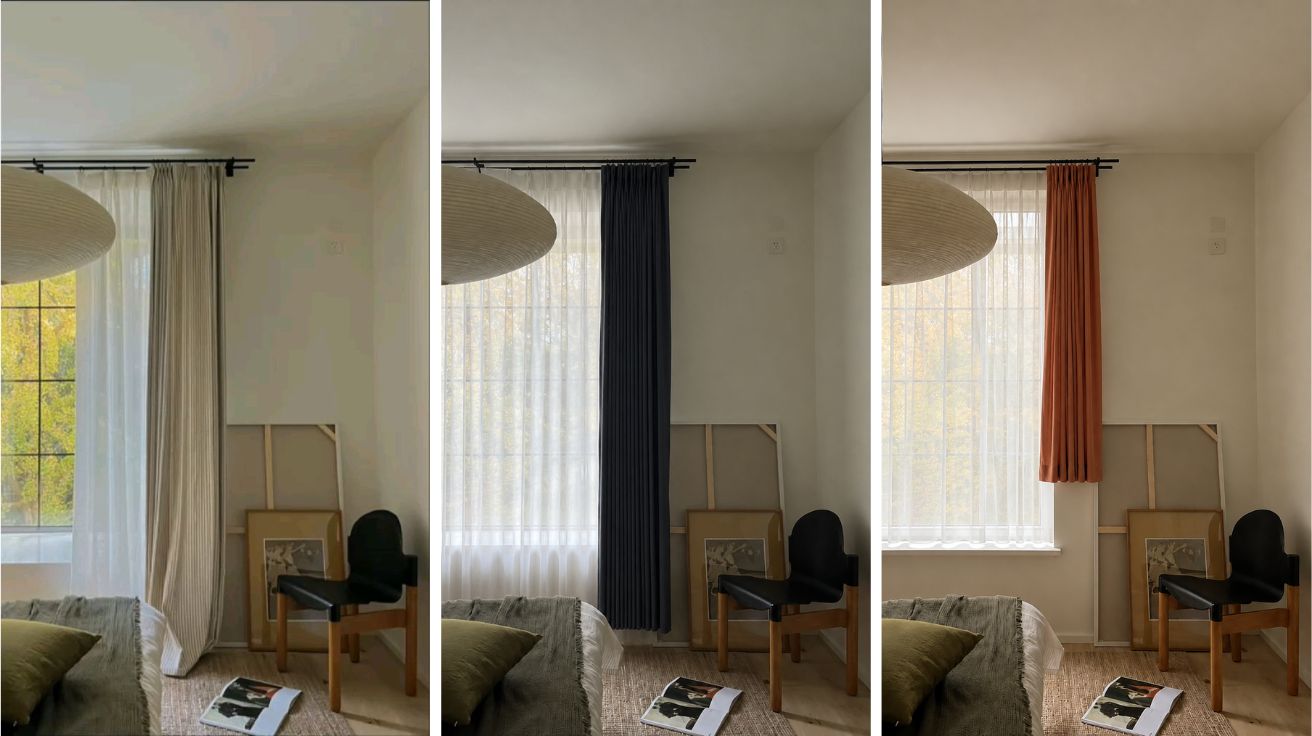
Curtains hung low and narrow make a window look small and a ceiling look low.
Curtains hung at ceiling height, and extending at least 15 cm beyond each side of the window frame when closed, make the window look larger, the ceiling higher, and the room more generous.
This is one of the cheapest and most effective small bedroom ideas available: the curtain pole position and width costs almost nothing to change, and the visual difference is significant. Use a fabric that has enough weight to hang straight. Lightweight synthetic curtains tend to billow and break the clean vertical line.
Which Small Bedroom Ideas Have the Highest Impact?
Not all small bedroom ideas are equal. Some change the experience of the room significantly; others are refinements that matter only once the fundamentals are right. This final section is about knowing the difference — about where to spend time, energy, and money first.
What architects prioritise that decorators often miss
When I work through small bedroom ideas professionally, the sequence is always the same: layout first, then storage, then light, then colour, then textiles, then decoration.
Decoration — the things that go on the walls and the surfaces — comes last because it has the least structural impact. A beautiful print on the wall of a poorly laid-out bedroom does not make the room work better. A well-resolved layout with plain white walls is always more comfortable to live in than a beautifully decorated room with the furniture in the wrong place.
This is the principle that most guides on small bedroom ideas reverse. They lead with decoration because decoration is visually engaging and easy to photograph.
But the decisions that change daily life are the earlier ones.
- Where the bed sits,
- how much clearance is on each side,
- whether the wardrobe opens without blocking the door,
- whether the light comes from the right place at the right height.
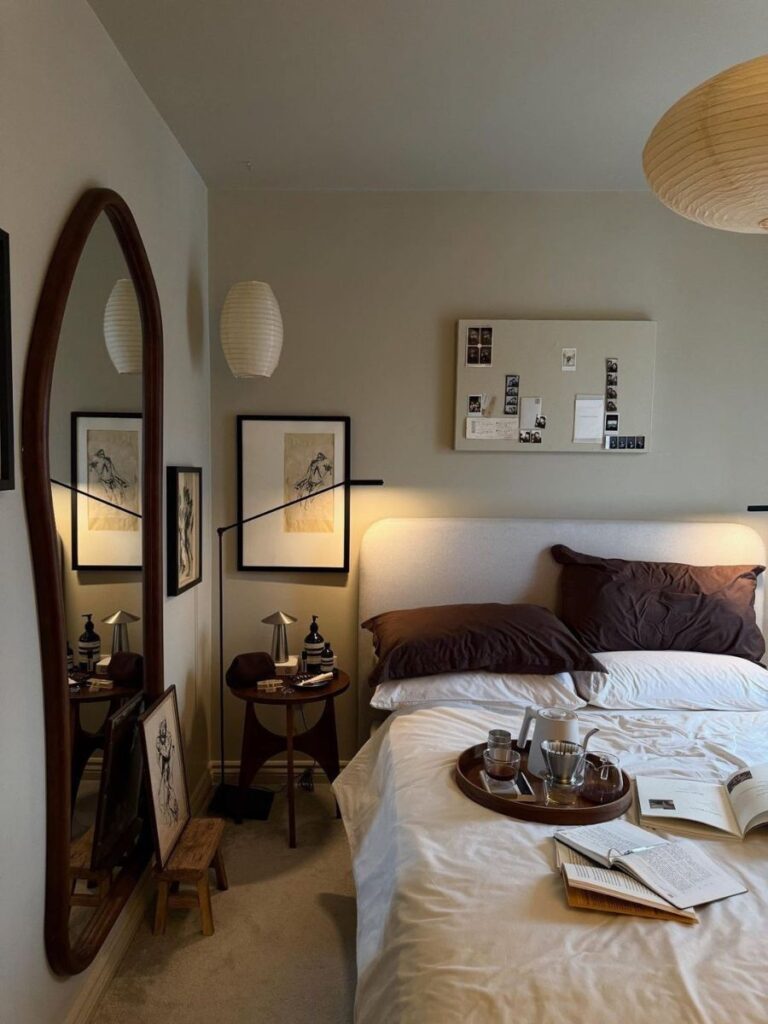
The one question to ask before buying any piece of furniture
Before any new piece of furniture enters a small bedroom, there is one question worth asking. Does this solve a problem the room actually has, or does it create a new one?
A bedside table solves the problem of nowhere to put a lamp and a book. It creates the problem of a surface that collects things, reduces clearance, and adds visual weight.
A wall-mounted lamp and a small niche solve the first problem without creating the second. The best small bedroom ideas are always the ones that resolve something real without adding something new to manage.
Final Thoughts
The small bedroom ideas that make the biggest difference are not the ones that add more — more storage, more decoration, more furniture — but the ones that resolve what is already there.
Get the bed in the right place. Build the storage into the walls. Plan the light before the furniture. Let color work continuously across all surfaces rather than being applied in patches. Remove what does not earn its place before adding anything new.
None of these are complicated ideas, but they require a different starting point. Instead of the question “what should I buy?” ask yourself “what is this room actually asking for?” When you answer that question honestly, the decisions become clear.
If the next step is resolving the floor plan — where exactly the bed goes, how the wardrobe fits, what the circulation paths look like — the small bedroom layout guide walks through that process in detail, with floor plan examples for rooms of different shapes and sizes.