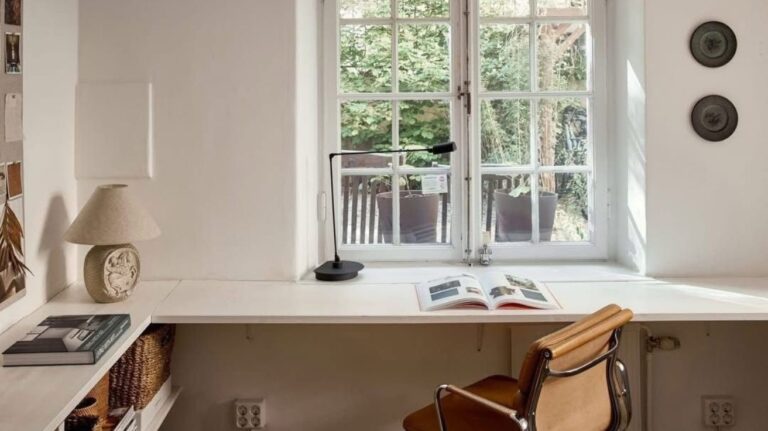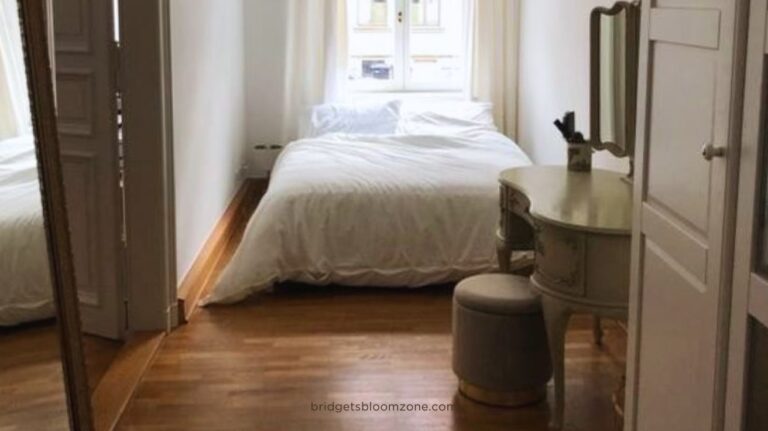
Living Room and Bedroom Combo – How to Make Your One Room Feel Cozy
It has to be a living room and bedroom combo – there is no space for two separate functions…
We were still in the planning stage of our studio renovation — walls stripped back, floor plans taped to the window — there was one decision I kept circling back to: where does the bed go?
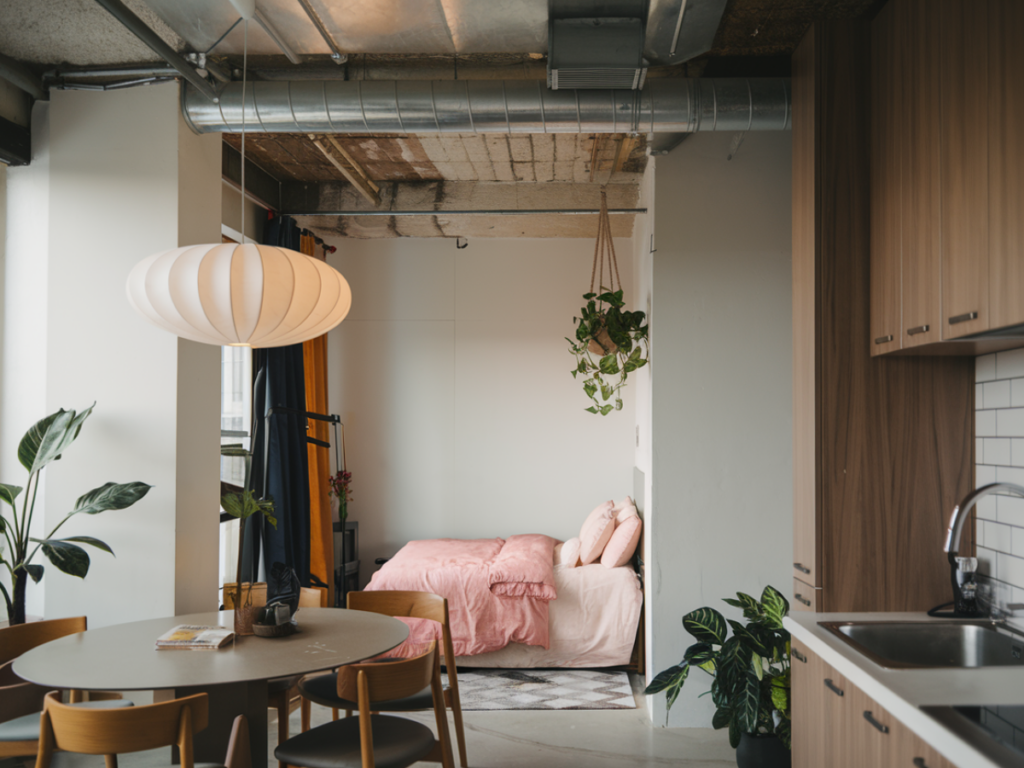
Not because I didn’t know the answer. Because I knew that answer would define everything else. The sofa, the light fixtures, the circulation path, the way the room would feel from the door. In a living room and bedroom combo, the bed isn’t just a piece of furniture. It’s the organisational anchor of the entire space.
What most people struggle with isn’t that the bed is visible. It’s that the room has no sense of place — no clear sleeping end, no clear living end. Everything competes, and the result feels unsettled, no matter how carefully the individual pieces are chosen.
This post is about the layout decisions you make once. Not daily transformations, not clever storage tricks — but the placement and zoning moves that let a room genuinely feel like both a living room and a bedroom, without needing to be reset each morning.
Start With the Bed — Because Everything Else Follows
This is the foundational rule of any one-room apartment: the bed is placed first, and every other decision follows it.
Since the bed is the largest piece of furniture in the space, its placement is the most consequential. Where it sits will determine where everything else can go.
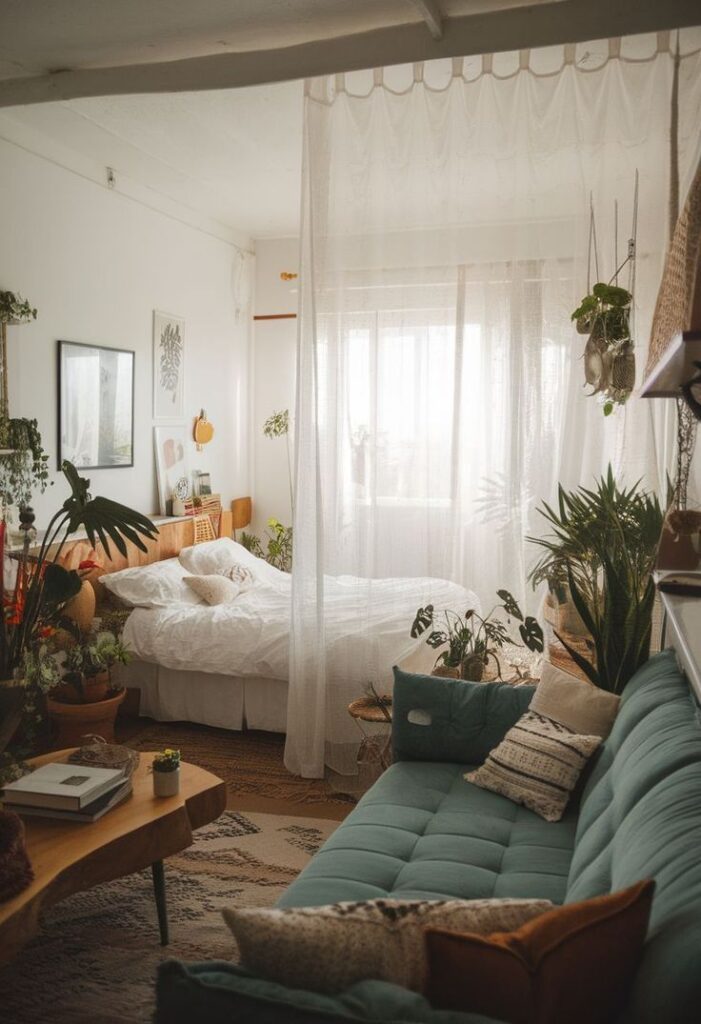
Where the Bed Belongs in a One-Room Apartment
Ideally, the bed should sit as far from the entry door — and from the kitchen — as possible. If the room has a nook, a recessed wall, or simply one end that feels more sheltered, that is where the bed belongs.
Privacy is the goal, and distance from the main entry creates it without any physical barrier.
Avoid placing the bed on the same wall as the sofa. This is the layout that produces the “hotel room” feeling — everything lined up, nothing differentiated.
Placing the sofa and the bed on opposite walls helps define two distinct spaces and removes the sense of everything existing in one undifferentiated strip.
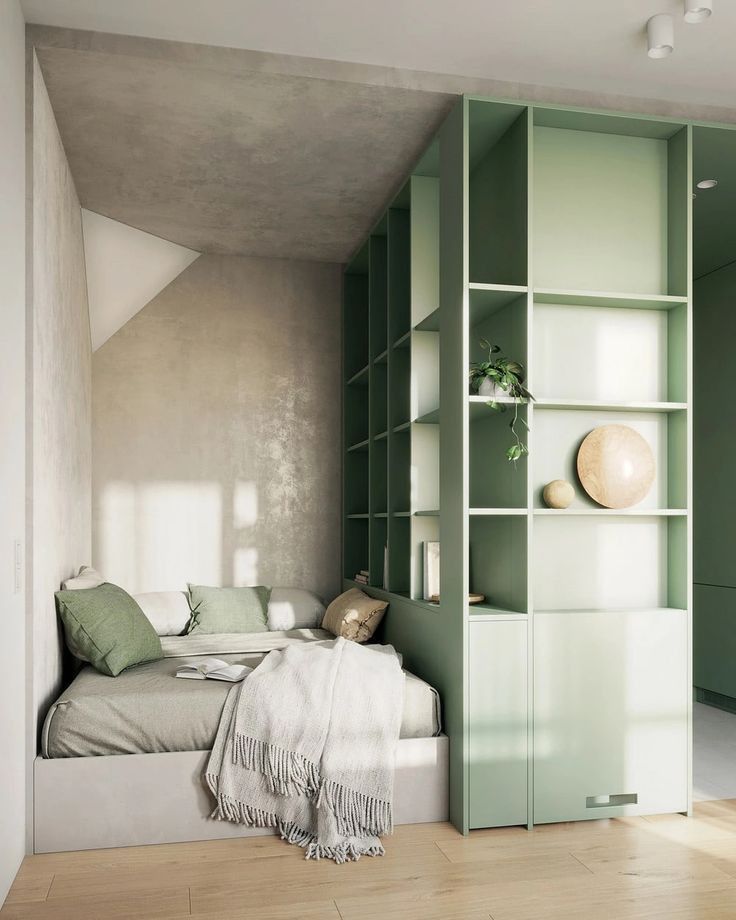
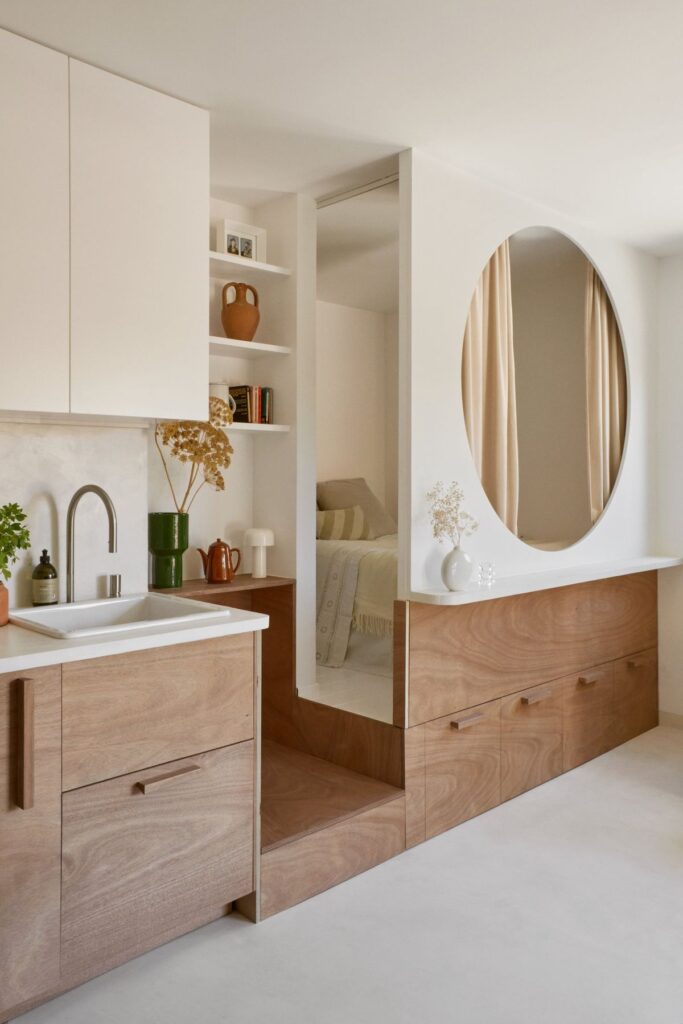
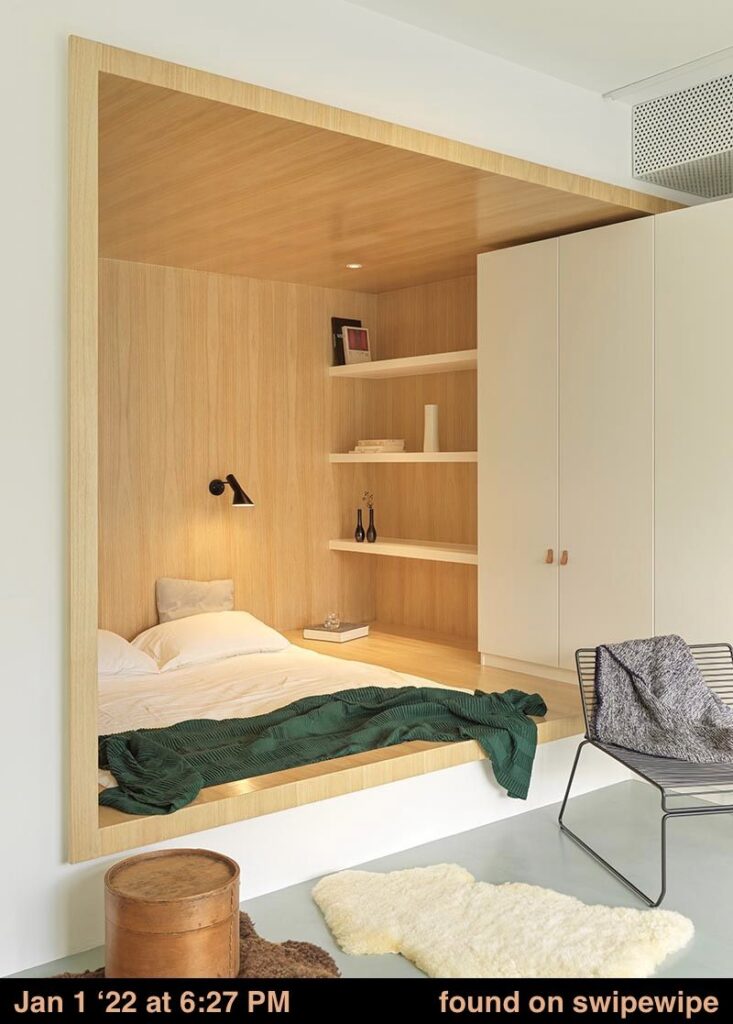
If the room has an L-shaped footprint, or even a small niche, use it. A niche painted in a calmer or deeper tone immediately signals that the sleeping zone is separate — a room-within-a-room effect that requires no physical division at all.

Grey, green and wood – A very small apartment, everything in one space. The bed got a nook, the kitchen is built around it (on the other side of the green wall). Found it here, I would love to know who is the designer, because the whole apartment is so clever! If you only have just 24 sqm… Still possible to create a nook to hide at night.
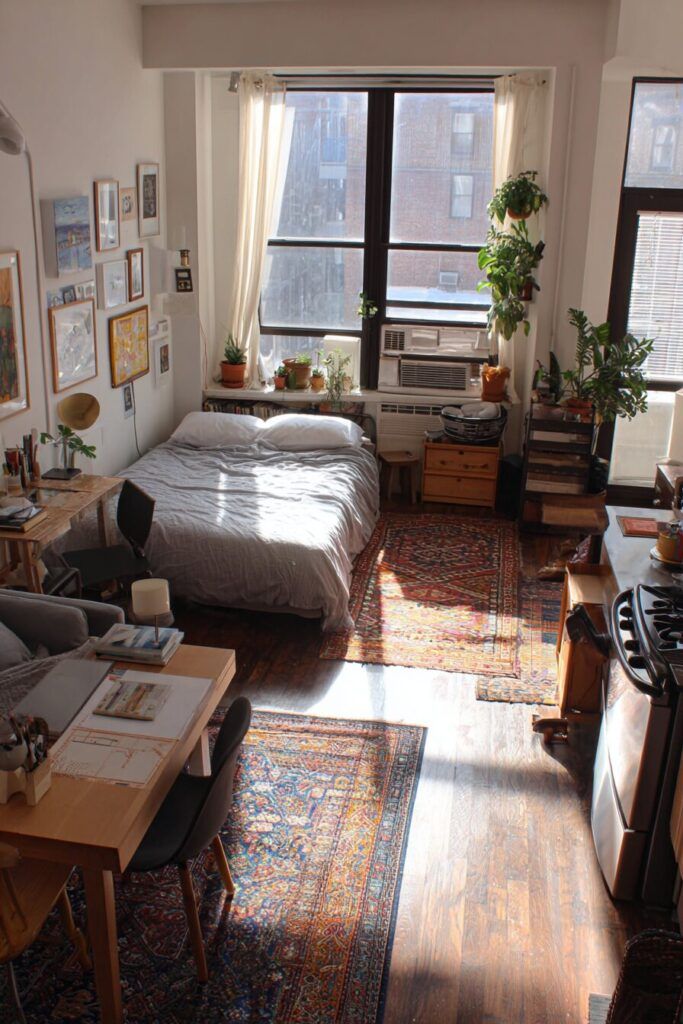
A beautiful project from Mars-AvrilSimilar concept, a niche for the bed – but a slightly more open version. A project by MDDM Studio, found it here. Zoning works even without nooks or niches. Just by moving the bed to one corner, and following this concept: a clear layout can be done on the most simple way. Found it on Pinterest.
Should You Float the Bed or Push It to the Wall?
Pushing the bed against the wall is the instinct in a small room — it conserves floor space. But it often works against the room’s sense of calm, particularly if it makes the bed feel like an afterthought rather than an intentional zone.
Floating furniture away from walls can make a room feel more spacious and opens up far more layout possibilities. Even 20–30 cm of clearance behind the headboard — enough to fit a slim console or a low panel — changes the way the sleeping zone reads.
It signals that the bed belongs there, rather than that it was pushed there.
For more on how furniture placement and scale affect the feel of a small space, the furniture for small spaces guide covers the underlying architectural principles in detail.
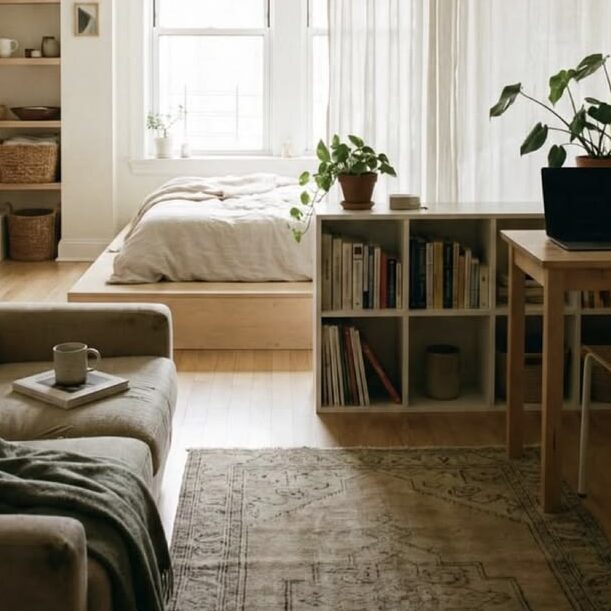
Why the Headboard Isn’t Optional in a Combo Room
In a living room and bedroom combo, the headboard functions as an architectural gesture. It anchors the sleeping zone visually, creates a sense of enclosure, and tells the eye where one area ends.
A bed without a headboard in a one-room apartment simply looks like a mattress that hasn’t found its home yet.
Even a simple upholstered panel or a DIY wall-mounted shelf at head height does the work. It doesn’t need to be elaborate — it needs to exist.
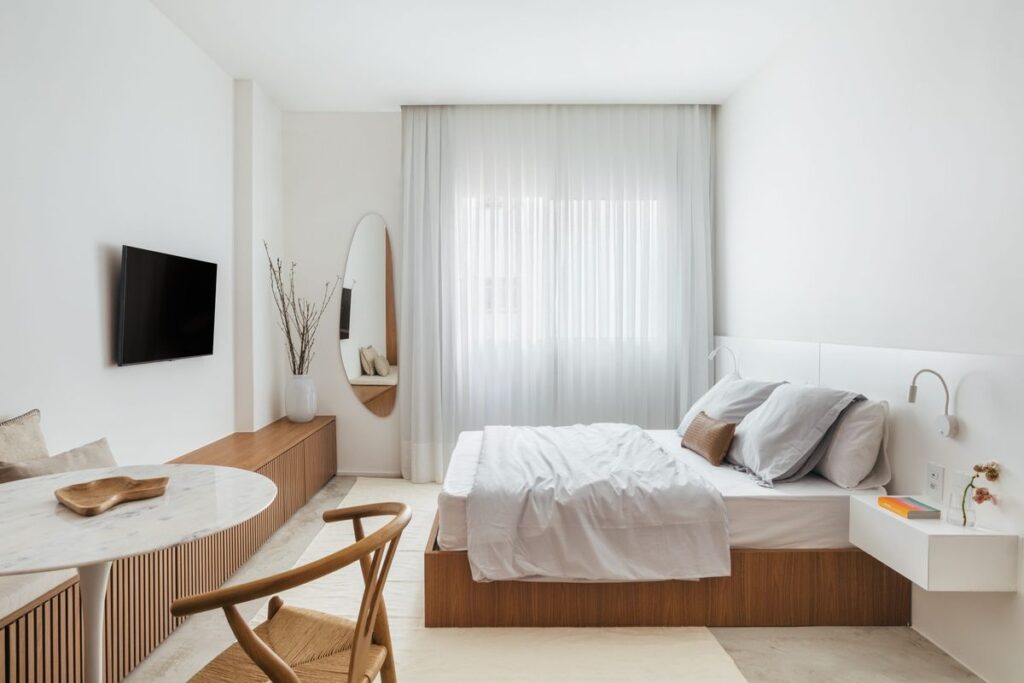
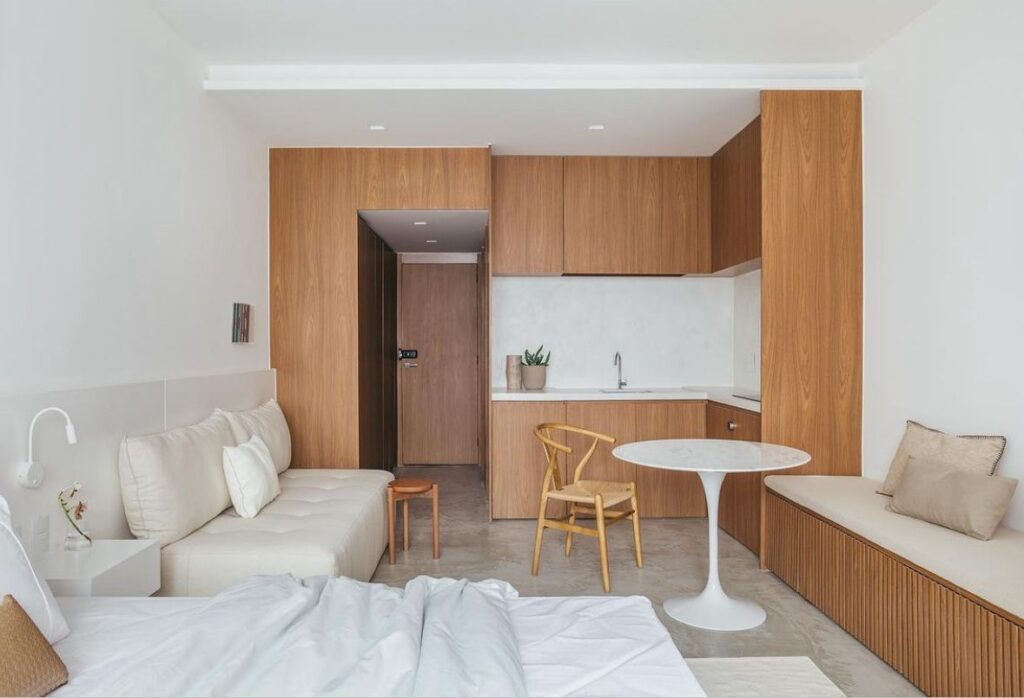
How Do You Make a Studio Feel Like It Has a Separate Living Room?
This is the most common question, and the answer is simpler than most people expect: the sofa does the work.
Use the Sofa as a Zone-Maker, Not Just as Seating
In a one-room apartment, the sofa is not just seating. It is a zone-maker.
Placing the sofa at the foot of the bed — with its back facing the sleeping area — creates a natural room divider without adding any extra furniture or physical partition. The back of the sofa becomes the boundary. The living area exists on one side; the sleeping area exists on the other.
This back-to-back arrangement is one of the most effective and budget-friendly layout moves in small-space design. It requires no installation, no additional cost, and no compromise on the size or style of sofa you choose. It simply reframes what the sofa is doing in the room.
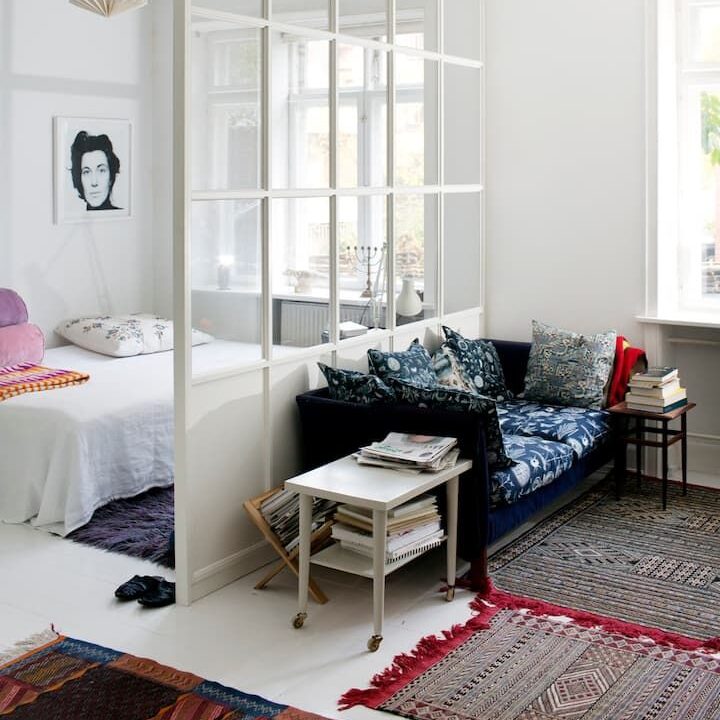
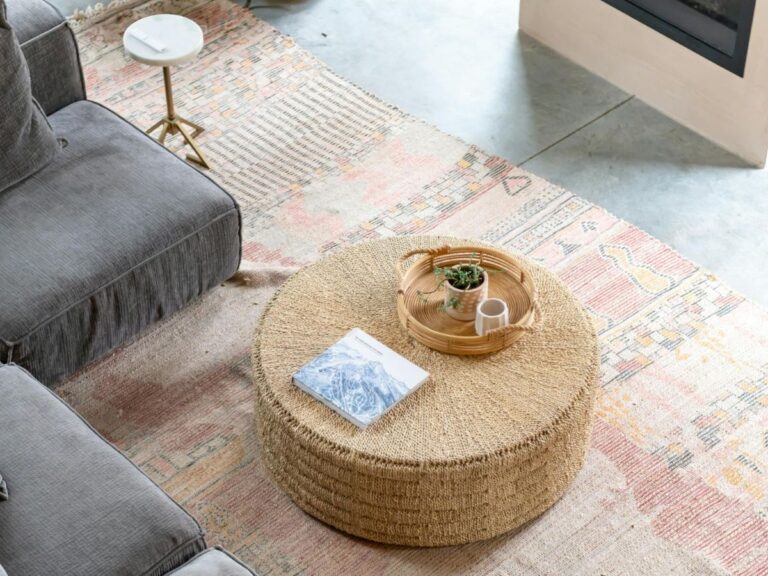
Pair this with a well-chosen rug under the sofa and coffee table — distinct from any rug or runner near the bed — and the two zones become visually self-contained.
For a deeper look at how this works spatially, the small living room layout guide covers the principles behind furniture placement and circulation in compact spaces.
The Console Trick That Reinforces the Boundary
If the back of the sofa is not particularly elegant, a low console table positioned behind it resolves this immediately. The console adds a surface — useful for a lamp, a plant, a book — and reinforces the boundary between zones.
It also gives the sleeping area something to look toward rather than looking directly at the back of upholstery.
This is a small addition that does quiet, consistent work. It makes the room feel considered from every angle, not just from the living side.
Zones Without Dividers — What Actually Works
Physical dividers — bookshelves, curtain tracks, slatted panels — can work well in larger studios, but in a genuinely compact space they often interrupt the light and make the room feel smaller and more complicated.
There are three approaches that create clear zones without adding any mass to the room.
1. Two Rugs, Two Zones
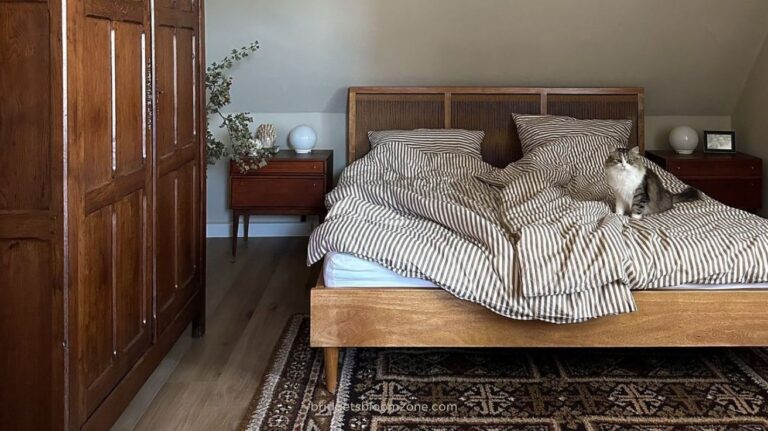
The floor is the most underused zoning surface in a small apartment. Placing different rugs under the bed and under the sofa creates visual islands that define each area’s purpose and anchor the furniture groupings within them.
The rugs don’t need to match — in fact, a slight tonal or textural difference between the sleeping-zone rug and the living-zone rug reinforces the separation.
They do need to be properly sized: a rug that is too small floats ineffectually and does the opposite of what you need. The living-zone rug should sit under all four legs of the sofa, or at least the front two, to work as a genuine anchor.
2. Warm Light vs. Cool Light — the Psychological Separation
Lighting is a zone-maker that most people forget to use.
Contrasting light temperatures — a warm floor lamp in the living area versus a more directed bedside lamp in the sleeping zone — creates psychological separation within one open room. The eye reads different light temperatures as different spaces.
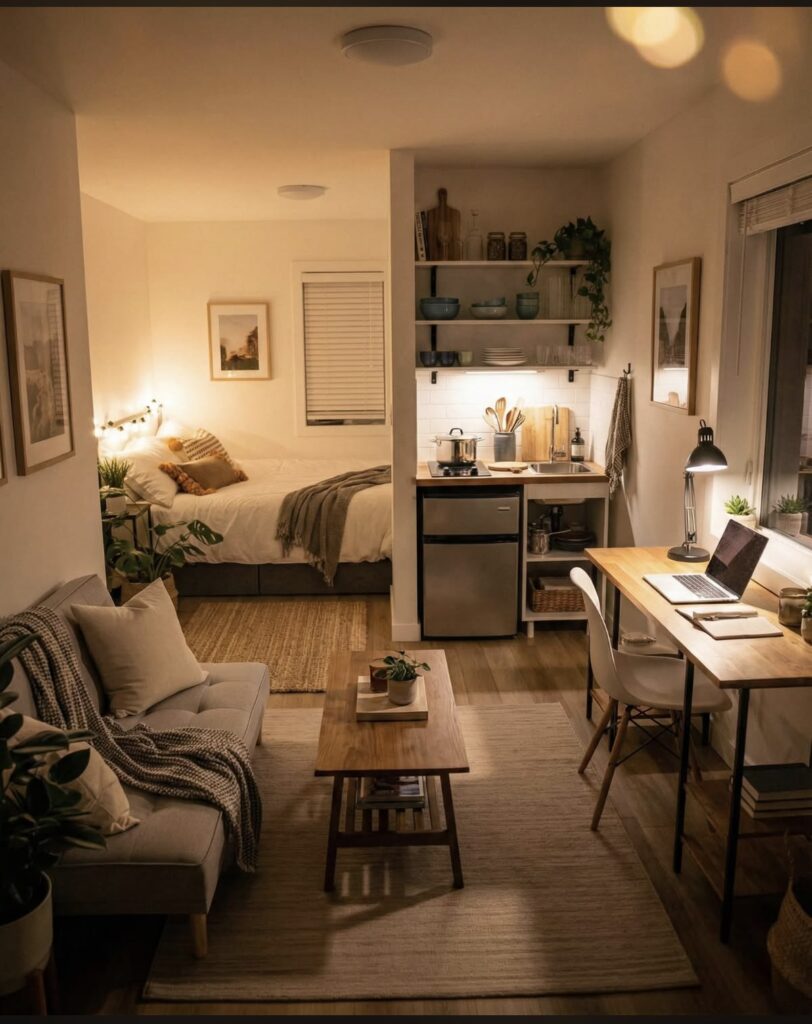
This doesn’t require a rewire.
It requires two lamps with intentionally different bulb temperatures. Warm amber (2700K) for the living area; slightly cooler or more directional (3000K) for the reading corner near the bed.
Sleep researchers note that keeping the sleeping zone in softer, warmer light in the evening also supports the brain’s association between that area and rest — what sleep medicine refers to as stimulus control.
For more on how to layer light effectively in a compact room, the ambient lighting guide for small living rooms is a useful companion.
3. One Accent Wall Behind the Bed
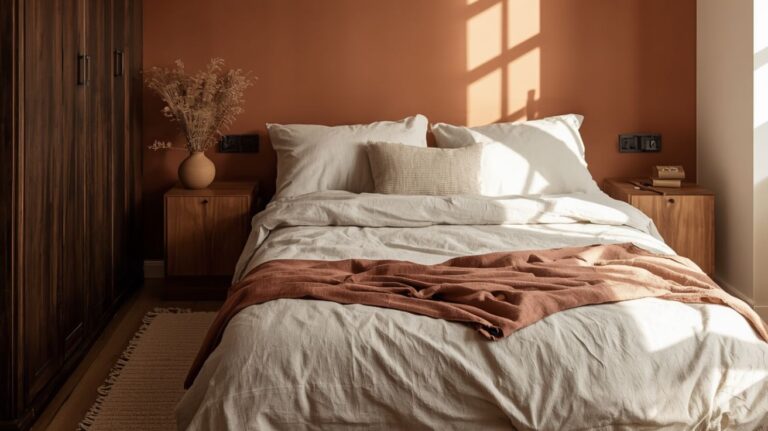
A single wall painted in a different colour, or finished in a different material, behind the headboard does more zone-defining work than any screen or shelf.
A calming deeper tone — soft sage, warm clay, or muted blue — behind the bed clearly sets the sleeping area apart from a more neutral living zone. It reads as a room-within-a-room without enclosing anything.
This is one of the most permanent, highest-impact changes available at low cost, and it holds up over time. It also gives the sleeping zone its own visual identity — something to come home to rather than something to work around.
For guidance on choosing colours that hold their calm in a small space, the small living room paint colour guide covers the principles well.
What Should the Sleeping Area in a Studio Feel Like?
The instinct is to make the sleeping end feel like the living end: matching palette, matching light, matching logic. This is the mistake.
Why the Bedroom Zone Needs Its Own Mood
The bedroom zone in a one-room apartment should feel slightly quieter, slightly more enclosed, slightly more textural than the living end. Not dramatically different — but with its own mood.
This is what makes the room feel like it has two distinct purposes rather than one confused one.
When the living area and sleeping area share identical colours, textiles, and finishes, the room reads as one long undifferentiated space. A subtle shift — a deeper wall tone on the bedroom side, warmer textiles near the bed, a different rug texture — is enough to create the sense of two places within one room.
There is also a practical reason for this distinction. Environmental psychology research suggests that keeping the sleeping zone visually separate from active living areas — even symbolically — helps the brain associate that area with rest rather than wakefulness.
In a small apartment where the bed is always visible, this matters more, not less.
The Small Rituals That Signal “This Is a Sleeping Place”
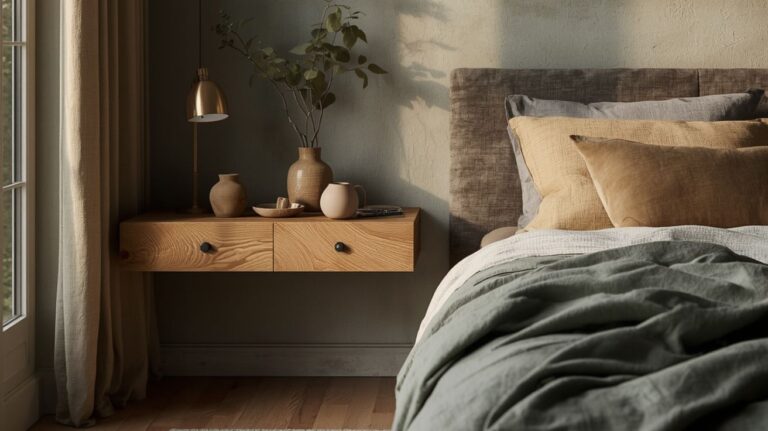
Commit to bedside ritual objects. A small table or wall-mounted shelf beside the bed, a dedicated lamp at the right height, a place for a glass of water and a book — these are not decoration. They are signals, to you and to anyone entering the room, that this is a sleeping place.
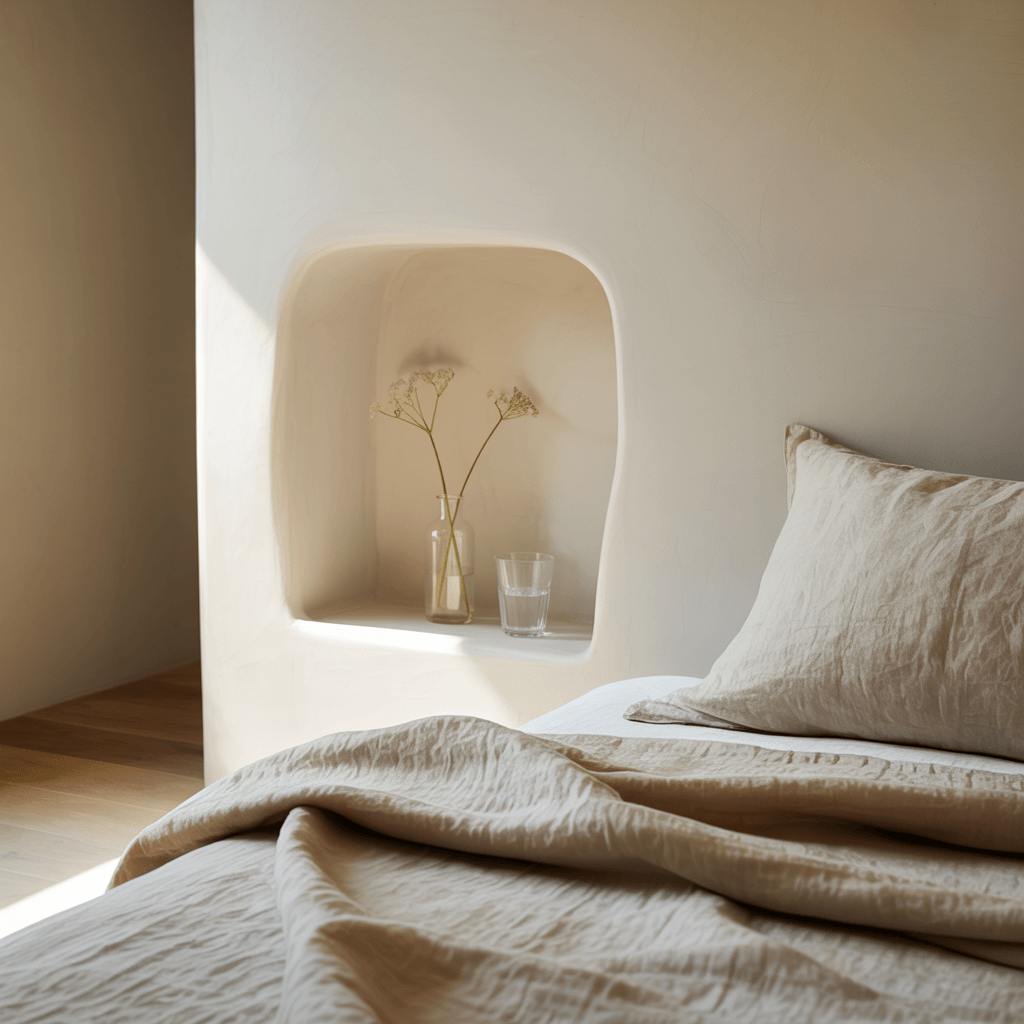
Even a compact wall niche can do this work at minimal cost and footprint. The DIY bedside table post shows exactly how we approached this in our own renovation — and how a small, considered detail can anchor an entire zone.
Use softness selectively, too. Heavier curtains, a textured throw, a slightly deeper rug — these should accumulate toward the sleeping end. They add acoustic softness (helpful for sleep) and visual warmth that separates the mood from the more open living zone.
Circulation and What Happens When You Get It Right
There should be a comfortable, unobstructed route from the entry to the bed and from the bed to the bathroom. Circulation is what makes a small room liveable over time.
Ideally, a path of 75–80 cm wide connects the zones without requiring anyone to navigate around furniture.
If you find yourself stepping around pieces to reach the bed, the layout isn’t working — no matter how considered it looks in a floor plan sketch. Circulation comfort is the quietest indicator of whether a small apartment layout is genuinely resolved.
The Layout Mistakes That Keep a One-Room Apartment From Feeling Cozy
These are the most common errors in a living room and bedroom combo — and the ones that most reliably prevent the room from feeling settled:
- Treating both zones with the same palette.
When the living area and sleeping area share identical colours, textiles, and finishes, the room reads as one long undifferentiated space. A subtle shift is all that’s needed — not a different room, just a different feeling. - Too much floor furniture.
Every piece that sits directly on the floor occupies visual weight. Pieces with visible legs — sofas, bed frames, side tables — feel lighter and allow the eye to travel beneath them, which reads as more space. - Ignoring the circulation path.
The path through the room determines the layout, not the other way around. If the circulation path feels awkward, the whole room feels awkward, regardless of how thoughtfully the zones are arranged. - Leaving the bed without a headboard.
In a one-room apartment, a headboard is not a style choice — it’s a zoning tool. Without it, the sleeping area never quite reads as intentional. - Placing the sofa and the bed on the same wall.
This eliminates the possibility of zone separation and produces the flat, undifferentiated layout that makes small apartments feel like temporary arrangements rather than real homes.
Does a One-Room Apartment Work Long-Term?
This is the honest question underneath most of the searches: can a living room and bedroom combo actually feel like home?
The answer is yes — with one condition. The space has to be treated as a home, not as a workaround.
That means committing to the bedroom zone rather than leaving the bed to feel temporary.
It means choosing a layout and staying with it long enough to understand how it works, rather than constantly rearranging.
And it means allowing the two zones to have genuinely different moods, rather than flattening everything into a single neutral palette in the hope that visual consistency will compensate for the lack of physical separation.
What I’ve learned through our own renovation is that the constraint is also a clarity. Every piece of furniture earns its place. Every decision has an effect. The result, when the layout is resolved rather than disguised, is a space that is considered in a way that larger apartments rarely are.
One-room living, done with intention, can feel remarkably calm. The room doesn’t need to be larger. It needs to be resolved.
For anyone starting from scratch with a studio layout, the studio apartment layout ideas post offers a set of real floor plan sketches across different configurations — which can help ground these principles in concrete geometry.
The Decisions That Actually Matter
A living room and bedroom combo works when the layout is resolved, not when it’s disguised. The key moves are few, and they are worth getting right:
- Place the bed first.
Everything else — sofa, rugs, lighting — arranges itself around that anchor decision. - Use the sofa as a zone boundary, not just as seating.
Float it with its back toward the bed. - Zone with floor, light, and colour
— not with furniture that adds mass and complexity. - Give the sleeping end its own mood.
Quieter, softer, slightly more enclosed. Not a different room — a different feeling.
If you’re in the middle of working this out for your own space, I’d genuinely like to hear what your biggest layout challenge is. Leave it in the comments, and I’ll answer as specifically as I can.
And if you’d like to follow along with how these decisions are playing out in our own renovation, the studio renovation diary is where all of it is documented — including the moments where the plan changed.
Pin it for later!