Wardrobe Design for Bedroom: How to Choose the Right System for a Small Room
This post contains affiliate links. If you buy through them, I may earn a small commission — at no extra cost to you. I only recommend products I’d genuinely specify as an architect.
Wardrobe design for bedroom is the highest-impact furniture decision in a small room. And the one most often made before the room was measured.
The wardrobe that looked right in the showroom arrives and blocks the door. Or the depth works, but the door arc is 60cm wide and the bed is 50cm in front of it. Every morning, you open into the side of the bed. These are predictable outcomes of a decision made from a catalogue photo instead of a floor plan.
Four decisions for wardrobe design for bedrooms, in order:
- position
- door type
- overall size
- interior layout
Each one constrains the next. Most people start at the interior and work backwards. This guide does not.
If you’re still working through the wider bedroom layout, the small bedroom ideas guide covers the foundational decisions that come before the wardrobe.
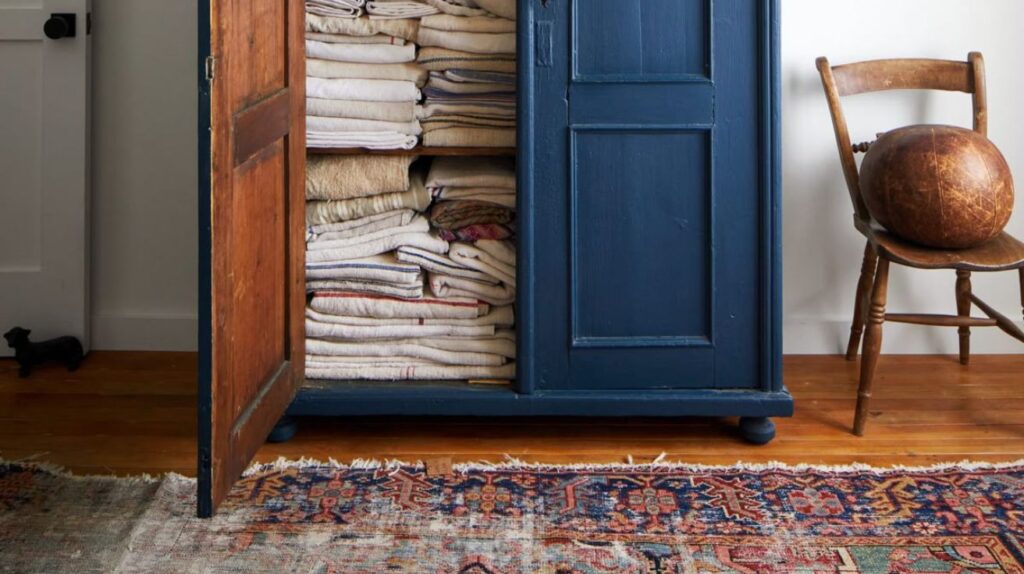
Image found: here
What Makes a Good Wardrobe Design for a Bedroom?
Good wardrobe design for a bedroom starts with a constraint the room gives you: the wall tells you what is possible before you decide what you want.
The available wall determines maximum width. The ceiling height determines maximum height. The door position determines which door type is viable. None of these are preference decisions — they are spatial facts. Preference decisions live inside the wardrobe.
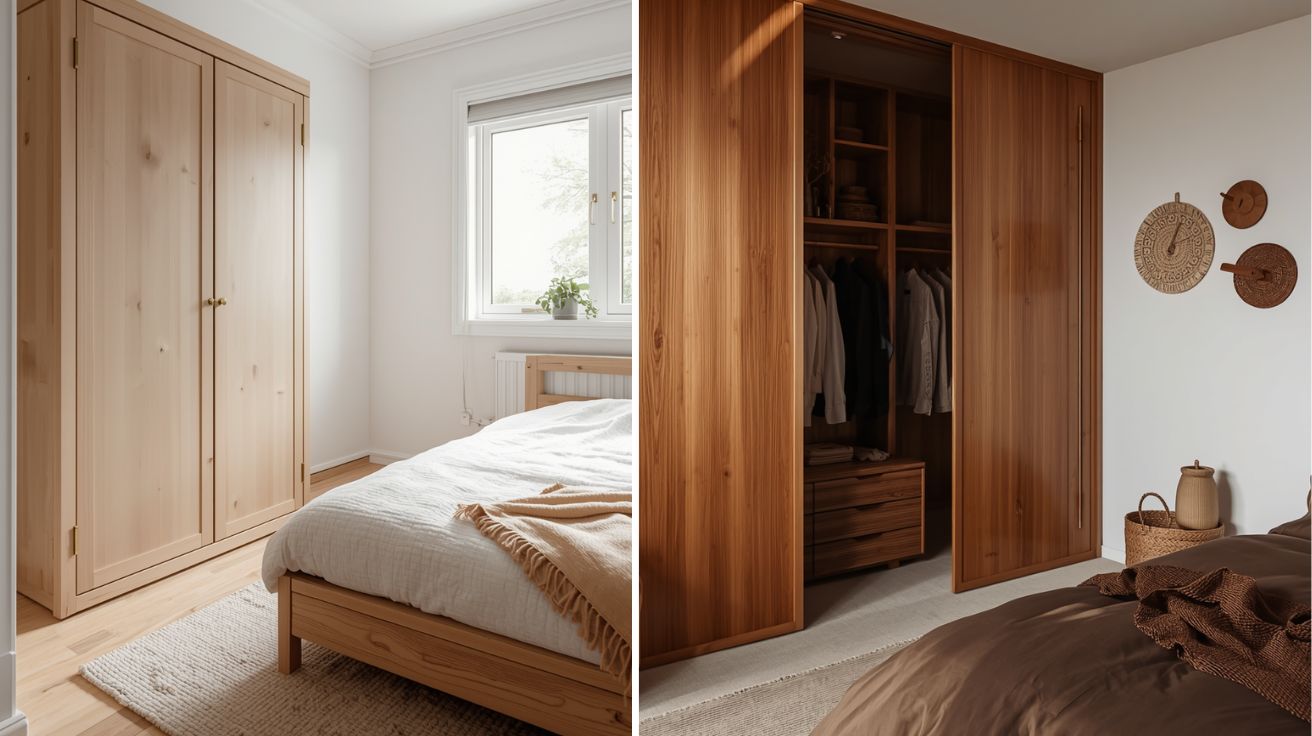
Built-in versus freestanding
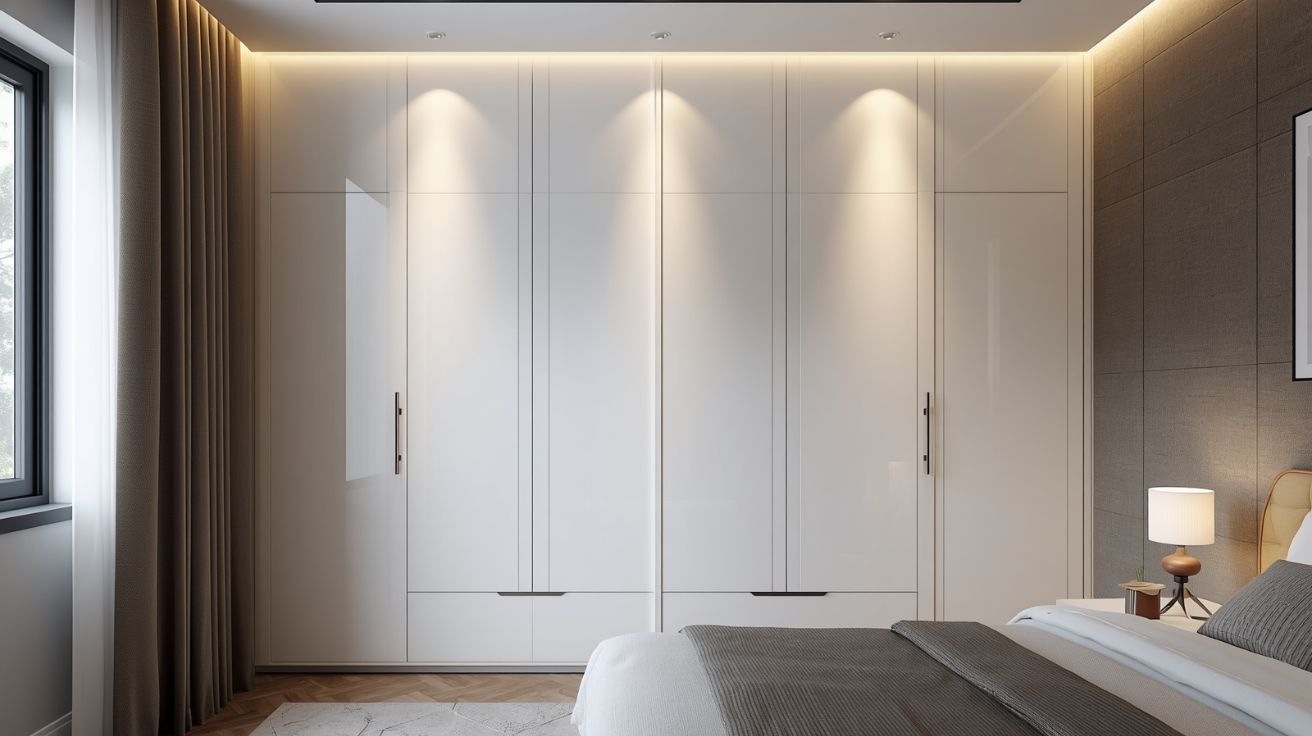
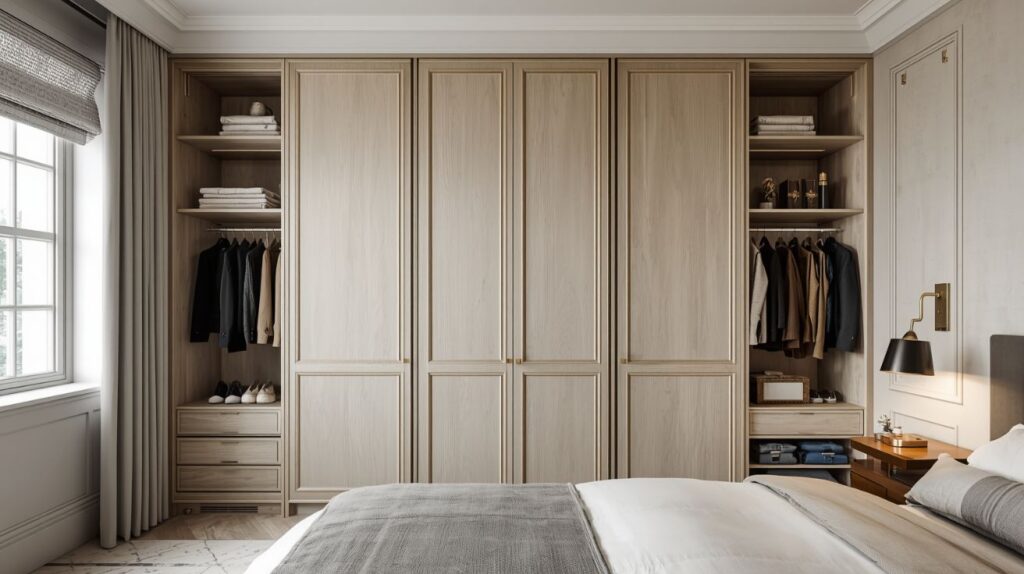
A built-in wardrobe sits flush to the wall and runs to the ceiling. The visible surface is the door face — everything else disappears into the wall plane.
A freestanding wardrobe has exposed sides, a gap above, and a footprint that extends beyond the cabinet. In a room under 12 square meters, that visual mass registers. The floor impact is the clearest practical difference: a full-wall built-in has zero floor footprint inside the storage zone.
For the broader framework of how furniture type affects a small room, the furniture for small spaces guide covers the underlying principles.
How much wardrobe space you actually need
Significantly less than the wardrobe most people buy on the first attempt.
I organize clothes-swap events with friends a couple of times a year — the rule is to invite women who aren’t your size and aren’t your closest friends, include the colleague you don’t know well, and make everything free including shoes and accessories. My best pieces have come from these afternoons. The practical result: my actual wardrobe volume is smaller than most people expect.
The target I recommend: the wardrobe should be roughly three-quarters empty on the day you move in. Not as a minimalist aspiration — as a functional condition. One that’s full on day one overflows by day three.
Measure before you plan. Hang all items on a temporary rail, measure the total length they require, and add 20%. That number is your minimum hanging requirement — arrived at by measurement, not assumption.
Where the wardrobe goes in the layout
Position comes before size. The most reliable position in a small bedroom: a side wall, clear of the door swing and the main path between door and bed.
The window wall is almost always wrong — it blocks natural light and interrupts the view from the bed. The wall directly opposite the entrance works well when it is long enough. The corner beside the door — between the frame and the adjacent wall — is underused in most small bedrooms: a slim built-in here, 40–50cm deep, captures dead space without touching the main floor area.
Key takeaway: Decide wardrobe position on the floor plan before visiting any showroom. The available wall sets the outer limit of everything that follows.
Bedroom Closet Design: Which Door Type Works?
Once position is confirmed, bedroom closet design comes down to which door type the available clearance actually allows. The three options differ in one variable: how much floor in front of the wardrobe they consume when operating.
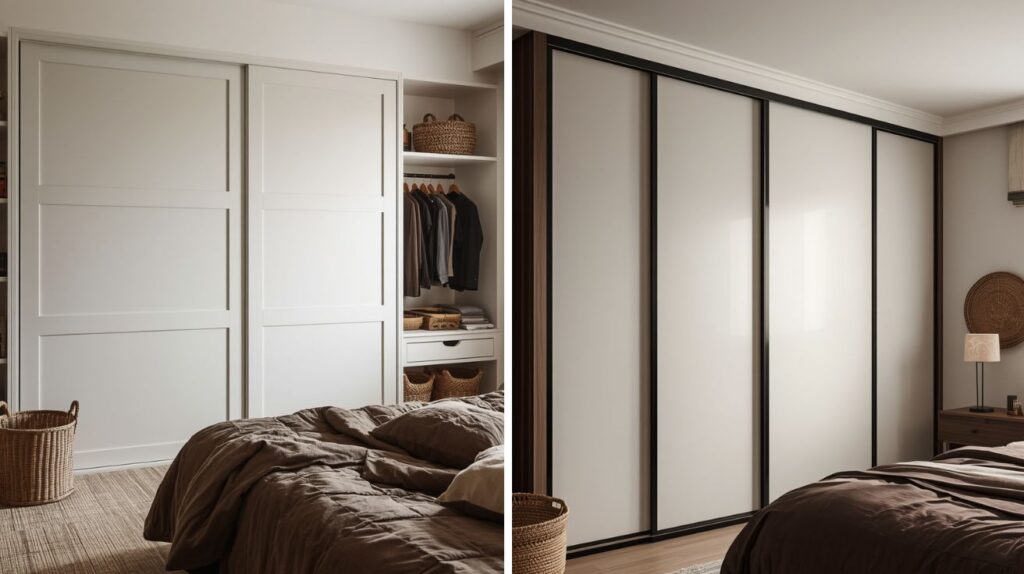
Sliding door wardrobe designs — the small bedroom default
Sliding door wardrobe design for bedroom require zero floor clearance to operate. The door panel travels within the wardrobe frame, parallel to the wall, at all times.
The trade-off is access: only one half of the wardrobe can be opened at a time. In a well-organized interior, this is a minor inconvenience. The interior depth behind a sliding door is identical to a hinged door: 60cm for full hanging, with the mechanism adding approximately 8–10cm to overall depth.
Hinged doors — when the clearance is genuinely available
A standard hinged door on a 60cm-deep wardrobe requires approximately 60cm of clear floor to open fully. Where the floor in front is consistently unobstructed, hinged doors are the better choice — they allow full simultaneous visibility into both sections.
That clearance is rarely available in rooms under 14 square meters. Before choosing hinged doors, draw the full door arc onto your floor plan and check what it overlaps.
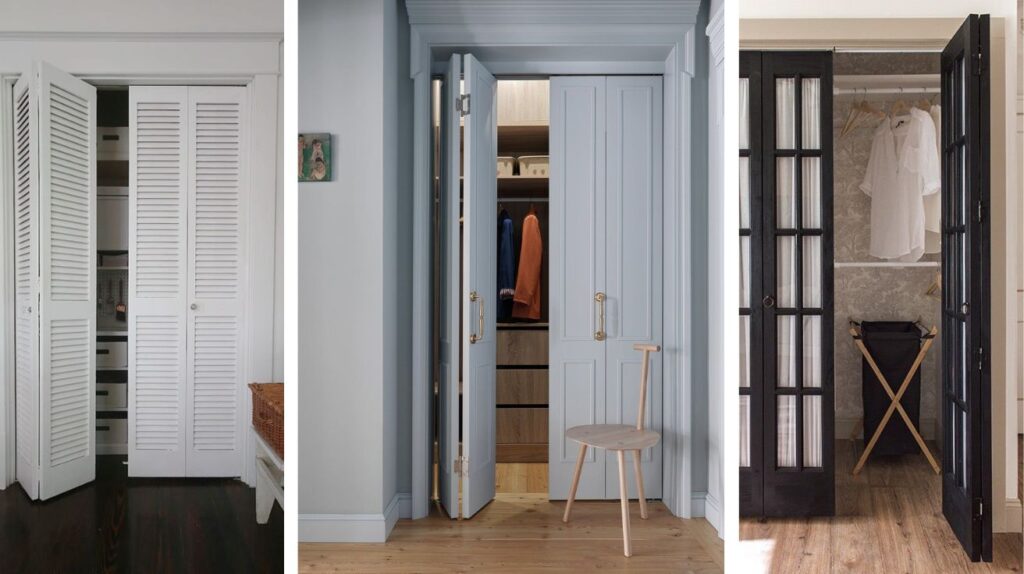
Bi-fold doors — the middle option
Bi-fold doors fold in half as they open, requiring approximately 30–35cm of clearance. Bi-fold earns its place where sliding is impractical and full hinged swing is impossible. The mechanism has more moving parts than either alternative — slightly more maintenance over time.
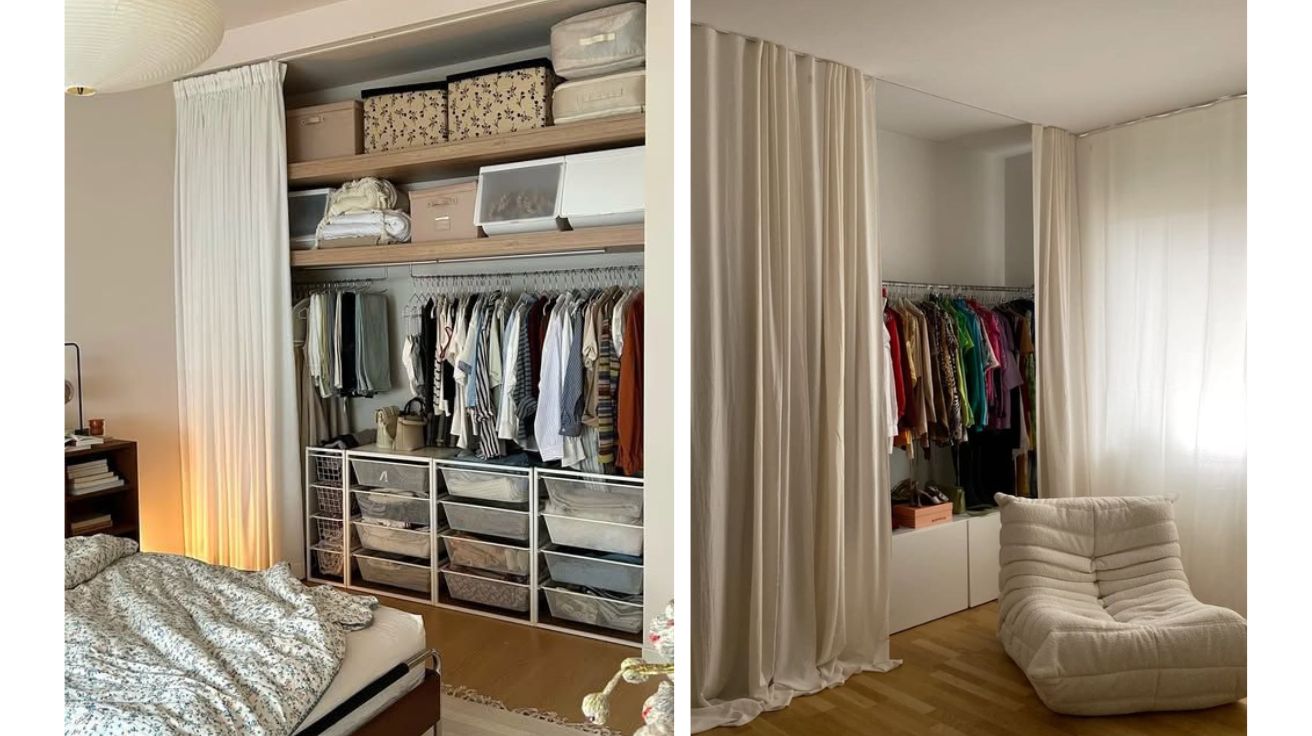
Curtains — low budget, soft look
If you don’t have enough space, budget for a door, or just want to have something soft in your bedroom, then this solution is a win for you. Easy to maintain, does not need space at all. One important thing before you decide for this option: you need a lot of curtain. I would say, 2,5-3 times the length of the opening is a good rule of thumb.
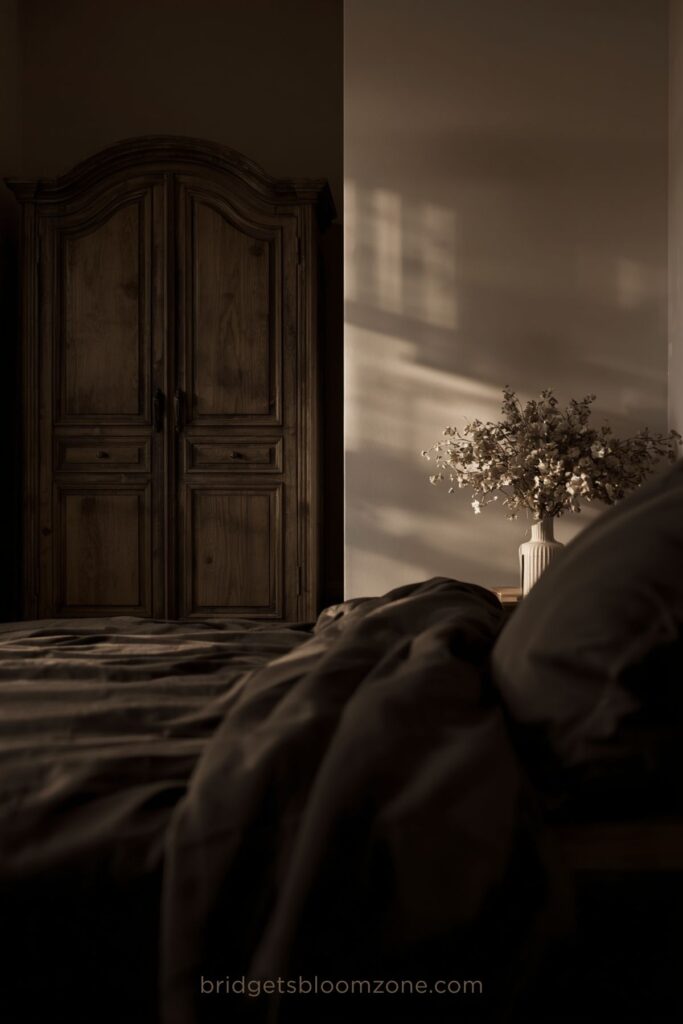
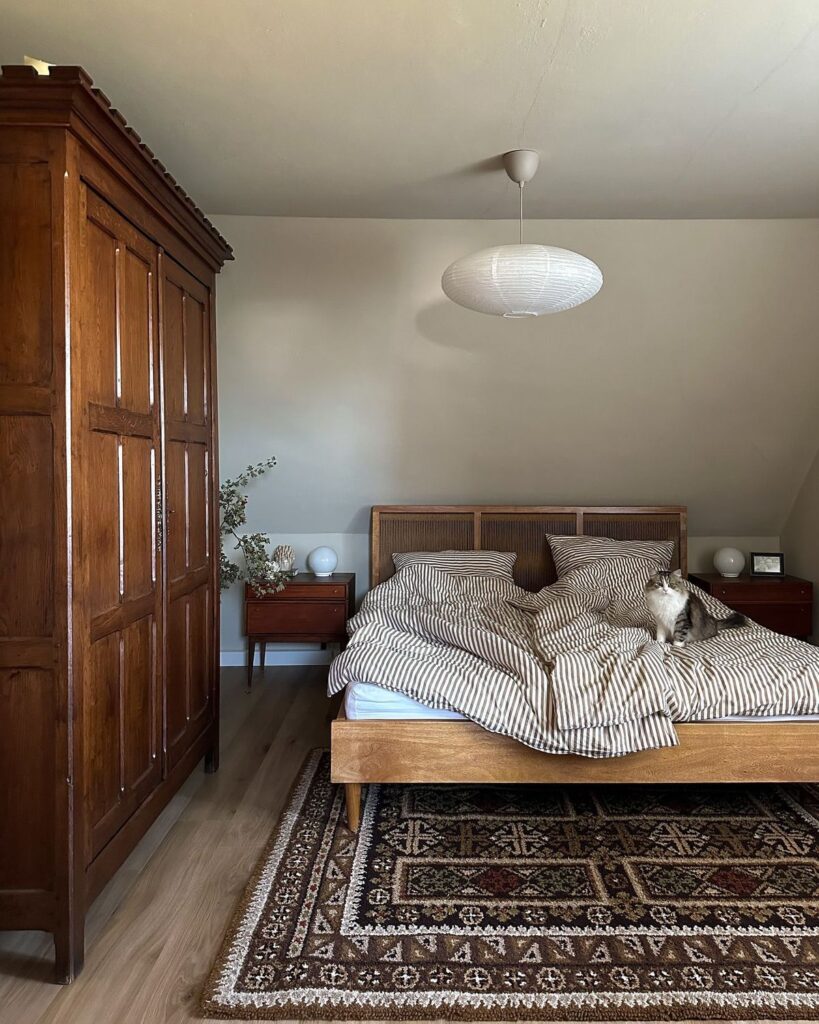
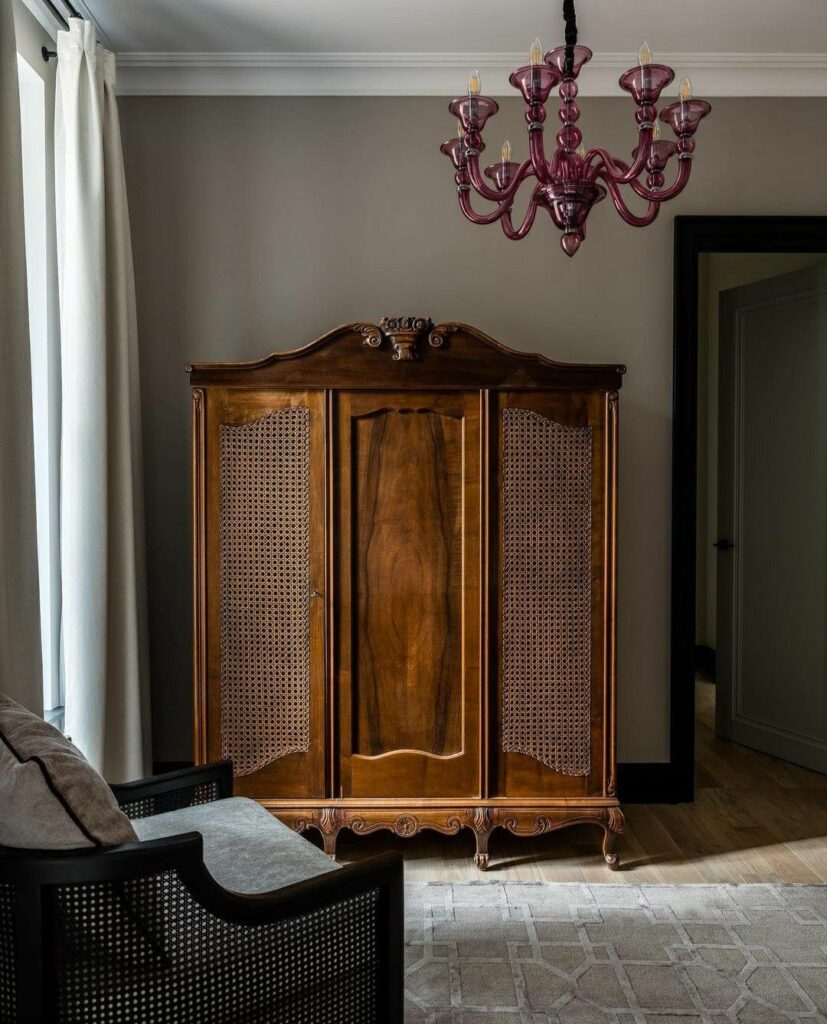
Something antique – If you are a minimalist, but also special
This is my favorit option. I love old cabinets and closets. With some little love, they can be perfect for storing clothes. If you have just a little amount of clothes, textiles, they can be enough. They are made of real wood, have some patina that is beautifully framed by the new, minimalist interior.
They take up some space, but combined with hidden storage options in your home, they can be the treasure and a unique decoration of your home.
Wardrobe Interior Design: What to Put Inside
Wardrobe interior design is the last decision in the sequence — but it has the most visible daily impact on whether the storage actually functions.
Hanging versus folded — the interior layout
Full-length hanging requires a minimum of 180cm of clear height. Double-rail hanging stacks two rails for shorter items — shirts, jackets, folded trousers — and roughly doubles hanging capacity in the same width of wardrobe.
The most efficient layout for a mixed wardrobe: full-height hanging on one third, double rail on the second third, and a shelf-and-drawer stack on the remaining third. Adjust the proportions to what you actually own.
Sizes as a rule of thumb
- Full-length hanging: minimum 180cm clear height, 60cm rail depth
- Double rail: shirts, jackets, folded trousers stacked in two rows – 90cm height each, 60cm rail depth
- Shelf and drawer stack: 35cm shelf spacing for folded items – min. 40 cm depth
- Shoe section: 30–35cm shelf depth, 15–18cm vertical clearance per pair
Drawers inside the wardrobe
A drawer stack inside the wardrobe eliminates the need for a separate chest of drawers in the bedroom. This is worth designing from the start. A built-in drawer unit occupies the floor footprint of the wardrobe — nothing is added to the bedroom’s floor area.
A freestanding chest of drawers beside the wardrobe adds significant footprint: typically 45–50cm of depth on a second floor position. Moving that function inside the wardrobe recovers it entirely.
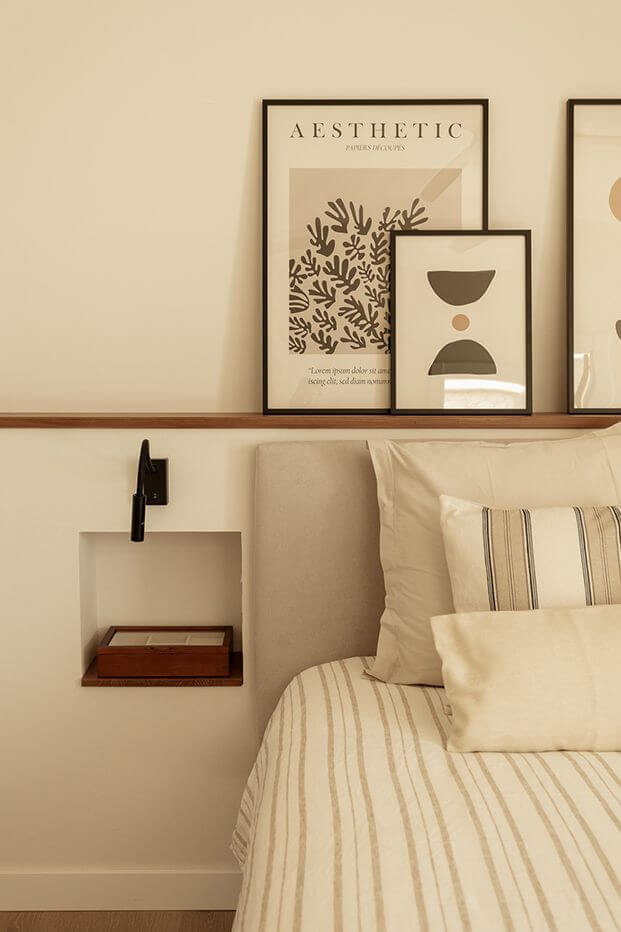
The same logic applies to the bedside zone — the DIY wall niche post shows function absorbed into the wall plane rather than added as furniture.
Walk-In Closet Bedroom: Is It Worth the Floor Area?
A walk-in closet bedroom requires a minimum footprint of approximately 1.8m × 1.8m — roughly 3.2 square meters of clear floor. In a bedroom under 16 square meters, allocating that area to a walk-in leaves the sleeping zone compromised.
At the same total footprint, a full-wall built-in holds more than a walk-in. The reason: the circulation path inside a walk-in is dead floor space — no storage can occupy it. Two 60cm-deep sides with a 90cm walkway between them use over 2 square meters for access alone.
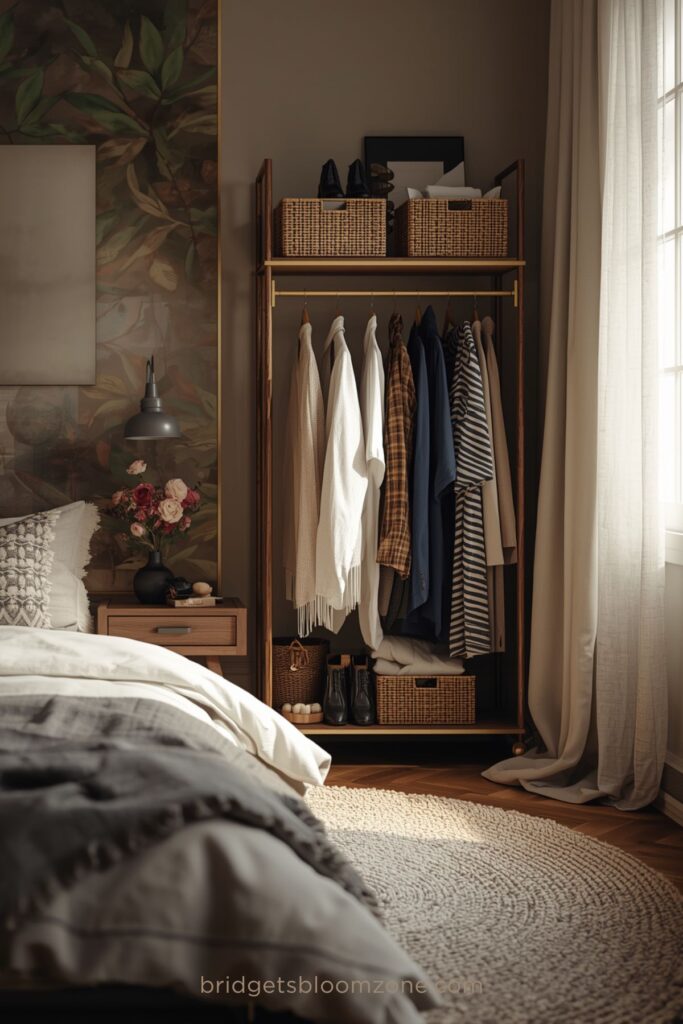
A half walk-in — using a room corner, approximately 1.4m × 1.4m — is a useful middle option. The open face can be curtained. The advantages over a full built-in: no door mechanism, full visibility, lower cost. The trade-off: dust accumulates faster, and the visual quality depends on consistent organization.
Small Closet Organization Bedroom: Making the Interior Work
A wardrobe where every item has a clear, obvious position is one where putting things back requires no thought. A wardrobe with an ambiguous interior layout produces the chair in the corner — the one that holds everything without a home.
Closed versus open sections
In a room under 12 square meters, the recommendation is fully closed. The visual calm of a flush panel is worth more than the marginal convenience of open access. An open section reduces daily friction for frequently used items but requires consistent organization to stay tidy from the bedroom doorway.
Seasonal rotation
Seasonal items — heavy coats, spare bedding, off-season shoes — do not belong in the active wardrobe. Vacuum bags on the highest shelf, or flat drawers under the bed, handle them efficiently. Rotate twice a year. The active wardrobe holds daily-use items only.
For how seasonal items fit into the wider storage system, the bedroom storage ideas guide covers the full bedroom by zone.
Wardrobe Design for Bedroom in Awkward Spaces
Not every bedroom offers four clean rectangular walls.
The wall behind the open door — the corner between the door frame and the adjacent wall — is dead space in most bedrooms. A slim built-in, 40–50cm deep, can occupy this zone without touching the door swing.
At 40cm, shelves work well. At 50cm, a short-hanging rail fits shirts and jackets. This is one of the most underused positions in small bedroom layouts.
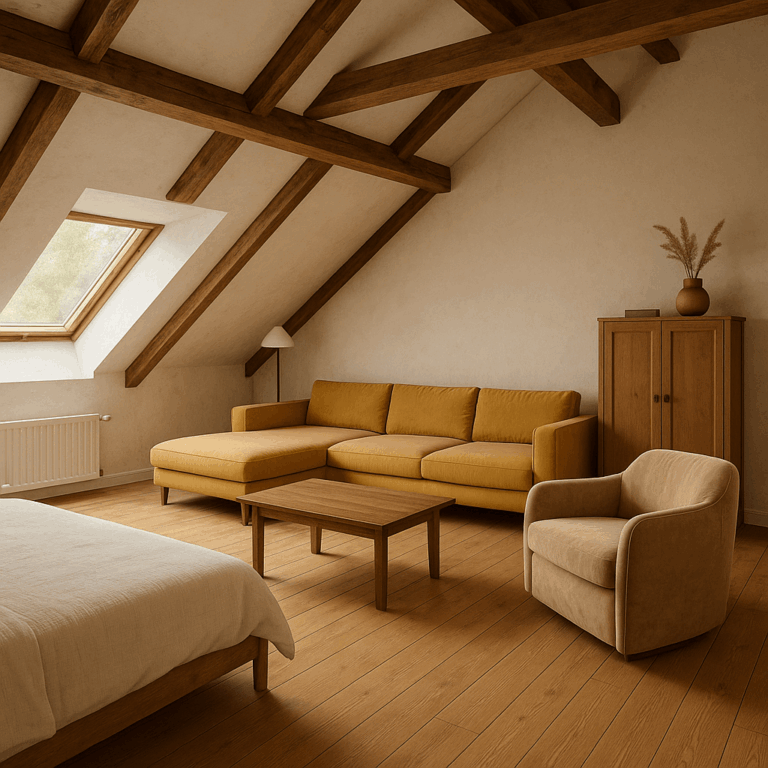
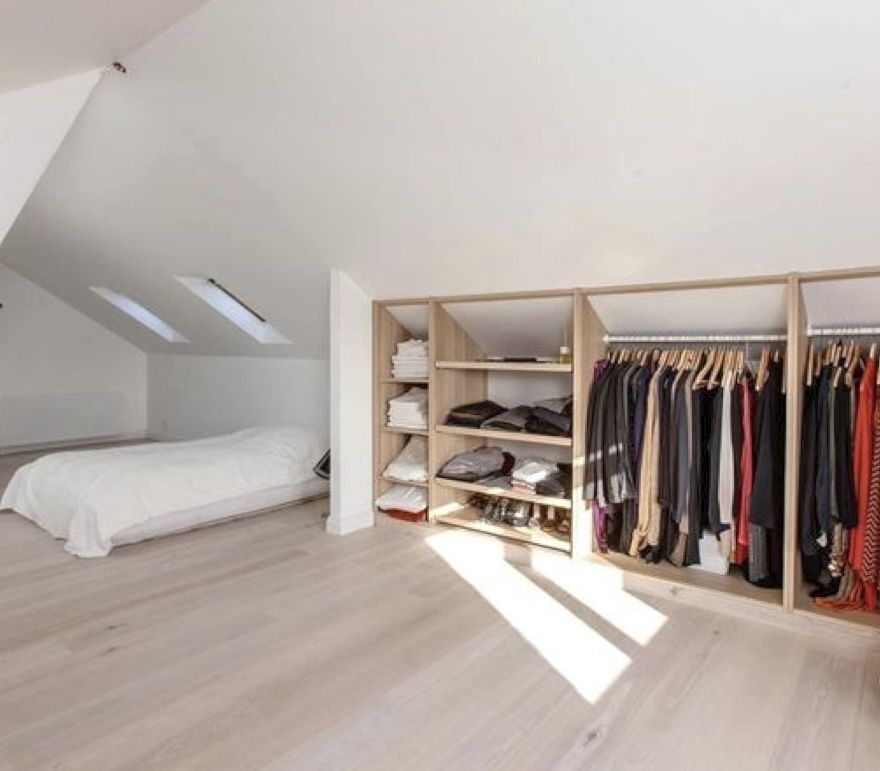
For slanted ceilings, a stepped profile wardrobe follows the ceiling slope: full height at the tallest section, dropping in steps as the ceiling descends. The taller sections handle hanging; the lower sections hold shoes and folded items. The junction between the wardrobe profile and the slope requires custom carpentry — a standard flat-pack system cannot manage it cleanly. The small attic bedroom guide covers all design decisions for that room type.
Final Thoughts
Position comes first. The available wall determines what the wardrobe can be before any other decision is made.
Door type follows from the clearance the room allows. Sliding is the default in small rooms. Hinged works only when the floor in front is genuinely and consistently clear. Interior layout is the last decision — it adjusts to the outer dimensions, not the other way around.
The wardrobe that functions well is rarely the largest option available. It is the one that fits the room on day one, opens without obstruction, and holds exactly what it needs to hold — with room to spare from the start.
For storage beyond the wardrobe, the bedroom storage ideas guide covers how other storage categories fit alongside it. For the complete bedroom furniture picture, the bedroom furniture design guide covers how every piece relates to the next.
Frequently Asked Questions About Wardrobe Design for Bedroom
What type of wardrobe is best for a small bedroom?
A floor-to-ceiling built-in wardrobe is the most space-efficient option. It eliminates visible sides and the gap above, and uses the full ceiling height. If a built-in is not possible, choose a tall freestanding wardrobe in a finish that reads close to the wall color — this reduces visual mass significantly.
Should I choose sliding or hinged wardrobe doors for a small room?
Sliding doors in most small bedrooms. They require zero floor clearance to operate. Hinged doors work only when there is a consistent 60cm of unobstructed floor in front of the wardrobe — which is rare in rooms under 14 square meters. Draw the door arc on your floor plan before deciding.
How deep should a bedroom wardrobe be?
60cm of interior depth for full-length hanging. 40cm is sufficient for shelves and folded items only. If the room cannot accommodate 60cm, a shallow wardrobe for folded clothing combined with a separate short-hanging rail is a practical alternative.
Is a walk-in closet worth it in a small bedroom?
Only in rooms large enough to spare the floor area. A functional walk-in needs at least 3.2 square meters of clear floor. In bedrooms under 16 square meters, a full-wall built-in at the same total footprint holds more and leaves the bedroom layout intact.
How do I organize a small bedroom wardrobe?
Design the interior around what you own, not around a standard configuration. Measure your hanging items for total rail length needed, count your shelf sections, and inventory your shoes. Aim for the wardrobe to be roughly three-quarters full on day one — at capacity on arrival is a problem waiting to happen.
How much wardrobe space do I need?
Measure your hanging items on a temporary rail and note the total linear length. Add 20% for ease of access. That is your minimum hanging rail requirement. Do the same inventory for folded items and shoes before confirming any wardrobe width.
Can I have a wardrobe in a very small bedroom?
Yes. A slim built-in wardrobe, 40–50cm deep, can sit in the dead zone beside the door without touching the main layout. Position determines what is possible — not room size alone.
What is the best wardrobe design for a slanted ceiling?
A stepped profile wardrobe that follows the ceiling slope. Taller sections handle hanging; lower sections hold shoes and folded items. The junction with the slope requires custom carpentry — a standard flat-pack system cannot manage it cleanly.