Earthy Bedroom: How to Design One That Feels Warm, Not Heavy
This post contains affiliate links. If you buy through them, I may earn a small commission — at no extra cost to you. I only recommend products I’d genuinely specify as an architect.
An earthy bedroom is not something I could have designed from a mood board alone — I had to see it first.
I was in Morocco, standing in a narrow street, looking at a king blue door set into a terracotta wall. The combination was unexpected, and completely right. Not because blue and terracotta are a stylish pairing on Pinterest, but because both materials had aged the same way — absorbed the same dust and light, developed the same warm patina. The relationship was between materials, not between colors.

That is what an earthy bedroom aesthetic actually is: not a color palette applied to a room, but a set of materials that respond to each other and to the light in the space.
This guide covers the decisions that build that result. If you are working on the broader bedroom palette at the same time, the small bedroom ideas guide covers the foundational layout and color decisions that come first.
What Makes an Earthy Bedroom Aesthetic?
The earthy bedroom aesthetic is defined by one quality above all: the surfaces in the room absorb light rather than reflect it.
Paint reflects. Clay plaster absorbs. Smooth gypsum reflects. Raw linen absorbs. The difference in how a room feels with absorbing surfaces versus reflecting ones is significant — and it is the main reason earthy bedrooms feel calmer and warmer than rooms of the same color in standard emulsion.
The materials that define an earthy bedroom
An earthy bedroom draws from a specific material set: clay, terracotta, stone, linen, wool, unglazed ceramic, raw wood, rattan, and aged metal. These materials share one visual quality — they all carry a warm undertone and a non-reflective surface.
The palette that results ranges from pale plaster and bleached linen to deep terracotta, olive, and raw umber. What connects them is not a color family but a surface behavior. Kinfolk’s visual language, consistently referenced in earthy interior discussions, prioritizes texture and material authenticity over palette coordination — the argument being that authentic materials create the palette, not the other way around. (Source flagged for URL below.)
Warm earthy bedroom versus cozy earthy bedroom boho
A warm earthy bedroom tends toward restraint: fewer objects, quieter textures, more space between things. The warmth comes from the surfaces themselves — plaster, wood, linen — rather than from layering.
A cozy earthy bedroom boho approach layers more generously: mixed textiles, patterned throws, woven wall objects, plants, baskets. The warmth comes from density and softness as much as from the individual materials. Both work. The difference is in how much visual quiet the room maintains — and in how much maintenance the layered version requires to stay considered rather than accumulated.
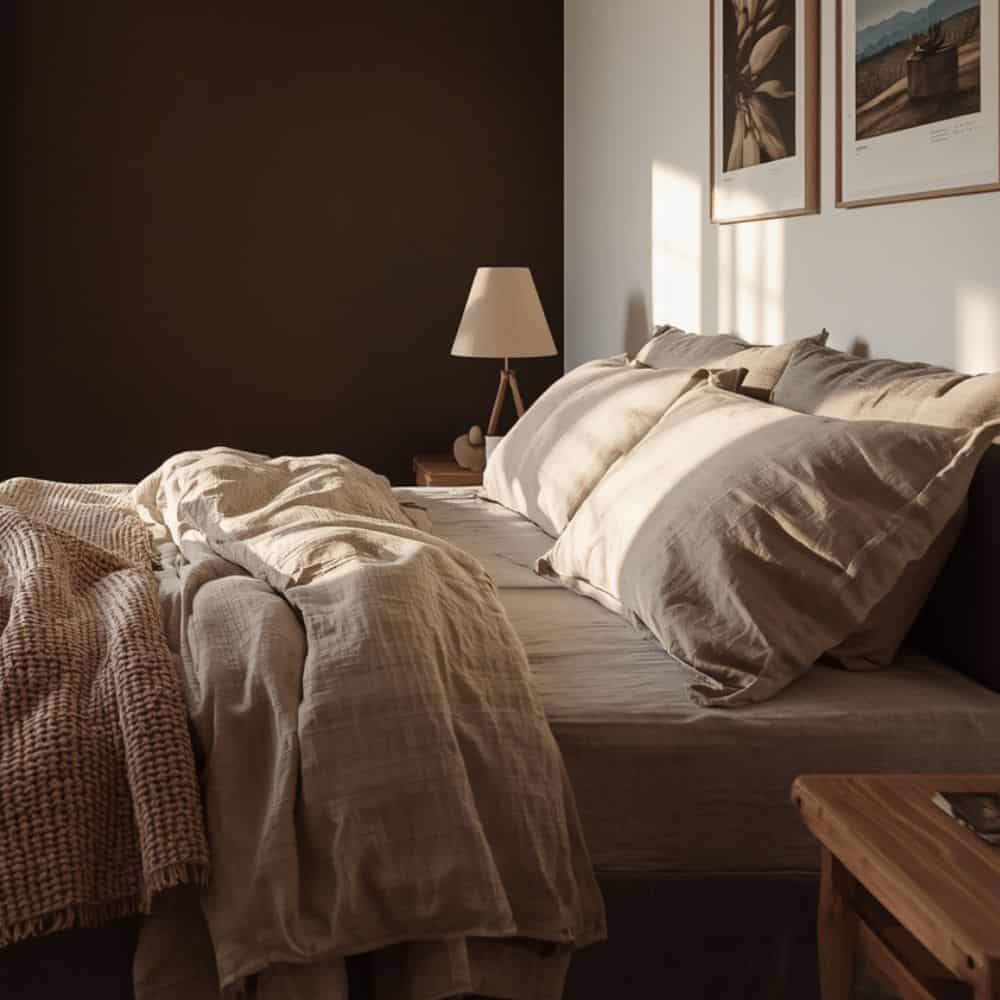
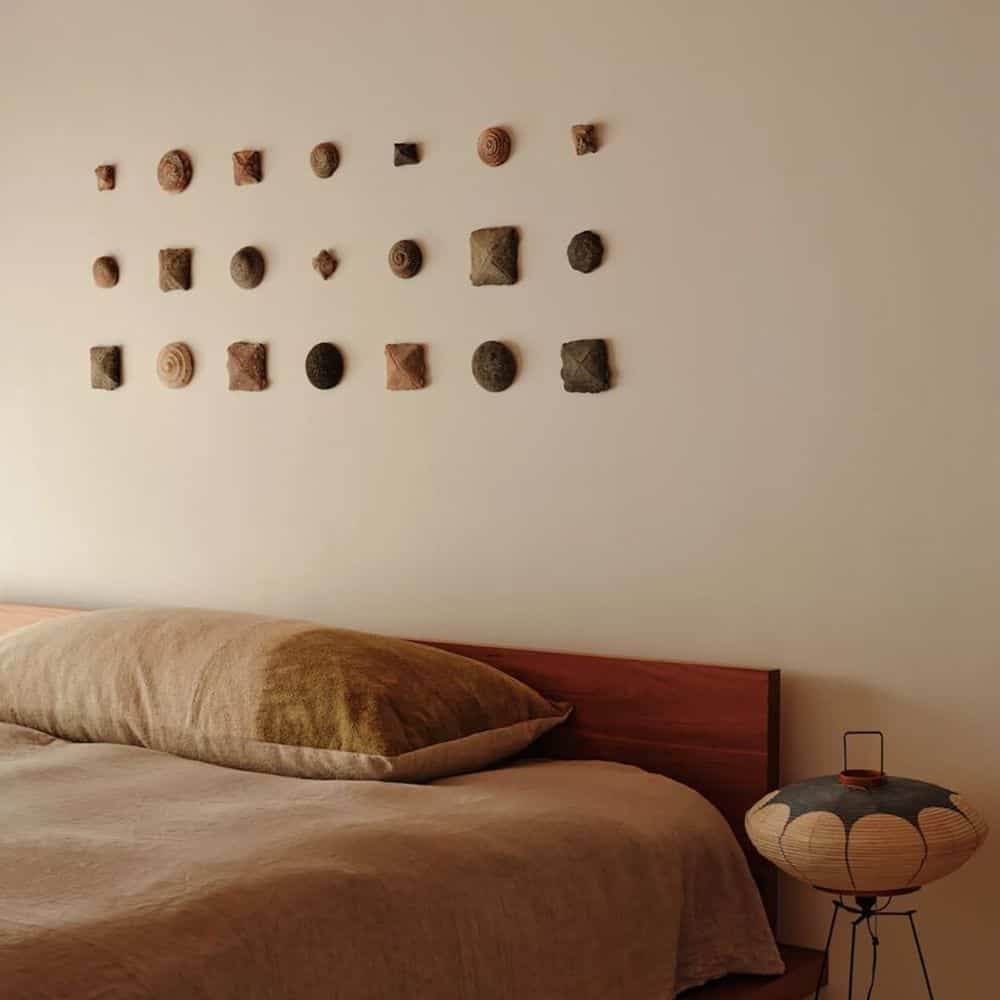
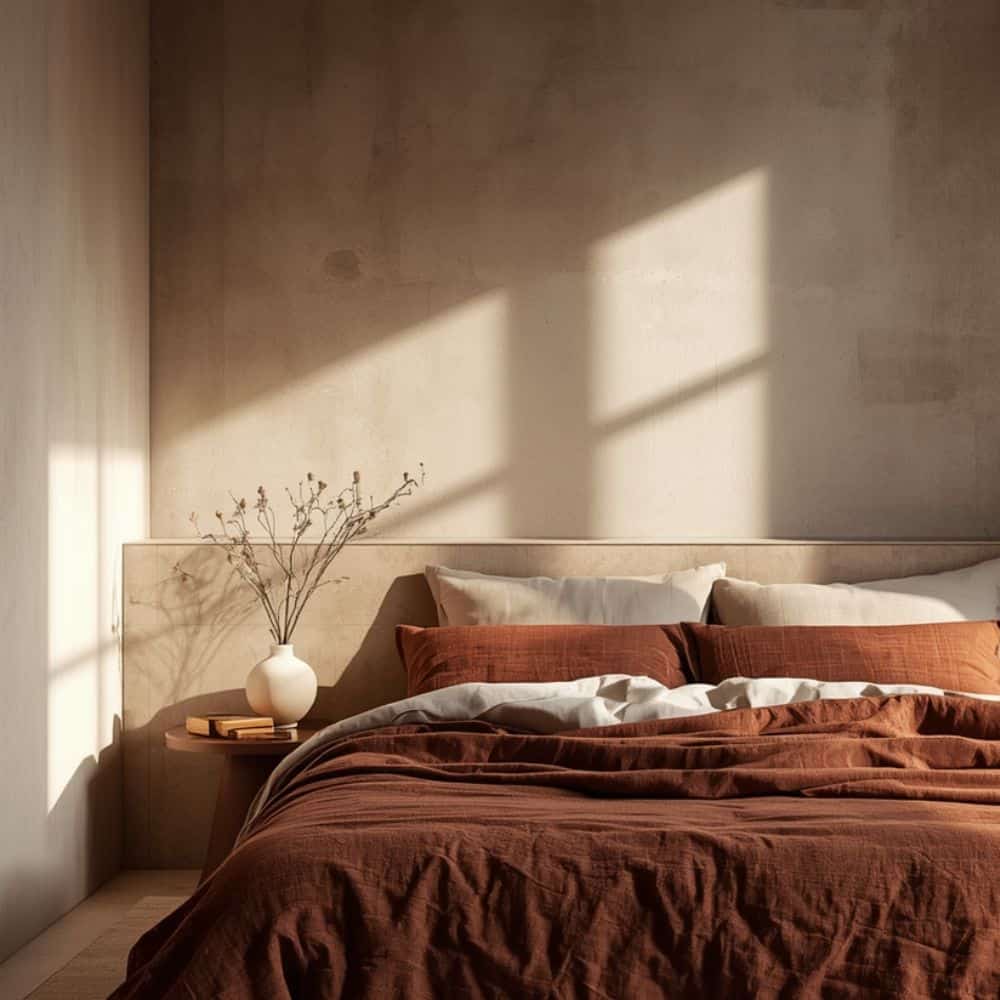
Earthy Bedroom Paint Colors: What to Choose and What to Avoid
Earthy paint colors are the category most affected by undertone shift under changing light conditions. A terracotta that reads beautifully in afternoon sun can read muddy and flat in a north-facing room in winter. Testing is not optional.
Terracotta — when it works and when it overpowers
Terracotta is the most searched earthy bedroom color — and the one with the highest failure rate in small rooms when applied to all four walls.
A full terracotta room requires a minimum ceiling height of around 2.7m and significant natural light to hold its warmth without feeling oppressive. In a room under 12 square meters with standard 2.4m ceilings, full terracotta walls often feel enclosed rather than warm.
The approach that works in small rooms: terracotta on the head-of-bed wall only, with pale plaster or warm off-white on the other three. For detailed paint selection guidance, the bedroom paint colors guide covers the full color sequence for small rooms.
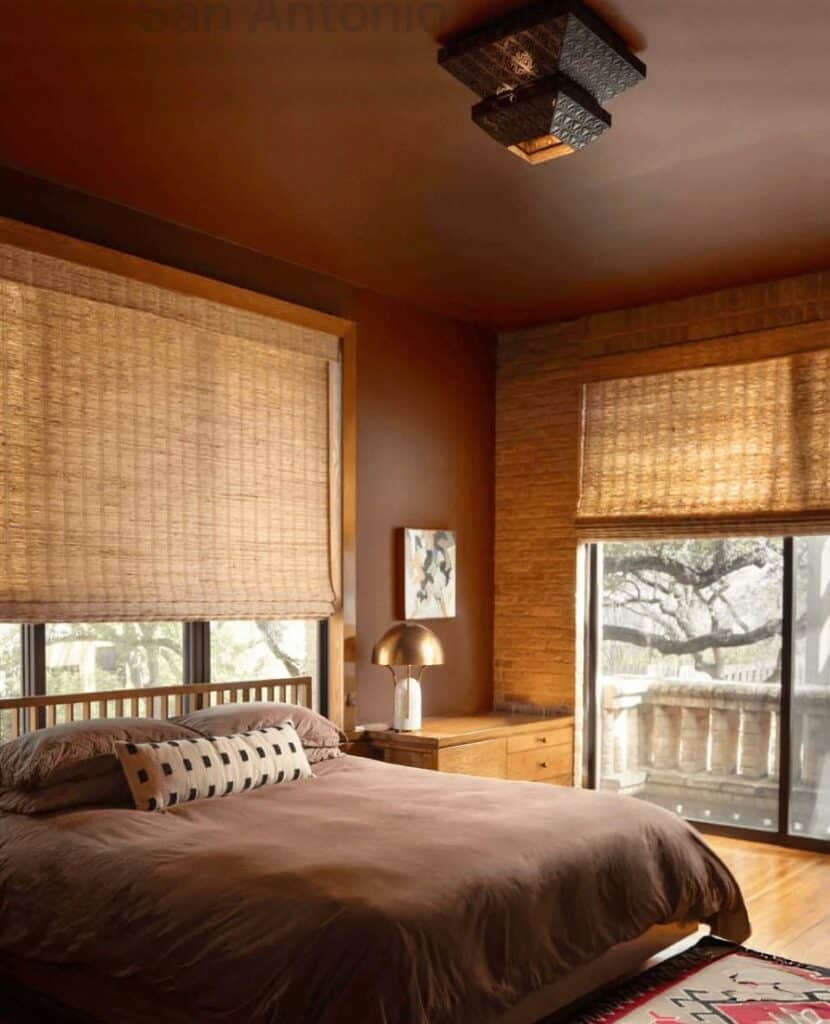
Clay, mushroom, and warm plaster tones — the versatile middle ground
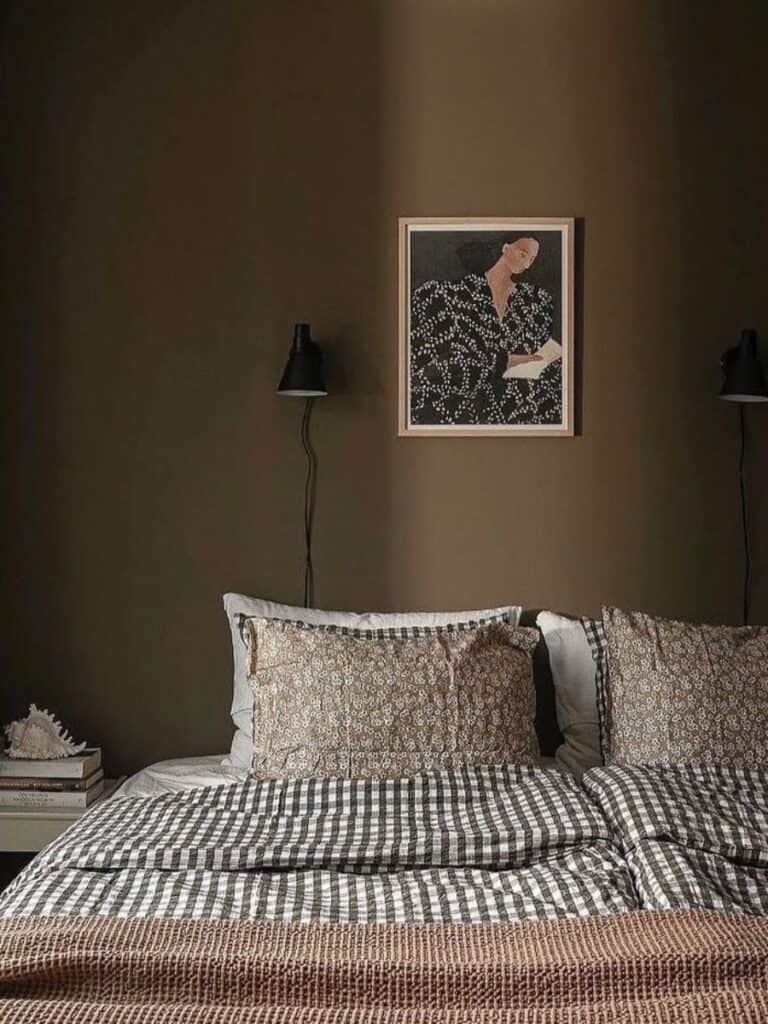
Clay, mushroom, warm greige, and aged plaster tones are the most forgiving earthy bedroom paint colors for small rooms.
They work across light conditions, read as neutral from a distance but warm and textured up close, and hold their quality when carried from wall to ceiling.
The key selection criterion: the paint must have a warm yellow or red undertone, not a cool gray base. Many paints marketed as clay or mushroom are, at base, gray neutrals with a slight warm cast — they read flat in most room light conditions.
Standard emulsion in an earthy color approximates the palette but not the surface behavior. Clay and limewash paints — including Bauwerk, Unearthed, and Clayworks — produce a softer, more absorbent surface that changes tone with the angle of light.
For how different wall finishes interact with undertone, the bedroom color combination guide covers undertone, tone, and finish as a connected system.
Natural Materials in an Earthy Bedroom
Natural materials are not the decoration added to an earthy bedroom — they are the palette itself. Paint sets the wall tone. Materials determine whether the room reads as earthy or as painted-to-look-earthy.
Clay plaster and how it changes light quality
I studied strawbale and adobe construction as part of my architectural training, and spent time inside rooms with clay plaster walls. Clay plaster does not just absorb light — it redistributes it.
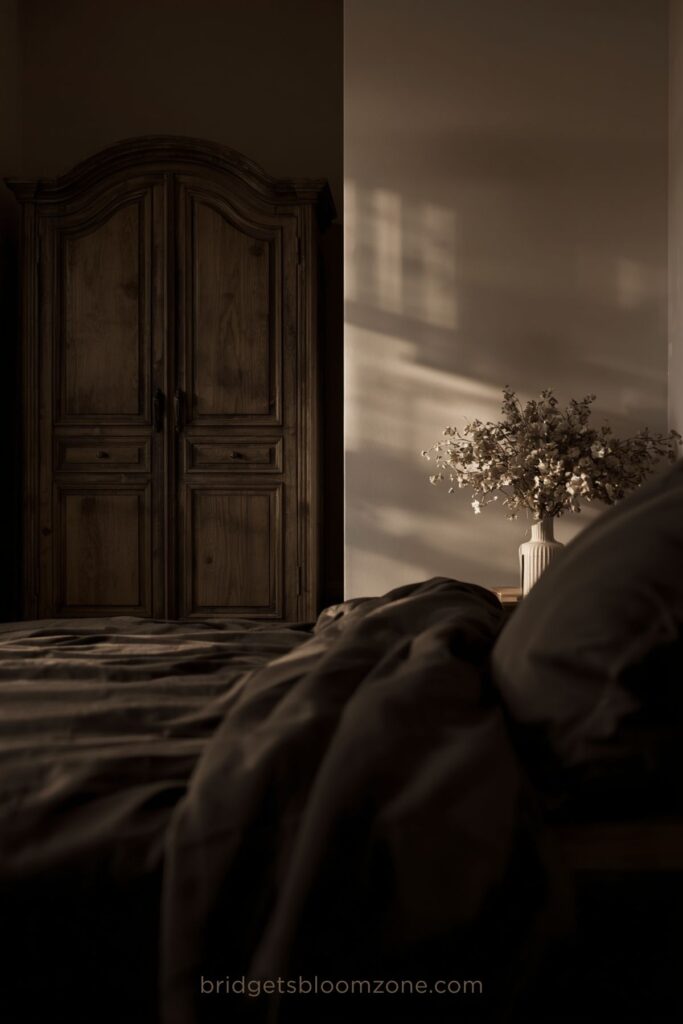
The wall surface in a clay-plastered room is never fully lit and never fully in shadow. Raking light from a window creates a gradient across the surface — lighter toward the window, darker in the corners — that changes as the day moves. The room feels alive at different times of day in a way that flat emulsion paint does not produce. (Source: The Nordroom — URL flagged below.)
For how light and texture work together as a design tool in small spaces, the small room design guide covers material and light as a connected system.
Linen, wool, and raw cotton — textiles in an earthy palette
Linen is the most important textile in an earthy bedroom. Its natural color — undyed — falls within the earthy palette without requiring any color decision at all. Washed linen has a softness and irregularity that reads as warmth from across the room.
Wool and raw cotton play secondary roles: wool for throws and cushions, raw cotton for lighter layers.
All three share the quality that defines earthy textiles — they absorb light rather than reflecting it.
Synthetic fabrics in earthy colors carry a slight sheen that works against the absorbing-surface quality of an earthy room — this is one of the harder details to notice in a shop and one of the more visible ones at home.
For how the bedroom rug fits into the earthy palette, the bedroom rug guide covers material, scale, and tone in detail.
The editing principle for textiles: one cover on the bed, one rug on the floor, one throw or cushion as accent. Adding a fourth textile layer almost always pushes the room from considered to busy.

The Cozy Bedroom Aesthetic and What It Actually Requires
A cozy bedroom aesthetic is not a quantity of soft objects. It is a specific quality of light, combined with surfaces that absorb and redirect it.
Many bedrooms with throws, cushions, and plants still do not feel cozy — because the lighting is wrong. Cold white LEDs at ceiling height flatten every texture and neutralize the warmth of any earthy palette.
Lighting temperature in an earthy room
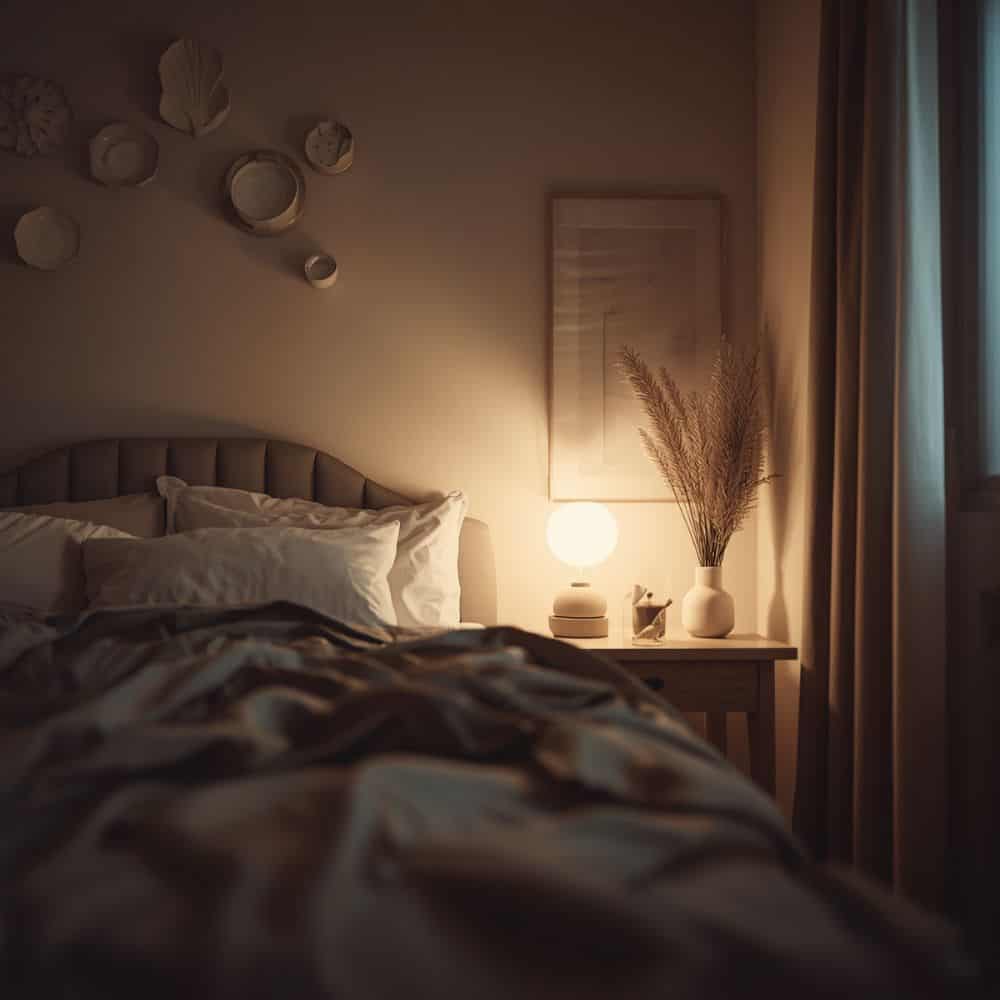
The lighting specification for an earthy bedroom is simple and firm: warm white bulbs only, at 2700K or below. At 3000K and above, even the warmest clay plaster wall reads as a cool neutral.
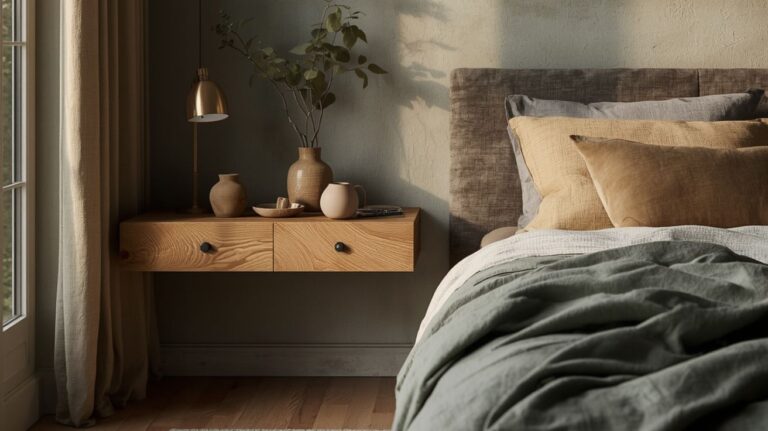
Position matters as much as temperature. A warm-white ceiling pendant flattens the room. The same wattage in a bedside lamp at surface level casts warm directional light upward across the wall — which activates the texture of any non-reflective finish.
Architectural Digest’s guidance on bedroom lighting specifies warm-white ambient and task lighting below 3000K as the standard for rooms where textural materials are in use.
Building a Warm Bedroom Aesthetic in a Rented Room
An earthy bedroom in a rented room — where painting is not permitted — depends on what you can bring in rather than what you can apply to the walls.
Starting with textiles and objects when you cannot paint
In a white-walled rented bedroom, the earthy palette is built from the floor up: rug first, bedding second, objects third.
A natural jute or wool rug in a warm earthy tone changes the register of a white-walled room significantly — the floor anchors the room’s palette more than any vertical surface does.
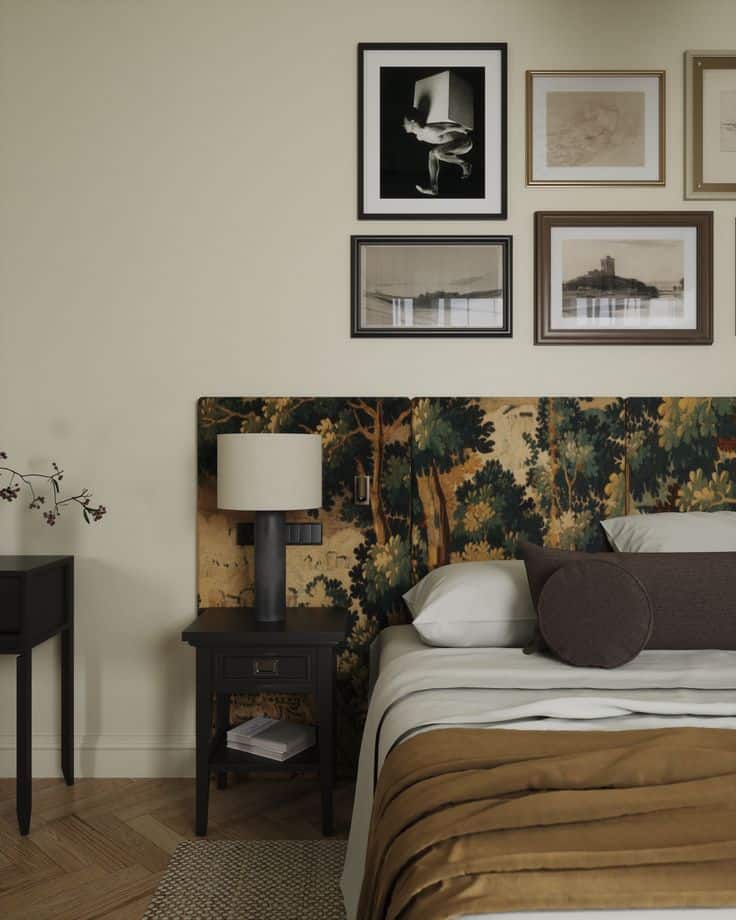
A large linen headboard panel or wall hanging pulls the eye to the head-of-bed wall and reduces the visual impact of white walls behind it.
Linen curtains in a warm natural tone add an earthy surface to the window wall while diffusing incoming light — the light condition that makes earthy surfaces look best.
For the complete approach to changing a bedroom’s color without paint, the bedroom color combination guide covers how textiles and objects carry the palette in a rented space. For curtain decisions specifically, the bedroom curtain ideas guide covers the earthy and natural textile options in detail.
Final Thoughts
An earthy bedroom is built from materials first and color second. The palette follows from surfaces that absorb and hold light — clay plaster, raw linen, unglazed ceramic, unfinished wood — not from paints chosen to approximate those materials on a smooth reflective wall.
Start with one material you can commit to: a rug on the floor, a linen duvet cover, clay plaster on one wall. See how the room responds. Add the next layer only after the first one has settled into the room and the light.
For the paint selection in detail, my post about bedroom color combination covers the complete selection sequence. For how earthy tones work in an adjacent small room, the grout color guide shows the same palette logic applied to tile and bathroom surfaces.
If you want to read more about colors:

Frequently Asked Questions About the Earthy Bedroom
What is an earthy bedroom aesthetic?
An earthy bedroom aesthetic uses natural, non-reflective materials — clay plaster, raw linen, unglazed ceramic, unfinished wood — in warm, muted tones. The defining quality is how surfaces absorb light rather than reflect it, producing a room that changes character through the day and feels genuinely warm rather than styled to look warm.
What colors make an earthy bedroom?
The earthy palette draws from terracotta, clay, warm mushroom, dusty olive, raw umber, and warm off-white — all with a warm yellow or red undertone rather than a cool gray base. The most reliable approach in a small room is a warm mid-tone on all walls and ceiling, with deeper earthy tones introduced through textiles and objects.
What is the difference between a warm earthy bedroom and a boho earthy bedroom?
A warm earthy bedroom tends toward restraint — fewer objects, quieter textures, more negative space. A boho earthy bedroom layers more generously: mixed textiles, woven wall objects, plants, baskets. Both use the same material references. The difference is in density and how much visual activity the room maintains.
How do I make an earthy bedroom without painting?
Start with the floor: a jute or wool rug in a warm earthy tone anchors the palette without touching the walls. Add undyed linen bedding. Hang a linen panel behind the bed. Each step pulls the room toward the earthy register without a brush.
Are clay paints worth it for an earthy bedroom?
Yes, if the earthy quality of the surface matters to you. Clay and limewash paints produce a surface that absorbs and redirects light — which is the visual quality that makes an earthy room feel genuinely warm rather than painted-to-look-warm. Standard emulsion in an earthy color approximates the palette but not the surface behavior.
What lighting works best in an earthy bedroom?
Warm white at 2700K or below, positioned at surface level rather than overhead. A warm-white bedside lamp at low height activates the texture of clay plaster and linen in a way that overhead lighting does not. Cold white light at any temperature neutralizes the warmth of earthy materials regardless of their color.
Pin it for later!