Place Setting: How to Lay a Table Properly (Formal, Casual, and Christmas)
This post contains affiliate links. If you buy through them, I may earn a small commission — at no extra cost to you. I only recommend products I’d genuinely specify as an architect.
A place setting is one of those things everyone has seen a hundred times and still hesitates over. Here is the short version, with diagrams and measurements further down.
- Work from the outside in. The outermost piece belongs to the first course.
- Forks go on the left, knives and spoons on the right, with the knife blade facing the plate.
- Bread plate top left, glasses top right, with the water glass above the knife.
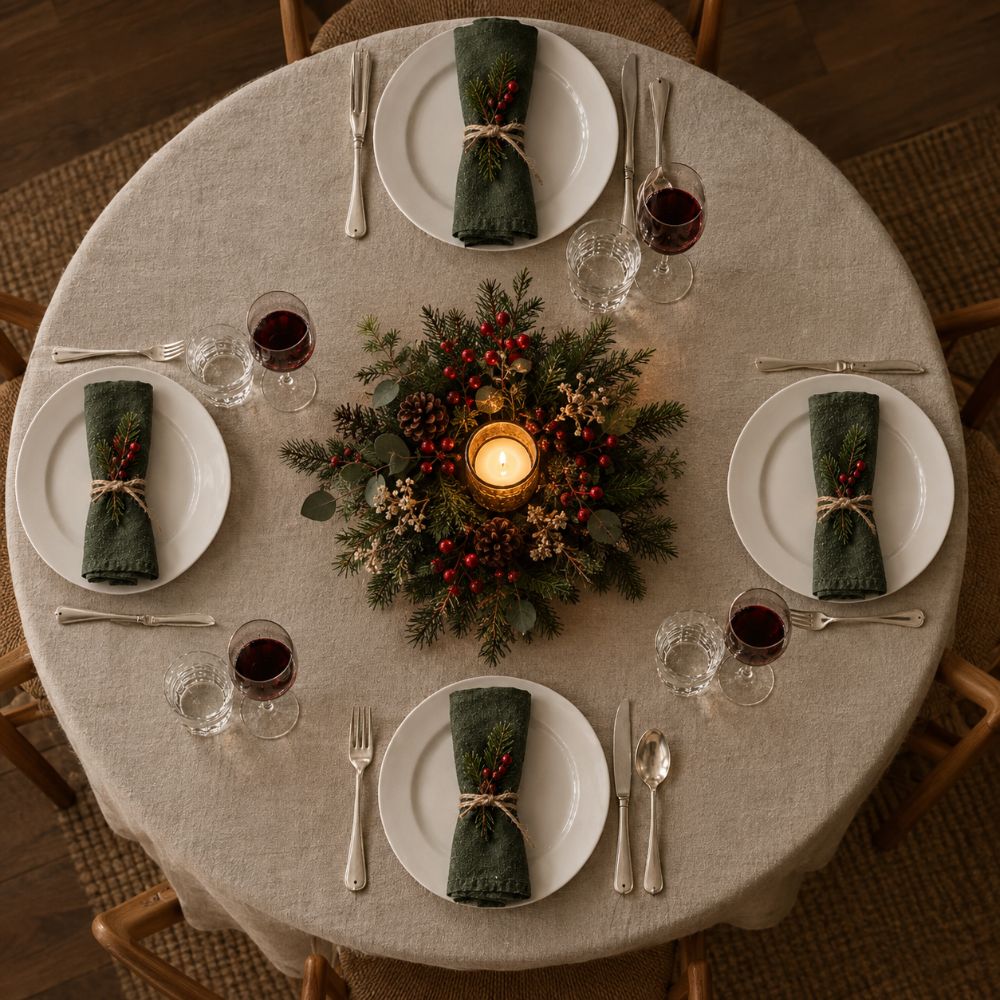
- Allow 24 inches (60 cm) per person at a casual table and about 30 inches (76 cm) at a formal one. The table further down compares all three settings.
- Own enough settings for your table plus two, and build them up slowly if you need to.
The post ends with how to put together tableware for a small home that grows with you.
How to Lay a Casual Place Setting
The Basic Layout
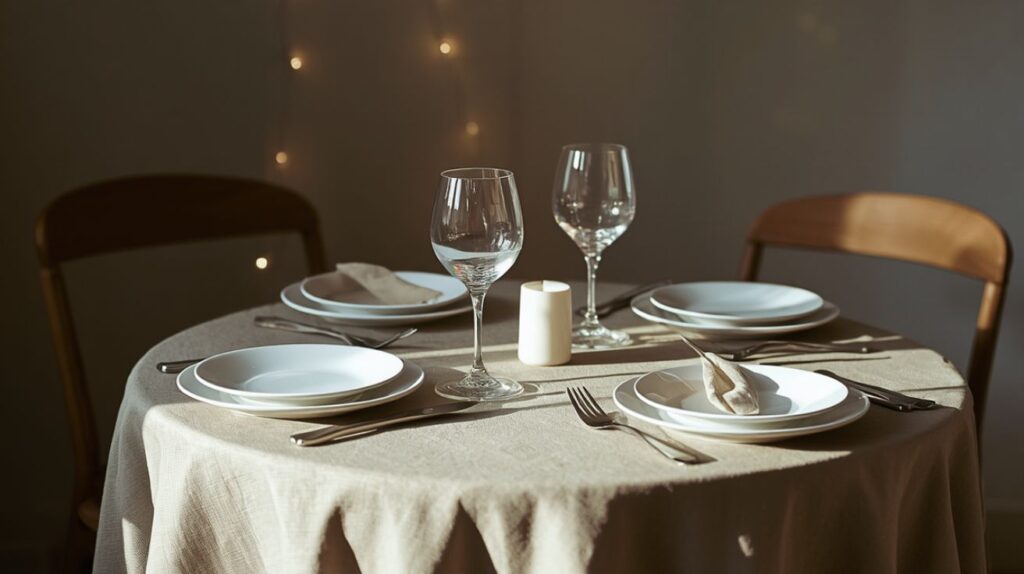
This is the version for weeknight dinners and most meals with friends.
- Plate in the center, about an inch (2.5 cm) from the table edge.
- Fork on the left of the plate.
- Knife on the right, with the blade facing the plate.
- Spoon to the right of the knife, if the menu needs one.
- Glass above the tip of the knife.
- Napkin on the plate or to the left of the fork.
Why the Knife Blade Faces the Plate
The blade faces inward so the cutting edge points away from the person beside you. It is an old courtesy that also keeps the knife tidy against the plate rim.
Line the bottoms of the fork and knife up with the lower edge of the plate. That single alignment makes a simple table look deliberate.
What to Leave Off a Casual Table
Fewer pieces suit a small table. Guides to seating capacity suggest smaller plates, fewer utensils and a separate drinks spot when you need to fit more people.
How to Lay a Formal Place Setting
Forks, Knives and Spoons in Course Order
A formal table repeats the casual logic, only with more courses. Each extra course adds a piece on the outside.
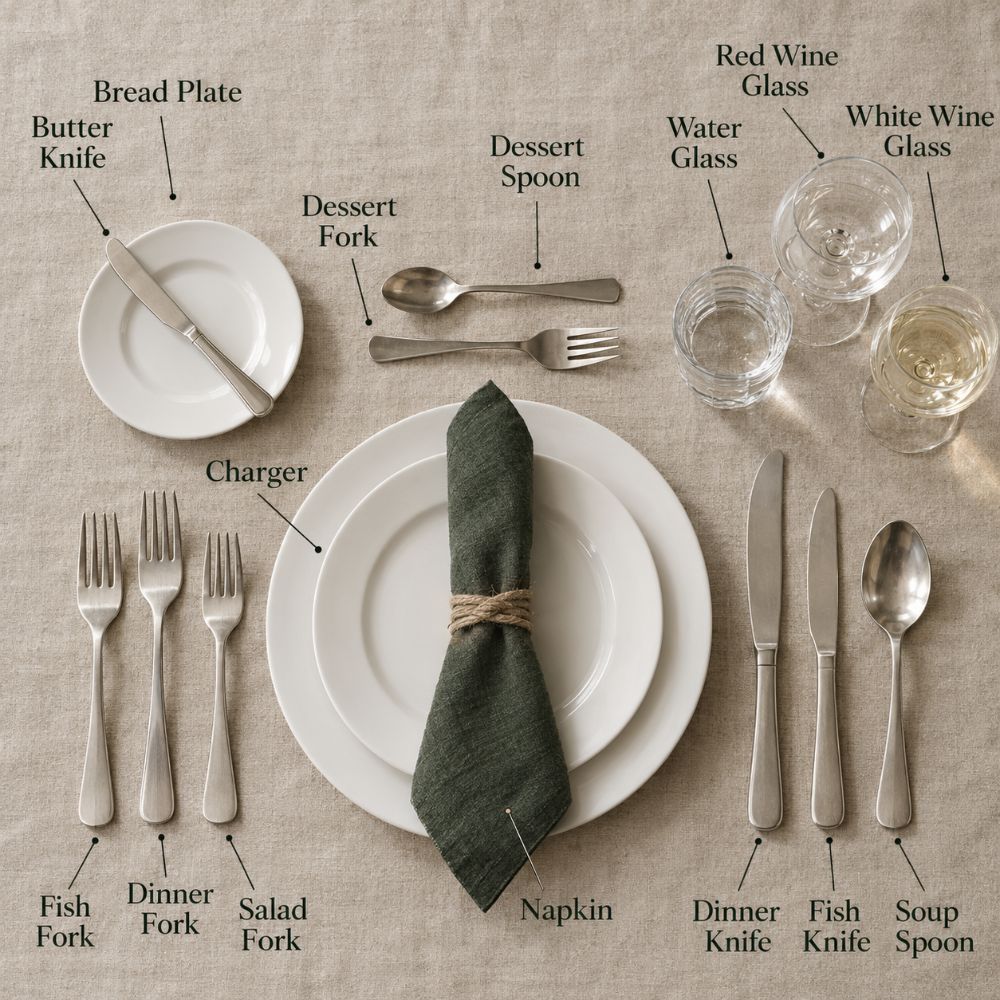
- Starter or fish fork on the outer left, dinner fork next to the plate.
- Soup spoon on the outer right, then the starter knife, then the dinner knife beside the plate.
- Salad fork outside the dinner fork if salad comes first, as in most American dinners.
- Salad fork inside the dinner fork if salad follows the main course, as in many European homes.
Bread Plate, Glasses and Dessert Pieces
The small items sit above the plate, out of the way of the hands. Remember bread left, drinks right, and most of it falls into place.
- The bread plate sits above the forks, with a butter knife laid across it.
- The water glass sits above the dinner knife, with wine glasses beside it in the order you pour.
- The dessert spoon and fork lie horizontally above the plate, spoon handle to the right and fork handle to the left.
How to Scale a Formal Table Down at Home
Formal etiquette usually limits the table to three pieces on each side. Anything more arrives with its course.
At home, two forks, two knives and a spoon cover even an elegant dinner. Fewer pieces also mean less washing by hand afterward.
A formal table also takes more width per guest. On a small table, that often means seating four formally where six would fit casually.
Note: Coffee cups and dessert plates are brought to the table later, so they never need space at the start.
Laying the Table for Christmas
Start Formal, Then Edit
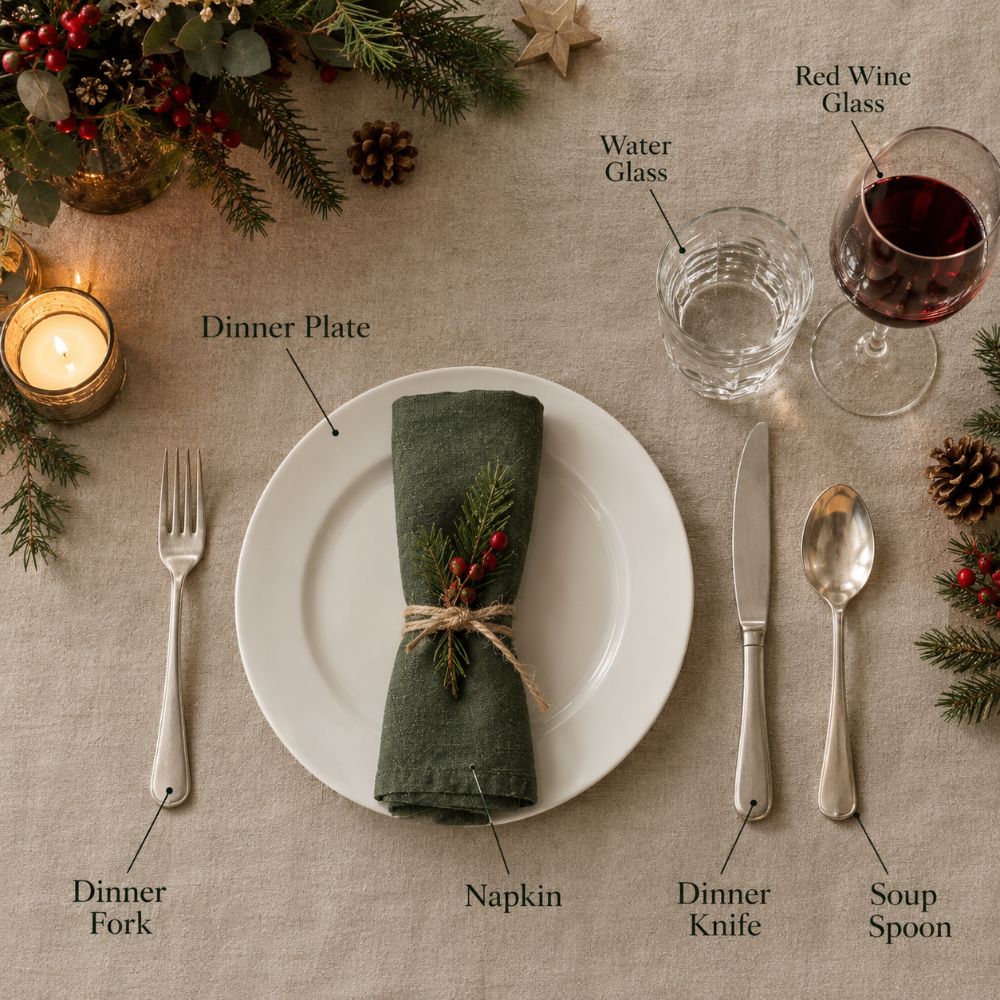
A Christmas table borrows its structure from the formal version. Then it drops whatever the menu does not need.
If there is no soup, there is no soup spoon. If dessert comes later on its own plate, bring the dessert pieces with it and keep the table lighter.
Where the Festive Detail Goes on a Christmas Place Setting
The festive detail should sit where it does not block the hands. A napkin folded into a tree on the plate, a pine sprig across the napkin or a name card above the dessert pieces all work.
Lift the sprig and the folded napkin away when the first course arrives. The detail has done its job once the guest sits down.
A napkin tree takes about a minute once you have folded two or three. Start with a large square napkin, fold it into quarters, turn the open layers up one by one, and then flip and fold the sides in to form the tree shape.
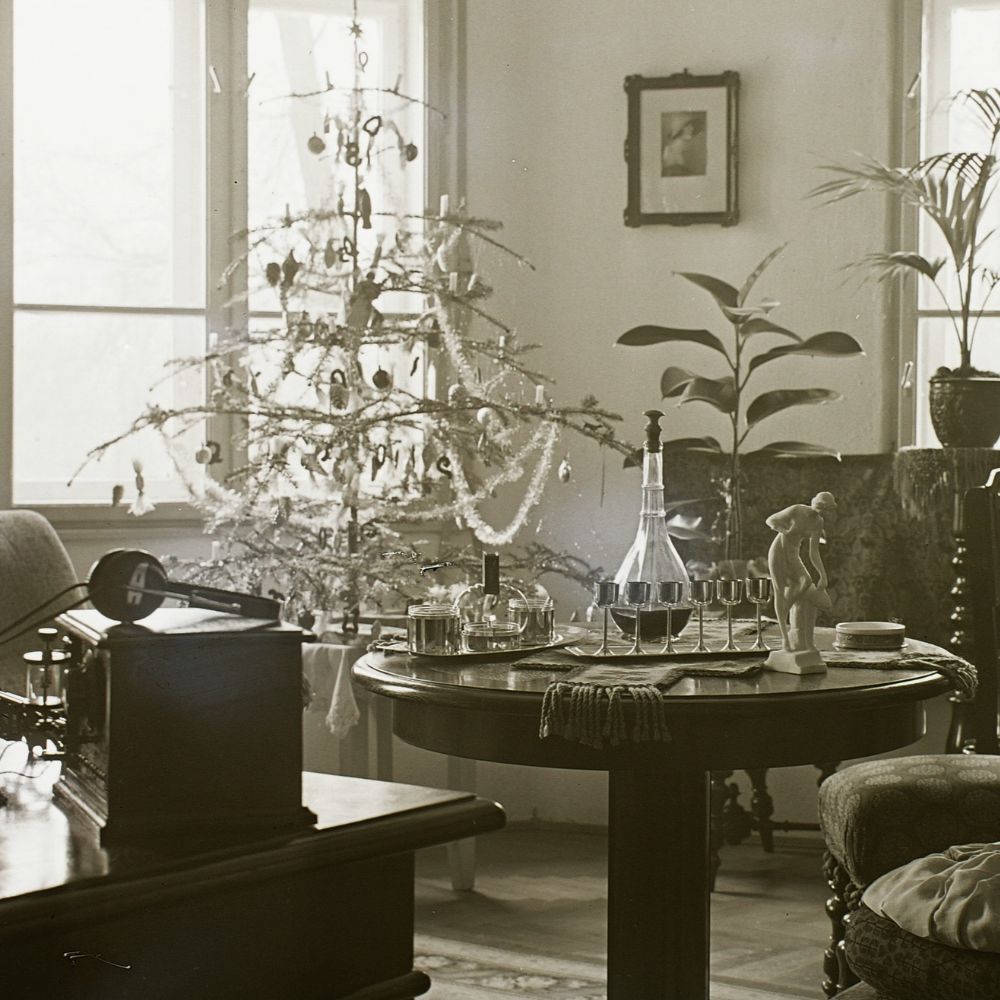
Linen holds the fold best when it is lightly starched or freshly ironed. Candlelight then does the rest, since it flatters old silver far more than a ceiling light, as my guide to ambient lighting in a small living room explains.
Chargers: Yes or No?
A charger is a large plate that sits under the dinner plate as a frame. It looks festive, but it widens each place by several inches.
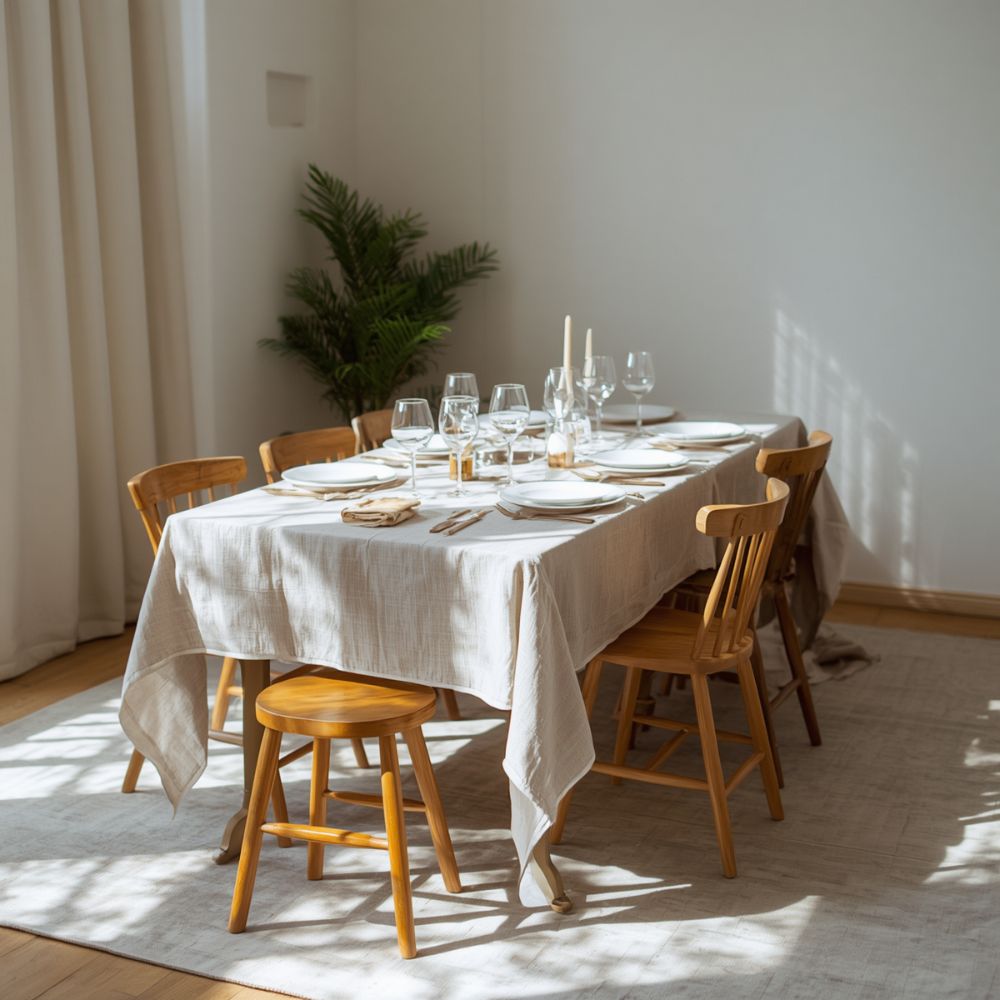
On a small table, I leave chargers out. A natural linen tablecloth frames every plate well enough, and the table keeps its breathing room.
How Much Space Does a Place Setting Need?
On a small table, casual spacing is the realistic choice, and formal spacing only works for fewer guests than the table normally seats.
| Setting | Width per person | Pieces | Choose when |
|---|---|---|---|
| Casual | 24 in (60 cm) | 4 to 6 | Everyday meals or a full table of guests |
| Family-style | 24 to 27 in (60 to 70 cm) | 6 to 8 | You pass shared dishes around the table |
| Formal | 30 to 33 in (76 to 84 cm) | 8 to 12 | A plated, multi-course dinner for fewer people |
The formal and family numbers come from this furniture maker’s seating guide. A few inches per person add up quickly once the table is full.
Depth Matters as Much as Width
Each place also needs about 14 inches (35 cm) of depth for the plate, the glass and a little breathing room. On a narrow table, that depth decides how much space is left in the middle.
I explain how to measure that leftover strip in my guide to a Christmas table setup. The same test works for any dinner party.
Clearance Behind the Chairs
A table is only part of the plan. Leave about 36 inches (90 cm) behind each chair, and more where people walk past, as the small living room layout rules explain.
If your table shares a room with the sofa, my guide to a small living room with a dining area shows how to keep both zones usable.
Why a Place Setting Looks the Way It Does (A Short History)
When Every Food Had Its Own Fork
For most of history, people ate with a knife, a spoon and their fingers. Forks only became cheap and common during the 1700s, when production got easier and dining fashions spread from the upper classes downward.
By the Victorian era, there was a fork for nearly everything. Sardines had one, and so did asparagus.
You still find these specialized pieces at flea markets today. Oyster forks, fish knives and tiny bonbon spoons turn up in mixed boxes for very little money.
Why Victorians Laid So Many Pieces at Once
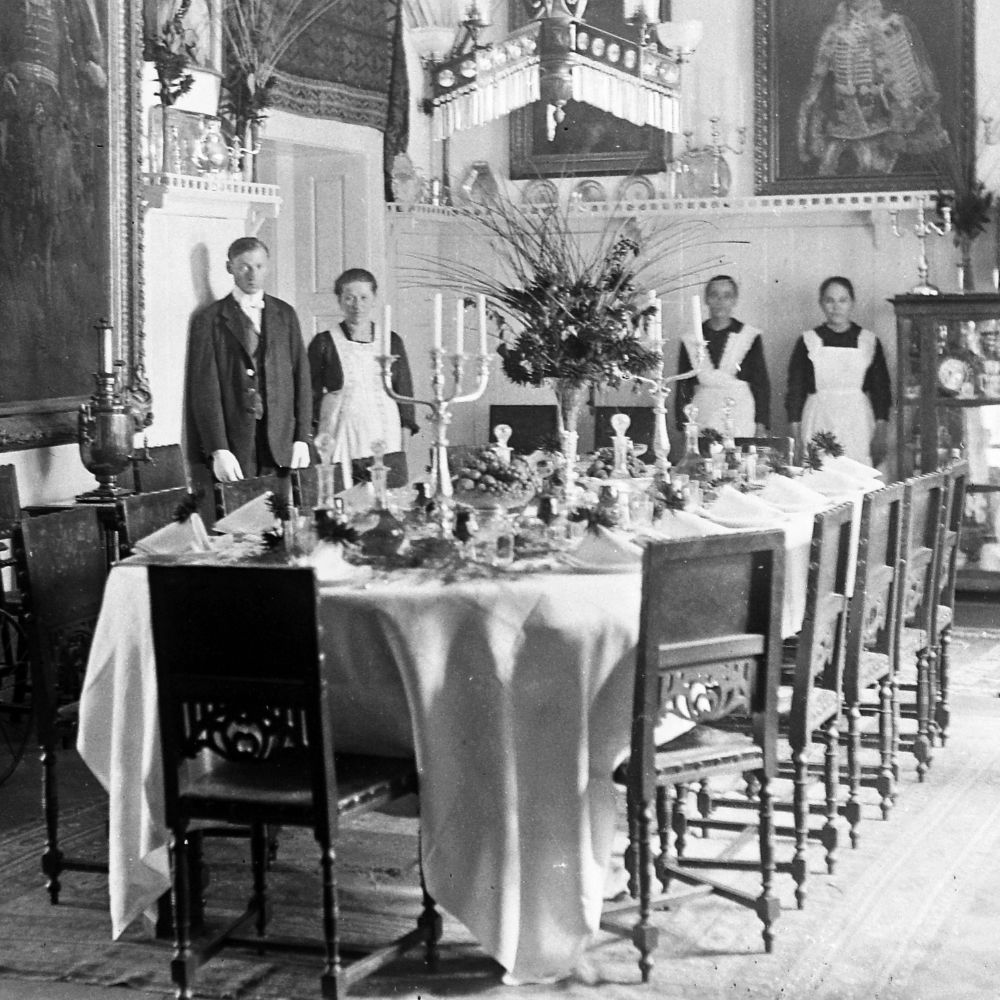
The real driver was a new way of serving dinner. Under service à la russe, courses arrived one after another, and each course came with its own tools.
An 1879 etiquette guide expected a lot from each diner’s place. It listed two large knives, a fish knife and fork, a soup spoon, three large forks and separate dessert pieces, according to the COVE collection.
Some pieces never waited on the table. At Victorian dinners, the dessert spoon arrived only with dessert, and a name card and rolled napkin sat at each place.
The Logic Behind Every Place Setting: Outside In
Our modern tables kept one useful rule from that era. Work from the outside in, because the outermost piece belongs to the first course.
The same change freed the center of the table for flowers. I cover that side of the story in my Christmas table setup guide.
Building a Collected Set of Tableware for a Small Home
Full Sets, Collected Sets and Good Porcelain
I have nothing against full sets of tableware. My dream is an antique dinner service from a porcelain maker, which is still out of reach, because fine porcelain like that is expensive.
I believe objects are there to serve us. A tight budget is no reason to give up quality, and a modest home still deserves porcelain at dinner.
Over time, a full set can be collected a few pieces each year. Even one upgrade lifts a festive table, like serving only the dessert on porcelain while the other plates stay simple ceramic.
Furniture is a different story. Matching furniture families bring a catalog feeling into a room, and none of the four real mid century rooms I studied for the home office series was bought as a set.
A dining table works differently. Glasses, flatware, linen and candles already bring plenty of variety, so identical plates never look dull.
What Holds a Set Together
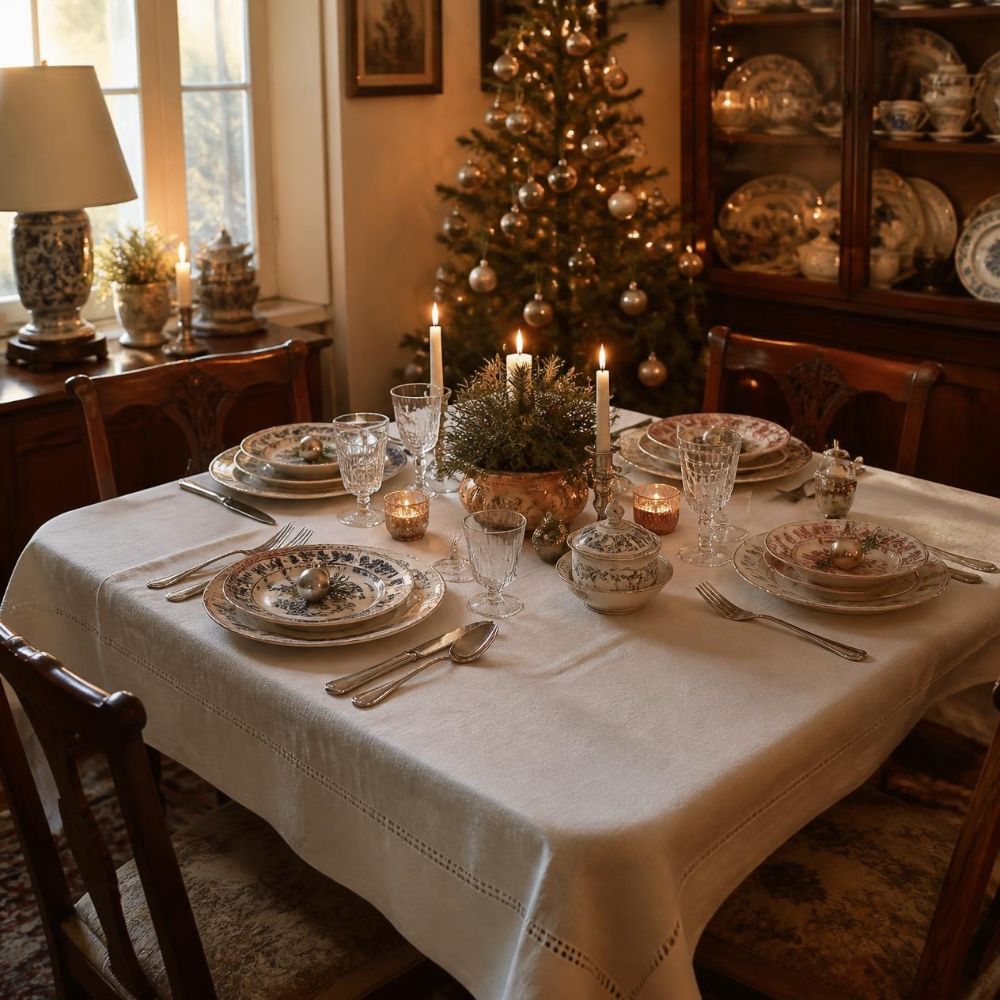
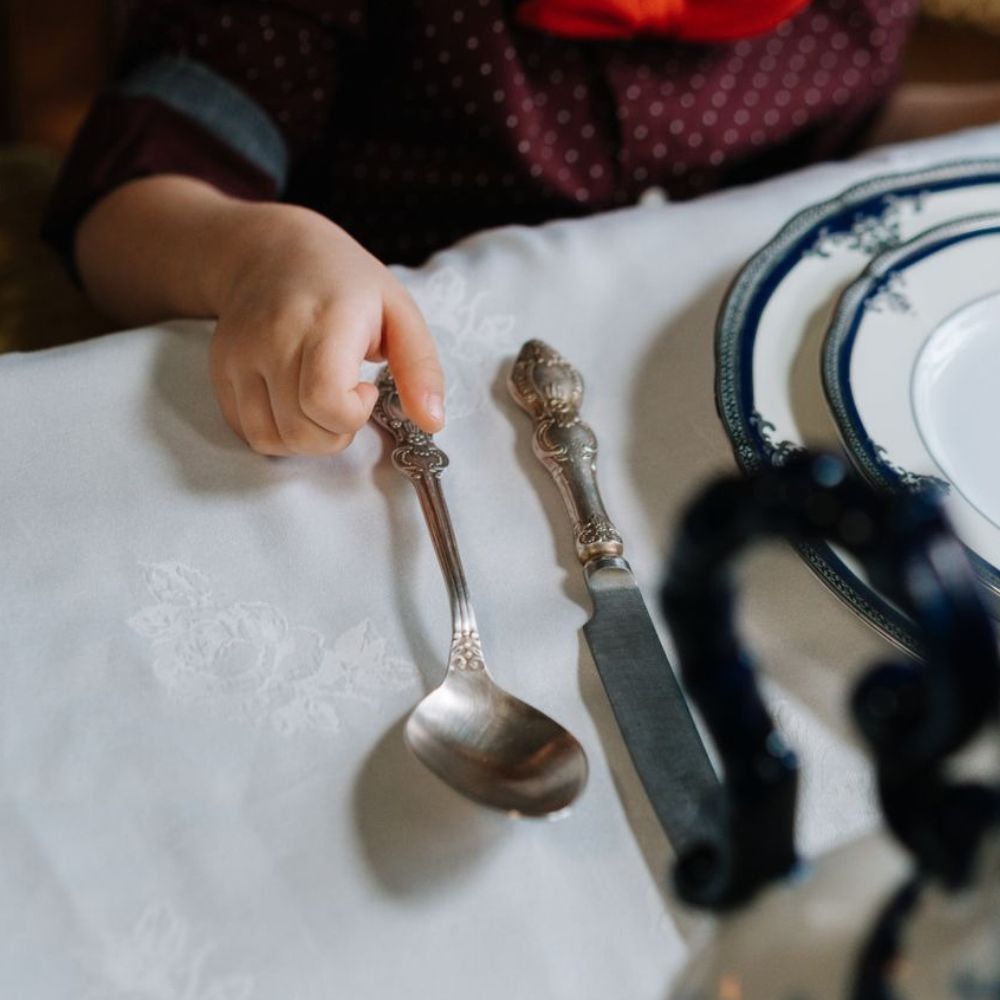
Silver flatware gathered slowly from flea markets reads as one set, even when no two patterns match. The shared material does the work.
Our own set grew exactly this way. I pick up forks and spoons of a similar style and size whenever I find them, and it is still not complete, which means it can take in anything I love next.
Plates work the same way. A full set from one maker and a slowly gathered mix of white plates can both look calm, as long as one thing stays constant.
Choose one constant, and let the rest vary freely. Natural materials make this easier, because linen, wood, silver and ceramic age well together, much like the palette in my earthy bedroom guide.
- One metal for all the flatware, such as silver or brass
- One base color for the plates, such as white or cream
- One textile for the napkins, such as natural linen
The same thinking applies to a whole room, as I describe in luxury living room ideas for small apartments. Quality comes from how things are chosen and combined.
How Many Pieces to Own in a Small Apartment
Own enough settings for your table’s real capacity plus two. For a table of four, six settings cover a dinner with guests and the occasional broken glass.
For each person, a practical set includes:
- A dinner plate, a side plate and a bowl
- A dinner fork, a small fork, a dinner knife, a spoon and a teaspoon
- A water glass and a wine glass
- A linen napkin
Anything beyond that list should earn its storage space. My principle of owning less as a storage strategy applies to cabinets just as much as to shelves.
Where to Find Pieces on a Budget
Flea markets and thrift stores are the best places for plated silver and single vintage plates. Buy in fours or sixes when you can, and single pieces when you love them.
Plated flatware is made to be used, but it prefers hand washing. A silver collector warns that dishwashers wear the thin plating and can damage filled knife handles.
New pieces make sense for glasses and everyday plates. Choose simple shapes, so the vintage pieces stay the ones people notice.
Tip: Carry a small magnet to the flea market, since silver is not magnetic and a strong pull usually means steel.
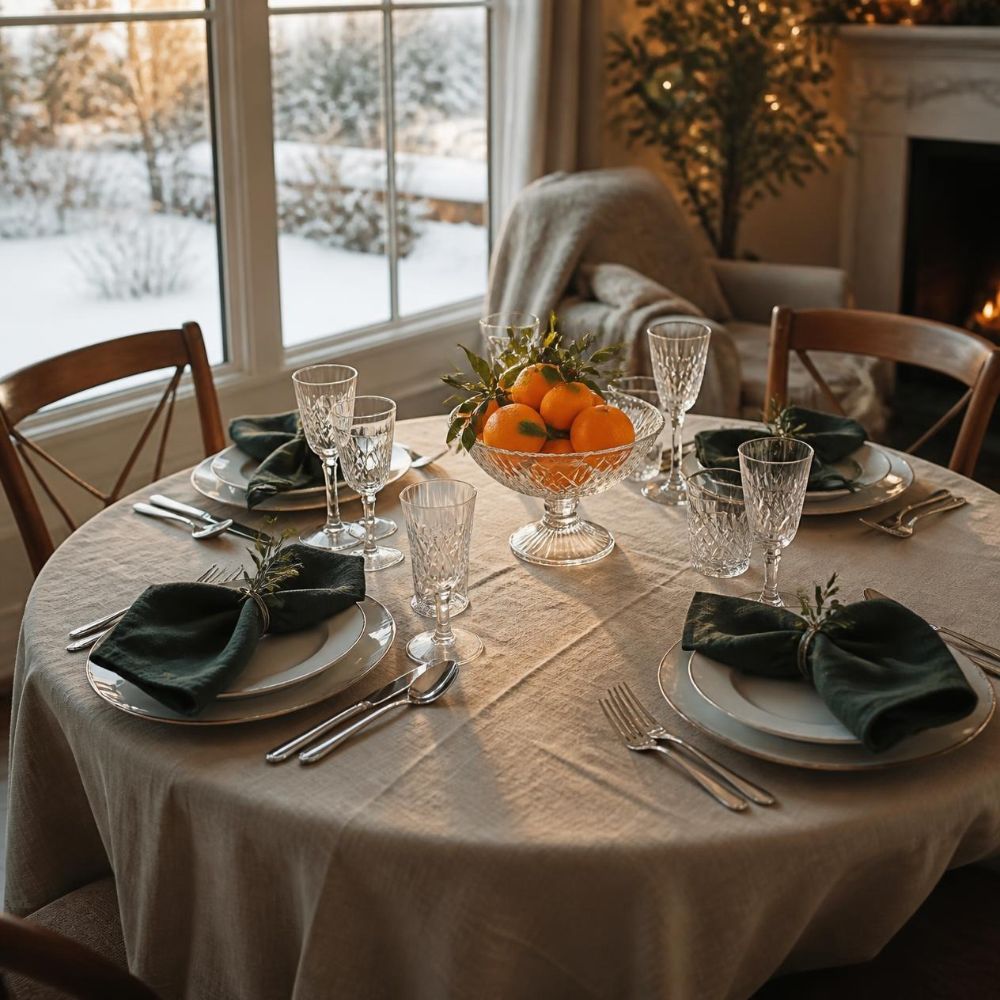
If you are buying new pieces this year, these are the ones I would start with.
- A natural linen tablecloth (paid link) in oatmeal or white, with about 8 to 12 inches (20 to 30 cm) of drop on each side.
- Maybe add a natural linen table runner (paid link) in a matching color.
- Linen napkins (paid link) in the same shade as the cloth.
- Unscented taper candles (paid link) in simple brass holders, since scented candles compete with the food.
- A footed glass bowl (paid link) for the clove-studded oranges, if the flea market has none.
Storing Tableware in a Small Kitchen
A collected set needs one home. One drawer or shelf for linen, flatware and the good plates keeps it from spreading through the kitchen.
Wrap silver in an anti-tarnish cloth or roll between uses. Store napkins and tablecloths loosely rolled, which avoids hard creases.
If cabinet space is tight, my small kitchen ideas cover where occasional items can live. The same rules of scale from my guide to furniture for small spaces help when you choose a sideboard or cabinet.
Keep weekly pieces within reach and Christmas pieces higher up, the same friction rule I use in my bedroom storage ideas.
Final Thoughts
Every place setting follows the order of the meal, from the outside in. Once you know that, casual, formal and Christmas tables are variations of one idea.
On a small table, fewer pieces and casual spacing give guests more room. Whether your plates arrive as a full set or one by one, real materials and one constant give the table its character.
Next, see how the whole table comes together in my Christmas table setup guide. For the room around it, the open plan kitchen living room guide is a good place to start.
Frequently Asked Questions About Place Setting
What is the correct order of cutlery?
Work from the outside in, in the order the courses arrive. The first course uses the outermost fork, knife or spoon.
Which side does the bread plate go on?
It goes on the left, above the forks. Glasses go on the right, above the knives.
Where does the napkin go?
Place it on the plate or to the left of the forks. At a formal dinner, it can also sit on the charger before the first course.
Where do the dessert spoon and fork go?
They lie horizontally above the plate. The spoon handle points right and the fork handle points left.
How many glasses should each guest have?
A water glass and one wine glass are enough for most home dinners. Add a second wine glass only if you serve two wines.
Do you need chargers?
No, chargers are optional. On a small table, a tablecloth frames each plate and saves several inches per person.
How much table space does each guest need?
Plan for 24 inches (60 cm) of width per person for casual meals. Formal dinners need about 30 inches (76 cm).
How many sets of tableware should you own?
Own enough for your table’s real capacity plus two. For a table of four, six settings are usually enough.