Christmas Table Setup: How to Make a Small Table Feel Like an Occasion
This post contains affiliate links. If you buy through them, I may earn a small commission — at no extra cost to you. I only recommend products I’d genuinely specify as an architect.
A Christmas table setup has one job, which is to make the meal feel like an occasion. On a small table, that comes down to a few clear decisions.
Here is the short version, you will find all the details, measurements and the reasons further down in the post.
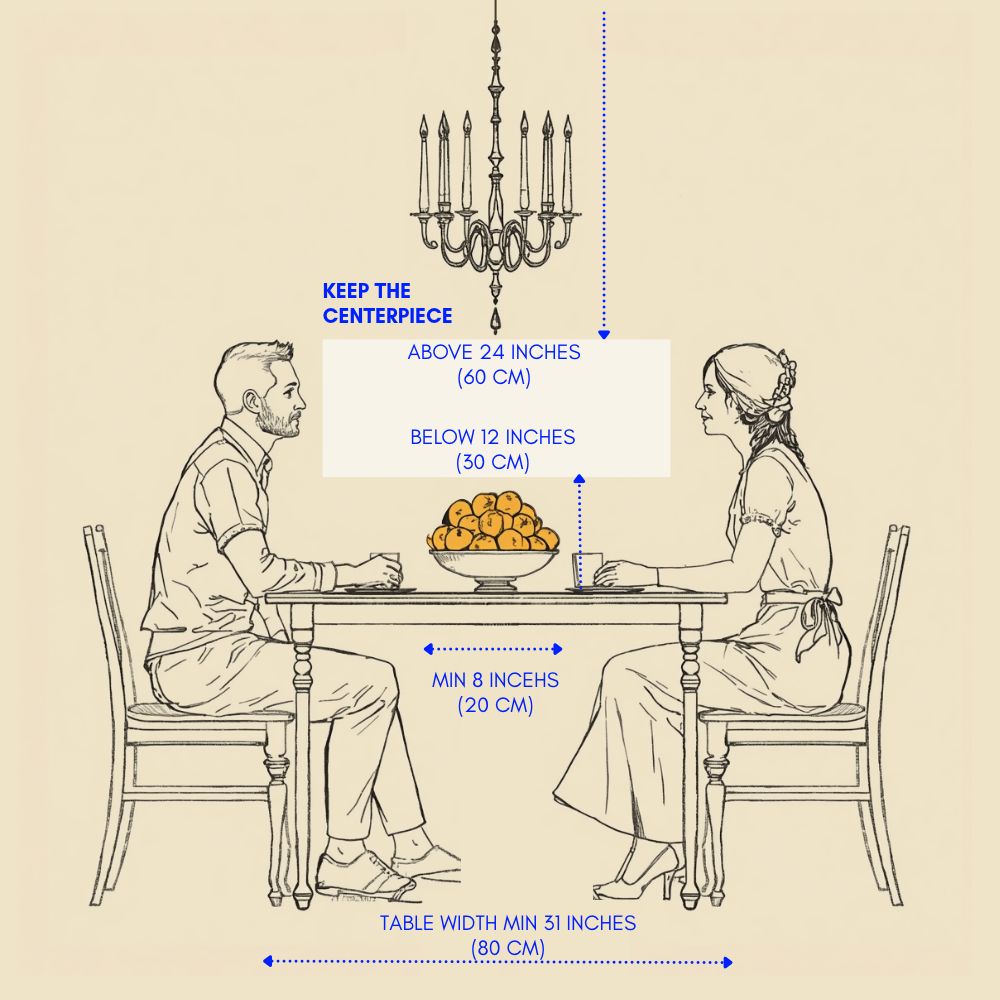
- Keep the centerpiece under 12 inches (30 cm) or above 24 inches (60 cm), so everyone can see each other across the table.
- Measure your table width and subtract 28 inches (70 cm). The rest is all the space you have for decoration and food, and the table below shows what fits at five common widths.
- Lay a linen tablecloth, even if you normally eat without one.
- Repeat one element along the table, or give each place its own small detail.
- For eight guests at a table for four, add a folding table under one long cloth and turn the kitchen counter into a buffet.
I have always loved Christmas, and I love the preparation even more than the day itself. Every year I make my own Advent wreath, because small, handmade details are where the festive feeling really comes from.
A dinner table works the same way. What makes it feel festive is a handful of details that someone clearly chose for the people sitting there.
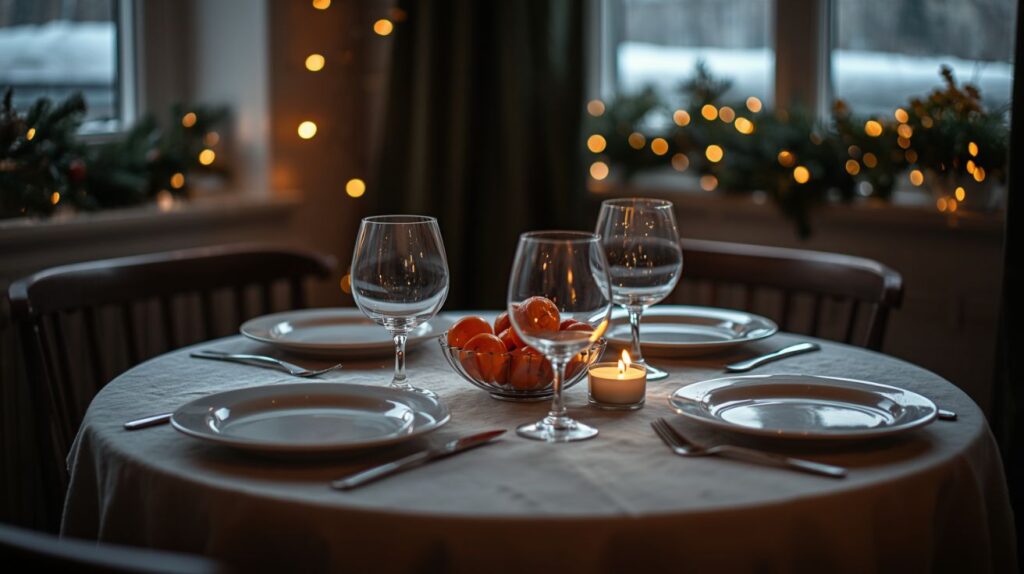
The Sightline Rule for a Christmas Table Setup
Why the 12 to 24 Inch Zone Does Not Work
Florists and event stylists share one height rule. A centerpiece stays under about 12 inches (30 cm) or rises above about 24 inches (60 cm), and nothing should sit in between.
That middle band is exactly where a seated face is. A vase at 16 inches (40 cm) is too tall to look over and too short to look under.
Test it by sitting down. If you have to lean to see the person opposite, the piece is in the dead zone.
Low and Long Works Better Than Tall on a Small Table
Tall arrangements need a heavy, narrow base and a wide table to feel safe. On a compact table they take space from the plates and wobble when someone reaches across.
A low, long line of greenery, candles and small vessels suits a small table much better. Scale matters here the same way it does with furniture for small spaces.
Height is only half the answer, though. How wide the centerpiece can be depends on your table, and the next section has a table that shows it for five common widths.
Tip: Measure height from the tabletop, including the bowl or candleholder, since the base adds more than you think.
Does the Food Fit? The Center Strip Test for a Christmas Table Setup
The Math Behind the Center Strip
Every place at the table takes a band of depth. A dinner plate is about 10 to 11 inches (26 to 28 cm) wide, and it sits roughly an inch (2.5 cm) from the edge.
Add room for the glass above the plate, and each side of the table uses about 14 inches (35 cm). Seating guides for generous everyday dining allow even more depth per person, which small tables simply do not have.
The formula is short. Table width minus two place settings equals your center strip.
- Measure the width of your table from edge to edge.
- Subtract 28 inches (70 cm) for the two place settings facing each other.
- The number left is your center strip, the only space for decoration and food.
What Each Table Width Allows in a Christmas Table Setup
On most small tables, the center strip is narrow enough that the food should be plated in the kitchen and the center should hold only something low.
| Table width | Center strip | What fits | Best service |
|---|---|---|---|
| 30 in (76 cm) | About 2 in (5 cm) | A flat garland or sprigs only | Plate every course in the kitchen |
| 32 in (80 cm) | About 4 in (10 cm) | One line of taper candles or bud vases | Plated food, decoration moves to each place |
| 36 in (90 cm) | About 8 in (20 cm) | Low candles plus one bread board | Plated mains, shared bread or salad |
| 40 in (100 cm) | About 12 in (30 cm) | Low centerpiece plus two dishes on trivets | Family-style for up to six guests |
| 42 in (107 cm) or more | About 14 in (37 cm) | Full shared dishes beside a low line | Family-style for a full table |
Plated, Family-Style or Buffet
If your strip is under about 8 inches (20 cm), plate the food in the kitchen. You become the host who brings each course to the table, the way Victorian dinners were served.
Family-style works when the strip reaches 12 inches (30 cm) or more. Put hot dishes on trivets, and keep the decoration low and narrow beside them.
A buffet on the kitchen counter solves the rest. Guests fill their plates standing, then sit down to a table that only holds what they are eating.
When the Centerpiece Does Not Fit, Decorate Each Place
Sometimes the strip is so narrow that even a garland feels crowded. Then the decoration can move from the center to each place.
A small, personal detail at every seat gives the table its festive character. It also takes no space in the middle at all.
- A napkin folded into a Christmas tree and laid on the plate.
- A small pine sprig resting on the napkin, lifted away when the meal begins.
- A glass detail such as a thin ribbon, a tiny tag or a sprig of rosemary tied around the stem.
- A festive coaster under each glass, in linen, cork or glazed ceramic.
These details greet each guest, and then they step aside for the food.
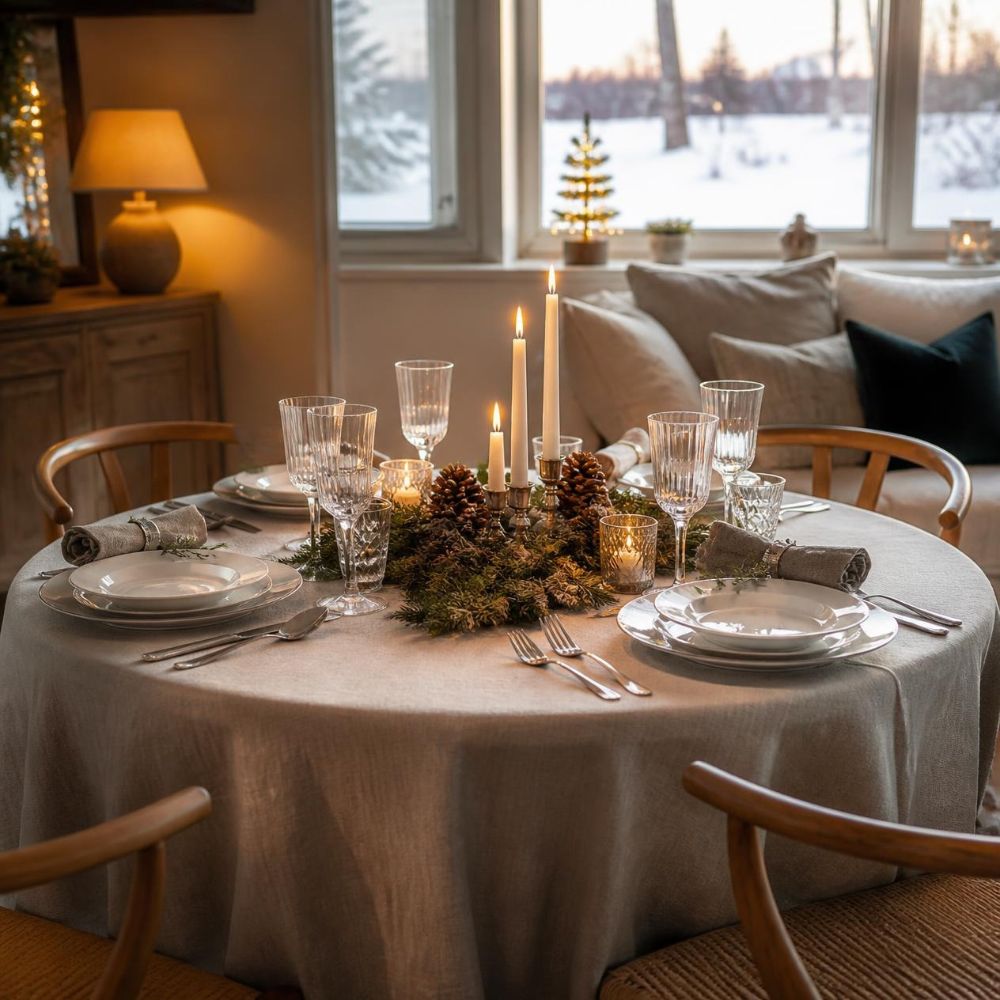
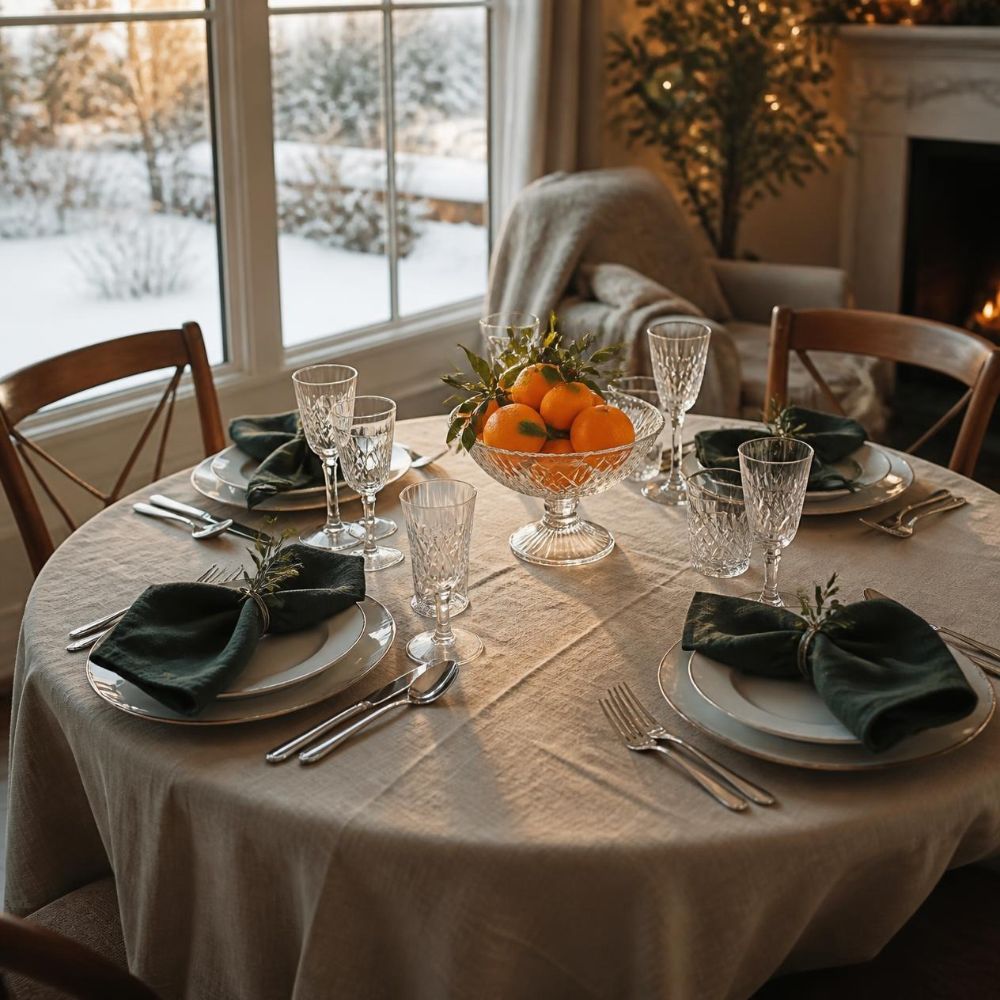
Real Materials, Each in One Family
Keep Every Element in One Material and Color
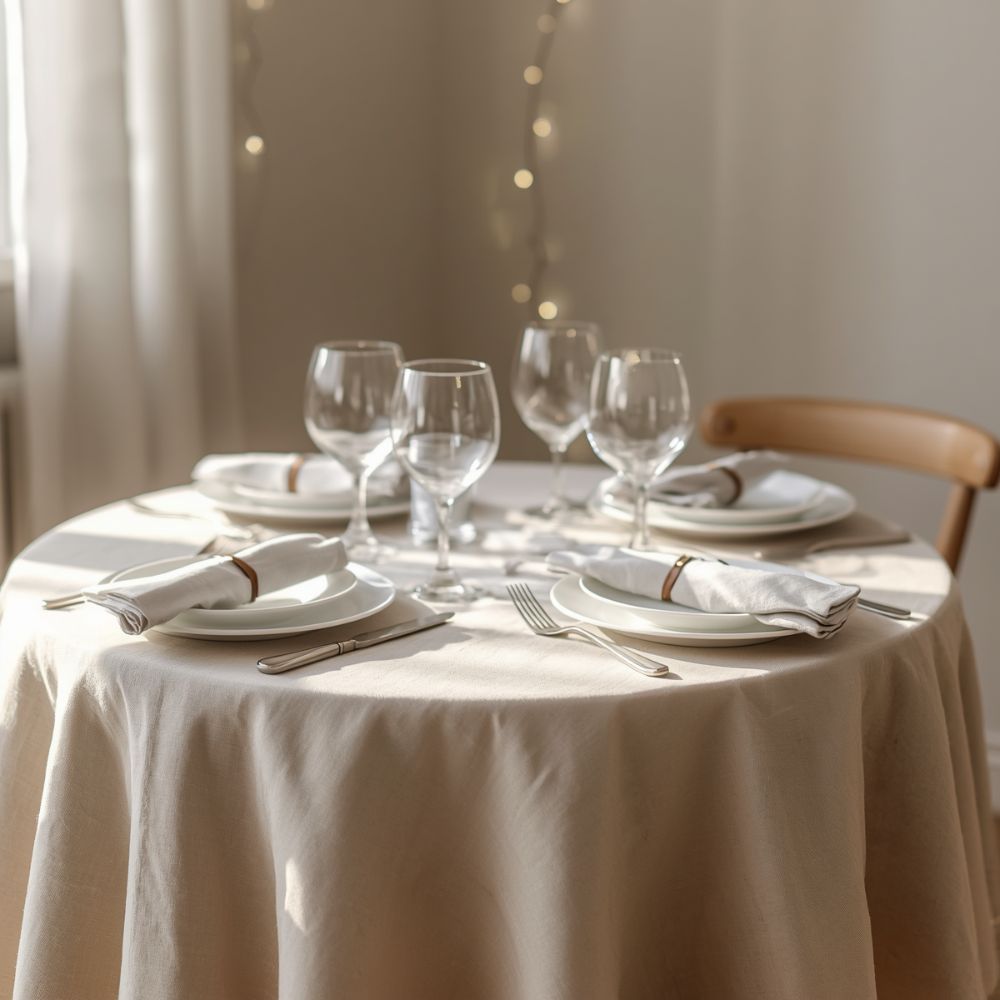
A set table already holds at least four materials, glass, metal, ceramic and textile. What keeps it calm is that each one stays within its own family.
- Glasses in clear glass, with different stems if you like.
- Plates in white or cream ceramic or porcelain
- Flatware in one metal, such as silver or silver plate or stainless steel.
- Textiles in natural linen, kept in one color family.
Most of us has the “oldschool wish to have a matching set for the Christmas dinner, and I think this is in fashion anytime. If you, like me, are not that lucky to have it, variety in shape gives the table character. The shared material and color keep it from looking random.
Choose Real Materials Only
Everything on the table should be the real thing. That means glass instead of acrylic, linen or cotton instead of polyester, and ceramic instead of melamine.
Real materials feel different in the hand, and they age well together. In candlelight, plastic and synthetic fabric shine in a flat, cold way that natural materials never do.
The same principle shapes a whole room, as I explain in the second layer of a small apartment. Texture and material often carry a space further than color does.
Why a Linen Tablecloth Is Worth Buying
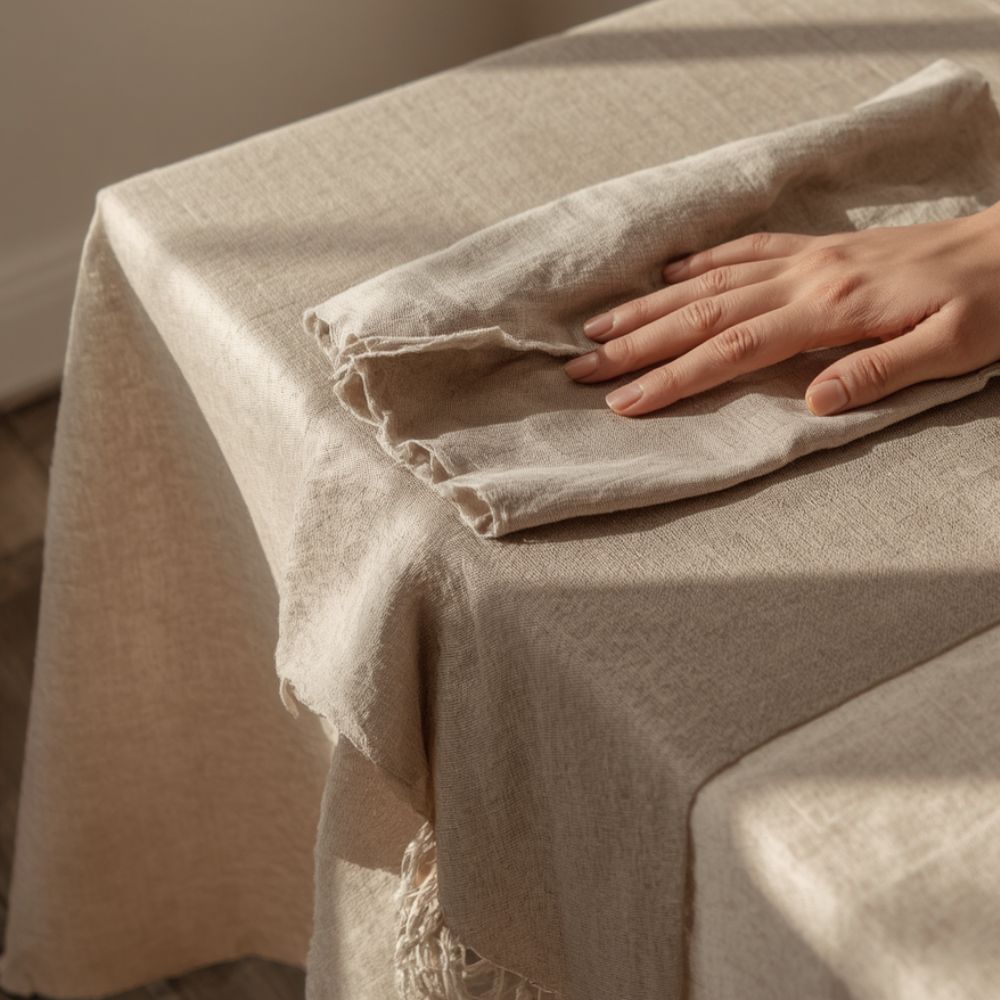
My favorite base is a natural linen tablecloth. It softens the light, and it ties mismatched plates together into one surface.
Even if you are not a tablecloth person, I would still buy one for Christmas. Plastic placemats look stiff and feel cold, and a bare tabletop can feel just as hard.
Linen adds a warmth you can actually feel. Guests rest their hands on the table between courses, and a soft cloth makes the whole meal feel slower and more generous.
It is also easier to live with than its reputation suggests. Linen handles a normal wash, a slightly crumpled look suits it, and ironing is optional.
If red wine lands on it, blot it and cover it with salt, then rinse in lukewarm water, as this linen supplier’s guide recommends.
Layering Cloths for More Warmth
If one cloth feels too plain, layer them. Keep every layer in a natural fabric and close in tone, so the table stays calm.
- A second cloth in a similar shade or color, laid across the first.
- A runner in the same linen as your napkins, which ties each place to the center.
- A playful printed cotton or linen runner, which works as decoration on its own when small children are at the table.
Keep the base layer calm, and let the top layer carry the color or pattern.
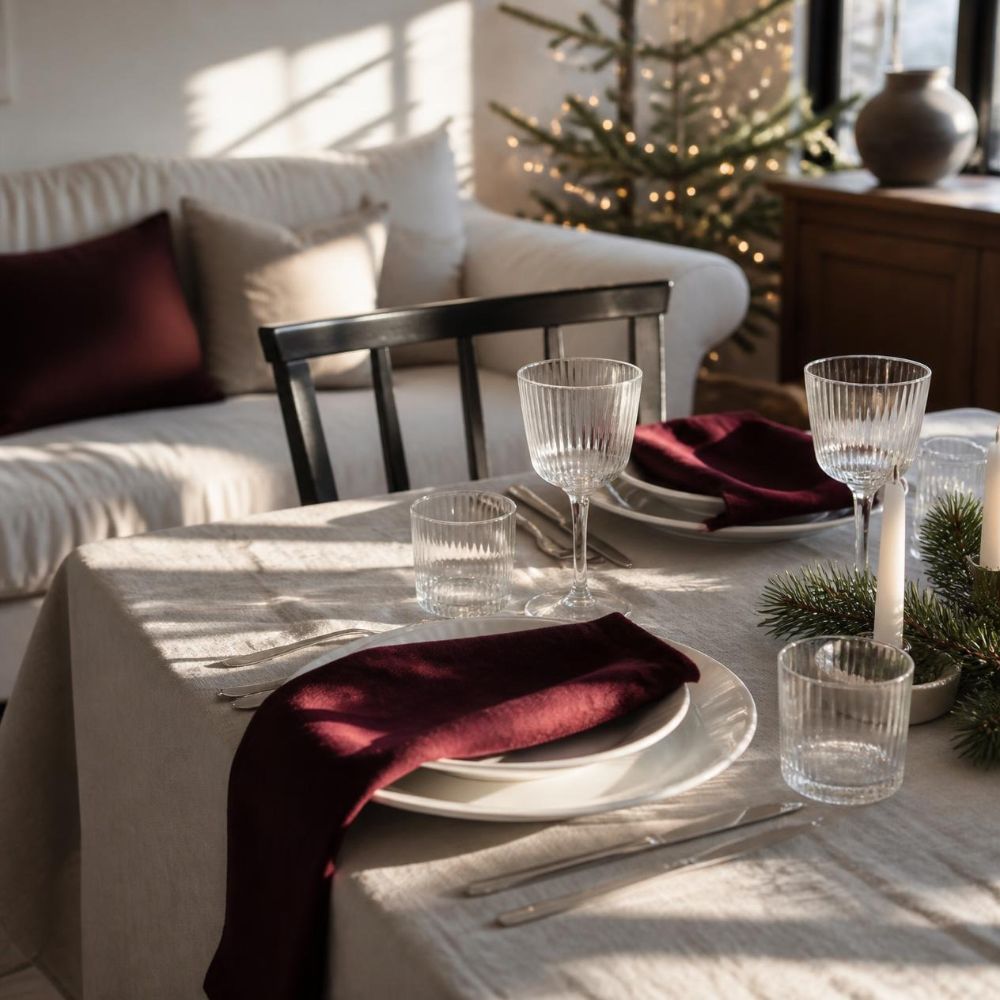
If you are buying new pieces this year, these are the ones I would start with.
- A natural linen tablecloth (paid link) in oatmeal or white, with about 8 to 12 inches (20 to 30 cm) of drop on each side.
- Maybe add a natural linen table runner (paid link) in a matching color.
- Linen napkins (paid link) in the same shade as the cloth.
- Unscented taper candles (paid link) in simple brass holders, since scented candles compete with the food.
- A footed glass bowl (paid link) for the clove-studded oranges, if the flea market has none.
Why the Middle of the Table Is Empty in the First Place (A Short History)
When All the Food Sat on the Table
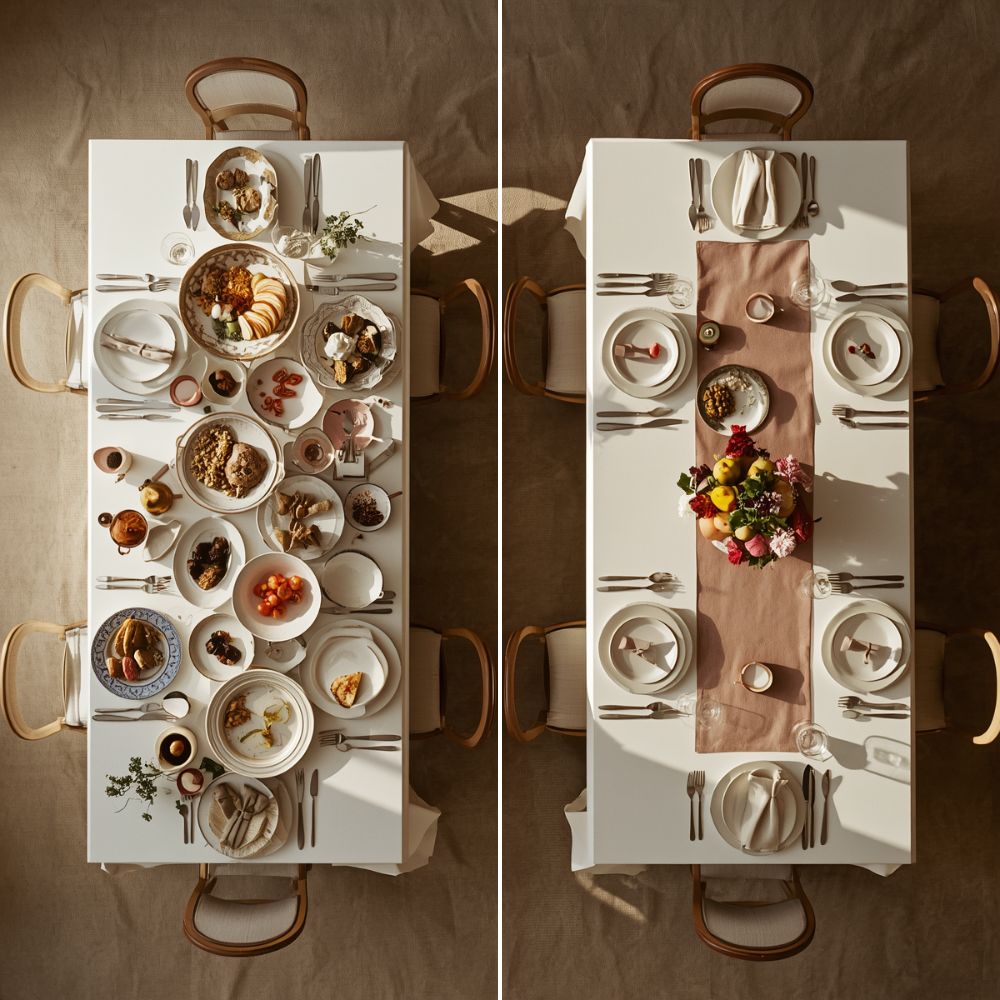
For centuries, formal dinners in Europe were served in the French style, called service à la française. Every dish of a course went on the table at once, and the center was crowded with tureens and platters.
How Flowers and Fruit Took Over the Center
From the 1830s, a Russian style of service slowly replaced it, as National Geographic’s history of table manners explains. Courses arrived one after another, and each guest was served individually.
Once the food left, tureens gave way to flowers in glass vases and to fruit stands, according to the Victoria and Albert Museum.
Why This Matters for Your Christmas Table Setup
The center strip test above asks you to make the same choice the Victorians made. On a small table, either the food or the decoration gets the middle, and my place setting guide covers the cutlery side of this history.
One Repeated Element Gives a Christmas Table Setup Its Rhythm
Choose One Thing and Repeat It
Repetition is the simplest tool a designer has. One flower, one candle type or one sprig, repeated along the table, creates a rhythm the eye can follow.
Some tablescape designers like bud vases cut to slightly different heights trailing down the middle. Space them evenly, roughly 8 to 12 inches (20 to 30 cm) apart, and keep them in one color family.
Good repeated elements for a small table include:
- Taper candles in identical holders
- Bud vases holding one kind of greenery
- Small clementines or pears in a loose line
- A pine sprig at every place
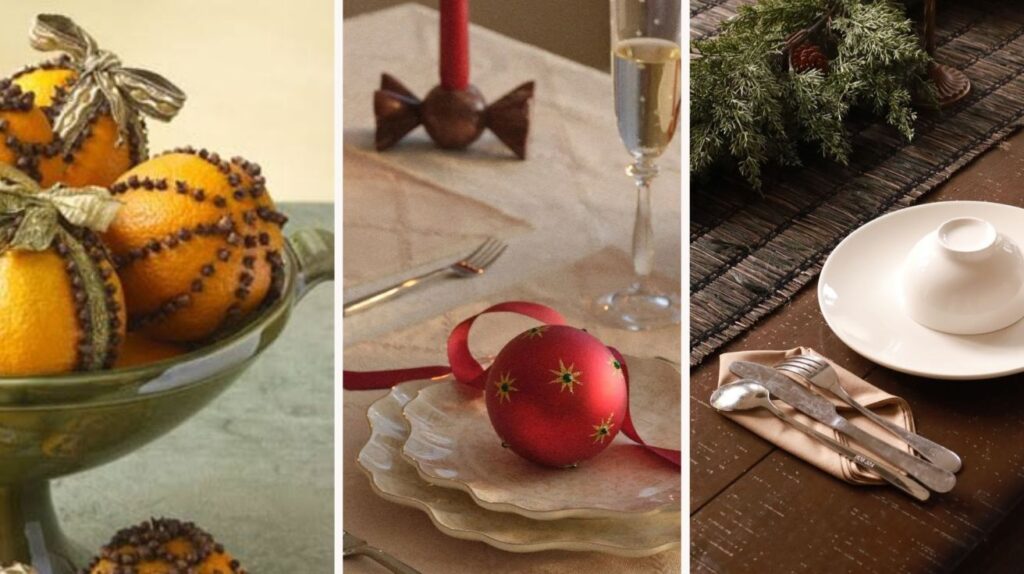
A Glass Bowl of Clove-Studded Oranges
The Victorians filled the center of the table with fruit once the tureens were gone. That idea still works beautifully on a small table.
Fill an elegant glass bowl, ideally an old-fashioned footed one, with oranges and mandarins studded with cloves. It smells of Christmas, it looks generous, and guests can eat the fruit at the end of the meal.
Choose a low bowl, so the fruit stays under 12 inches (30 cm). Press the cloves in a day ahead, in simple rows or spirals, so the scent has time to open.
Where the Height Comes From
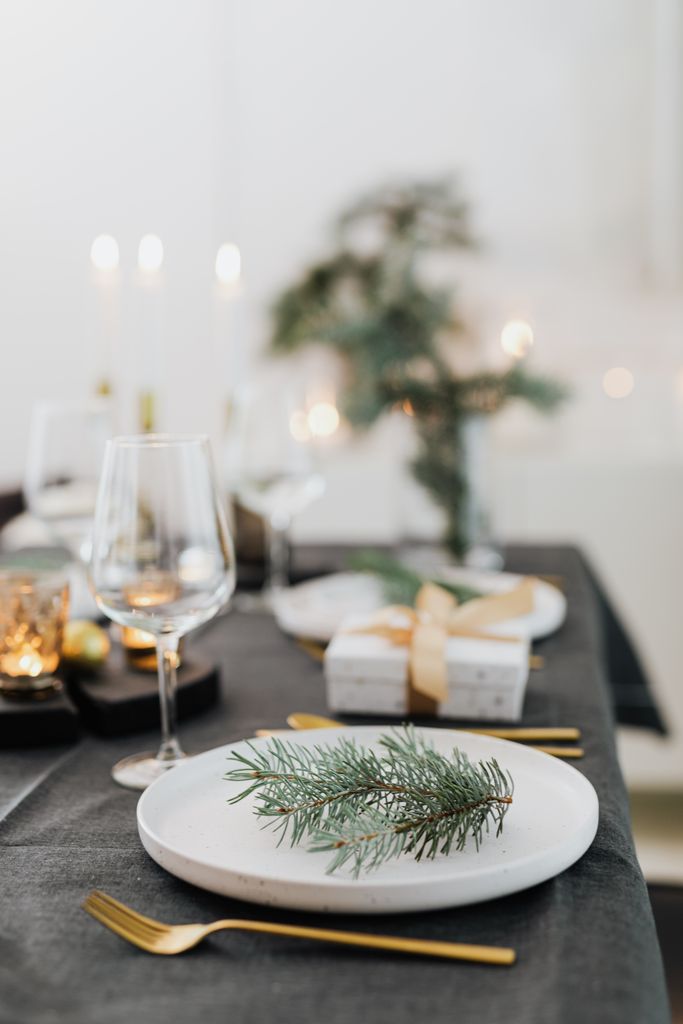
Height gives a table life, but on a small table it has to come from thin objects. Taper candles rise above the sightline with almost no width.
Candlelight also changes the room around the table. My guide to ambient lighting in a small living room explains why a few low light sources feel warmer than one ceiling fixture.
Dim the overhead light while you eat, so the table becomes the brightest place in the room. That is how layered lighting in a small space is meant to work.
Important: Keep candle flames well away from greenery and napkins, and never leave candles burning on an empty table.
Family Silver and Flea Market Finds: This Is Their Occasion
Why Patina Makes an Ordinary Menu Feel Special
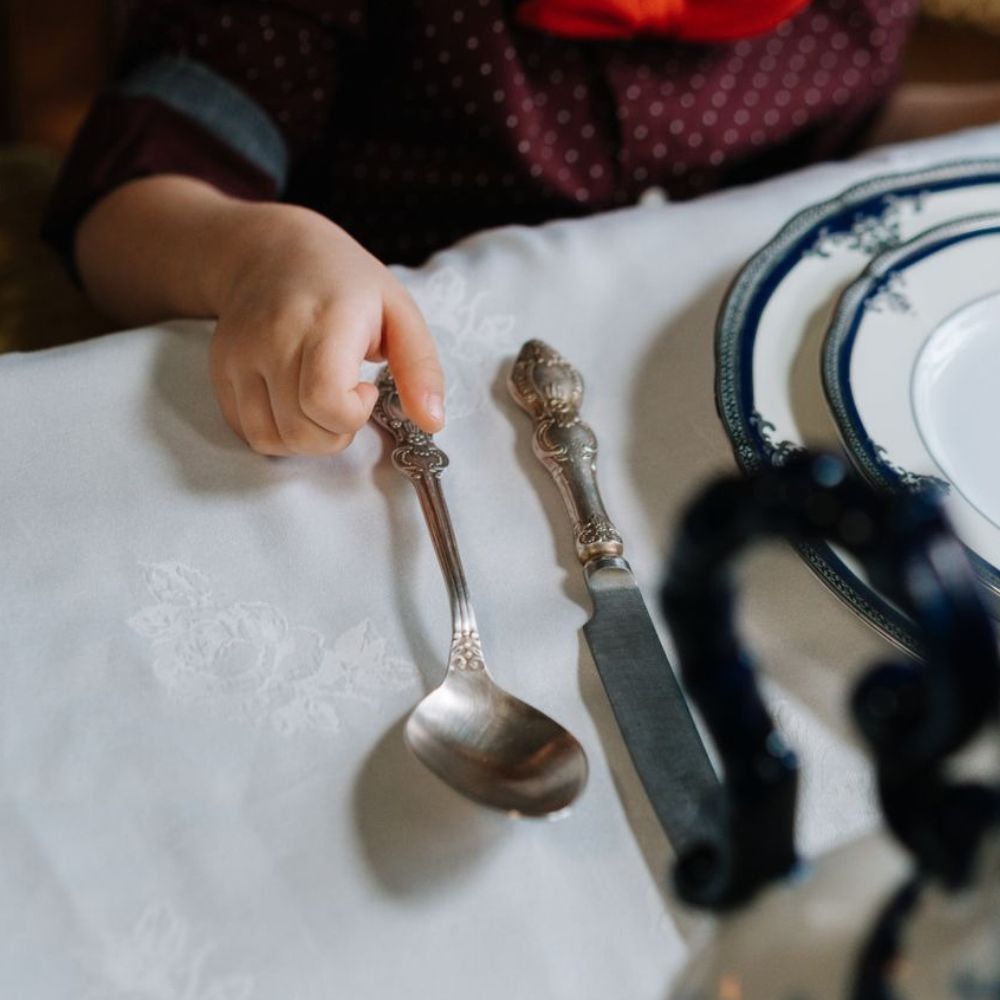
I believe Christmas is the best reason to use the family silver. If it has been sitting in a box for years, this is its moment.
Our own “family silver” is completely chaotic. I found it piece by piece at flea markets, choosing forks and spoons of a similar style and size, and the set is still not complete.
That suits me, because it can grow with anything I find next. Even when the menu is food we cook all year, old silver makes the table feel like an occasion.
How to Read the Marks at a Flea Market
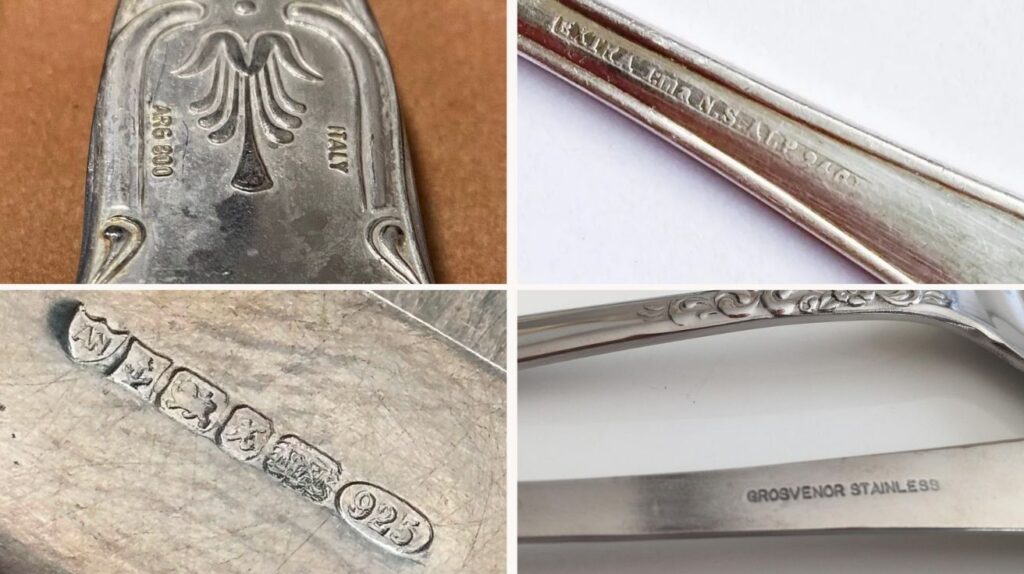
Most of what you find at flea markets will be silver plate, which is perfectly good for the table. Check the back of the handle, as this silver specialist’s guide shows.
- ARG 800 means solid silver at 80% purity, the common continental European grade.
- 925 or Sterling means solid silver, with a higher price to match.
- EPNS, EP, EPBM, ALP or A1 means silver plate, which is affordable and made to be used.
- Stainless means no silver at all, and it can go in the dishwasher.
Wash old silver and plate by hand and dry it right away. Polish it a day or two before Christmas, and leave a little tarnish in the pattern, since it shows the age.
Stamps can be faked, so check the worn edges on the back of the bowl and the end of the handle. Solid silver stays silver all the way through, while plate wears down to a yellowish or grey metal underneath. If you need to be sure, a jeweller can test it in a few minutes.
Mixing Old and New in a Christmas Table Setup
Mismatched pieces look chosen when one thing stays constant. Keep all plates white, or keep all flatware in one metal, and let the rest vary.
Glasses do not have to match either. Different stems in clear glass read as one family, especially in candlelight. But if you have a set from glasses and plates, this is the best I believe.
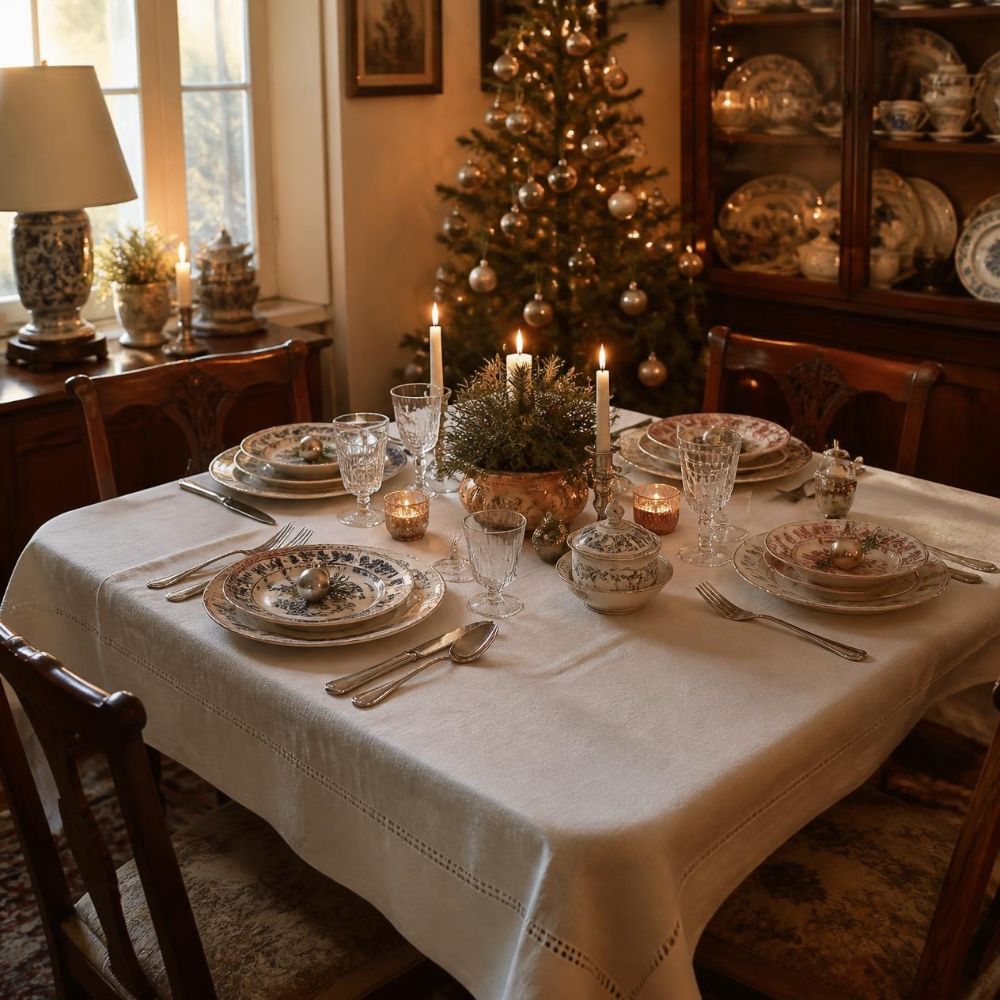
My secret dream is to have an antique porcelain plate set with all the little cute extras, bowls and pots…
This idea of a collected set is at the heart of my guide to laying a place setting, where I explain how to build one slowly.
Hosting in a Small Apartment: A Christmas Table Setup for Eight at a Table for Four
How Many People Fit at Your Table?
Furniture makers plan for at least 24 inches (60 cm) of table edge per person. Behind the chairs, you need about 36 inches (90 cm) so people can sit down and walk past.
A typical table for four, around 48 by 32 inches (120 by 80 cm), fits two people on each long side. Seating eight, four per side, needs a table close to 96 inches (240 cm) long.
Extending the Table for One Night
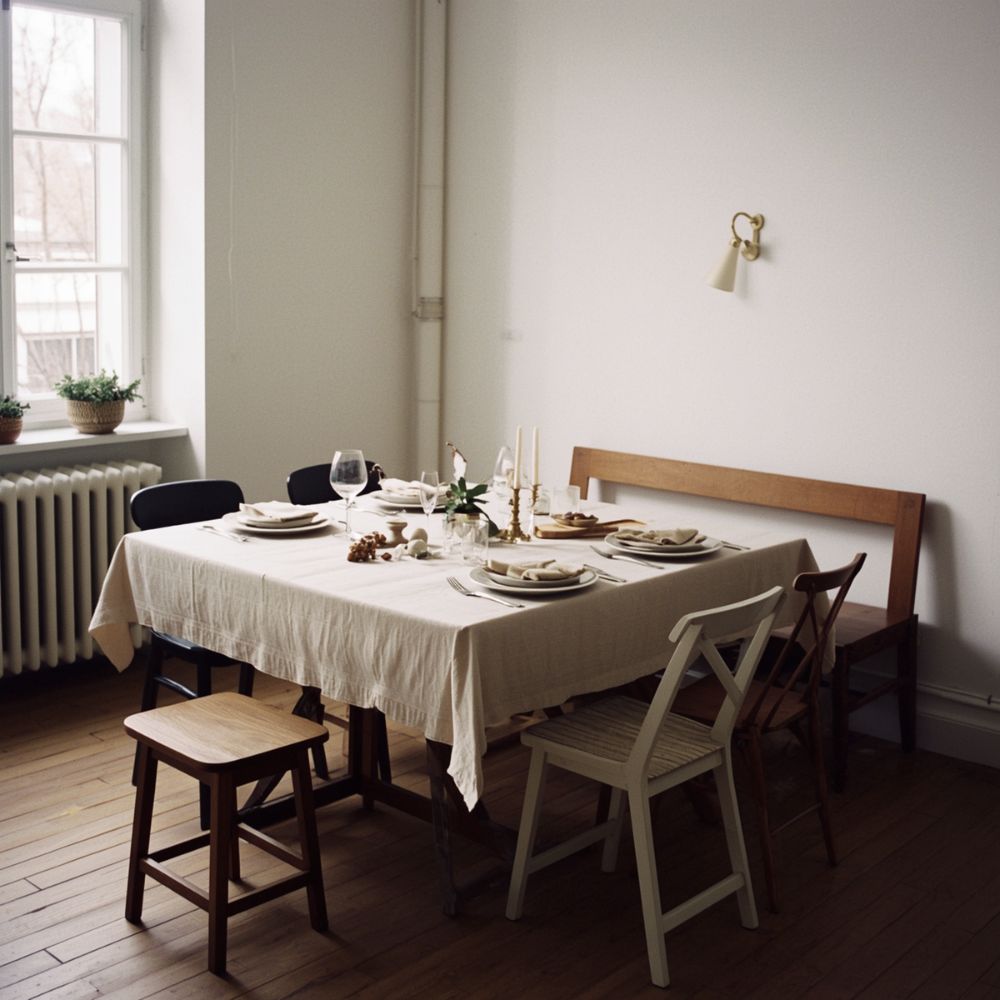
The easiest fix is a folding table (paid link) pushed against your own. Match its height to yours, usually 28 to 30 inches (71 to 76 cm), then cover both with one long cloth.
Or use this one (paid link) alone with a large linen tablecloth.
This is where the tablecloth earns its place again. Under one piece of linen, two different tables become one.
For seating, mix what you have. Dining chairs, a bench, stools and a chair borrowed from a neighbor all work once the table itself looks unified.
When the evening is over, folding chairs and the spare table need a home. My living room storage ideas cover where bulky, occasional things can hide.
Guests will use the bathroom too, and my bathroom storage ideas for small spaces show where everyday things can go for the evening.
Where the Food Goes Without a Sideboard
Without a sideboard, the kitchen counter becomes the buffet. Houzz suggests serving buffet-style from the counter so the table can seat more people.
Clear the counter the day before, so it holds serving dishes and nothing else. My small kitchen ideas help if the counter is short to begin with.
- Cover the cooktop with a large board to gain a second counter.
- Set drinks on a tray by a window or shelf, away from the table.
- Use a small cart or stool as a landing spot for empty plates.
- Keep only the bread and one sauce on the table itself.
Moving the Table Into the Living Room
Sometimes the best place for the Christmas table is outside the dining corner. In a studio apartment layout, the living area often has the most floor space.
Move the coffee table or an armchair into the bedroom for the evening, keeping a clear path to the bed as in my small bedroom ideas. The rules of a good small living room layout still apply, especially the clear path around the chairs.
My guides to a small living room with a dining area and an open plan kitchen living room show how the zones share space. For a table that grows every December, see my comparison of multifunctional living room furniture.
Tip: Set the whole table the evening before, so anything you forgot shows itself while there is still time.
What Is the Best Way to Plan a Christmas Table Setup?
Work through these steps in order, and most of the stress disappears.
- Measure your table width and count your guests.
- Run the center strip test and choose plated, family-style or buffet service.
- Keep each element in one real material and color, with a linen tablecloth as the base.
- Choose one repeated element, or a small detail for each place.
- Check every piece from a seated position, below 12 inches (30 cm) or above 24 inches (60 cm).
- Set the table the day before and light the candles once as a test.
Final Thoughts
A Christmas table setup feels special when a few decisions are made on purpose. Keep the center below the sightline, measure the strip before you choose how to serve, and keep each element in one real material.
A linen tablecloth, one repeated element or one small detail at each place gives even a very small table a festive rhythm.
What guests remember is the feeling that someone prepared this for them. A folded napkin, a bowl of clove-studded oranges or a drawer of mismatched old silver carries that feeling better than any amount of decoration.
Next, read my place setting guide to lay each place properly. For the room around the table, see what creates real quality in a small living room.
Frequently Asked Questions About Christmas Table Setup
How tall should a Christmas centerpiece be?
Keep it under about 12 inches (30 cm) or above about 24 inches (60 cm). Anything in between blocks the view of the person sitting opposite.
How many people can sit at a table for four?
Plan for 24 inches (60 cm) of table edge per person. A 48 inch (120 cm) table seats four comfortably, and six only if the ends are free of legs.
What do you put in the middle of a Christmas table if there is no room?
Use a single line of taper candles or a low bowl of oranges. If even that feels crowded, move the decoration to each place with a folded napkin or a pine sprig.
Do I need a tablecloth for Christmas dinner?
It is worth having one, even if you usually skip it. Linen feels warm under the hands and makes mismatched pieces read as one table.
Can you mix vintage and new plates?
Yes, as long as one thing stays constant. Keep one plate color or one metal for the flatware, and everything else can vary.
Is it better to serve plated or family-style in a small apartment?
If your table leaves less than about 8 inches (20 cm) in the middle, plate the food in the kitchen. Wider tables can take shared dishes on trivets.