Bedroom Curtain Ideas: How to Choose What to Hang and Where
Bedroom Curtain Ideas: How to Choose What to Hang and Where
This post contains affiliate links. If you buy through them, I may earn a small commission — at no extra cost to you. I only recommend products I’d genuinely specify as an architect.
The studio apartment I’m renovating has no curtain in front of the main window — and for good reason.
During demolition, one of the internal walls came down. That opened up the whole zone between the entrance and the sleeping area.
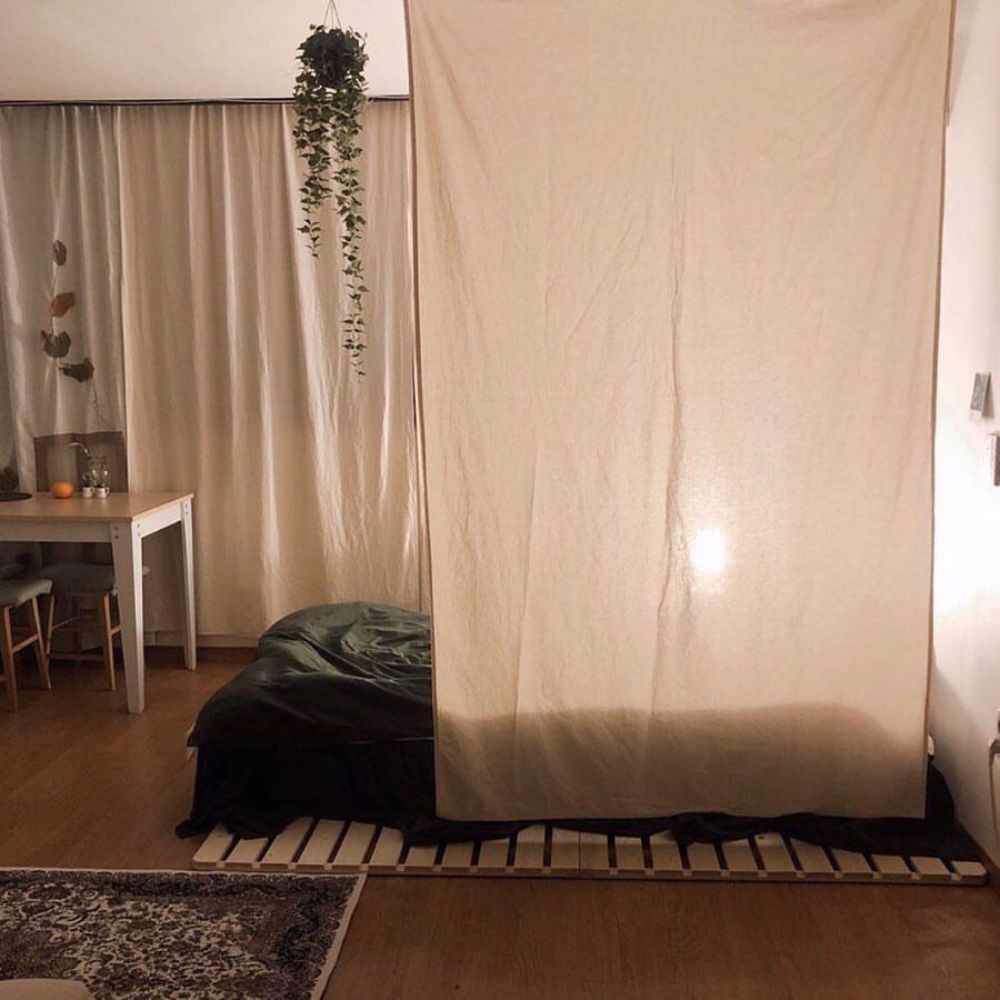
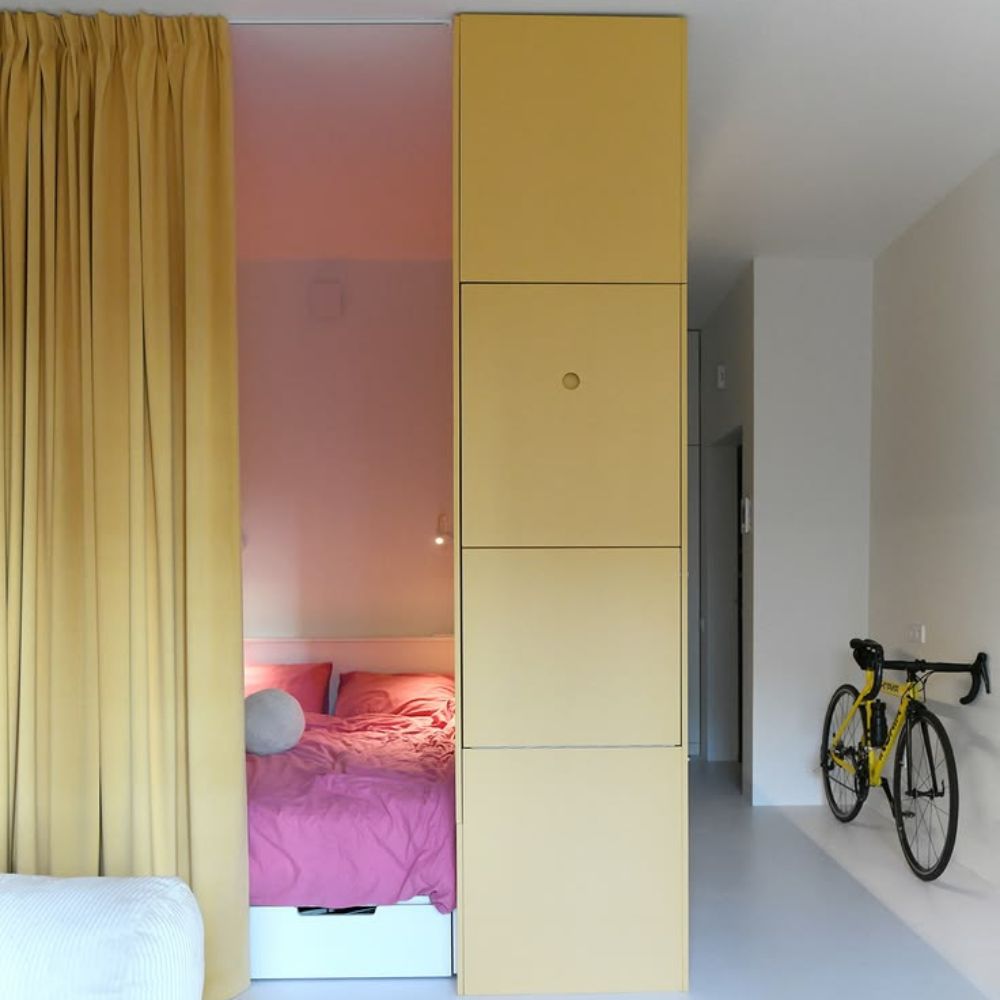
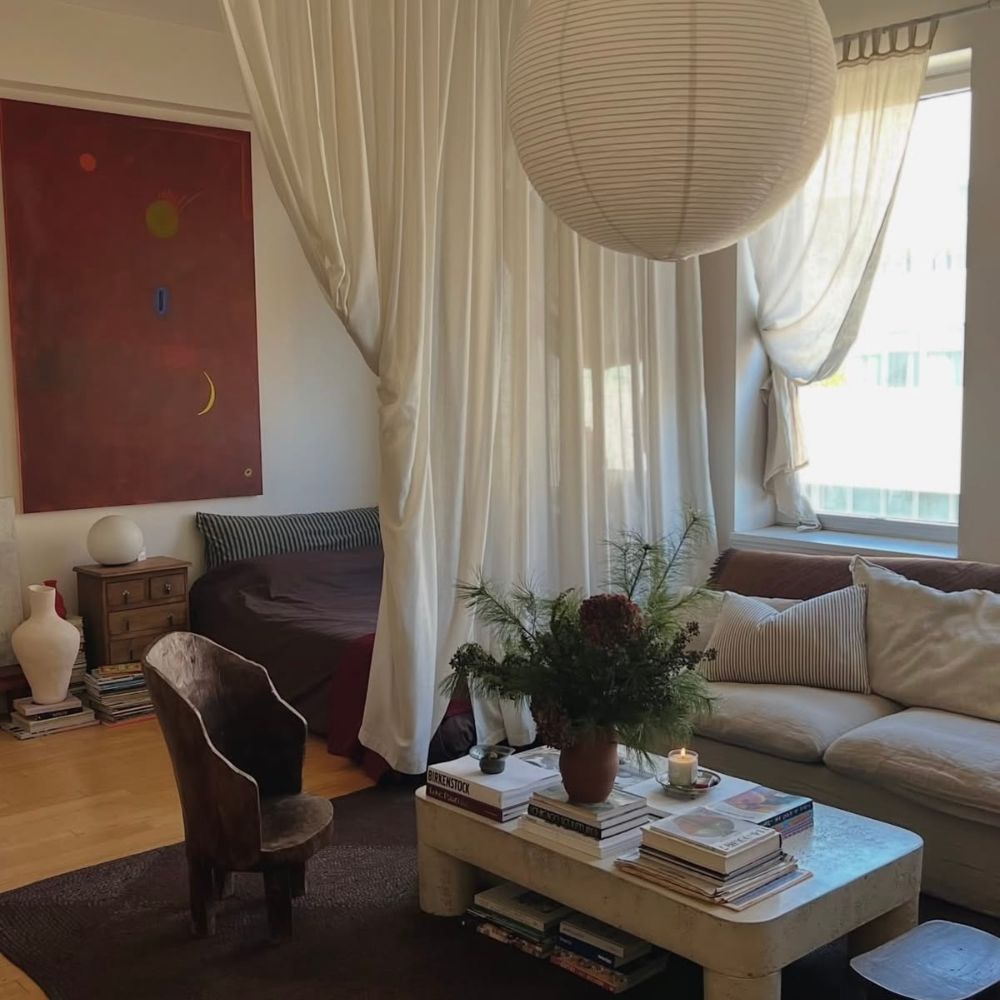
What I’ll add instead is a curtain where the wall used to be: open during the day so the space reads long and uninterrupted, closed at night to create visual separation between the bed and the entrance. The window gets light.
The room gets privacy. A curtain as a space divider rather than a window treatment is one of the most useful bedroom curtain ideas in a compact layout.

What a Bedroom Curtain Is Actually Doing
Before choosing a curtain for bedroom use, it’s worth being clear about which function it’s serving.
Light control, privacy, acoustic softening, and spatial separation are four different jobs — and a curtain that does all four well is not always the same curtain. In a small room, the curtain is also a significant visual element.
A floor-length fabric panel at a window can be the largest single object visible from the bed.
1. Light Control vs Blackout
The blackout curtain question comes up in almost every bedroom conversation.
Blackout linings are worth it when the room receives early direct sun. And the occupant is sensitive to morning light. For most rooms facing north, east at depth, or receiving indirect light, a lined linen curtain provides enough dimming without the visual heaviness of a blackout.
The lighting rules for small spaces covers how light direction and intensity affect room decisions — including which windows genuinely need blackout treatment and which don’t.
Note: If the room already has external shutters or good deep eaves, a blackout lining may be unnecessary even in a room with full morning sun.

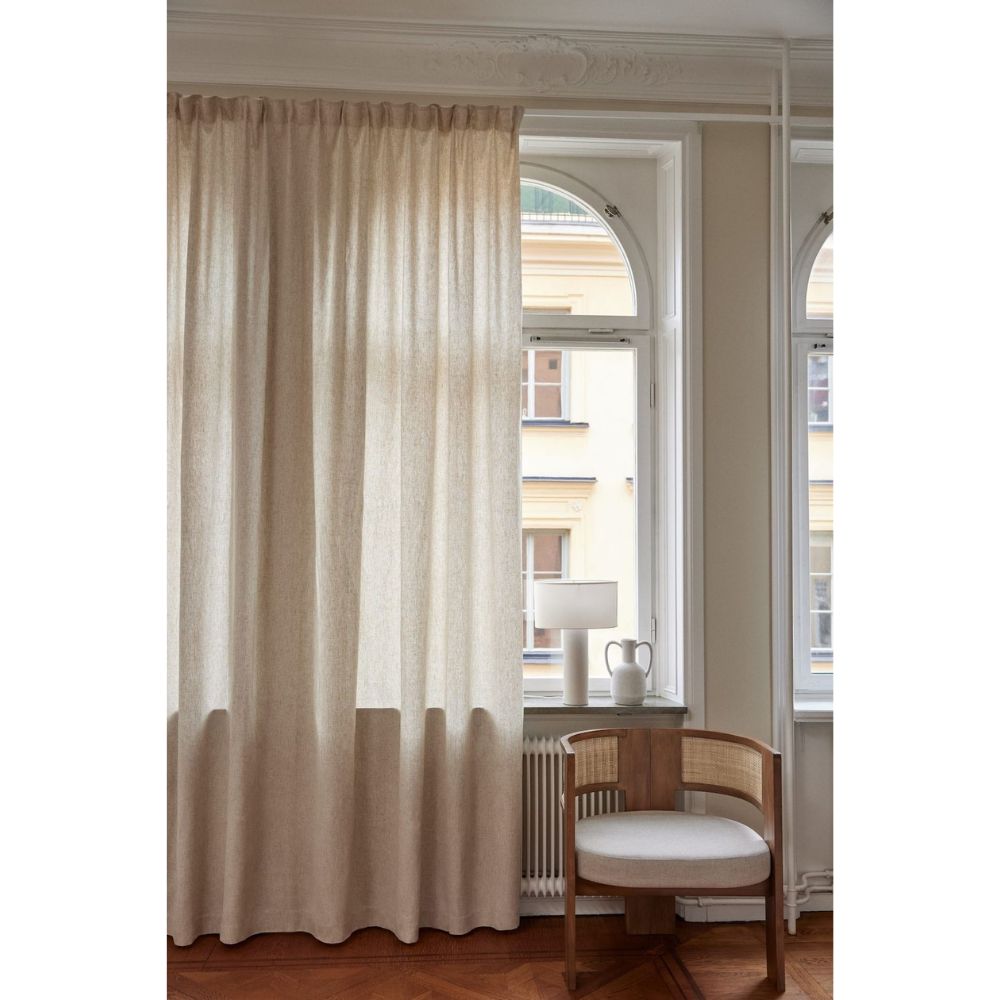
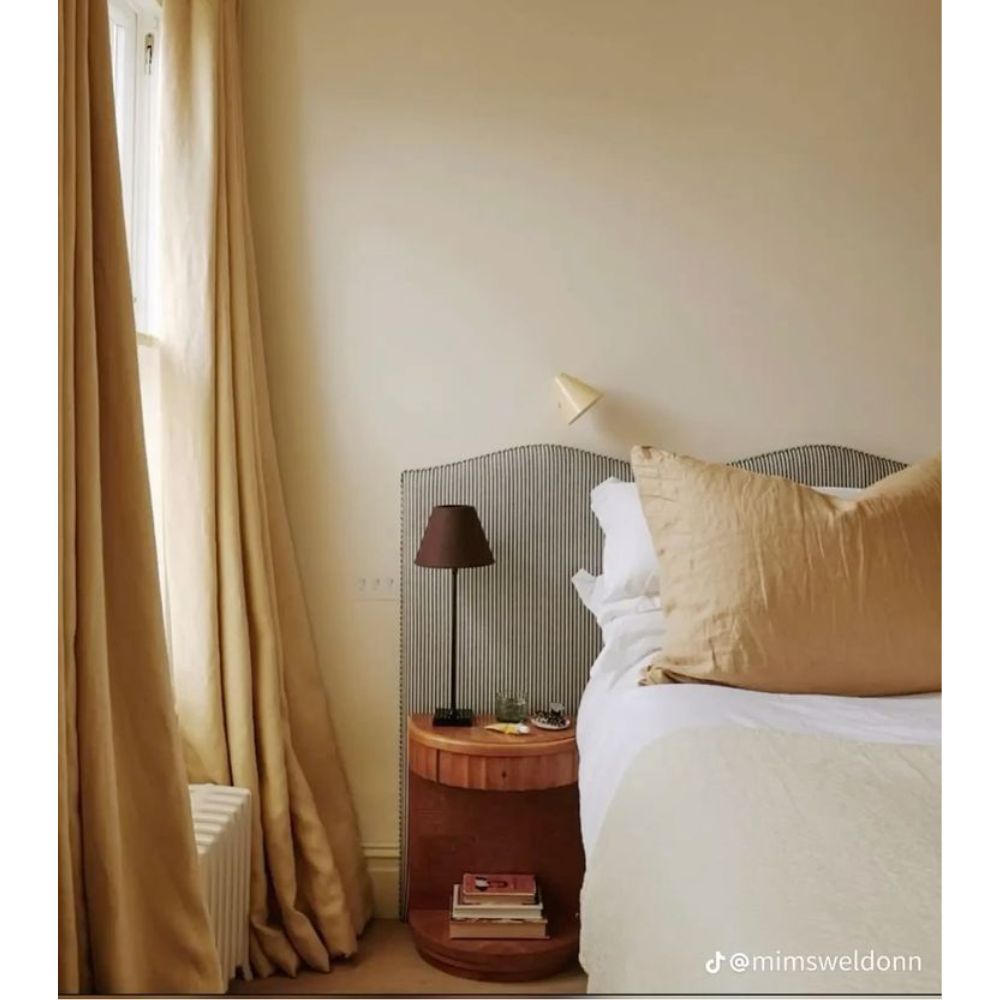
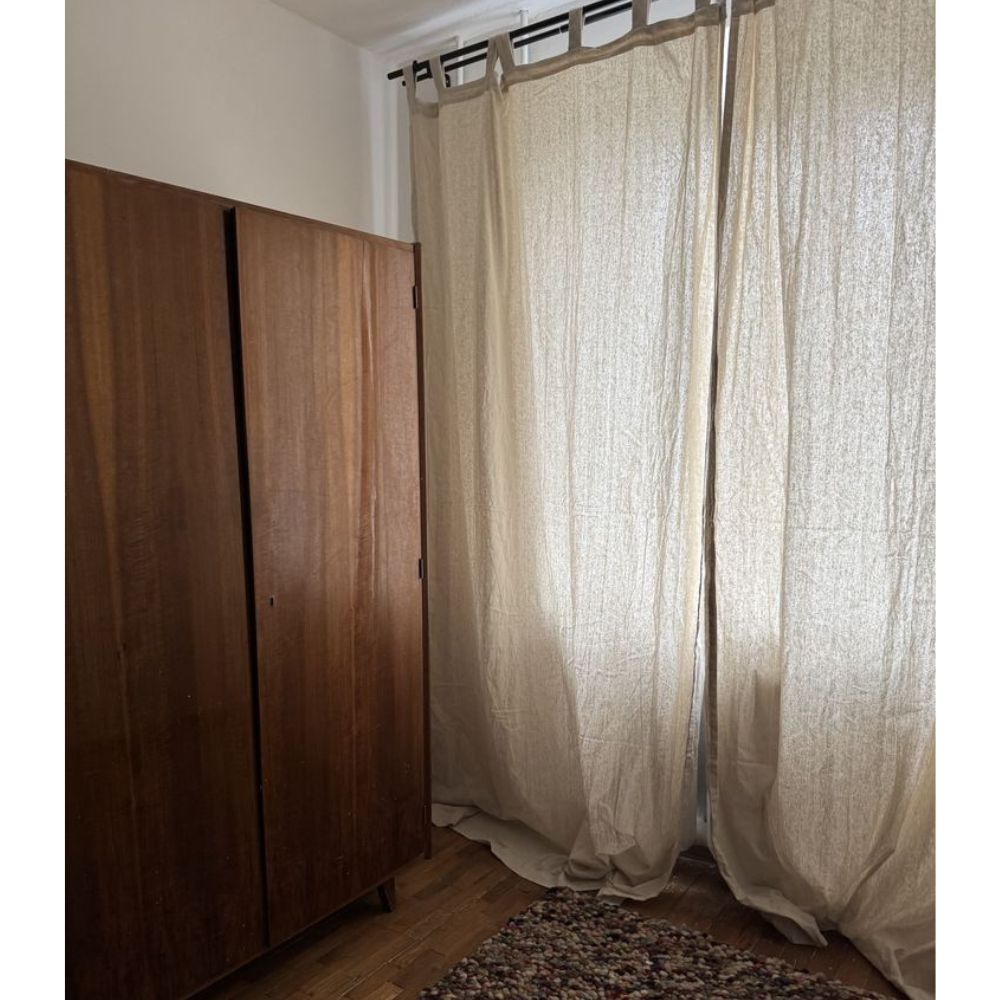
Double shading – one has practical use, the other is more of a design.
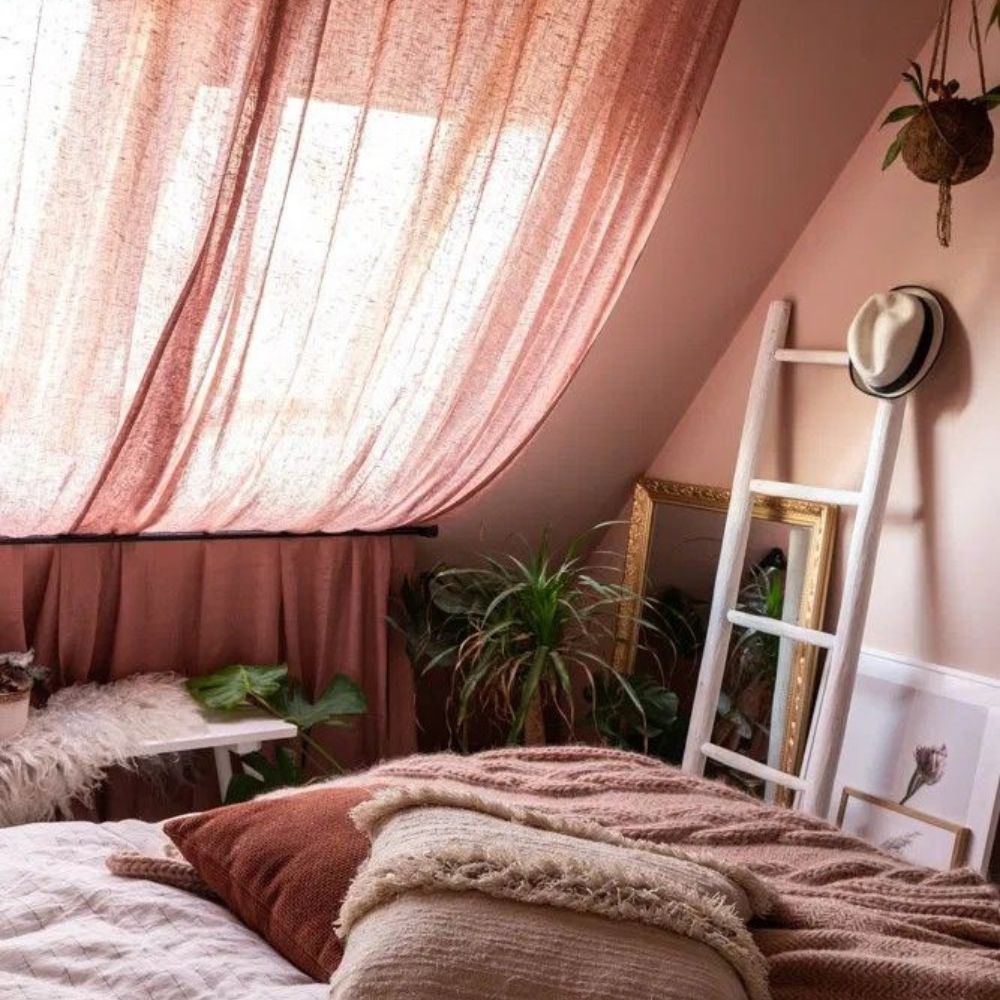
Found it here.A lightly a translucent colored curtain. Foto from here. A slightly denser woven, but still light-permeable curtain as a shading option.
The details here are also beautiful: the height of the rod lets shine the beautiful plaster cornice at the ceiling.
Foto from Pinterest.The bedroom of Lucy Williams, a British blogger.
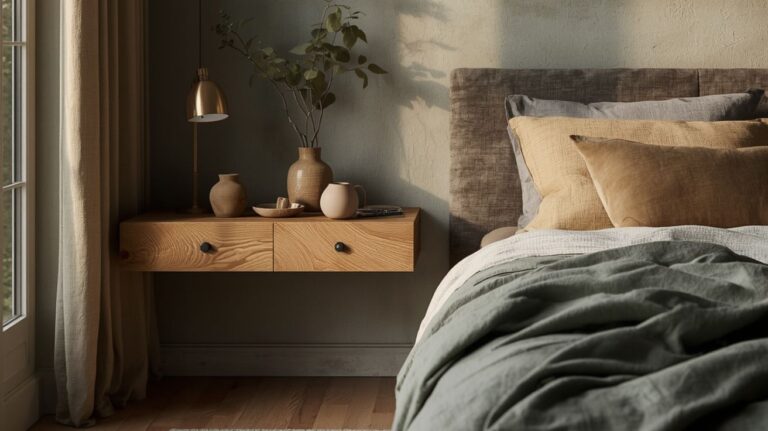
Beautiful color and texture harmony, with the Neve Nightstand.Foto from Pinterest. Sometimes functionality wins over design.
But if you choose natural textiles for curtains, you don’t really need to choose from the two.

Privacy Without Losing Light
For rooms that face directly onto a street or neighboring building, privacy and light are competing needs.
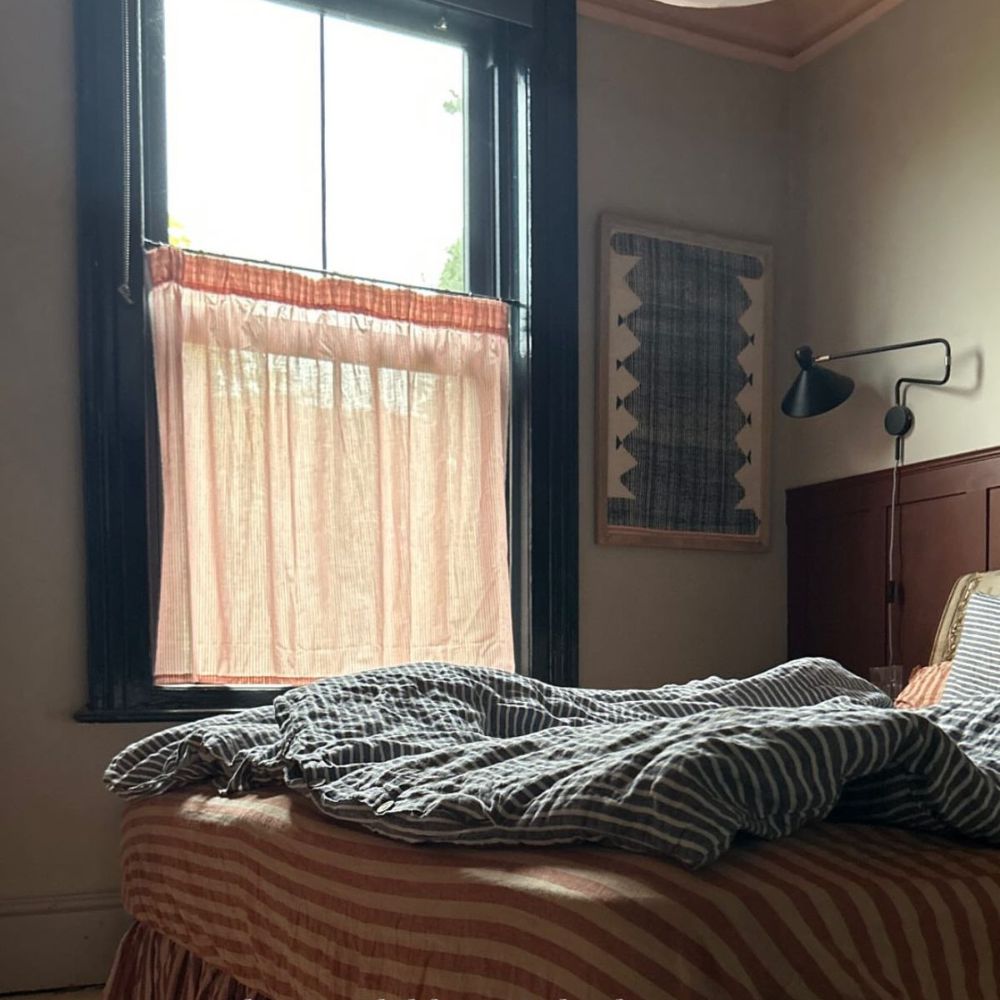
A sheer panel on the lower half of the window — leaving the upper portion uncovered — allows diffused daylight while blocking direct sightlines from outside. This is more architecturally considered than full-length sheers on a track, which block more light than necessary and flatten the window visually.
Curtains for Bedroom Windows — Fabric and Weight
The fabric choice affects how a bedroom curtain idea reads in the room almost as much as the color does.
Heavy fabrics — velvet, thick cotton, interlined linen — create warmth and drama, but can feel oppressive in a small room. They also trap dust and are harder to clean. But don’t worry – I have solution for these fears later in this post!
Lightweight fabrics — sheer linen, cotton voile, unlined natural linen — move in air movement, let more light through, and read lighter in a small room. The trade-off is less acoustic softening and less dimming capacity.
Linen Curtains — the Most Versatile Bedroom Choice
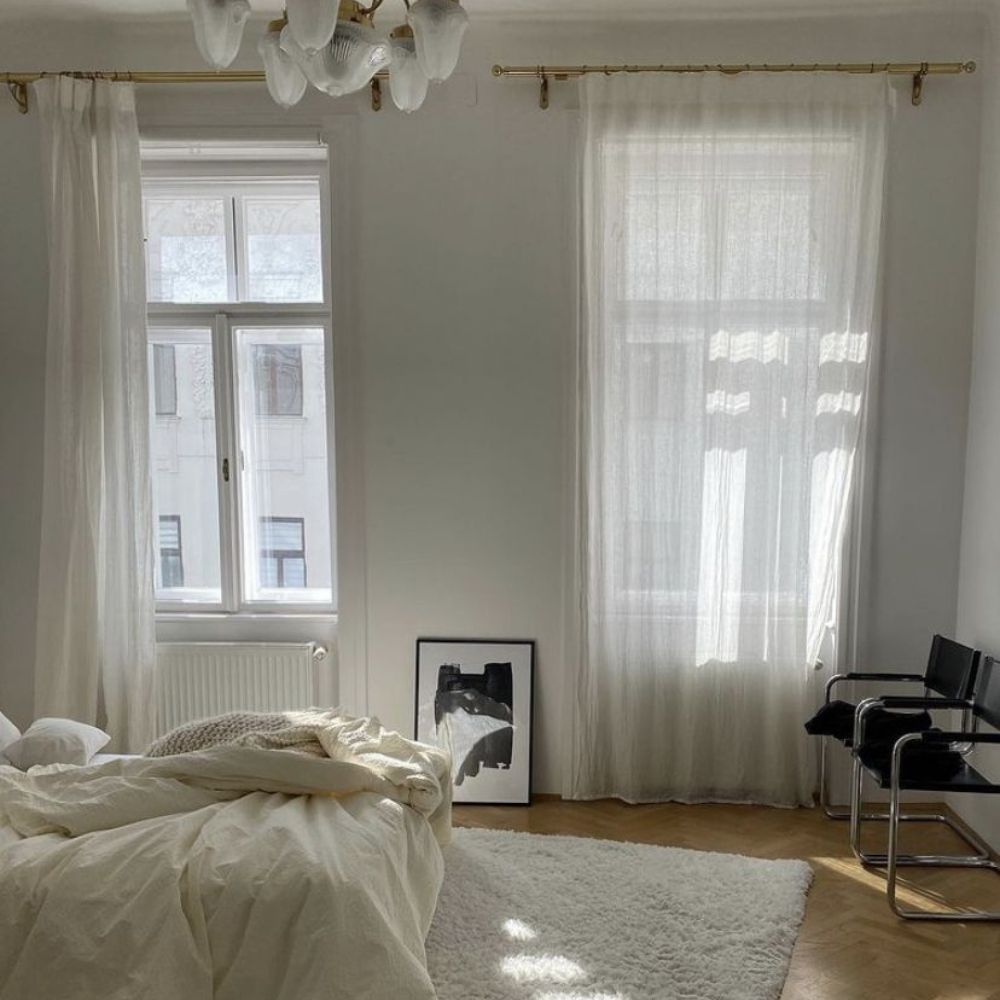
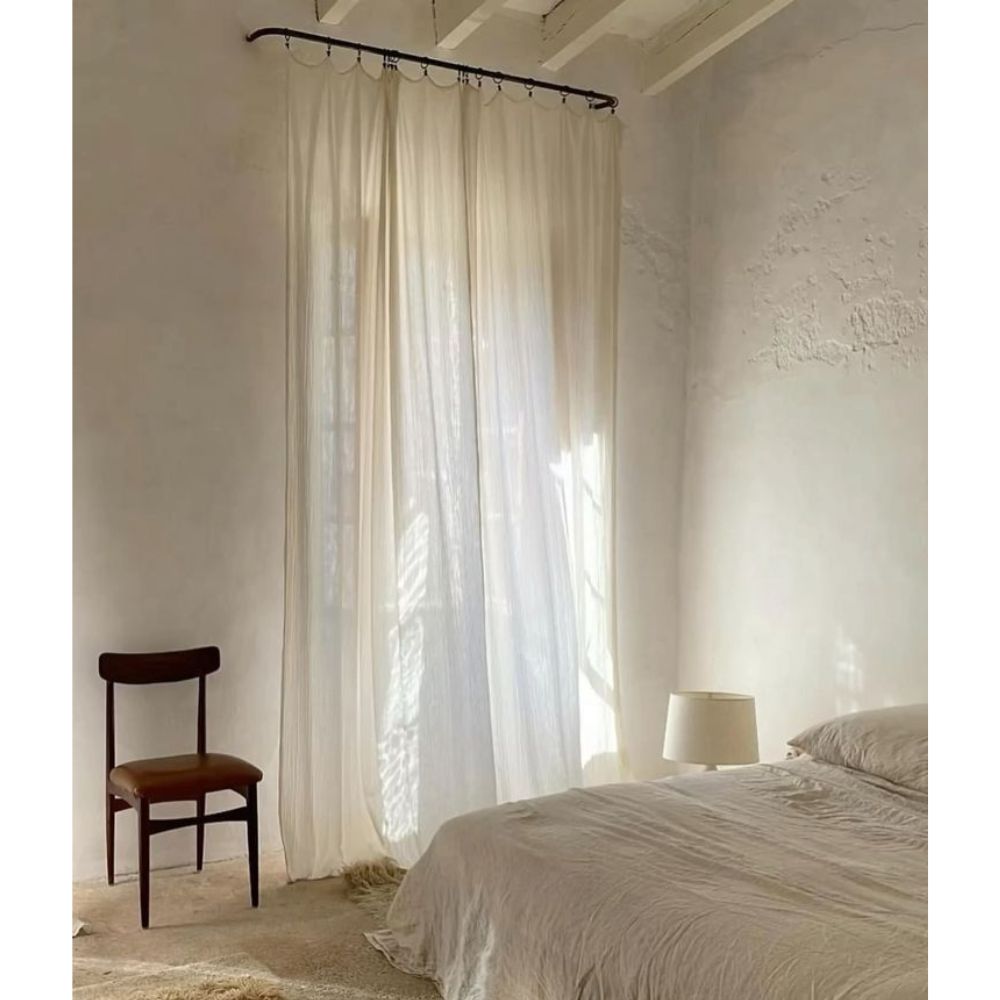
Unlined or lightly lined natural linen curtains are the most consistent performer across bedroom types.
They soften the window without blocking it, take color from warm-to-neutral, and hang with a slight natural drape that reads well at floor length.
For a room built around an earthy bedroom palette, undyed or oatmeal linen is the natural choice. For a room with a cooler bedroom color combination, a stone or pale gray linen sits better than white, which can read cold against cool-tone walls.
Blackout Curtains in a Small Bedroom
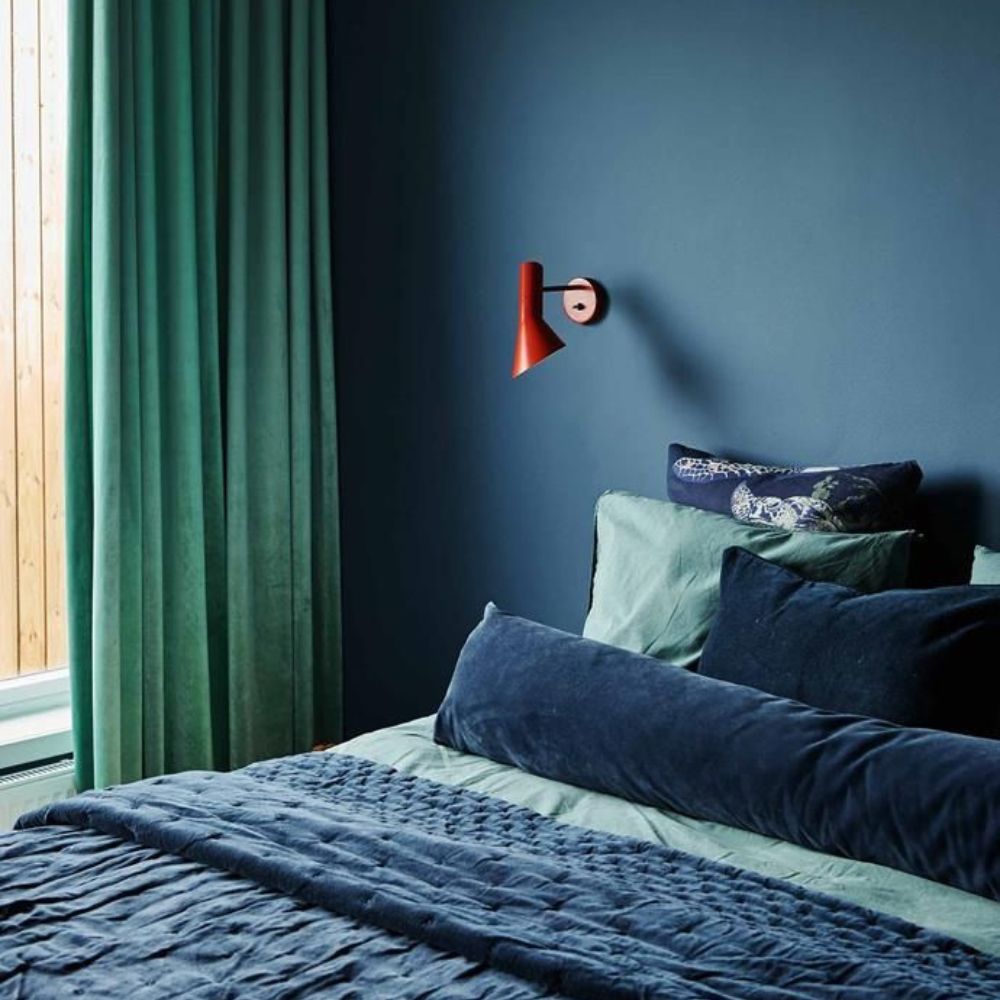
Blackout curtains work best when they’re the same color as the wall or within one tone of it.
A contrasting blackout curtain becomes a dominant feature every time you look at the window. When it matches the wall closely, it reads as the wall continuing rather than as fabric. In a small room where the window is already a large proportion of the visible wall, that continuity matters.
Bedroom Curtain Maintenance and Other Fears
The fears people have about curtains
Fear of dust: Curtains produce static electricity that causes dust particles to stick — and because they’re rarely cleaned, dust builds up continuously, with a noticeable effect on indoor air quality over time.
Dust mites feed on sloughed-off skin cells and congregate in curtains — it’s actually dust mite waste that triggers allergies, not the mites themselves.
Deep creases and fuzzy fibers are where dust concentrates most — fewer folds means less dust trapped.
Washing fear: almost sixty percent of people clean their curtains for more than a year — they don’t have the habit of cleaning curtains regularly. Some fabrics like linen and other sensitive materials should not be washed very frequently — washing them too often can cause them to tear, shrink, or fade.
What the cleaning frequency actually is
For bedroom curtains specifically: every 6–12 months for healthy low-allergy households, every 6 months for allergy-prone households.
The American Cleaning Institute recommends washing curtains every 3–6 months and spritzing them with a fabric refresher in between to neutralize odors. My advice: use natural products, like odorless alcohol mixed with water and maybe with a few drops of your favorite essential oil.
Between washes: vacuum monthly with a HEPA-filtered attachment to pull dust from folds, and flip or rearrange the panels every few weeks so dust doesn’t settle in the same spots.
For linen curtains specifically: machine washable directly, cold water under 40°C, no dryer — hang to dry to avoid wrinkles and shrinkage.
Bedroom Curtain Hanging Height — Where Most People Get It Wrong
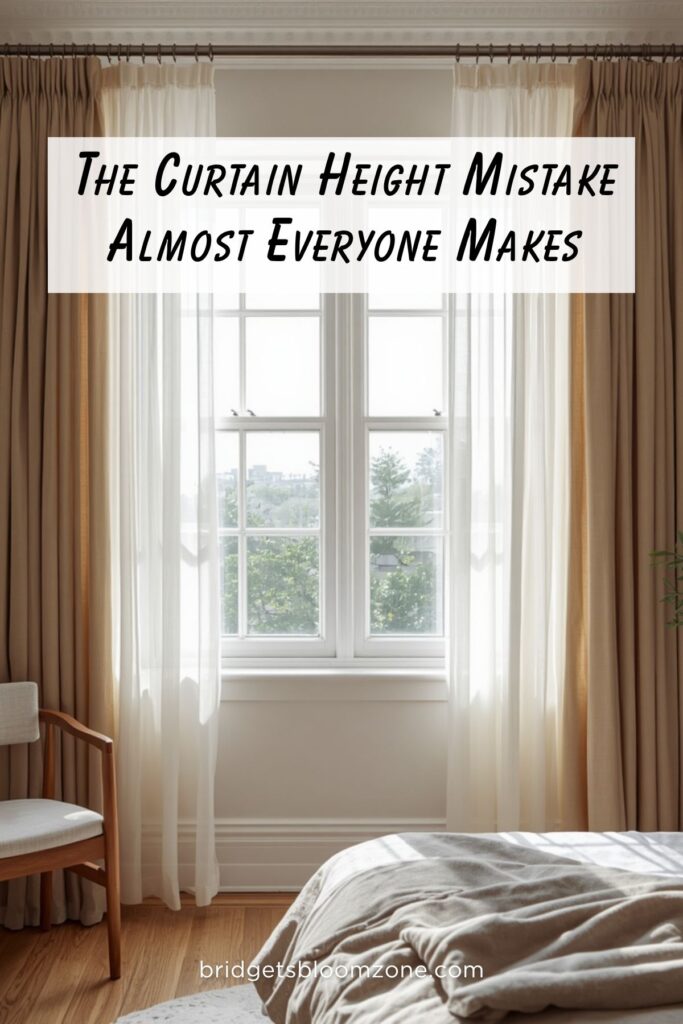
The single most common mistake with bedroom curtain ideas is hanging the rod too low.
A rod mounted directly above the window frame — or worse, mid-way up the wall — compresses the room height visually. The curtain then reads as a window covering rather than an architectural element. The correct placement for a bedroom curtain is as close to the ceiling as the wall allows, with the curtain falling to the floor.
Floor-to-Ceiling Placement
A curtain hung from a ceiling-mounted track, or from a wall-mounted rod placed 10–15cm below the ceiling, makes the window appear taller and the room feel higher.
When the curtain is drawn, it reads as a full-height element. When it’s open and stacked to the side, the window looks larger because the fabric doesn’t interrupt the wall area above the frame. This approach works in any room — it’s not dependent on ceiling height or window size.
For the broader layout decisions that affect where and how curtains sit in a small bedroom, the small bedroom ideas guide covers how window treatment choices interact with bed placement and furniture position.
Floor-Length vs Sill-Length
Floor-length curtains make a room feel taller. Sill-length curtains read as casual and belong in kitchens, not bedrooms.
The exception is a deep window seat or a radiator directly below the window. In those cases, sill-length is a practical constraint — it should look like a deliberate proportion choice, not a limitation.
Key takeaway: Hang the rod high. Let the curtain fall to the floor. These two decisions cost nothing and have a greater effect on the room than any fabric choice.
Aesthetic Curtains and Room Division
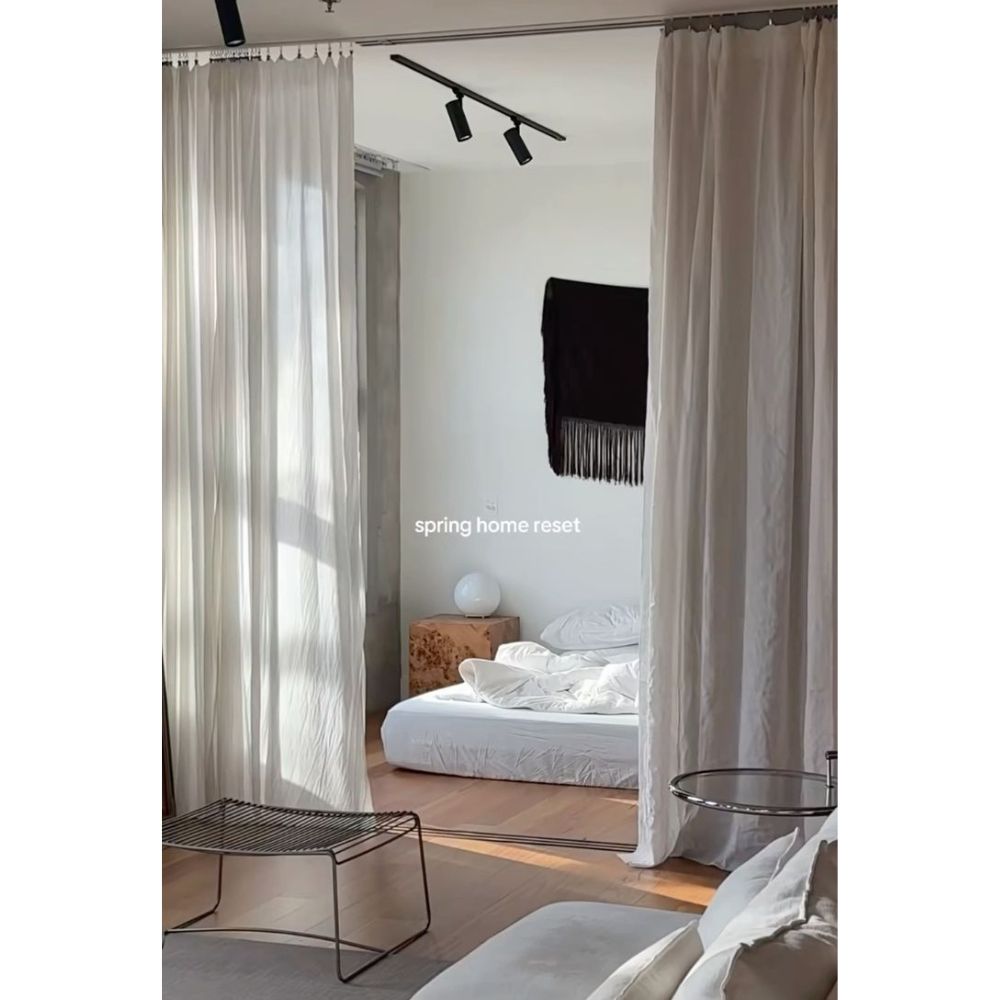
The most interesting use of aesthetic curtains in a small bedroom is not at the window. A curtain can define a zone — covering a wardrobe opening, separating a sleeping area from a dressing area, or marking where a wall used to be.
In each case it’s doing spatial work that would otherwise require a fixed structure.
Curtains as Wardrobe Doors
A floor-length curtain in front of an open wardrobe opening costs less than a fitted door, requires no track or hinge, and can be updated easily. Full-length, with enough fabric to stack generously to one side, is the version that works — a half-length or gathered curtain reads as an attempt to conceal rather than a design choice.
For a fully planned wardrobe zone, the bedroom storage ideas guide covers internal wardrobe layout alongside other zone-by-zone storage decisions.

A Note About My Studio Window
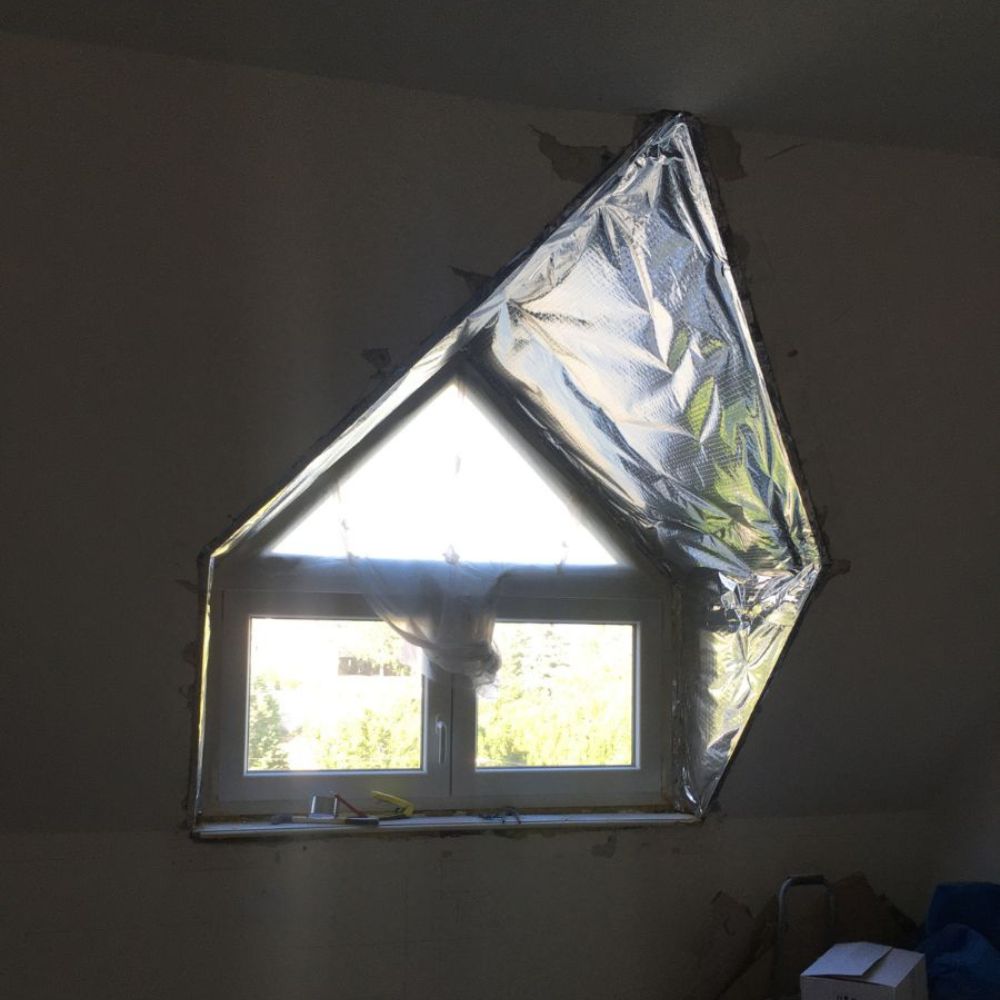
The main window in the studio renovation is unusual: five-sided, shaped like a small house silhouette — a flat triangle at the top sitting above a long rectangle below.
A standard curtain track won’t work for that shape. I’m still researching which sun-shading solution performs best for that specific geometry — external shutters or a custom shade are the most likely candidates.
If you’ve found a solution for a non-rectangular window that didn’t compromise its shape, I’d genuinely like to hear from you.
Bedroom Decor Curtains — Keeping the Room Cohesive
A curtain that serves as bedroom decor as well as a functional covering should share at least one element with the room’s existing palette.
That element can be tonal — a curtain in the same warm-white register as the walls — or material — linen matching the bedding — or more direct: the curtain color picking up one tone from the bedroom paint colors in the room.
What it shouldn’t do is introduce a new color family that the rest of the room doesn’t contain. In a small bedroom, there isn’t enough surface area for a curtain to exist independently of the rest of the palette.


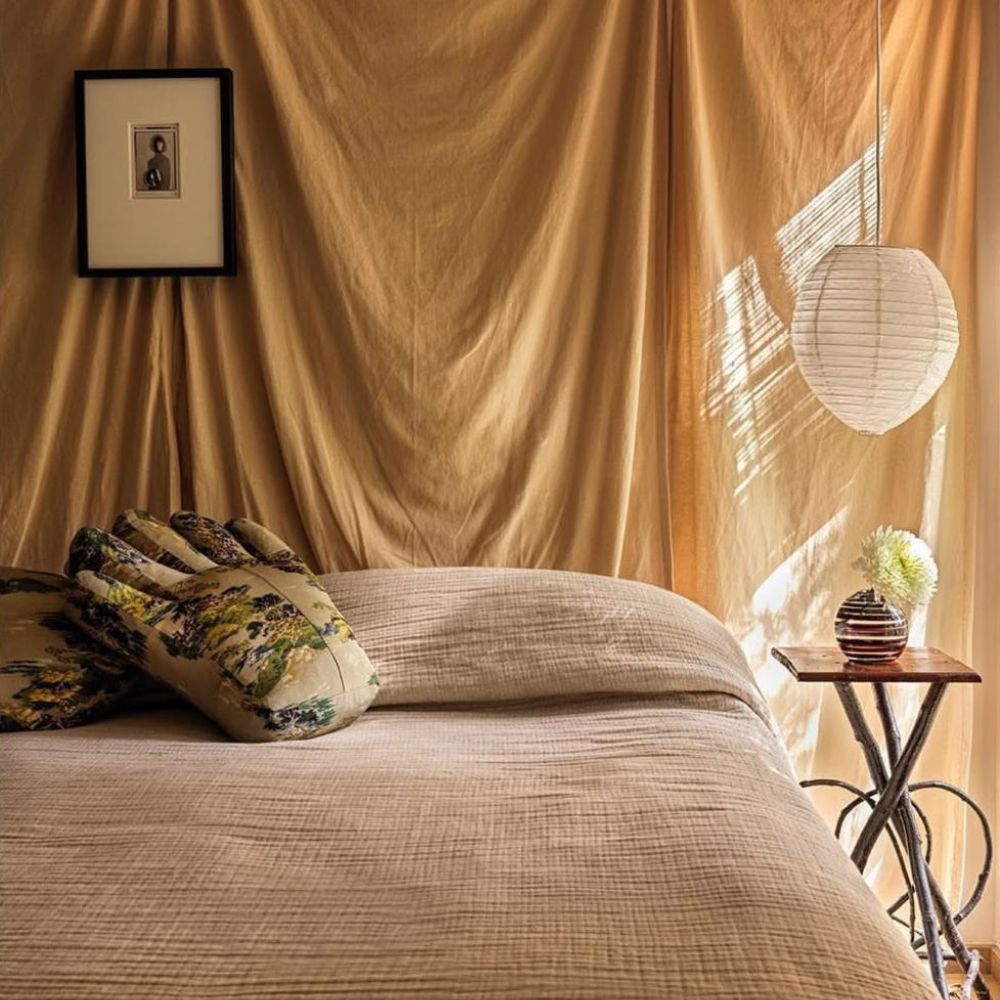
Extra: The Non-Traditional Textile Window Treatment Options
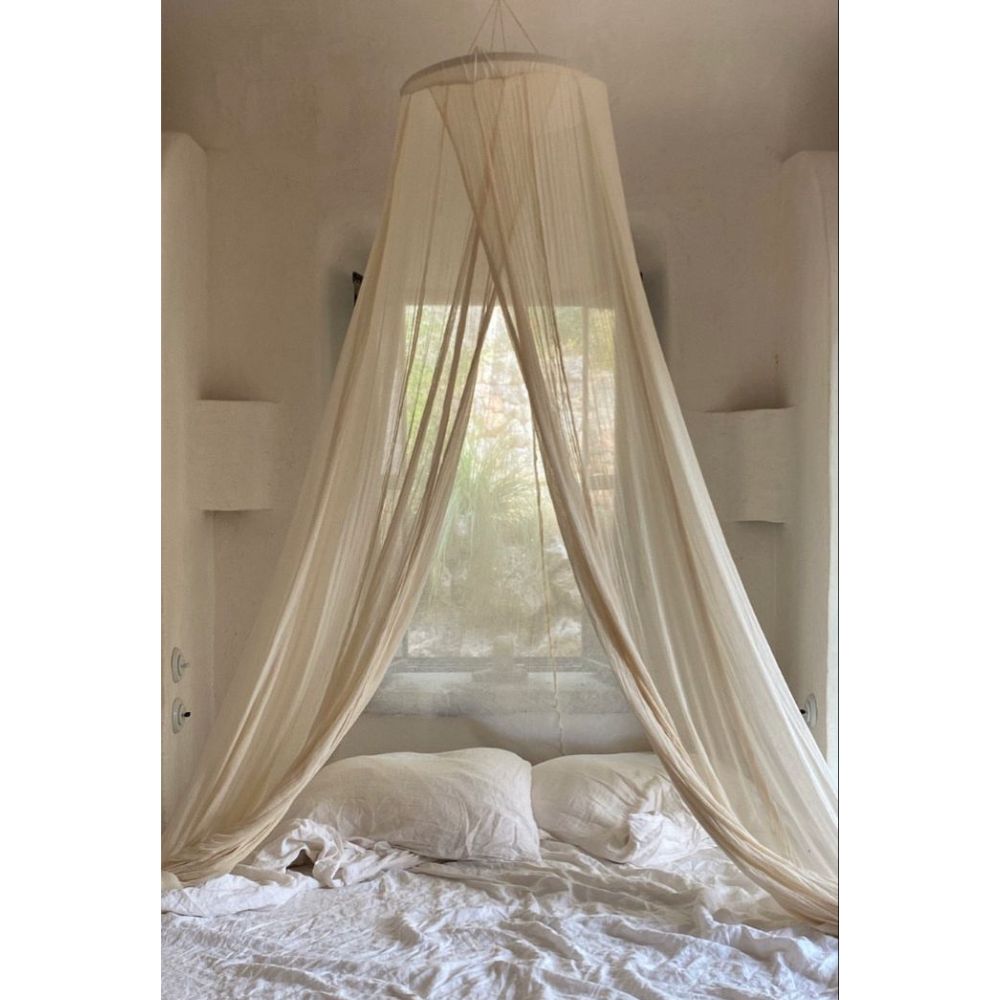
These are the main alternatives that read as designed rather than dressed:
Roman blinds — the most popular alternative. Flat fabric hanging in a frame, folding into horizontal stacks when raised. The folds are the one maintenance weak point (dust concentrates there). Architectural, minimal, works with any fabric weight.
Roller shades with fabric — a single piece of fabric rolling around a casing at the top. When lowered: completely flat, no folds at all. The most minimal option visually. Fabric rollers can be sheer (filtering light), room-darkening, or blackout. Easy to clean because there are no pleats.
Japanese panel blinds (panel track blinds) — wide flat fabric panels hanging vertically from a ceiling-mounted track, sliding horizontally. The closest thing to a traditional sliding wall. Used both as window covering and as room dividers. Completely flat panels mean almost no dust trapping. The most architectural option and also the easiest to clean. Inspired by Japanese shoji screens.
Woven wood / bamboo shades — flat roll-up shades in woven natural materials (bamboo, grass, rattan, reed). Filter light beautifully but cannot be washed with water — dust only. Not suitable as room dividers.
Pleated shades — accordion-fold fabric compressed into a slim cassette at the top. Very crisp geometric look. Can be cellular (honeycomb structure for insulation) or single-layer.
Final Thoughts
Good bedroom curtain ideas start with being clear about what the curtain is doing in the room.
Light control, privacy, spatial division, and aesthetic cohesion are different goals. The curtain that handles all four well in your specific room is the one worth finding — and it’s likely simpler than the range of options suggests. Hang it high, let it reach the floor, and choose a fabric that agrees with the rest of the room. The decisions after that are details.
For the full picture of a small bedroom designed from the floor up, the bedroom ideas for small rooms guide covers layout, color, furniture, and window treatment as an integrated set of decisions.
Frequently Asked Questions About Bedroom Curtain Ideas
What type of curtains are best for a bedroom?
Lined or unlined linen curtains suit most bedrooms — they filter light without blocking it, hang well at floor length, and read well in both warm and neutral room palettes. Blackout-lined curtains are worth adding in rooms that receive early direct sun or where light sensitivity affects sleep.
How high should bedroom curtains be hung?
As high as the wall allows — ideally 10–15cm below the ceiling, not at the window frame. Floor-length curtains hung from a high rod make the room feel taller and the window feel larger. Mounting the rod at frame height compresses the room visually.
Should bedroom curtains touch the floor?
Yes. Floor-length curtains make a room feel taller and a window feel larger. The exceptions are window seats, radiators beneath the window, or practical reasons that prevent a floor-length panel from working. If you have to use a shorter length, make it look proportionally deliberate rather than constrained.
What color curtains are best for a small bedroom?
A curtain in the same tonal register as the walls — or one tone deeper — keeps the room feeling cohesive. A curtain that matches the wall reads as the wall continuing. A curtain in a contrasting color becomes a dominant visual element that the rest of the room has to respond to.
Are blackout curtains good for bedrooms?
Yes, if the room receives direct early sun and sleep quality is affected by morning light. In rooms with indirect light or external shutters, a blackout lining is often unnecessary. When you do use blackout curtains, match them as closely as possible to the wall color so they don’t dominate the room visually.
Can curtains be used as room dividers in a small bedroom?
Yes, and this is one of the most effective uses in a compact apartment. A floor-length curtain on a ceiling-mounted track can define a sleeping zone, cover a wardrobe opening, or mark a spatial boundary that would otherwise require a fixed wall. It’s flexible, affordable, and doesn’t require structural work.
What fabric is best for linen bedroom curtains?
Natural or blended linen in a medium weight — roughly 200–280gsm — hangs well without being stiff and provides enough body to stack neatly when drawn open. Heavier linen or interlined linen offers more acoustic softening and light dimming at the cost of visual heaviness in a small room.
How do I choose curtains for a bedroom window with an unusual shape?
Standard curtain tracks work for rectangular windows only. For arched, angled, or geometric windows, the options are custom-shaped blinds, external shutters, or sun-shading films. A curtain that approximates the opening without following the shape is a reasonable workaround — hang it on a straight track above the frame and let it cover the full width.