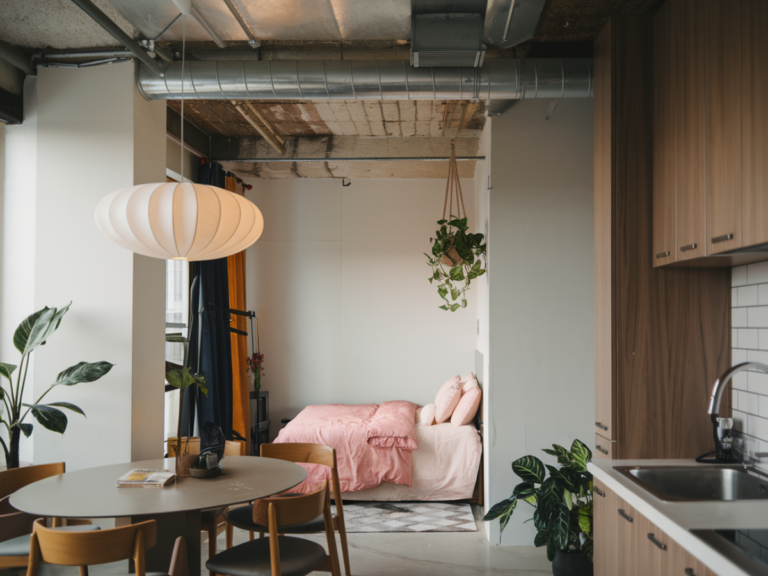
Floor Bed vs. Low Bed Frame: Which Fits a Small Bedroom (On a Budget)
This post contains affiliate links. If you buy through them, I may earn a small commission at no extra cost to you. I only recommend products I would genuinely specify as an architect.
A floor bed is the simplest way to get a low, minimal bedroom without spending much on furniture.
It also comes with a few real trade-offs that most inspiration photos skip over completely.
In our guide to styling a room around a low bed frame, I told the story of a rented room I once fixed. I used nothing but low, rearranged furniture.
That project used an actual frame, just a very low one.
This time, the question is different. Should you skip the frame entirely, and put the mattress straight on the ground?
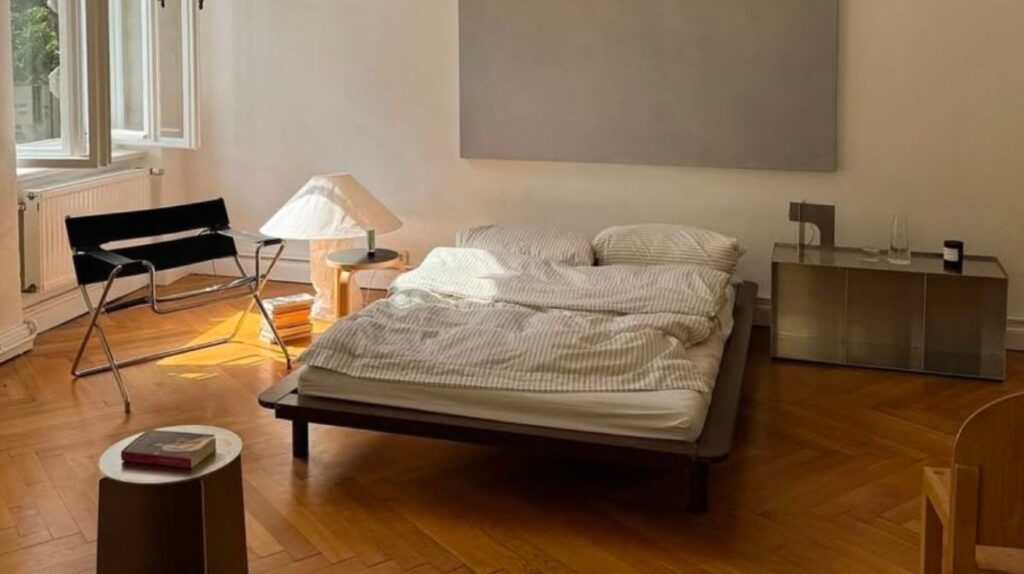
Here is how to think it through. I have also included a simple way to build one yourself, in case buying is not an option right now.
Neither choice is automatically right. It depends on your climate, your body, and your budget, more than it depends on the look.
Pinterest tends to show only the finished, styled version of a mattress on the floor. It rarely shows what happens underneath after a few humid months.
This guide covers both sides: the look, and the maintenance. That way you can make the call with full information, not half of it.
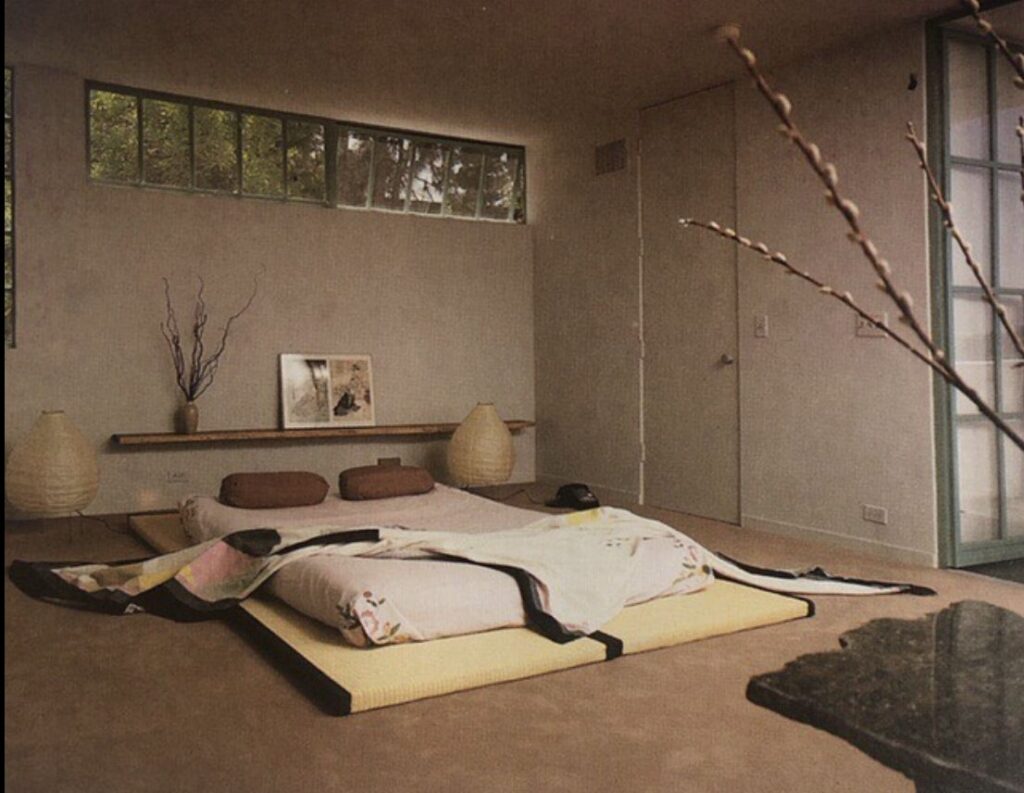
Floor Bed vs. Low Bed Frame: What’s Actually Different
These two options get lumped together constantly, but they are not the same thing.
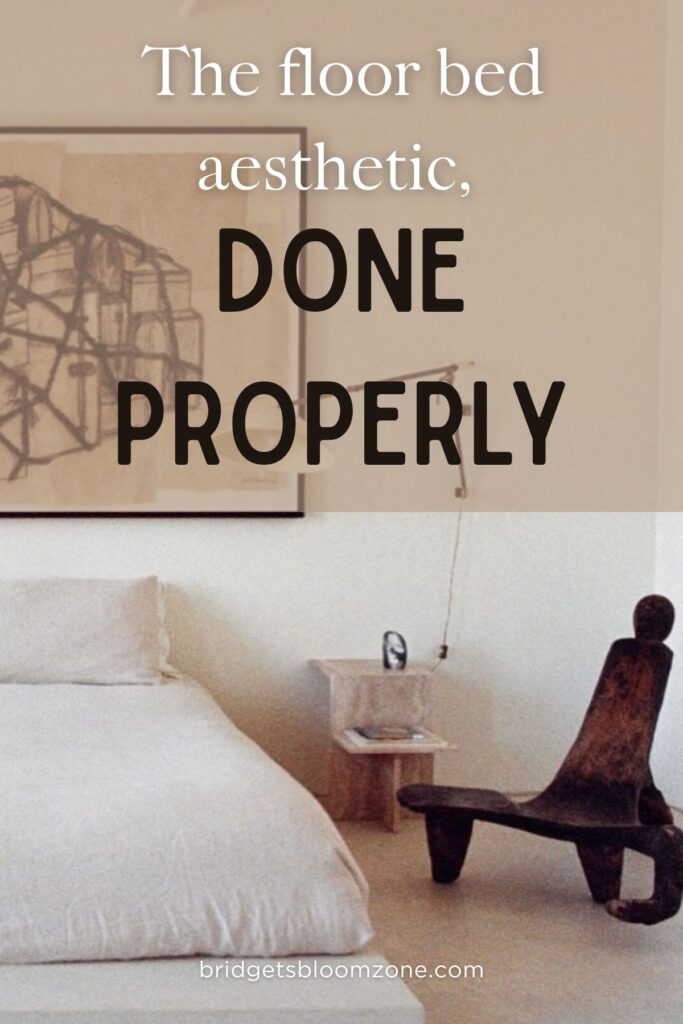
A floor bed means a mattress or futon placed directly on the floor. Nothing sits underneath it at all.
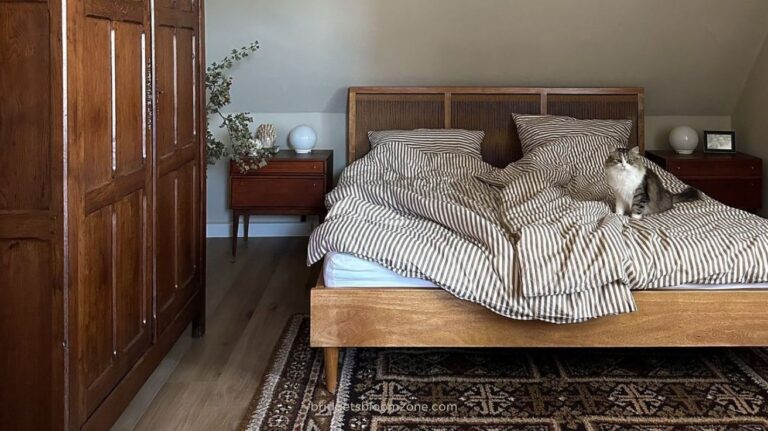
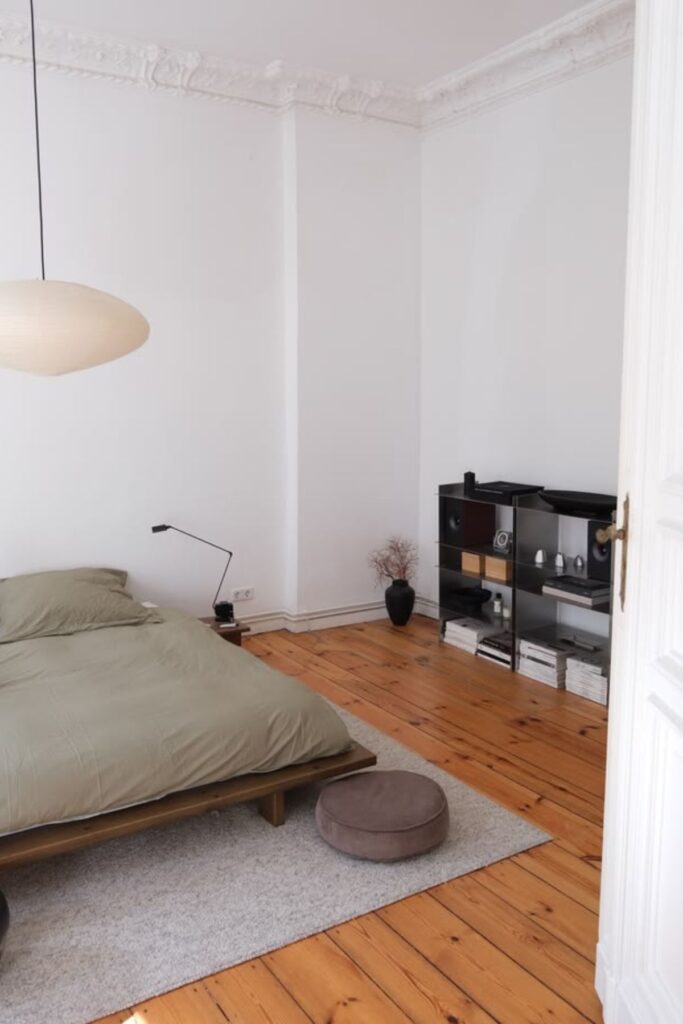
A low bed frame, by contrast, is still a frame. It typically sits somewhere between 11 and 15 inches ( 27-35 cm) off the ground.
That gap matters more than it looks on a moodboard. A frame, even a very low one, lifts the mattress just enough to let air move underneath it.
- No frame at all: mattress or futon directly on the floor, no gap for airflow
- Low bed frame: roughly 11 to 15 inches, with slats or a base beneath the mattress
Both can look almost identical in a photo. Only one of them behaves differently underneath, and that difference is where the real decision lives.
There is a third option worth knowing about too: a bunkie board.
A bunkie board is a thin panel that sits between your mattress and whatever holds it up, whether that is a frame, a platform, or a box spring. Most are one to three inches thick, made from plywood or particleboard today, though older versions used a single wood panel wrapped in fabric.
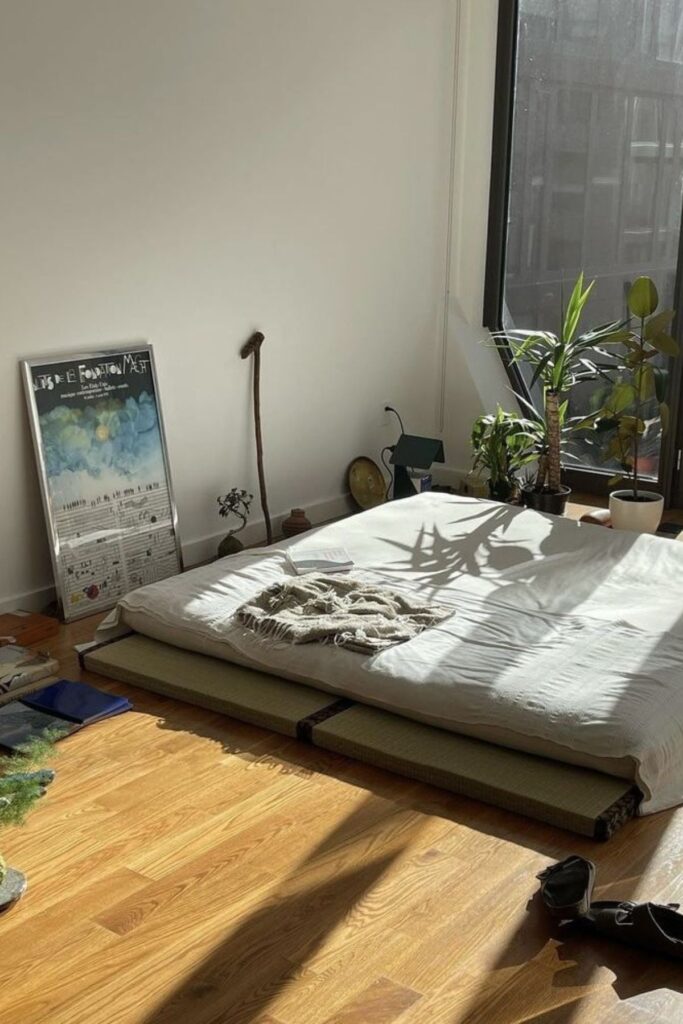
You do not need one labeled as a bunkie board. A cut sheet of plywood, a solid door laid flat, or a tatami mat can all do the same job. Tatami adds a natural, minimalist texture that a manufactured board does not.
It keeps almost all of the visual effect of sleeping low, while still creating a small gap for air to move.
This is the same middle ground we point to in our small attic bedroom guide. A slatted base solves a similar height and ceiling problem at once.
None of these three options is objectively correct. Each one trades a small amount of height for a different benefit, whether that is airflow, cost, or pure visual weight.
Price is often the deciding factor at the start. A simple platform or bunkie board usually costs less than either extreme.
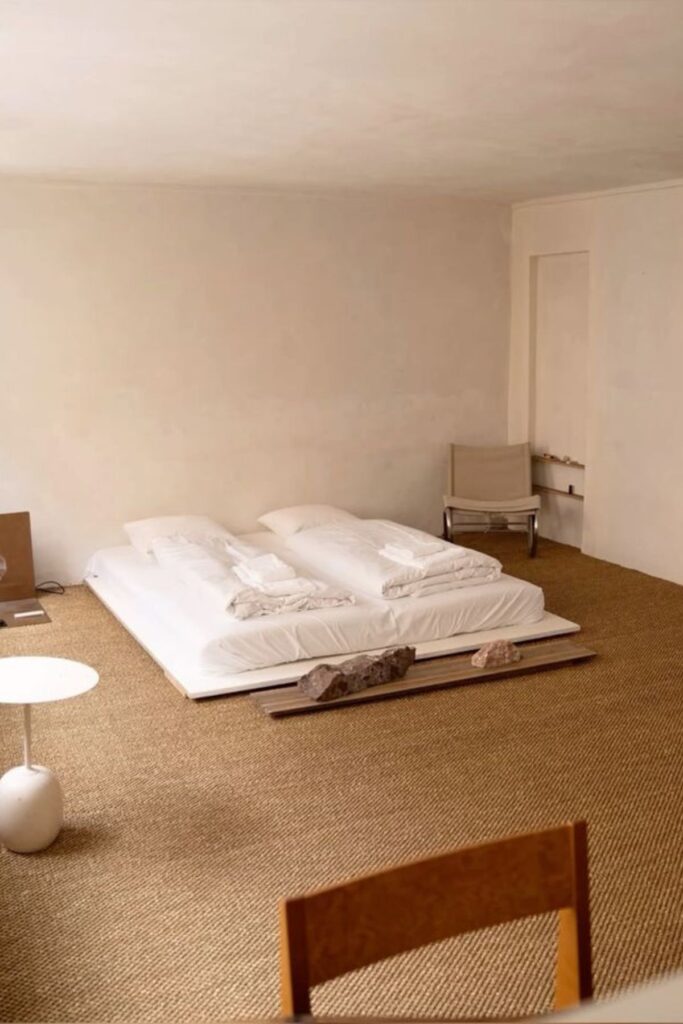
The Real Risks of a Floor Bed
This is the part most Pinterest boards leave out entirely.
None of it means you should rule the idea out. It just means going in with your eyes open.
Ventilation and Mold Risk on a Floor Bed
A mattress needs airflow underneath it to stay dry. Without it, body heat and moisture have nowhere to go.
This can create the right conditions for mold and mildew. Memory foam mattresses are the most at risk, since they already retain more moisture.
Symptoms from mold exposure can range from a stuffy nose to itchy skin. More serious cases bring fatigue and headaches over time.
Cold, humid rooms carry the highest risk. Basements and downstairs bedrooms with concrete underneath deserve the most caution.
Even a dry climate is not fully immune. Body heat and overnight sweat create moisture regardless of the weather outside.
The flooring underneath matters too. Hardwood and tile handle this better than carpet, which traps moisture instead of letting it evaporate.
Season matters as well. Humid summer months bring the highest risk, so that is the time to be strictest about airing the mattress out.
If your bedroom already leans toward the natural materials palette we cover in our earthy bedroom guide, a breathable underlay fits right in. I mentioned tatamis before – easy, simple, and stylish. Not the cheapest option though.
Warranty and Mattress Lifespan
Most mattress manufacturers design their products to sit on a slatted base or box spring, not directly on the floor.
Skipping the frame can void the warranty entirely. It is worth checking your specific mattress terms before deciding.
Wear happens faster too. A mattress on the ground gets stepped on and sat on. It is exposed to spills in a way a raised bed rarely is.
Important: this setup also tends to attract dust and, depending on your home, small pests, since there is no gap protecting the underside of the mattress.
How to Get the Floor Bed Look Without the Problems
None of this rules a low, grounded look off the table. It just means the setup underneath matters more than the look on top.
Tatami Mats and Coconut Coir Underlays
Two traditional materials solve the airflow problem almost completely.
Tatami mats and coconut coir bed rugs both sit under the mattress. Their loose, woven structure lets air move freely.
They add only an inch or two of height. The floor-level look stays intact, while the ventilation problem mostly disappears.
A regular airing routine helps too. Lean the mattress against a wall for a few hours every week or two. This matters most in humid seasons.
A mattress protector adds one more layer of defense. It shields against spills and everyday dust, on top of whatever ventilation solution you choose.
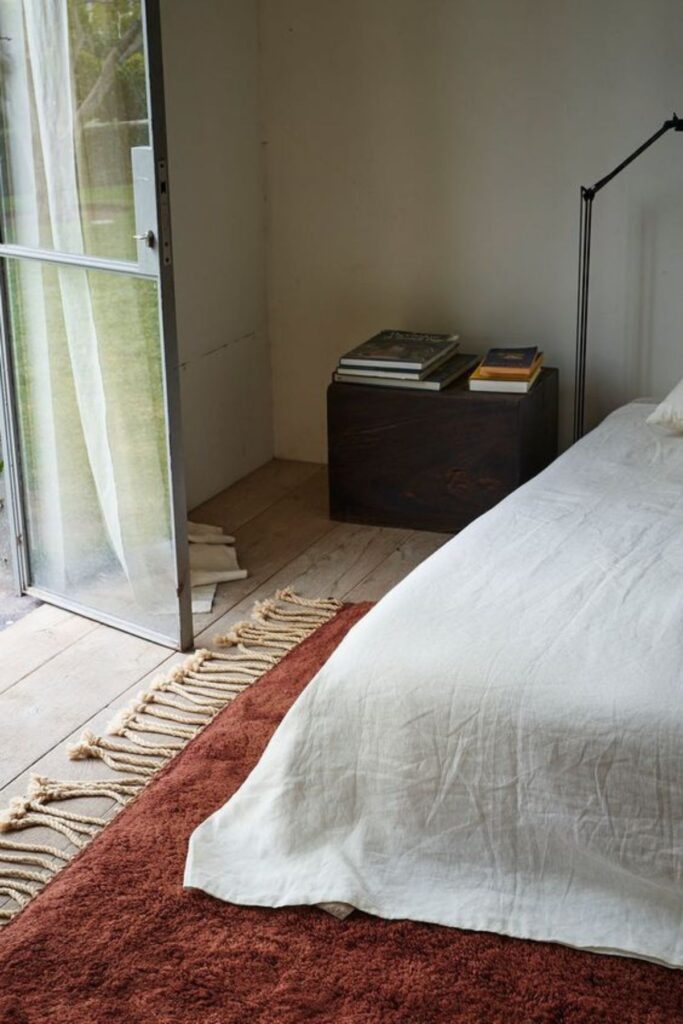
A wide, natural-fiber rug underneath the whole setup adds a layer of texture too. Our bedroom rug guide explains how to size one correctly for this kind of low, grounded layout.
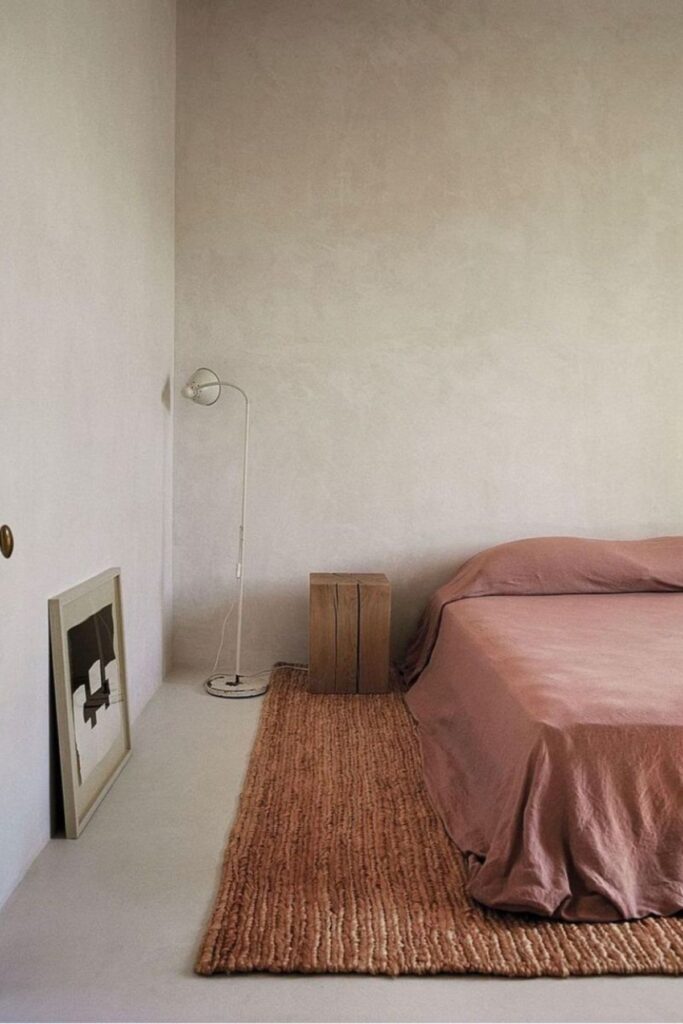
How to DIY a Simple Floor Bed Platform
If buying a frame is not in the budget right now, building a basic one is genuinely simple.
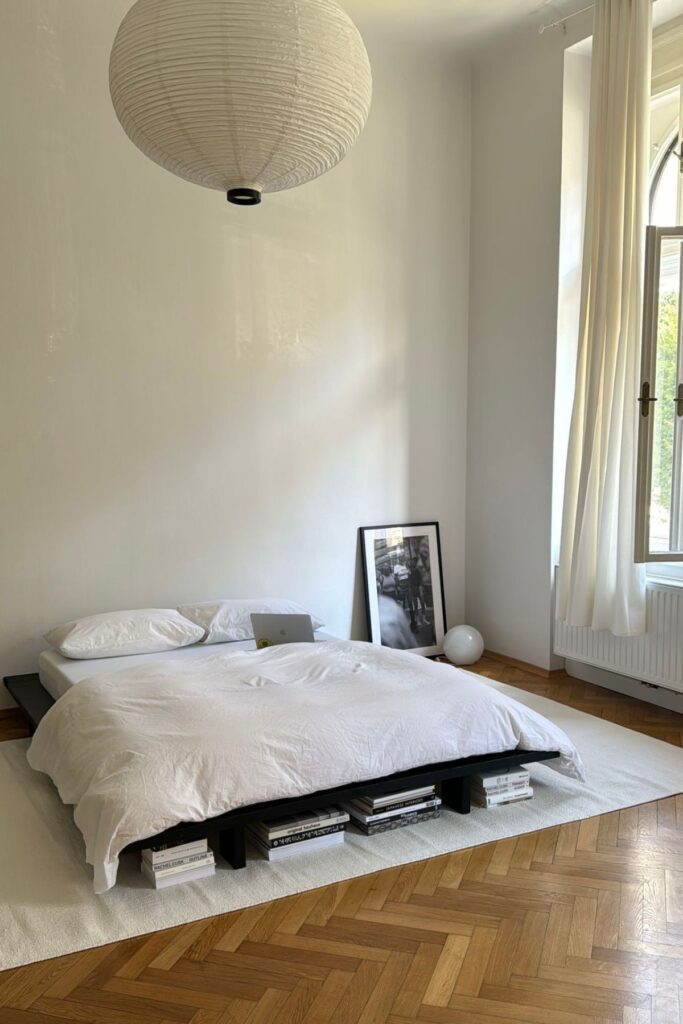
A low platform is just a flat, sturdy surface with small gaps for airflow. It only needs to sit a few inches off the ground.
- A few sheets of plywood cut to your mattress size, laid over simple wooden support blocks
- Basic wooden pallets, sanded down and arranged in a rectangle to match your mattress
- Slatted wooden crates, spaced with small gaps between them for airflow
None of these require advanced carpentry. A saw, sandpaper, and an afternoon are usually enough.
This is the same spirit behind our (unusual) DIY bedside table project. A simple, sturdy structure, built once, solves the problem for years.
Sand every edge well before use, especially if pallets are your starting material. Splinters and rough wood are the most common complaint with this approach.
A thin foam mat between the platform and the mattress adds a bit of extra comfort too, without changing the overall height by much.
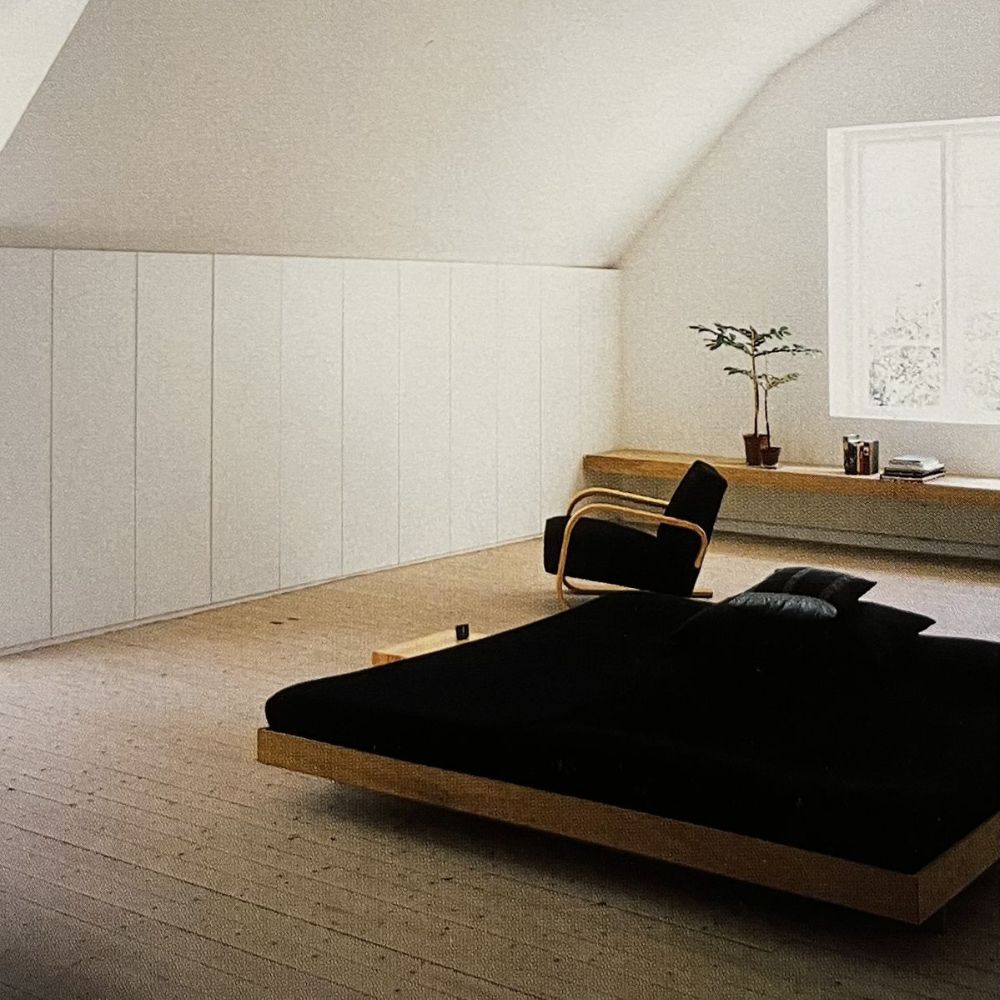
More foto about the home here.
You can always upgrade to a proper low bed frame later. Building the simplest version first lets you live with the height before spending more money on it.
I like recommending this route to anyone just starting out in a new apartment. It costs very little, and it teaches you what height and firmness actually feel right before you commit to buying anything.
A basic nightstand alternative works well alongside this kind of platform too. Our simple bedside table guide has a few low, budget options that sit at the same height as a DIY platform.
Paint or stain is optional. A coat of either helps the raw wood blend in, instead of looking like a work in progress.

Who Should Think Twice About Sleeping This Low
Sleeping this close to the ground is not the right fit for everyone. Budget and style are not the only factors that matter.
- Anyone with joint pain or limited mobility.
Getting up from floor level puts more strain on the knees and hips than most people expect. - Side sleepers who need more contouring.
A firm floor surface can leave hips and shoulders without enough cushioning. - Anyone with dust allergies.
Floor-level surfaces sit exactly where dust and pet dander settle most. Dust mite allergies affect a large share of the population, per research cited by Vaya Sleep. - Anyone in a humid or cold climate. Ground-floor rooms and concrete floors make ventilation problems more likely, not less.
None of these rule out a low bed frame instead. A frame that lifts the mattress even a few inches solves most of these problems on its own.
If any of these apply to you, a slatted platform a few inches high is usually a better starting point than the floor itself.
None of this is about age. A very fit person in their sixties may handle a low setup better than a desk-bound person in their thirties. Age is not the deciding factor here.
Test it honestly before you commit. Sit on a low cushion or stack of folded blankets at the height you are considering. Get up a few times the way you would each morning.
Making the Decision for Your Room
Start with climate. If your home is humid, damp, or has a ground-floor concrete slab, lean toward a low frame or a well-ventilated setup. Skip a bare mattress on tile.
Next, think about your body. If you or anyone sharing the bed has joint pain, a slightly higher frame will make daily life easier.
Then think about storage. A proper wardrobe plan matters more here, since there is no under-bed space to rely on at all.
Consider the room’s overall palette too. A low, grounded sleeping area reads best against the right floor and wall pairing. Our bedroom color combination guide covers exactly that.
Finally, be honest about budget. A DIY platform, or a simple frame from our furniture principles for small rooms, can close most of the price gap anyway.
None of these factors work in isolation. A dry climate and a healthy back still might not suit everyone. A tight moving timeline and no tools on hand change the equation.
Weigh them together, and let the one that matters most to your actual life make the final call.
In summary: this option suits a dry climate, a healthy back, and a willingness to maintain it. A low bed frame suits almost everyone else.

Final Thoughts
A floor bed and a low bed frame can look almost the same in a photo, but they behave very differently in daily life.
Climate, body, and budget decide this one more than aesthetics do.
None of those three factors show up in a Pinterest photo, which is exactly why they deserve more attention before you buy or build anything.
The DIY route is worth taking seriously too. It is the fastest way to learn what actually works for you, not just a compromise.
If you want the full guide to styling whichever option you choose, our low bed frame styling guide picks up right where this one leaves off. It covers furniture pairing through lighting.
Common Questions About Sleeping on the Floor
Does a floor bed get moldy?
It can, mainly due to trapped moisture and poor airflow underneath the mattress. A tatami mat, coir underlay, or regular airing routine reduces this risk significantly.
Will sleeping on the floor void my mattress warranty?
Often, yes. Most manufacturers design mattresses for a slatted base or frame, so check your specific warranty terms before deciding.
Is a mattress on the floor bad for your back?
It depends on the sleeper. Some people find the firmness improves spinal alignment. Side sleepers may find it too firm for proper hip and shoulder support.
What’s the difference between sleeping on the floor and a platform bed?
Sleeping directly on the floor means no frame at all. A platform bed still has a frame, usually with slats, that lifts the mattress a few inches and allows airflow.
Can you put any mattress type directly on the floor?
Latex and hybrid mattresses tend to handle it better than memory foam. Memory foam retains moisture more easily and is more prone to mold in this setup.
Is this a good idea in a humid climate?
Not without extra care. Humid or ground-floor rooms benefit from a ventilated underlay or a low frame. A bare mattress directly on the floor is the riskiest option there.
Is a DIY platform sturdy enough for everyday use?
Yes, if it is built with solid support blocks and sanded edges. It will not last as long as a manufactured frame. It does hold up well for a year or two while you decide on something permanent.
Read Next
Small Bedroom Ideas: A Complete Decision Guide for Tight Spaces

Low Bed Frame Ideas: How to Style a Room Around a Low-Profile Bed