Low Bed Frame Ideas: How to Style a Room Around a Low-Profile Bed
This post contains affiliate links. If you buy through them, I may earn a small commission at no extra cost to you. I only recommend products I would genuinely specify as an architect.
A low bed frame can change the entire feel of a small bedroom.
Sometimes within a single afternoon.
I learned this in the strangest way, in a rented room of a 3-bedroom-flat that had nothing to do with a normal bedroom.
The apartment had one enormous room, almost 45 square meters. That is nearly three times the size of the tiny studio I remodel now.
It came furnished with a handful of antique pieces. And two odd convertible sofas that never quite worked as either sofas or beds. The room felt closer to an empty hall than a place to live. Nothing in it agreed with anything else.
The only real design tool I had back then was rearranging what was already there. There was no budget for anything new.
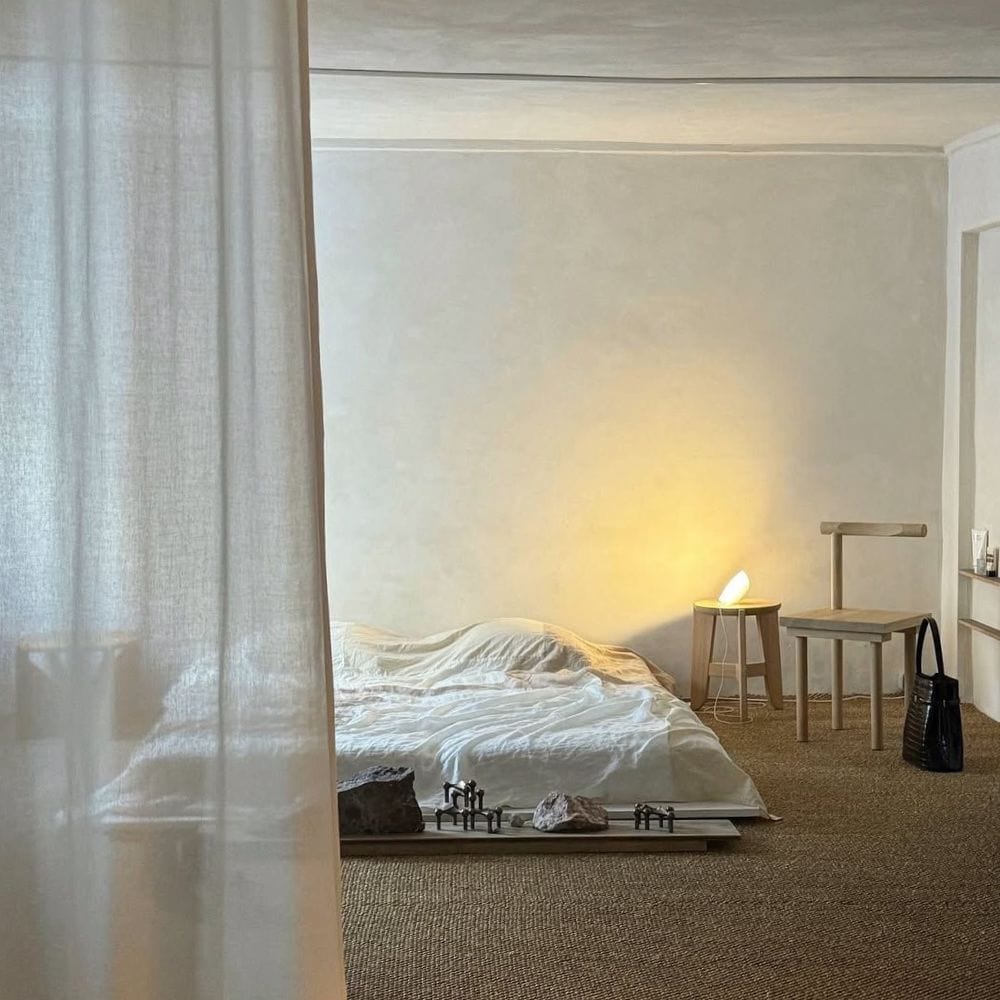
Swapping those two sofas for a single low bed turned out to be the fix. Practically, I just had a mattress on the floor. I will walk through exactly how further down.
Most people shopping for a low-profile bed today are chasing that same feeling. They want a small room that suddenly reads as calmer and more open.
But the bed itself is only half of it.
What you put around it decides whether the room actually works. The furniture, the art, and the way you light it all play a part.
That is what this guide is really about. Not just the bed, but the whole room built around it.
Some of it is instinct. Most of it, though, comes down to a few principles borrowed from architecture and lighting design, not just Pinterest boards.
What a Low Bed Frame Does to a Small Room
A low bed frame does more than sit lower to the ground. It shifts how your eye reads the whole room.
Two mechanisms are doing the work here, and both come from architecture rather than trend cycles. One is about line. The other is about scale.
Horizontal Lines and Why They Read as Calm
Interior designers describe horizontal lines as the visual language of rest. They echo the horizon and the position we take when we lie down to sleep, according to Dakota Design Company.
That same source points to Japanese interiors. Simple horizontal lines are used there deliberately, to create a sense of calm and quiet order.
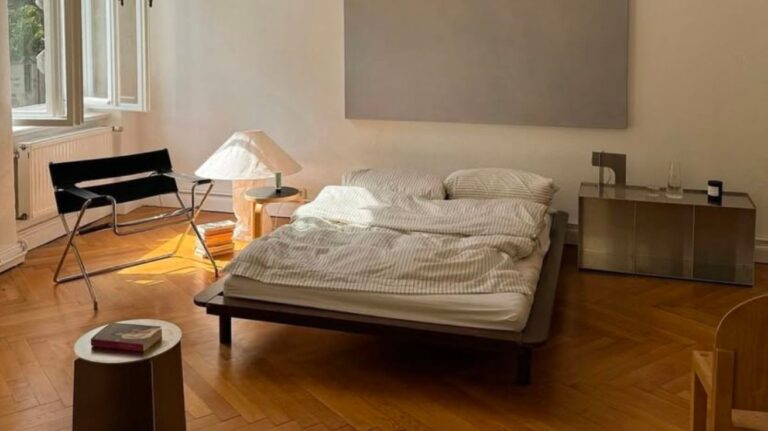
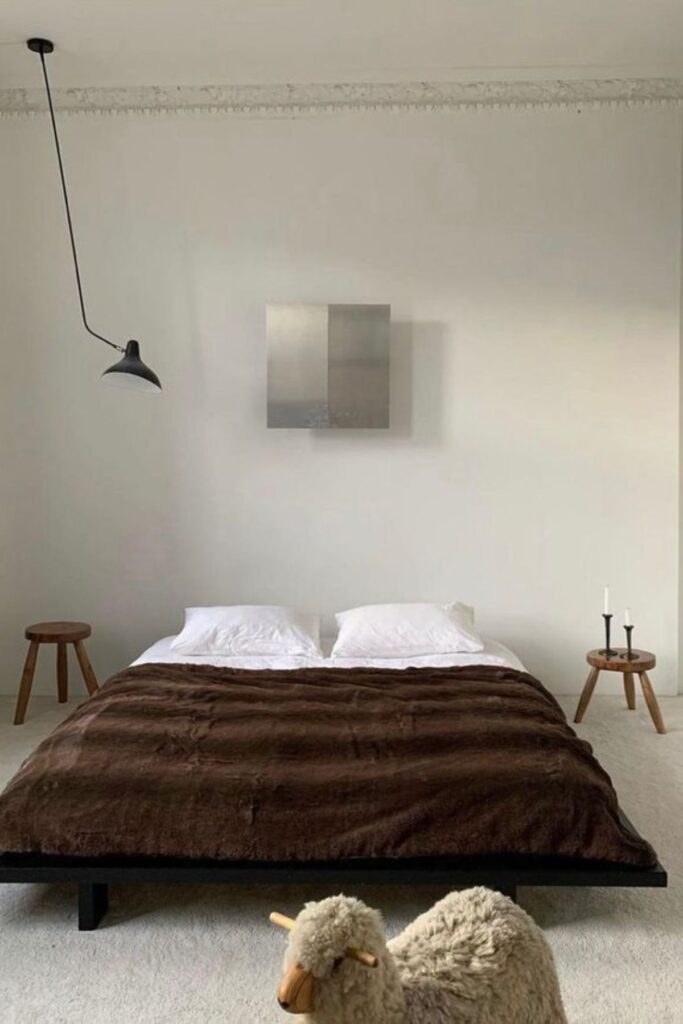
This style of bed frame is one of the strongest horizontal lines you can introduce into a bedroom. It sits parallel to the floor, across the widest surface in the room.
Compare that to a tall headboard or a high bed base. Both introduce a vertical break right at eye level.
Vertical lines tend to read as more formal and more active. That is often the opposite of what a small bedroom actually needs.
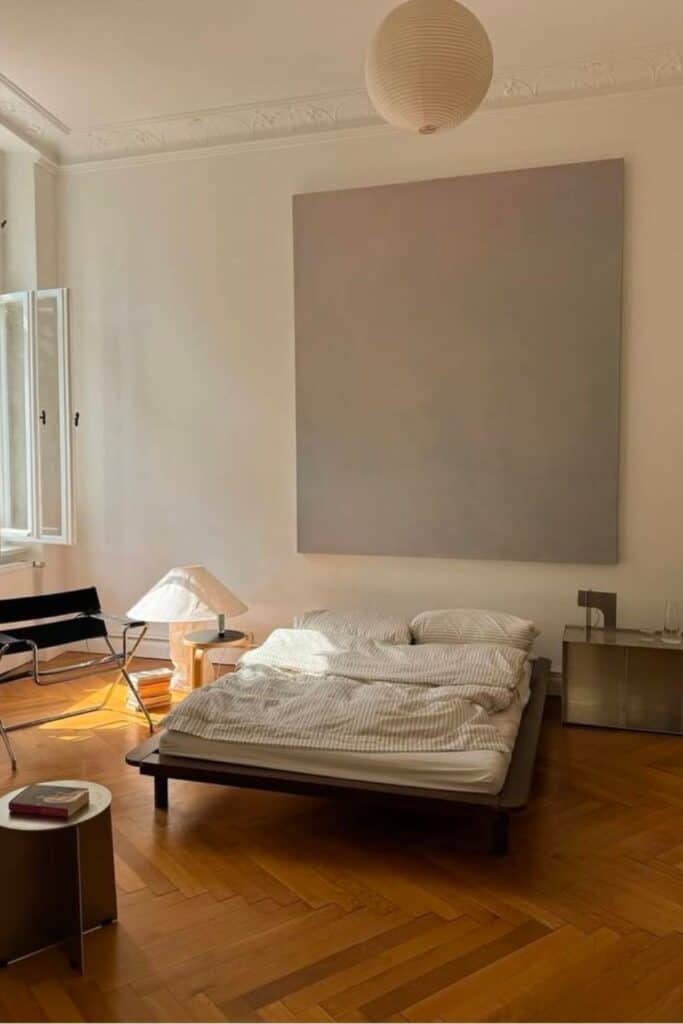
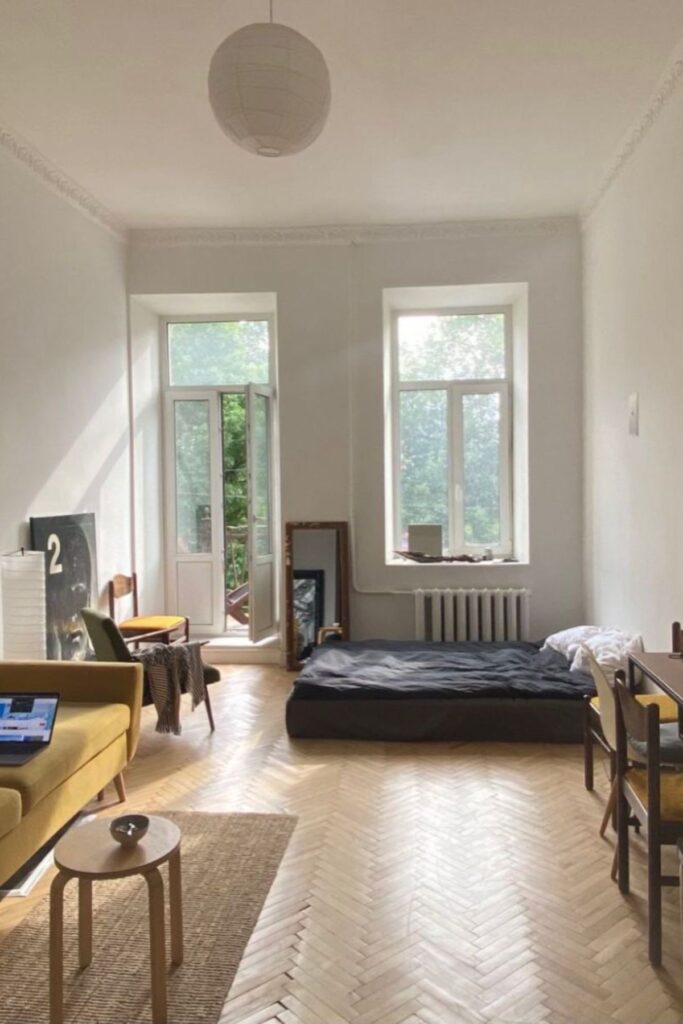
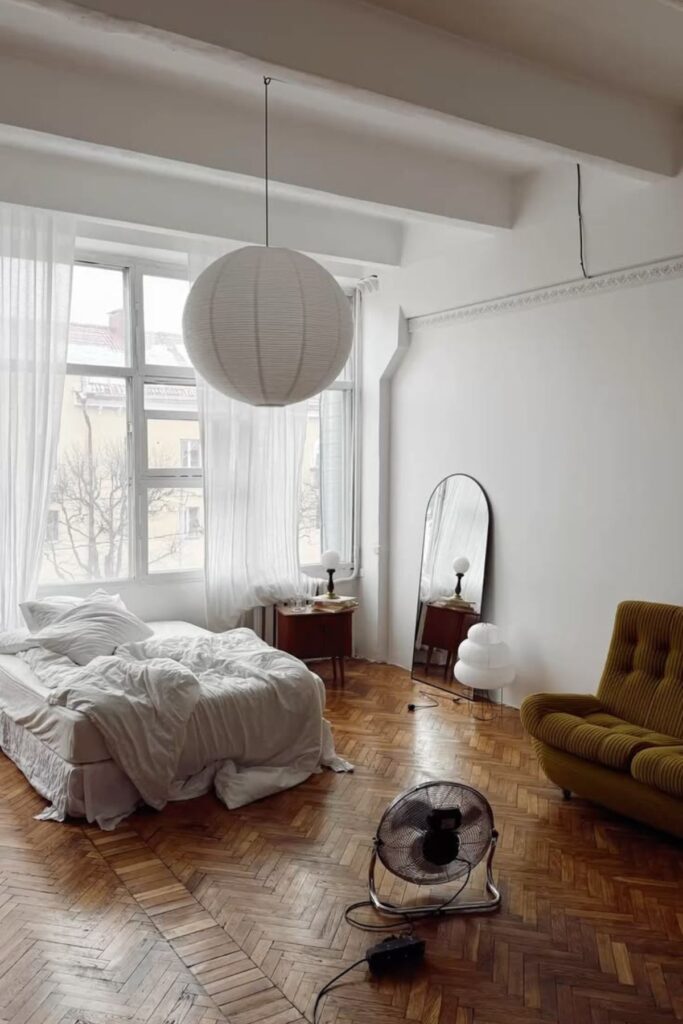
Key takeaway: the lower and longer the bed’s silhouette, the more it reinforces a feeling of rest rather than activity.
This is also why a low bed so often pairs well with a low bench, a wide rug, or a horizontal headboard rather than a tall one. Each piece adds to the same line instead of interrupting it.
Why Low Furniture Makes a Ceiling Feel Taller
This part surprises most people. A lower bed does not just remove visual bulk, it actively changes how tall the ceiling feels.
Lower-profile furniture increases the visible distance between the floor and the ceiling. This is one reason it shows up so often in guidance on making ceilings feel higher, as explained by the AND Academy.
Houzz lists low furniture directly among its go-to techniques for creating the illusion of a higher ceiling. This matters most in rooms where the scale already feels off, per its guide on ceiling height.
The effect is not subtle once you notice it. Stand in a room with a standard-height bed, then picture the same bed twelve inches (30 cm) lower.
The space above it reads as noticeably taller, even though nothing structural has changed.
This is exactly why a small attic bedroom with a slanted ceiling often benefits from a low frame more than any other room type. The lower the furniture sits, the more headroom the slant appears to leave.
A Real Example: Dividing One Big Room With a Low Bed Frame
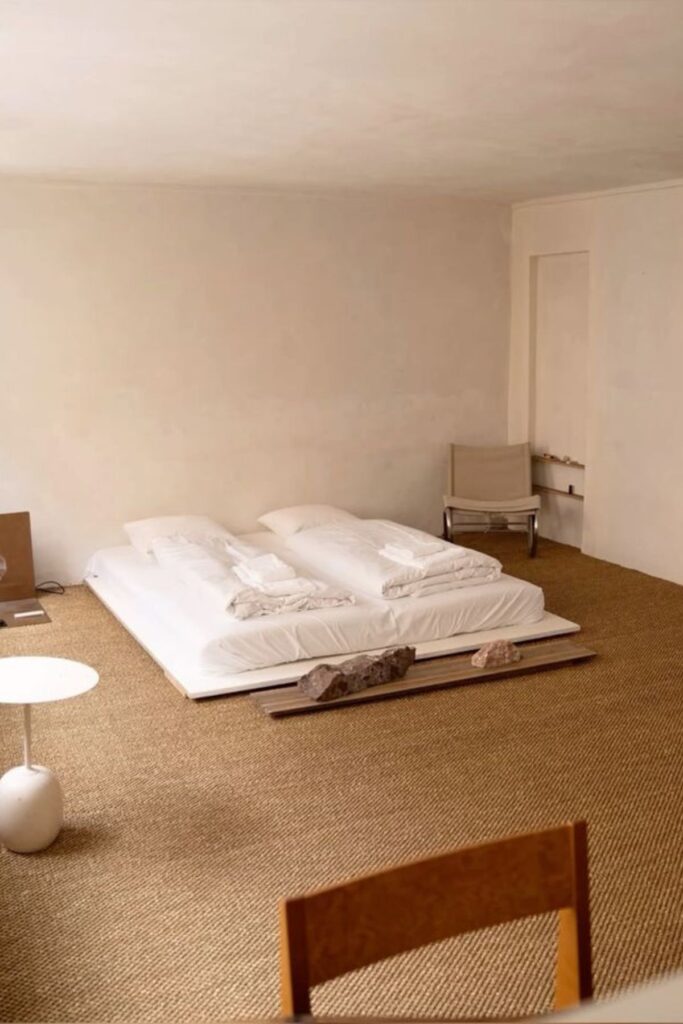
Back to that 45 square meter room. It was just too big and too empty. So I had to zone it using furniture height alone.
I moved the taller antique pieces to one half of the room, further from the windows but facing them. That side became the wardrobe and work zone.
The other half became the sleeping zone. It held the bed itself, a carpet, and small wooden blocks used as side tables, right in front of the second set of windows.
Two rooms appeared out of one. Each with its own light source, and its own visual height.
The low, grounded half read as restful. The taller half, closer to the windows, read as active. Neither fought the other for attention.
Height was doing the job a wall usually does. That is the part most people miss when they think about zoning one large room.
The same logic applies at a smaller scale in any living room and bedroom combo. It borrows directly from the zoning principles in our small living room layout rules.
I am still looking for the old photos from that apartment. I will add them here once I find them.
How Low Is a Low Bed Frame? Reading the Height Options
“Low” is not one fixed number. It covers a real range, and knowing where each option sits helps you choose on purpose.
Low-Profile, Platform, and Floor-Level Bed Types
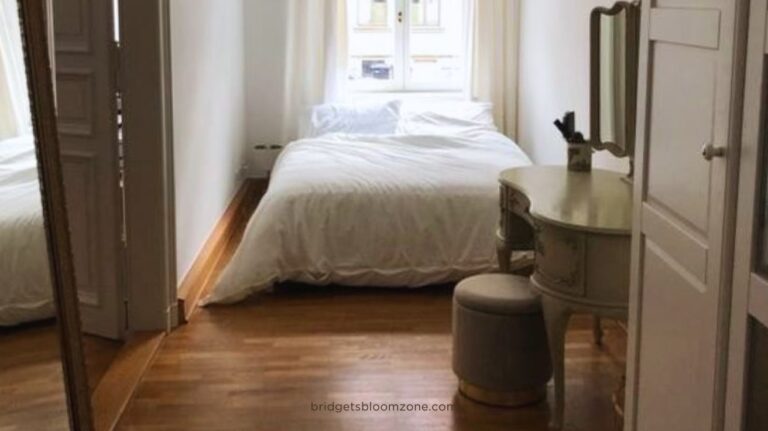
A true low-profile frame usually sits at 11 inches (27 cm) or less from the floor to the top of the frame. That figure comes from a comparison of low and high bed frames.
Platform beds are a step up from that. They typically reach up to 18 inches (45 cm) once the mattress is included, per the same source.
Floor-level setups go further still. This means either an ultra-low frame, or a mattress placed directly on the floor.
That option gets its own full comparison in a separate guide, since it comes with a different set of trade-offs entirely.
- Low-profile frame: roughly 11 inches / 27 cm or less
- Platform bed: up to about 18 inches / 45 cm with the mattress
- Floor-level bed: a few inches high, or the mattress directly on the ground
For comparison, a standard bed frame sits around 14 to 15 inches / 30-33 cm. With the mattress on it, that is close to knee height for most adults.
That gap is sometimes over a foot. It is exactly why a low frame reads as a different style of room, not a smaller version of a standard one.
Note: “Low” and “floor level” are not the same thing. Mixing them up is where most buying mistakes start.
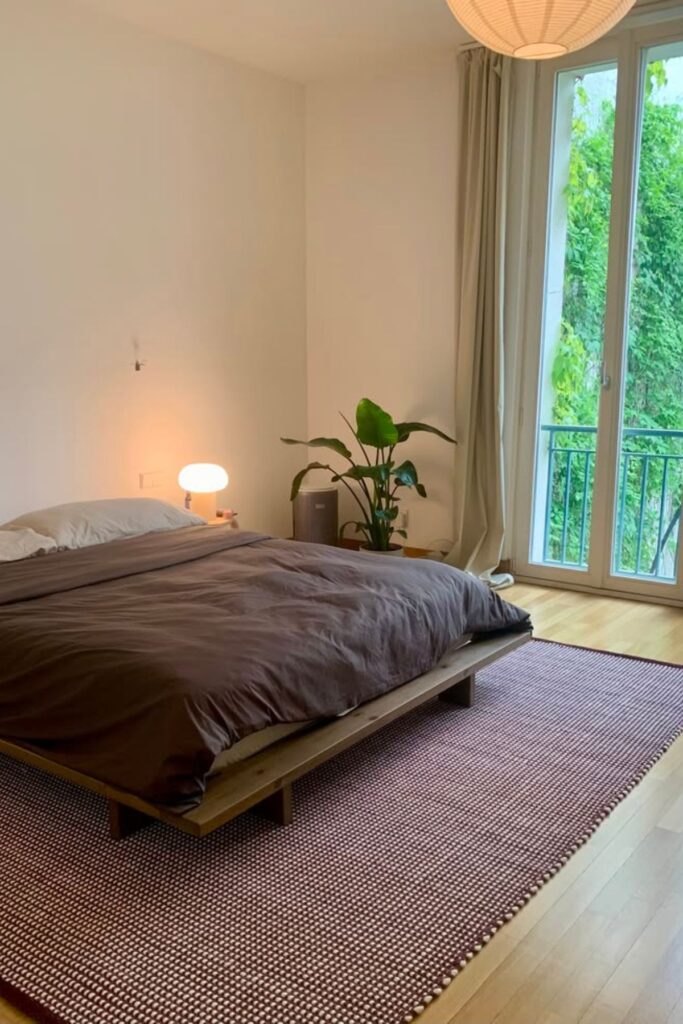
Matching a Low Bed to Your Ceiling and Mattress
A thicker mattress eats into the visual gain a low frame gives you. Pair a low frame with a slightly slimmer mattress where possible, rather than the tallest one you can find.
In a room with genuinely low ceilings, like the ones in our attic bedroom guide, staying closer to the 11 inch end of the range makes the biggest difference.
In a room with average or higher ceilings, the platform range around 18 inches gives you almost the same benefit. It also stays easier to get in and out of.
Frame material affects this too. A slim wooden or metal frame with visible legs tends to feel lighter than a fully upholstered base, even at the same height.
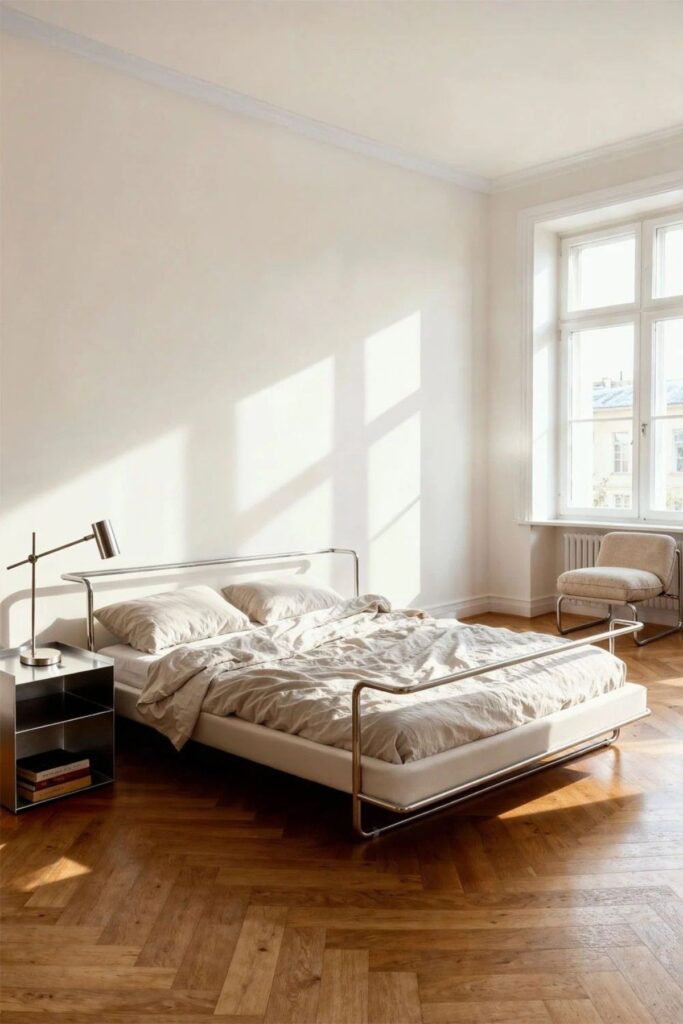
If you like the upholstered look but worry about bulk, look for one with a low, straight edge rather than a rolled or padded one. The straight line keeps the horizontal effect intact.
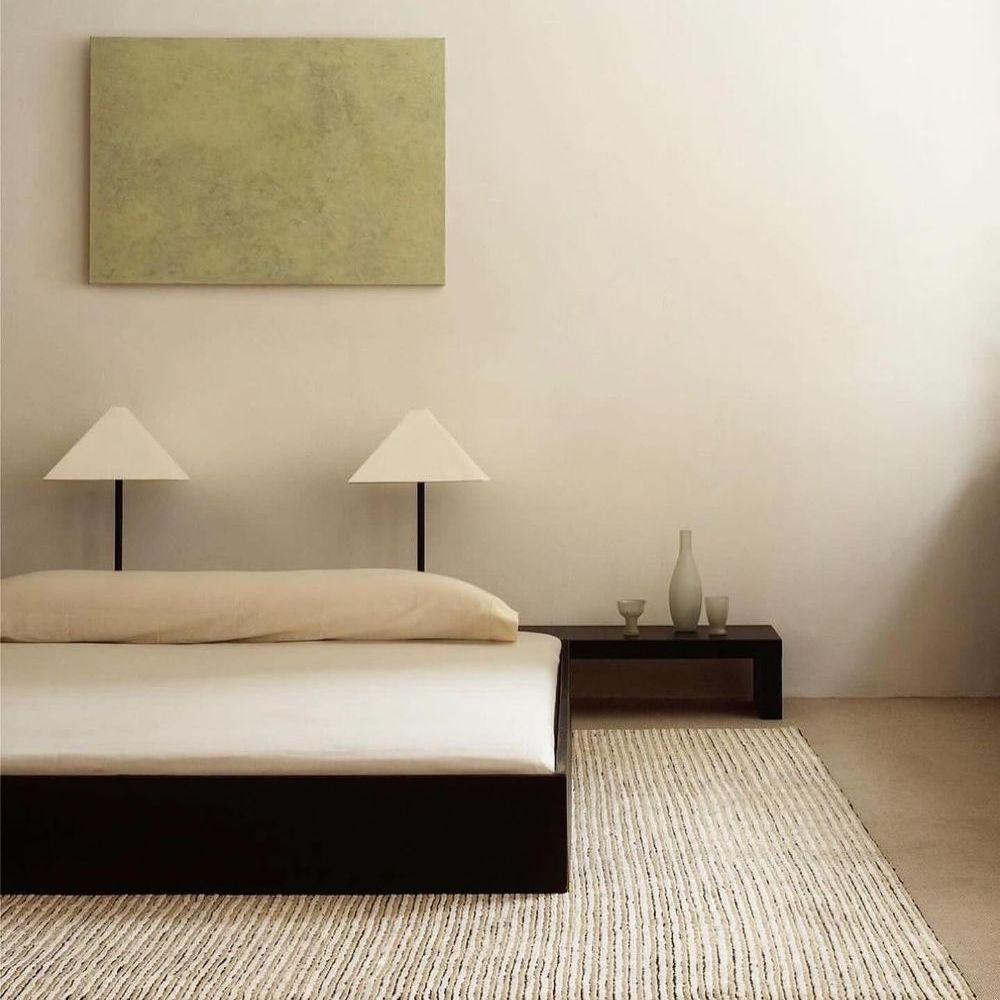
Furniture That Pairs With a Low Bed Frame
Once the bed sits low, everything nearby needs to agree with it. This is where visual weight comes in.
Visual weight explains why your eye lands on certain furniture pieces and skips right past others. It comes down to their size, color, and texture, as outlined by House of Gossamer.
A frame this low carries light visual weight at floor level. A tall, spindly nightstand right beside it carries the opposite.
That mismatch is what makes a room feel unresolved rather than calm.
The fix is not about matching materials or finishes. It is about matching height and mass.
You can mix wood tones, mix metals, even mix eras of furniture, as long as the pieces near the bed stay low and solid. Consistency in height matters more than consistency in style.
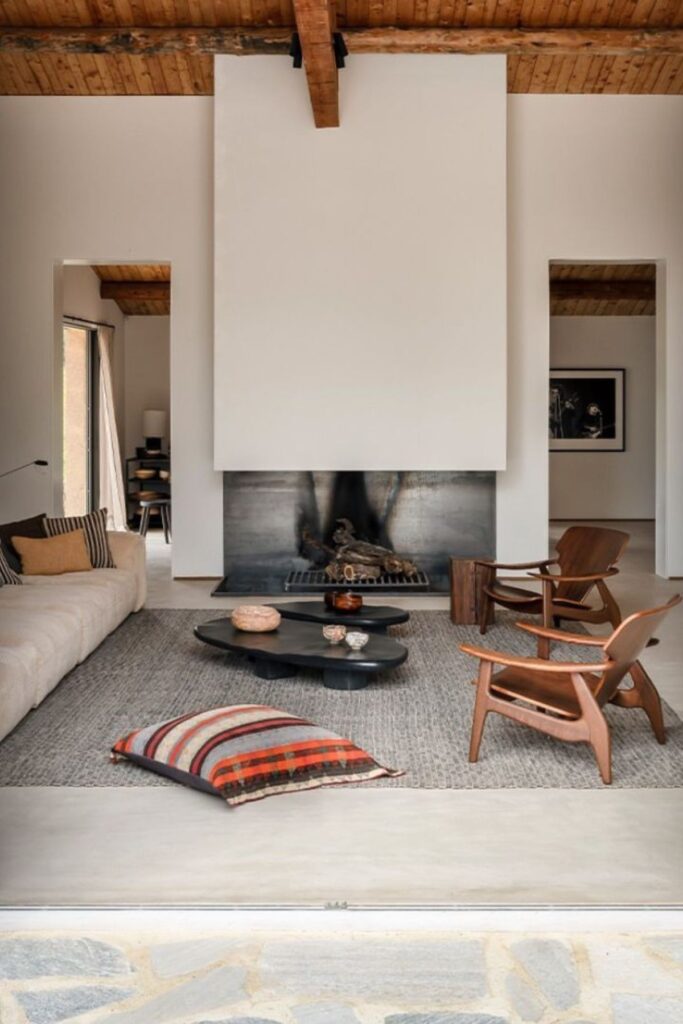
Choosing a Nightstand for a Low Bed
Keep the nightstand low, solid, and close to the bed’s own height. Avoid anything that towers over it.
Our simple bedside table guide covers exactly this kind of proportion matching for small bedrooms.
A pair of low wooden blocks, a stack of vintage suitcases, or a shallow bench can all do the job. Often better than a traditional nightstand, since none of them introduce a tall vertical line.
For the rest of the room, our full bedroom furniture design guide walks through the same decision for every other piece you need.
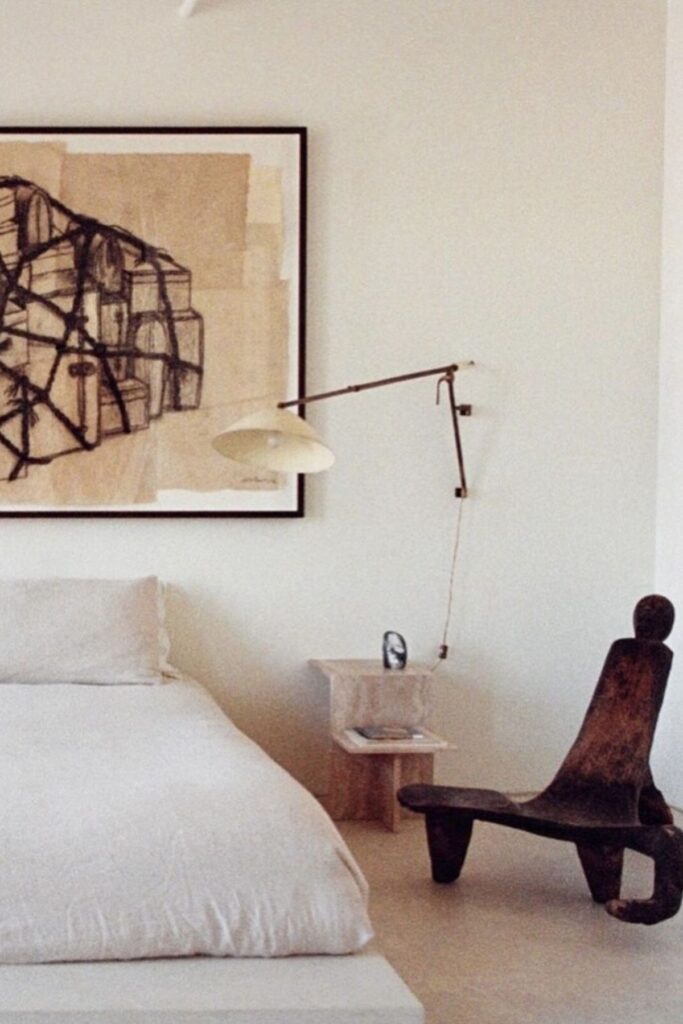
What to Avoid Placing Near a Low Bed
Tall dressers, floor lamps with heavy bases, and armchairs with high backs all tend to compete rather than complement.
If a piece cannot sit lower, give it distance from the bed instead. The height difference will read as intentional rather than accidental.
A wide, low-pile rug under and around the bed helps too. It extends the same horizontal plane across the floor, instead of stopping abruptly at the mattress edge.
In summary: match the visual weight of nearby furniture to the bed, not the other way around.
Art and Walls: Scaling Up Above a Low Bed
With less visual activity at floor level, the wall above the bed carries more of the room’s attention than it usually would.
Why Larger, Quieter Art Works Better Here
A single large piece almost always reads better next to a low bed than a gallery wall of small frames.
Small frames scattered above a low horizontal line create competing visual weight. That undoes the very calm the bed was meant to bring.
One large piece, even a simple one, gives the eye a single place to rest. Several small frames give it several distractions instead.
If you already lean toward a warm, natural palette, our earthy bedroom guide has specific pairings that work well with this scale of art.
Clean Walls Are a Choice, Not an Empty One
Leaving a wall bare above a low bed can be the right call. This is especially true if the room already has texture from a rug or bedding.
Wall color still matters even without art on it. Our bedroom color combination guide explains how to choose one that holds against your floor tone and light.
A large, simply framed mirror works as well as art in this spot, and it adds the practical benefit of reflecting whatever light source sits nearest to it.
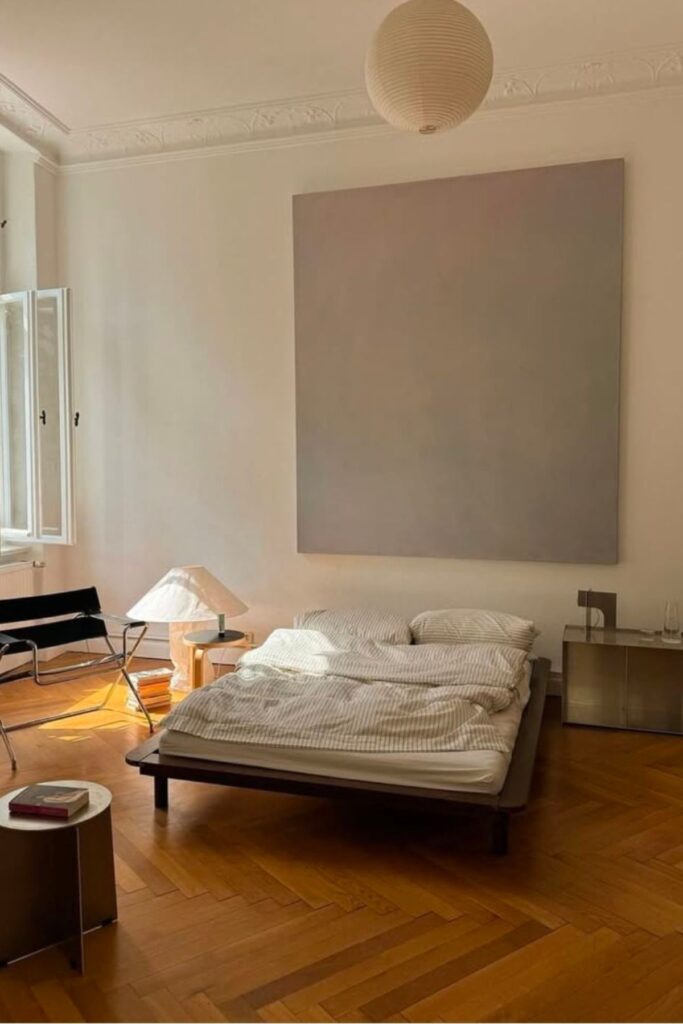
Lighting a Room Built Around a Low Bed Frame
Once the furniture is low, a single bright ceiling fixture starts to feel out of place. It lights the one part of the room your furniture has abandoned.
Layering Light Around a Low Bed
Professional lighting guidance consistently favors layering light at several heights. That approach beats relying on one overhead source.
Using multiple lamps at varying heights instead of a single fixture can improve overall light distribution by as much as 30 percent, according to Golden Lighting.
For a room built around a bed this low, that means floor lamps, low table lamps, and wall sconces working together. One ceiling light cannot do that job alone.
- Floor level: a floor lamp or uplighter near a corner or reading chair
- Table level: a low lamp on your nightstand, close to the bed’s own height
- Wall level: a sconce beside or above the headboard for reading light
For ceiling light it is a good option to choose something very characteristic. As it is not necessary to have a strong ceiling light, you can mount something more like an art. For example, echoing an existing shape in the room, as emphasizing the height of the room.
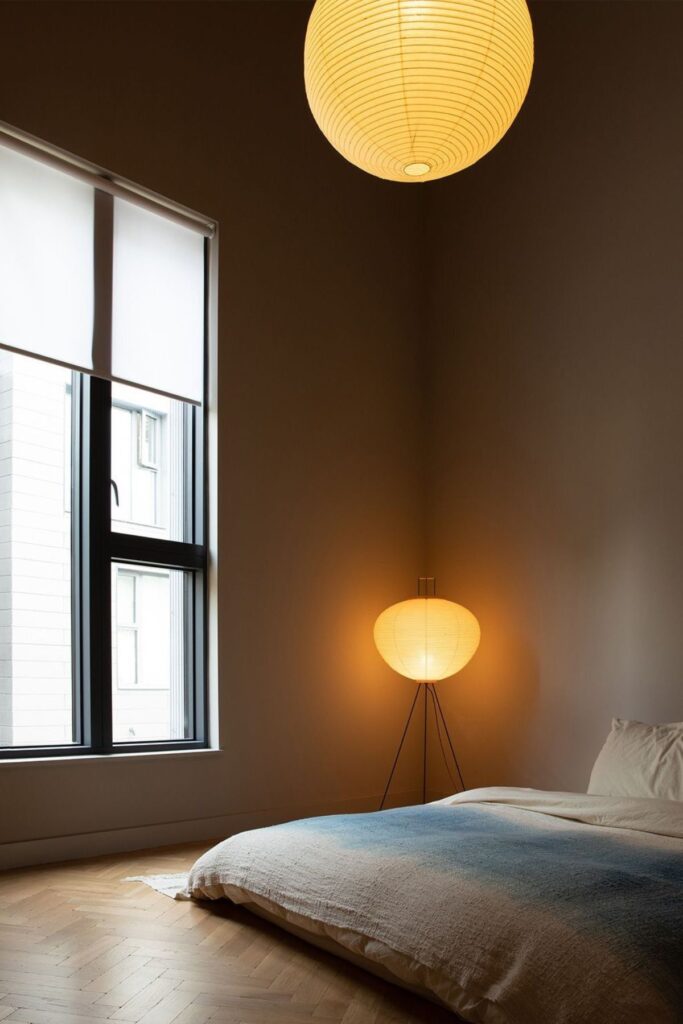
I love these paper lamps, I have found very similar standing lamps, like this. (paid link)
Our lighting rules for small spaces cover this layering approach in more depth. The same principles carry over from our ambient lighting ideas for small living rooms.
Important: avoid relying on one central overhead light in a low-bed room. It creates a harsh point of brightness with nothing at floor level to balance it.
Warm bulbs, somewhere around 2700 to 3000 Kelvin, matter more here too. The light sources sit closer to eye level than a ceiling fixture ever would.
A simple plug-in dimmer on the floor lamp or table lamp is a small investment that pays off nightly. It lets the same fixture handle both bright evening light and a dimmer, calmer glow before sleep.
Common Mistakes When Choosing a Low Bed Frame
Most low-bed rooms that feel unfinished share the same handful of problems. None of them are about the bed itself.
- Pairing it with tall storage furniture.
A tall wardrobe next to a low bed recreates the exact mismatch you were trying to avoid.
Solution: make the wardrobe disappear, same color as the wall, built-in options. - Leaving clutter at floor level.
Bags, shoes, and boxes read as visual noise right where the eye already rests.
Solution: just clean up! - Ignoring accessibility.
A very low frame can be genuinely hard to get in and out of for anyone with joint pain.
Worth testing before you buy. - Skipping storage planning.
A bed this low usually means giving up under-bed storage. Plan for it elsewhere first, the same way we recommend in our wardrobe design guide. - Forgetting the rug. A low bed with a bare floor around it loses some of its grounded feeling. There is no horizontal texture connecting it to the rest of the room.
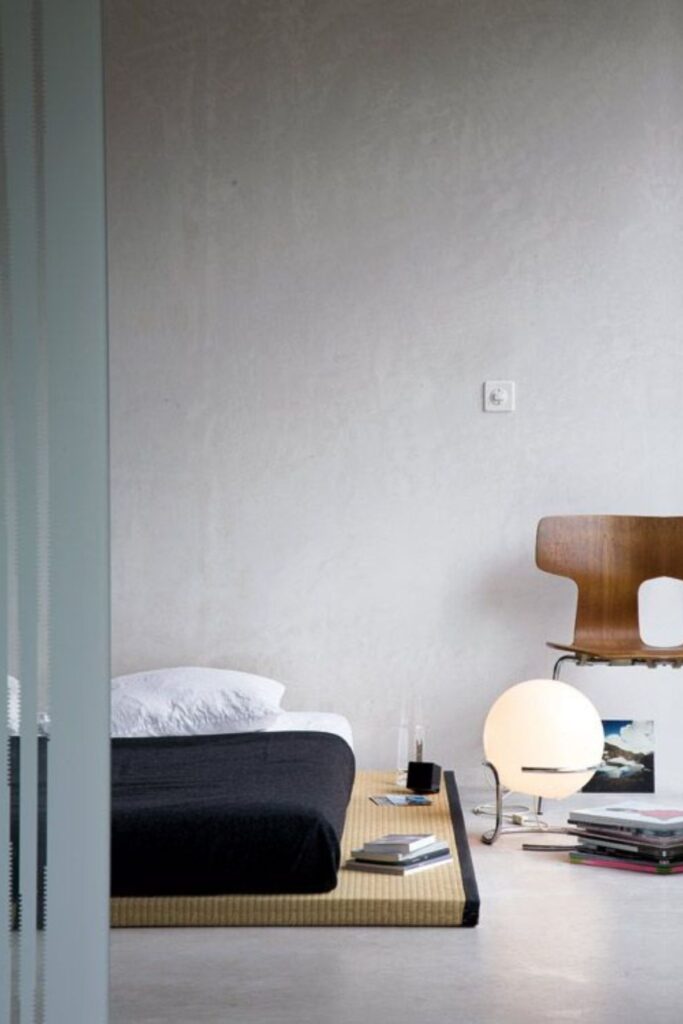
Solution is simple: just add a rug or tatami under the bed.
Our broader furniture principles for small rooms cover several of these same trade-offs in more detail.
Most of these fixes cost nothing. They are about what you remove or rearrange, not what you buy.
Final Thoughts
A low bed frame is a decision about the whole room’s visual language, not just the furniture piece itself.
Get the height, the surrounding furniture, the art, and the lighting working together. A small bedroom can genuinely feel bigger without adding a single square foot.
That rented 45 square meter room taught me this before I ever put it into words for a client. Sometimes the furniture you remove changes a room more than anything you add.
You do not need a full renovation to test any of this. Try the height, the nightstand swap, and the lighting layer one at a time, and see which one changes the room the most for you.
If you are still deciding between a frame and skipping it entirely, our companion guide on floor beds versus low frames walks through that decision next.

Frequently Asked Questions About a Low Bed Frame
Do low bed frames make a small room look bigger?
Yes. Low furniture increases the visible distance between the floor and ceiling. This reads as more open space, even though the room’s actual size has not changed.
What furniture goes with a low bed?
Low, solid pieces work best, such as a low nightstand, a wide bench, or floor-level shelving. Tall, narrow furniture tends to compete with the bed’s visual weight instead of supporting it.
Is a low bed frame comfortable for older adults?
Not always. A very low frame can be difficult to get in and out of for anyone with joint pain or limited mobility. It is worth testing the height in person first.
What height counts as a low bed frame?
Most low-profile bed frames sit at 11 inches or less. Platform beds can reach up to about 18 inches with the mattress included.
Do low beds work with high ceilings too?
Yes, though the visual benefit is strongest in rooms with low or average ceiling heights. That is where every added inch of visible wall space matters most. In a room with genuinely tall ceilings, a low bed can occasionally feel a little lost, so balance it with a taller piece elsewhere in the room.
Can you add storage under a low bed?
Rarely, since there is little to no clearance underneath. Plan your storage elsewhere in the room, such as a dedicated wardrobe, before committing to a low frame.
What should I avoid placing next to a low bed?
Tall dressers, high-backed chairs, and floor lamps with heavy bases tend to compete with a low bed’s proportions. They rarely complement it.
Read Next
Small Bedroom Ideas: A Complete Decision Guide for Tight Spaces
Floor Bed vs. Low Bed Frame: Which Fits a Small Bedroom (On a Budget)