Small Bedroom Ideas for Couples: One Room That Works for Both of You
This post contains affiliate links. If you buy through them, I may earn a small commission — at no extra cost to you. I only recommend products I’d genuinely specify as an architect.
Small bedroom ideas for couples usually start in the wrong place, with a floor plan. The real question is how to fit two different people into one small room.
Sharing a bedroom is a fairness problem before it is a space problem. The friction starts when the room is designed as a mirror instead of around what each person actually needs.
My partner and I have shared tight spaces for a while now. I am an early bird and he is a good sleeper, so there are quiet hours when one of us is awake in a bed the other is still using.
We sleep in a double bed under one large duvet, and it works because we planned it around the two of us. These small bedroom ideas come from doing exactly that.
Small Bedroom Ideas for Couples Start With How You Sleep
Two different people, not a mirror image
The best shared rooms use balanced asymmetry. Each side suits the person who sleeps there, and the two sides feel even without being identical.
A forced 50/50 split rarely fits real life. One of you needs more bedside space, one of you falls asleep faster, and fairness means matching each person’s needs, not copying one side onto the other.
Interior teams who work with couples say the same. Designers at Furniture in Fashion point out that clear, personal zones are what stop a shared room from breeding resentment.
The questions that decide the layout
Before you move any furniture, answer a few things together. The answers set the whole plan.
- Who wakes first and needs to leave the room quietly?
- Who needs more bedside space, and who barely uses theirs?
- Who prefers to sleep closer to the door?
Once you know this, the layout almost designs itself. You are placing two people, and the furniture follows.
Key takeaway: design around how the two of you actually sleep, then let the furniture fall into place.
Bed Size vs. Both-Sides Access: The First Real Decision
Some of the most useful small bedroom ideas for couples are about the bed itself. Get this decision right and the rest of the room falls into place.
The honest tradeoff
Every guide tells couples to buy the biggest bed that fits. That advice can cost you the walkway that matters more than the extra few inches of mattress.
A bed that touches two walls leaves one person climbing over the other. Access beats size in a small shared room, so sizing down is sometimes the smarter move.
Think about how it feels at 6am. If one of you has to shuffle down to the foot of the bed to get out, that is the wrong bed for the room, however comfortable it looks.
The clearance rule
Aim for roughly 24 inches, about 60 cm, of clear floor on each side of the bed. That is enough for both of you to get in, get out, and make the bed without a fight.
If a queen leaves you under that on both sides, a full or double bed often serves you better.
For more on planning circulation in tight rooms, my studio apartment layout ideas walk through clearances in detail.
Measure before you fall for a bed. Mark the frame on the floor with tape, then walk both sides in the dark to feel whether the room really works for two.
One big duvet or two?
We use one large shared duvet, and it keeps a small bed reading as a single calm surface. Two separate duvets solve the problem of one cold sleeper and one warm one.
Pick by comfort, not by looks. If different temperatures wake you both, two duvets are worth the slightly busier bed. Or little bit more work when making the bed – there are ways to make the bed with two duvets that read as one.
Small Bedroom Ideas for Couples: Where the Bed Goes
Center on the longest wall
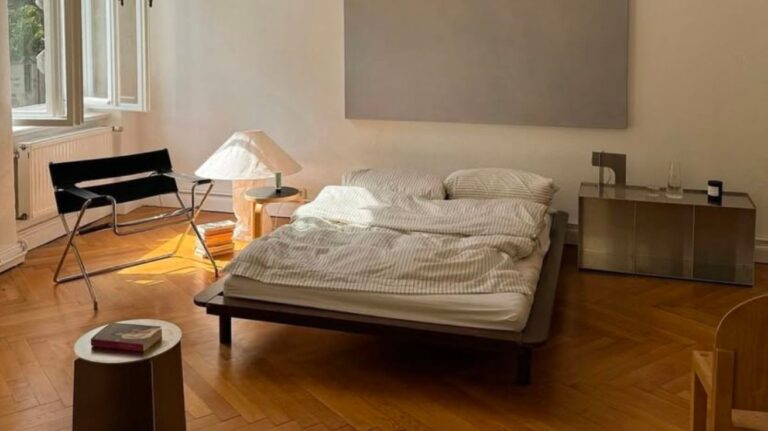
For two people, the bed usually belongs centered on the longest wall. That gives you matching access on both sides and a balanced room the moment you walk in.
Designers agree that centering the bed reads as intentional for a couple. It signals the room was planned for two, not assembled around one.
If the room is very narrow, you may only fit two clear sides by giving up a wardrobe wall. That trade is usually worth it, since a bed you can both reach beats a closet you fight over.
Why the corner rarely works
Pushing the bed into a corner saves floor space and costs you a partner. The person on the inside has to climb over to get out, every single night.
A door that swings into the bed is the other common problem. Swapping it for a sliding door reclaims that clearance, a fix for tight rooms.
Let preference settle the rest. If layout depends on your exact room, my guide to bedroom ideas for small rooms covers how shape changes the answer.
The Nightstand Question: What Do You Actually Store Bedside?
Two matching nightstands is the default advice, and it often wastes space. What you keep bedside should decide the size, the shape, and whether you need one at all.
Start from the contents, not the furniture. Two freestanding nightstands can eat close to 18 inches of floor between them, which a small shared room rarely has to spare.
Plenty of small bedroom ideas for couples default to matching side tables for the sake of symmetry. In a truly tight room, matching often costs more floor than it is worth.
Different needs, different sides
Couples almost never need the same thing bedside. I only need my phone as an alarm, so I keep a low leather ottoman by the bed and it does the job.
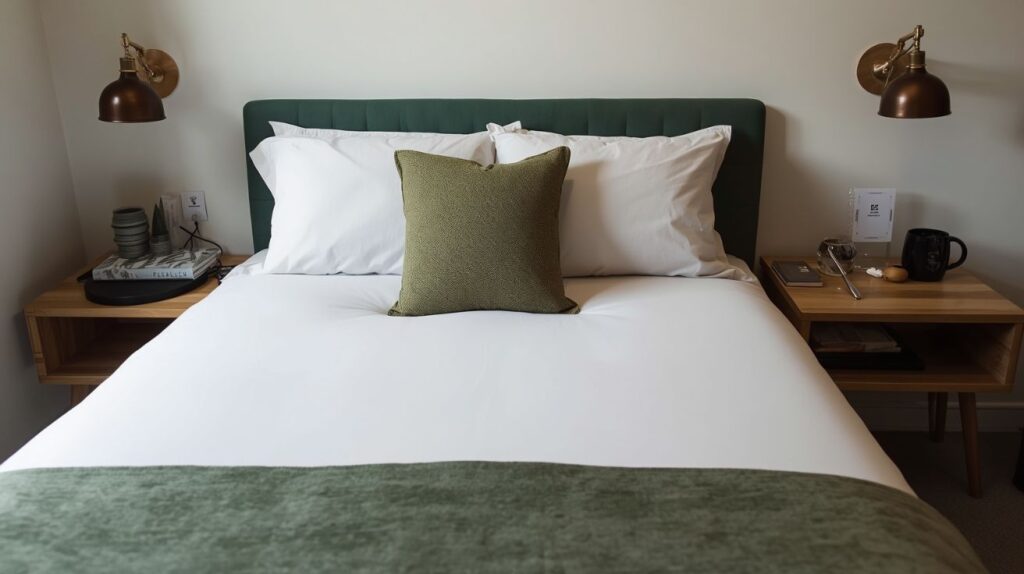
My partner keeps more within reach, so one real nightstand sits on his side. That single bedside piece defines his zone, roughly the 50 to 60 cm of space he has next to the bed.
A slim bedside table on one side only is often the honest answer for two people with different habits.
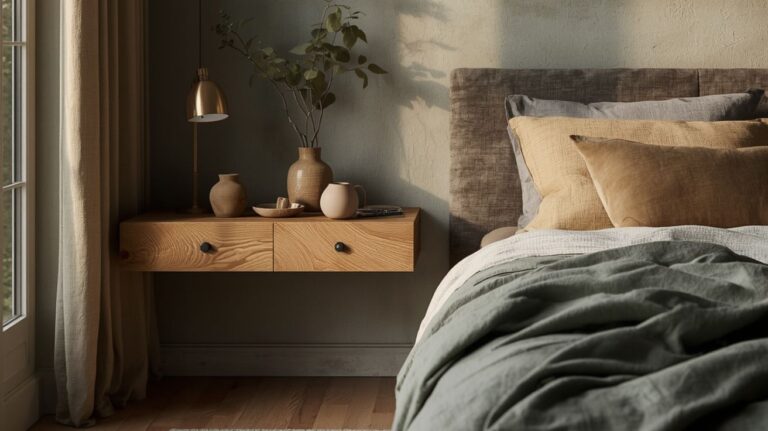
Wall-mounted options help when the floor is tight. A small floating shelf or a swing-arm lamp frees the space a freestanding table would block, and it still gives that partner a spot for a glass of water.
Tip: give the partner who needs less bedside a floating shelf or an ottoman instead of a table. It can hold the necessities and gives you a seat.
Small Bedroom Ideas for Couples: Dividing the Storage
Share the wardrobe by clothing type
You can share one wardrobe, but a perfect mirror split almost never works. Two people own different clothes, so divide the space by what each of you actually hangs and folds.
Give the person with more dresses the long hanging section. Give the other the shelves. My guide to wardrobe design for a small bedroom shows how to plan the interior around real garments.
Under-bed storage is for seasonal items only
The space under the bed is useful, with one rule. Keep it for seasonal and bulky things, not daily clothes you reach for every morning.
Good candidates for under-bed boxes include:
- Seasonal clothing you rotate a couple of times a year.
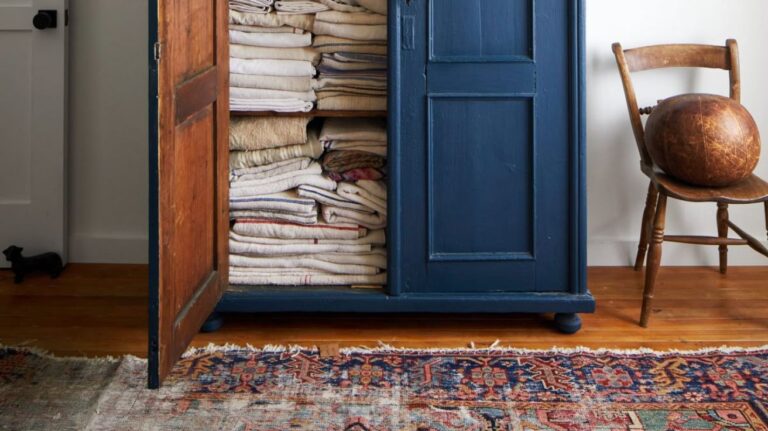
- Spare bedding and towels, including guest sets.
- Bulky gear like ski pants or camping kit.
Two people also means double the clothes, double the chargers, and double the odd bits that pile up on a surface. Deciding where each category lives, before it arrives, is half the battle in a shared room.
Anything you use daily belongs somewhere you can reach without kneeling on the floor. Save the crawl-space access for the things you touch twice a year.
The storage bed when there is no closet
If the room has no closet to spare, a storage bed is the single best upgrade. Drawers or a lift-up base turn the bed’s own footprint into storage for two.
A lift-up base holds the most, since the whole area under the mattress opens at once. Side drawers are easier to reach day to day, so pick by how often you dig for what is inside.
Pair it with your wider bedroom storage ideas so nothing spills onto the floor. In a shared room, floor clutter reads as double the mess.
Note: label or agree which drawers are whose. Defined zones prevent the slow creep of one person’s things into the other’s space.
Lighting and Balance for Two Schedules
Lighting is where small bedroom ideas for couples quietly succeed or fail. Two schedules under one roof need two independent, gentle light sources.
Hide the light source from the sleeping partner
Independent bedside lights are essential when one of you reads while the other sleeps. Each side needs its own dimmable, directional light.
The detail most people miss is where the bulb sits. The reading light should not be visible from the other pillow, because a bare bulb in your eyeline is genuinely hard to sleep next to.
Aim the light so it is hidden by your partner’s body or kept low enough that the bed itself blocks it. A shielded, low, warm light lets one person read while the other stays in the dark.
Balanced asymmetry, not a mirrored room
Overhead light is the enemy of a shared bedroom. It wakes the sleeping partner no matter where they lie, so lean on the two bedside lights instead.
Balance does not mean copying the whole room from side to side. It means the two sides feel even, even when one holds a nightstand and the other something else.
My lighting rules for small spaces go deeper on layering warm light without an overhead glare. If the long sleeper needs darkness, good bedroom curtain ideas matter as much as the lamps.
Small Bedroom Ideas for Couples That Feel Like Both of You
A calm, shared base palette
A shared room settles when the base is quiet and neutral. Warm whites, soft taupes, and natural wood give both people a background they can live with.
Or go for bold colors, if you agree – this is us. I love big patterns for bedding, my husband loves minimalism. So we compromised in linen in a beautiful color.
Keep the big surfaces calm, then let personality come through in small, changeable pieces. My guide to choosing a bedroom color combination helps you find a base that suits two tastes at once.
One personal corner each
Fairness gets easier when each person controls a little territory. A shelf, a favorite lamp, or a piece of art on each side does a lot of quiet work.
- Let each person choose the art around their own side of the bed.
- Give both a surface they own, even a very small one.
- Add one shared seat, so the bed is not the only place to sit. (Plus you can put the cushions there for the night.)
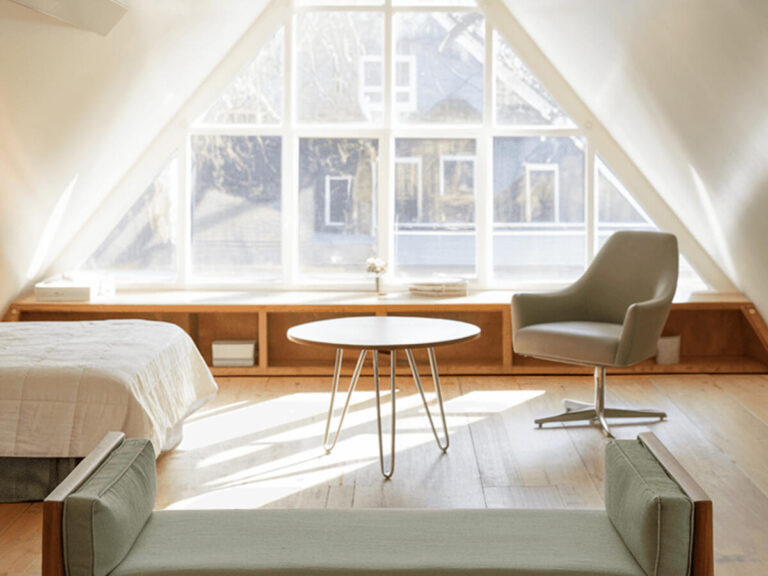
A compact chair or a bench at the foot of the bed takes pressure off the mattress as the room’s only surface. The right bedroom furniture earns its footprint by doing two jobs at once.
Small touches like these are what turn a functional layout into a room that feels shared. Both of you should be able to point to something and say that part is mine.
Final Thoughts
A shared small bedroom works when it fits two real people, not a symmetrical diagram. Size the bed to protect access on both sides, and let each person have a zone that suits them.
Split the storage by what you each own, keep the under-bed space for seasonal things, and give both sides their own hidden, warm light. Balanced asymmetry is the calm signal, not a mirror.
If a room combining more than sleeping is your next challenge, my living room and bedroom combo guide is a natural next read. You can also join the newsletter for more small-space decisions made simple.

Frequently Asked Questions About Small Bedroom Ideas for Couples
What size bed fits a small couples bedroom?
A queen fits many small rooms, but only if it leaves clear floor on both sides. When it does not, a full or double bed protects access and is usually the wiser choice.
How much clearance do you need on each side of the bed for two people?
Aim for about 24 inches, or roughly 60 cm, on each side. That lets both partners get in and out and make the bed without climbing over each other.
Should a couple use one big duvet or two single ones?
One shared duvet keeps a small bed looking calm and unified. Choose two if you and your partner sleep at very different temperatures.
Do you need two nightstands in a small shared bedroom?
Not always. Many couples do better with one real nightstand for the partner who needs it, and a bench or ottoman for the other.
How do couples share a small wardrobe without it feeling unfair?
Divide it by clothing type rather than down the middle. Give the person with more hanging clothes the rail, and the other the shelves and drawers.
Is under-bed storage good in a couples bedroom?
Yes, for seasonal and bulky items like spare bedding, towels, or sports gear. Keep daily clothes somewhere easier to reach.
How do you sleep when your partner is on a different schedule?
Give each side its own dimmable, directional light, and hide the bulb from the other pillow. Skip the overhead light, since it wakes whoever is trying to sleep.
Where should the bed go in a small shared room?
Center it on the longest wall for equal access on both sides. Avoid the corner, which forces one partner to climb over the other.