Bedding Ideas: How to Style a Small Bed Without Overwhelming the Room
This post contains affiliate links. If you buy through them, I may earn a small commission — at no extra cost to you. I only recommend products I’d genuinely specify as an architect.
Bedding ideas are everywhere right now, and for good reason. Swapping your linens is the cheapest way to refresh a bedroom without touching a single piece of furniture.
Almost every example you find, though, is a big bed in a room styled like a hotel. Piles of pillows, three stacked throws, and a headboard taller than most doorways.
I have a small bedroom and a normal budget. Those pillow mountains never looked real to me, and they are a chore to put away every night.
Your bedroom is a private place where you should feel calm and safe. A hotel is not that, and your room does not need to look like a showroom.
So this is my honest take on small bedroom ideas applied to the bed itself. Realistic, still lovely to look at, and quick to make in the morning.
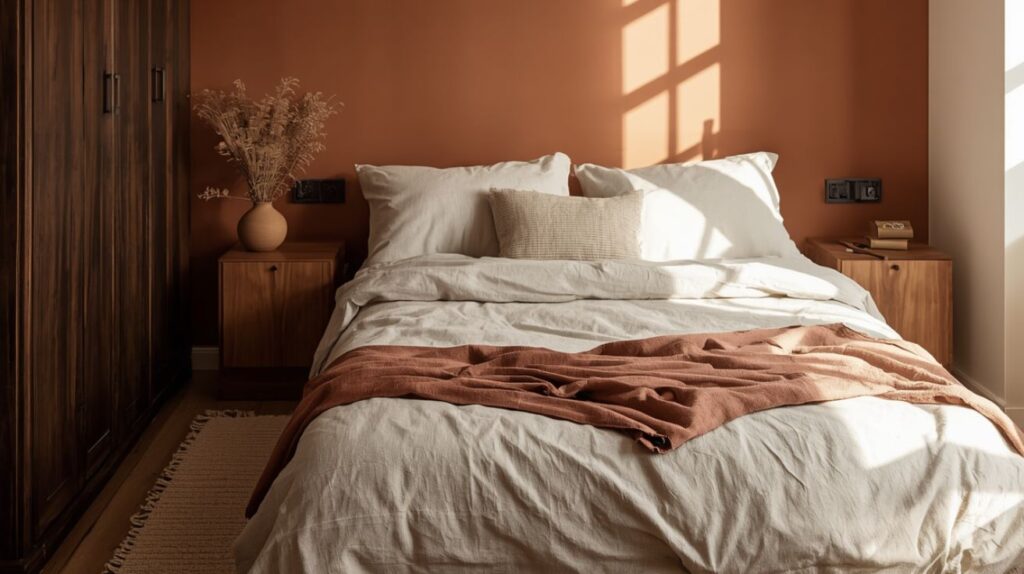
Why Most Bedding Ideas Miss a Small Room
First, here is a quick reminder about bed sizes. English is not my native language, having the correct names for reference is useful for me to have it here:
The reference problem: every guide shows a king bed
Search for how to layer a bed and you get the same thing back. A large frame dressed for a photo shoot, not for a Tuesday morning.
The advice is written around volume and grandeur. On a king, four euro shams and a mound of cushions read as full. On a small bed, the same pile reads as clutter.
Even good guides admit the copied result often looks flat or slumped at home, as one designer at A Blissful Nest describes. The look was built for a bed twice the size of yours.
Copying it is also expensive in the wrong way. You buy a full coordinated set, and half of it sits in a cupboard because it never fit the bed you own.
A hotel look versus a room you can breathe in
I understand the appeal of the hotel bed. It photographs beautifully and it feels like a treat.
A hotel is not restful to me, though. It is anonymous, and your bedroom is the opposite of anonymous.
This is your most private room, so it should feel like you, not like a catalog. You are allowed to be original here, because nobody is grading the arrangement.
Making the bed and keeping it tidy is a fair, everyday wish. The goal is a room that looks cared for, not staged.
The one rule for a small bed
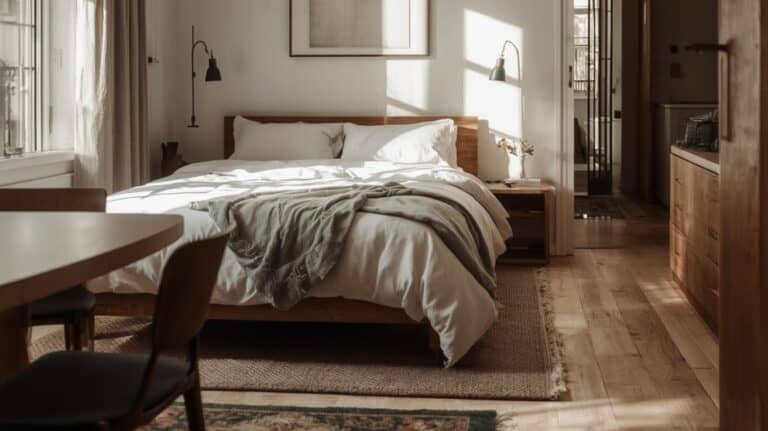
Bedding should fill the bed and leave the room alone. The moment your linens start competing with the walls and floor, the space feels smaller.
Proportion beats abundance in a small bedroom. This is the same logic behind choosing the right rug proportion for a small bedroom, where too little and too much both break the room.
Key takeaway: style the bed to sit quietly in the room, not to dominate it.
Less Is More on a Small Bed: The Sleeping Pillows
How many sleeping pillows a small bed needs
Start with the pillows you actually sleep on. On a full or queen, two is usually enough, and the bed still looks dressed rather than bare.
A wall of pillows belongs on a wide bed. Stack euro shams behind your sleeping pillows on a small frame and you lose the whole headboard to padding. (=Don’t do it please.)
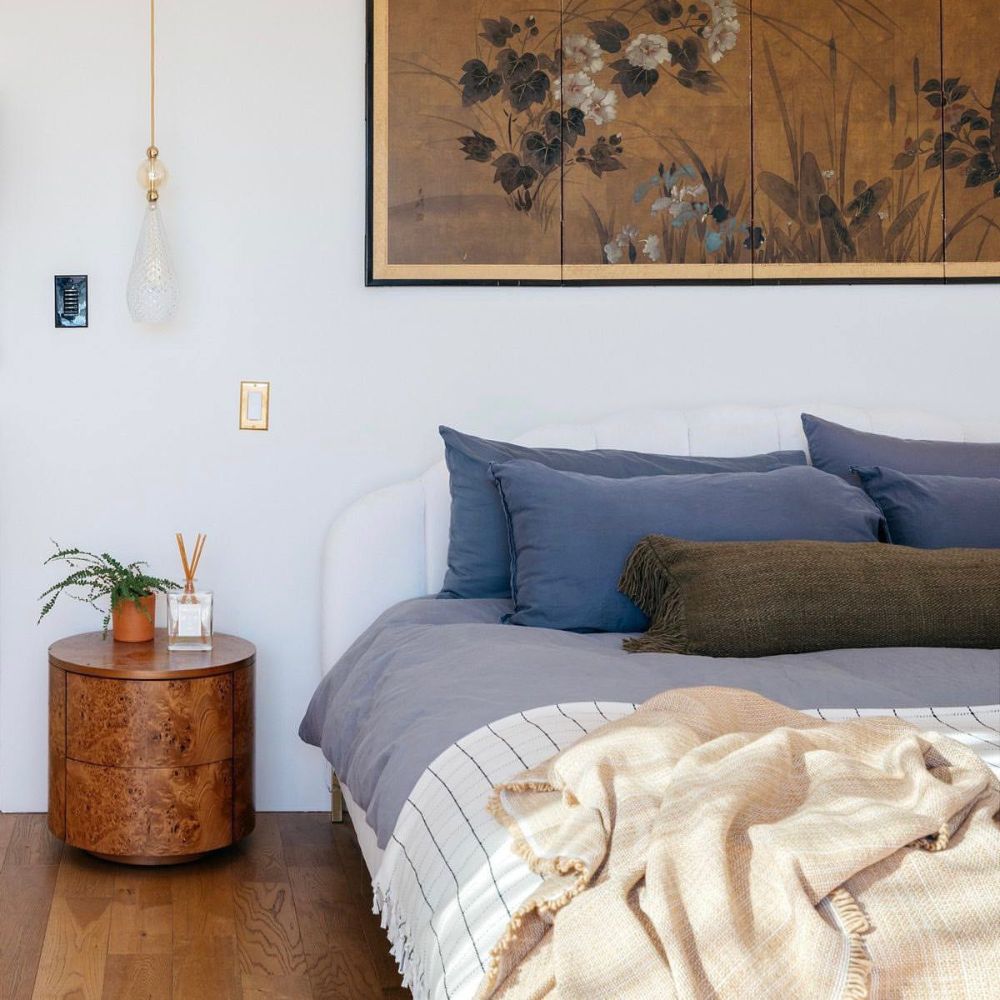
Personally, I do not love pillows for sleeping. I keep a couple anyway, because without them the bed looks a little naked. My husband does like them, so one sleeping pillow each is our compromise. And sometimes one long OR two small cushions more as decor.
Stack or lean, and what suits a low headboard
There are two simple ways to set pillows at the head of the bed. You can stack them flat, or you can lean them upright against the headboard. In my oppinion: if you don’t have a headboard, just stack them, if you have a headboard, you can decide.
Stacking reads clean and low, which flatters a small bed. Leaning adds height, so it suits a taller headboard more than a short one. For me, stacking is more natural.
Stylists at Parachute suggest sticking to odd numbers when you do add cushions… In a small room, that usually means one, not three or five. But I think adding just two cushions is the most honest.
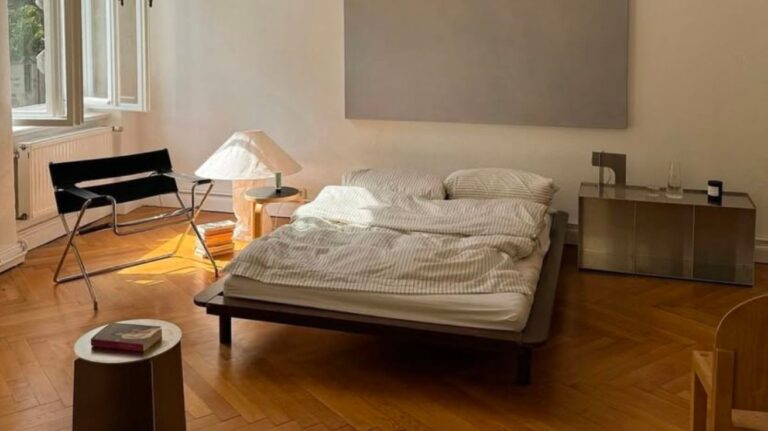
If you like a low, grounded look, soft shapes settle nicely on a low bed frame instead of towering over it.

Right: from Pinterest, Left: The Beldon House restored by designer @joelmozerskydesign,
photographed by @jeff_jones_photo
The realistic-use test for your bedding ideas
Here is the check I run before adding anything. If I have to unpack pillows for ten minutes before bed, and making the bed takes three times longer, it is wrong for daily life.
Mies van der Rohe said less is more, and a small bedroom is where that lands hardest. Every extra cushion is one more thing to move, store, and replace each morning.
Practical stylists reach the same conclusion. The team at Jenna Sue Design keeps decorative pillows low precisely so nobody is fishing them off the floor every day.
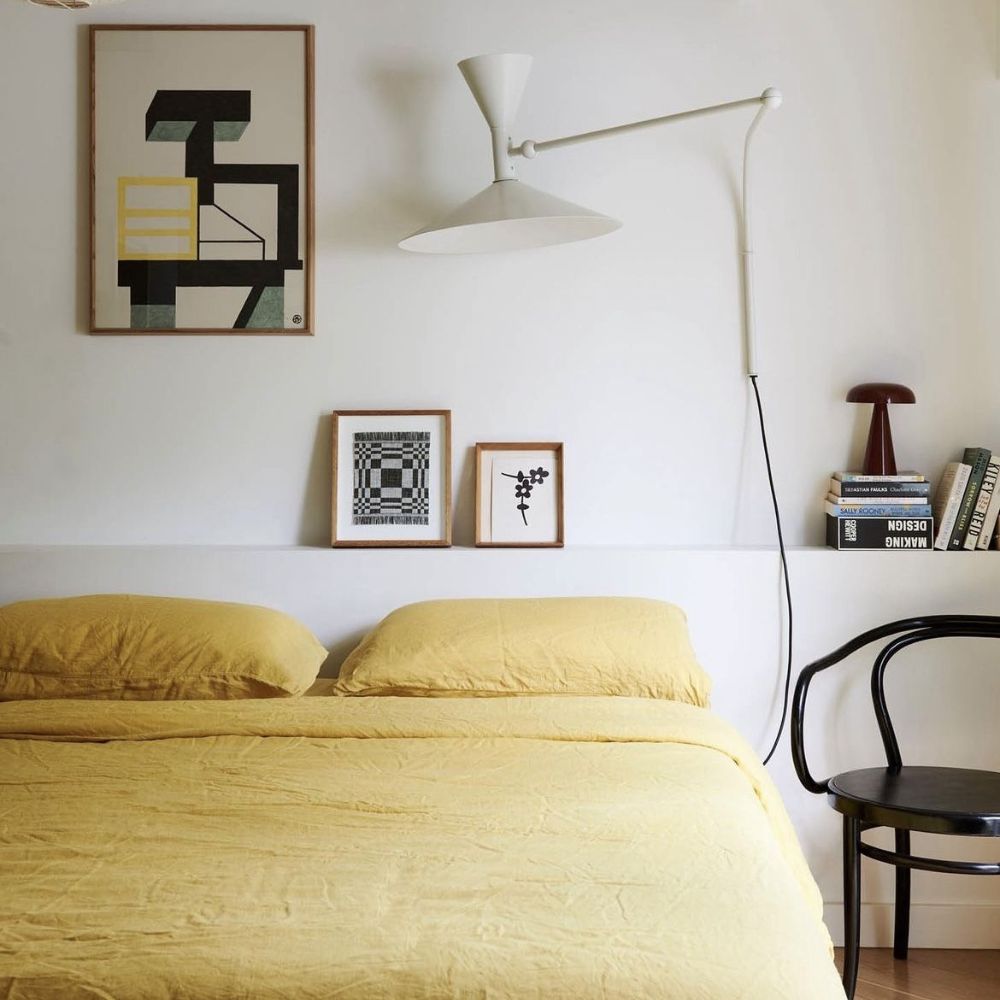
Home of Suzy Tuxen, foto from here.
Where Do the Decorative Pillows Go at Night?
Why the floor is not the answer
This is the question the pretty guides skip, and it matters most in a small room. You have nowhere spare to put four cushions and a folded throw at bedtime.
Please do not put your nice pillows and throw on the floor. They collect dust, get kicked, and look sad by the second night.
Be kind to the pieces you paid for. A cushion left on the floor every night wears out faster and never looks fresh again.
Real places to keep them
A small room rewards one dedicated landing spot. I use an old leather ottoman near the bed, and everything decorative lands there overnight. We don’t have too much of it, but for that amount it works perfectly.
- A bench or ottoman at the foot of the bed, which doubles as a seat for getting dressed.
- A basket in the corner, low and soft, so the pillows are protected but out of the way.
- A simple bedside table or a nearby shelf, if the cushion count is small.
- An armchair or a chair is also suitable, if you have one in the room.
The simplest fix is the number itself. Keep the decorative count low enough that storing it at night is trivial, and the problem mostly disappears.
If your room has no obvious spot, this is worth solving alongside your wider bedroom storage ideas, because a homeless pile becomes floor clutter fast.
The best bedding ideas for a small room plan for the night, not only the daytime photo. When the pillows have a home, the whole setup stays realistic to live with.
Note: a piece of dual-purpose bedroom furniture like a storage bench solves seating and pillow storage in one move.
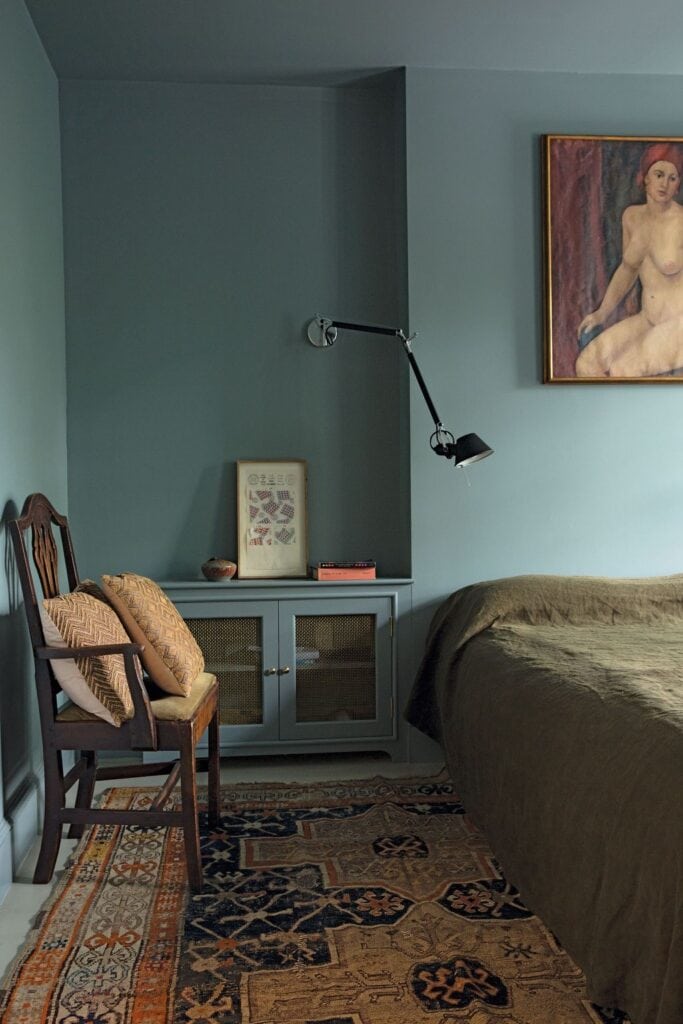
Bedroom by interior designer Billy Cotton, foto from Pinterest.
Bedding Ideas That Stay Usable at Night
The prettiest bedding ideas fall apart if you rebuild the bed every night. On a small bed, styling and daily use are the same problem.
Style for use, not for a daytime sculpture
The best styling supports how you live. It should not turn your bed into an arrangement you have to dismantle before you can climb in.
A small bed is used hard. It is a seat, a folding surface, and sometimes a desk, so the styling has to survive real days without a full rebuild each morning.
A good habit is a quick turn-down at night. Move the throw and cushion to the ottoman, and the bed is ready in seconds.
Be nice to your pillows
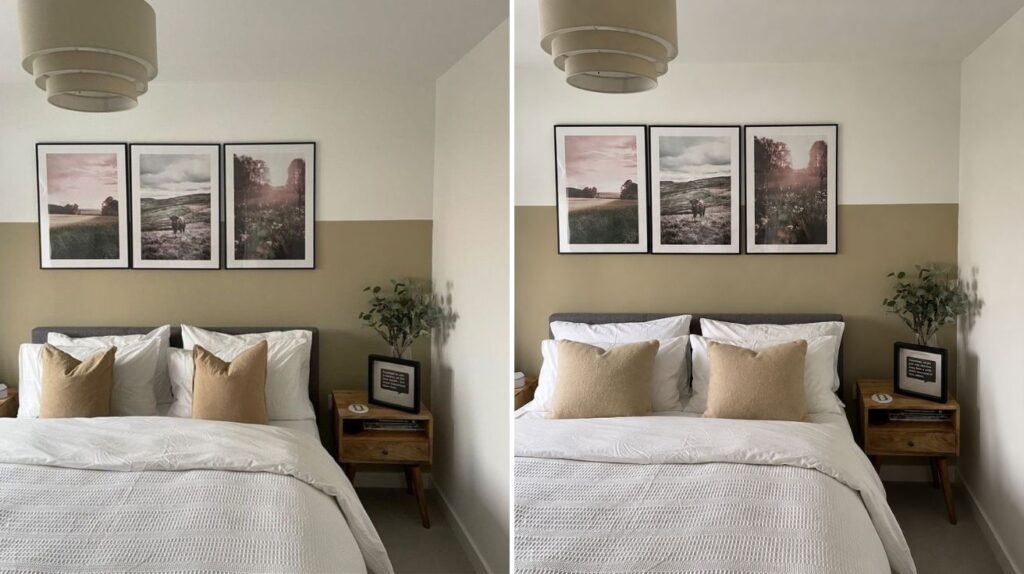
I never understood the karate-chop diamond shape. You hit a good pillow with force to fake a crease it was never meant to hold.
Let pillows keep their natural shape. A soft, filled cushion standing on its own looks more inviting than one bruised into a point.
A gentle fluff and a light hand are all a pillow needs. The rest of the bed, covers and blankets, works the same way, folding each layer back softly rather than forcing it.

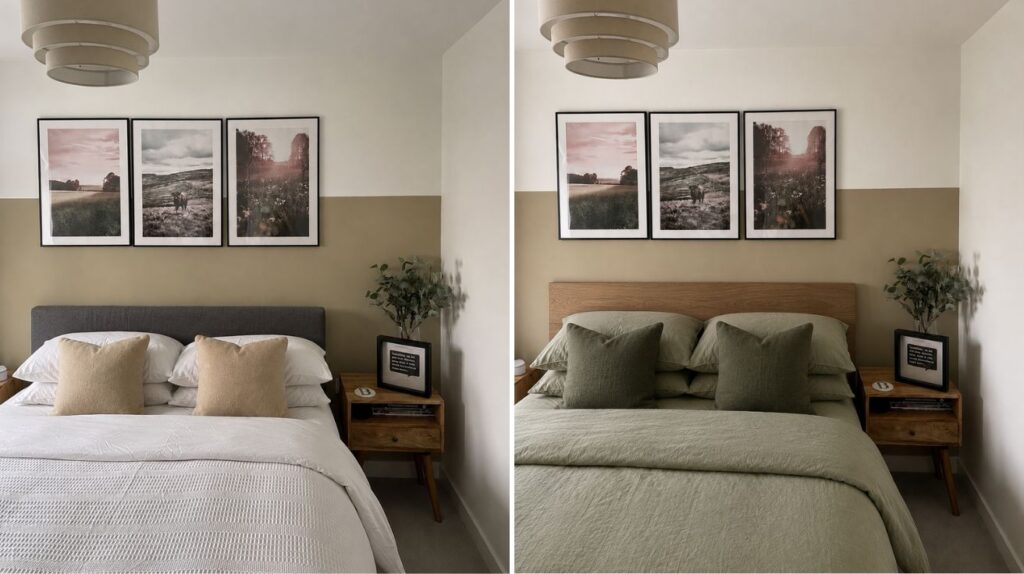
Karate chop pillows vs. soft natural pillows. On the next image there is an experiment with more natural colors. White is a safe choice, but what about a nice sage green bedding? Compared to the previous images, here the sleeping pillows are stacked on top of each other. Green bedding with dark green cushions looks a bit softer than the crisp white bedding and beige cushion combo.
One big duvet or two single blankets?
Both work, and the choice is personal. I prefer one shared big duvet, and that is what my husband and I use.
A single duvet makes a small bed read as one calm surface. Two separate blankets solve temperature differences, at the cost of a slightly busier look.
I will share photos of both setups on my own bed, so you can see how each one falls. The big duvet stays my favorite for a small room. Although it is possible to fake two single blankets look like one big duvet – but this is slightly more effort than I am comfortable for everyday use.
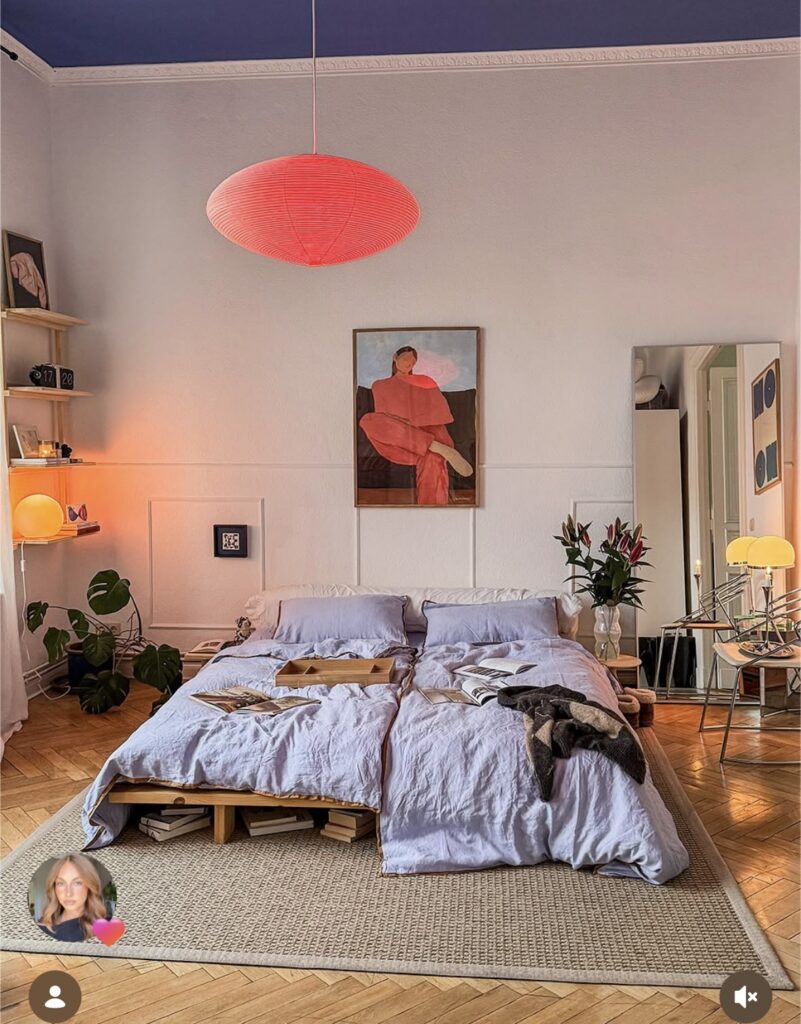
Here are my favorite examples, how to style a bed with two single blankets:
This is @casaanaclara bedroom in Berlin – with two single blankets placed next to each other.
Beautiful details in this bedroom!
Bedding Ideas for Color and Pattern That Work Together
The color rule I actually use
Forget rigid formulas here. I pick colors that share the same undertone and a similar saturation, and they sit together without a fight.
Think of it like seasonal color analysis for a bedroom. Those color groups share the same warmth and softness, so any two members already belong on the same bed.
If you want a fuller method for the whole room, my guide to building a bedroom color combination walks through undertone and light in more detail.
A few same-undertone groups that reliably work together:
- Warm neutrals: oat, cream, soft clay, and warm white.
- Muted greens: sage, olive, and a warm stone to ground them.
- Soft blues: dusty blue, slate, and a pale gray with a warm base.
Bedding ideas for pattern lovers
I am the person who sees florals and buys them on sight. Pattern is easy to place once you accept one focal print and let the rest stay quiet.
Pair a patterned duvet or cushion with a plain sheet from the same color family. Well-made patterns are designed to coordinate, so the sheet has a built-in match already in the print.
If you do mix two patterns, vary the scale. A large floral sits happily next to a fine stripe, while two big prints tend to shout.
Designers at Secret Linen Store start every scheme from color for a reason. Bedding is the biggest changeable surface in the room after the walls.
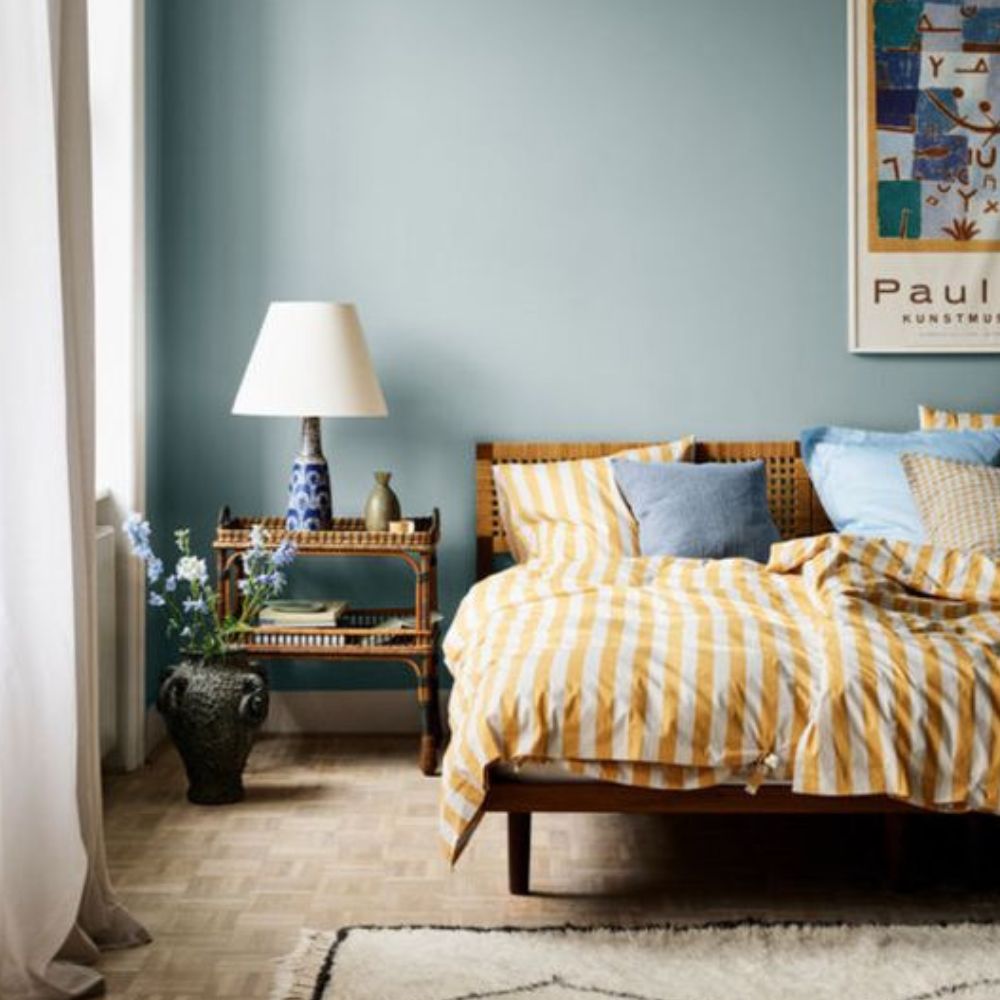
Warm, green, and blue done through textiles
You do not need paint to change a small bedroom’s mood. Bedding lets you test a color story cheaply and reverse it in a wash.
A warm, earthy palette feels grounding, and I explore that fully in my post on the earthy bedroom look. Soft green reads calm and natural, while a muted blue cools a room that runs warm.
If you would rather commit the color to a wall later, an accent wall in a small bedroom is the next step up from textiles.
Start with the bedding, live with it for a week, and see how the color reads at night under your lamps. That trial run costs almost nothing and tells you far more than a paint chip.
Here are some very nice bedding ideas with blue and yellow colors:
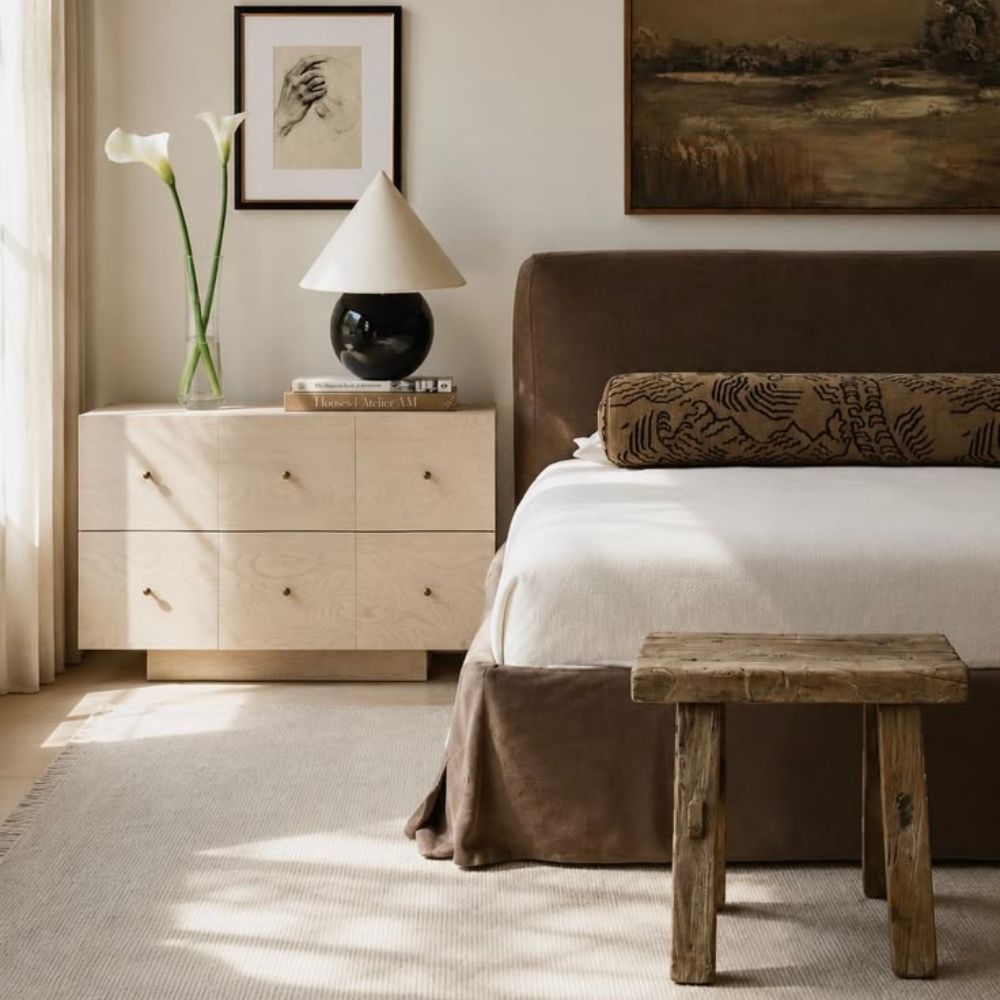
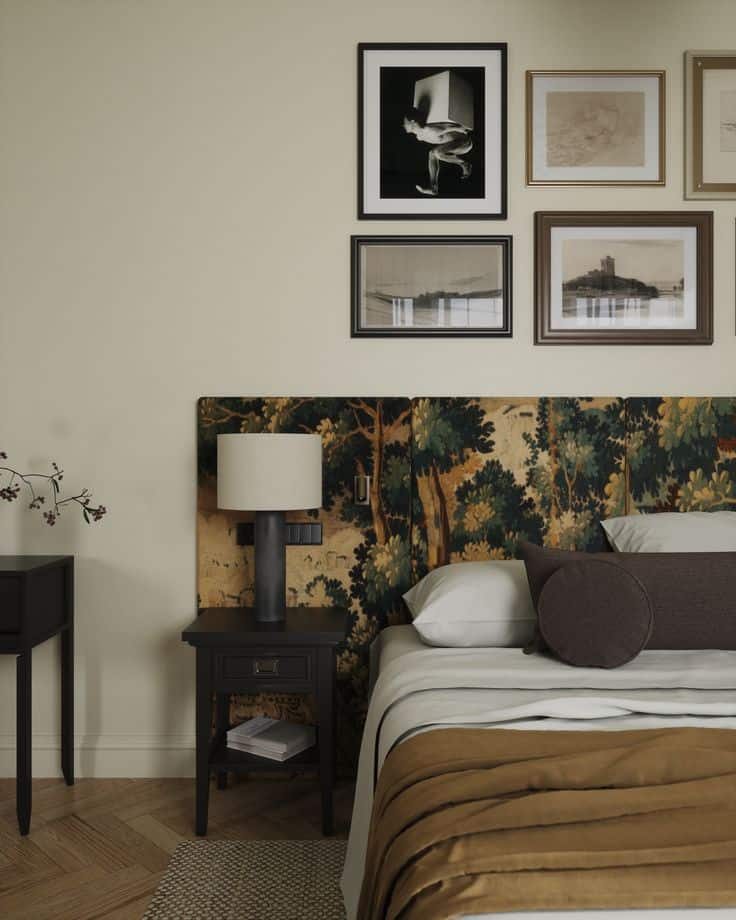
3. Fabric as accent wall. A project by Morrisstudio: Barbican Estate The bedroom of Lucy Williams, a British blogger.
Beautiful color and texture harmony, with the Neve Nightstand.
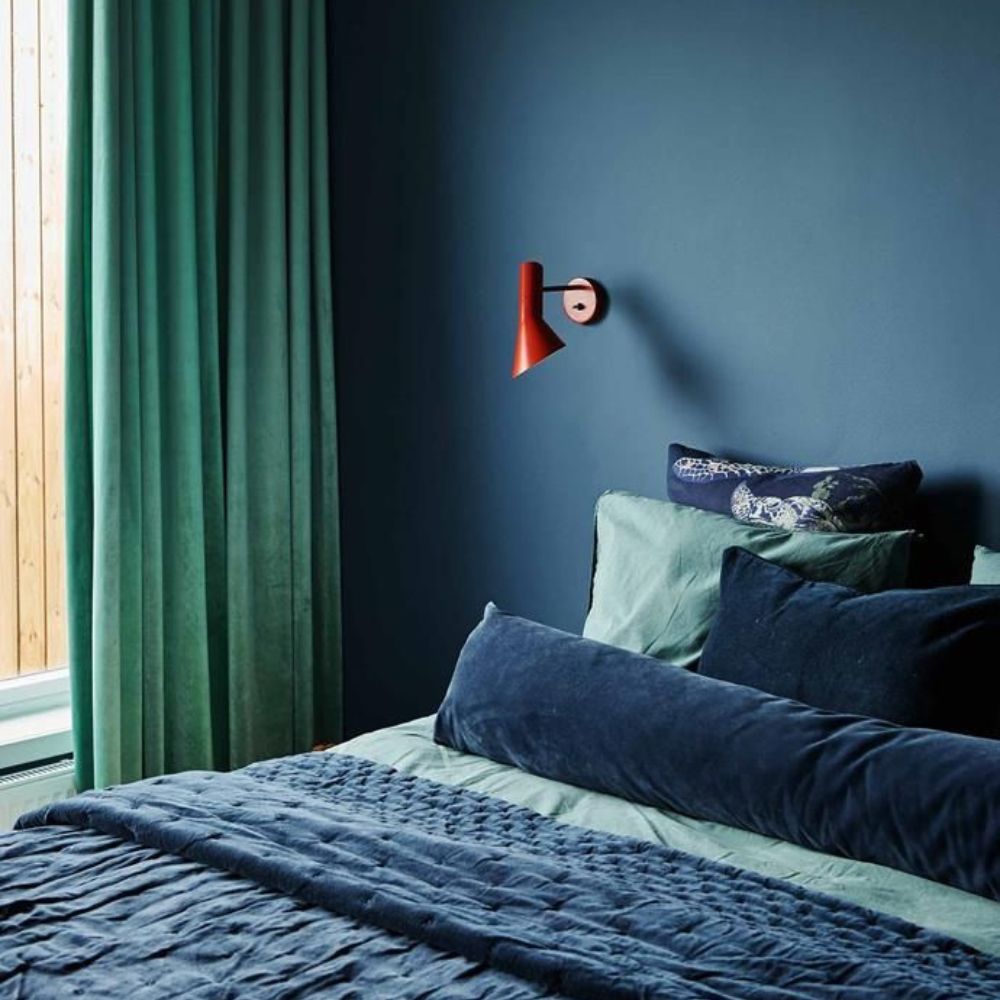



The Materials Worth Your Money: Linen, Wool, and Down
My three-material combination
If you spend anywhere, spend on the layer that touches your skin. Natural materials sit above everything else for comfort and for how long they last.
Here is what I put on my own small bed, in every season.
- 100% linen sheets and duvet cover as the base, breathable in summer and warm enough in winter.
- A wool throw for the foot of the bed, light but genuinely warming.
- A down or feather duvet and pillows, duck or goose, for softness that holds its shape.
This combination covers hot nights, cold nights, and everything between. Linen, wool, and feathers are naturally anti-allergic, easy to clean, and kind to skin.

Why natural beats synthetic in a small room
A small bedroom holds air and smell more than a large one does. Natural fibers breathe, so the bed feels fresh instead of stuffy.
They also age well. Linen softens with every wash, while a cheap synthetic set pills and starts to feel plasticky within a season.
Care is simple too. A warm wash and a light air-dry keep linen, wool, and down in good shape for years, so the cost spreads thin over time.
A trick – you can wash feather duvet or pillows at 60 celsius occasionally if you buy them second hand. There’s one thing you need to pay attention to when drying, you need to shake it quite often while it’s drying, say every second hour. Best if you can dry them in the sun.
Fewer, better pieces make the bed easier to keep tidy too, which matters more in a small room than a large one.
Tip: buy one excellent linen set before you buy any decorative extras. The sheet you sleep in earns its cost every night.
When you dress the window in the same natural spirit, the room reads as a whole. My bedroom curtain ideas follow the same material-first logic.
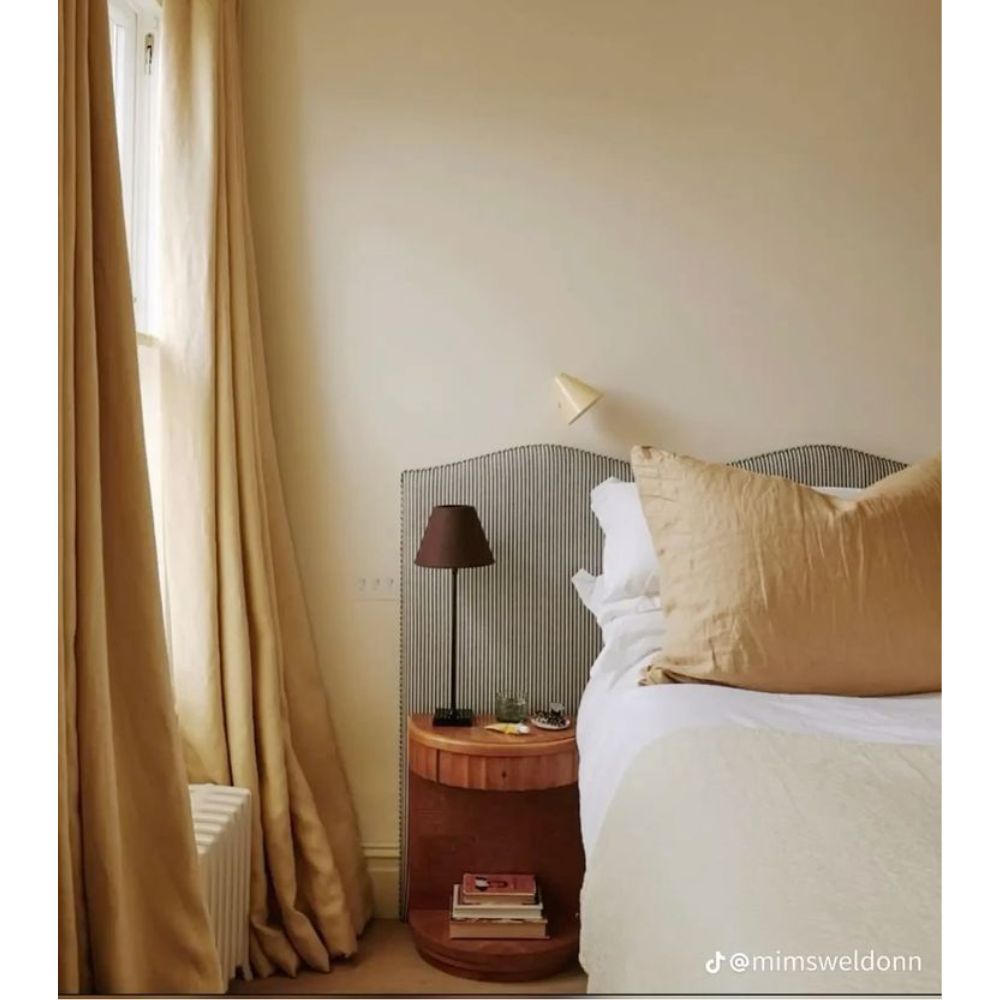
Beautiful color and texture harmony, with the Neve Nightstand.
Small-Bed Bedding Ideas on a Low Budget
Where to spend and save on your bedding ideas
A full refresh does not need a big budget. The cheapest swaps are the ones people see and touch first.
- Start with pillowcases and a duvet cover, the fastest visual change for the least money.
- Upgrade the sheet you sleep on when you can, since that is where comfort actually lives.
- Add one good throw in a natural fiber, which does more than three cheap cushions.
You can restyle a whole small bed by changing textiles alone, with the frame and mattress untouched. That is the real reason a bedding refresh beats a renovation for a quick lift.
A rough budget to aim for
You can lift a small bed for the price of a nice dinner out. A duvet cover and two pillowcases in a good linen sit at the top of the list.
Add the sheet next, then the throw when funds allow. Spreading it over two or three paydays keeps the whole refresh comfortable.
Tip: refresh in order and stop the moment the bed looks right. You rarely need every layer to feel finished.
What to skip entirely
Skip the big matching decorative sets. One or two well-chosen cushions in your color family look more considered than a coordinated pile.
Skip novelty pieces you will not wash easily. If a cushion cannot go in the machine, it will look tired long before it looks loved.
Skip anything you want only because it matched in the shop. A piece earns its place when you reach for it, not when it completes a set.
If a bigger change is calling, weigh it against a floor bed versus a low bed frame before spending on a new frame.
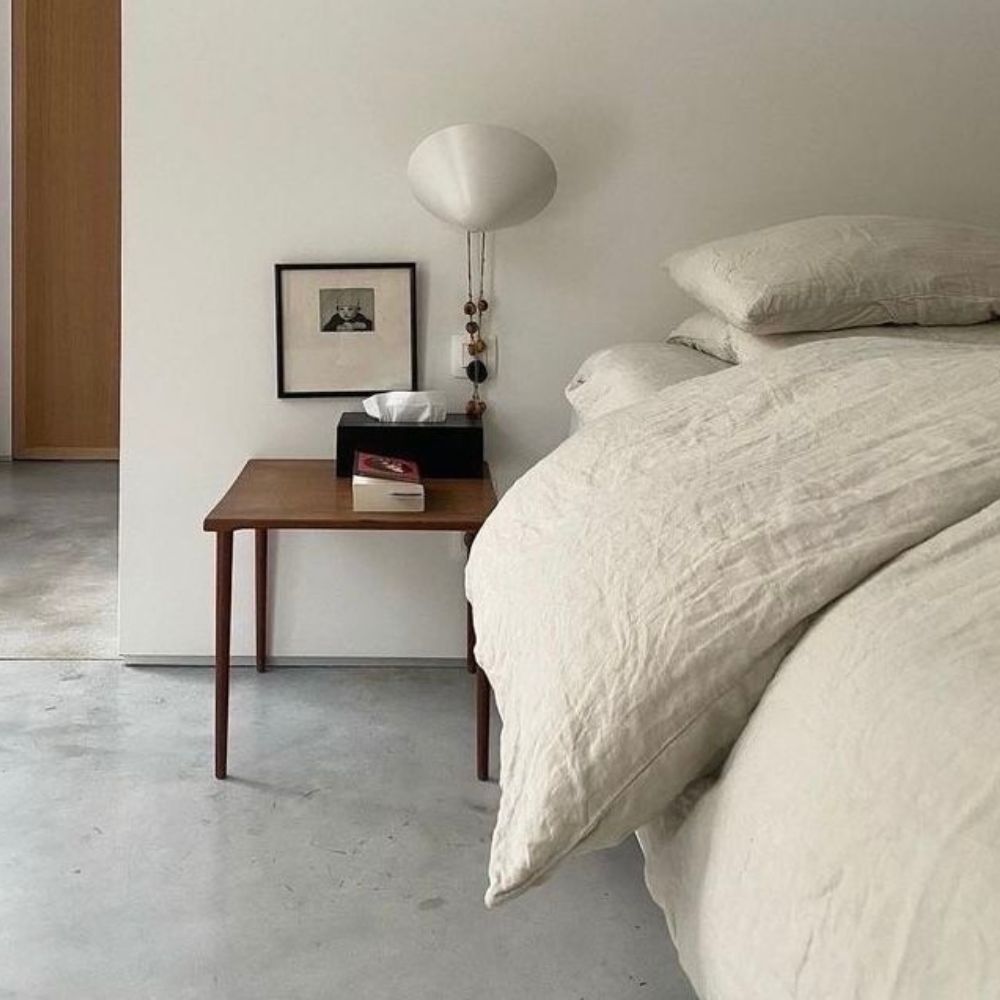
Bedding Ideas That Keep a Small Bed Tidy
A one-minute morning routine
Good bedding ideas only work if you can reset the bed fast. In a small room, a slow ritual turns into an unmade bed by the third day.
My routine is short. Straighten the fitted sheet, shake and lay the duvet, lay the two fluffy pillows, and set one cushion in front.
The throw comes back from the ottoman to the foot of the bed, or in winter it covers the bed, and the job is done. Fewer pieces make this genuinely quick.
Does a small bed need a bedcover?
A bedcover or coverlet is optional on a small bed. A single duvet already reads as one clean surface, so an extra top layer can feel like one thing too many. In some climates it is not just a decor element but a more functional one.
If you sit on the bed often, or you have a one-room apartment, then it is a good choice to have one. It is more hygienic in my opinion.
If you love the look, treat the bedcover as your throw and skip the separate throw. Keep the layers to what you will actually straighten each morning.
I style the sleeping pillows, maybe one decorative cushion, and the blanket to work together. We live on a climate where winters are quite cold – our bedcover is part of the bed seasonally, and is not removed for sleeping. The bed looks finished without a stack of covers to peel back at night.
Final Thoughts
A small bed does not need the hotel treatment. It needs bedding that fills it, sits calmly in the room, and goes back together in a minute.
Keep the pillow count honest, give the decorative pieces a home for the night, and spend your money on natural materials where it counts. Color and pattern are the easy, reversible part once your palette shares one undertone.
Above all, style the bed for the person who sleeps in it. A calm, private room you can reset in a minute beats a showroom you are afraid to touch.
If this helped, my bedroom ideas for small rooms guide is a good next read, and you can join the newsletter for more small-space decisions made simple.

Frequently Asked Questions About Bedding Ideas
How many pillows should be on a small bed?
Two sleeping pillows are perfectly fine. If you would like to have a mor elevated look, one or two small decorative cushion is plenty for a full or queen small bed. It looks dressed without swallowing the headboard or the room.
Where do you put decorative pillows at night?
Give them one home, such as a bench, ottoman, or a low basket near the bed. Keeping the count small makes this effortless, and it keeps the pillows off the floor.
Do I need throw pillows if I do not even like them?
Not many. One cushion stops a made bed from looking bare, and that is often enough for a small bedroom.
Is one big duvet or two single blankets better for a couple?
One shared duvet reads as a calmer single surface on a small bed. Two blankets are worth it only if you and your partner run at very different temperatures.
What bedding material is best and lowest maintenance?
Linen sheets, a wool throw, and a down duvet cover the whole year. All three are anti-allergic, easy to clean, and gentle on skin.
How do I choose bedding colors that go together?
Pick colors that share the same undertone and a similar softness. Like personal color seasons, those groups are already built to sit well together.
Can I use floral or patterned bedding in a small room?
Yes. Choose one focal pattern and pair it with a plain sheet from the same color family, and the room still feels calm.
How do I make my bed quickly and keep it tidy?
Fewer layers make a faster bed. A fitted sheet, one duvet, two pillows, and a single throw can be reset in under a minute.